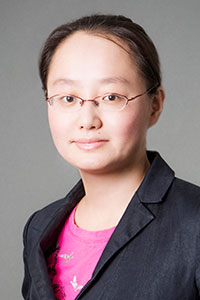

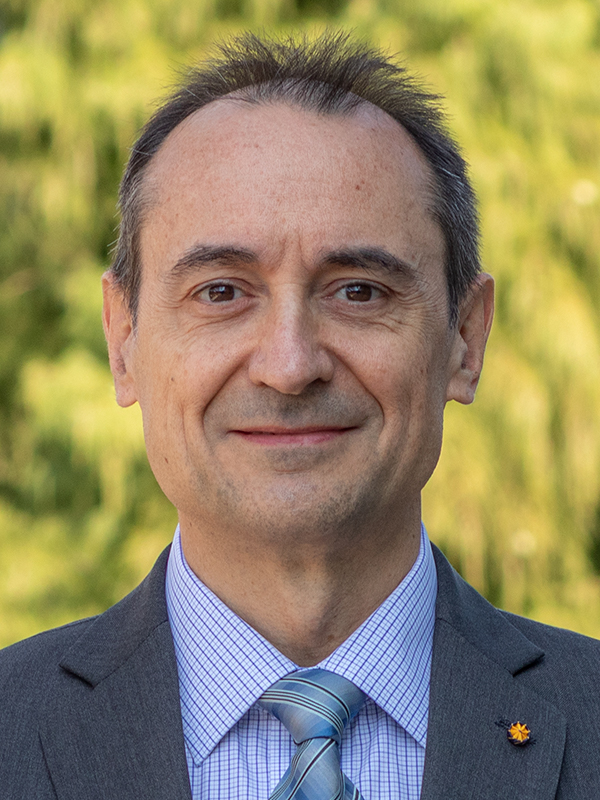
Hubert Marek Drazkowski is a PhD Fellow at the Department of Computer Science , University of Copenhagen , specializing in Machine Learning . He is affiliated with the Machine Learning Section and the SCIENCE AI Centre. Email: hubert.drazkowski@di.ku.dk Location: Universitetsparken 1, 2100 Copenhagen Ø His research spans quantum computing , environmentally sustainable AI , biomolecular modeling , and recommender systems . He contributes to interdisciplinary projects in healthcare informatics , remote sensing , and cross-cultural AI applications . Recent work includes quantum-inspired neural networks , interpretability in large language models , and fairness evaluation frameworks . He collaborates with labs like TreeSense on geospatial deep learning projects.
Lennard Hilgendorf is a Researcher at the Department of Computer Science , University of Copenhagen . His work focuses on Machine Learning with applications in quantum computing, medical imaging, natural language processing, and environmental sustainability. Research Trends: His recent publications highlight interdisciplinary work at the intersection of quantum mechanics and machine learning, efficient AI architectures for environmental sustainability, explainable models for medical diagnostics, and multimodal approaches to ecological monitoring. Key keywords include Machine Learning , Quantum Computing , Medical AI , and Environmental Science . Labs & Collaborations: Affiliated with the SCIENCE AI Centre and the TreeSense Centre , which specialize in foundational machine learning research and remote sensing for global tree resources, respectively.
Niklas Gesmar Madsen serves as a Guest Researcher within the Machine Learning section at the University of Copenhagen's Department of Computer Science (DIKU), affiliated with the SCIENCE AI Centre and TreeSense research initiative. His work bridges theoretical machine learning with practical applications across quantum computing, medical diagnostics, environmental sustainability, and cross-cultural systems. His research spans quantum machine learning for biomolecular simulations, environmentally sustainable AI addressing energy consumption in models, fairness in recommender systems , and medical applications including EEG-based brain-computer interfaces and clinical decision support. Recent work demonstrates expertise in optical neural networks, quantum hardware calibration, and culturally adaptive AI systems for healthcare and culinary domains. Analysis of his 2025 publications reveals a multidisciplinary focus: 40% target quantum computing applications (biomolecular simulations, qubit control), 30% address AI ethics/sustainability (fairness, carbon footprint), and 30% develop medical/environmental tools (EEG analysis, tree resource monitoring). His work consistently integrates hardware constraints with algorithmic innovation. No scientific awards were documented in available sources. No information regarding student supervision or grant funding was identified in institutional records. Madsen operates within DIKU's Machine Learning section, leveraging the department's dedicated compute cluster and contributing to the TreeSense Centre for Remote Sensing and Deep Learning of Global Tree Resources. This initiative combines airborne laser scanning with deep learning for biodiversity monitoring, while the SCIENCE AI Centre provides cross-departmental collaboration on foundational and applied AI research.
Oliver Mortensen is a PhD Fellow (Research Fellow) at the Machine Learning Section , Department of Computer Science (DIKU) , University of Copenhagen , Denmark. He is affiliated with the university’s Faculty of Science and participates in the cross-faculty SCIENCE AI Centre , a strategic initiative to advance artificial intelligence research and applications. Research Interests Mortensen’s research lies at the intersection of machine learning , quantum computing , and neuro-symbolic AI . His work spans both theoretical foundations—such as entropic risk optimization in reinforcement learning and Riemannian generative models—and highly applied domains including medical AI, recommender-system fairness, and brain-computer interfaces. A recurring theme is trustworthy AI , where he investigates explainability, fairness, and sustainability across large language models and clinical decision-support systems. Scientific Contributions & Trends Across more than 60 peer-reviewed contributions (2024-2025), Mortensen demonstrates a clear trajectory toward hybrid quantum-classical algorithms , energy-efficient AI , and human-centric evaluation . His publications integrate rigorous theoretical guarantees with empirical validation on real-world data from electronic health records, satellite imagery, and conversational corpora. Collaborations & Resources He carries out his doctoral research under the supervision of Professor Yevgeny Seldin within DIKU’s vibrant Machine Learning Section. The group offers access to a dedicated high-performance compute cluster, the SCIENCE AI Centre ’s GPU/TPU pools, and interdisciplinary ties to life-science, geoscience, and humanities researchers across the university.
Casper Dorph-Jensen serves as a Lecturer in the Department of Computer Science at the University of Copenhagen, where he is an active member of the Machine Learning section. His academic work bridges theoretical machine learning foundations with practical applications across diverse domains, contributing to both research and educational initiatives within Denmark's premier computing institution. His research spans multiple critical frontiers in artificial intelligence. Key interests include: Natural Language Processing with emphasis on emotion-aware dialogue systems and cross-cultural adaptation frameworks Sustainable AI development addressing environmental impacts of large models Quantum machine learning applications for biomolecular simulations Medical image analysis techniques for clinical diagnostics Fairness-aware information retrieval systems and recommender algorithms Analysis of his 2024-2025 publications reveals strong interdisciplinary trends combining machine learning with quantum physics, healthcare informatics, and sustainability science. Notable patterns include the application of large language models to clinical contexts (particularly nursing values evaluation), energy efficiency concerns in AI infrastructure, and novel quantum-classical hybrid approaches for scientific computing. His work frequently addresses real-world implementation challenges in noisy environments and resource-constrained settings. No scientific awards were documented in available sources. Information regarding student supervision or specific research grants remains unavailable in current public records, though his Machine Learning section affiliation suggests participation in broader departmental initiatives like the SCIENCE AI Centre and TreeSense remote sensing project. He operates within the Department of Computer Science's Machine Learning section, which maintains dedicated high-performance computing resources and participates in the university-wide SCIENCE AI Centre. This section focuses on both theoretical ML foundations and applications in medical imaging, biological data modeling, and sustainability-focused computing, with recent projects including quantum computing initiatives and environmental monitoring systems.
Dr. A. Yousefzadeh is an Assistant Professor in Edge AI at the University of Twente (joined February 2024), affiliated with the Faculty of Electrical Engineering, Mathematics and Computer Science (EEMCS) within the Department of Computer Architecture Design and Test for Embedded Systems. He holds a Ph.D. in Neuromorphic Engineering from IMSE (Instituto de Microelectrónica de Sevilla), where his thesis focused on bio-inspired vision processing. His research specializes in neuromorphic computing systems, with emphasis on: Designing ultra-low-power AI processors and event-based vision systems Developing hardware accelerators for spiking neural networks (SNNs) Edge AI deployment for sensor-based applications Hardware-software co-design for energy-efficient computing His publication trends (2015-2025) reveal core foci on neuromorphic processor architectures (e.g., SENECA, NeuronFlow), event-based vision processing, hardware-aware neural network optimization, and 3D integration techniques. Recent work explores activation sparsification in transformers and hybrid analog-digital neuromorphic systems. Prior to academia, he contributed to industry neuromorphic projects: Architected the NeuronFlow processor at GrAI Matter Labs (acquired by Snap) Led SENECA processor development at imec's Hardware Efficient AI group He currently leads research on next-generation edge AI processors at UT's Embedded Systems lab.
Xiaoxuan Yang is an Assistant Professor in the Department of Electrical and Computer Engineering at the University of Virginia . Her research focuses on processing-in-memory-based system design , biologically plausible systems , and hardware accelerators for emerging applications. She has held postdoctoral positions at Stanford University's Robust Systems Group and served as a research scientist at the University of Virginia. Ph.D. : Electrical and Computer Engineering, Duke University M.S. : Electrical Engineering, University of California, Los Angeles B.S. : Electrical Engineering, Tsinghua University Her research integrates neuromorphic computing , LLM acceleration , and hardware-software co-design , with specific interests in ReRAM crossbars , photonic neural networks , and memristor synapses . Current projects address stochastic noise resilience , quantization optimization , and energy-efficient AI . The 15 most recent publications explore PIM architectures (38%), neuromorphic systems (30%), ML hardware (25%), and optical computing (7%). Key trends include large language model acceleration , hardware robustness , and emerging memory technologies . Third Place ACM Student Research Competition (ICCAD) Best Research Award ACM SIGDA Ph.D. Forum (DAC) Best Paper Award GLSVLSI 2025 Rising Star in EECS NSF iREDEFINE Fellow Machine Learning and Systems Rising Star Rising Scholars Postdoc Fellow
Dhireesha Kudithipudi is a Professor in the Department of Computer Science at the University of Texas at San Antonio (UTSA) and Director of the MATRIX AI Consortium. Her work focuses on advancing neuromorphic computing, energy-efficient machine learning architectures, and lifelong learning systems. She holds a Ph.D. in Electrical and Computer Engineering from UTSA and an M.S. in Computer Engineering from Wright State University. Her research interests include AI algorithms, neuromorphic hardware design, spiking neural networks, and memristor-based systems. She leads initiatives in neuromorphic benchmarking (NeuroBench), energy-efficient computing roadmaps (EES2), and collaborative frameworks like the Neuromorphic Commons (THOR). Her lab develops neuromorphic chips with on-device learning capabilities, such as the Genesis chip, and explores applications in edge computing. Dr. Kudithipudi has pioneered techniques for continual learning in spiking networks, probabilistic metaplasticity, and low-precision numerical formats (e.g., PositCL). Her work bridges theoretical neuroscience principles with practical hardware implementations, emphasizing sustainability and scalability. She also contributes to NSF-funded projects like EFRI BRAID and NAIAD, advancing interdisciplinary AI research. Her lab’s collaborations include developing the NeuroBench framework for fair benchmarking and exploring neuromorphic systems for tasks like video/activity recognition and time-series forecasting. She advises on hardware-software co-design strategies for efficient neural network deployment on constrained devices.
Yang (Cindy) Yi is a Professor in the Bradley Department of Electrical and Computer Engineering at Virginia Tech, and Director of the Multifunctional Integrated Circuits & Systems (MICS@VT) Lab. She holds roles as a Dean's Fellow and UDL Fellow. Her research focuses on neuromorphic computing, VLSI circuits, machine learning for wireless networks, and emerging nanodevices. Educated at Shanghai Jiao Tong University (B.S., M.S.) and Texas A&M (Ph.D.), she has over 180 publications and multiple best paper awards. Current projects include neuromorphic accelerators, energy-efficient architectures, and AI-driven communication systems. Awards include NSF CAREER (2018), ICTAS Junior Faculty Award (2019), and Dean’s Research Award (2024). Research interests span integrated circuits, neuromorphic systems, and AI applications in 5G/6G networks. She directs the BRICC Lab and collaborates with industry partners like Intel and Texas Instruments. Positions are available for students/postdocs in IC design and neuromorphic computing. Awards include multiple best paper recognitions (e.g., Charles K. Kao Award, IEEE Globecom), NSF grants, and leadership roles in conferences/journals. Her work bridges hardware design, AI algorithms, and interdisciplinary applications in edge computing and cybersecurity.
Thidapat (Tam) Chantem is an Associate Professor in the Bradley Department of Electrical and Computer Engineering at Virginia Tech. He is affiliated with the Virginia Tech Research Center - Arlington and leads the RTX Lab. His research focuses on real-time systems, cyber-physical systems (CPS), and embedded systems security. He holds a Ph.D. from the University of Notre Dame (2011), M.S. from the same institution (2008), and a B.S. from Iowa State University (2005). His work integrates hardware-software co-design principles to address challenges in low-power computing, energy-aware system design, and secure embedded systems. Key projects include developing scheduling frameworks for CPS security, GPU-based real-time DNN inference, and vehicular edge computing solutions. He has secured grants from NSF and industry partners to advance time-sensitive CPS design and emergency response systems. His publications span ~150 articles since 2006, emphasizing real-time scheduling, embedded security, and traffic optimization. Notable contributions include DARIS (GPU spatio-temporal scheduling) and SGPRS (periodic deep learning workload management). He actively collaborates on NSF-funded projects like the Semi-Automated Emergency Response System (CPS Synergy grant). Professional service includes reviewing for top-tier journals/conferences and organizing workshops on real-time systems security. His RTX Lab develops solutions for connected vehicle systems, CPS trustworthiness, and energy-efficient multiprocessor architectures.
Paul Ampadu is a Professor of Electrical and Computer Engineering at Virginia Tech and serves as the diversity lead at the Virginia Tech Innovation Campus. He leads the Embedded Integrated Systems-on-chip (EdISon) research group and is the associate director of the Advanced Research Institute (ARI). His work focuses on reliable, secure, and energy-efficient systems-on-chip (SoC), low-power VLSI design, and IoT security. He holds a Ph.D. from Cornell University (2004), an M.S. from the University of Washington (1999), and a B.S. from Tuskegee University (1996). Research interests span secure embedded systems design, low-power circuit architectures, and hardware security countermeasures against side-channel attacks. He is affiliated with the Center for Embedded Systems for Critical Applications and the Power and Energy Center. Recent contributions include scalable DC-DC converters, fault-resistant NoC designs, and neural network-based security analysis tools. Publications emphasize interdisciplinary approaches to hardware-software co-design for energy efficiency and security. His work addresses challenges in multicore systems, FPGA security, and IoT reliability through innovative circuit and system-level solutions.
Md Maruf Hossain Shuvo is an Assistant Professor in the Department of Electrical and Computer Engineering at the University of Texas at El Paso (UTEP). His research focuses on artificial intelligence (AI) and edge computing, particularly in healthcare applications such as AI-driven medical decision support tools, biomedical signal/image analysis, and edge intelligence. He integrates engineering, data science, and medicine to develop hardware designs and experimental validations for cutting-edge AI algorithms. Dr. Shuvo's expertise spans AI-enabled biomedical instrumentation, deep learning for sensors and integrated circuits, and application-specific integrated circuits. His interdisciplinary work addresses challenges in computationally intensive AI techniques, emphasizing real-time healthcare solutions. He is affiliated with UTEP's IDRE (Interdisciplinary Research and Education) and AAI (Applied Artificial Intelligence) initiatives. His publications highlight advancements in explainable AI for hypoglycemia detection, wearable sensor data analysis, neuromorphic computing, and semiconductor device modeling. While no explicit awards are mentioned, his contributions to AI in healthcare and edge computing reflect significant academic impact. His research narrative includes collaborations on predictive analytics for glycemic control and hardware optimization for spiking neural networks. Dr. Shuvo's work also explores energy-efficient AI inference on edge devices and sensor-based plant health monitoring using VOC analysis.
Minlan Yu is the Gordon McKay Professor of Computer Science at Harvard University's John A. Paulson School of Engineering and Applied Sciences (SEAS). She leads the Harvard Theory and Systems group and co-leads the Harvard Power and AI initiative. Her research focuses on data networking, distributed systems, and software-defined networking, with recent emphasis on sustainable computing and AI-driven network management. She is also Assistant Director of the SRC/DARPA JUMP 2.0 ACE Center for Evolvable Computing. Key research interests include network optimization, edge AI serving, large-scale resource allocation, and fault tolerance in distributed systems. Recent work highlights include innovations in energy-efficient data centers, homomorphic encryption acceleration, and real-time network telemetry using FPGA coprocessors. Teaching responsibilities include advanced courses on networking (CS 145/243) and systems programming. She actively advises PhD students and postdocs across systems and networking domains. Her lab's work has led to impactful contributions in both academia and industry, with a focus on bridging theory and practical system implementations. Current research initiatives include the Harvard Power and AI initiative exploring energy-efficient AI workflows and the development of evolvable computing infrastructure through the ACE Center.
Dr. Sathwika Bavikadi is an Assistant Professor in the Department of Computer Engineering at the Rochester Institute of Technology (RIT), part of the Kate Gleason College of Engineering. She holds a PhD in Electrical and Computer Engineering from George Mason University (2024), an MSc in Electrical Engineering (Signal Processing) from Blekinge Institute of Technology (Sweden), and a BSc in Electronics and Communication Engineering from Jawaharlal Nehru Technological University (India). Her research focuses on the intersection of machine learning and hardware accelerator design, emphasizing customized architectures for domain-specific applications like healthcare, IoT, AI/ML, and security. Key areas include memory management, energy efficiency, and system usability. She teaches courses in computer architecture and machine intelligence at RIT. Research Interests: ML-driven hardware accelerator design In-memory computing architectures Energy-efficient embedded AI Neuromorphic computing Quantum-CMOS hybrid accelerators Awards & Recognition: 2025 ECE Outstanding Academic Achievement Award 2025 Mason Innovation Award (George Mason University) 2024 NSF iREDEFINE Fellowship 2024 RIT Grant Writers Boot Camp Award Teaching: CMPE-550 Computer Architecture CMPE-677 Machine Intelligence Professional Contributions: Served as Program Committee member for GLSVLSI, ISVLSI, and ESWEEK Main reviewer for ICCD, TCAD, and IEEE journals Active mentor in IEEE Women in Engineering and iREDEFINE
Josep Torrellas is the Saburo Muroga Professor of Computer Science at the University of Illinois at Urbana-Champaign. He directs the SRC/DARPA JUMP 2.0 ACE Center for Evolvable Computing and leads research in computer architecture, with focus on parallel processing, energy efficiency, and hardware reliability. Dr. Torrellas has received major awards including the IEEE Harry H. Goode Memorial Award, UIUC Campus Mentoring Award, and IEEE Technical Achievement Award. He is a Fellow of IEEE, ACM, and AAAS. His recent publications demonstrate strong focus on cloud security, serverless computing, and AI acceleration. Research consistently addresses hardware/software co-design for emerging computing paradigms. He has graduated 48 PhD students, many now faculty at top institutions. Dr. Torrellas teaches courses in parallel computer architecture and advises students in the ACE Center for Evolvable Computing.