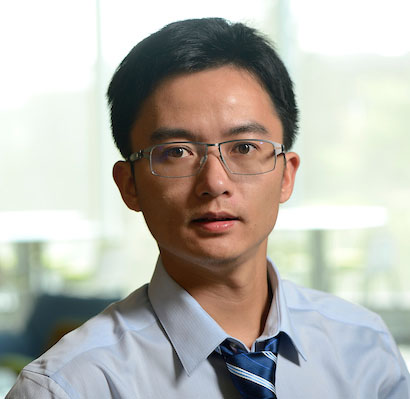
Ryan P. HuangView profile
Associate Professor
Ryan P. Huang is an Associate Professor in the Computer Science & Engineering department at the University of Michigan, College of Engineering, where he leads the Order Lab. Previously, he was an Assistant Professor at Johns Hopkins CS department from 2017 to 2022. His research focuses on computer systems, particularly operating systems and distributed systems, with emphasis on reliability, efficiency, and defensibility across cloud data centers and mobile devices. Dr. Huang's research interests center on pushing the boundaries of cloud systems availability and observability. His work addresses critical challenges such as gray failures and partial failures in distributed systems, developing principled techniques for failure detection and localization. His research spans multiple thrusts including Panorama for enhanced observability, Watchdog for runtime checking, OmegaGen for partial failure localization, and Narya for predictive failure mitigation. He also investigates energy-efficient mobile systems and system misconfiguration prevention. His recent publications demonstrate a strong trend toward addressing silent failures in distributed systems, with multiple papers accepted to top-tier conferences including SOSP and OSDI in 2025. His work bridges theoretical principles with practical system implementations, focusing on real-world challenges in cloud infrastructure and distributed computing environments. NSF CAREER award recipient Multiple Best Paper Awards (OmegaGen, Argus, LeaseOS) CRA Outstanding Undergraduate Researcher Award honorable mentions for advisees Dennis Ritchie doctoral dissertation award honorable mention Dr. Huang actively mentors PhD students including Yuzhuo Jing, Wanning He, Yuxuan Jiang, and others. His lab has produced graduates who have gone on to faculty positions at institutions like University of Virginia and Boston University. He serves on program committees for major systems conferences including SOSP, OSDI, and NSDI, contributing significantly to the academic community. The Order Lab maintains active research collaborations and regularly publishes in top-tier venues, with multiple papers accepted to SOSP and OSDI in 2025.