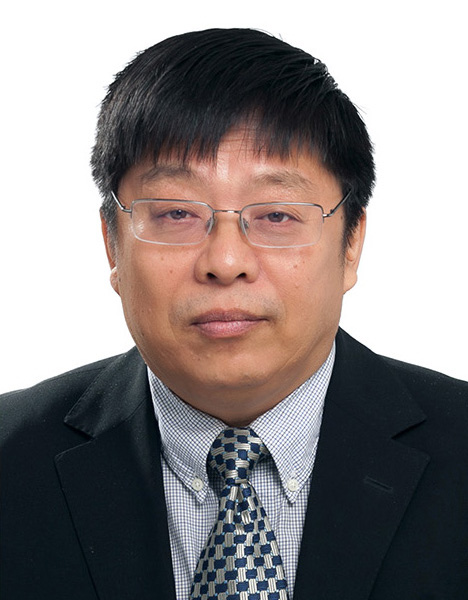
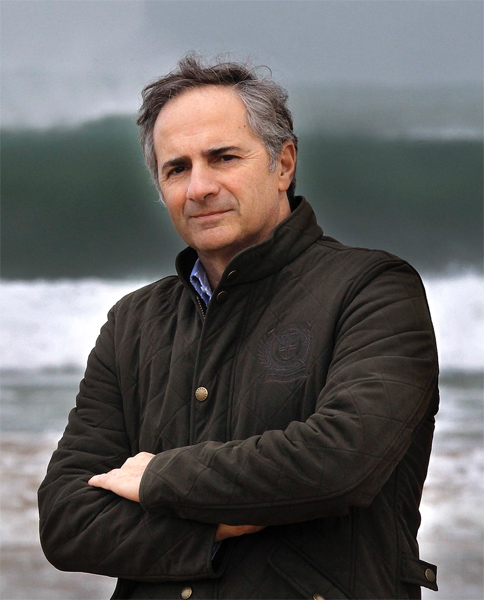
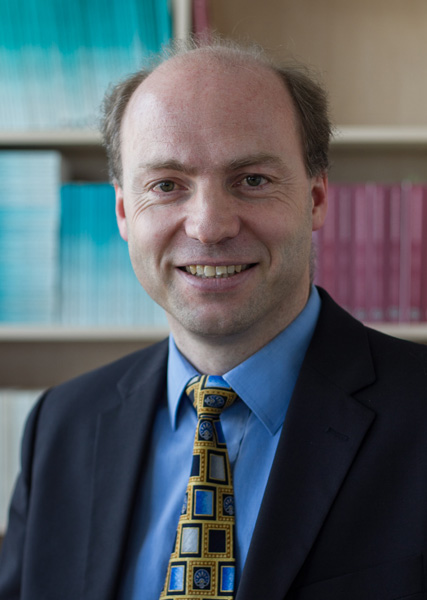
Jürgen König is a full professor at the Department of Nutritional Sciences , University of Vienna, leading the Research Professorship Specialized Human Nutrition . His work bridges psychological and physiological dimensions of eating behavior, with additional focus on population-level nutritional assessment in Austria. Academic Rank: Professor Department: Nutritional Sciences Research Focus: Hunger/satiety mechanisms, Public health nutrition, Food safety Key research themes include: Psychological drivers of eating behaviors (stress, food craving, sensory cues) Physiological regulation of nutrient homeostasis National nutrition surveys assessing dietary patterns Caloric restriction and metabolic adaptation Child and adolescent hydration/nutrition policies Recent publications highlight: Mechanistic studies on caloric restriction effects (2025) Pandemic impacts on school nutrition (2024) Global obesity/diabetes trends analysis (2024) Behavioral nudging in food selection (2024) Microbiota's role in dietary interventions (2023) Contact: juergen.koenig@univie.ac.at | Sekretariat: sekretariat.ew@univie.ac.at
Univ.-Prof. Torsten Möller, PhD is a Professor at the University of Vienna and serves as Head of the Research Group Visualization and Data Analysis and Head of the Research Network Data Science. His work spans data visualization, visual analytics, and human-computer interaction, with a focus on biomedical, environmental, and societal data applications. Academic rank: Professor Research group: Visualization and Data Analysis Network: Data Science Email: torsten.moeller@univie.ac.at Research interests include: Visual data analysis for complex systems Interdisciplinary applications in climate science and medicine Human-computer interaction in data exploration Image processing and computer graphics Recent publication trends show expertise in: Visualizing climate change and pandemic data Multi-volumetric and network analysis Algorithmic transparency and user-centered design Interdisciplinary collaborations (e.g., astrophysics, medical imaging) Statistical and uncertainty visualization Design frameworks for visualization recommendation Teaching includes courses in: Computer graphics and visualization Image processing and analysis Human-computer interaction Data analysis projects Doctoral research seminars
Adam Jatowt is a Professor and Head of the Data Science group at the Department of Computer Science, University of Innsbruck. He also serves as Deputy Head of the Digital Science Center and Research Center for Digital Humanities. His academic career spans roles at Kyoto University (2010-2020), National Institute of Advanced Industrial Science and Technology (AIST), and visiting positions at Karlsruhe Institute of Technology, University of La Rochelle, and University of California Berkeley. Research interests focus on temporal aspects of NLP/IR, computational history, large language models, and future forecasting. He leads projects combining digital humanities with advanced AI techniques, including temporal validity assessment and hint generation systems. Recent publications (2025) emphasize LLM applications in temporal analysis, QA systems, and energy sector digitalization. His work has been recognized through awards like the Friedrich Wilhelm Bessel Research Award (2024) and top-cited paper distinction in Information Sciences. He actively organizes conferences like ECIR 2026 and Text2Story workshops. Key contributions include developing WikiHint dataset, PlausibleQA framework, and tools like Rankify. His research also addresses societal challenges through ESG rating prediction and medical LLM applications.
Claudia Plant is a Professor in the Faculty of Computer Science , leading the Research Group Data Mining and Machine Learning . Her research focuses on clustering algorithms, data mining, and machine learning applications in areas like biomedical data, wind energy, and causality inference. She has contributed to projects such as Knowledge-infused Deep Learning for Natural Language Processing (2020–2028) and Hybrid Computational Sciences (2021–2021). Plant has authored over 160 publications, with recent work emphasizing deep learning, anomaly detection, and GPU-optimized algorithms. She actively engages in academic activities, including talks on clustering methods and interdisciplinary projects like Governing Algorithms: The Politics of Data and Decision-Making . Her research interests span clustering algorithms , graph neural networks , causality discovery , and ethical digital transformation . Notable projects include causal analysis of wind farm dynamics and AI-enhanced education tools. Plant’s work bridges computational methods with societal challenges, such as empowering marginalized communities through ethical technology adoption.
Penelope Harvey is a Professor of Social Anthropology at the University of Manchester (2000–present), with prior roles at the University of Oslo (2012–2019) and University of Liverpool (1985–1990). Her work bridges ethnographic fieldwork with critical analyses of infrastructure, governance, and technology. PhD and MSc in Social Anthropology (London School of Economics) BA in Spanish (King’s College London) Her research spans large-scale infrastructures (e.g., roads in Peru, big data in the UK), nuclear decommissioning , and knowledge politics . Projects include grants from the ESRC and BNFL Endowment Fund. She has advised on interdisciplinary initiatives like Global Trout and Ports , and led the ESRC Centre for Research on Socio-Cultural Change (2006–2014). Awards include Fellowships from the British Academy and the Norwegian Academy of Science and Letters.
Dr. Alexander Linsbichler serves as Senior Postdoc and Principal Investigator at the Institute of Philosophy and Scientific Method at Johannes Kepler University Linz. He leads the FWF ESPRIT project 'Adverse Allies: Logical Empiricism and Austrian Economics' and will assume Principal Investigator duties for the OeNB (Austrian National Bank) Anniversary Fund Project 'Carl Menger as a Central Banker?' starting January 2025. Concurrently, he holds faculty appointments at the Vienna Doctoral School of Philosophy (University of Vienna) and the Department of International Economics (Vienna International School), and lectures at multiple economics departments across Vienna and Graz institutions. Dr. Linsbichler earned his doctorate in Philosophy from the University of Vienna with highest distinction in September 2020 through the Doctoral Program 'The Sciences in Historical, Philosophical and Cultural Contexts.' His academic foundation includes an MA in History and Philosophy of Science (2014) and a Mag.rer.nat. in Mathematics: Mathematical Logic and Foundations (2012), both completed with highest distinction from the University of Vienna and Vienna University of Technology. His research centers on the philosophical foundations of economics, with particular emphasis on the Austrian School of Economics within historical context. Dr. Linsbichler investigates the complex relationship between Logical Empiricism and Austrian Economics, the evolution of economic methodology, and the history of economic thought from Viennese Enlightenment through 20th century debates. His work frequently examines intellectual connections between figures like Otto Neurath, Ludwig von Mises, and members of both the Vienna Circle and Mises Circle, challenging conventional narratives about these philosophical and economic traditions. Analysis of his recent publications reveals a scholarly trajectory focused on re-examining foundational assumptions in economic thought, particularly regarding the socialist calculation debates, the role of formal methods in economics, and the historical development of Viennese economic philosophy. His interdisciplinary approach integrates philosophy of science, economic methodology, and historical analysis to provide nuanced perspectives on longstanding debates in economic theory. 2nd place RHETM Paper Prize 2020 for 'Rationalities and Their Limits: Reconstructing Neurath's and Mises's Prerequisites in the Early Socialist Calculation Debates' As Principal Investigator of major research projects funded by the Austrian Science Fund (FWF) and the Austrian National Bank, Dr. Linsbichler manages substantial research resources. His FWF ESPRIT project 'Adverse Allies' explores historical connections between Logical Empiricism and Austrian Economics, while his upcoming OeNB project will investigate Carl Menger's central banking contributions. These projects demonstrate his ability to secure competitive funding and lead interdisciplinary research teams examining foundational questions in economic thought. Dr. Linsbichler actively participates in multiple research initiatives including 'Adverse Allies: Logical Empiricism and Austrian Economics' (FWF), 'Carl Menger as a Central Banker?' (OeNB), and 'Normative Framework for Measuring Lifespan Inequity' (NORM_LIFE). These projects unite scholars from philosophy, economics, and history to investigate methodological questions in economic theory and policy formation, with particular attention to how philosophical frameworks shape economic reasoning.
Prof. Tobias Plieninger holds dual appointments as Professor of Social-Ecological Interactions at the Universities of Kassel and Göttingen, Germany, and currently serves as Dean of Research at Kassel’s Faculty of Organic Agricultural Sciences. He specializes in sustainability science focusing on rural landscape dynamics, ecosystem services, and transformative change processes. His work examines intersections between agriculture, forestry, nature conservation, and natural resource management. Education: PhD in Forest and Environmental Sciences (2004, University of Freiburg), Habilitation in Landscape Ecology (Humboldt-Universität zu Berlin). Prior roles include Associate Professorships at the University of Copenhagen and leadership at the Berlin-Brandenburg Academy of Sciences. Research focuses on biocultural landscapes, agroforestry systems, and participatory methods. Notable projects include coordination of the EU’s HERCULES initiative and leadership in IPBES’ Transformative Change Assessment. Recognitions include Clarivate’s Highly Cited Researcher (2019–2022) and the Henriette Herz Fellowship (2022). Editorial roles: Lead Author for IPBES, Associate Editor at Landscape and Urban Planning and People and Nature . Over 200 publications span topics like ecosystem service synergies, high nature value farming, and rewilding strategies. Active in policy engagement through Germany’s Leopoldina Academy and the Joint Programming Initiative on Cultural Heritage. Research Themes: Landscape sustainability, participatory governance, biodiversity in agricultural systems Key Projects: SINCERE (forest ecosystem services), AGFORWARD (agroforestry innovation) Awards: Clarivate’s Highly Cited Researcher, Alexander von Humboldt Foundation fellowship Current initiatives emphasize transdisciplinary approaches, integrating local knowledge with scientific frameworks to address global sustainability challenges.
Jean-Pierre Gattuso is a CNRS Research Professor at the Laboratoire d'Océanographie de Villefranche (Sorbonne University) and Associate Scientist at the Institute for Sustainable Development and International Relations (IDDRI-SciencesPo, Paris). His research focuses on the impacts of ocean acidification and warming on marine ecosystems, as well as ocean-based solutions to climate change mitigation and adaptation. Current Roles : CNRS Research Professor, Associate Scientist at IDDRI-SciencesPo Past Positions : Research Professor at Shantou University (2006–2009), Visiting Scientist at Rutgers University and NCAR (2004–2005), Group Leader at Laboratoire d'Océanographie de Villefranche (1998–2004), and others. His research interests span ocean acidification , carbon and carbonate cycling , climate change impacts on marine ecosystems , and ocean-based mitigation strategies . He co-edited the first book on ocean acidification and contributed to IPCC AR5 and AR6 reports. Recent publications highlight his work on ocean alkalinity enhancement , CO2 sequestration , and climate policy integration . He has developed tools like FOCE systems for in situ ocean acidification experiments and standardized ocean carbonate chemistry analysis. Scientific Awards : Ruth Patrick Award (2020), Blaise Pascal Medal (2014), Vladimir Vernadsky Medal (2012), and others. Academic Memberships : Foreign member of the Chinese Academy of Sciences, elected member of the European Academy of Sciences, Academia Europaea, and founder of the European Geosciences Union. Gattuso has led the Ocean Acidification International Coordination Centre at the International Atomic Energy Agency and will co-chair the 2025 One Ocean Science Congress.
David Newbery serves as Professor of Applied Economics at the University of Cambridge's Faculty of Economics since 1988 and Research Director of the Electricity Policy Research Group (EPRG). His career spans prestigious appointments including Visiting Professorships at Stanford, Princeton, UC Berkeley, and Imperial College London, alongside significant policy roles at the World Bank and IMF. His research focuses on electricity market design , climate policy economics , and transport pricing , addressing critical challenges in energy transition and regulatory frameworks. Key contributions include foundational work on supply function equilibria, market power assessment in liberalized utilities, and optimal climate policy instruments. Analysis of his publications reveals consistent leadership in energy market restructuring (1990s-2000s) renewables integration economics (2000s-2010s) climate policy-market power interactions (2000s-present) with methodological strengths in game theory and empirical industrial organization. Major recognitions include: CBE (2012 Birthday Honours) Frisch Medal (1990) Fellowships of Econometric Society and British Academy IAEE Outstanding Contributions Award (2003) Honorary Degree from University of Antwerp (2004) Newbery's policy impact extends through World Bank advisory roles (1981-83 as Division Chief of Public Economics), IMF consultations (1987), and sustained engagement with European energy regulators via EPRG. His work informs critical infrastructure pricing frameworks globally, particularly in electricity and transport sectors. He leads the Electricity Policy Research Group at Cambridge, fostering interdisciplinary collaboration between economists, engineers, and policy experts to address energy transition challenges through rigorous market design analysis.
Alexandra Brausmann is an Associate Professor in Environmental and Resource Economics at the Department of Economics, University of Vienna, and a member of the Environment and Climate Research Hub. She holds a Master's in International Economics (MIS) from The Graduate Institute (Geneva) and a PhD in Economics/Resource Economics from ETH Zürich. Research Focus: Climate change impacts (macro/micro), environmental migration, resource management, climate policy, agricultural economics, growth and sustainability. Recent Publications: Co-authored works on endogenous climate shocks, undocumented migration economics, and climate policy effectiveness, published in journals like Journal of Environmental Economics and Management and Environmental and Resource Economics . Teaching: Offers courses in Environmental Economics (MA) and Resource and Environmental Economics (BA) at the University of Vienna. News: Co-organizing a workshop on the Political Economy of the Environment in February 2025 at the University of Vienna.
Tina Comes is a Full Professor in Decision-Making & Digitalisation at the University of Maastricht, Netherlands. She holds a part-time position (0.2 FTE) and has previously held academic roles at TU Delft (Associate Professor in Decision-Making for Resilience, 2017), University of Agder (Full Professor in ICT, 2015-2017), and Visiting Professor at Lamsade, Université Dauphine, Paris (2014). Her research focuses on Crisis Informatics , Decision Theory , Disaster Management , Humanitarian Logistics , and Resilience . Her work spans building simulation , ventilation systems , and energy-efficient design , with grants totaling €9.6 million since 2012. Key projects include Resilient Systems (NL Ministry of Defense, 2020-2026), H2020 HERoS (2020-2023), and Climate Resilient Urban Infrastructure (Amsterdam, 2020-2022). She has supervised 6 PhD students at TU Delft (2017-2022), 3 Postdocs/PhDs at University of Agder (2013-2020), and 1 PhD at Université Toulouse (2014-2018). Her scientific awards include: 2020 José Maria Sarriegi Award by the Spanish Red Cross 2019 Emerald Literati Award 2016 Delft Technology Fellowship (acceptance rate 2012 Best Paper Award at ISCRAM Conference
University of Natural Resources and Life Sciences ViennaAustria
Tamara Artacker is a Researcher at the Institute of Social Ecology within the Department of Economics and Social Sciences at the University of Natural Resources and Life Sciences, Vienna (BOKU). Based in Vienna at Schottenfeldgasse 29, she has been actively contributing to the field since 2019, following the completion of her MA in International Development Studies from the University of Vienna in 2017. Her work bridges academic research with practical policy implications, particularly focused on Latin America and global environmental challenges. Artacker's educational background in International Development Studies has shaped her interdisciplinary approach to examining the complex relationships between society, environment, and economic systems. Her research spans multiple interconnected domains that address critical contemporary challenges facing communities worldwide. Her research interests center on political ecology, food sovereignty, ecofeminism, and sustainable agricultural systems. Artacker critically examines the structural inequalities embedded in global food systems, the impacts of climate change on agricultural communities, and the tensions between economic development models and ecological sustainability. Her work consistently highlights how extractive agricultural practices intersect with social injustices, particularly affecting vulnerable populations. She explores alternative models that prioritize community resilience, ecological balance, and social equity, with particular attention to the Global South and Latin American contexts. Artacker's extensive publication record reveals a strong focus on the intersections between environmental policy, agricultural practices, and social justice. Her research demonstrates consistent engagement with contemporary crises including the pandemic's impact on food systems, geopolitical conflicts affecting global food security, and the complex challenges of transitioning toward sustainable agricultural models. She has developed particular expertise in analyzing Ecuadorian agricultural policies and their implications for food sovereignty, while also examining broader regional and global patterns. As an active academic, Artacker regularly presents her research at international conferences and engages with diverse audiences through invited keynote speeches. Her work demonstrates a commitment to knowledge transfer beyond academic circles, with presentations addressing policymakers, practitioners, and community organizations working on food sovereignty and environmental justice issues.
Liu Derong is a distinguished academic holding the position of Chair Professor at Southern University of Science and Technology (Shenzhen, China) since 2022. He is also a Full Professor at the University of Illinois at Chicago (UIC) since 2006. His academic journey includes roles as Professor at Guangdong University of Technology (2017–2022) and the Chinese Academy of Sciences' Institute of Automation (2008–2016). He earned his Ph.D. in Electrical Engineering from the University of Notre Dame (1994), M.S. from the Chinese Academy of Sciences (1987), and B.S. from Nanjing University of Science and Technology (1982). His research focuses on neural networks, reinforcement learning, intelligent control, and adaptive dynamic programming. He has authored 19 books and 260+ journal papers, contributing significantly to computational intelligence and control systems. Notable works include Adaptive Dynamic Programming with Applications in Optimal Control (2017) and co-editing volumes like Frontiers of Intelligent Control and Information Processing (2014). Liu Derong has held leadership roles in professional societies, including Editor-in-Chief of Artificial Intelligence Review , Deputy Editor-in-Chief of the IEEE/CAA Journal of Automatica Sinica , and President of the Asia Pacific Neural Network Society (2018). He has organized major conferences such as the IEEE World Congress on Computational Intelligence (2014) and received prestigious awards like the Dennis Gabor Award (2018) and membership in Academia Europaea (2021). His contributions span theoretical advancements and practical applications in control systems, with a focus on optimization, robotics, and energy systems. He has also served on editorial boards of leading journals and as a keynote speaker at 30+ international conferences.
Iñigo J. Losada is a Full Professor at the School of Civil Engineering, University of Cantabria, and Research Director at the Environmental Hydraulics Institute (IHCantabria). He co-founded the Cantabria-Cornell Engineering Exchange Program and serves as Scientific Director of the Cantabria Coastal and Ocean Wave Basin. His work focuses on coastal dynamics, climate change adaptation, and ocean renewable energy. Coordinating Lead Author for IPCC reports (2014-2019) Editor-in-Chief of Coastal Engineering Ranked 2nd in Ocean Engineering citations (1992-2019) His research emphasizes: Coastal protection using green and grey solutions Wave interaction modeling with coastal features Climate change risk assessment and adaptation Wind and wave energy conversion systems Recent publications analyze global wave power variability, coral reef flood protection benefits, and nature-based coastal defenses. His work bridges experimental facilities (Cantabria Coastal Basin) with policy impact across 25+ countries. Scientific Awards King Jaime I Award (2018) John G. Moffat-Frank E. Nichol Award (2017) Navy Medal of Merit (2017) Member of Spanish Royal Academy of Engineering Losada has led over 25 EU/national projects, >80 technology transfer initiatives, and supervised 23 PhD students, shaping coastal protection policies and ocean energy development in Europe. His experimental infrastructure ranks 6th globally in Ocean Engineering (Shanghai Ranking, 2017).
Matthias Sutter serves as Director at the Max Planck Institute for Research on Collective Goods in Bonn while holding part-time professorships at the University of Cologne (10%) and University of Innsbruck (5%). His academic career spans multiple prestigious institutions including the European University Institute in Florence (2013-2014), University of Gothenburg (2007-2013, part-time), University of Cologne (2015-2017, Excellence Chair), and University of Innsbruck (2006-2017). His educational background includes a PhD in economics (1999) and habilitation (2002), both from the University of Innsbruck. Additional academic recognition includes membership in the German National Science Association (Leopoldina) and Academia Europaea. Sutter's research program centers on experimental economics, with particular focus on team decision making processes and the development of economic decision capabilities across different age groups. His work investigates how patience, risk preferences, and social behaviors evolve throughout life, and how these economic preferences impact health and economic success. He has made significant contributions to understanding credence goods markets, where information asymmetry between providers and consumers creates unique market challenges. His experimental approaches combine laboratory studies with field experiments to generate robust insights applicable to real-world economic situations. His publication record demonstrates consistent output in top-tier journals, with recent work spanning diverse topics including energy consumption during crises, workplace climate interventions, vaccination attitudes in polarized environments, and the formation of economic preferences in childhood. The interdisciplinary nature of his research connects economics with psychology, public policy, and organizational behavior, reflecting his broad scholarly impact. Major Awards and Honors: 2017 Hans Kelsen Preis of the Universität zu Köln 2016 Pater Johannes Schasching SJ Preis for dialogue between economy, ethics and religion 2015 Exeter Prize for Research in Experimental Economics 2009 Science Prize of the State of Tyrol 2008 Honorary Prizes from Stiftung Südtiroler Sparkasse and State of Vorarlberg 2004 Oberbank-Science-Prize Linz Sutter serves as Principal Investigator in the Excellence Cluster 'ECONtribute: Markets & Public Policy,' funded by the German Science Foundation (DFG). He holds editorial positions as Associate Editor of 'Management Science,' 'European Economic Review,' and 'Economics Letters,' and serves on the Editorial Boards of 'Experimental Economics' and 'Journal of the Economic Science Association.' His work extends beyond academia through popular science communication, including the best-selling book 'Die Entdeckung der Geduld' (The Discovery of Patience) exploring the importance of patience for health and economic success.