Gheorghe Asachi Technical University of IasiRomania
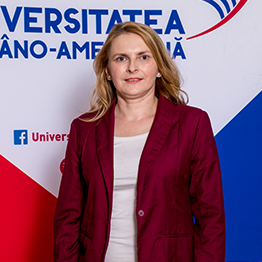
Elena Niculina Dragoi is a Lecturer at the Faculty of Chemical Engineering and Environmental Protection 'Cristofor Simionescu' at Gheorghe Asachi Technical University in Iasi, Romania. Her academic work integrates Artificial Intelligence and Machine Learning tools for solving complex problems in Chemical Engineering and Environmental Protection . With over 30 published papers and six active research projects, her contributions span process optimization, nanomaterials, and sustainable technologies. Teaches Applied Informatics (Years 1 & 4) and Artificial Intelligence at the Faculty of Chemical Engineering Contributes to Programming Engineering at the Faculty of Computer Science, University 'Alexandru Ioan Cuza' Engaged in interdisciplinary courses at the Faculty of Automatic Control and Computer Engineering Research Interests : Elena's work focuses on modelling and optimization (90% emphasis) of chemical processes using AI methodologies, with cross-disciplinary applications in environmental engineering (70%) and chemical engineering (95%). Her recent publications highlight innovations in: 3D-printed nanocomposite adsorbents for pollutant removal Metaheuristic optimization algorithms for industrial processes Hydrogen generation via nanocatalysts Electrochemical biosensors for environmental and health monitoring AI-driven wastewater treatment systems Green chemistry applications in pharmaceutical and dye removal
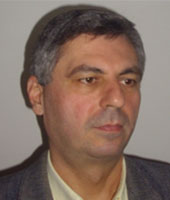
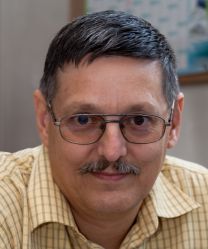
Gheorghe Asachi Technical University of IasiRomania
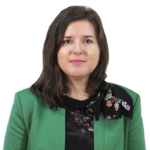
Prof. Victor Grigoras is a faculty member at the Technical University of Iași, holding the rank of Professor. He specializes in electrical engineering and computer science, focusing on signal processing, parallel architectures, and nonlinear dynamics in power systems. His research interests include smart grid technologies, renewable energy integration, and data-driven methodologies for grid optimization. He teaches courses such as 'Semnale, Circuite și Sisteme' and 'Algoritmi și Structuri Paralele de Calcul.' His research spans over 15 recent articles (2021–2025), emphasizing advancements in smart grid automation, machine learning applications in voltage quality analysis, and optimal power flow solutions for renewable integration. Notable trends include SCADA system improvements, energy storage strategies for prosumer grids, and IoT-based energy management. His work addresses challenges in grid reliability, power quality, and future urban grid resilience under high EV adoption scenarios. Prof. Grigoras has contributed to frameworks for electric vehicle charging station placement, hydropower plant optimization via data mining, and demand response mechanisms using smart metering. His methodologies often combine clustering techniques with fuzzy logic or metaheuristic algorithms to solve complex grid problems.
Dr. Aurelian Catalin GALCA is a Senior Researcher I at the National Institute of Materials Physics (NIMP) in Magurele, Romania, where he works in the Laboratory of Complex Heterostructures and Multifunctional Materials (HeCoMat). He serves as NIMP's responsible for international collaborations with the Agence universitaire de la Francophonie (AUF) since 2016, managing administrative procedures and educational, training, and research activities for foreign PhD students and postdocs. Dr. GALCA's educational background includes: PhD in Physics from the University of Twente, Netherlands (2006) Master's degree in Solid State Physics from the University of Bucharest, Romania (2002) Bachelor's degree in Physics from the University of Bucharest, Romania (2002) Dr. GALCA's research focuses on the non-destructive characterization of nanoscaled materials using advanced techniques including spectroscopic ellipsometry, X-ray diffraction, UV-Vis and infrared spectroscopy, and Raman spectroscopy. His work also encompasses the preparation of dielectric/semiconductor/metallic thin films by physical vapor deposition methods and the development and testing of optoelectronic devices . His expertise spans materials science, nanotechnology, photovoltaics, and magnetooptics, with particular emphasis on thin film characterization and engineering for solar cell applications, memory devices, and other electronic applications. Analysis of Dr. GALCA's recent publications reveals a strong focus on advanced materials for energy applications , particularly photovoltaics and energy storage. His work spans thin film solar cells (CZTS, CBTS), perovskite solar cells, supercapacitors, and magnetocaloric materials. A common thread is the precise engineering of material properties through composition control, phase transitions, and surface morphology optimization. His research increasingly incorporates computational methods to complement experimental findings, demonstrating an interdisciplinary approach to materials science. Dr. GALCA has received notable recognition for his work, including: RADU GRIGOROVICI prize awarded by the Romanian Academy in 2011 for contributions to the optical characterization of oxide systems As a research leader, Dr. GALCA has coordinated three national projects, two of which as Principal Investigator, including the "Science and engineering of kesterites for the next generation of solar cells" project. He has also contributed to economic projects with CyberSwarm Inc. and Honeywell Romania. His expertise is sought after as a scientific reviewer for top journals including Scientific Reports, ACS Applied Materials & Interfaces, and Applied Surface Science, and as an Expert Evaluator for the European Commission (H2020), ANR (France), CNR (Italy), and Romanian funding agencies. Dr. GALCA leads research activities at the Laboratory of Complex Heterostructures and Multifunctional Materials (HeCoMat) at NIMP, where his team focuses on the characterization and development of advanced materials for optoelectronic applications. The laboratory is equipped with state-of-the-art instrumentation for thin film deposition and characterization, supporting research in photovoltaics, memory devices, and other electronic applications. Dr. GALCA's team collaborates extensively with international partners, reflecting his role as NIMP's responsible for AUF collaborations.
Lavinia Stănică Justina is a university lecturer at the Faculty of Managerial Informatics, Romanian-American University (URA), with 18 years of teaching experience in software programming and e-learning domains. Holding a PhD in Cybernetics and Economic Statistics since 2011, she teaches courses in Romanian and English at both bachelor's and master's degree programs. Her research focuses on ICT's role in innovation, educational technologies, and data analysis for energy consumption, with over 30 publications and multiple coordinated research projects. Faculty: Managerial Informatics University: Romanian-American University Academic Rank: Lecturer Teaching Experience: 18 years PhD: Cybernetics and Economic Statistics (2011) Her research interests include: e-Learning systems and technology integration Artificial Intelligence applications in education ICT's impact on innovation performance Mathematical content modeling Energy consumption data analysis Internet of Things implementations Fractal techniques in imaging Recent publications highlight trends in: Comparative innovation-ICT readiness analysis AI education accessibility Smart energy systems Competitive programming metrics Neural network energy forecasting IoT cloud solutions Modular educational software As Erasmus coordinator since 2013 and Institutional Erasmus Coordinator since 2020, she actively promotes internationalization efforts and academic collaboration with partner universities across Europe.
Claudia Steluta Martis is an Associate Professor at the Department of Electrical Machines, Marketing & Management , Technical University of Cluj-Napoca, Romania. Her expertise spans electrical machine design, electromagnetic compatibility, and motor control systems. Date of birth: 19 August 1967, Măcin, Tulcea, Romania Education Industrial High School, Măcin (1981-1985) Technical University of Cluj-Napoca, Electrical Engineering (1985-1990) Research interests focus on design and modeling of electrical machines , particularly doubly-salient permanent magnet motors and electric traction drives. She has contributed to electronically commutated small motor development and electromagnetic compatibility in electromechanical systems. Research projects include National Science Foundation collaborations on doubly-salient motor design, bilateral programs with Italy (University of Cassino), and grants from Romania's National Education Ministry for energy-efficient drives and real-time control systems. Professional experience includes engineering roles at SINTEROM SA and Dania Comprod SRL (1990-1996), followed by academic positions. International mobility includes Erasmus-Socrates stays at Helsinki University of Technology (1999) and University of Cassino (2000).
Luminita Roxana Clotea is an Associate Professor at the Department of Electrical Engineering and Applied Physics, Faculty of Electrical Engineering and Computer Science, Transilvania University of Brasov, Romania. Her research focuses on power electronics systems and renewable energy technologies, particularly analyzing energy efficiency in electrical conversion systems. Focus on evaluating power losses in multilevel inverters Applications in wind energy and photovoltaic systems Investigations into soft-switching converter technologies Her publications demonstrate expertise in electrical engineering domains, particularly in optimizing semiconductor-based energy conversion systems. While no specific awards are mentioned in the available information, her work appears in international conference proceedings and technical publications.
Dr. Bogdana Borca serves as a Scientific Researcher I at the National Institute of Materials Physics (NIMP) in Romania, where she has conducted research since 2015 in the Laboratory of Magnetism and Superconductivity. Her work focuses on the fundamental properties of nanoscale systems with applications in next-generation electronic and spintronic devices. She earned her PhD in Physics in 2007 through a binational program between Joseph Fourier University in Grenoble, France and Babeș-Bolyai University in Cluj-Napoca, Romania, with research conducted at the Institut Néel in France. Prior to joining NIMP, she held postdoctoral positions at Universidad Autónoma de Madrid, Spain (2007-2011) and Max Planck Institute for Solid State Research in Stuttgart, Germany (2011-2015). Dr. Borca's research spans nanomagnetism, surface science, 2D materials, molecular electronics, and spintronics. Her expertise includes ultra-high-vacuum techniques, cryogenics, physical and chemical vapor deposition, scanning probe microscopy, and magnetometry. She specializes in characterizing and controlling electronic and magnetic properties at the nanoscale, with particular focus on nanostructures, heterostructures, thin films, and organic-inorganic interfaces. Her recent publications demonstrate significant contributions across multiple subfields, with strong emphasis on organic multiferroic junctions, image potential states of 2D materials, molecular recognition techniques, and electric-field-driven chemical reactions. These works reflect her interdisciplinary approach combining physics, chemistry, and materials science to address fundamental questions with practical applications in electronics, spintronics, and biocompatible devices. Dr. Borca leads the 'Memristive multiferroic junctions' project (2022-2024) and maintains active international collaborations through visiting positions at Technische Universität Braunschweig (Germany), University of Twente (Netherlands), Forschungszentrum Jülich (Germany), and Max Planck Institute for Solid State Research (Germany). Her research methodology integrates advanced experimental techniques with theoretical understanding, particularly using scanning tunneling microscopy for atomic-scale manipulation and characterization. This approach has yielded insights into molecular conductance switching, chiral molecular adsorption, and the electronic properties of novel materials systems.
Cristina Anca DANCIU is a researcher specializing in food technology, agricultural engineering, and sustainability. Her work focuses on optimizing food production processes, reducing food waste, and enhancing the quality of agricultural products. She has extensively studied grain processing, wheat quality management, and the sustainable use of agricultural by-products. Her research also explores consumer behavior in food systems and traditional farming practices, including pastoralism and medicinal plant utilization in Romania. Her contributions include advancements in dough maturation techniques for bakery products, innovative methods for wheat milling optimization, and studies on the socio-cultural dimensions of food waste. She has published widely on topics such as circular economy approaches in food systems, quality control in flour manufacturing, and educational strategies in gastronomy. Her articles frequently emphasize interdisciplinary solutions, combining technological innovation with environmental and social sciences to address challenges in food production and waste reduction. Her work highlights the importance of integrating traditional knowledge with modern practices to achieve sustainable outcomes in agriculture and food systems.
Răzvan-Virgil Bogdan is an Assistant Professor at the Faculty of Automation and Computer Science, Politehnica University of Timisoara (PUT), with expertise in Embedded Systems , Automotive Software Testing , and Dependability of Computer Systems . His research bridges Internet-of-Things and e-Learning , focusing on reliability, testing, and intelligent environments. University: Politehnica University of Timisoara School: Faculty of Automation and Computer Science Contact: razvan.bogdan@cs.upt.ro | Room B413A Research Focus: Bogdan's work emphasizes system reliability , embedded software quality , and automotive electronics , with projects like GEMSCLAIM (energy-efficient mobile systems) and HURO JCBICS (cross-border educational infrastructure). He also drives industrial collaborations (e.g., AC_G_xBU_Academy with Continental Automotive Romania). Teaching Career: Bogdan has taught courses such as Embedded Systems , Microprocessor Systems , and Advanced Embedded Systems at PUT, blending theoretical rigor with hands-on lab work in the Vector Lab . His pedagogical approach integrates software testing methodologies and energy-aware system design . Scientific Contributions: He has contributed to embedded systems validation, security frameworks for distributed systems (e.g., TD/54 project ), and automotive software tools. His publications span ACTA POLYTECHNICA HUNGARICA , BRAIN: Broad Research in Artificial Intelligence and Neuroscience , and conference proceedings like IEEE Sustainability and SACI. Awards: Mercy Diplomas 2021 Mercy Diplomas 2020 Memberships: IEEE ACM Prospective Students: Bogdan actively seeks undergrad, Masters, and PhD candidates, emphasizing practical research in automotive embedded systems and IoT . His lab provides direct access for project collaboration and discussions.
Florin Bonciu serves as a Professor at the Romanian-American University, teaching undergraduate and master's courses including World Economy, International Investments, and European Union policies. He previously held leadership roles as Dean of the Faculty of European Economic Studies and Vice-Rector for Scientific Research, while maintaining an active research position at the Institute of World Economy and involvement with the European Institute in Romania. His research examines systemic transformations in global economic structures driven by geopolitical realignments, climate change policies, and fourth industrial revolution technologies. Key focus areas include evolving economic integration patterns, foreign direct investment dynamics, circular economy transitions, and hydrogen-based energy systems, with particular attention to sustainable development frameworks and new economic paradigms emerging from contemporary crises. Analysis of his recent publications (2020-2024) reveals dominant trends toward examining polycrisis scenarios where climate action, geopolitical conflicts, and technological disruption converge. His work critically assesses the feasibility of large-scale green transitions, EU hydrogen strategy implementation, and the compatibility of circular economic models with existing capitalist structures, often through the lens of European policy frameworks and global governance challenges. Bonciu has coordinated over 30 scientific studies at the Institute of World Economy and published more than 100 articles across domestic and international journals. He contributes to academic discourse through editorial roles at the Romanian Journal of European Affairs and Global Economic Observer, while maintaining membership in the Romanian Economic Society and Scientific Advisory Board of the European Institute of Romania. As head of the World Economic Situation department at the Institute of World Economy, he leads research analyzing global economic trends and policy responses. His current work emphasizes the intersection of energy transitions, geopolitical competition, and sustainable development in shaping future economic orders, with ongoing projects examining REPowerEU implementation and hydrogen economy geopolitics.
Cristina Stângaciu is a Lecturer at the Department of Computer and Information Technology, Politehnica University of Timisoara. Her research focuses on embedded systems, real-time systems, IoT, and energy-efficient computing. She has contributed to mixed criticality task scheduling and wireless sensor networks. PhD in Real-Time Systems (2015) Scientific Secretary of Department Involvement in projects: Bright Cityscapes - Synthia, CloudPUTing, TEEFIOS Her research interests span real-time task scheduling, embedded operating systems, and smart sensing systems. Recent work explores IoT security and multicore scheduling techniques. Key article trends include real-time scheduling frameworks, IoT protocol optimization, and energy-efficient embedded systems. Topics like lightweight cryptography and CAN FD improvements are prominent in her 2024-2025 publications. Merit Diplomas (2021, 2022) Merit Awards 2025 As advisor to PhD students, she contributes to advancements in real-time systems through grants and collaborative projects like SCMUPT 2025. Her work integrates practical and theoretical aspects of sensor networks and cloud platforms.
Dr. Cristina BESLEAGA STAN is a Scientific Researcher II at the National Institute of Materials Physics (NIMP) since 2019, where she has been working since 2012. She leads research at the Laboratory of Complex Heterostructures and Multifunctional Materials, focusing on micro-electronics, opto-electronics, and solar cells development with significant contributions to semiconductor physics and device fabrication. Dr. Besleaga Stan earned her PhD in Solid-State Physics from the University of Bucharest in 2013, following a Master's degree in Solid-State Physics (2010) and undergraduate studies in Physics with specialization in Medical Physics (2007), all from the University of Bucharest. Her educational background established the foundation for her expertise in materials science and semiconductor physics. Her research spans micro-electronics, transport phenomena in semiconductors, and halide perovskite materials. She possesses extensive expertise in physical vapor deposition processes, particularly magnetron sputtering for thin film synthesis, and comprehensive characterization techniques including structural (XRD, XRR), morphological (AFM), optical (UV-Vis-IR), and electrical (resistivity, Hall effect) analysis. Her work bridges fundamental materials science with practical applications in energy harvesting and electronic devices. Dr. Besleaga Stan's publication record demonstrates consistent high-impact research across multiple domains including perovskite solar cells, thin film transistors, and self-cleaning surfaces. Her work shows a clear progression from fundamental semiconductor physics to applied device development, with recent publications emphasizing sustainable materials processing and advanced characterization techniques. Her scientific achievements have been recognized with numerous prestigious awards: "Ștefan Procopiu" prize from Romanian Academy (2018) Gold medal from EUROINVENT, Iași (2018) "Excellence" prize and gold medal from "Ștefan cel Mare" University (2018) Multiple "Excellence" prizes from ProInvent Exhibition Third prize "Young Researchers in Science and Engineering" (2019) Best poster presentation award at the "10th International Conference on Physics of Advanced Materials" (2014) Dr. Besleaga Stan has demonstrated exceptional leadership as principal investigator of multiple national research projects including PN-II-RU-TE-2014-4-1122, PN-III-P1-1.1-PD-2016-1546, PN-III-P1-1.1-TE-2019-0688, and PN-III-P2-2.1-PTE-2021-0150. She has secured substantial research funding and contributed to more than 16 national and international scientific projects, demonstrating strong grant-writing and project management capabilities. She leads a dynamic research team within the Laboratory of Complex Heterostructures and Multifunctional Materials at NIMP, collaborating extensively with international partners including University Nova de Lisboa (Portugal), University of Oslo (Norway), ARPES facility (Switzerland), and CVD/ALD AnnealSys company (France). Her laboratory specializes in clean room fabrication of electronic and optoelectronic devices and advanced materials characterization.
Cătălin Petrea ION is an Associate Professor at the Department of Electrical Engineering and Applied Physics, Faculty of Electrical Engineering and Computer Science, Transilvania University of Brașov, Romania. His research focuses on rotating electrical machines, renewable energy systems, and micro-hydro power plant technologies. Key Research Areas: Rotating electrical machines, renewable energy sources, micro-hydro power plants Publications: 6 notable works (2011–2023) on induction generators, PMSM design, and microgrid integration His recent publications emphasize energy efficiency in electric machines, sustainable power generation from hydro sources, and integration of autonomous systems into modern grids. Despite no explicit awards or student mentoring details in the text, his work highlights technical contributions to renewable energy infrastructure and applied physics in electrical engineering contexts.
Tibor BEDO is an Associate Professor at the University of Transilvania of Brașov , affiliated with the Faculty of Materials Science and Engineering and its Department of Materials Science . His contact information includes Building W, Room WIII5, Brașov, Romania, and phone/fax +40 268 411877. Research Interests: thermal analysis, special metal casting technology, computer aided design Key Focus Areas: additive manufacturing, 3D printing, metallurgical processing His recent publications explore solar sintering applications, material consumption reduction in ABS silver printing, innovative polymer architectures, metastable aluminum alloys for additive manufacturing, and medical implant translation methods. These works emphasize thermal behavior, structural optimization, and material efficiency. Dr. BEDO's collaborations span international institutions including Italian Academic University of Modena and Reggio Emilia, Romanian Technical University of Brașov, and Hungarian research entities. His work integrates computational modeling with experimental validation in materials development.
Lorand Szabo is a Full Professor at the Department of Electrical Machines and Drives , Faculty of Electrical Engineering , Technical University of Cluj-Napoca , Romania. He has been affiliated with this institution since 1990, transitioning from Research and Design Engineer to Lecturer (1999), Associate Professor (2007), and Full Professor (current). He also served as an Invited Professor at Pannon University (Hungary, 2007-2008) and University of Pavia (Italy, 2015). Teaching : Special Electrical Machines (1985-present), Electrical Machines and Drives (1996-present), Computer Aided Design of Electromechanical Systems (2009-present). Supervision : Ph.D. supervisor since 2007 for 8 students (6 completed). Research Focus : Linear and variable reluctance electrical machines, fault-tolerant designs, bearing fault detection in motors, and condition monitoring. His work extends to automotive applications (electric vehicles, hybrid systems), wind energy generators, and sustainable material sourcing for electrical machines. Recent Publications (2023-2025) address critical topics in sustainable mobility, including rare earth material dependency, deep-sea mining for electric technologies, battery management systems, and resource-efficient motor designs. These works reflect his interdisciplinary approach combining electrical machine innovation with environmental and industrial systems thinking. Technical Expertise : Finite element analysis (JMAG, ANSYS Motor-CAD), LabVIEW modeling, fault detection algorithms (wavelet transforms, kurtosis deconvolution), and modular motor construction for automotive and renewable energy applications.