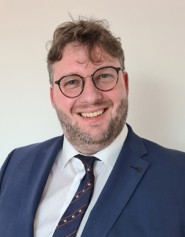
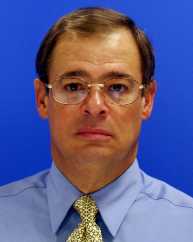
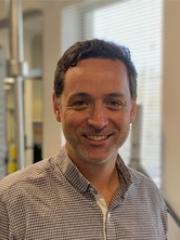
Steven Son is the Alfred J McAllister Professor of Mechanical Engineering at Purdue University with a courtesy appointment in Materials Engineering. His research focuses on energetic materials, combustion physics, and advanced propulsion systems through experimental and computational investigations. Primary Affiliation: Department of Mechanical Engineering, College of Engineering Laboratory: Zucrow Labs, Purdue University Dr. Son's research spans: Combustion and detonation physics Laser diagnostics and spectroscopy Smart energetic material design Additive manufacturing of propulsion components Flexoelectric and piezoelectric material applications Thermal decomposition mechanisms His recent work demonstrates advancements in: Aluminized composite propellant characterization Shock sensitivity of molecular crystals Throttleable solid propellant systems Machine learning for energetic material properties 3D-printed energetic compositions Current advisees include graduate student Ethan Binkley , while his laboratory group conducts research at Zucrow Labs, Purdue's premier propulsion research facility.
Dr. Irina Paci is a Professor of Chemistry at the University of Victoria, specializing in theoretical and computational chemistry. Her research focuses on understanding molecular self-assembly processes, particularly at solid surfaces, and developing multi-scale computational methods to model materials' dynamic behavior under external fields. She holds a PhD from Queen's University and completed postdoctoral research at Queen's and Northwestern University. Her work integrates Monte Carlo simulations, density functional theory (DFT), and quantum chemistry to study surface adsorption mechanisms, catalytic reactions, and nanocomposite dielectric properties. Key areas include cysteine adsorption on gold surfaces, palladium-catalyzed cross-coupling reactions, and the impact of solvent effects on reaction pathways. Recent studies explore aluminum oxide degradation in perovskite solar cells and quantitative reactivity models for nucleophilic aromatic substitution. Teaching interests span physical chemistry, quantum mechanics, and computational methods. Dr. Paci leads the Paci Research Group, which includes graduate students like Archita Adluri and Natalie Stubb, focusing on advancing computational methodologies for energy materials and surface science. Her lab's work bridges fundamental theory with applications in nanotechnology and sustainable energy systems.
Eric May is an Associate Professor in the Department of Molecular and Cell Biology at the University of Connecticut, with research focused on computational and theoretical biophysics and biochemistry. His work bridges physical mechanisms in biology with applications in nanotechnology and biomedical engineering, particularly studying conformational transitions and mechanical properties of biological materials. May's research explores structural changes in non-enveloped viruses during infection, membrane disruption, protein folding, structural prediction, and mitochondrial peptide interactions. His group utilizes advanced molecular dynamics simulations to connect single-molecule and ensemble experimental data, developing tools like BUMPy for lipid bilayer modeling. Recent computational studies highlight his expertise in pH-dependent viral capsid behavior, mitochondria-targeted peptides, and lipid bilayer interactions. He has published extensively on topics including viral lytic peptides, cardiolipin dynamics, and nanotube architecture, though no specific awards or student advisement details are mentioned in available records. His lab at UConn (maylab.uconn.edu) investigates how environmental stimuli affect viral structures and biomedical systems, combining theoretical approaches with experimental correlations to advance understanding of biological and synthetic material behavior.
Albert E. Patterson is an Assistant Professor in the Department of Engineering Technology and Industrial Distribution at Texas A&M University's College of Engineering. He is also affiliated with Materials Science & Engineering, Mechanical Engineering, and Multidisciplinary Engineering. His research focuses on mechanical design methods, additive manufacturing processes, and fracture mechanics. He holds a Ph.D. in Industrial Engineering from the University of Illinois at Urbana-Champaign (2021), an M.S. in Industrial Engineering (2014), and a B.S. in Mechanical Engineering (2013), both from the University of Alabama in Huntsville. Key research areas include design under manufacturability constraints, additive manufacturing (e.g., FDM/FFF, SLS, SLM), and systems engineering for manufacturing and aerospace applications. His work emphasizes optimizing material properties, process-driven constraints, and sustainable manufacturing practices. Dr. Patterson leads the Manufacturability-Driven Design Lab (MDDL), exploring topics like additive manufacturing for energetic materials, repair strategies for plastic components, and energy-efficient production systems. He has contributed to over 60 publications on fracture mechanics, material characterization, and manufacturing systems optimization. His research integrates experimental methods with computational modeling to address challenges in design, manufacturability, and sustainability.
Dr. Robert Oliver is a Lecturer in Sustainable Materials at the University of Sheffield within the School of Chemical, Materials and Biological Engineering . His research focuses on the development of advanced semiconducting materials, particularly metal halide perovskites , to enhance solar energy conversion efficiency and mitigate climate change. He holds a MPhys in Physics from Corpus Christi College, Oxford, and a DPhil in Materials Science from St Anne's College, Oxford, supervised by Professors Henry Snaith and Michael Johnston. Dr. Oliver's work spans materials science, photophysics, and device engineering , with a multidisciplinary approach to studying perovskite solar cells and LEDs. He has received the MRS Graduate Student Award (2022) for his doctoral research. His teaching includes modules on Energy Generation and Storage (MSc) and Chemistry and Biology of Materials (Undergraduate) . Recent publications highlight his expertise in perovskite passivation , interface engineering , and device physics for photovoltaics. His research group, the Optoelectronic Devices and Spectroscopy Group (ODSG) , aims to develop design rules for next-generation optoelectronics. Dr. Oliver is a Member of the Institute of Physics (MInstP) and a Fellow of the Higher Education Academy (FHEA) .
Cindy Kaiying Lin is an ethnographer and information scientist serving as the Stephen Fleming Early Career Assistant Professor in the School of Interactive Computing at Georgia Institute of Technology. Her career spans roles as an assistant professor at Pennsylvania State University's College of Information Sciences and Technology, and postdoctoral fellowships at Cornell Tech's Digital Life Initiative and Cornell Atkinson Centre for Sustainability. PhD from University of Michigan's School of Information Co-author of Technoprecarious (MIT Press, 2020) and Digital Energetics (Minnesota Press, 2023) Published in ACM CHI, Social Text, e-flux, and other venues Her research integrates Artificial Intelligence , Human-Computer Interaction , and Critical Data Studies to analyze climate data practices and environmental governance in Indonesia and the United States. She explores how data infrastructures mediate ecological crises, sociotechnical errors, and post-growth economies. Recent publications reveal trends in environmental data ethics, techno-optimism critique, and sustainable computing. Lin examines energy systems, digital precarity, and repair practices through interdisciplinary lenses spanning computational and humanistic disciplines. Scientific awards include the ProQuest Distinguished Dissertation Award from the University of Michigan. Her work bridges computing with critical theory, evidenced by publications in both ACM venues and humanistic presses.
Christopher Blackwood is a Professor in the Department of Plant Biology at Michigan State University, with additional appointments in Plant Soil and Microbial Sciences and the Ecology, Evolution & Behavior Program. Based in the Plant Biology Lab (S124), his research examines soil-plant-microbe interactions and their critical roles in ecosystem processes and soil carbon dynamics. Education: Ph.D. from Michigan State University His research spans community ecology of plants and microorganisms, plant-fungal interactions, root traits, and soil biogeochemistry. Current projects investigate coexistence mechanisms of closely related plant species, cascading effects of tree root traits on pathogens and soil carbon, forest restoration dynamics, and urban green roof performance. His work integrates field studies with molecular approaches to understand belowground ecological processes. Analysis of recent publications (2021-2025) reveals consistent focus on plant-soil feedbacks, fungal community ecology, and soil carbon dynamics. Key themes include mycorrhizal influences on plant-fungal coevolution, root trait evolution across plant lineages, and applications to sustainable land management. His work bridges fundamental ecological theory with practical restoration ecology. Dr. Blackwood leads an active research laboratory funded by competitive grants, mentoring graduate students in plant and soil ecology. His team investigates soil biota across diverse ecosystems including temperate forests, agricultural landscapes, and urban green infrastructure. His laboratory conducts research on soil organism ecology, plant-microbe interactions, and ecosystem functioning, with ongoing projects in forest restoration, green roof optimization, and soil carbon dynamics across multiple spatial scales.
Professor Daniel Cha holds a faculty position in the Department of Civil and Environmental Engineering at the University of Delaware. He earned his Ph.D. from the University of California, Berkeley, followed by a Master's from the University of British Columbia and a Bachelor's from McGill University. His academic and industrial career spans over three decades with expertise in environmental biological processes, microbial community dynamics, and sustainable waste management solutions. Dr. Cha has worked as a consulting engineer and held roles at the Sacramento Regional Wastewater Treatment Plant. His research focuses on microbial-driven systems, including energy/fertilizer recovery from food waste, biocomposite material synthesis from wastewater microorganisms, and genomic analysis of mixed culture microbial communities. Key areas also include zerovalent iron-based water treatment technologies, sulfate reduction for acid mine drainage mitigation, and innovative fecal sludge management systems in urban contexts. Notable projects include field demonstrations of breathable membrane toilets in India and pilot-scale bioretention systems integrating biochar. His work bridges environmental chemistry with engineering solutions, addressing contaminants like perchlorate, energetic compounds, and heavy metals in industrial wastewater. Publications span advanced oxidation processes, microbial ecology, and novel membrane technologies. While no formal awards are listed, his extensive patent portfolio includes systems for treating energetic compound wastewaters and biodegradation enhancement methods. His lab collaborates on projects involving both academic and industrial partners, emphasizing scalable environmental engineering solutions.
Balázs Fábián is a postdoctoral researcher at the Max Planck Institute of Biophysics in the group of Gerhard Hummer. He holds a PhD from the University Bourgogne Franche-Comté (France) and Budapest University of Technology and Economics (Hungary). His research focuses on molecular dynamics simulations of lipid membranes and viral systems, particularly studying viral budding mechanisms in enveloped viruses like HIV. Fábián’s work bridges computational biophysics and membrane biology, with applications ranging from anaesthesia mechanisms to neurodegenerative diseases. Education: BSc and MSc in Chemical Engineering from Debrecen and Budapest Universities (Hungary), followed by a PhD in Biophysics. Previously, he conducted postdoctoral research at the Czech Academy of Sciences and the Max Planck Institute. Research Interests: Computational modeling of lipid bilayers, viral membrane interactions, anaesthetic effects on membranes, and protein aggregation in neurodegenerative contexts. His methods include molecular dynamics simulations and coarse-grained modeling (e.g., Martini force field). Teaching and Mentorship: Guides junior researchers in computational techniques and simulation methodologies. Active in conference presentations and publication preparation. Future Goals: Aims to lead a junior research group via the Emmy Noether program, focusing on advancing computational tools for membrane systems and viral dynamics.
Dr Sean Tomlinson is an ARC Grant-Funded Researcher (A) in the Department of Ecology and Evolutionary Biology at the University of Adelaide. His work focuses on integrating physiological and ecological principles to address challenges in conservation biology, restoration ecology, and biodiversity management. Key research areas include seed germination dynamics, animal metabolic responses to environmental stressors, and the application of physiological tools to inform conservation strategies. His research employs interdisciplinary approaches, combining field studies, experimental laboratory work, and computational modeling to understand ecological processes at multiple scales. Notable contributions include studies on the impacts of climate change on plant and animal physiology, the reconstruction of historical ecological dynamics, and the development of frameworks for effective ecological restoration. Recent work emphasizes the importance of physiological data in guiding translocation programs for threatened species, optimizing seed-banking strategies for degraded landscapes, and bridging gaps between theoretical models and applied conservation practices. Dr Tomlinson collaborates extensively with government agencies, NGOs, and international research networks to ensure his work informs policy and on-ground management decisions. His publications highlight innovative methodologies such as LiDAR-based habitat analysis for endangered species, high-resolution niche modeling informed by edaphic factors, and quasi-mechanistic spatial models for insect energetics. Ongoing projects explore the interplay of temperature, moisture, and bioclimatic factors in shaping species' distributions and resilience to anthropogenic pressures.
Peter Verwilst is an Associate Professor at the Medicinal Chemistry division of the Rega Institute for Medical Research , part of KU Leuven 's Department of Pharmaceutical and Pharmacological Sciences. He leads projects in allosteric modulation of enzyme targets , fluorescent markers for neurodegenerative diseases , and novel antimicrobial development , particularly focusing on Gram-negative bacteria and HIV-related therapies. His research integrates computational modeling , chemical synthesis , and fluorescent probe design . He supervises PhD students including Margaux Billen , Eline Goffin , and Radu Bulai , and collaborates with institutions like Masaryk University and the Institut Pasteur de Lille. Current projects explore CCR5 signaling modulators , PurK inhibitors , and DNA-Encoded Libraries for P. aeruginosa antibiotics. Scientific awards include supporting students like Radu Bulai in obtaining FWO PhD Fellowships . His teaching includes Organische chemie I & II and Medicinale chemie courses. The lab recently celebrated securing a C1 grant and welcomes international collaborations.
Robert L. McCrory is a Professor at the University of Rochester, affiliated with the Laboratory for Laser Energetics (LLE). He holds dual appointments in Mechanical Engineering (1984) and Physics (1999). As Director and Chief Executive Officer of the LLE, he leads research in theoretical plasma and laser physics. He previously served as Executive Director of Governmental Relations (1997–2004) and Vice Provost (2006–). Research Interests: Theoretical Plasma Physics Laser Physics Inertial Confinement Fusion Hydrodynamic Stability Thermal Transport in Laser-Driven Plasmas His work focuses on advancing laser-driven fusion, including hydrodynamic efficiency optimization and stability theory. Recent publications highlight contributions to petawatt laser systems and cryogenic target implosions. He was awarded the Edward Teller Medal and Fusion Power Associates Leadership Award for pioneering fusion research. Scientific Awards: Edward Teller Award (1995) Fusion Power Associates Leadership Award (1996) Fellow of the American Physical Society (1985) He served on the National Academy of Sciences' Committee on Space Technology and as Associate Editor for journals like Physics of Plasmas. His leadership roles in fusion management councils reflect his academic influence in national programs.
Jody Reimer is an Assistant Professor jointly appointed in the Department of Mathematics and the School of Biological Sciences at the University of Utah. Her interdisciplinary work bridges mathematical theory with ecological applications, focusing on extreme environments including polar regions and Great Salt Lake. She maintains offices in both the Mathematics building (LCB 301) and South Biology building (227), reflecting her dual departmental affiliation and commitment to collaborative research across disciplines. Dr. Reimer's research explores the intersection of mathematics, ecology, and statistical/computational methods to connect models with data. Her work leverages advances in uncertainty quantification, optimal control theory, and data science to understand ecological phenomena. Much of her research is motivated by questions in polar marine biology and Great Salt Lake ecology, with additional collaborative projects spanning diverse biological systems. She develops mathematical approaches to study sea ice ecosystems, polar bear navigation in warming Arctic, and long transient dynamics in ecological systems. Analysis of Dr. Reimer's recent publications reveals a strong focus on mathematical approaches to pressing ecological questions. Her work spans theoretical developments in uncertainty quantification and transient dynamics, alongside applied research on polar ecosystems, wildlife management, and disease modeling. A recurring theme is the development and application of optimal control theory to ecological problems, particularly in understanding animal behavior under environmental change. Her interdisciplinary approach consistently bridges mathematical theory with empirical ecological challenges. Shortlisted for the Robert May Prize for her paper "Matrix methods for stochastic dynamic programming in ecology and evolutionary biology" Dr. Reimer actively mentors a diverse group of students across multiple disciplines, including PhD candidates in Mathematics and Biology, as well as numerous undergraduate researchers. Her lab recently received a 1U4U Seed Grant to support data collection on Great Salt Lake microbialites. She co-organizes significant research initiatives including the ICERM Workshop on Uncertainty Quantification for Mathematical Biology (May 2025) and the SLMath graduate summer school on Mathematics of Climate, Sea Ice, and Polar Ecosystems (June 2025). Current funding supports research on polar bear navigation, sea ice ecology, and Great Salt Lake microbial communities. The Reimer lab operates at the interface of mathematics and biology, with members working on diverse projects spanning polar ecology, Great Salt Lake research, and theoretical ecology. The lab maintains strong connections with field researchers in the Arctic and collaborates with biologists, statisticians, and applied mathematicians across institutions. Recent work includes the "Mathpedition" project documenting academia in the Arctic and collaborative efforts with Polar Bears International on educational initiatives.
Alexei Maklakov is a Professor of Evolutionary Biology and Biogerontology at the University of East Anglia, School of Biological Sciences. He is an active faculty member and principal investigator leading a research group focused on the evolution of ageing and life histories. He is affiliated with several research centers, including the Norwich Institute for Healthy Aging, the Centre for Ecology, Evolution and Conservation, and the Organisms and the Environment research group. Research Interests: His research centers on fundamental questions in evolutionary biology, particularly: Why do organisms age? Why do males and females exhibit different life histories and lifespans? How do trade-offs shape the evolution of ageing? His lab investigates the evolution of life histories, sexual dimorphism, and conflicts between the sexes, integrating evolutionary theory of ageing with sexual selection theory. Current interests include age-specific nutrient-sensing signaling, transgenerational effects of lifespan extension, and sex differences in ageing. Research is conducted using diverse organisms such as roundworms (C. elegans), beetles, fruit flies, birds, and human population data. Research Trends: His recent publications reveal a consistent focus on experimental and theoretical approaches to ageing. Key themes include transgenerational fitness effects, cost-free lifespan extension, and trade-offs between early-life fitness and reproductive ageing. The work combines molecular genetics (e.g., RNAi, gene expression), experimental evolution, and long-term ecological studies, demonstrating a multidisciplinary approach bridging molecular biology and evolutionary ecology. Scientific Awards: No specific awards or fellowships are mentioned in the provided text. Advising and Grants: Alexei Maklakov is accepting PhD students and actively supervises research. He leads several major externally funded research projects, including: Leverhulme Trust: The mechanisms and adaptive value of transgenerational epigenetic effects (2023–2027) BBSRC: I see / smell / touch / hear and therefore I am: sex differences in perception alter survival and reproduction (2022–2025) NERC: Testing classical and emerging evolutionary theories of ageing in ecologically relevant environments (2022–2025) NERC: Understanding the breadth and depth of heatwave damage to reproduction across insect systems (2020–2024) BBSRC: The cost of longevity: transgenerational consequences of parental lifespan extension for offspring fitness (2018–2021) These grants reflect sustained funding and leadership in evolutionary gerontology. Labs and Teams: He leads his own research lab, accessible via alexeimaklakov.com . He collaborates closely with researchers such as Professor Tracey Chapman, Dr. Simone Immler, and Dr. Edward Duxbury. He is also a member of the BIO Executive and serves as Director of Research within his school, indicating significant administrative and leadership responsibilities.
Luke Kelly is an Honorary Associate Professor at the School of Human Movement and Nutrition Sciences (The University of Queensland). Specializing in human foot biomechanics , his research explores the evolutionary, neuromuscular, and elastic tissue mechanisms underlying foot function during locomotion, with applications in health (osteoarthritis) , rehabilitation , and robotic/prosthetic design . Industry collaborations: Australian Sports Commission , Asics Oceania , Cricket Australia Research focus: Foot structure-function relationships , Muscle mechanics , Energy conservation His work employs advanced methodologies like biplanar videoradiography and markerless motion capture , addressing questions about foot adaptation to surfaces , diabetic foot morphology , and neuromechanical control . While not directly supervising students currently, he has guided research on foot fatigue , prosthetic optimization , and injury biomechanics . Luke Kelly’s contributions include: Key publications in Journal of Biomechanics , Royal Society Interface , and PNAS Dataset creation for foot shape modeling , muscle-tendon dynamics , and joint kinematics Grants from ARC Discovery , NHMRC , and Arthritis Foundation of Australia