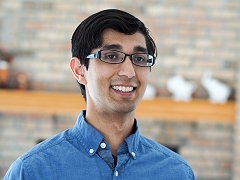
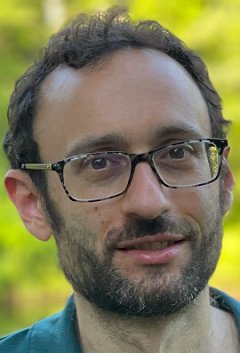
Tej Chajed is an Assistant Professor in the Department of Computer Sciences at the University of Wisconsin-Madison, focusing on formal verification of systems software. His research bridges theoretical foundations and practical implementations to ensure software correctness in concurrent and crash-safe systems. Research interests include formal verification, concurrency, crash safety, and programming languages, particularly using Coq, Perennial, and Goose frameworks. He has contributed to systems like DaisyNFS, a verified file system with sequential reasoning, and Verus, a foundation for systems verification. His work appears in top venues like SOSP, OSDI, and PLDI. 2025: Dafny PC Member 2024: PLDI Committee Member, CoqPL Co-chair 2023: CoqPL Co-chair, POPL Program Committee He actively mentors students and develops tools for systems verification education, including extensive Coq-based course materials.
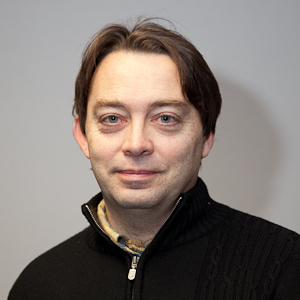
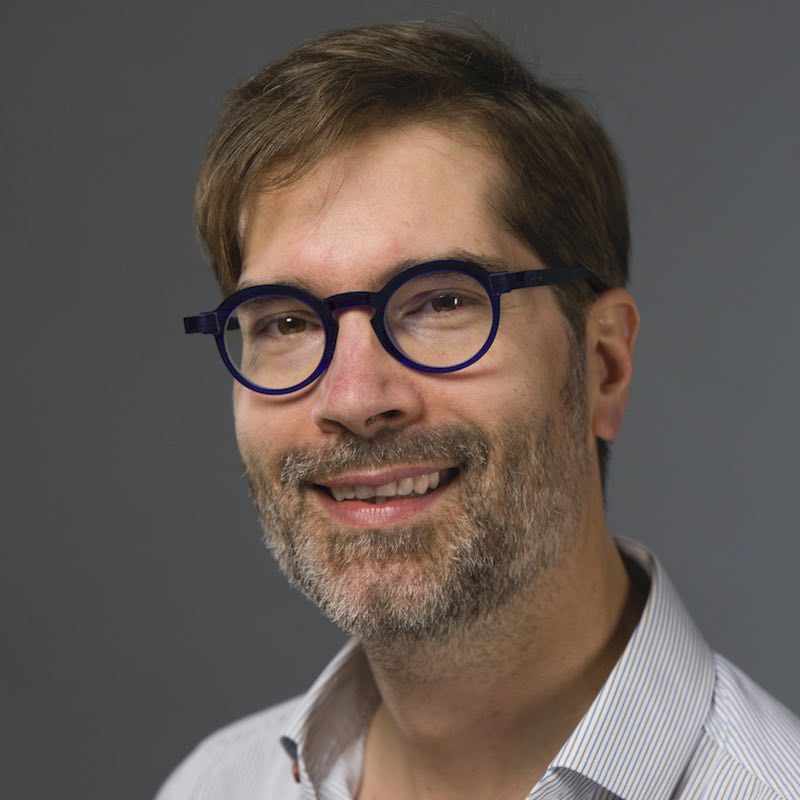
Fabrice Neyret is a senior CNRS researcher in Computer Graphics and head of the MAVERICK team (formerly ARTIS- EVASION ) within the LJK laboratory at Université Grenoble Alpes and INRIA Rhône-Alpes, France. Education PhD in Computer Science, INRIA Rocquencourt, 1996 Diplôme d’Ingénieur, Télécom Paris (ENST), 1991 DESS Ingénierie Mathématique, 1989 Maîtrise d’Ingénierie Mathématique, 1988 Licence de Mathématiques, 1987 Research Interests Neyret’s work centers on Computer Graphics with a strong focus on procedural modeling , real-time rendering of natural phenomena , and GPU acceleration . He investigates volumetric textures, clouds, smoke, rivers, lava, and forests, aiming to bridge physics-based models with efficient, user-friendly methods for video production and interactive applications. Scientific Output & Trends His publications span over two decades and highlight a consistent emphasis on real-time realistic rendering of complex natural scenes. Key themes include volumetric rendering (GigaVoxels), procedural noise, GPU-friendly algorithms, and simulation of dynamic phenomena such as convective clouds, ocean waves, and lava flows. Awards & Recognition Multiple film-festival selections for scientific visualizations (e.g., Eurographics, Festival du Film Scientifique de Palaiseau, Festival international du film scientifique de Parmes) Invited seminars at MIT, University of Toronto, University of Montréal, and others Advising & Teaching Neyret has supervised more than 30 PhD and Master students since 1997, covering topics from fractal noise rendering to large-scale volumetric visualization. He teaches in the Master DEA IVR program and offers internships and postdoc positions regularly. Teams & Labs He leads the MAVERICK research team, hosted jointly by the LJK laboratory (Université Grenoble Alpes) and INRIA . The team’s infrastructure includes access to high-end GPU clusters and collaborative links with Weta Digital and other international partners.
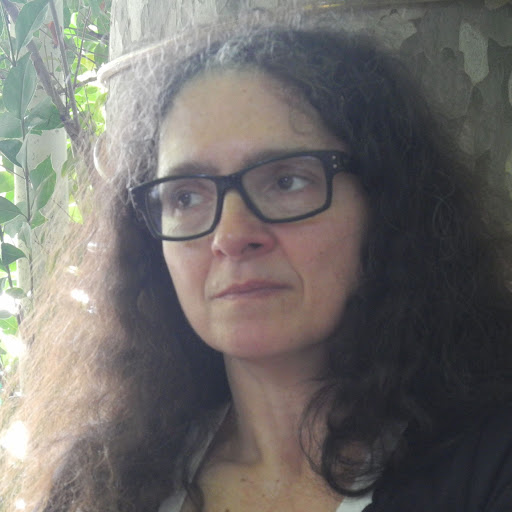
Catherine Letondal is a Professor of Computer Science and Human-Computer Interaction at ENAC (University of Toulouse). She leads the HCI group within the Interactive Computing Team and holds an HDR (Habilitation à Diriger des Recherches) and PhD in Human-Computer Interaction from the University of Paris-Sud. Her research focuses on systemic approaches to sustainability in design, tangible interaction, and participatory design methodologies. Her education includes advanced degrees in computer systems, philosophy, and engineering. She has extensive industry experience, including 15 years at the Institut Pasteur where she developed bioinformatics tools through participatory programming approaches. Key research areas include tangible interaction for aviation systems (e.g., cockpit design), systemic design for sustainability, and philosophical foundations of HCI. Recent work emphasizes integrating systems thinking into interactive system design to address ecological challenges. Notable achievements include awards at CHI 2009 and CHI 2013 for contributions to music composition tools and air traffic control interfaces. She co-supervises PhDs exploring systemic participatory design and sustainable air mobility. Her advising spans projects on shape-changing interfaces, gesture-based interaction for pilots, and sustainability in aviation systems. Research collaborations involve multi-disciplinary teams from sociology, economics, and aeronautics. Current projects include the AIRTIUS ANR initiative exploring touch technologies in cockpits and systemic design frameworks for rebound effects mitigation in ICT. Labs/Teams: Core member of the Interactive Computing Laboratory at ENAC; collaborates with aerospace engineering groups and sustainability-focused research consortia.
Tanguy Risset is Professor in the Telecommunication Department at Insa-Lyon, specializing in embedded systems, compilation, and software-defined radio. As head of Inria's Socrate project, he coordinates research on cognitive radio networks integrating signal processing, communications, and computer science. His research develops FPGA-based solutions for real-time audio processing and wireless systems, emphasizing compilation techniques for hardware acceleration. Recent publications focus on low-latency audio transmission, spatial sound implementation, and open-source toolchains for FPGA audio DSP.
Sybille Caffiau serves as an Associate Professor in the Computer Science Department at the University of Grenoble Alpes, France, where she is affiliated with the Grenoble Computer Science Laboratory (LIG) within the College of Engineering. Her research focuses on Human-Computer Interaction (HCI) with specializations in smart home systems, end-user development, and voice-based interaction technologies. She maintains an active research program through the Human-Computer Interaction Engineering Team (IIHM/ECMI). Her primary research interests center on making smart home technologies more accessible through innovative interaction paradigms. Key areas include context-aware programming languages like CCBL (Cascading Contexts Based Language), voice interface design for ambient assisted living, tactile feedback mechanisms, and task model comprehension. Her work bridges theoretical HCI principles with practical applications in real-world smart home environments, particularly focusing on user-centered design approaches that empower inhabitants as developers of their own living spaces. Analysis of her recent publications reveals a consistent focus on improving end-user programmability in smart homes through novel language design (CCBL), empirical validation of voice interfaces, and educational frameworks for HCI engineering. Her research demonstrates strong interdisciplinary connections between interaction design, programming language theory, and accessibility considerations, with particular emphasis on creating systems that accommodate diverse user needs including elderly populations and people with visual impairments. Through projects like SWEET-HOME and VocADom, Caffiau has contributed significantly to voice-based interaction in smart home environments, developing corpus collections and evaluating system performance against user experience metrics. Her work on educational frameworks for HCI engineering demonstrates commitment to advancing pedagogy in the field through structured case studies and practical teaching methodologies.
Azelle Courtial is a Researcher at Institut Géographique National (IGN) , specializing in deep learning applications for cartographic generalization within the MEIG research team (Modélisation des Environnements Inhabités et Généralisation). Her work focuses on multi-scale mapping automation and spatial data representations , with recent contributions in GAN-based mountain road generalization and deep learning benchmark development . Education: PhD in Geographic Information Sciences (Université Paris-Est, 2023), Master's in GIS (2019), Licence in Math & Informatics (2017) Projects: ERC Consolidator Grant recipient (2021-2026) Software: Developer of CartAGen4Py and DeepMapGen libraries Her publications demonstrate a research trajectory combining deep learning for map generalization multi-scale cartography principles constraint-based evaluation frameworks spatial relation modeling in GIS Scientific recognition includes: Best short paper award at AGILE Conference 2022 Teaching contributions span spatial databases , webmapping , and GIS programming , with responsibilities in course material development and student project supervision.
Gerson Sunyé is an Associate Professor at Nantes University, where he teaches topics related to Software Engineering. He is a member of the Naomod research group within the LS2N research laboratory, focusing on Model-Based Engineering (MDE) techniques applied to software engineering problems, particularly in testing distributed systems. His work bridges academic research and industrial applications through the Atlanmod open-source platform developed within the Eclipse Community. His primary research interests span Model-Based Engineering, Software Testing, Distributed Systems, Cloud Computing, and Domain-Specific Languages. He investigates how rigorous application of models can improve software engineering practices, focusing on model merging, conflict resolution, and large-scale model management. His work particularly emphasizes executable DSLs, model views, and testing methodologies for complex systems. Analysis of his recent publications (2020-2024) reveals a strong trend toward integrating AI techniques with model management, particularly using machine learning for inter-model relations and reinforcement learning for conflict resolution. His work continues to evolve from foundational model management toward more applied contexts including low-code development platforms, energy-aware computing, and large language model integration for software engineering tasks. Dr. Sunyé actively collaborates with numerous researchers including Jean-Marie Mottu, Massimo Tisi, and Erwan Bousse. His research has been supported by European projects including Heterogeneous and Distributed Services for the Future Computing Continuum and Training the Next Generation of Experts in Scalable Low-Code Engineering Platforms. He leads research within the Naomod group at LS2N, which develops the Atlanmod platform for model-based engineering. The group focuses on practical applications of MDE in industrial contexts, particularly addressing scalability challenges in model management and the integration of model-based techniques with modern software development practices including cloud computing and low-code platforms.
Fabrice Depaulis is a Researcher in Data Engineering at ISAE-ENSMA, Poitiers, France, affiliated with Laboratory LIAS (a joint research unit with University of Poitiers). His work bridges academic research and practical applications in technical design systems. His primary research domains include Human-Computer Interaction, Programming by Demonstration, Software Engineering, and CAD Systems. He specializes in developing end-user programming techniques where systems learn from user demonstrations, creating interactive environments for structured dialog applications and technical design workflows. His H4 software architecture model demonstrates a focus on adaptable technical design tools with documented real-world implementations. Publications from 1999-2006 reveal consistent innovation in making programming accessible to non-experts through demonstration-based interfaces. Key themes include semantic interpretation of user actions, error correction in example-based systems, and integrating end-user class definition into CAD environments. This body of work significantly contributes to End-User Development methodologies within Human-Computer Interaction. Depaulis operates within the Data Engineering Team at Laboratory LIAS, which encompasses broader research groups in Automatic Control and Real-Time Systems. The lab's interdisciplinary structure supports his work on interactive technical design applications through collaborations across engineering and computer science domains.
Adam Chlipala is the Arthur J. Conner (1888) Professor of Computer Science at the Massachusetts Institute of Technology (MIT), where he is a faculty member in the Department of Electrical Engineering and Computer Science (EECS), the Computer Science and Artificial Intelligence Laboratory (CSAIL), and leads the Programming Languages & Verification Group. He has been a faculty member at MIT since 2011, following a postdoctoral position at Harvard University. PhD in Computer Science, UC Berkeley (2007) BS in Computer Science, Carnegie Mellon University (2003) His research lies at the intersection of programming languages and formal methods, with a strong emphasis on using the Coq proof assistant to build verified compilers, cryptographic systems, and hardware-software stacks. His work spans from high-level language design to gate-level hardware verification, aiming for end-to-end correctness proofs. Recent efforts focus on high-performance parallel computing systems with full formal assurance. The 15 most recent publications highlight a consistent trend in verified compilation, cryptographic security, hardware verification, and tensor/ML program optimization. His work increasingly integrates software and hardware verification, emphasizing modular, extensible frameworks and end-to-end correctness. Key themes include side-channel resistance, automated proof techniques, and practical deployment of formally verified systems. Advisory Board Member, BlueRock Systems (formerly BedRock Systems) Member, DARPA Information Science and Technology (ISAT) Study Group (2018–2022) Advisory Board Member, SiFive Former Advisor, krypt.co (acquired by Akamai) Chlipala has advised numerous PhD and Master’s students and regularly teaches core MIT courses such as 6.009 (Fundamentals of Programming), 6.042 (Mathematics for Computer Science), and 6.822/6.5120 (Formal Reasoning About Programs). He is the author of the widely used textbook Certified Programming with Dependent Types and co-developer of the FRAP (Formal Reasoning About Programs) educational materials. He is also the founder of Nectry, a startup based on Ur/Web and UPO, aiming to democratize enterprise application development through AI-assisted, type-safe programming. His research group develops tools and frameworks for modular verification, verified compilation, and formal analysis of complex digital systems. The work is deeply collaborative, involving students, industry partners, and open-source contributions via GitHub. Projects like Fiat Cryptography have been deployed in major web browsers, demonstrating real-world impact.
James R. Eagan is an Associate Professor at Télécom Paris , part of Institut Polytechnique de Paris , and holds a Visiting Professor position at the University of Colorado, Boulder in the College of Media, Communication & Information. He leads the DIVA Lab (Data, Intelligence, Visualization, and Applications) within the Computer Science & Networking Department. Currently on sabbatical (2024–25 academic year) at CU Boulder, his research bridges Human-Computer Interaction, Explainable AI (XAI), and computational media design.
Johannes Borgström is an Associate Professor in the Department of Computer Science at Uppsala University, Sweden. He serves as the program director for the Bachelor's program in Computer Science and has been actively involved in numerous academic conferences including ESOP, POPL, and FASE as a committee member. His research spans theoretical computer science with practical applications in programming language design and analysis. Borgström's research primarily focuses on semantics for programming languages and process algebras , with significant contributions to both theoretical foundations and practical applications. His work centers on two major strands: probabilistic programming languages for statistical models and Bayesian inference, and psi-calculus as a framework for modeling communicating systems. His research integrates formal methods with practical programming language implementation, creating bridges between theoretical computer science and real-world applications in statistical computing and distributed systems. Analysis of Borgström's recent publications reveals a strong trajectory in probabilistic programming and formal verification. His 2021 work demonstrates applications of probabilistic programming to statistical phylogenetics, while his foundational work on lambda-calculus for universal probabilistic programming (2016) established important theoretical frameworks. The research shows increasing integration of statistical methods with programming language theory, particularly in Bayesian inference techniques. His work on psi-calculi continues to evolve with applications to wireless protocols and higher-order systems, demonstrating the versatility of process calculi approaches. Borgström has served on program committees for numerous prestigious conferences including ESOP, POPL, ICFP, and FASE, demonstrating his standing in the programming languages research community. His service includes roles as committee member for NWPT 2023, ESOP 2019, POPL 2017-2018, and ICFP 2016. His research laboratory appears to be part of Uppsala University's Department of Information Technology, with collaborations extending to Microsoft Research (Andrew Gordon appears as frequent co-author) and other international institutions. Borgström's work on the Psi-Calculi Workbench suggests active development of practical tools for formal verification, bridging theoretical research with software engineering applications. His current research trajectory indicates continued exploration of probabilistic programming semantics and their applications to statistical modeling across diverse domains.
Gilles Venturini is a Professor in Computer Science at the University of Tours, France, affiliated with PolytechTours and the Computer Science Lab. He has held this position since 1998 following his appointment as Assistant Professor from 1994-1998. His academic credentials include a Research Supervisor Degree (HdR) from the University of Tours (1997), a PhD in Computer Science from the University of the South of Paris (1994) supervised by Yves Kodratoff, and dual qualifications in Computer Science (MSc, 1990) and Electrical Engineering (ESIEE, 1990). Professor Venturini's research concentrates on information visualization, machine learning, and data mining with emphasis on genetic algorithms, neural networks, and computer vision. His work develops practical tools for visual data exploration, automatic dashboard generation, and analysis of large datasets, particularly addressing usability challenges for novice users in open data contexts. His 2023-2025 publications reveal sustained innovation in ternarization of vision-language models for edge devices, few-shot object detection, and backpropagation alternatives for binary neural networks. These contributions bridge theoretical machine learning advancements with applications in cultural heritage visualization and human resources analytics. No scientific awards were documented in the source materials. While specific grant details and student supervision records are absent from the provided text, his professorial role implies active involvement in research funding acquisition and academic mentoring. His work frequently intersects with interdisciplinary teams, particularly in digital humanities projects. He remains operationally active within the University of Tours' Computer Science Lab, driving research in visualization techniques and machine learning applications through this primary institutional affiliation.
Matthias Hauswirth is an Associate Professor at the Università della Svizzera italiana (USI) in Lugano, Switzerland, leading the Lugano Computing Education (LuCE) research lab . His work focuses on programming education, conceptual change in learning, and notional machines. He actively contributes to Swiss high school informatics teacher training programs and maintains the programming misconceptions repository . Education: Not explicitly detailed in provided texts Research: Centers on programming education, language design for learning, and empirical studies of programming practices Publications: Span 2011-2025 with emphasis on educational tools, Java analysis, and graphics-based learning Service: Program committee roles in OOPSLA, SPLASH, ICER, and co-organizer of SPLASH-E 2016 Projects: ExpressionTutor.org, PyTamaro, Progmiscon.org
Daniel W. Barowy is an Associate Professor in the Department of Computer Science at Williams College . His research focuses on programming languages , particularly end-user programming , crowdsourcing , and spreadsheet debugging . He integrates program analysis with statistical techniques to improve software usability and robustness. Current affiliations: Williams College (2017-present) Education: University of Massachusetts Amherst (PhD, 2017) His research explores language abstractions for human-computer integration , with notable projects like ExceLint (spreadsheet error detection), FlashRelate (spreadsheet data extraction), and Riker (incremental build systems). He emphasizes artifact verification , securing PLDI 2015 Distinguished Artifact Award and USENIX ATC 2022 Best Paper . Recent publications demonstrate trends in spreadsheet reliability , crowdsourcing frameworks , and scalable educational tools . He has received "Artifact Verified" badges for multiple projects and actively contributes to software tool development , including AutoMan , ExceLint , and CheckCell . USENIX ATC 2022 Best Paper PLDI 2015 Distinguished Artifact Award Multiple "Artifact Verified" badges As an educator, he teaches CSCI 334: Principles of Programming Languages and CSCI 331: Computer Security . His work bridges theoretical PL research with practical applications in spreadsheet programming and crowdsourcing platforms .
Fabien Granjon is a Professor of Sociology at Université Paris 8. His research focuses on cognitive capitalism, digital technology's societal impacts, and the philosophy of technological mediation. He actively contributes to interdisciplinary studies on sustainable innovation, education technology, and the socio-political dimensions of digital practices. Granjon co-edits sections on 'Cognitive Capitalism' and 'Democracy and Digital Technology' in Cahiers Costech, a journal he collaborates with through its editorial committee. His work bridges sociology, cognitive science, and technological design, emphasizing how tools shape perception and cognition. Research Interests: Cognitive Capitalism, Digital Democracy, Enactive Design, Sustainable Innovation in Engineering Editorial Roles: Section Editor for 'Cognitive Capitalism' and 'Democracy and Digital Technology' (Cahiers Costech) Key Contributions: Exploring code as a semiotic tool, digital literacy frameworks, and the societal implications of AI Granjon’s recent work analyzes how technical models from diverse disciplines (e.g., neurophysiology, computer vision) are reframed into computational tools, influencing both developer perception and end-user experiences. He emphasizes the role of code as a mediating artifact in collaborative innovation processes.