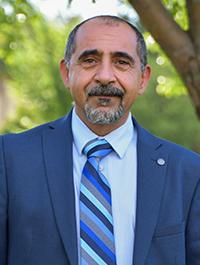
Dr. Jaafar Alghazo is an Associate Professor in the Math, Science and Technology Department at the University of Minnesota. He currently teaches courses in Information Technology Management and Software Engineering, including ITM 3900-E90: Internship, SE 2200-001: Intro to Software Engineering, and SE 4500-001: Senior Project I. Research Focus: Machine Learning, Deep Learning, Medical Image Analysis, Cybersecurity, IoT, UAV Communications Key Publication Trends: 15 most recent works span 2025–2023, emphasizing neural network optimization, Arabic sign language recognition, flood detection, and secure medical imaging techniques
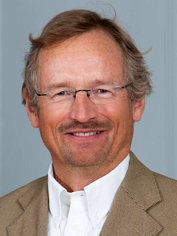
Ashutosh Dhar Dwivedi is an Assistant Professor in the Cybersecurity Group at Aalborg University, Copenhagen, Denmark. He specializes in blockchain security, applied cryptography, post-quantum cryptography, and advanced cybersecurity. His interdisciplinary research spans cryptography, IoT security, and AI-driven security analytics. Education: PhD in Cryptography, with postdoctoral research at institutions including the University of Waterloo, Technical University of Denmark, and the Polish Academy of Sciences. His pedagogical focus includes professional upskilling in cyber defense and post-quantum resilience. Research interests include post-quantum cryptographic protocols, privacy-preserving blockchain systems, and machine learning for security. His work has yielded over 50 peer-reviewed papers, including contributions to high-impact journals and conferences. Notable achievements: 2023 and 2024 Stanford University Top 2% Scientist ranking. Contributions: Editorial roles in international journals, program committees for premier conferences, and leadership in academic-industry collaborations like the Quantum Communication Infrastructure (QCI) consortium. Active in developing quantum-secure systems for national and industrial infrastructure.
Dr. Cungang Yang is an Associate Professor in the Department of Electrical, Computer, and Biomedical Engineering at Ryerson University. Holding a PhD from the University of Regina (2003) and a Master's from Jilin University (1992), Yang specializes in security protocols for emerging technologies including robotics, IoT, and cloud computing. His research focuses on developing efficient authentication mechanisms to protect data in power systems, smart grids, and wireless networks. PhD in Computer Science, University of Regina (2003) MS in Computer Science, Jilin University (1992) Yang's work addresses critical security challenges in: Internet of Things (IoT) communication Cloud computing infrastructure Wireless sensor networks Smart grid technology His research team has published extensively on cryptographic key management and authentication protocols, with recent work appearing in IEEE Cloud and IEEE ICIOT conferences (2018). Yang teaches core courses in network security and software systems (COE 817, COE 318, EE 8213). Scientific Awards New Opportunities Fund, Canada Foundation for Innovation (CFI) Departmental Teaching Excellence Awards
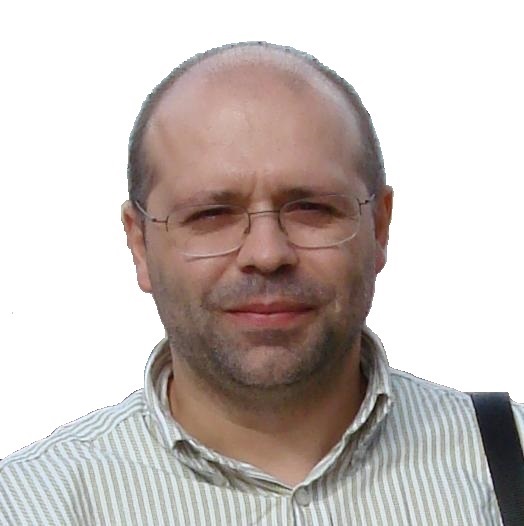
Jaime Delgado is a prominent researcher with over three decades of contributions to digital rights management, healthcare information systems, and security and privacy in eHealth. With an extensive publication record spanning from 1994 to 2025, Delgado has established themselves as a leading expert at the intersection of computer science and healthcare, developing practical frameworks that enhance security, privacy, and interoperability in medical systems. Delgado's research spans multiple critical domains: Digital Rights Management and Multimedia Content Security Healthcare Information Systems and eHealth Applications Security and Privacy in Medical Data Management Ontologies and Semantic Web Technologies for Healthcare Genomic Information Systems and FAIR Data Principles Trustworthy Media Systems and Provenance Tracking Analysis of recent publications (2021-2025) reveals a strategic shift toward healthcare applications, particularly focusing on security requirements for Internet of Medical Things (IoMT), privacy-enhancing techniques for medical data, and genomic information systems. Delgado's work demonstrates consistent development of practical architectures addressing real-world security challenges in healthcare settings, with increasing collaboration with medical professionals and participation in European health informatics initiatives like the MedSecurance Project. Delgado has received recognition for contributions to standardization efforts, particularly in developing frameworks for media trustworthiness and international standards for assessing trust in digital media. Their work on the JPEG Privacy and Security framework has significantly influenced industry practices. Through extensive collaboration with researchers like Silvia Llorente (43 joint publications), Eva Rodríguez (29 publications), and Rubén Tous (26 publications), Delgado has built a strong research network across European institutions. Their work consistently combines theoretical framework development with practical implementation considerations, addressing the critical balance between security requirements and clinical workflow usability. Delgado's laboratory work centers on developing secure frameworks for medical data management, with recent emphasis on genomic information systems, provenance tracking in eHealth, and security requirements for medical IoT devices. Their research group actively participates in European health informatics initiatives and contributes to international standards development, maintaining exceptional productivity with 4-7 publications annually in recent years.
Norman Mooradian is an Assistant Professor at the School of Information, San José State University, where he teaches courses in information retrieval, digital ethics, and records management. His academic and professional background bridges philosophy and information science, with a focus on ethical dimensions of information systems. Ph.D. and M.A. in Philosophy, The Ohio State University B.A. in Philosophy, Pitzer College His research interests are centered on information ethics, digital privacy, knowledge management, and the philosophical foundations of information science . He integrates concepts from applied ethics, epistemology, and ontology into the design and governance of information systems, particularly in enterprise content management (ECM) and records management. The most recent publications reflect a strong trend in AI ethics, accountability in digital records, and privacy-by-design frameworks . His work appears in handbooks and journals such as The Handbook of Archival Practice , Information Management Magazine , and Ethics and Information Technology , demonstrating sustained scholarly engagement with the ethical challenges of modern information systems. Norman Mooradian has been active in professional communities including ARMA and AIIM, contributing to standards development and presenting on trusted systems. He has also served in industry roles, notably as ECM Education Manager at Konica Minolta, blending academic insight with practical implementation. He advises on curriculum development and professional practice in information ethics and has led seminars on ethics in AI, records management, and archival practice. Though no formal grants are mentioned, his work bridges academic research and corporate information governance, suggesting applied research impact. Norman Mooradian is involved in shaping professional discourse through publications, standards committees, and teaching. His lab or team affiliations are not explicitly stated, but his collaborative publications and professional service indicate active participation in interdisciplinary and professional networks.
Henri Ruotsalainen is a Researcher at the University of Applied Sciences St. Pölten (FH St. Pölten) , affiliated with the Institute of IT Security Research and the Department of Computer Science and Security . His work focuses on IoT security , wireless network protection , and sensor system resilience , with particular emphasis on LoRaWAN and critical infrastructure security . PhD in Technical Sciences (Dr. Techn.) from Vienna University of Technology (2011–2015) Diploma in Engineering (Dipl.-Ing.) from Helsinki University of Technology (2002–2010) Prior roles as University Assistant (Helsinki, 2007–2008) and Project Assistant (Vienna, 2011–2015) Ruotsalainen's research explores physical layer security for IoT, including radio-based key generation , supply voltage watermarking , and reactive jamming detection . His projects like LoRaKey and Substation Security aim to strengthen wireless communication integrity in industrial environments. Recent publications highlight trends in sensor network security and smart home vulnerabilities , with a focus on metadata differencing and attack countermeasures . Scientific contributions include: 15+ peer-reviewed articles in journals like Sensors and IEEE Transactions Participation in conferences including IEEE ETFA , ARES , and IT-SECX Development of security testbeds for LoRaWAN and critical infrastructure systems
Rune Hylsberg Jacobsen is a Professor at the Department of Electrical and Computer Engineering, Aarhus University. His work bridges energy systems, drone technology, and blockchain applications, with a focus on smart grids, autonomous systems, and decentralized infrastructure. Research interests include: Security frameworks for prosumer-driven energy systems using blockchain mmWave and LEO satellite communication protocols Homomorphic encryption for smart meter privacy Cooperative drone swarm navigation and infrastructure inspection Earth observation via CubeSats for climate research His recent publications highlight advancements in: Zero trust security models for renewable energy certificates Transport protocol optimization in satellite networks AI-driven charging window scheduling for drone fleets Decentralized identity management in Web3 infrastructure Key projects include: DISCO-2: Student CubeSat for Arctic climate monitoring Drones4Safety: Safety-critical inspection systems VPP4SGR: Virtual Power Plant networks
Jean-Pierre Hubaux is a Full Professor at the School of Information and Communication Sciences, Swiss Federal Institute of Technology in Lausanne (EPFL), where he pioneers foundational tools for privacy in hyper-connected systems. His work bridges computer science and healthcare, focusing on critical security challenges in emerging technologies. His research centers on genome privacy and security, where he has designed cryptographic solutions since 2011 in collaboration with Lausanne University Hospital (CHUV) and EPFL's School of Life Sciences. He co-founded the International Workshop on Genome Privacy and Security (GenoPri.org), chairs its steering committee, and actively contributes to the GA4GH Security Working Group. His work addresses inference attacks against genomic databases, kinship implications, and develops architectures for secure phenotypic/genomic data sharing using partial homomorphic and lattice-based encryption. His notable recognitions include: IEEE Fellow (2008) for contributions to network security and privacy ACM Fellow (2010) for pioneering work in privacy-enhancing technologies Professor Hubaux leads major research initiatives including a privacy-conscious data-sharing system for Swiss hospitals under the Swiss federal government's Information Security Task Force. His projects involve significant collaborations with healthcare institutions and research bodies, though specific grant details and student names aren't documented in the source material. He operates within EPFL's Laboratory for Computer Communications and Applications (LCA), directing a research team focused on developing practical security frameworks for precision medicine and mobile networks. His lab maintains the genomeprivacy.org community portal and the genomic-privacy project repository.
Mark Bailey is the Robert and Pamela (Craig) Delaney Professor of Computer Science at Hamilton College, where he has served as Chair of the Department of Computer Science since 2011. He teaches foundational courses including Introduction to Computer Science, Data Structures, and Computer Organization, and pioneered the innovative course Secrets, Lies, and Digital Threats that pairs Hamilton students with high school classes for cybersecurity education. His educational background includes: Ph.D. in Computer Science from the University of Virginia M.C.S. from the University of Virginia B.S. from the University of Massachusetts Dr. Bailey's research bridges theoretical computer science and practical applications, with primary focus areas in computer security , embedded systems optimization , and compiler design . His work on mobile encryption architectures and fault-tolerant distributed systems demonstrates interdisciplinary innovation, while his educational initiatives like the high school cybersecurity outreach program reflect commitment to real-world impact. Recent publications show increasing emphasis on mobile security and interactive optimization tools for embedded environments. His publication trends reveal consistent exploration of security vulnerabilities across computing layers—from low-power mobile encryption to server protection models—with growing attention to educational applications of security research since 2008. The interdisciplinary nature of his work connects hardware architecture, software engineering, and pedagogical innovation. Key recognitions include: Three competitive National Science Foundation grants Two Microsoft Research grants National Research Council/Air Force Research Laboratory Faculty Fellowship Hamilton College's Richardson Award for Faculty Innovation Dr. Bailey has secured over $1.2M in external funding through NSF and Microsoft Research grants, and provided consultancy for the Air Force Research Laboratory and Assured Information Security. His academic service includes editorial leadership as Editor-in-Chief of ACM Inroads and membership on the Barry Goldwater Scholarship review committee. Campus leadership roles span the Information Security Review Board, High Performance Computing Advisory Committee, and multiple college governance bodies since 1997. He actively shapes academic infrastructure through committee work including the Committee on Information Technology (chaired 2003–2005) and Science Facilities Faculty Committee, while maintaining strong industry connections through conference organization for SIGPLAN and NYCWiC.
Jan von der Assen is a doctoral student at the Communication Systems Group (CSG) within the Department of Informatics at the University of Zurich . His research focuses on Holistic Cybersecurity , spanning Threat and Asset Management , Security Economics , and AI-powered Malware Mitigation . Education : MSc in Software Systems from University of Zurich (2021) Research Affiliations : Involved in 12+ national/EU projects (2021–2025) including CheeseChain , CONCORDIA , and DSI Cybersecurity . His work emphasizes Moving Target Defense (MTD) for IoT security, Decentralized Federated Learning with blockchain-based reputation systems, and Ransomware Detection using hypervisor-level system call monitoring. Recent publications include: GuardFS (JISA 2025) for Linux ransomware mitigation HyperDtct (IEEE CSR 2025) on hypervisor-based detection ThreatFinderAI (CNSM 2024) for LLM threat modeling
Guillermo Ormazabal Sanchez serves as Professor of Procedural Law at the University of Girona's Faculty of Law, holding dual expertise in civil and criminal procedural systems with emphasis on comparative and international dimensions. His institutional roles include Director of Public Law Department, Dean of Law Faculty, Vice Rector, and General Secretary at the university. His research spans civil procedure topics including arbitration, documentary evidence, burden of proof, and technology-driven evidentiary issues in discrimination cases, alongside criminal procedure specialization in European judicial cooperation, intermediate trial phases, and self-incrimination rights. International engagements include Humboldt Foundation research at Munich University (2004-5) and Fordham Law School studies (2015) resulting in comparative civil procedure monographs. Publications comprise 11 monographs, a 7-edition Procedural Law manual, and 60+ scholarly contributions. Current leadership positions include President of the Interuniversity Network for Legal Dialogue between Europe and America (REDIJEA) and membership in the International Association of Procedural Law and European Law Institute. His research portfolio includes 8 MEC-funded projects (most recently as PI for 'Collective actions, a new regulation' DER 2017-82146-P) and European collaboration on victim protection systems. Research Group: Current Issues in Procedural Law ORCID: 0000-0001-7392-8545 As doctoral thesis supervisor, he guided two award-winning dissertations receiving Girona University's extraordinary doctorate distinction (2013, 2020). His evaluation expertise includes national research project assessments for ANEP (2008-2020), with extensive international lecturing across Latin America and Europe.
Mário Marques Freire is a Full Professor at the University of Beira Interior, where he serves as President of the Faculty of Engineering and Professor in the Department of Computer Science. He is also a Senior Researcher at Instituto de Telecomunicações, leading the Secure and Intelligent Networked Software Systems Lab. His academic qualifications include a Dr. habil. in Computer Science (2007) and Ph.D. in Electrical Engineering (2000) from the University of Beira Interior, complemented by an M.Sc. in Systems and Automation and B.Sc. in Electrical Engineering from the University of Coimbra. Freire's research spans Computer Systems and Networks, with specific expertise in Cloud Systems, Computer Networking, Security & Privacy, and AI applications. His work focuses on infrastructure virtualization, encrypted traffic classification, DDoS attack detection, and malware analysis. Recent publications demonstrate strong emphasis on cloud security, AI-enhanced defect prediction, and IoT security frameworks. He has received several scientific awards including multiple Conference Best Paper Awards and an ACM Certificate of Appreciation for his long-term contributions. Freire has supervised over 35 graduate students (10 PhD graduates) and led numerous research projects such as 'Towards the assurance of SECURity by dESIGN of the Internet of Things' (FCT/COMPETE/FEDER) and 'Cloud Computing Competence Center'. At the University of Beira Interior, Freire has held significant administrative roles including Vice-Rector (2020-2021), Director of Computer Science Services (2009-2013), and multiple terms as President of the Faculty of Engineering. He leads the Network Applications and Services research group at Instituto de Telecomunicações, focusing on secure networked systems.
Prof. Dr. Katharina Kohls serves as a Professor at Ruhr University Bochum specializing in system security, with research spanning mobile network vulnerabilities (4G/5G), privacy/anonymity systems, and internet censorship detection. Her work addresses critical security flaws in cellular infrastructure and anonymity networks through empirical attack simulations and defensive techniques. Her primary research domains include: Mobile Network Security : Investigating protocol vulnerabilities in 4G/5G including fake base stations, bidding-down attacks, and voice call eavesdropping (ReVoLTE/IMP4GT) Privacy & Anonymity : Analyzing traffic on Tor, location leaks in messaging apps, and information leakage in mobile VPNs Internet Measurement : Leading censorship monitoring initiatives like Censored Planet for longitudinal internet freedom analysis Analysis of her 2019-2024 publications reveals escalating focus on 5G security challenges and machine learning applications for intrusion detection, with consistent contributions to identifying practical attack vectors against real-world communication systems. Her methodology combines large-scale simulations with field measurements to expose systemic vulnerabilities. No scientific awards or student advising information was documented in the provided materials. Her contact details (room MC 4.137, tel +49 (0)234 32-27814) confirm active faculty status without indication of specialized labs or research teams in the source data.
Muskaan Singh is a Lecturer in Data Analytics at the Intelligent Systems Research Centre (ISRC) within the School of Computing, Engineering and Intelligent Systems at Ulster University . A member of the Cognitive Analytics Research Lab (CARL) , her work bridges Natural Language Processing (NLP) , Artificial Intelligence , and Practical Applications in domains ranging from machine translation to biomedical diagnostics. Education: PhD in Machine Translation (Thapar Institute of Engineering and Technology, 2016-2020) Master’s in Machine Translation (IIIT Hyderabad, India) Her research spans NLP and AI with applications in code-switched language modeling , depression detection , social media analytics , and medical diagnostics . She has developed multilingual tools for automatic minuting, including DeepCon and ALIGNMEET , and contributed to EU-funded projects like ROXANNE (criminal network analysis) and ELITR (European Live Translator). Key scientific awards include first prizes in international NLP competitions (EVAL4NLP, LT-EDI, SMM4H) and recognition at EMNLP , ACL , and COLING . She received the Inclusion and Diversity Grant (EMNLP 2021) and GHC Scholarship (2019). Current projects include AI-EPOCMON (AI-Enabled Point-of-Care Monitoring) and T3-NCP (crime prevention for safer communities). Dr. Singh has supervised grants from UKRI and Alzheimer’s Research UK , focusing on AI for health and IT operations . Her team at ISRC collaborates globally with institutions in Switzerland , Czech Republic , and India . She also leads research for the Center for Data Science and Artificial Intelligence at IIIT Lucknow, India.
Dr. Usman Hadi serves as an Assistant Professor in the School of Engineering within Ulster University's Faculty of Computing, Engineering and Built Environment at the Jordanstown campus. His academic trajectory includes a Ph.D. in Electronic Engineering from the University of Bologna (2020), followed by postdoctoral research at Aalborg University and industry experience as an External Research Engineer at Nokia Bell Labs in Denmark (2019-2021). His educational foundation comprises: PhD in Electronic Engineering, University of Bologna (2020) Master's in Digital Predistortion for Compensation of Nonlinearities in Radio over Fiber Links, University of Bologna Dr. Hadi's research spans cutting-edge domains in wireless communications and AI-driven networking solutions. His primary focus includes 5G/6G technologies, Time Sensitive Networks, Radio over Fiber systems, and machine learning applications in telecommunications. Recent work emphasizes AI-enhanced signal detection for MIMO systems, UAV-based communication frameworks, and IoT security architectures, with significant contributions to optical front-haul optimization and wireless sensor networks. Analysis of his publication record reveals a strategic emphasis on AI integration for next-generation wireless systems. Key trends include deep learning applications for MIMO detection in 6G networks, digital twin implementations for UAV fault detection, and secure IoT frameworks for drone communications. His work consistently bridges theoretical advancements with practical implementations in optical and wireless front-haul systems, particularly through the MADNI (Made in UU) drone platform. Notable recognitions include: Top 2% Cited Researcher designation for three consecutive years (2021-2023) Research and Impact Fund Award (2023) Dr. Hadi supervises two PhD students: Ms. Cara Rose (Department of Economy-funded, 2023-present) and Mr. M.Y. Daha (Vice Chancellor's Research Studentship, 2022-present). His active research portfolio includes drone-based climate resilience initiatives funded by the British Council (2025-2026) and IoT-driven cybersecurity frameworks supported by Innovate UK (2025), alongside participation in EPSRC-funded infrastructure projects. He leads the MADNI drone research platform, which integrates state-of-the-art 5G connectivity, object detection, and facial recognition capabilities. His laboratory maintains active collaborations with Nokia Bell Labs, University of Manchester, University of East Anglia, Manchester Metropolitan University, University of Texas, and Boise State University, focusing on next-generation communication technologies and sustainable development applications aligned with UN SDGs.