Filip Holik is an Associate Professor at the Department of Information Security and Communication Technology at Norwegian University of Science and Technology (NTNU). He works remotely at the University of Glasgow, Scotland, and is actively involved in cybersecurity research for critical infrastructure. Key research areas: eBPF-based programmable data planes, Smart Grid security, Digital Substations, Software-Defined Networking. Major projects: Multidisciplinary Research group on Privacy and data protection (MR PET) , ECoDiS - Engineering and Condition monitoring in Digital Substations , InterSecure - Security of supply in smartgrids . Publications focus on eBPF security frameworks, digital substation threat modeling, and smart grid cybersecurity. His work addresses security of supply in interconnected digital systems and develops adaptive learning mechanisms for attack detection. Technical contributions include developing simulation models for Digital Substations, serving as a Smart Grid Simulation Model developer , and Digital Security instructor for industrial network training programs.
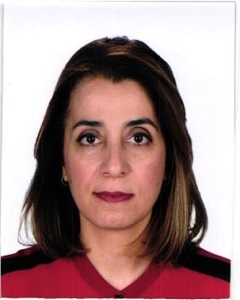
Professor Sema Kayhan is a faculty member at Gaziantep University , Faculty of Engineering , Department of Electrical and Electronic Engineering . She has held the academic rank of Professor since 2021, after progressing from Associate Professor (2016-2021) and Assistant Professor (2007-2015). Her career began at Gaziantep University as a Research Assistant (1996-2005) and includes administrative roles as Vice Head of Department (2013-2015). Doctorate: 1999-2005, Gaziantep University Institute of Science, Electrical and Electronic Engineering Degree: 1996-1999, Gaziantep University Faculty of Engineering, Electrical and Electronic Engineering & Computer Science Licence: 1991-1996, Gaziantep University Faculty of Engineering, Electrical and Electronics Engineering (English) Her research spans Image Processing , Compressive Sensing , Machine Learning , and Biomedical Signal Processing , with notable contributions to ECG signal reconstruction , chaotic encryption , and FPGA-based hardware acceleration . She has supervised 23 theses, including PhD works on hybrid deep learning for schizophrenia detection , sparse extreme learning machines , and smart home solar energy systems . Her 15 most recent publications (2015-2022) demonstrate expertise in image watermarking , encryption , antenna design , and ECG signal processing , often leveraging chaos theory , extreme learning machines , and FPGA implementations . She has also contributed to NLP for Arabic-alphabet languages and retinal blood vessel segmentation via transfer learning. Professor Kayhan's projects include renewing jacquard control systems (2007-2008) and ECG signal reconstruction via compressive sensing on FPGA (2016-2017). She co-designed a smart home model using solar energy (2017) and has been a Member of the Chamber of Electrical Engineers since 1997.
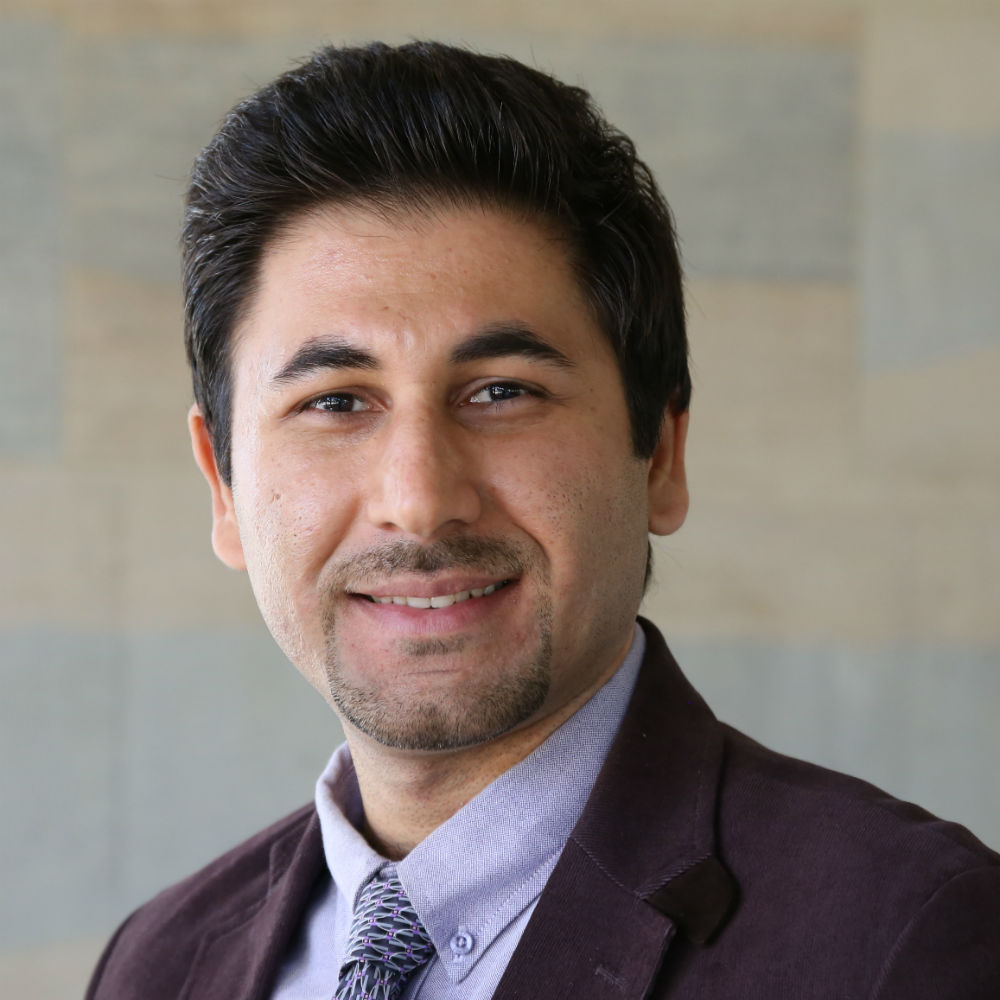
Dr Hossein Anisi is a Reader (equivalent to Associate Professor) and Head of the Internet of Everything (IoE) Laboratory in the School of Computer Science and Electronic Engineering at the University of Essex, UK. Recognised as the university’s Best Academic 2023 and recipient of the Best Research Impact in Enterprise and Innovation 2023 , he drives interdisciplinary research that bridges IoT, cybersecurity, energy-efficient communications and real-world applications spanning agriculture, transport and healthcare. Education & Career Path Reader (permanent faculty), University of Essex, UK (current) Senior Research Associate, University of East Anglia, UK Senior Lecturer, University of Malaya, Malaysia — awarded Excellent Service Award Research Interests Dr Anisi’s work centres on secure, resilient and energy-efficient architectures for the Internet of Things . His group designs smart sensors, UAVs, edge-cloud frameworks and AI-driven protocols for: Smart agriculture & environmental monitoring Intelligent transportation & autonomous vehicles Healthcare IoT & body-area networks 5G/6G networks & cyber-physical security Publications & Scholarly Impact With over 150 peer-reviewed articles in top-tier IEEE journals, his recent output (2023-2025) demonstrates a clear trajectory toward AI-enhanced security , 6G URLLC , post-quantum federated learning and precision agriculture . Editorial roles include Associate Editor for IEEE Transactions on Cybernetics , IEEE Transactions on Intelligent Transportation Systems and several other flagship periodicals. Scientific Awards & Recognition Best Academic 2023 – University of Essex KTP Celebration of Innovation Best Research Impact in Enterprise & Innovation 2023 – University of Essex Celebrating Excellence Awards Excellent Service Award – University of Malaya Medals for innovation at international expositions Funding & Enterprise As Principal or Co-Investigator, Dr Anisi has secured numerous Innovate UK, Royal Society and institutional grants exceeding £1 million since 2018, translating research into commercial IoT and AI systems for retail, horticulture and smart-building sectors. Teaching & Doctoral Supervision He currently teaches Mathematics for Computing and Team Project Challenge , and supervises three ongoing PhD students—Shafiq Ahmed, Aryan Morteza and Hassan Moin—while having recently graduated Han Yang, Kabo Elliot Pule and Sumit Kumar Singh. Laboratory & Collaboration: Dr Anisi directs the Internet of Everything (IoE) Laboratory , fostering industry partnerships across the UK and maintaining active memberships in IEEE, ACM, the Royal Society and the Higher Education Academy.
Rosen Pasarelski is a Professor in the Telecommunications Department at New Bulgarian University (NBU), where he has taught since 2003. His academic career includes roles as assistant professor (2003–2015) and current professor status since 2015. He has directed NBU's Telecommunications bachelor's program (2005–2015) and actively participates in departmental councils and seminars. Education : PhD in Radio Transmitter and Receiver Equipment (2009), Master's in Telecommunications Systems (2003), Bachelor's in Telecommunications Systems (2001), Specialist degree in Telecommunications (1999) His research focuses on radio communications , wireless networks , and WEB technologies , with recent publications exploring 5G network optimization, microwave antennas for space-based radar, IoT vehicle tracking, and femtocell technologies. He has contributed to projects including satellite studio development, WLAN network analysis, and electromagnetic field safety studies. Recent publications highlight trends in 5G network algorithms , radio wave attenuation modeling , and AI-driven cybersecurity . His work often intersects telecommunications engineering with practical applications in smart city infrastructure and educational technology . He teaches courses such as: Network Administration and Virtualization Applied Software for Telecommunications Mobile Communications WEB Services Installation Computer Hardware/Software Installation Technical expertise includes LINUX systems , cloud computing , VoIP security , and WiMAX protocol analysis . He holds advanced English and Russian language proficiency alongside native Bulgarian.
John Bush Idoko is an Assistant Professor in the Computer Engineering Department at Near East University, North Cyprus. He earned his BSc in Computer Science from Benue State University, Nigeria (2010), followed by MSc (2017) and PhD (2020) in Computer Engineering at Near East University. His research focuses on machine learning , computer vision , and signal processing , with applications in IoT systems , healthcare devices , and smart infrastructure . He has contributed to 15 recent publications spanning topics such as UAV routing protocols, image encryption, and medical prosthetics. BSc: Computer Science, Benue State University (2010) MSc: Computer Engineering, Near East University (2017) PhD: Computer Engineering, Near East University (2020) His work emphasizes deep learning optimization , chaotic encryption , and intelligent sensor networks . Recent projects include IoT-based infant monitoring, sleep apnea detection, and voice-controlled prosthetics. He is affiliated with the Applied Artificial Intelligence Research Centre and leads the Cyber Security Engineering Department.
Maria Claudia Diaz Martinez is a part-time Associate Professor at KU Leuven's Department of Electrical Engineering (ESAT) , affiliated with the Computer Security and Industrial Cryptography (COSIC) research group and the DigiSoc – KU Leuven Institute for Digital Society . She also serves as Chief Scientist at Nym Technologies SA since 2019. Education: Master's in Telecommunications Engineering (University of Vigo, 2000), Ph.D. in Engineering (KU Leuven, 2005) Honors: FWO Postdoctoral Fellowship (2009-2012) Her research focuses on privacy technologies and anonymity systems , particularly metadata protection against surveillance, traffic analysis, tracking, and profiling. Current work includes Mixnet design , encrypted DNS analysis , and privacy-preserving federated learning . Recent publications address Mixnet latency optimization , traffic correlation attacks , and decentralized localization . Over 150 peer-reviewed papers span topics like browser fingerprinting, Tor onion services analysis, and k-anonymity frameworks. Key awards include the Andreas Pfitzmann Best Student Paper Award (2024) and the CNIL-INRIA Privacy Protection Award (2018) . She served as Program Chair for FC 2021 and PETS 2017 , and maintains editorial/advisory roles in major privacy conferences. She leads the DigiSoc research group and collaborates with Nym Technologies SA , while advising against new student supervision due to reduced academic duties.
Professor Bryan Scotney is a faculty member at Ulster University 's School of Computing , holding the title of Professor of Informatics. His research spans over three decades with a focus on digital image processing , computer vision , pattern recognition , and statistical databases , applied to healthcare informatics , biomedical sciences , and telecommunications network management . He has extensive experience in interdisciplinary projects and research management , leading the university's Computer Science Research Institute from 2005 to 2015. Key research areas: data integration , distributed processing , healthcare technologies Major funded projects: EU FP5 , EPSRC NETWORK , India-UK Advanced Technology Centre , ESRC Design for Ageing Well , EU H2020 DESIREE and ASGARD Recent publications include advancements in video anomaly detection , IoT encryption , face recognition , and medical image processing . His work contributes to UN Sustainable Development Goals through AI for healthcare and secure smart environments . Scientific Awards and Recognition : Shortlisted for BCS & Computing UK IT Industry Awards - Security Innovation of the Year Digital Innovation of the Year (Highly Commended) for 5G-Enabled Edge Compute Highly Commended for Emerald Literati Network Awards TM Forum awards for Catalyst Innovation and Use of TM Forum Assets His research emphasizes collaborative projects across academic , government , and commercial sectors, with significant contributions to EU Framework Programmes and UK Research Councils funded initiatives.
Stefan Soesanto is a Senior Researcher at the Center for Security Studies (CSS) at ETH Zurich. He leads the Cyberdefense Project and serves as Co-Team Head of the Risk and Resilience Team . His work focuses on cybersecurity, cyber defense, and international law, with extensive experience in designing cyber wargame exercises and organizing defense conferences. Education: MA from Yonsei University (South Korea) in Security Policies and International Law BA from Ruhr-University Bochum (Germany) in Political Science and Japanese Research Interests: Cyberwarfare and Digital Conflict Hybrid Threats and Cyber Deterrence International Cyber Norms and Policy Implementation Ukraine’s Cyber Defense Strategies Space Economy Security Key Publications: 2024: Analysis of Ukraine’s Digital Warfighting Ecosystem 2023: Insight into Ukraine’s IT Army and Counter-Hybrid Campaigns 2022: Studies on EU Norm Erosion and Cyber Deterrence 2021: Exploration of Cyber-Electromagnetic Activities and Space Security 2020: Critique of EU Cyber Sanctions and Cyber Terrorism Trends
Dr. Antonio Carreño-Rodríguez is a faculty member at George Mason University, specializing in Medieval and Early Modern Spain, Colonial Spanish-American literature, and cultural studies. His research spans literary theory, performance studies, and cross-disciplinary analysis of popular culture. His scholarly output includes interdisciplinary work connecting historical texts to modern contexts, as seen in publications like Golden Age 'Diss Tracks' and studies on Lope de Vega's political allegories. Recent collaborations show technical focus in bioinformatics tools and network security. Contact: acarreno@gmu.edu | Office: Horizon Hall 5136 | Office Hours: MW 4:30-5:45pm.
Dr. Daniel Hellwig serves as Professor and Chair of Production Management within the Supply Chain Management Group at WHU - Otto Beisheim School of Management in Vallendar, Germany. His academic expertise is complemented by his professional role as Principal at Kepler Cannon in New York since 2014, demonstrating a strong integration of theoretical research and practical business applications in the field of supply chain innovation. His educational background includes: M.Eng. from University of California at Berkeley (2013) B.S.E. from The Wharton School, University of Pennsylvania (2011) Dr. Hellwig's research focuses on blockchain technology applications in supply chain management, with particular emphasis on distributed ledger systems for trade finance, resource allocation, and supply chain resilience. His work bridges technical blockchain implementation with business process optimization, exploring how cryptographic techniques like fully homomorphic encryption can enable secure information sharing among competing retailers. He has developed innovative simulation frameworks such as the DISASTER token trading game to study supply chain behavior during crises, demonstrating practical applications of theoretical concepts. His publication trajectory reveals an evolution from foundational blockchain concepts to increasingly sophisticated supply chain applications. Early works established fundamental blockchain knowledge through comprehensive guides, while recent research focuses on behavioral aspects of blockchain-enabled markets and privacy-preserving technologies for supply chain collaboration. This progression demonstrates both technical depth and growing business relevance in his scholarly contributions. As an educator, Dr. Hellwig has been a consistent guest lecturer at WHU since 2018, teaching blockchain programming and introduction courses at both bachelor's and master's levels. His teaching approach emphasizes practical implementation alongside theoretical understanding, reflecting his dual expertise in academic research and professional consulting. He frequently collaborates with Goran Karlic and Professor Arnd Huchzermeier, suggesting strong research partnerships within WHU's Supply Chain Management Group.
Rob A. Rutenbar is the Senior Vice Chancellor for Research at the University of Pittsburgh and holds Distinguished Professorships in Computer Science (School of Computing and Information) and Electrical and Computer Engineering (Swanson School of Engineering). He also serves as Adjunct Professor at UIUC and CMU. With nearly 40 years in academia and industry, his research focuses on integrated circuit tools, nanoscale chip design statistics, and AI hardware accelerators. He led the University of Illinois' CS department (ranked #5 nationally) and spent 25 years at CMU, where he pioneered analog CAD tools and founded Neolinear (acquired by Cadence) and Voci Technologies (acquired by Medallia). Education: PhD (Computer Engineering, University of Michigan, 1984), MS (Computer Engineering, University of Michigan, 1979), BS (Electrical Engineering, Wayne State University, 1978). Research interests include analog circuit synthesis, statistical methods for nanoscale ICs, and hardware architectures for AI. Notable contributions include the first MOOC on chip design tools (60k+ learners) and the Phil Kaufman Award for lifetime contributions to EDA. His work spans over 200 publications and 14 patents, with funding from DARPA, NSF, and industry partners like Google and IBM. Awards include ACM SIGDA Pioneering Achievement Award (2021), AAAS Fellowship (2019), and NAI Fellow (2019). He has advised over 50 PhD students, many of whom lead industry and academia (e.g., Amith Singhee at IBM, Saurabh Tiwary at Google). Rutenbar's leadership initiatives at Pitt include the Momentum Funds for team science, LifeX Labs for life sciences commercialization, and the Office of Industry Partnerships to align research with industry needs.
Zhengping Jay Luo serves as Assistant Professor II in Rider University's Department of Computer Science and Physics, specializing in cybersecurity and computer science with research spanning machine learning security, network defenses, and quantum computing applications. Education: Ph.D. Systems and Security, University of South Florida, Tampa, Florida, United States M.S. Computer Application Technology, Jinan University, Guangzhou, China B.S. Computer Science and Technology, Hebei University of Science and Technology, Shijiazhuang, China His research centers on three interconnected pillars: securing machine learning systems within IoT and communication infrastructures, developing advanced network security protocols, and exploring quantum computing's security implications—particularly in quantum machine learning frameworks. This work addresses critical vulnerabilities in AI-driven systems while pioneering defense mechanisms against next-generation threats. Analysis of his 15 most recent publications (2025-2017) reveals a consistent trajectory toward securing emerging technologies, with 2025-2023 works dominating publications on AI security (SpeechGPT jailbreaks), quantum machine learning, and UAV network defenses. His research bridges theoretical innovation with practical implementations across wireless communications, cryptography, and adversarial machine learning. Scientific Awards: None documented in provided materials. Professor Luo actively mentors Rider students through CYB/CSC 490 Independent Research projects and advises both the ACM Club and Asian American Students Association. His professional service includes NSF Panelist roles (2024-2025), CCSC Eastern conference committee membership, Mercer County Science Fair judging, and NJCCIC affiliation, though specific research grants remain unlisted. He maintains active engagement with the cybersecurity community through invited talks at international conferences and summer tournaments, focusing on quantum computing mathematics and RSA algorithm fundamentals for diverse audiences.
Stefan Schubert is an Associate Lecturer at the Department of Computer Science and Security at St. Pölten University of Applied Sciences, where he contributes to both the IT Security (BA) and Cyber Security and Resilience (MA) study programs. His work is closely associated with the Institute for IT Security Research, where he actively participates in cutting-edge security research initiatives. Dr. Schubert's research focuses primarily on cryptographic systems in the face of emerging technologies, with particular emphasis on post-quantum cryptography . His work addresses how quantum computing advancements threaten current encryption standards and explores viable migration paths to quantum-resistant cryptographic systems. He has conducted significant research on NIST's post-quantum cryptography standardization process, blockchain technologies, and cryptographic applications for wireless communication security. Analysis of Dr. Schubert's publications reveals a consistent focus on the intersection of quantum computing and cryptographic security. His work spans both theoretical explorations of quantum threats to established encryption methods and practical implementations of post-quantum cryptographic solutions. The research demonstrates growing urgency around preparing IT infrastructure for the quantum computing era, with particular attention to standardization efforts led by organizations like NIST. Dr. Schubert actively contributes to major research initiatives including the Josef Ressel Center for Blockchain Technologies & Security Management and the KIF project on Cryptography for Wireless Communication. His work bridges academic research with practical security applications, supporting both educational programs and industry partnerships through the Institute for IT Security Research.
Wiktor Sędkowski serves as a Lecturer in the Department of Cybersecurity at Opole University of Technology, based in room P3-205. He holds weekly consultations every Thursday from 10:00 to 11:00 and maintains an academic profile at https://w.sedkowski.po.edu.pl. His research spans critical cybersecurity domains including information security, network security, digital forensics, and cryptography. These areas address modern challenges in protecting digital infrastructure through: Secure system architecture design Threat analysis and mitigation Encryption methodologies Incident response protocols Security policy development Privacy-preserving technologies His work contributes to advancing defensive strategies against evolving cyber threats in both academic and practical contexts.
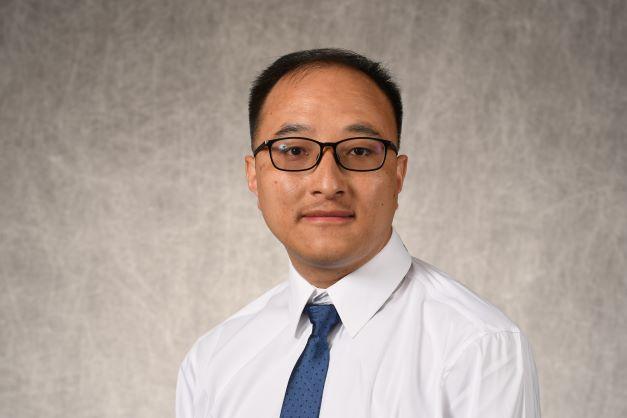
Sheng Wen is a Professor at Swinburne University of Technology's School of Science, Computing and Emerging Technologies, where he serves as Director of the Blockchain Innovation Lab and Deputy Director of the Swinburne Cybersecurity Lab. His research spans cybersecurity, blockchain, and distributed systems, with over $7 million in research funding from ARC and industry partners. He leads a team focused on vulnerability detection, AI security, and privacy-preserving technologies. Research interests include adversarial machine learning, blockchain consensus security, IoT device vulnerabilities, and federated learning applications. His publications consistently address emerging threats in AI systems and cross-chain blockchain security. Awards include the 2021 SCET Research Excellence Award and the 2015 Scientists Meet Senators recognition. Grants support projects in optimized energy management, railway signaling verification, and healthcare AI security. Supervision includes 36 PhD students working on blockchain applications, fuzzing tools, and cybersecurity AI. His lab collaborates with CSIRO and industry partners on critical infrastructure protection.