Cong Ling is a Professor of Information Theory and Cryptography at Imperial College London's Department of Electrical and Electronic Engineering, within the Faculty of Engineering. His research focuses on lattice theory and its applications in coding, cryptography, quantum information, and number theory. Key affiliations include the Academic Centre of Excellence in Cyber Security Research and the Engineering Secure Software Systems group. Education details are not explicitly provided in the text, but his professional experience indicates advanced qualifications in electrical engineering and mathematics. Research interests span lattice-based cryptography, post-quantum security, algebraic coding theory, and quantum-resistant algorithms. His work bridges information theory and number theory, with contributions to MIMO systems, secure communication protocols, and cryptographic protocol design. Recent publications emphasize lattice reduction techniques, quantum algorithms for the shortest vector problem, and advancements in polar codes. Notable trends include exploration of non-commutative algebras for cryptography, Gaussian sampling optimizations, and hybrid quantum-classical approaches to hard integer problems. Over 50+ articles published since 2018 reflect his leadership in lattice-based research and quantum-safe technologies. Awards: None explicitly listed in the text. Grants/Advising: No specific grants or student advisees mentioned; focus remains on collaborative research outputs. Labs/Teams: Associated with Imperial's Cyber Security Research groups and quantum engineering initiatives.
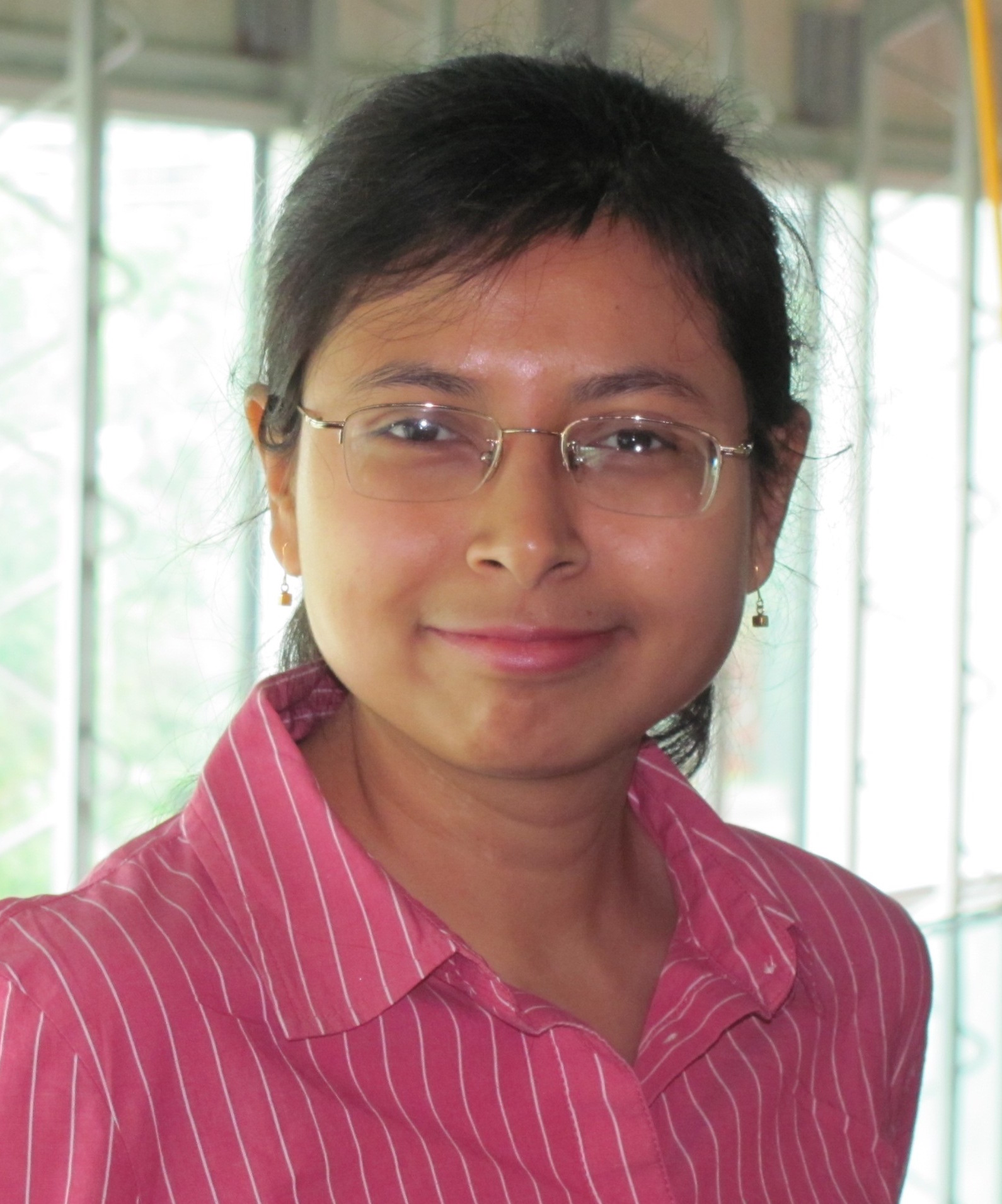
Sushmita Ruj is an Associate Professor in the School of Computer Science and Engineering at the University of New South Wales (UNSW), Sydney. She serves as the Faculty of Engineering Lead for the UNSW Institute for Cybersecurity (IfCyber) and as the Taste of Research (ToR) Coordinator within the School of Computer Science and Engineering. Her academic journey includes previous positions as a Senior Research Scientist at CSIRO's Data61 (2019-2022), Associate Professor at the Indian Statistical Institute, Kolkata, and Assistant Professor at the Indian Institute of Technology (IIT), Indore. Dr. Ruj's primary research interests focus on applied cryptography, post-quantum cryptography, cybersecurity, blockchains, and data privacy. She designs practical, efficient, and provably secure protocols for real-life applications, with particular emphasis on critical infrastructure including smart grids, cloud computing, ad hoc networks, and data sharing frameworks. As quantum technology advances, her work increasingly focuses on developing quantum-safe algorithms to ensure a more secure Internet infrastructure. Her research spans multiple domains including cryptographic key management, proofs of storage, verifiable computation, vector commitments, and privacy-enhancing technologies for cloud and IoT environments. Her recent publications demonstrate a strong trend toward post-quantum cryptography solutions, with particular emphasis on blockchain applications, DNS security, and privacy-preserving protocols for industrial IoT. The research shows increasing focus on practical implementations of theoretical cryptographic concepts, with applications across multiple sectors including finance, healthcare, and critical infrastructure. Her work bridges the gap between theoretical cryptography and real-world security challenges, with growing emphasis on the transition from classical to quantum-resistant systems. Best Paper Award at ACISP 2024 JNCA Best Survey Award (2023) NSW Innovation Award (iAward) Merit Winner (2022) Women in Science Award from CSIRO (2020) ACM Senior Member (2016) IEEE Senior Member (2015) Samsung GRO award (2014) Dr. Ruj has successfully mentored numerous PhD and Master's students, with many of her former students now holding academic positions at institutions like IIT Indore, TU Wien, and CISPA Helmholtz Center. She has secured significant competitive funding including multiple Australian Research Council (ARC) grants, Samsung GRO Award, NetApp Faculty Fellowship, Cisco Academic Grant, and IBM Research grant. Her current research portfolio includes projects on blockchain-based quantum-safe digital medical passports, embedding trust in digital IDs, and resilience of supply chain unstructured data. As Faculty of Engineering Lead for IfCyber, Dr. Ruj plays a key role in UNSW's cybersecurity research initiatives. She has served on editorial boards for prestigious journals including IEEE Transactions on Information Forensics and Security and has held leadership positions in major conferences such as ACISP 2021 and Indocrypt 2020. She was also a member of the working group on "Blockchain For Cybersecurity" for the National Blockchain Roadmap of Australia and the first Blockchain Working group set up by the Reserve Bank of India.
Jens Groth is an Honorary Professor at the Department of Computer Science, University College London (UCL), and serves as Chief Scientist at Nexus. His primary research focuses on cryptography, with an emphasis on cryptographic protocols, zero-knowledge proofs, and privacy-preserving technologies. Groth has contributed significantly to advancements in digital signatures, homomorphic encryption, and secure multi-party computation. He holds a leadership role as Program Chair for the 15th IMA International Conference on Cryptography and Coding (2015) and has been a key figure in shaping modern cryptographic standards. His work often bridges theoretical foundations with practical implementations, emphasizing efficiency and security. Groth's research interests include but are not limited to: cryptographic protocol design, lattice-based cryptography, and the application of zero-knowledge proofs in real-world systems such as blockchain and voting systems. His publications span venues like CRYPTO, EUROCRYPT, and ASIACRYPT, reflecting his impact on the field. Notably, he advocates for open access to research and has contributed to strategies ensuring conferences adopt de facto open-access policies. His current focus at Nexus centers on verifiable computation and distributed cryptographic systems.
Amir Houmansadr is an Associate Professor in the College of Information and Computer Sciences at the University of Massachusetts Amherst. His research focuses on network and AI security, privacy-enhancing technologies, and censorship circumvention. He holds a PhD from the University of Illinois at Urbana-Champaign (2012) and a postdoctoral fellowship at the University of Texas at Austin (2012-2014). Key research areas include secure communication systems, adversarial ML attacks, federated learning defenses, and analyzing censorship mechanisms like the Great Firewall of China. He leads the SPIN research group, which develops tools like CensorLab and MassBrowser. Notable contributions include exposing GFW vulnerabilities and advancing privacy-preserving AI models. Awards include the DARPA Director’s Award (2024), ACM CCS Distinguished Paper (2023), and NSF CAREER Award (2016). His work has been featured in media outlets like The Guardian, MIT Technology Review, and MassLive. He advises over 20 students and has served on program committees for top security conferences (IEEE S&P, ACM CCS, USENIX Security). Current courses include CMPSCI 660: Advanced Information Assurance.
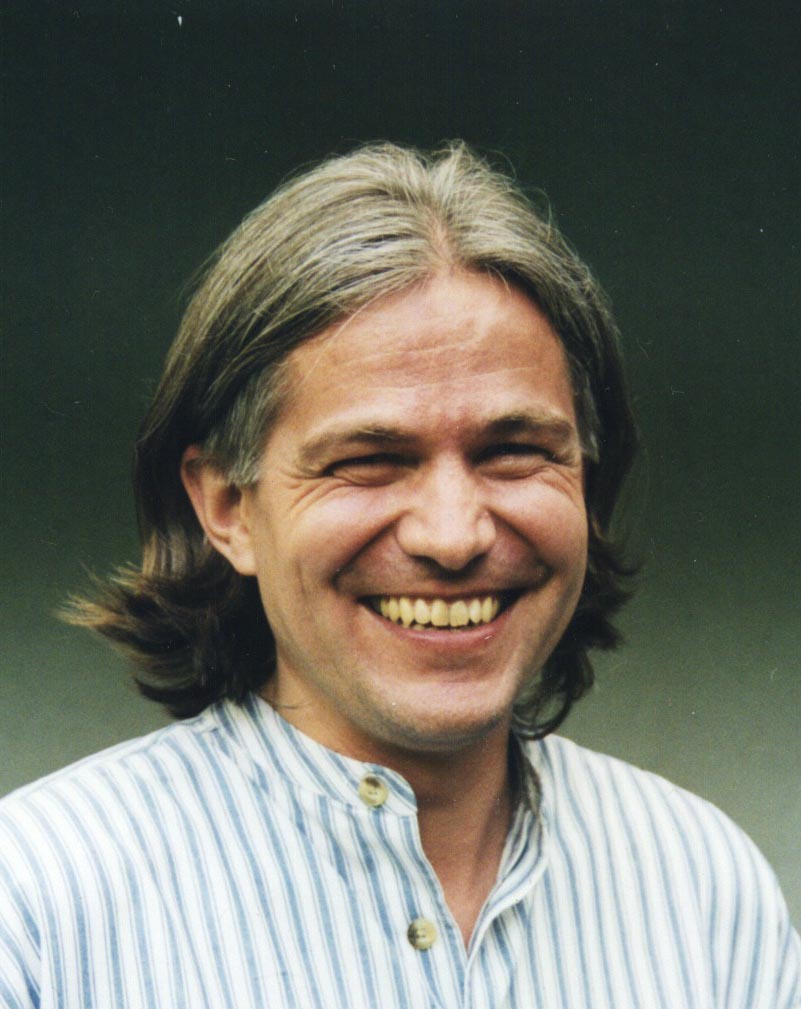
Peter Druschel is a Professor and founding Director of the Max Planck Institute for Software Systems (MPI-SWS) in Saarbrücken, Germany. He holds adjunct professorships at Saarland University and the University of Maryland. His research focuses on distributed systems, operating systems, and privacy-preserving technologies. He earned his Ph.D. from the University of Arizona in 1994 and has held roles at Rice University since 1994, including Professor of Computer Science (2002–2005). Education: Ph.D. in Computer Science, University of Arizona (1994) Research Interests: Distributed systems, operating systems, network security, accountable computing, and privacy technologies. Current projects include privacy compliance in data systems (Thoth), secure communication (EbN), and privacy-aware image capture (I-Pic). Awards: SIGOPS Mark Weiser Award (2008) NSF CAREER Award (1995) Member of Academia Europaea and German Academy of Sciences Leopoldina Grants & Leadership: Leads the ERC Synergy Project imPACT, chairs the Max Planck Society’s Chemistry, Physics, and Technology Section, and collaborates with institutions like Cornell and Google. Advises on policy issues related to technology and privacy. Labs/Teams: Distributed Systems Group at MPI-SWS, collaborations with Microsoft Research and MIT. Current team includes students and postdocs working on privacy, security, and distributed systems.
Dalibor Radovanović is a researcher at Singidunum University , affiliated with the Faculty of Business Informatics . His work spans cybersecurity, blockchain technologies, and their applications in business and IoT systems. Education: Doctoral Dissertation (2016, Singidunum University) Master's & Basic Studies (Faculty of Business Informatics) Secondary Education: ETŠ Nikola Tesla Research Interests include: Security frameworks for IoT and blockchain integration Smart card and wireless network vulnerabilities E-governance and corporate IT audit methodologies Machine learning applications in cybersecurity Environmental performance optimization in agribusiness Publication Trends reveal a focus on blockchain (2022), cybersecurity (2009-2022), and IT governance (2010-2017). His work bridges theoretical analysis with practical implementations in Serbia's digital economy. Collaborations with scholars like Marko Šarac and Saša Adamović highlight interdisciplinary approaches to securing financial systems, educational institutions, and industrial IoT applications.
Michael J. Freedman is the Robert E. Kahn Professor of Computer Science at Princeton University and co-founder/CTO of Timescale. He received his Ph.D. from NYU’s Courant Institute and degrees from MIT. Current roles: Professor, Co-founder & CTO Affiliations: Princeton University, SNS Group, CITP Associate Education: Ph.D. (NYU), S.B./M.Eng. (MIT) His research spans distributed systems, networking, and security, with innovations like CoralCDN, DONAR, and Ethane. His work impacts decentralized content delivery, software-defined networking, and privacy-enhancing technologies. His recent publications address scalable fusion algorithms, GPU acceleration for data systems, and distributed GPU resource management. These works intersect with cloud infrastructure, network optimization, and security. Scientific honors include: Presidential Early Career Award for Scientists and Engineers (PECASE) Sloan Fellowship NSF CAREER Award Office of Naval Research Young Investigator Award Test of Time Award (Theory of Crypto Conference) ACM SIGOPS Mark Weiser Award He advises graduate students like Sam Ginzburg and Ashwini Raina, who joined Meta AI and Timescale post-PhD. His projects have secured substantial grants, including $110M Series C funding for Timescale. Key labs/teams: Princeton SNS Group Co-founder, Timescale (enterprise data platform) Co-founder, iobeam (IoT analytics, acquired by Timescale) Collaboration with FCC on Consumer Broadband Test Contributions to OpenFlow/SDN standardization
Amrita Roy Chowdhury is an Assistant Professor in the Department of Computer Science at the University of Michigan, Ann Arbor. Her research focuses on developing systems that enable safe, decentralized data analytics while ensuring provable privacy guarantees through the synergy of differential privacy and cryptography. Key research areas: Data Privacy, Cryptography, Secure Data Analytics, and Privacy-Preserving Machine Learning. Recent work explores prompt sanitization for LLMs (NDSS 2026), robust graph analysis (ASIACCS 2025), and metric differential privacy (CCS 2024). She has received awards including Best Paper at Private ML@ICLR'24 and Best Poster at ITA'23. Current Ph.D. advisees include Mushtari Sadia, Yiyi Sun, and Samanway Sadhu. Her work spans conferences like IEEE S&P, CCS, USENIX Security, and ICML.
Chee-Wooi Ten is a tenured Professor in the Department of Electrical and Computer Engineering at Michigan Technological University, where he has served since 2010 and achieved tenure in 2016. He concurrently holds an Affiliated Professor appointment in Applied Computing and directs both the PSERC Site and ICC CPS Center. His institutional roles emphasize cyber-physical security integration within power infrastructure. His educational background includes: PhD in Electrical Engineering from University College Dublin (2009) MSc in Electrical Engineering from Iowa State University (2001) BSc in Electrical Engineering from Iowa State University (1999) Ten's research pioneers cyber-informed security engineering strategies for bulk power systems, focusing on quantifying rare events through system risk models and data science. His work bridges power grid interactions with robotics and transportation systems to advance decarbonization and electrification. Key methodologies include validating cyber-physical security frameworks against steady-state and dynamic grid approaches, with emphasis on attack/defense combinatorics and smart home technologies. This transdisciplinary approach supports the fourth industrial revolution's resilience requirements. His publication trends reveal strong focus on risk-aggregated substation testbeds using generative adversarial networks, cyber insurance models for power systems, and cascading failure analysis from switching attacks. Recent works increasingly integrate machine learning with physics-based modeling to address cybersecurity threats in inverter-based resource integration and distribution emergency operations. Ten has secured over $6.5M in active funding including: $2M DOE grant (MTU portion $105,000) for CyDERMS Center on DERs/Microgrids cybersecurity $704,409 CyManII award for secure digitalization in smart manufacturing $1.05M DOE ARPA-E grant for decarbonized freight transportation modeling NSF CyberCorps Scholarship for Service program ($3.38M) His grants consistently address risk management through data-driven and physics-based modeling, with industry partnerships through PSERC and utility collaborations. As ICC CPS Center Director, he leads research on cyber-physical security testbeds and coordinates the PSERC Summer Transformation School. His team develops validation frameworks for NERC CIP compliance while addressing practical pain points in OT cybersecurity for grid operators.
Qiang Tang is currently an Associate Professor (Level D) at the School of Computer Science of The University of Sydney. Previously, he was a Senior Lecturer (2021.1-2024.12) at USYD and an Assistant Professor at the Computer Science Department of New Jersey Institute of Technology (2016.8-2021.1), where he co-directed the JACOBI Blockchain Lab with Prof. Jian Pei and Prof. Zhenfeng Zhang. He completed his PhD at the University of Connecticut under Prof. Aggelos Kiayias and Prof. Alexander Russell, following postdoctoral research at Cornell University with Prof. Elaine Shi. His research spans applied and theoretical cryptography, blockchain technology, privacy, and computer security. His work is supported by ARC, Google, Ethereum Foundation, Stellar Foundation, Protocol Labs, Algorand Foundation, Oracle, and USYD. Previous funding includes NSF, JD.com, AFRL, DoE, and Particl Foundation. His research has led to significant contributions in consensus protocols, distributed randomness generation, secure multi-party computation, and privacy-preserving technologies. Tang's publications reveal a strong focus on practical cryptographic solutions for blockchain and distributed systems. His recent work demonstrates expertise in asynchronous consensus, optimal protocol design, and secure implementations for real-world applications. His research shows consistent innovation in improving efficiency, security, and scalability of distributed systems. Scientific Awards: 2025 DSN Best Paper Award 2024 ICDCS Distinguished Paper Award 2023 SOAR Prize, USYD 2023 Oracle for Research Award 2022 Stellar Foundation Research Awards 2022 Ethereum Academic Award 2019 MIT Technical Review, 35 Chinese Innovators Under 35 Tang actively mentors PhD and Master's students, with several alumni now holding faculty positions or research roles at institutions like City University Hong Kong, Chinese Academy of Sciences, and A*STAR Singapore. He has received significant research funding including a multi-year Google project on End-to-End Secure Cloud and an ARC DP grant on Order Fairness in Decentralized Systems. He leads the research in his lab focusing on blockchain protocols and cryptographic applications, with strong industry connections through collaborations with Google, Ethereum Foundation, Stellar Foundation, and Protocol Labs. His team regularly publishes in top security and cryptography venues including CRYPTO, CCS, USENIX Security, and S&P.
Yan Huang is an Associate Professor in the Department of Computer Science at Indiana University Bloomington, focusing on security and cryptography. His work bridges theoretical foundations with practical systems, emphasizing cryptographic protocols with strong security guarantees for generic computation. University: Indiana University Bloomington School: College of Arts and Sciences Department: Computer Science Academic Rank: Associate Professor His research combines theoretical computer science , program analysis , artificial intelligence , and software engineering to address real-world security problems. Key areas include secure computation , zero-knowledge proofs , and privacy-preserving technologies . Recent publications, such as Phecda (SP'25) and Dubhe (USENIX Security'23), highlight advancements in post-quantum cryptography , AES verification , and privacy-preserving deep packet inspection , reflecting his focus on scalable and practical cryptographic solutions. He has advised notable students including Changchang Ding (PhD, Computer Science) and Ruiyu Zhu (PhD, now at Facebook), and served on program committees for top conferences like ACM CCS and CRYPTO .
Dr. Xiaodong Lin is a Professor at the University of Guelph's School of Computer Science and an IEEE Fellow (2017) for contributions to secure vehicular communications. He leads the Blockchain Technology and Cybersecurity (BTC) lab, focusing on privacy-enhancing technologies, digital forensics, wireless network security, blockchain applications, and DeFi security. PhD, Beijing University of Posts and Telecommunications, China PhD, University of Waterloo, Canada His research bridges theoretical and applied domains in cybersecurity, particularly vehicular networks, smart grids, and decentralized systems. Recent work examines blockchain security, privacy-preserving protocols for IoT, and secure data aggregation in wireless networks. Key publication trends include secure fog computing for vehicular crowdsensing, privacy-preserving authentication in 5G, and cryptographic solutions for smart grids. Awards highlight multiple Best Paper recognitions at IEEE conferences. IEEE Fellow (2017) Best Paper Awards (IEEE INFOCOM 2018, GLOBECOM 2017, SECURECOMM 2016) Dr. Lin supervises graduate students in blockchain security, AI security, and digital forensics. His lab provides financial support to qualified students.
Matteo Maffei is a Full Professor at TU Wien, leading the Security and Privacy group. He joined in 2017 after 11 years at Saarland University's CISPA. He holds a Ph.D. in Computer Science from Ca’ Foscari University of Venice (2006). He coordinates the TU Wien Cybersecurity Center, the SecInt Doctoral School, and the FWF Special Research Program SPyCoDe. His research focuses on formal methods for security and privacy, blockchain technologies, and web security. Roles: Full Professor, Coordinator of TU Wien Cybersecurity Center, Module Head of Christian Doppler Lab for Blockchain Technologies (CDL-BOT), Board Member of Vienna Cybersecurity and Privacy Research Cluster (ViSP). His work emphasizes formal verification of cryptographic protocols, smart contracts, and decentralized systems. Key achievements include ERC Advanced (2024) and Consolidator (2018) Grants, and leadership roles in conferences like IEEE Computer Security Foundations Symposium (CSF). Research Interests: Formal methods, smart contracts, blockchain scalability, web security, privacy-preserving protocols, and decentralized systems. His recent projects include optimizing Lightning Network channels, secure multi-hop payments, and AI-driven robustness verification. Publications: Over 200 publications in top venues like CCS, IEEE S&P, and CRYPTO. Recent work includes advancements in blockchain interoperability (e.g., Alba bridges), light client protocols (Blink), and neural network verification techniques. Grants & Awards: ERC Advanced Grant (2024), ERC Consolidator Grant (2018), DFG Emmy Noether Fellowship (2009). Led projects funded by EU Horizon, FWF, and industry partners like ABC Research GmbH. Advising & Labs: Supervised over 20 PhD/Master theses. Active in the Christian Doppler Lab for Blockchain Technologies and the SPyCoDe SFB. Collaborates with institutions like SBA Research and Stanford University.
Scott Kerlin is a Senior Lecturer in the Department of Electrical Engineering and Computer Science at Oregon State University's College of Engineering. He holds an M.S. and B.S. in Computer Science from the University of North Dakota. Prior to academia, he worked at the Mayo Clinic on medical software systems and IBM as a build master for enterprise products. His career spans roles including network administrator, lab manager, and Undergraduate Director at UND. Dr. Kerlin's research focuses on bridging industry experience with academic curriculum, particularly in computer science education, project-based learning, and cybersecurity. He emphasizes practical applications of theoretical concepts, such as integrating 3D printing and scanning technologies with security systems for small satellites. His work also explores student efficacy in AI courses and scalable software project management methodologies. He has taught at multiple institutions, including the University of Minnesota and Augsburg University, and held roles at Michigan Tech as Senior Security Engineer. His 2024 Engineering+ Outstanding Teaching Award highlights his commitment to pedagogical innovation. Current projects include in-space 3D printing, solar energy systems, and cryptographic solutions for satellite communications. Key areas of contribution include: 3D printing/Scanning: Material characterization, key replication, and aerospace applications Cybersecurity: Intrusion detection, satellite communications security, and chaotic cryptosystems Educational Innovation: Active learning frameworks, PBL implementation, and student performance modeling His interdisciplinary approach connects computer science fundamentals with real-world engineering challenges, emphasizing sustainability and industry relevance in curricula.
Brandon Reagen is an Assistant Professor in the Department of Electrical and Computer Engineering at New York University's Tandon School of Engineering, with affiliations in Computer Science, the Center for Advanced Technology in Telecommunications (CATT), and the NYU Center for Cybersecurity (CCS). He holds a PhD in Computer Science from Harvard (2018) and undergraduate degrees in Computer Systems Engineering and Applied Mathematics from the University of Massachusetts, Amherst (2012). His research focuses on computer architecture, hardware acceleration for deep learning and privacy-preserving computation, and VLSI design. He pioneered efficient deep learning accelerator designs through unsafe optimizations and contributed to benchmarking frameworks like Aladdin and MachSuite. His work spans privacy-preserving machine learning, secure computing systems, and hardware-software co-design for cryptographic protocols. Key achievements include the NSF CAREER Award (2024) and Siebel Scholar recognition (2018). His research centers on advancing secure computing through innovations like zero-knowledge proof accelerators (e.g., zkSpeed), fully homomorphic encryption frameworks (Orion), and entropy-guided privacy techniques for large language models. He leads interdisciplinary efforts at CATT and CCS to bridge hardware design and cybersecurity challenges. Reagen's contributions include over 50 publications in top-tier conferences (e.g., ISCA, ASPLOS, MLSys) and industry collaborations at Facebook AI. His work emphasizes practical solutions for encrypted computation efficiency, privacy-preserving inference, and scalable secure systems.