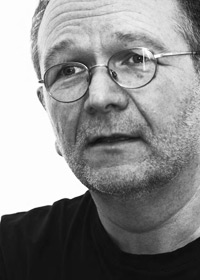
Wenguang Chen is a researcher affiliated with Tsinghua University and Pengcheng Laboratory , specializing in computer science and high-performance computing . His work bridges theoretical advancements with practical applications in domain-specific languages , parallel programming , and machine learning . Research Interests include: Development of modular DSLs for numerical methods (e.g., Mat2Stencil) Performance optimization in distributed and parallel systems Compiler frameworks for privacy-preserving AI (e.g., FHE-based neural network inference) Graph algorithms scaling to trillion-edge datasets Applications of Rust in memory-safe pointer analysis Recent Publications span 2014–2025, focusing on: Parallelization strategies for supercomputing Compiler automation tools Extreme-scale data processing Performance variance diagnosis in production environments
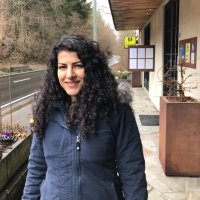
Tracy Camp is a Professor in the Department of Computer Science at Colorado School of Mines, College of Applied Science and Engineering. With a distinguished career spanning over three decades, she has established herself as a leading researcher in wireless networking, mobility modeling, and computing education. Her work has evolved from foundational research in mobile ad hoc networks to impactful contributions in broadening participation in computing. Dr. Camp's research interests span wireless networking, mobility modeling, machine learning applications in networking, and computer science education. Initially focusing on mobility models for ad hoc networks, she published seminal work including the widely cited survey 'A survey of mobility models for ad hoc network research' (2002). More recently, her work has shifted toward computing education, particularly broadening participation in computing, K-12 teacher preparation, and supporting underrepresented students through scholarship programs like S-STEM. Her recent publications reveal a strong emphasis on machine learning applications for network security, particularly in analyzing encrypted messaging applications and smart device traffic. Simultaneously, she has become a national leader in departmental strategies for broadening participation in computing, developing frameworks for BPC (Broadening Participation in Computing) plans that are now required by the NSF. Dr. Camp has been instrumental in developing the CS@Mines program, creating successful scholarship ecosystems for low-income and underrepresented students, and leading Colorado's strategic approach to prepare K-12 computer science teachers. Her work bridges technical research with practical educational initiatives that address critical challenges in the computing field. She has served in leadership roles for major computing education conferences including SIGCSE, where she has contributed to shaping the national conversation about computing education, enrollment surges, and diversity in the field. Her collaborative work with organizations like CRA-W (Computing Research Association-Women) demonstrates her commitment to addressing systemic issues in computing.
Yuan Liu is a faculty member affiliated with Guangzhou University's Cyberspace Institute of Advanced Technology. Their research focuses on cybersecurity, blockchain technology, federated learning, and IoT systems. They have held roles at multiple institutions, including Northeastern University (Software College) and Nanyang Technological University (PhD in Computer Engineering). Liu's work emphasizes secure communication, edge computing, and distributed systems, with contributions to protocols like blockchain-based redactable systems and quantum federated learning frameworks. They have collaborated extensively on projects addressing IoT security, smart healthcare, and privacy-preserving technologies. Key research trends include leveraging AI for enhanced security (e.g., watermarking frameworks, attack detection) and optimizing resource allocation in edge computing environments. Their publications span journals like IEEE Communications Surveys & Tutorials and conferences such as GLOBECOM.
Haitham Abu-Rub is a Professor at Texas A&M University at Qatar specializing in power systems, renewable energy integration, and power electronics. His research focuses on developing innovative solutions for grid stability, EV charging infrastructure, and intelligent control systems. He has published extensively in IEEE journals and conferences, addressing challenges in smart grids and sustainable energy systems. His work spans power converter design, fault diagnosis, and AI applications in energy management. Recent projects include decentralized PV trading systems, resilient inverter networks, and physics-informed neural networks for insulation diagnostics. Dr. Abu-Rub collaborates internationally on projects involving grid-interactive buildings, digital twins for power converters, and adaptive control techniques for electric vehicle charging.
Mitra Baratchi is an Associate Professor at the Leiden Institute of Advanced Computer Science (LIACS) , Leiden University. She leads the Spatio-temporal data Analysis and Reasoning (STAR) research group, co-leads the Automated Design of Algorithms (ADA) group, and founded the Special Interest Group on Spatio-Temporal Data Mining (SIG-SDTM) . PhD from University of Twente (Mobility Data) Master’s/Bachelor’s in Computer Engineering, Iran Research Interests focus on automated pattern extraction from spatio-temporal data across urban, environmental, and industrial domains. Key applications include: Automated Machine Learning (AutoML) for Earth Observations Time-Series Forecasting for public health (e.g., pandemic modeling) Urban Mobility Optimization with ESA, Honda, and municipalities Reliable Vehicular Communication Systems Smart Garments for Health Risk Detection Geocast Protocols for Internet-wide Communication Grant Highlights include €120K NWO-Aspasia, €2.9M Marie Skłodowska-Curie, €350K NWO-KLEIN, and €135K Center for BOLD Cities funding. She has supervised 12 PhD students and 4 current Master’s students since 2011, with notable best paper award at WWIC'16. Teaching includes Machine Learning (2020-present) and Urban Computing (2018-present) at Leiden, plus past courses in Data Visualization, Software Engineering, and Research Methods.
Prof. Dr. Rainer Schnell is a Professor at the Institute of Sociology, University of Duisburg-Essen. His research focuses on advanced survey methodologies, privacy-preserving data linkage techniques, and statistical analysis of health and social data. He leads the Chair of Empirical Social Research and contributes to interdisciplinary studies combining sociology, computer science, and public health. Research interests span: Survey Methodology : Innovations in web surveys, non-response analysis, and data quality assurance Data Privacy : Cryptographic techniques for secure record linkage and vulnerability assessments Health Analytics : Vaccination behavior studies, health data governance, and pandemic-related research Recent publications demonstrate a strong emphasis on: Privacy-enhancing technologies for sensitive data integration Methodological critiques of survey and data linkage practices COVID-19-related behavioral research using large-scale population data
Tatjana Wingarz is a Research Associate and PhD student in the IT-Security and Security Management (ISS) research group at the University of Hamburg's Department of Computer Science (MIN). She holds a Master's degree in IT-Security from Ruhr-University Bochum (2020) and a Bachelor's in Media Communication and Computer Science from Rhine-Waal University of Applied Sciences (2017). Her research focuses on Secure Machine Learning and Privacy-preserving Data Processing , addressing challenges in data integrity, cryptographic protocols, and network security. Recent publications highlight contributions to QUIC-aware load balancing, privacy-preserving data sharing, and edge computing middleware. Team & Collaborations: She collaborates closely with Prof. Mathias Fischer and colleagues like Dr. Heiko Bornholdt, Liliana Kistenmacher, and Kevin Röbert. Her work spans interdisciplinary projects in network security, functional encryption, and educational innovation in computer science pedagogy. Contact: tatjana.wingarz@uni-hamburg.de | Office F 624
Jürgen Schönwälder is a Professor at Jacobs University Bremen, Germany, with affiliations at the University of Osnabrück and TU Braunschweig's Department of Computer Science. His research focuses on network management, protocol design, and internet infrastructure. Key research areas include network management protocols (NETCONF, RESTCONF, YANG), IPv6 performance analysis, cybersecurity, and network configuration. He has contributed extensively to standardization efforts through RFCs and collaborations with institutions like the IETF and Dagstuhl Seminars. Recent publications highlight trends in RESTCONF implementation for constrained devices, active malware analysis using Bayesian models, and metamorphic testing for cryptographic protocols. His work intersects network management, internet infrastructure, and security evaluation. Co-authors like Vaibhav Bajpai, Anuj Sehgal, and Abhilash Hota appear frequently in his research, indicating long-term collaborations. He has participated in editorial roles for journals like IEEE Communications Magazine.
Kevin Röbert is a Researcher and PhD Student in the Computer Networks research group at the University of Hamburg's Department of Informatics, within the Faculty of Mathematics, Informatics and Natural Sciences. He holds a Master's degree (2022) and a Bachelor's degree (2019), both from the University of Hamburg. His research focuses on privacy-preserving techniques in decentralized systems, P2P networks, and edge computing. Notable contributions include work on untrustworthy environments, encrypted endpoint security, and latency-aware edge computing protocols. Education: Master's degree in Informatics, University of Hamburg, 2022 Bachelor's degree in Informatics, University of Hamburg, 2019 Research Interests: Kevin's work spans privacy-enhancing technologies, secure edge computing systems, and decentralized network architectures. He explores topics such as data anonymization in P2P networks, real-time scheduling for edge applications, and mitigating bot automation threats in online services. Publications: His recent work includes advancements in overlay networking middleware for edge applications, dynamic access control for data sharing, and latency-optimized TLS protocols. His 2024 paper on educational reform highlights innovative pedagogical approaches in computer science education. Lab/Team: Kevin is part of the Computer Networks group led by Prof. Mathias Fischer, collaborating with researchers like Dr. Heiko Bornholdt on projects involving network security and decentralized systems.
Anne Grons is a Postdoctoral Research Fellow at the Institute of the History of Pharmacy and Medicine, Philipps-Universität Marburg. She specializes in Coptic medical and pharmaceutical traditions, focusing on late antique and early Islamic Egypt. Her work bridges historical linguistics, pharmacological practices, and manuscript studies. PhD in Foreign Language Philologies (2022), University of Marburg Master of Arts in Languages and Cultures of Egypt (2015), University of Münster Bachelor of Arts in Ancient Cultures of Egypt (2013), University of Münster Her research investigates cryptographic strategies in Coptic medical recipes, cross-cultural knowledge transfer, and the contextualization of pharmacological texts. She employs interdisciplinary methods to analyze plant-based remedies, mineral ingredients, and lexicographical exchanges between Greek and Coptic traditions. Recent publications highlight her expertise in: Coptic pharmacological text standardization Contextualizing medical papyri Encryption in Coptic recipes Comparative materia medica studies Language contact in Egypt Historical effectiveness of ancient treatments She received the Rudolf Schmitz Study Foundation Prize (2022) for her groundbreaking dissertation on Coptic medical texts. Grons contributes to international collaborations like the Coptic Magical Papyri project and the Scientific Papyri from Ancient Egypt initiative.
Prof. Dr. Violetta Weger is a Rudolf Mößbauer Tenure Track Assistant Professor in Applied Algebra at the Technical University of Munich (TUM), within the Department of Mathematics (M11) and the TUM School of Computation, Information, and Technology (CIT). Her research focuses on cryptography, algebraic coding theory, and number theory, with a particular emphasis on post-quantum cryptographic solutions. She has held fellowships at TUM and Eindhoven University of Technology, working under Prof. Antonia Wachter-Zeh and Prof. Alberto Ravagnani. Weger’s work includes developing code-based cryptographic systems like the CROSS signature scheme, submitted to NIST’s post-quantum standardization call. She actively contributes to conferences such as CBCrypto and publishes in leading journals like Designs, Codes and Cryptography. Her academic journey includes a PhD in Mathematics from the University of Zurich under Prof. Joachim Rosenthal. Research highlights include advancements in Lee metric decoding, information set decoding, and cryptographic applications of structured codes. Weger mentors students such as Anmoal Porwal and Sebastian Bitzer, and collaborates with international researchers. She also engages in educational initiatives, teaching courses on coding theory and cryptography.
Jussara M. Almeida is an established computer science researcher specializing in social network analysis, misinformation detection, and human mobility modeling. Her extensive publication record (1996–2025) demonstrates active research in web science, political communication on messaging platforms (WhatsApp/Telegram), and cloud systems. She frequently collaborates with Brazilian institutions and international partners on large-scale data projects. Research Focus: Her core interests include: Modeling information diffusion in encrypted messaging apps (WhatsApp/Telegram) Predicting human mobility patterns and privacy implications Analyzing political discourse and election-related coordination online Developing computational methods for misinformation detection Optimizing cloud/edge computing performance Publication Trends: Recent work (2021-2025) shows intensified focus on: Telegram's role in political mobilization and information dissemination Advanced techniques for identifying fake news websites and image-based misinformation Privacy-preserving mobility analysis and edge computing Child safety in live-streaming platforms Collaborations & Impact: Key collaborators include Marcos André Gonçalves, Fabrício Benevenuto, and Marco Mellia. Her research provides critical insights into real-world problems like election integrity, platform governance, and user privacy.
Tim Würtele is a Ph.D. researcher at the Institute of Information Security at the University of Stuttgart. His work focuses on formal security analysis of cryptographic protocols, particularly those underpinning critical web standards like OAuth 2.0, OpenID Connect, FAPI, ACME, and Web Payment APIs. He has contributed to identifying and mitigating vulnerabilities in these protocols, collaborating with standardization bodies such as the OpenID Foundation and W3C. University of Stuttgart Würtele's research interests include web security , cryptographic protocol verification , and formal methods for analyzing real-world implementations. His work addresses both theoretical and practical security flaws in protocols used by billions of users globally, spanning high-risk sectors like open banking and healthcare. He has published extensively in top-tier venues such as IEEE S&P, CCS, and ESORICS, often uncovering critical vulnerabilities and proposing formally verified fixes. In 2025, Würtele co-authored a paper introducing audience injection attacks , a novel class of vulnerabilities in Web-based authentication standards. His 2024 publications focused on fixing and verifying the FAPI 2.0 protocol , while 2023 papers addressed GNAP and layered protocol analysis . Earlier works (2021–2022) scrutinized the ACME certificate management standard and W3C Web Payment APIs , revealing over-charge vulnerabilities and formalizing security guarantees.
Dr. Christian Borgs is a Researcher at the Institute of Sociology, University of Duisburg-Essen. His work focuses on privacy-preserving record linkage , leveraging cryptographic methods such as Bloom filters to securely integrate large-scale medical and administrative datasets. Collaborating extensively with Rainer Schnell, he addresses challenges in data privacy in healthcare, including perinatal and neonatal data analysis, mortality registries, and census data integration. His research emphasizes robust techniques for protecting patient privacy while enabling data utility for public health and policy. His publications highlight advancements in Bloom filter encryptions, randomized response techniques, and the evaluation of cryptographic methods for medical datasets. He actively participates in international conferences like ECML PKDD, IEEE ICDM, and the International Population Data Linkage Conference, contributing to the development of secure data integration frameworks. Despite no explicit awards listed, his contributions to privacy-preserving methodologies have significant impact in health informatics and administrative data science.
Roman Vaculín is a Researcher at IBM Research, focusing on interdisciplinary domains where artificial intelligence, blockchain technologies, and data-centric workflows converge. His work spans automated machine learning, time series analysis, and secure computation via cryptographic methods like homomorphic encryption. Affiliation: IBM Research Key research areas: Time Series Analysis, Blockchain, AI Explainability, Business Process Management Across his publications, Vaculín explores: Time Series Modeling: Developing robust frameworks like TsSHAP and end-to-end architectures for forecasting and imputation. Blockchain Applications: Designing trusted AI systems, secure multi-party computation, and verifiable simulations. Automated Machine Learning: Creating toolkits for industrial AI explainability and automation. Privacy-preserving Techniques: Optimizing encrypted inference and secure decision tree protocols. His methodology often integrates formal verification with practical implementations, emphasizing efficiency and interpretability in complex systems. While no formal awards or students are documented in the provided data, his collaborative publications with institutions like IBM Research and academic partners highlight his role in advancing applied AI research.