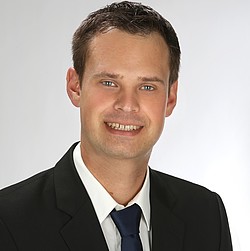
Prof. Niki Kilbertus is an Assistant Professor at the Technical University of Munich (TUM) in the Department of Informatics, and Group Leader at Helmholtz AI. His research focuses on causal machine learning, ethical AI systems, and applications in healthcare, climate science, and dynamical systems. He earned his PhD from the University of Cambridge (2020) and has held positions at DeepMind, Google, and Amazon during his studies. His research interests include causal discovery, fairness in AI, counterfactual reasoning, and integrating physics-based constraints into neural networks. Key contributions include foundational work on fair machine learning (e.g., avoiding discrimination through causal models) and developing methods for causal inference in complex systems like healthcare and climate modeling. Recent work emphasizes generative models for causal interventions, robust treatment effect estimation, and physically consistent neural differential equations. He leads a large interdisciplinary group with over 20 students and postdocs working on projects funded by Helmholtz Association, ERC, and industry collaborations. Notable awards include the Leopoldina Prize for Young Scientists (2024) and membership in the Junge Akademie. His lab maintains active partnerships with ELLIS, MCML, and the Zuse Institute Berlin.
Christof Paar is a Professor of Embedded Security at Ruhr University Bochum's Faculty of Computer Science. His work focuses on hardware security, cryptography, and embedded systems security. He leads the Embedded Security Group within the CASE Cluster of Excellence (Cyber Security in the Age of Large-Scale Attacks), addressing cutting-edge challenges in hardware Trojans, side-channel attacks, and cryptographic engineering. His research spans FPGA and IoT security, with contributions to physical-layer security, wireless jamming defenses, and tamper-resistant systems. Research Interests: Paar's expertise lies in hardware-software co-design for security, with a focus on embedded systems. His work includes analyzing vulnerabilities in FPGAs, developing countermeasures against side-channel attacks, and exploring physical-layer security mechanisms. He also investigates the human factors in hardware reverse engineering and the implications of adversarial machine learning on security systems. Notable Work: Recent publications highlight breakthroughs in detecting hardware Trojans across CMOS generations, breaking industry-standard IP protection mechanisms (IEEE 1735), and proposing novel defenses like IRShield against adversarial wireless sensing. His group actively contributes to standards for secure embedded systems and IoT devices, emphasizing practical implementations.
Prof. Bryan Ford leads the Decentralized/Distributed Systems (DEDIS) lab at EPFL. He focuses on secure decentralized systems, including blockchain technology, privacy, and systems security. He earned his Ph.D. from MIT and held faculty positions at Yale University and EPFL. His work spans distributed consensus protocols, peer-to-peer networking, and privacy-preserving systems. Key projects include QuePaxa (timeout-free consensus), UIA (global connectivity for mobile devices), and MedCo (secure healthcare data sharing). He advises numerous PhD students and contributes to open-source projects like Bitcoin collective signing and privacy networks like Riffle. Education: Ph.D., MIT; Postdoctoral work at Yale Research interests include blockchain scalability, consensus algorithms, and cryptographic privacy. His lab develops systems like TRIP for coercion-resistant voting and F3B to mitigate blockchain front-running. His work on NAT traversal and peer-to-peer protocols (e.g., STUN/ICE) remains foundational in network architecture. He emphasizes practical, auditable security solutions such as CertiKOS and atomic cross-chain transactions (Atom). Notable contributions: CoSi (collective signing), OmniLedger (sharded blockchain), and privacy-preserving protocols like PURBs (Protected Unsealable Recursive Boxes). His lab collaborates with Swiss Post to audit e-voting systems and designs democratic cryptocurrencies like PoPCoin.
Krishna Gummadi is a Scientific Director and Professor at the Max Planck Institute for Software Systems (MPI-SWS) in Germany, where he leads the Networked Systems Research Group. He also holds a professorship at the University of Saarland, demonstrating his dual commitment to research and academic instruction in computer science. His educational background includes: Ph.D. in Computer Science and Engineering from the University of Washington (2005) B.Tech. in Computer Science and Engineering from the Indian Institute of Technology, Madras (2000) Gummadi's research spans networked and distributed computer systems with a current focus on social computing systems. His work addresses critical challenges in algorithmic fairness, privacy in social media, trustworthiness of online identities, and information dissemination in social networks. He approaches these problems through interdisciplinary methods combining user-centric studies, data-centric analysis, and systems-centric design to create practical solutions that enhance fairness, transparency, and user control in online platforms. His methodology integrates large-scale observational studies, computational modeling, and system implementation to tackle complex human-computer interaction challenges at societal scale. His recent publications reveal a strong emphasis on fairness in algorithmic decision making, with significant contributions to quantifying and addressing discrimination in machine learning systems. His work bridges computer science, social science, and ethics, creating frameworks for fair classification, understanding media bias, and developing privacy-preserving techniques that maintain functionality while protecting user data. The research demonstrates a progression from technical system design to addressing societal implications of computing systems. Among his notable scientific achievements: ERC Advanced Grant in 2017 for 'Foundations for Fair Social Computing' Test of Time Awards at ACM SIGCOMM and AAAI ICWSM Casper Bowden Privacy Enhancing Technologies (PET) and CNIL-INRIA Privacy Runners-Up Awards IW3C2 WWW Best Paper Honorable Mention Multiple Best Paper awards across prestigious conferences Gummadi has advised numerous PhD students and postdoctoral researchers who have gone on to prominent positions in academia and industry. His ERC Advanced Grant has supported extensive research into fair social computing, while his leadership in major conferences (including serving as General Chair for ICWSM 2016 and Program Chair for WWW 2015) has shaped research directions in the field. His teaching portfolio includes courses on Distributed Systems, Human-Centered Machine Learning, and Social Media Analysis. He leads the Networked Systems Research Group at MPI-SWS, which has developed several publicly available systems including tools for fair classification, privacy risk assessment, trust evaluation in social media, and information diet management. The group's work bridges theoretical advances with practical implementations that address real-world challenges in social computing, with numerous software releases and datasets made available to the research community.
Jun.-Prof. Dr. Christian Krupitzer is a Tenure Track Professor in Food Informatics at the University of Hohenheim's Institute of Food Science and Biotechnology, part of the Faculty of Natural Sciences. He leads the Department of Food Informatics and is a member of the Computational Science Hub (CSH). His research focuses on self-adaptive software systems, machine learning (especially edge computing), IoT technologies, and software engineering applied to food processing and agricultural systems. Education: PhD in Business Information Systems (Dr. rer. pol.), University of Mannheim (2018) M.Sc. and B.Sc. in Business Information Systems, University of Mannheim (2010–2012) High School Diploma (Abitur) from Wilhelmi-Gymnasium Sinsheim (2007) Research Interests: Krupitzer’s work integrates computational methods with food science, emphasizing adaptive systems for food quality monitoring, IoT in agriculture, and machine learning for predictive analytics. He explores edge computing’s role in real-time decision-making and secure group communication schemes for IoT networks. Publications: His recent work spans predictive maintenance in Industry 4.0, digital twins in food systems, and blockchain applications in supply chain authentication. The articles highlight trends in interdisciplinary approaches combining AI, IoT, and domain-specific challenges in food production and logistics. Awards: No scientific awards explicitly listed in the provided materials. Grants & Advising: While specific grants are unmentioned, his roles as department head and tenure-track professor suggest involvement in research funding. No formal advisee list provided, though his team includes postgraduate researchers like Dana Jox, Daniel Einsiedel, and others. Labs & Teams: Leads the Food Informatics department and collaborates with the Computational Science Hub. His team focuses on developing innovative solutions for food systems through computational methods.
Esfandiar Mohammadi is an Associate Professor at the Institute for IT Security, University of Lübeck, leading the Privacy & Security (PrivSec) group and directing the AnoMed competence cluster. He has held tenured faculty positions since 2019 after postdoctoral research at ETH Zürich (2016-2019) and a PhD at Saarland University (2015). University of Lübeck (2015-present) ETH Zürich (2016-2019) Saarland University (2015) His research focuses on privacy-preserving technologies in machine learning, anonymous communication protocols, and formal verification of security properties. Recent work includes advancements in Mixnet scalability and federated learning with differential privacy guarantees. Key publication trends reveal a strong emphasis on privacy-preserving algorithms for machine learning (2024), cryptographic protocols for anonymous communication (2025), and security analysis of decentralized systems (2023-2025). Collaborations span institutions like ETH Zürich, Saarland University, and industry partners EnergieDock/NAECO Blue for the VeDS project. His group includes 11 researchers (5 PhD students) and software engineers working on topics like Differential Privacy Secure Multi-Party Computation Trusted Execution Environments
Aslan Askarov is an Associate Professor in the Department of Computer Science at Aarhus University, where he leads research in computer security and programming languages. He is a member of the Logic and Semantics Group and maintains an active research program with several ongoing projects. Dr. Askarov's research interests span computer security and privacy, with a focus on foundations, information-flow, covert channels, metadata privacy, and formal methods for security. He also works extensively in programming languages, particularly in semantics, design, type systems, and program analysis. His work bridges theoretical foundations with practical security applications, particularly in web and mobile security contexts. His active projects include Troupe, a programming language for concurrent and distributed programming with dynamic information flow control, and DenIM, a protocol for secure instant messaging with metadata privacy. These projects reflect his commitment to developing practical security solutions grounded in formal methods. Dr. Askarov has published extensively in top security and programming languages venues, with recent work focusing on metadata privacy in instant messaging, separation logic for virtual machine security, and oblivious execution techniques for reactive programs. His research demonstrates a consistent pattern of addressing fundamental security challenges through formal methods and language-based approaches. CSF 2026 ESOP 2026 PLDI 2025 CSF 2025 CSF 2022 CSF 2021 CSF 2020 PriSC 2020 Nordsec 2019 (co-chair) POST 2019 Euro S&P 2018 PLAS 2017 FCS 2017 (co-chair) HotSpot 2017 FCS 2016 (co-chair) CSF 2016 ESSOS 2015 FCS-FCC 2014 ARES 2014 FCS 2013 ARES 2013 PLAS 2013 ARES 2012 PLAS 2011 (co-chair) ISARCS 2010 PLAS 2009 VODCA 2008 Dr. Askarov teaches advanced courses in computer science, including Compilers in Fall 2024 and Language-Based Security in Spring 2024. He is actively recruiting PhD students and postdocs to work in the areas of Programming Languages and Computer Security, demonstrating his ongoing commitment to mentoring the next generation of researchers.
Peter Schwabe is a scientific director at the Max Planck Institute for Security and Privacy and holds academic positions as a part-time professor for cryptographic engineering in the Digital Security Group at Radboud University, Faculty of Science, and as an adjunct professor in the Faculty of Computer Science at Ruhr University Bochum. His career spans multiple prestigious institutions including Academia Sinica and National Taiwan University. Dr. Schwabe's research focuses on cryptography, particularly post-quantum cryptography, cryptographic engineering, and implementation security. His work addresses critical challenges in secure cryptographic implementations, side-channel resistance, and the transition to quantum-resistant algorithms. He has made significant contributions to NIST's post-quantum cryptography standardization project, particularly with CRYSTALS-Kyber which was selected for standardization in July 2022. His publication record shows a strong emphasis on practical implementations of cryptographic algorithms, formal verification of security properties, and addressing real-world security challenges. Recent work centers on verifying Kyber implementations, protecting against Spectre variants, and developing high-assurance cryptographic software. Dr. Schwabe has received significant recognition in the field, serving as an elected member of the IACR Board of Directors and participating in various steering committees including the IACR CHES and RWC Steering Committees. He also serves on advisory boards for several security-focused companies. As an advisor, he has supervised numerous PhD students working on cutting-edge cryptographic research, with recent graduates focusing on post-quantum cryptography, side-channel resistance, and formal verification of cryptographic implementations. His research group actively contributes to both theoretical advances and practical implementations in cryptography.
Prof. Dr. rer. nat. Rainer Leupers is a faculty member at RWTH Aachen University, chairing the Department of Software for Systems on Silicon. His research focuses on embedded systems, hardware-software co-design, virtual prototyping, and security in computing-in-memory architectures. He has published extensively on RRAM accelerators, logic locking, and neuromorphic security. Chair of Software for Systems on Silicon Research in hardware security and deep learning accelerators Recent publications on cross-tool virtual frameworks and thermal side-channel attacks His work bridges system-level modeling with practical security implementations, emphasizing reliability and performance in heterogeneous computing environments. Key trends in his 2025-2023 articles include compute-in-memory optimization, neural network inference efficiency, and security vulnerabilities in emerging hardware. Awards and formal recognitions are not explicitly detailed in the provided materials. He has not directly mentioned advising students or research grants in the given text fragments. The chair's contact information includes an office at ICT Cube 1, Electrical Engineering, Aachen, with direct email and website links.
Rainer Böhme is a Professor at the University of Münster, Germany. His research focuses on cyber security, cryptography, steganography, digital forensics, and blockchain technology. He has made significant contributions to understanding cyber risk quantification, central bank digital currencies (CBDCs), and the socio-technical challenges in cryptocurrency systems. Key areas of research include steganalysis (analysis of hidden data in digital media), forensic techniques for neural network inference pipelines, and the economic implications of cyber insurance. He actively contributes to conferences like the Financial Cryptography Workshops (FC) and the Workshop on Information Hiding and Multimedia Security (IH). Böhme's work bridges theory and practice, addressing real-world issues such as privacy in CBDCs, adversarial attacks on AI systems, and the role of law enforcement in cryptocurrency markets. His recent studies explore the security implications of image orientation in JPEG files and the detection of privileged parties in blockchain transactions. He has collaborated with institutions like the University of Vienna and ETH Zurich, and his research has been published in top-tier venues such as IEEE Transactions on Information Forensics and Security and the ACM Conference on Computer and Communications Security (CCS).
Stefan Decker is a full University Professor (Universitätsprofessor) at RWTH Aachen University, Germany, where he heads the Chair of Information Systems and Databases (Informatik 5) within the Faculty of Mathematics, Computer Science and Natural Sciences. He is actively involved in teaching, research, and the supervision of numerous ongoing and completed doctoral, master’s, and bachelor theses. Education & Academic Background Doctorate (Dr. rer. pol.) – field of Information Systems or related (exact institution/year not stated in text). Appointed as University Professor and Chair of Information Systems and Databases at RWTH Aachen University. Research Interests Prof. Decker’s work lies at the intersection of databases, knowledge graphs, semantic web technologies, data science, and cybersecurity . He investigates architectures and algorithms for large-scale, privacy-preserving, decentralized data analytics , develops ontology-driven information systems , and explores the use of large language models (LLMs) for educational technology, anomaly detection, and incident-response playbooks. Additional focal areas include smart energy systems, mixed-reality learning environments, FAIR data principles, and federated machine learning . Scientific Contributions & Trends His recent publications (2022-2025) demonstrate a clear trend toward explainable AI, LLM-enhanced systems, secure data spaces, and semantic interoperability . Key contributions include novel anomaly-detection frameworks for encrypted power-grid communications, knowledge-graph-driven chatbots for higher-education support, and methodological advances in decentralized analytics and FAIR data sharing. These works are disseminated in top-tier venues such as AAAI, IEEE ISGT Europe, ESWC, IDEAL, and various Springer LNCS and IEEE Transactions. Supervision & Grants Doctoral Theses Advised: A. T. Neumann – “Chatbots as professional companions in large-scale community information systems” (2024) S. M. Welten – “Methods for practical data sharing and decentralized analytics” (2025) Master’s Theses Co-Advised: A. R. Küsters – “Object-centric process constraints using variable bindings” (2025) Additionally supervising more than 30 ongoing bachelor, master, and doctoral projects covering topics such as LLM-driven cybersecurity playbooks, knowledge-graph construction for German law, privacy-preserving analytics in smart grids, and mixed-reality learning agents. Principal investigator or senior researcher in large collaborative projects including NFDI4DS, WestAI, champI4.0ns and several EU/national initiatives on sovereign data spaces and AI services. Labs & Teams Prof. Decker leads the Information Systems & Databases (DBIS) Research Group . The group operates well-equipped laboratories for knowledge-graph engineering, mixed-reality applications, privacy-enhancing technologies, and secure distributed analytics . Current team size exceeds 30 researchers including PhD candidates, postdocs, and scientific programmers, supported by national and EU funding streams.
Dominique Unruh is a Professor at RWTH Aachen University , leading the Chair for Quantum Information Systems . Additionally, they hold a Professorship in Cryptography at the Institute of Computer Science of the University of Tartu , Estonia. Their research spans quantum computing , quantum cryptography , post-quantum cryptography , and formal verification of cryptographic protocols and programs. Research Focus : Quantum programs, zero-knowledge proofs, lattice-based cryptography, and quantum random oracle model. Key Contributions : Advancements in NTRU encryption efficiency, quantum Hoare logic, and rewinding techniques for security proofs. Tools : Active development in the EasyCrypt framework for cryptographic verification. Email : unruh@cs.rwth-aachen.de
Jason C. Woodworth is a researcher affiliated with the University of Louisiana at Lafayette, LA, USA. His work primarily focuses on Virtual Reality (VR) and Secure Data Search technologies. Through extensive collaborations, he has explored innovative applications of VR in education, emotion tracking, and cross-reality interfaces, while contributing to methods for secure semantic search over encrypted cloud data. Research Interests: VR for attention guidance, emotion recognition in immersive environments, collaborative VR tools, and secure search architectures. Publication Trends: His recent studies emphasize Visual Cues in VR for attention management, Transformer-based Emotion Recognition , and Time-Continuous Emotion Rating systems. Collaborations: Frequent co-authorship with Christoph W. Borst and Mohsen Amini Salehi, indicating strong partnerships in VR and cybersecurity domains. Contributions: Pioneering work in Teacher-Guided Educational VR , Avatar Redirection for cross-reality communication, and privacy-preserving Secure Semantic Search frameworks.
Dr. rer. nat. Joscha Grüger is a researcher at the Experience-based Learning Systems department of the University of Trier . His work bridges artificial intelligence, medical informatics, and software engineering, focusing on AI-driven solutions for healthcare and data-intensive applications. Current research projects include: KI-AIM : AI-based anonymization in medicine KIAFlex : Interactive AI assistance for predictive and flexible control in discharge management DaTreFo : Encrypted data stewardship for medical research Pre-OnkoCase : Case-oriented decision support for skin cancer treatment His publications highlight expertise in probabilistic programming, IoT-enhanced event logs, and clinical decision support systems. Collaborations span international conferences like Petri Nets 2025, ICCBR, and RCIS. Contact: Joscha.Grueger@dfki.de .
Jingling Xue is a Scientia Professor at the School of Computer Science and Engineering at the University of New South Wales (UNSW) in Sydney, Australia. As an IEEE Fellow of the Computer Society, he leads the Programming Languages and Compilers research group, focusing on practical applications of compiler optimization and program analysis techniques. His work bridges theoretical foundations with real-world software systems, particularly in developing open-source tools for large-scale program analysis. Professor Xue received his B.Eng and M.Eng degrees from Tsinghua University in 1984 and 1987, respectively, followed by a PhD from the University of Edinburgh in 1992. His academic journey has established him as a leading figure in programming languages and compiler technology. Xue's research spans programming languages, compiler technology, and program analysis with emphasis on practical relevance. His current projects include compiler techniques for improving parallelism and locality, pointer/alias analysis for million-line-scale programs, and static/dynamic analysis for detecting bugs and security vulnerabilities in real-world applications like web browsers and Android apps. His group actively develops open-source tools to support scientific replicability and reproducibility in these areas. His recent publications demonstrate a strong focus on applying program analysis techniques to modern challenges including AI compilers, homomorphic encryption, security vulnerability detection, and graph processing systems. The work shows evolution from traditional compiler optimization to addressing emerging domains like privacy-preserving computation and deep learning systems while maintaining rigorous theoretical foundations. Scientific Awards: Best Paper Award at CGO'13 Best Paper Award at CGO'16 Distinguished Paper Award at ECOOP'16 Distinguished Paper Award at ICSE'18 Distinguished Paper Award at ISSTA'19 Distinguished Paper Award at ASE'19 Distinguished Artifact Award at ISSTA'23 Best Artifact Award at FSE'23 Distinguished Paper Award at ASE'23 Test-of-Time Award at CGO'21 Professor Xue has successfully supervised 30 PhD students to completion, many of whom now work as professors or researchers in academia and industry. He has served as Program Chair for major conferences including LCTES'13, CC'18, CGO'20, and General Chair for LCTES'20. His group currently focuses on memory safety in Rust, smart contract analysis, AI compilers, compilation for privacy-preserving computation, and adversarial attacks in deep learning. The Programming Languages and Compilers group maintains strong connections with industry partners, translating theoretical advances into practical tools for real-world software development challenges. Their work on pointer analysis, memory safety, and compiler optimizations continues to influence both academic research and industrial practice.