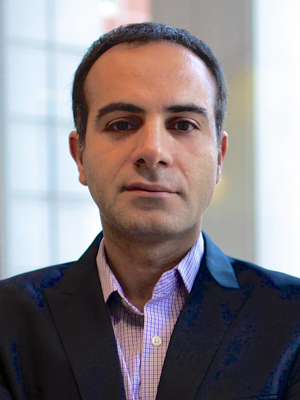
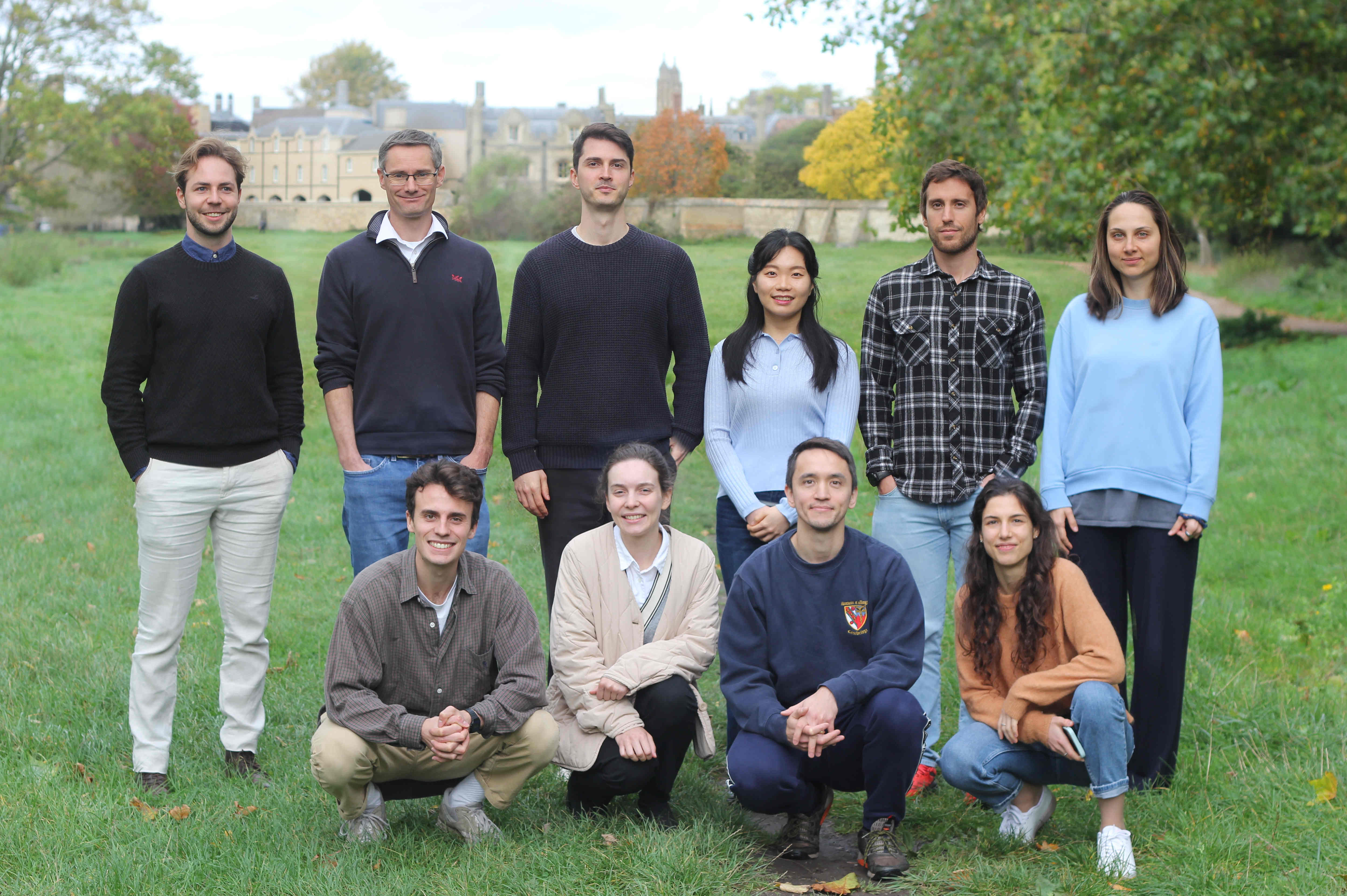
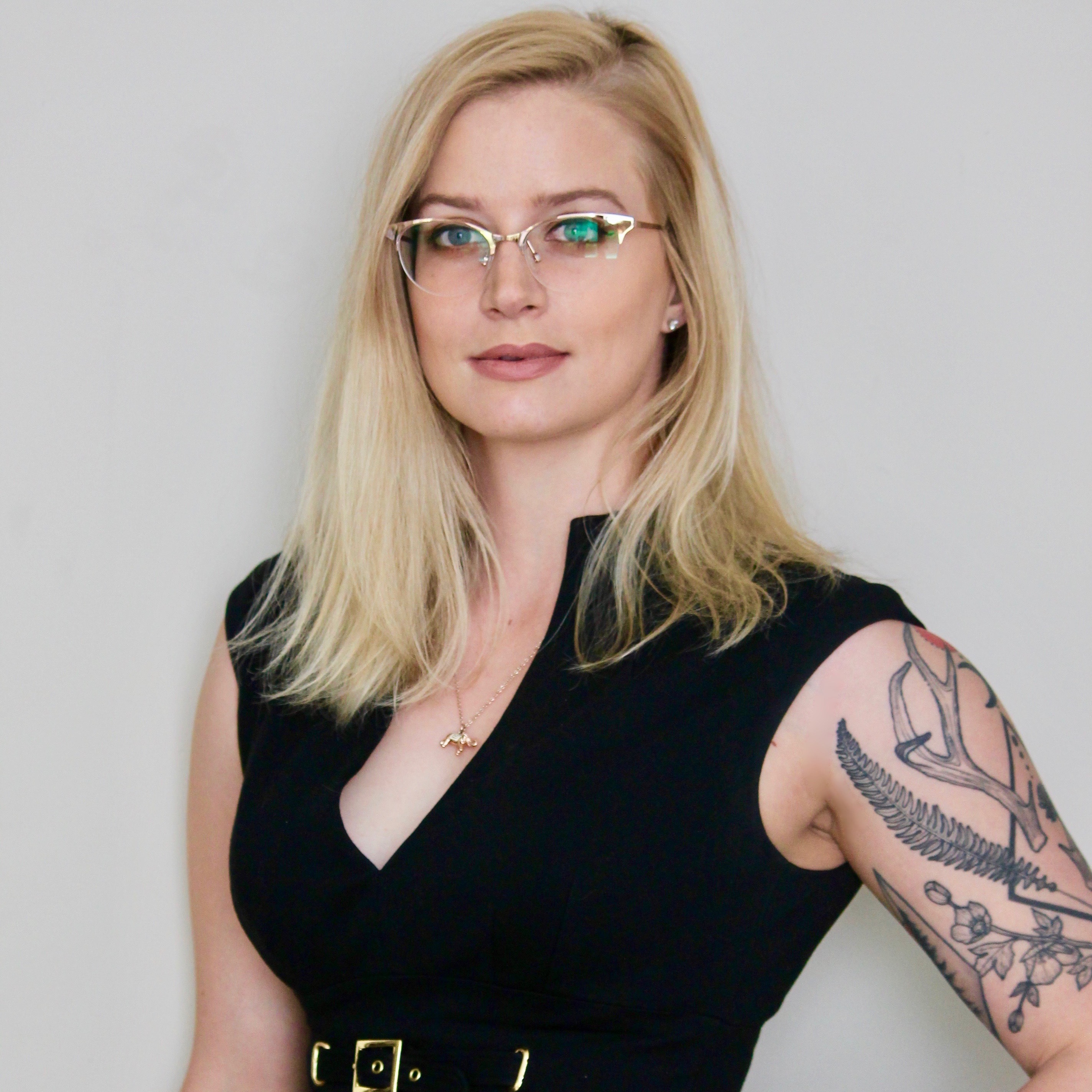
Dr Henry Moss is a Researcher at the Department of Applied Mathematics and Theoretical Physics within the School of Physical Sciences at the University of Cambridge. His work focuses on machine learning applications in climate modeling, Bayesian optimization, and Gaussian processes, bridging computational mathematics with environmental science and chemistry. His research interests include: Bayesian optimization for environmental and chemical systems Reinforcement learning in climate modeling Gaussian processes for molecular property prediction High-throughput machine learning in scientific domains Interpretable AI for coastal flooding prediction Hybrid ML-physics modeling Dr Moss's publications highlight his contributions to federated learning for climate models, sparse Gaussian process techniques, and multi-objective optimization frameworks. These works span applications in weather prediction, chemical engineering, and oceanography. Email: hwm26@cam.ac.uk
Mayank R. Mehta is a Professor at the University of California, Los Angeles (UCLA), holding joint appointments in the Departments of Physics & Astronomy, Neurology, and Neurobiology. He is a member of the Brain Research Institute and the W. M. Keck Center for Neurophysics at UCLA. His research bridges experimental and theoretical neuroscience, focusing on how neuronal networks encode space-time, the role of brain rhythms in learning and memory, and the impact of sleep and virtual reality on neural dynamics. His recent publications highlight breakthroughs in understanding hippocampal spatiotemporal selectivity, dendritic activity during behavior, and the causal influence of visual cues on memory neurons. Notable findings include the discovery that dendrites generate ten times more spikes than neuronal cell bodies and the modulation of hippocampal theta rhythms in virtual reality. Research Themes: Neurophysics of spatial-temporal coding Dendritic contributions to learning Virtual reality and brain plasticity Neural oscillations in memory consolidation Key Collaborators: Bert Sakmann (Max Planck Florida Institute) Thomas Hahn (Bernstein Center Heidelberg/Mannheim) Maryam Ghorbani (UCLA) Mehta's lab at UCLA trains graduate and postdoctoral researchers in cutting-edge techniques combining hardware development, electrophysiological recordings, and biophysical modeling. His work has significant implications for treating learning and memory disorders like Alzheimer's disease.
Dr. Soonja Choi is a Research Professor in the Comparative Psycholinguistics Group at the University of Vienna and Director of the Korean Studies Program at San Diego State University (SDSU), where she holds the title of Professor Emerita of Linguistics. She earned her Ph.D. in Linguistics from the University of Buffalo (1986) and holds advanced degrees from institutions in France and South Korea. Her research focuses on language and thought, semantics, spatial language, and Korean linguistics, with a particular emphasis on cross-linguistic studies of spatial categorization and its cognitive implications. Research Contributions: Her work has explored how language influences spatial perception and cognition, notably through long-term collaborations with the Max Planck Institute for Psycholinguistics and the National Science Foundation. Key contributions include studies on spatial term development in Korean/English children and cross-linguistic comparisons of spatial semantics between German, Korean, and English. Grants & Awards: Secured over $1.4M in grants including a EUR 600,000 Vienna Science Fund grant (2016-2020) and multiple NSF awards. Elected to the Academy of Europe (2019) as an Ordinary Member. Professional Roles: Served as Chair of SDSU's Department of Linguistics and Oriental Languages (1997-2000, 2001-2002), Graduate Advisor (multiple terms), and editorial board member for Language, Interaction, and Acquisition . Active in academic governance and international linguistic organizations.
Yi Fang is an Associate Professor of Computer Engineering and an affiliated Associate Professor of Computer Science at New York University Abu Dhabi (NYUAD), and a Global Network Associate Professor at NYU Tandon. He is a core faculty member in the Division of Engineering, specializing in Electrical and Computer Engineering. His research is centered at the intersection of Embodied AI, Robotics, and AI-driven assistive technologies, with strong support from agencies such as the US NSF, UAE ADEK, and ASPIRE. PhD, Purdue University Yi Fang's research interests span 3D Computer Vision, Multimedia Processing, Machine Learning, Deep Learning, and Embodied AI . He focuses on AI-driven perception, learning, and real-world applications, particularly in engineering, medicine, and accessibility. His lab, the Embodied AI and Robotics (AIR) Lab, develops intelligent robotic systems that integrate perception, learning, and decision-making to solve complex societal challenges. His work emphasizes large-scale visual computing, deep visual learning, and cross-domain/multimodal foundation models , with recent innovations in assistive AI for the Deaf and Hard-of-Hearing community. The 15 most recent publications reflect a consistent focus on 3D vision, sketch-based 3D retrieval, point cloud learning, and assistive computer vision . His work leverages deep learning, adversarial training, metric learning, and generative models to bridge modalities such as sketches, depth images, and 3D models. There is a clear trend toward cross-modal understanding, unsupervised representation learning, and real-world assistive applications , especially for visually impaired individuals. Yi Fang actively contributes to the academic community as an Area Chair for top-tier conferences including CVPR, ECCV, ICCV, IJCAI, and IROS. He also serves in peer review and mentoring roles, shaping the future of AI and robotics research. As a dedicated educator, he teaches foundational and advanced courses such as Computer Vision, Applied Machine Learning, Data Structures, and Capstone Design . He mentors students through research seminars and honors projects, fostering innovation and technical excellence. His research is supported by major grants from US NSF, UAE ADEK, and ASPIRE, enabling high-impact interdisciplinary collaborations. He founded and directs the Embodied AI and Robotics (AIR) Lab at NYU Abu Dhabi, a dedicated research space for developing intelligent systems that seamlessly integrate perception, learning, and decision-making. The lab promotes interdisciplinary collaboration across engineering, medicine, and social sciences, advancing the frontiers of Embodied AI.
Marcia O’Malley is the Thomas Michael Panos Family Professor in Mechanical Engineering, Computer Science, Electrical and Computer Engineering, and Bioengineering at Rice University’s George R. Brown School of Engineering. She chairs the Department of Mechanical Engineering and directs the Mechatronics and Haptic Interfaces (MAHI) Lab. Her research focuses on haptics and robotic rehabilitation, particularly wearable robotic systems for training and rehabilitation in virtual environments. She holds adjunct roles at Baylor College of Medicine and the University of Texas Medical School. Educated at Purdue University (B.S., 1996) and Vanderbilt University (M.S./Ph.D., 1999/2001), Dr. O’Malley has been recognized with prestigious awards, including the ONR Young Investigator Award, NSF CAREER Award, and multiple fellowships. She has twice won Rice’s George R. Brown Award for Superior Teaching. Her work bridges engineering and medicine, addressing human-robot interaction challenges in surgical training, workforce safety, and neurorehabilitation. The MAHI Lab develops devices like the hBracelet and Rice Haptic Rocker to enhance human-robot collaboration. She co-founded Houston Medical Robotics, Inc., applying her innovations to real-world medical applications. Research Interests: Haptics, wearable robotics, neural interfaces, surgical training metrics, and rehabilitation robotics. Labs/Teams: MAHI Lab (Biosciences Research Collaborative), collaborations with medical institutions. Grants/Awards: Extensive funding from NSF, ONR, and industry partnerships; leadership in editorial roles for IEEE Transactions on Haptics.
Professor Haijiang Li is a Chair in BIM for Smart Engineering at Cardiff University's School of Engineering. His roles include leading the Computational Mechanics and Engineering AI Research Group, directing the BIM for Smart Engineering Centre, and overseeing the BIM MSc programme. He holds editorial roles for journals like Construction Innovation and Automation in Construction , and chairs the European Group of Intelligent Computing in Engineering (EG-ICE). Research focuses on smart computational engineering platforms integrating BIM, AI, and big data for sustainable infrastructure. Key areas include digital twins, disaster management, and resilient urban systems. He has secured £40M in research funding, including £9M as PI, and led over 70 research staff and students. Prof. Li is a Standards Committee Technical Executive at buildingSMART, driving international BIM standards. His work includes co-authoring a book on BIM standards across China, the US, and the UK. Awards include Fellowships from the British Computer Society (FBCS) and the Higher Education Academy (FHEA). His research outputs span over 250 publications, covering topics like AI-driven bridge maintenance, ontology-based decision-making, and energy-efficient urban systems. Collaborations with industry and global partners emphasize practical applications of BIM and smart technologies.
Yaser Sheikh is an Associate Professor at the Robotics Institute of Carnegie Mellon University (on leave) and Director of the Facebook Reality Lab, Pittsburgh . He holds appointments in the Mechanical Engineering Department and focuses on ' metric telepresence ' for AR/VR interactions. His research spans machine perception , computer vision , computer graphics , and machine learning , with applications in social behavior modeling and dynamic 3D reconstruction. University: Carnegie Mellon University Roles: Associate Professor (Robotics Institute), Director (Facebook Reality Lab) Contact: yaser@cs.cmu.edu, yasers@fb.com Research Interests include: Computer Vision: Pose estimation, 3D reconstruction, camera calibration Computer Graphics: Face/Hand animation, photorealistic rendering Machine Learning: Neural rendering, unsupervised learning for landmark detection AR/VR: Telepresence, immersive social interactions Notable Trends in Publications reveal a focus on real-time pose estimation (e.g., OpenPose), dynamic 3D reconstruction , and codec avatars for VR/AR. Recent works emphasize universal priors and neural rendering for photorealistic avatars. Scientific Awards include: Popular Science’s Best of What’s New Award Honda Initiation Award (2010) Best Paper Awards: WACV (2012), SCA (2010), ICCV THEMIS (2009) Hillman Fellowship for Excellence in Computer Science Research (2004) Advising and Grants: He has advised numerous PhD students (e.g., Hanbyul Joo, Tomas Simon) and received funding from the National Science Foundation , DARPA, and industry partners like Intel , Disney , and Honda . Labs & Teams: Leads the Facebook Reality Lab in Pittsburgh, collaborating with institutions like Carnegie Mellon University and Disney Research.
Giacomo Indiveri is a dual Professor at the Faculty of Science of the University of Zurich and the Department of Information Technology and Electrical Engineering of ETH Zurich . He serves as the Director of the Institute of Neuroinformatics at both institutions. Indiveri holds an M.Sc. in Electrical Engineering (1992) from the University of Genoa and a Ph.D. in Computer Science (2004) from the same university. Primary Affiliation: University of Zurich (Faculty of Science, Institute of Neuroinformatics) Secondary Affiliation: ETH Zurich (Department of Information Technology and Electrical Engineering) Indiveri's research bridges neuroscience , computer science , and machine learning to develop neuromorphic cognitive systems . His work focuses on spike-based learning , recurrent neural networks , and analog/digital circuit design for real-time sensory-motor systems . He integrates emerging memory technologies into fault-tolerant event-based architectures, enabling brain-inspired computing paradigms in applications like robotics and medical monitoring. His recent publications emphasize neuromorphic hardware for epileptic seizure detection , spiking neural networks in robotic painting , and scalable processors with on-chip learning . These works explore biologically plausible neurons , delay lines , and memory arrays for temporal processing, with applications in healthcare , edge computing , and adaptive control . Scientific Awards & Recognitions: 2021 IEEE Biomedical Circuits and Systems Best Paper Award Senior Member of IEEE Society ERC Fellow with three European Research Council grants Indiveri's group at the Institute of Neuroinformatics develops event-based systems for real-world validation of brain-inspired computing. His work includes multi-core processors , feedback optimizers , and dynamic routing architectures , supported by grants for advancing neuromorphic technologies .
J. Anthony Movshon is a Professor at New York University (NYU) in the Department of Psychology and a key member of NYU's Center for Neural Science (CNS). His research focuses on the primate visual system, particularly the encoding and decoding of visual information in cortical areas like V1 and MT, and its role in behavior and perception. Education: Doctorate in Visual Neurophysiology and Psychophysics from Cambridge University Research Interests: Movshon investigates the functional architecture of the visual cortex, emphasizing motion, form, and color processing. His work explores how neural activity relates to perceptual decisions and motor behavior, using electrophysiological recordings, neuroimaging, and computational models. He also studies developmental disorders like amblyopia and their impact on visual system organization. Publications: His recent work spans visual texture selectivity in V2, contextual modulation in neural responses, motion processing in MT, and decoding mechanisms in visual cortex. These studies employ interdisciplinary approaches blending neurophysiology, computational neuroscience, and cognitive modeling. Labs & Collaborations: Movshon leads the Visual Neuroscience Laboratory at NYU, collaborating with researchers such as Michael Hawken, Lynne Kiorpes, and Eero Simoncelli.
Nima Mesgarani is an Associate Professor of Electrical Engineering at Columbia Engineering, Columbia University, affiliated with the Sense, Collect and Move Data Committee. His research bridges engineering and neuroscience through reverse-engineering neural signal processing mechanisms, leading to advancements in brain-machine interfaces, neural prosthetics, and speech processing algorithms. He received his PhD in Electrical Engineering from the University of Maryland and completed postdoctoral training at Johns Hopkins University's Center for Language and Speech Processing and UC San Francisco's Neurosurgery Department. Research Focus Professor Mesgarani's lab integrates computational neuroscience and engineering to study acoustic signal processing. Key areas include: Neural decoding of speech and auditory attention in multi-talker environments Development of brain-controlled hearing technologies Novel speech separation and synthesis algorithms inspired by cortical processing Cross-modal learning between auditory and visual systems Applications of large language models in neural signal interpretation Publication Trends Analysis of his 15 most recent articles (2025) reveals dominant themes: neural decoding techniques using intracranial EEG, brain-inspired speech separation models (e.g., Mamba architectures), applications of large language models in auditory neuroscience, cross-modal distillation methods, and clinical translation of audio processing algorithms. A strong emphasis emerges on real-time brain-computer interfaces and noise-robust speech processing. Laboratory and Collaborations Mesgarani directs an interdisciplinary lab developing neurotechnology for hearing restoration. His team collaborates with neurosurgery departments and speech processing centers, focusing on translating theoretical models into clinical brain-machine interfaces. The lab's work has yielded patents for brain-informed speech separation systems and attention-decoding frameworks.
Danai Koutra is an Associate Professor in Computer Science and Engineering at the University of Michigan, Ann Arbor, and an Amazon Scholar. Her research focuses on large-scale graph mining, graph neural networks, and interpretable machine learning methods for understanding complex networks. Key roles include leading the GEMS Lab and contributing to projects like DeltaCon (graph similarity) and VoG (graph summarization). She holds a PhD from Carnegie Mellon University and has authored over 80 publications in top venues like KDD, SDM, and NeurIPS. Educations: PhD in Computer Science, Carnegie Mellon University (2015) MS in Computer Science, Carnegie Mellon University (2015) Diploma in Electrical & Computer Engineering, National Technical University of Athens (2010) Research Interests: Her work spans graph mining, anomaly detection, knowledge graph completion, and applications in neuroscience, healthcare, and social networks. Recent projects include MAGNET (multi-agent graph networks) and GT2VEC (multimodal graph-text encoders). Grants & Awards: Recipient of the 2025 PECASE award, NSF CAREER Award (2019), and the 2016 ACM SIGKDD Dissertation Award. Active in organizing conferences like KDD and ECML/PKDD. Labs & Teams: Directs the GEMS Lab, collaborating on projects like FIDDLE (clinical data preprocessing) and SpecGreedy (dense subgraph detection). Engages in interdisciplinary efforts, including M-DICE (urban mobility analysis with Detroit).
Huamin Qu is a Chair Professor in the Department of Computer Science and Engineering at the Hong Kong University of Science and Technology (HKUST). He serves as the Founding Dean of the Academy of Interdisciplinary Studies (AIS), Founding Head of the Division of Emerging Interdisciplinary Areas (EMIA), and was the Founding Acting Head of Computational Media and Arts (CMA) at HKUST(GZ). Qu directs the VisLab and coordinates the Human-Computer Interaction (HCI) group. He obtained his BS in Mathematics from Xi'an Jiaotong University and MS/PhD in Computer Science from Stony Brook University. Qu's research integrates Data Visualization , Human-Computer Interaction , and Human-Centered AI , with applications in urban informatics, social networks, and explainable AI. His work focuses on developing interactive systems for big data analytics, visual storytelling, and AI-driven decision support. Research extends to multimodal communication, fintech, and augmented reality applications. His publications emphasize visual analytics for complex datasets (mobility, social media, financial), interaction techniques for immersive environments, and AI-enhanced visualization tools. Recent works explore explainable AI interfaces and large-scale data communication frameworks. IEEE Visualization Academy (2020) IEEE VGTC Technical Achievement Award AI 2000 Most Influential Scholar (2019, 2023, 2024) 21 Best Paper/Honorable Mention awards IBM Faculty Award (2009) APICTA Merit Award (2015) Yelp Dataset Grand Prize (2018) Qu has advised 48 PhD graduates (21 now faculty at institutions like UC Davis, University of Minnesota, Texas A&M) and 30 MPhil students. He secured major grants including RGC theme-based projects (digital citizenship, air pollution), UGC AoE (slope safety), and China's 973 Program. As VisLab director, he leads 20+ researchers in visualization/HCI projects adopted by Microsoft, IBM, Huawei, and Tencent.
Richard E. Turner is a Professor of Machine Learning at the University of Cambridge's Department of Engineering and Research Lead for AI for Weather Prediction at the Alan Turing Institute. He serves as Cambridge Lead for the EPSRC Probabilistic AI Hub and previously held roles including Visiting Researcher at Microsoft Research, Co-Director of the AI4ER CDT, and Course Director for the Machine Learning and Machine Intelligence MPhil program. Current research focuses on probabilistic machine learning fundamentals, environmental prediction (weather/climate), and spatio-temporal modeling combining deep learning with Bayesian methods Supervised 26 PhD students (13 graduated) and 7 research assistants/associates Secured over £30M in research funding from EPSRC, Microsoft, Toyota, Google, DeepMind, Amazon, and Improbable Featured in BBC Radio 5 Live's The Naked Scientist, BBC World Service's Click, and Wired Magazine His recent publications demonstrate expertise in diffusion models for PDE simulations, Gaussian Processes for environmental applications, and Bayesian methods for spatio-temporal forecasting. Key trends include climate modeling using ML, neural PDE solvers, and scalable probabilistic inference. Awards : Cambridge Students' Union Teaching Award for Lecturing; supervised Qualcomm Innovation Fellowship winner Collaborations : Microsoft Research (AI4Science), Alan Turing Institute, EPSRC Probabilistic AI Hub Turner leads the Turner Group within Cambridge's Machine Learning Group, focusing on uncertainty-aware ML for scientific applications. Current research assistants work on topics like meta-learning, Bayesian inference, and climate science applications.
Yin Tat Lee is an Associate Professor at the Paul G. Allen School of Computer Science & Engineering , University of Washington, and a Senior Principal Researcher in Microsoft AI. His research spans convex optimization , convex geometry , graph algorithms , online algorithms , and differential privacy , with applications in machine learning and theoretical computer science.
Dr. Emily Wall is an Assistant Professor in the Department of Computer Science at Emory University, leading the CAV Lab (Cognition and Visualization). She earned her Ph.D. in Computer Science from Georgia Tech (2020) and completed a postdoctoral fellowship at Northwestern University before joining Emory. Ph.D., Computer Science, Georgia Tech (2020) Postdoctoral Researcher, Northwestern University Current: Assistant Professor, Emory University Her research focuses on enhancing human decision-making through data visualization and visual analytics by addressing cognitive limitations and biases. Key areas include metacognition promotion, computational strategies for bias mitigation, and human-AI collaboration in data analysis. She combines cognitive psychology principles with technical implementation using tools like D3.js and Tableau. Recent publications highlight her work on LLM applications in visual analytics, cognitive bias interventions, and trust calibration in AI systems. Current students like Mengyu Chen, Shiyao Li, and Zhongzheng Xu are presenting at top conferences such as CHI and IEEE VIS. She also explores educational applications through interactive visualization pedagogy and innovative assessment methods. Dr. Wall actively engages in academic service through graduate mentorship, conference judging, and diversity initiatives. Her lab emphasizes both technical proficiency and social justice implications in visualization design, reflected in course projects that merge artistic expression with data-driven storytelling.