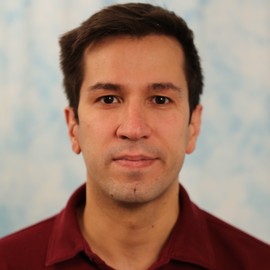
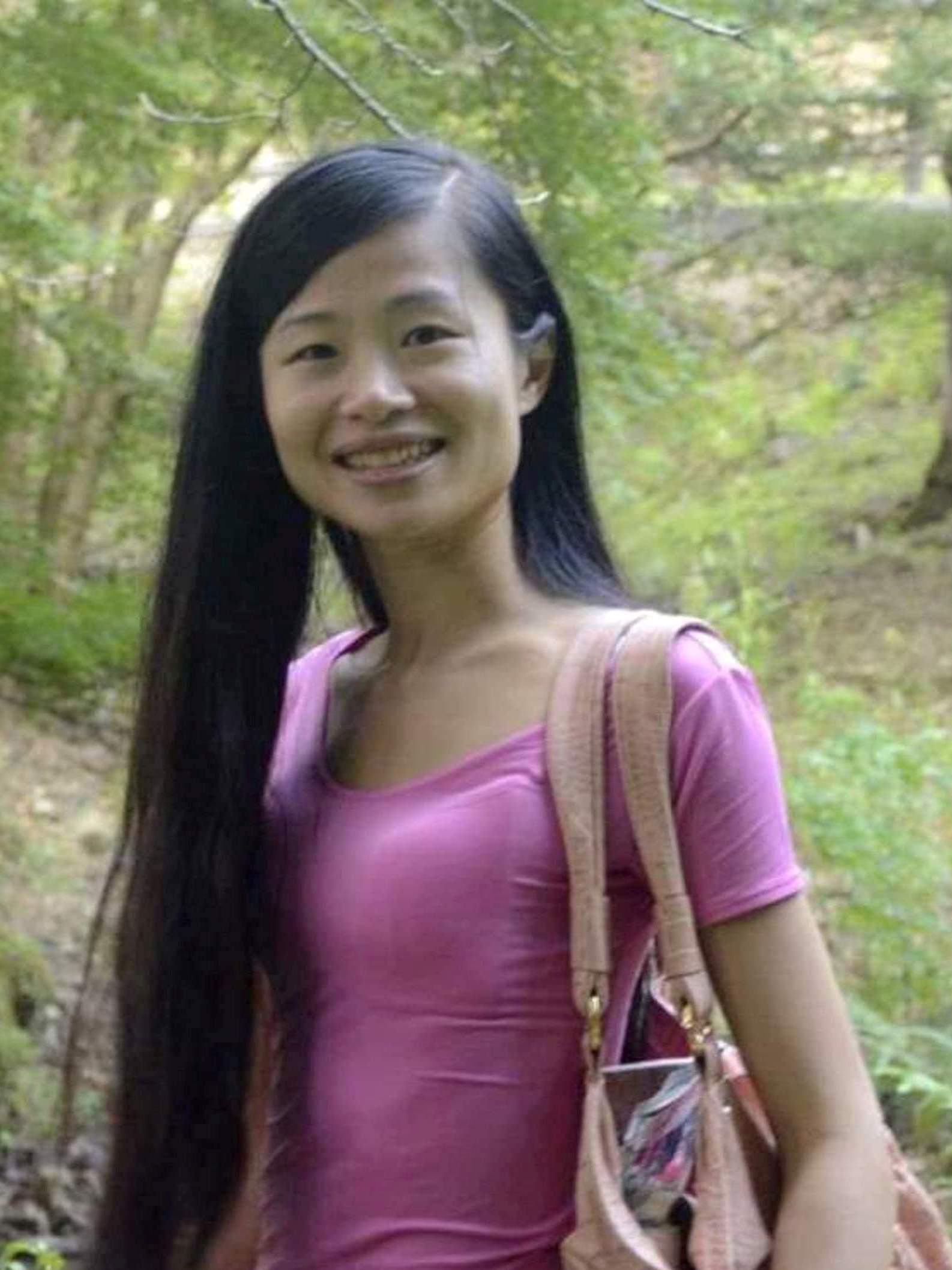
Susanne Narciss is a Professor at the Psychology of Learning and Instruction department of Technische Universität Dresden, leading the Center of Tactile Internet with Human in the Loop (CeTI). Her research focuses on error processing in educational contexts, with 15 recent publications analyzing error climates, feedback strategies, and motivational frameworks. Key Research Areas : Learning from errors/failure, instructional feedback design, affective-motivational responses, error-related metacognition. Methodological Scope : Combines longitudinal studies, experimental designs, and qualitative analyses across K-12, university, and informal learning settings (museums, home contexts). Her work emphasizes context-specific interventions for educators, parents, and students, including error-competency training programs and metacognitive scaffolding tools. Current projects examine vibrotactile feedback systems for motor learning and cultural responsiveness in psychology education. Collaborative Networks : Works with international teams on the International Competences for Undergraduate Psychology model and cyber-physical system pedagogy. Recent Trends : 2025 articles focus on collaborative error processing, scenario-based human-machine interaction, and generative learning tasks in digital environments.
Prof. Florian Zaussinger is a faculty member at the Faculty of Applied Computer and Life Sciences at Mittweida University of Applied Sciences. His research focuses on thermal convection, fluid dynamics, and numerical simulations in both geophysical and astrophysical contexts. He has contributed extensively to studies on microgravity experiments, including the GeoFlow and AtmoFlow projects conducted on the International Space Station (ISS). University: Mittweida University of Applied Sciences Faculty: Applied Computer and Life Sciences Department: Mathematics Contact: +49 3727 58-1381 | florian.zaussinger@hs-mittweida.de | Building 6, Room 6-131 His research involves advanced numerical modeling of complex fluid systems, including spherical convection, dielectric heating, and double-diffusive processes. He has developed and applied computational tools like the ANTARES code to simulate convection in DA white dwarfs, planetary atmospheres, and Earth's mantle. His work bridges theoretical fluid mechanics with experimental validation in space-based microgravity environments. Recent publications highlight his expertise in thermo-electrohydrodynamic convection, planetary fluid flow analysis, and microgravity-induced instabilities. While the scraped data does not list scientific awards or students directly, his academic profile emphasizes interdisciplinary collaboration with engineering and life sciences, particularly in applied mathematics for fluid dynamics and experimental data processing.
Dr. Eric T. Reifenstein is a neuroscience researcher at Humboldt-Universität zu Berlin's Faculty of Life Sciences, Institute of Biology, specializing in neural mechanisms of spatial navigation and memory. As a key contributor to SFB 1315 (Entorhinal Cortex as Interface between Memory and Space), his work bridges computational modeling and human electrophysiology. His research focuses on egocentric spatial mapping and sequence learning mechanisms , with particular expertise in human single-neuron recordings during virtual navigation tasks. Reifenstein investigates how the brain encodes self-centered spatial representations and how synaptic learning rules enable temporal sequence memorization. His publication trends reveal a strong emphasis on translational neuroscience , connecting rodent studies to human cognition through innovative virtual reality paradigms. Key methodological approaches include single-neuron recordings, computational modeling of neural networks, and behavioral analysis of spatial memory. Scientific contributions include: Identification of egocentric bearing cells in human parahippocampal cortex Mathematical analysis of phase precession in sequence learning Vectorial representation models of egocentric space Reifenstein actively collaborates with leading researchers including Prof. Richard Kempter and Joshua Jacobs, contributing to major neuroscience journals like Neuron and eLife. His work has implications for understanding memory disorders and developing neural prosthetics.
Dr. Jacek Kudera is a post-doctoral researcher in the Department of Phonetics at the University of Trier, coordinator of the LODinG project at the Trier Center for Digital Humanities, and adjunct faculty at WSB Merito University in Wrocław. His work bridges phonetics, Slavic linguistics, digital humanities, and forensic speech science. Education 2022 – PhD, Department of Language Science and Technology, Saarland University, Germany 2019 – MA (Linguistics), Department of Linguistics, Cognitive Science and Semiotics, Aarhus University, Denmark 2015 – Magister (Slavic Philology), Institute of Slavic Studies, University of Wrocław, Poland Research Interests His research focuses on phonetic and prosodic aspects of Slavic languages , cross-linguistic speech perception , forensic automatic speaker recognition , and human-robot interaction . He employs experimental methods such as eye-tracking, articulatory measurements (EMA), and large-scale digital corpora to investigate how speakers of closely related languages understand one another and how machines can replicate or support this process. Publication Trends Across more than 25 peer-reviewed articles (2014-2025), Kudera has consistently explored Slavic intercomprehension , speech technology evaluation , and digital humanities infrastructure . Recent work (2024-2025) targets voice cloning security , linked open data for linguistics , and mismatch conditions in forensic speaker recognition . Scientific Awards & Fellowships Visegrad Fellowship, University of Presov (2025) Erasmus+ Fellowships (Ostrava 2025, Zagreb 2014, Rijeka 2012-2013) NAWA Fellowship, Polish Academy of Sciences (2022) Nordlys Fellowship, University of Eastern Finland (2018-2019) CEEPUS & additional Central-European mobility grants (2014-2018) Projects & Funding Coordinator : “Mismatch conditions in machine speaker identification” (University of Trier Research Fund, 2024-2025) Coordinator : LODinG – Linked Open Data in the Humanities (Trier Center for Digital Humanities, ongoing) Coordinator : “Patterns: Linguistic Creativity and Variation” (Trier Center for Language and Communication, 2022-2024) Member : SFB 1102 “Information Density and Linguistic Encoding” (Saarland University, DFG, 2019-2022) Member : Digital Atlas of Dialects of Bosnia and Herzegovina (2017-2018) Member : CLARIN-PL & European Roadmap for Research Infrastructures (2014-2017) Labs & Teams He conducts research within the Phonetics Team at the University of Trier , collaborates closely with the Trier Center for Digital Humanities , and maintains affiliations with the Phonetics Group at Saarland University and the WSB Merito University in Wrocław.
Maxim Romanov heads 'The Evolution of Islamic Societies' project at University of Hamburg's Asia-Africa-Institut, funded by DFG's Emmy Noether Program. Former positions include senior research fellow at KITAB Project and University of Vienna. Research reconstructs social history of Islamic world (c.600-1600 CE) through computational analysis of Arabic chronicles and biographical collections. Research Focus: Digital humanities approaches to premodern Islamic history including OCR development for Arabic manuscripts, corpus linguistics, and geospatial modeling of historical data. Technical Contributions: Developed OpenITI corpus infrastructure, al-Ṯurayyā gazetteer system, and computational methods for large-scale historical text analysis. Recent work enhances NLP for classical Arabic with OCR accuracy exceeding 90%.
Nick Thieberger is an Associate Professor in the School of Languages and Linguistics at the University of Melbourne, Australia. He also holds adjunct positions at the University of Sydney, University of Hawai'i, LaTrobe University, Australian National University, and the University of Tasmania. Thieberger serves as Director of PARADISEC (Pacific and Regional Archive for Digital Sources in Endangered Cultures), President of DELAMAN (Digital Endangered Languages and Musics Archives Network), and Deputy Director of the Research Unit for Indigenous Language at the University of Melbourne. He is a Fellow of the Australian Academy of the Humanities and leads multiple major research projects including Nyingarn and Modularised cultural heritage archives. Thieberger's primary research interests focus on language documentation, endangered languages, and digital archiving methodologies. His work bridges linguistics, digital humanities, and Indigenous language preservation, with particular emphasis on Pacific and Australian Indigenous languages. He has developed innovative approaches to linguistic archiving, including the creation of PARADISEC, which has become a model for digital language archives worldwide. His research spans theoretical linguistics, practical archiving solutions, and community-based language work, with significant contributions to Nafsan (South Efate) language documentation and Australian Indigenous language preservation. His recent publications demonstrate a clear trend toward integrating digital humanities with language documentation, particularly focusing on computational approaches to endangered language preservation. Thieberger's work increasingly addresses ethical considerations in linguistic archiving, community-led documentation models, and the development of platforms that give Indigenous communities control over their linguistic heritage. His research shows a progression from descriptive linguistics toward infrastructure development for language preservation, with growing emphasis on access protocols, data sovereignty, and the technical challenges of long-term digital preservation. Open Scholarship Award (2025) for PARADISEC team Digital Repository of Ireland Award for Research and Innovation (2024) DASSH award for Research Partnership and Social Impact (2021) Fellow of the Australian Academy of the Humanities (2021) Ludwig Leichhardt Jubilee Fellowship by Alexander von Humboldt Foundation (2013-2015) ARC Australian Postdoctoral award (2004-2007) QEII Fellowship (2009-2014) Future Fellowship (2014-2018) Thieberger has secured substantial grant funding throughout his career, including multiple ARC grants as Chief Investigator. He leads the ARC LIEF grant 'Nyingarn: a platform for primary sources in Australian Indigenous languages' (2021-2025) and another ARC LIEF grant for 'Modularised cultural heritage archives – future-proofing PARADISEC' (2022-2025). He also serves as Chief Investigator in the ARDC-funded 'Online Heritage Resource Manager to Describo Collections' project (2023-2024) and in the ARC Centre of Excellence for the Dynamics of Language (2014-2025). His grant portfolio reflects his dual focus on theoretical linguistic research and practical infrastructure development for language preservation. Thieberger directs PARADISEC, a pioneering digital archive for endangered language materials that has become an international model. He also leads the Nyingarn project team, which is developing a platform specifically for Australian Indigenous language materials. Through DELAMAN, he coordinates with other language archives worldwide to establish best practices for digital language preservation. His work with the Language Data Commons of Australia (LDACA) further demonstrates his commitment to building research infrastructure that serves both academic researchers and Indigenous communities.
Dr. Yang Zhang is a tenured Professor at the CISPA Helmholtz Center for Information Security . His research focuses on Trustworthy Machine Learning , emphasizing privacy, safety, and security , with additional work on measuring misinformation and unsafe online content like hateful memes. He has published extensively at top conferences (CCS, NDSS, Oakland, USENIX Security) and received multiple awards including the Busy Beaver Award (2022) and NDSS Distinguished Paper Award (2019) . Research Interests : Trustworthy Machine Learning LLM Security, Privacy, and Safety Misinformation and Hate Speech Detection Social Network Analysis Recent Publications examine synthetic data auditing, hate speech detection in LLM-generated content, and privacy risks in curriculum learning, spanning conferences like USENIX Security , IEEE S&P , and ACM CCS . His work often intersects AI security with ethical considerations . Scientific Awards : Busy Beaver Award for “Privacy of Machine Learning” (2022) NDSS Distinguished Paper Award (2019) CCS Best Paper Runner-Up (2022) Best Machine Learning and Security Paper in Cybersecurity Award (2025) Best Paper Finalist at CSAW Europe (2023, 2024) Students in his group include Yixin Wu , Xinyue Shen , and Yiting Qu , the latter recently completing their Ph.D. defense. He actively recruits MSc and PhD students and has contributed to iDRAMA Lab for meme-related research.
Yi-Chi Liao is a postdoc researcher at ETH Zürich under the SIP Lab, funded by the ETH Zürich Postdoc Fellowship Programme. He holds a PhD from Aalto University (supervised by Prof. Antti Oulasvirta) and Master's/Bachelor's degrees from National Taiwan University. His research focuses on computational interaction, human-in-the-loop optimization, and biomechanical simulation. He has contributed to over 14 top-tier publications in venues like CHI, UIST, and TiiS. Education: PhD in Computer Science, Aalto University (Finland) Master's in Computer Science, National Taiwan University Bachelor's in Computer Science, National Taiwan University Research Interests: Advances in HILO frameworks for adaptive systems, human-AI co-design, and biomechanical motion simulation. His work integrates reinforcement learning, Bayesian optimization, and computational modeling to enhance interactive systems. Publications: Over 14 papers in top HCI venues, emphasizing optimization techniques, tactile interfaces, and 3D interaction. Recent work includes meta-Bayesian optimization for wrist-based interactions and real-time target inference via biomechanical simulation. Awards: CHI 2022 Honorable Mention, multiple outstanding review recognitions, and the ETH Postdoc Fellowship. He serves on program committees for CHI, UIST, and TEI. Teaching: Delivered lectures on Bayesian statistics, deep learning, and computational design at Aalto and NTU. Served as a teaching assistant for HCI and computer architecture courses. Labs: Active in the Human-Computer Interaction Lab (Saarland University), SIP Lab (ETH Zürich), and collaborations with Meta Reality Labs.
Ruben Martins is an Assistant Professor at Carnegie Mellon University's School of Computer Science and serves as the program director of the Master of Science in Computer Science (MSCS) . His research focuses on the intersection of constraint programming, program synthesis, analysis, and verification, with recent work aiming to make formal methods tools more accessible through automated reasoning. Ruben earned his Ph.D. with honors from the Technical University of Lisbon, Portugal (2013) , followed by postdoctoral research at the University of Oxford (2014-2015) and UT Austin (2015-2017) . Research Interests : Ruben's work bridges constraint programming and program synthesis , with applications in software verification , optimization , and automated reasoning . He has developed award-winning tools like Open-WBO , a modular MaxSAT solver that has won gold medals in international competitions. His publications span top-tier venues such as POPL , PLDI , FSE , SAT , and CP , often addressing real-world challenges from program analysis to network security. Scientific Awards include: Distinguished Paper Award at PLDI 2018 Distinguished Paper Award at FSE 2021 Distinguished Paper Award at SAT 2022 Gold medals for Open-WBO in MaxSAT competitions Teaching & Advising : Ruben mentors Ph.D., Master’s, and undergraduate students in research projects related to program synthesis, formal methods, and constraint solving. He teaches courses such as Bug Catching: Automated Program Verification and Advanced Topics in Logic: Automated Reasoning and Satisfiability , emphasizing hands-on experience with tools like Why3. His advising spans topics from AI-driven program repair to network protocol verification , fostering collaboration across disciplines.
Richard Kempter is a Full Professor at the Humboldt-Universität zu Berlin, where he leads the Theoretical Neuroscience research group within the Institute for Theoretical Biology, Department of Biology. His research focuses on the neural basis of learning and memory through computational and mathematical modeling of synapses, neurons, and neural networks. He is affiliated with several major research centers including the Bernstein Center for Computational Neuroscience, the Einstein Center for Neurosciences Berlin, and the CRC 1315 Memory Consolidation. Professor Kempter's research interests span theoretical and computational neuroscience with a particular focus on the neural mechanisms underlying learning and memory. His work employs biophysical modeling and mathematical analysis to study synaptic short- and long-term plasticity, the dynamics of single neurons, and the interaction of neurons in recurrently coupled networks. A key aspect of his research investigates how neural systems maintain a balance between learning susceptibility and stability against pathological activity patterns, with model systems including the hippocampus and early auditory system. His research group has made significant contributions to understanding hippocampal sharp wave-ripple events, phase precession in spatial navigation, auditory processing in barn owls, and memory consolidation mechanisms. The group's work combines theoretical approaches with computer simulations to unravel the computational principles of neural circuits, showing particular interest in how neural tissue remains susceptible to learning while maintaining robust stability against pathological activity patterns. Scholarship of the State of Bavaria (03/1994-12/1995) Emmy Noether Fellowship Part I (09/1999-08/2001), funded by the Deutsche Forschungsgemeinschaft Emmy Noether Fellowship Part II (01/2003-09/2008) Guest Professor , HU Berlin, Department of Biology (10/2008-03/2010) Professor Kempter has advised numerous PhD and Master's students throughout his career, with many continuing in neuroscience research. His group maintains strong connections with experimental laboratories to bridge computational models with empirical findings, particularly in hippocampal function and auditory processing. The Theoretical Neuroscience Lab participates in collaborative projects investigating memory consolidation and neural coding principles, contributing significantly to our understanding of how neural circuits implement computational principles underlying learning and memory.
Prof. Akash Kumar is a Professor at the Chair of Embedded Systems at Ruhr University Bochum, Germany. He previously held professorships at TU Dresden (2015–2024) and the National University of Singapore (NUS; 2011–2015). His research focuses on design automation of embedded systems, reliability optimization, and approximate computing, with a strong emphasis on FPGA and emerging technologies. He leads projects such as Lean-MICS (DFG-funded) and SecuREFET-II, addressing cross-layer reliability and secure circuits. Education: PhD in Multimedia Multiprocessor Systems from Eindhoven University of Technology (TUe) and NUS (2005–2009), Master of Technological Design (Embedded Systems) from NUS (2003–2004), and B.Eng (Computer Engineering) from NUS (1999–2002, First Class Honours). Research interests span embedded systems, reconfigurable architectures, and hardware-software co-design. His work includes optimizing energy efficiency, fault tolerance, and cross-layer approximation techniques. Recent publications highlight advancements in FPGA-based accelerators, machine learning optimizations, and mixed-criticality systems. Active in grants and leadership, Kumar is Principal Investigator on multiple DFG and industry-funded projects, emphasizing collaborative research in distributed computing and approximate architectures. His contributions bridge theory and practice, with applications in edge AI, IoT, and cybersecurity.
Oliver Deussen is a Professor of Visual Computing at the University of Konstanz, recognized by the German Informatics Society (GSI) as a Fellow for his contributions to computer science. His research focuses on visualization, robotics, and environmental modeling, particularly in plant and landscape representation. He has pioneered methods in image manipulation and robotic painting, emphasizing digitalization's societal impacts. His work spans computational biology (e.g., schooling fish behavior) and AI-driven creative technologies. Research Interests: Visualization techniques, swarm behavior analysis, robotic creativity, and interdisciplinary applications of computer science. He explores how computational methods can model natural systems and enhance human-machine interaction. Awards: Fellow of the German Informatics Society (GSI) His research often bridges theory and practice, with contributions to SLAM frameworks, style transfer algorithms, and uncertainty visualization tools. Collaborations in robotics and biology reflect his commitment to applied computational research.
Dr. Frances Yung is a Postdoctoral Researcher at Saarland University's Department of Language Science and Technology within the Department of Computer Science. She has been affiliated with Prof. Vera Demberg's research group since April 2017 and is currently working on the DFG-funded SFB-1102 project "Information Density and Linguistic Encoding," specifically on project B2 "Cognitive modelling of information density for discourse relations." She is pursuing her habilitation, indicating career progression toward a higher academic position in the German university system. Dr. Yung's research focuses on discourse relations at the intersection of NLP, corpus linguistics, and experimental psycholinguistics. Her work explores how information density affects discourse relation marking through cognitive modeling approaches. She has developed expertise in discourse parsing, resource construction, annotation aggregation, and experimental pragmatics, with particular attention to multilingual aspects of discourse phenomena. Her research combines computational modeling with experimental methods to understand how speakers produce and comprehend discourse relations. Analysis of Dr. Yung's recent publications reveals a strong focus on discourse relation resources, particularly multilingual corpora like DiscoGeM 2.0 covering English, German, French, and Czech. Her work increasingly incorporates crowdsourcing methodologies and examines how large language models can be leveraged for discourse annotation tasks. She has made significant contributions to understanding the challenges of implicit discourse relation annotation and the biases introduced by different task designs in crowdsourcing environments. Active reviewer for major computational linguistics conferences (ACL, EMNLP, NAACL, EACL, COLING, IJCNLP) and workshops since 2016 Served as area chair for Sigdial 2024 Regular service on program committees for discourse-related workshops Dr. Yung has supervised multiple Master's theses on topics related to discourse relations, implicit relation identification, and domain adaptation. Her teaching portfolio includes courses on crowdsourcing linguistic annotations, discourse relations from cognitive and NLP perspectives, and recent advances in discourse processing. She has also served as a teaching assistant for data science and AI courses, demonstrating her commitment to interdisciplinary education at the intersection of computer science and linguistics.
Raimund Seidel is a Professor in the Department of Computer Science at Universität des Saarlandes, leading the Chair of Theoretical Computer Science. He is actively involved in research and teaching, focusing on foundational aspects of algorithms and data structures, particularly in computational geometry. His primary research interests include theoretical computer science , design and analysis of efficient algorithms , geometric data structures , randomized algorithms , and combinatorial geometry . His work addresses fundamental problems such as planar point location, convex hull computation, and efficient encoding of triangulations. He also investigates geometric algorithms under the transdichotomous model, leveraging word-level parallelism. The selected publications reflect a long-standing contribution to computational geometry and data structure theory , with a focus on randomized methods and exact complexity analysis. His research combines theoretical rigor with practical implications for algorithm design. Award or honor not found in the provided text. Prof. Seidel has advised several students, including Alexander Malkis , Ralf Osbild , Udo Adamy , Christian Sohler , and others, many of whom have gone on to academic and research careers. No explicit information about grants or funding is available in the text. He leads a research group within the Department of Computer Science at Universität des Saarlandes, mentoring current staff such as László Kozma , Giorgi Nadiradze , and Lavinia Dinu . The group maintains active research in theoretical computer science and computational geometry.
Tanja Blascheck is a PostDoc Researcher and Margarete von Wrangell Fellow at the Institute for Visualization and Interactive Systems (VIS) at the University of Stuttgart. Her work focuses on visual analytics , eye tracking , and microvisualizations for smartwatches and other wearable devices.