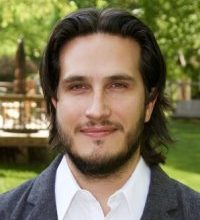
Margarita StaykovaView profile
Associate Professor
Margarita Staykova serves as Associate Professor in the Department of Physics at Durham University, Director of Science at the Institute of Advanced Study, and Executive Board Member at the Biophysical Sciences Institute. She also holds affiliations with Durham CELLS (Centre for Ethics and Law in the Life Sciences) and the Biophysical Sciences Institute Executive Board. Her educational background includes: PhD in Biophysics from Rostock University, Germany (2006) MSc in Molecular Biology from Sofia University, Bulgaria Staykova's research centers on biophysics of cellular interfaces, investigating how plasma membranes, actin cortices, and extracellular matrices interact mechanically. Her group develops synthetic cells and model interfaces using soft matter and microfluidics to study membrane responses to electrical and mechanical stimuli. Current work explores membrane fracture, cholesterol dynamics, and biohybrid systems with life-like properties through the Material Imagination project. Recent publications (2021-2025) reveal dual research trajectories: fundamental membrane biophysics (lipid bilayer mechanics under stress, adhesion dynamics, cholesterol effects) and socially engaged science (responsible innovation, public engagement with engineered living materials). Her work bridges experimental physics with Science and Technology Studies through collaborations with social scientists and artists. No major scientific awards were listed in the provided information. Staykova supervises postgraduates including Alex Brown, Mary Patterson, Natalie Richards, and Ruth McTiernan. Her research receives industrial support from GSK, Procter & Gamble, and Mondelēz. She actively sponsors Visiting IAS Fellows from anthropology, physics, and art, fostering interdisciplinary collaborations on biohybrid futures. She leads a biophysics group combining experimental membrane model systems with living cells, operating within Durham's Biophysical Sciences Institute. Current initiatives include the Material Imagination project studying microbe-lipid membrane interactions for pathogenesis insights and biohybrid system design, with explicit attention to ethical and societal dimensions through collaborations with anthropologists and artists.