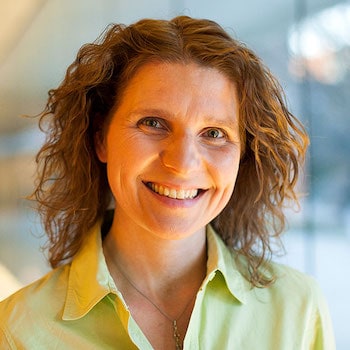
Michael Helmut Boy is a tenured Professor at the University of Helsinki, affiliated with the Institute for Atmospheric and Earth System Research. His work spans atmospheric chemistry, aerosol dynamics, and climate modeling, with a focus on biogenic volatile organic compounds and their role in nanoparticle formation. University of Helsinki (2022–present): Professor University of Helsinki (2009–2022): University Researcher Ludwig-Maximilians-Universität München (1998–present): Master in Meteorology His research integrates computational models with field measurements to understand atmospheric processes in boreal forests and urban environments. Key themes include: Secondary organic aerosol formation Climate feedback mechanisms OH and NO3 reactivity Forest-atmosphere interactions Urban pollution dynamics Recent publications highlight neural network emulators for atmospheric chemistry and studies on highly oxygenated molecules in boreal climates. Scientific awards include Academy Research Fellow at the Academy of Finland.
David Weld is a Professor in the Department of Physics at the University of California, Santa Barbara, where he leads the Weld Lab focused on experimental ultracold atomic physics. He received his B.A. in physics from Harvard University and Ph.D. in physics from Stanford University, followed by postdoctoral work at MIT before joining UCSB's faculty. Weld serves as co-director of UCSB's Eddleman Center for Quantum Innovation and as co-design lead for quantum simulation for the U.S. Department of Energy's Quantum Science Center. His research specializes in using quantum degenerate gases to explore quantum dynamical phenomena, with particular focus on quantum simulation, quantum thermodynamics, Floquet engineering, quasicrystals, and quantum metrology. The Weld group has made significant contributions to understanding kicked quantum matter, quantum emulation of ultrafast phenomena, and defect-adsorbate quantum interfaces. Weld's recent publications reveal a strong focus on quantum simulation of complex phenomena including light-induced phases in 2D materials, Floquet-Bloch band structures, quantum boomerang effects, and quantum phase transitions in quasicrystals. His work increasingly bridges fundamental quantum physics with potential quantum technology applications. Gordon and Betty Moore Foundation Experimental Physics Investigator (2023) Chancellor's Faculty Award for Undergraduate Research Mentoring (2020-2021) Elected to DAMOP Executive Committee of the American Physical Society Professor Weld has mentored numerous graduate and undergraduate students who have gone on to prestigious postdoctoral positions and awards, including multiple Goldwater Scholars. His lab participates in major collaborative initiatives including the NSF's Quantum Leap Challenge Institute and the DOE's Quantum Science Center. Weld's current Moore Foundation project investigates the role of feedback and measurement in quantum systems, potentially advancing quantum error correction techniques.
Dr. Yao Lu is an Associate Researcher and doctoral supervisor at the Institute for Quantum Science and Engineering, Southern University of Science and Technology (SUSTech). He specializes in quantum computing and simulation using trapped ion systems, with a focus on experimental realization and scaling of quantum platforms. His work has contributed to China's first small-scale programmable ion quantum computing system. PhD in Physics (2020), Tsinghua University Bachelor in Physics (2014), Peking University His research explores: Compact trapped ion quantum computing platforms Quantum error mitigation and fidelity optimization Many-body quantum simulations in noisy environments Modular quantum computation via ion-electron coupling His publications in Nature , Nature Physics , and Nature Communications demonstrate expertise in trapped ion quantum gate design, non-equilibrium thermodynamics, and phonon manipulation. Current projects include robust quantum control of multi-ion qubits (NSFC Young Scientists Fund) and fast ion qubit shuttling (Shenzhen Science and Technology Program). He leads the trapped ion quantum computing laboratory at Futian International Quantum Research Institute (Room 102) and actively recruits researchers for quantum science initiatives.
R. Hai is a researcher active in the fields of Machine Learning , Relational Databases , and Quantum Computing . Their work bridges the integration of large language models (LLMs) with database systems, focusing on optimizing query processing and data management through linear algebraic methods. Hai's research emphasizes seamless data-ML workflows and innovative applications of relational databases in emerging domains. Key Research Themes : LLM compilation to SQL, quantum circuit simulation via RDBMS, and convergence of data integration with ML. Collaborations : Active in international academic networks, with contributions to conferences like SIGMOD and IEEE journals. Scientific Awards: Veni grant AES2022 (2023) Publications demonstrate expertise in overcoming data barriers, enhancing database performance for ML tasks, and simulating quantum computations using relational database management systems.
George Papadimitriou is an Assistant Professor in the Computer Engineering & Informatics Department at the University of Patras , Greece, hosted within the School of Engineering . His primary affiliation lies with the Computer Hardware and Architecture division, where he leads research and teaching activities focused on dependable, energy-efficient computer architectures. Education: PhD in Computer Science, Department of Informatics & Telecommunications, National and Kapodistrian University of Athens (2019) Post-doctoral researcher, Computer Architecture Lab, National and Kapodistrian University of Athens Research Interests: Dr Papadimitriou’s research lies at the intersection of computer architecture , energy efficiency , and microprocessor reliability . His work specifically targets: Robust and energy-efficient CPU/GPU/accelerator architectures Post-silicon validation techniques for catching elusive hardware bugs Silent data corruption detection and mitigation across the compute stack Characterization of voltage margins and power consumption in modern microprocessors Modeling and simulation of domain-specific accelerators for low-power, dependable operation More recently, his team has been extending these methodologies to RISC-V and neuromorphic photonic accelerators within large European consortia. Scientific Awards & Recognition: Eight HiPEAC Paper Awards for top-tier conference publications (MICRO, HPCA, ISCA) between 2017–2024 IEEE Transactions on Computers 2022 Best Paper Award for the article “Anatomy of On-Chip Memory Hardware Fault Effects Across the Layers” TTTC/ITC Gerald W. Gordon Student Award 2023 Research Funding & Projects: Dr Papadimitriou is principal investigator or key technical contributor in multiple Horizon Europe and industry-backed projects that collectively exceed €50 M in funding. Current leadership roles include: DARE (Digital Autonomy for RISC-V in Europe) NEUROPULS (Neuromorphic Energy-Efficient Secure Accelerators) REBECCA (Reconfigurable Heterogeneous Highly Parallel Processing Platform) Vitamin-V (Virtual Environment & Tool-boxing for Trustworthy RISC-V Cloud Services) Intel, IBM, and Thales bilateral research contracts on energy-efficient and resilient microarchitectures Laboratory & Team: He leads the Energy-Efficient and Dependable Architectures (EEDA) research group at University of Patras, operating laboratory facilities for silicon measurement, FPGA emulation, and full-system simulation (gem5, MARSS, custom tools). The team currently comprises 3 PhD candidates, 2 post-docs, and several MSc thesis students collaborating with European and US partners.
Corey Clark, Ph.D., serves as Deputy Director of Research and Assistant Professor in the Department of Computer Science and Engineering at Southern Methodist University's Lyle School of Engineering. He leads the Human and Machine Intelligence (HuMIn) Game Lab, pioneering research at the intersection of gaming, artificial intelligence, and human computation to solve large-scale problems in healthcare, education, and national security. Dr. Clark holds a Ph.D., M.S., and B.S. in Electrical Engineering from The University of Texas at Arlington, where he graduated Magna Cum Laude for his undergraduate degree. His doctoral research focused on nanoscale modeling and simulation techniques for Molecular Beam Epitaxy and Chemical Vapor Deposition of exotic materials. His research spans Artificial Intelligence, Game Development, Human Computation, Distributed Computing, Machine Learning, Computational Biology, and Educational Technology. Clark is renowned for transforming commercial video games into distributed computing platforms through human computation, enabling breakthroughs in medical diagnostics and educational technology. His technical innovations in HTML5/JavaScript multithreading have been featured at major international game conferences. Analysis of Clark's 15 most recent publications (2022-2024) reveals a dominant focus on generative AI applications integrated with gaming mechanics, particularly for knowledge graph enhancement, medical diagnostics, and computational thinking education. Key trends include explainable AI systems, human-AI collaboration through gameplay, blockchain applications, and privacy-preserving machine learning, demonstrating consistent innovation in applying game-based approaches to real-world problems. Dr. Clark has secured over $1.7 million in competitive research funding, including: Human Computation for Ocular Tomography Analysis ($62,924) with Retina Foundation Cryptocurrency Transactional Analysis via Gaming ($60,000) with Raytheon Game-Based Adult Literacy (XPrize) ($480,000) Flexible Electronics for Airborne Laser ($820,000) with Missile Defense Agency Networked C4ISR Chip ($850,000) with US Army As CTO for Dallas-based game technology companies, Clark has helped raise over $12 million in startup funding. His HuMIn Game Lab currently develops immersive gameplay systems for cancer treatment research using crowdsourced computation and machine learning, with recent projects including therapeutic discovery platforms and blockchain-based task completion systems.
Pascal Mérindol is an Associate Professor in Computer Science at the University of Strasbourg, affiliated with the ICube Lab (UMR CNRS 7357) and the Network Research Group. His academic career spans roles in routing, internet measurements, and network security. He obtained his HDR (Habilitation to Direct Research) in 2022 and leads the national ANR project NanoNet (2019-2022). He has served on the Editorial Board of Elsevier's Computer Communications Journal (2016-2020) and contributed to European projects like GN4 (2016-2018) and TRILOGY (2008-2011). Research interests include: Multipath and Loop-Free Routing: Developing algorithms for network reliability and fast rerouting in wired intra-domain networks. Internet Measurements: Tools like MERLIN and mrinfo for topology discovery, MPLS signatures, and fingerprinting. Energy-Efficient Wireless Networks: Distributed heuristics for MLST (Maximum Leaves Spanning Tree) to optimize battery usage. Fast IP Protection: Schemes for tunnel protection and restoration in IP networks. His work has been published in journals such as IEEE Transactions on Networking (TON), Computer Networks (COMNET), and conferences including INFOCOM and IMC. He mentors PhD students like François Clad and has contributed to teaching modules on networks, protocols, distributed systems, and performance evaluation at the University of Strasbourg.
Håkan Nilsson is a Full Professor in Fluid Dynamics at Chalmers University of Technology. His research focuses on computational fluid dynamics (CFD) with applications in hydropower systems, particularly turbine flow analysis, cavitation modeling, and generator cooling air dynamics. He utilizes OpenFOAM for numerical simulations and develops advanced algorithms for mesh deformation and flow control. Academic Rank: Full Professor Institution: Chalmers University of Technology Primary Research: Hydropower Turbines, Cavitation, CFD, Machine Learning, Multiphase Flow His recent work integrates machine learning with CFD for optimizing turbine operations and predictive maintenance in hydropower plants. Key projects include ALPHEUS and investigations into contra-rotating pump-turbine systems for low-head energy storage. Collaborations span experimental validation with experts in PIV, laser Doppler velocimetry, and industrial partners in renewable energy. Research trends highlight 15+ years of publications on turbulence modeling, vortex dynamics, and fluid-structure interaction in hydraulic systems. Sub-fields include Francis turbine transients, Kaplan turbine rotor-stator interactions, and applications in biomedical fluid dynamics and welding processes. Scientific awards are not explicitly mentioned.
Mehmet Doğan is a Lecturer in the Department of Electrical-Electronics Engineering at Kütahya Dumlupınar University's Simav Faculty of Technology. He previously served as a Research Assistant at the same institution from 2021 to 2024. He holds a PhD in Electrical-Electronic Engineering from Pamukkale University, where he also completed his Bachelor's and Master's degrees. His research expertise lies in analog circuit design, specifically: Voltage/current-mode filters using CFOAs and DVCCs Capacitance multiplier and inductor simulator circuits Synthetic transformer design with active components Biquad and universal filter topologies He teaches courses including Circuit Analysis I/II, Renewable Energy Systems, and Entrepreneurship. His publications demonstrate consistent contributions to circuit theory, with 10 articles since 2018 focused on analog signal processing applications.
Dr. Johannes Pfau serves as a Scientific Assistant at the Institute for Information Processing Technology (ITIV) within Karlsruhe Institute of Technology (KIT), working in Prof. Becker's research group. His position combines postdoctoral research in advanced FPGA architectures with teaching responsibilities including System-on-Chip internships and academic advising for specialized engineering tracks. Education: Doctorate (Dissertation) in Electrical Engineering and Information Technology, Karlsruhe Institute of Technology, 2024 Research Interests: Pfau's work centers on reconfigurable computing with three interconnected pillars: (1) Next-generation FPGA architectures using emerging technologies like RFETs that require fundamental toolchain redesigns; (2) Digital beamforming systems for satellite Earth observation that replace analog processing with FPGA-based solutions to enable on-orbit data compression; and (3) High-throughput data acquisition systems for 6G prototyping handling multi-100Gbps streams through RFSoC platforms. His research bridges semiconductor physics, hardware architecture, and practical applications in communications and remote sensing. Publication Trends: Pfau's 15 most recent publications (2021-2024) reveal a strong focus on practical FPGA implementations addressing real-world constraints. His work increasingly integrates power management (7 papers), 6G infrastructure (5 papers), and novel semiconductor technologies (4 papers), with a clear trajectory toward hardware solutions for satellite communications and next-generation wireless systems. The research demonstrates consistent progression from architectural innovations (RFET, V-FPGAs) to applied systems (beamforming, 6G testbeds). Advising and Mentorship: Pfau maintains an active student supervision portfolio with documented guidance of 7+ Bachelor's and Master's theses since 2021. His projects emphasize hands-on hardware development, spanning power management techniques, beamforming filter design, and prosthetic control systems. The academic advising role for specializations 13 and 21 positions him at the intersection of computer science and electrical engineering education. Research Context: As a core member of Prof. Becker's group at ITIV, Pfau contributes to KIT's leadership in reconfigurable systems research. The group maintains strong industry connections through 6G initiatives and satellite technology development, with Pfau's work directly supporting German and European efforts in secure communications infrastructure and Earth observation systems.
Dr. Roland Ryndzionek is an Associate Professor at Gdańsk University of Technology with dual affiliations in the Department of Power Electronics and Electrical Machines and the Department of Mechanics of Materials and Structures. His research bridges electromechanical systems and renewable energy, specializing in: Piezoelectric ultrasonic motors with multi-rotor designs Fault-tolerant multiphase doubly-fed induction generators (DFIGs) for wind turbines Power Hardware-in-the-Loop (PHIL) emulation of synchronous generators He leads the BLDFIG project (2023–present), developing gearless wind turbines using multiphase DFIGs, and co-leads the EU-funded DigiWind initiative for wind energy digitalization. His publications emphasize real-time control systems, harmonic reduction in power converters, and mechatronic integration, with recent work in IEEE Transactions and COMPEL journals. No awards or student advising roles are documented in available sources.
Christiane Jablonowski is a Professor in the Department of Atmospheric, Oceanic and Space Sciences (AOSS) at the University of Michigan's College of Engineering. She serves on the NCAR Community Earth System Model (CESM) Scientific Steering Committee, the AMS Committee on Artificial Intelligence Applications to Environmental Science, and represents U-M at the University Corporation for Atmospheric Research (UCAR). Her educational background includes: Ph.D. in Atmospheric & Space Sciences and Scientific Computing, University of Michigan M.S. in Meteorology, University of Bonn, Germany B.S. in Physics, Aachen University of Technology, Germany Professor Jablonowski specializes in atmospheric dynamics, focusing on baroclinic waves, tropical cyclones, and stratospheric phenomena. She pioneers idealized test cases for dynamical cores of General Circulation Models (GCMs) and leads the Dynamical Core Model Intercomparison Project (DCMIP). Her research integrates machine learning with high-resolution modeling for weather prediction and climate simulation, with significant work on Great Lakes coupling and volcanic eruption impacts. Her recent publications reveal strong trends toward machine learning applications in physical parameterizations and ultra-high-resolution modeling, with recurring themes in stratospheric dynamics, tropical cyclone simulation, and dynamical core evaluation across 15 recent articles spanning volcanic aerosol impacts, QBO modeling, and Great Lakes ice forecasting. Her scientific accolades include the Presidential Early Career Award for Scientists and Engineers (PECASE) and Department of Energy Early Career Award, alongside the 2023 UCAR Outstanding Accomplishment Award. Additional honors recognize her methodological innovations and graduate fellowship achievements. UCAR Outstanding Accomplishment Award in Publication (2023) AGU EOS publication highlights (2022) Presidential Early Career Award for Scientists and Engineers (PECASE) (2010) Department of Energy Early Career Award (2010) AOSS Faculty Award (2010) Distinguished Achievement Award, U-M College of Engineering NCAR Advanced Study Program Fellowship She directs major federally funded initiatives including the NOAA Unified Forecast System Short-Range-Weather team and CESM Atmospheric Model Working Group, mentoring numerous graduate students through DOE and NASA grants while leading the Dynamical Core Model Intercomparison Project. As founder of the Dynamical Core Model Intercomparison Project (DCMIP) and co-chair of NOAA's Unified Forecast System team, she coordinates international collaborations developing next-generation atmospheric modeling frameworks at the Climate and Space Research Building.
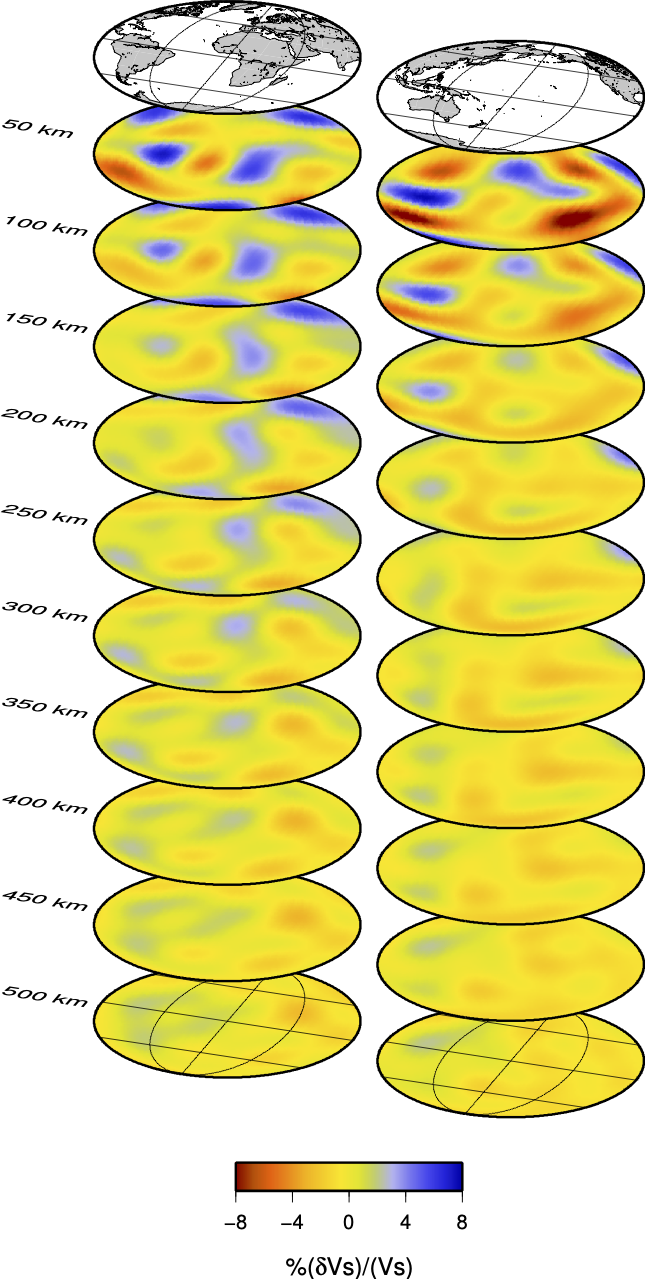
Dr Andrew Valentine is currently an Associate Professor in the Department of Earth Sciences at Durham University, a position he has held since 2023. Previously, he served as Assistant Professor at Durham (2021-2023), Fellow at the Research School of Earth Sciences at The Australian National University (2016-2021), and Postdoctoral Researcher at Utrecht University (2011-2016). He holds significant leadership roles including Director of Education for the Department of Earth Sciences (2025-present) and Secretary of the IUGG Commission on Mathematical Geophysics (2023-present). DPhil in Earth Sciences, University of Oxford (2006-2010), supervised by Prof. J.H. Woodhouse BA/MSci in Natural Sciences (Physics), University of Cambridge (2002-2006) Valentine's research focuses on mathematical and statistical tools for extracting information from observational data, with expertise in geophysical inverse theory, global seismology, and machine learning applications in Earth Sciences. His work bridges theoretical mathematics with practical geophysical problems, developing novel approaches to data analysis and interpretation. He has made significant contributions to probabilistic inversion methods, seismic tomography, and the application of deep learning to geoscience problems. Analysis of his recent publications reveals a strong trend toward integrating machine learning with traditional geophysical methods. His work spans from theoretical developments in Bayesian inference and optimal transport to practical applications in seismic modeling, mantle dynamics, and volcanic processes. A notable pattern is his focus on uncertainty quantification in geophysical models and the development of efficient computational frameworks for complex inverse problems. His research increasingly incorporates neural networks and other AI techniques to address longstanding challenges in Earth Sciences. Harold Jeffreys Lectureship, Royal Astronomical Society (2025) ARC DECRA Fellowship (2018-2021) Multiple Geophysical Journal International Outstanding Reviewer citations Geophysical Journal International Student Author Award (2010) Valentine has supervised numerous PhD students including Buse Turunçtur, Matthias Scheiter, Suzanne Atkins, Paul Käufl, and Ralph de Wit, with thesis topics spanning sparsity-constrained inversion, Monte Carlo methods, mantle convection patterns, and probabilistic source inversion. His supervision extends to current students Arijit Chakraborty, Charlotte Aulton, Hanna-Riia Allas, Isaac Abbott, and Ugurcan Cetiner. He has served on various editorial boards including as Editor for Geophysical Journal International (2020-2025) and has been involved in major collaborative projects through organizations like CIG. As Director of InLab since 2018, Valentine leads a research group focused on developing innovative computational approaches to geophysical problems. His team has produced influential open-source software like pyprop8 for seismic modeling and has pioneered applications of deep learning to problems ranging from glacial isostatic adjustment to volcanic glass properties. The group maintains strong international collaborations, particularly with researchers at The Australian National University where Valentine holds an Honorary Senior Lecturer position (2021-2025).
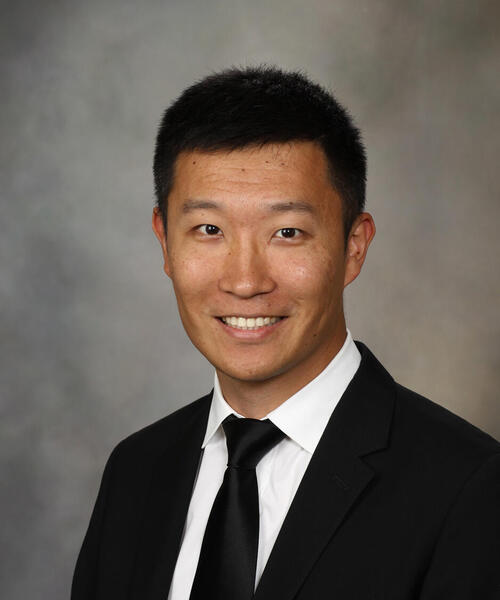
Dr. Yu Shi, M.D., M.P.H., is a Physician Scientist at Mayo Clinic College of Medicine specializing in pediatric anesthesiology and outcomes research. Currently affiliated with the Department of Anesthesiology and Perioperative Medicine and Pediatrics, Dr. Shi leads investigations into anesthesia neurotoxicity, health disparities, and tobacco control. Research interests center on: Pediatric anesthesia safety and neurodevelopmental outcomes (MASK Study) Racial/ethnic disparities in surgical care and ADHD diagnosis Perioperative tobacco cessation interventions Epidemiology of anesthesia complications in children Recent publications span high-impact journals including Circulation , Science , and JAMA Network Open , with 2025 work focusing on vascular biology mechanisms and AI-driven protein modeling. Scientific recognition includes: Full Tuition Scholarship from Johns Hopkins (2007) Board Certification in Anesthesiology and Pediatric Anesthesiology (2016) Dr. Shi directs multiple institutional committees including the Pediatric Research Committee and AI Advisory Committee, with active grants supporting population-based outcomes research and tobacco control program implementation.
Dr. Alessio Celi serves as Associate Professor at the Autonomous University of Barcelona (UAB) and Visiting Professor at ICFO. His internationally recognized research bridges theoretical physics, quantum simulation, and experimental atomic systems. His primary research domains include: Quantum simulation of many-body phenomena Gauge theories emulation using atomic platforms Quantum magnetism and topological order High-energy physics phenomena in condensed matter systems Professor Celi's work has yielded publications in premier journals including Nature , Nature Photonics , and Physical Review Letters . His research trajectory shows consistent focus on developing experimental pathways for quantum simulation since 2009, with increasing emphasis on gauge theories since joining UAB. His current research program is supported by active national and international grants. Students benefit from his extensive collaboration network spanning ICFO, University of Innsbruck, and University of Barcelona. Professor Celi has built an independent research line at UAB focusing on quantum simulation using Rydberg atoms and Raman-dressed gases, positioning his group at the forefront of quantum emulation techniques.