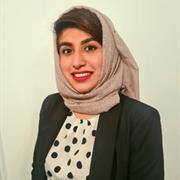
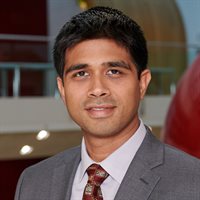
Martina Čaić is an Assistant Professor in Strategic Service Design at Aalto University's School of Arts, Design and Architecture. She leads the ENCORE (Engaging Co-Design) research group, focusing on innovative service design methodologies. Her PhD from Maastricht University, supported by a Marie Curie Fellowship, emphasized service design for innovation. Research Interests: Her work explores intersections between service management, AI, and emerging technologies like social robots and chatbots. Key themes include human-agent interactions in healthcare, education, and industrial contexts, emphasizing ethical implications, well-being, and organizational transformation. She advocates for network-conscious design approaches to address complex service ecosystems. Publications: Recent work highlights frameworks for human-robot collaboration (e.g., chatbot integration in workplaces, ethical robotic care systems) and the role of smart technologies in aging populations. She also investigates scaling diversity initiatives and the societal impact of AI/robots in service networks. Labs/Teams: The ENCORE group develops participatory design methods for inclusive services, with projects ranging from healthcare AI ethics to municipal diversity programs. Her research bridges academic rigor with practical industry applications.
Philip S. DeOrtentiis is an Assistant Professor at the School of Human Resources and Labor Relations, part of Michigan State University's College of Social Science. He holds a PhD in Organizational Behavior & Human Resources Management from Florida State University, an MBA in Strategy from Penn State University, and a BS in Finance from Penn State University. His research focuses on employment processes, social class impacts, demographic differences in the workforce, and human capital management. He has published extensively in top journals like the Journal of Applied Psychology and Journal of Management . DeOrtentiis has received notable awards including the 2019 Schmidt-Hunter Meta-Analysis Award and the 2022 Honor Roll of Responsible Business Research. His teaching spans courses on human capital, quantitative HR analysis, and training/development. He actively serves on university committees including the DEI Committee and the Dean’s Advisory Council on Diversity & Inclusion. His professional affiliations include the Academy of Management, Society for Industrial/Organizational Psychology, and the Southern Management Association. His research emphasizes social class disparities in job search processes and the performance of internal vs. external hires. Recent work explores union dynamics during strikes and the role of cognitive ability in workplace performance. Media coverage of his work includes features in WIRED Business and the Royal College of Physicians' KeyLIME Podcast.
Dr. Abigail Morris is a Lecturer in Organisational Health and Well Being at the University of Lancaster's Faculty of Health and Medicine. Her work focuses on developing and evaluating workplace health interventions, integrating mixed-methods research to address sedentary behavior, physical activity promotion, and climate change impacts on health. Collaborations include projects with Lancaster Environment Centre exploring local authority climate strategies and Net Zero goals. She has led initiatives like the SLAMM intervention for call center workers and process evaluations of eHealth/mHealth tools such as 'Exertime' and 'Rise and Recharge.' Research interests span interdisciplinary approaches to workplace health, with particular attention to innovative technologies and reducing health inequalities. Projects include feasibility studies on active commuting and the intersection of mental health with dental care access via link workers. Morris has presented at conferences including the International Society of Physical Activity and Health and UK Active Summit, and contributed to policy discussions through events like the Cycling UK Big Bike Revival Parliamentary Event. Awards include the Deans Award for Outstanding Contribution to the Faculty. She supervises PhD students Miriam El Irani and Ming Jin, and participates in research groups like the Centre for Organizational Health and Well Being and FHM Mental Health Theme.
Dr Julian A Sempill is a Senior Lecturer at the Melbourne Law School, University of Melbourne. He holds degrees including a DPhil (Oxford), LLB (Hons), and BA (Melbourne). His teaching spans Corporations Law, Trusts, Legal Ethics, Disputes & Ethics, and Legal Theory. He is completing a book, "Power & the Law," with Cambridge University Press, building on research exploring the Rule of Law, corporate power, and employer power dynamics. His work has been published in journals like Oxford Journal of Legal Studies and The Hague Journal on the Rule of Law. Dr Sempill’s research interests center on the intersection of power structures and legal frameworks, particularly in constitutional, corporate, and employment contexts. He is affiliated with the Centre for Comparative Constitutional Studies, Centre for Employment and Labour Relations Law, and Melbourne Centre for Commercial Law. He co-convenes the Faculty Research Seminar Series and contributes to curriculum development for subjects like Disputes & Ethics. His scholarly output reflects a critical engagement with legal theory and its societal implications, including analyses of historical political systems, contemporary workplace power, and socio-economic inequality. While no specific awards are noted, his academic contributions focus on advancing theoretical and practical understandings of law’s role in shaping power dynamics. Dr Sempill’s professional activities include advising on curriculum design and participating in interdisciplinary research teams. His future work, as indicated by his book project, aims to synthesize legal theory with empirical analysis of power in modern institutions.
Dr. Sehrish Shahid is a Lecturer in Management at RMIT University's School of Management (since 2023) and previously held roles at the Australian Institute of Business and University of Central Punjab. Her research focuses on leadership dynamics, organizational behavior, and workplace well-being, with a particular emphasis on expatriate management, gender roles, and sustainable development goals. She has secured grants including the ECR Grant (2023) and contributed to projects like the SAFE initiative funded by the Victorian Government. Shahid actively publishes in ABDC-ranked journals and presents at conferences like the Academy of Management. She coordinates leadership courses and advocates for student-centered, work-integrated learning approaches. Her work aligns with UN SDGs such as Gender Equality and Decent Work. Education: PhD in Management from RMIT University (IPRS Scholar) Grants: Multiple research awards including 2023 ECR Grant and 2018 RMIT Publication Grant Teaching: Leadership course coordination and MBA programs Research highlights include frameworks addressing expatriate mental health post-pandemic, HRM in emerging markets, and virtual leadership effectiveness. She reviews for journals and participates in ethics advisory networks. Shahid’s interdisciplinary approach bridges psychology, management, and education to enhance professional practices.
Herman Aguinis is the Avram Tucker Distinguished Scholar and Professor of Management at the George Washington University School of Business. He has held leadership roles including Department Chair, Director of the Master of Human Resources Management Program, and President of the Academy of Management (AOM). His research focuses on talent management, organizational research methods, and CSR, with over 230 refereed articles and 13 books. He has secured $5MM+ in research funding and advised organizations like the United Nations and Fortune 500 companies. Education: Ph.D. in Industrial and Organizational Psychology (1993), University at Albany, SUNY; M.A. (1992), B.A. (1988), University of Buenos Aires. His research interests include global talent acquisition, leadership, diversity, and methodological innovation. Notable awards include the Society for Industrial and Organizational Psychology’s Scientific Contributions Award and the Losey Award. He has delivered 40+ keynote speeches and 340+ conference presentations worldwide. Awards: Losey Award, Distinguished Career Awards (AOM), Society for Industrial and Organizational Psychology Award, Martin Luther King Building Bridges Award, and 10 Best-Article Awards. Leadership: Spearheaded the 2020 AOM virtual conference during the pandemic; increased Department of Management credit hours by 30% at GWU; founded the Institute for Global Organizational Effectiveness at Indiana University with a $4.8MM endowment.
Elissa Adame is an Assistant Professor at the Hugh Downs School Of Human Communication, Arizona State University. Her research focuses on healthcare communication, organizational behavior, educational psychology, and sport psychology. She explores how communication dynamics influence compassion in healthcare settings, athlete well-being, leadership development, and adolescent identity formation in sport contexts. Her work employs mixed-methods approaches, including experimental designs and qualitative analyses. Her recent studies investigate barriers to compassion disclosure in workplaces, concussion education efficacy for NCAA athletes, and the role of growth mindsets in educational interventions. She has contributed to understanding ethical dissent in organizations and the impact of strategic communication on perceptions of organizational citizenship. Research emphasizes applied communication solutions in healthcare, education, and sports. Publications span topics from medical training simulations to adolescent gender identity through sport participation.
Dr Niranjan Janardhanan is a Lecturer in the Department of Management at the London School of Economics and Political Science (LSE). He holds a PhD in Management from the University of Texas at Austin (2018), focusing on organizational behavior. Prior to academia, he worked in semiconductor manufacturing, financial services, and consulting roles across Asia and Europe. His research explores how employees construct and express identities in teams and organizations, with a focus on managing multiple work identities in uncertain environments. He has reviewed for journals like Journal of Applied Psychology and conferences such as the Academy of Management. Dr Janardhanan’s research interests include team cognition, identity work in crises, and the interplay between role expectations and moral decision-making. His work has been published in top-tier journals such as Organization Science and Journal of Applied Psychology . He integrates social network theory and field theory to analyze team dynamics, particularly in contexts involving conflict, precarity, and technological integration. His recent studies investigate human-AI collaboration norms and the impact of collective affect during organizational crises. Education details include a Bachelors and Masters in Electrical Engineering from the National University of Singapore and an MBA in Strategy & Leadership from the Indian School of Business. His interdisciplinary background bridges technical domains with organizational behavior, informing his research on leadership training, skill gaps in retail sectors, and systemic approaches to organizational development. Key themes across his work include the navigation of identity congruence, ethical dilemmas in roles, and leveraging cross-understanding for team performance. While no specific grants or awards are listed, his contributions to peer review and conference participation highlight his active role in advancing organizational behavior scholarship.
Marianne Kallaste is a Lecturer at Tallinn University of Technology (TalTech), School of Business and Governance, Department of Business Administration. She serves as Programme Director for International Business Administration (0.20 FTE) and has held various roles including Lecturer, Research Fellow, and project coordinator. Education: Master's Degree (2011) in Organizational Culture from TalTech; PhD studies (interrupted) in Entrepreneurial Ecosystems Research Focus: Entrepreneurial ecosystems, problem-based learning, university-business collaboration, SME internationalization Project Leadership: Currently leads 'Digital-Physical Hybrid Architecture of Entrepreneurial Ecosystem' (2025-2029, €116,518) Her work emphasizes transforming higher education through entrepreneurial mindsets and cross-disciplinary approaches. She has co-authored 15+ publications analyzing Estonian entrepreneurship ecosystems, university innovation capacity, and open innovation strategies in post-socialist contexts. Scientific Awards: 2024 TalTech Department of Business Administration award for academic innovation in large research project submissions As project leader for multiple EU-funded initiatives (e.g., BeComE, INNOLAB), she bridges academia and industry while serving on the Estonian Economic Association and Estonian Andragogy Association.
Stephen C. Smith is Professor of Economics and International Affairs and Chair of the Department of Economics at George Washington University. He is also Research Fellow at the Institute of Labor Economics (IZA), Nonresident Senior Fellow at the Brookings Institution, and member of the BRAC-USA Advisory Council. He previously served as Director of the Institute for International Economic Policy (IIEP) and as founding director of GW’s International Development Studies Program. Ph.D. in Economics, Cornell University His research focuses on development economics, particularly poverty reduction, climate change adaptation, and the economics of cooperatives and employee participation. His work combines rigorous empirical analysis with policy relevance, drawing on field research in Bangladesh, India, Uganda, Senegal, Germany, and other countries. He has authored or co-authored over 50 journal articles and several influential books, including the widely adopted textbook Economic Development (13th ed., 2020) with Michael Todaro and Ending Global Poverty: A Guide to What Works . His recent publications span topics such as agricultural extension in Uganda, works councils in Germany, multidimensional poverty targeting in Bangladesh, and climate adaptation in India. These works reflect a consistent focus on policy evaluation, institutional design, and the economic mechanisms underlying poverty traps and development outcomes. Fulbright Research Scholar Jean Monnet Research Fellow IZA Research Fellow Visiting Fellow, Brookings Institution Nonresident Senior Fellow, Brookings Institution Fulbright Senior Specialist UNICEF Senior Research Fellow Smith has supervised numerous doctoral students and taught core courses in development economics at undergraduate, master’s, and PhD levels. He has been Principal Investigator on major research projects funded by USAID/BASIS, including work on training, technology, and credit in smallholder agriculture. He has also served as Associate Editor of the Journal of Economic Behavior and Organization and consulted for the World Bank, UNDP, ILO, and USAID. His research program integrates fieldwork, policy engagement, and academic scholarship to advance understanding of effective strategies for global poverty reduction.
Jennifer Gahee Kim is an Assistant Professor in the School of Interactive Computing at Georgia Institute of Technology. She holds a Ph.D. in Computer Science from the University of Illinois at Urbana-Champaign and an M.S. from Georgia Tech. Her research focuses on Human-Computer Interaction (HCI), Digital Health, and Neurodiversity, aiming to design technologies that promote inclusivity, empathy, and advocacy, particularly for neurodiverse populations. Key projects include Workplace Playbook VR for autism support, BEDA (Behavioral and External Data Analysis tool), and co-design initiatives for neurodivergent individuals. Education: Ph.D. in Computer Science (UIUC), M.S. in Computer Science (Georgia Tech) Research Themes: Neurodiversity advocacy, healthcare technologies, and collaborative systems design Teaching: Courses in Personal Health Informatics and Human-Computer Interaction Her work emphasizes co-design methodologies and ethical technology integration, with notable contributions to VR-based training systems and sensor data analytics tools. Collaborations include projects with behavioral scientists and healthcare practitioners to bridge gaps between technology and real-world needs.
Henning Bang is a Professor (50% part-time) at the Department of Psychology, University of Oslo , specializing in work, cultural, and social psychology. He concurrently serves as Managing Director of Henning Bang AS (50%) and has held leadership roles in consulting firms since 1989. His academic career includes teaching at UiO, NHH, and BI in areas like group psychology, organizational culture, and leadership. Education: PhD in Psychology (2010, University of Oslo) Master's in Psychology (1986, University of Oslo) Master of Science in Economics (1982, Norwegian School of Economics) Research Interests: Focuses on group processes, team effectiveness, leadership dynamics, organizational culture development, and conflict resolution. His work emphasizes practical applications in military, police, and corporate settings, often leveraging character strengths and psychological safety frameworks. Recent projects include predicting cadet performance, leadership team development, and organizational flexibility. Publications: Over 30 peer-reviewed articles and book chapters since 2008, with a focus on character strengths measurement, leadership effectiveness, and organizational behavior. Recent themes include psychological safety in teams and cultural flexibility in workplaces. Awards: 2010: Bjørn Christiansen Memorial Prize (Norwegian Psychological Association) 2004: Teaching Excellence Award (UiO Department of Psychology) Consulting & Teams: Leads Henning Bang AS, advising organizations on leadership development and culture change. Collaborates with military and police institutions on character strengths-based training programs.
Dr. Fahad Ibrahim is an Assistant Professor in the Department of Marketing at Birmingham Business School, University of Birmingham. He holds a PhD in Management from the University of Hull and has prior academic experience as a Lecturer at Swansea University and a Teaching Fellow at the University of Birmingham. He is a Fellow of the Higher Education Academy (FHEA) and actively contributes to research and teaching in marketing. Education: PhD in Management, University of Hull, 2019 MSc in Marketing Management, University of Hull, 2010 Bachelor of Business Administration (BBA), North South University, Bangladesh, 2009 His research focuses on consumer research, digital marketing, service marketing, strategic marketing, innovation, and big data & AI in marketing . He also explores topics in employee relations, occupational health and safety, and institutional theory as they relate to marketing practice. His methodological approach includes both quantitative and qualitative research methods. Dr. Ibrahim has published in top-tier journals such as the Journal of Travel Research , Journal of Business Research , and Technological Forecasting and Social Change . His recent work examines innovation in international firms, the impact of security threats on tourism, privacy in online health communities, and consumer behavior toward superfoods. His research demonstrates a consistent trend in understanding consumer and organizational behavior in digital and global contexts. Scientific Awards: Journal of Travel Research Charles R. Goeldner Article of Excellence Award, 2024 University Studentship Award, University of Hull He has successfully supervised a PhD student to completion and welcomes inquiries from prospective PhD students. He also serves as an ad hoc reviewer for several academic journals. His industry experience includes working as a Strategy Development Manager in advertising, with campaigns for major brands like Coca-Cola, Lafarge Holcim, and Chevron, including a global strategic campaign adopted in 64 countries. Dr. Ibrahim teaches courses such as Problem Solving and Strategic Marketing, Digital and Innovative Marketing, and Branding in the Digital Age. He is not associated with any specific lab or research center mentioned in the text, but his work is deeply integrated into the academic and industry-facing missions of the Birmingham Business School.
Zahide Karakitapoğlu-Aygün is an Associate Professor at Bilkent University's Faculty of Business Administration, specializing in Organizational Behavior. She holds a Ph.D. in Social Psychology from Middle East Technical University (2002) and has been at Bilkent since 2003. Her research focuses on leadership, team dynamics, innovative behavior, cross-cultural issues, and organizational justice. Key projects were funded by TÜBİTAK, including BIDEB 1001 grants in 2008 and 2015. Her work spans transformative leadership styles, authoritarian leadership differentiation, and the impact of cultural contexts on leadership effectiveness. She has conducted visiting scholar roles at the University of Michigan (2000-2002) and Portland State University (2018-2019). Awards include the 2017 Evidence-based Human Resource Management Paper Award and 2014 Creativity & Innovation Best Paper Award. Publications appear in journals like Human Resource Management , Journal of Business Ethics , and Journal of Cross-Cultural Psychology . Her research emphasizes leadership's dual roles (bright/dark sides), team identity's innovation impact, and cross-cultural ethical climate dynamics. She teaches Organizational Behavior and Organization Theory. Grants and collaborations highlight her focus on cultural dimensions of leadership and global management challenges. Professional memberships include Academy of Management and European Academy of Management.
Amparo Cervera Taulet is a Full Professor at the Department of Marketing and Market Research, Faculty of Economics, University of Valencia. She holds a PhD from the same university and leads the SIV (Service, Innovation, Value) research group. She has held leadership roles including Director of the Interuniversity Institute of International Economics (2016–2023), Director of the City of Valencia Chair (2013–2015), and Director of the Sustainable Economic Model Chair (2017–2019). She currently coordinates the PhD in Marketing at the University of Valencia and co-directed the international iMBA program (2009–2012). She is Editor-in-Chief of the International Review on Public and Nonprofit Marketing (Springer) and Vice President of the International Association on Public and Nonprofit Marketing. Education: PhD in Marketing and Market Research, University of Valencia (1998) Research stays at Harvard Business School, University of Birmingham, Victoria University (NZ), and others Her research focuses on strategic marketing, service marketing, innovation, public and nonprofit marketing, and sustainable tourism . She explores how organizations in both public and private sectors create value through customer orientation, branding, and innovation. Her work integrates theoretical models with practical applications in tourism, public services, and higher education. The analysis of her recent publications reveals a consistent focus on value co-creation, customer orientation, brand personality, and innovation in service contexts . Her work spans sectors including airlines, hotels, higher education, and public administration. She frequently employs relationship marketing and stakeholder theory to understand organizational dynamics. Recent trends show growing emphasis on digital services, inclusive tourism, and sustainability . Scientific Awards: Best Paper in Industrial Marketing Management (2008) Outstanding Paper Award in Industrial Management & Data Systems (2010) Multiple presentation awards at GIKA, AIRSI, and international tourism congresses Three Extraordinary Doctorate Prizes awarded to her PhD students Best Spanish Thesis in Entrepreneurship (awarded to her student) Amparo Cervera has supervised 13 doctoral theses and numerous master's projects, many funded by public and private institutions, reflecting strong knowledge transfer. She has participated in over 25 research projects, including European (ENPI) and public-funded initiatives on sustainable tourism and urban development. She has evaluated research for ANEP, DEVA-AAC, and the European Commission. She is actively involved in academic governance as a member of ANECA PEP commission, faculty board, and university gender and sustainability commissions. She leads the SIV (Service, Innovation, Value) research group and has directed competitive projects like Newcimed (sustainable Mediterranean tourism) and cruise tourism sustainability in the Valencian Community. Her international collaborations span institutions in the US, UK, Portugal, Chile, and France.