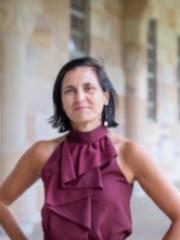
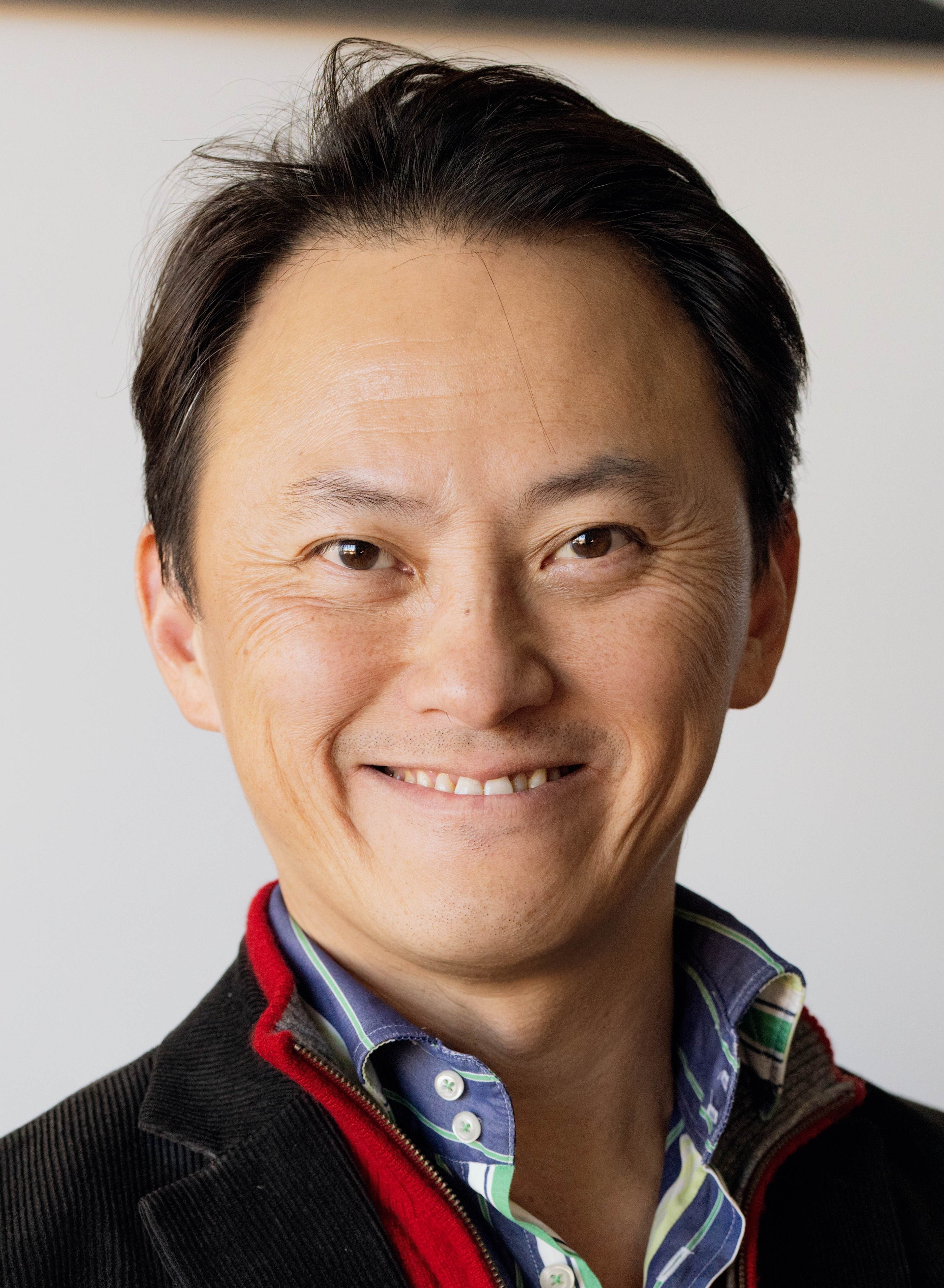
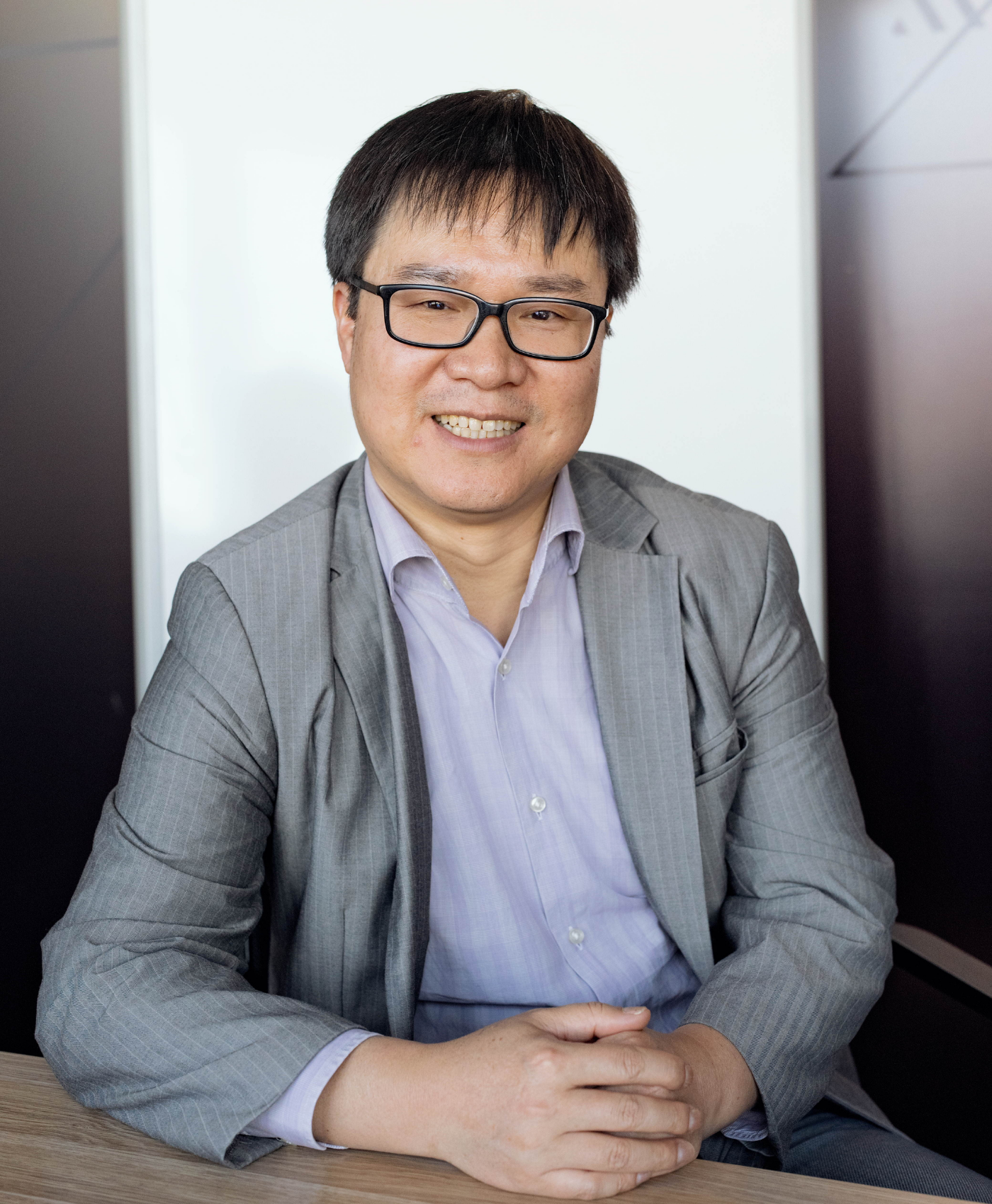
Professor Begona Dominguez is a faculty member in the School of Economics at The University of Queensland (UQ), within the Faculty of Business, Economics and Law. She holds a Doctor of Philosophy in Economics from Universitat Autònoma de Barcelona. Her research focuses on Macroeconomics, Public Finance, and Monetary Economics, with emphasis on fiscal policy design, central bank balance sheets, and optimal taxation frameworks. Her key projects include Supporting Entry and Growth of Australian Businesses via Tax and Transfers (2022–2024) and The role of a central bank's balance sheet in shaping the economy (2021–2024) . She is available for PhD supervision and actively contributes to applied macroeconomic analysis, particularly in urban economic advantages and policy evaluation. Publications span topics like fiscal sustainability, inflation dynamics under central bank policies, and the implications of constitutional constraints on taxation. Her work bridges theoretical models (e.g., Ramsey frameworks) with empirical applications in tax policy and public debt management. Professor Dominguez maintains affiliations with the Centre for Applied Macroeconomic Analysis (ANU) and has reviewed prominent texts such as John Taylor's Reform of the International Monetary System . She is based in Room 507, Colin Clark Building at UQ.
Francisco Barillas Bedoya is an Associate Professor at the School of Banking and Finance within the UNSW Business School, University of New South Wales. His research focuses on theoretical and empirical asset pricing, particularly portfolio choice, asset pricing tests, macrofinance, and term structure of interest rates. He has published extensively in top-tier journals like the Journal of Finance and Management Science. PhD from New York University MA from University of British Columbia BSc from Trent University His recent publications analyze Sharpe ratios for model comparison, speculative behavior in bond markets, and risk premia in fixed income markets. While no formal awards are listed, his work intersects financial economics, econometrics, and computational methods. Office: Level 3, Room 333C, Ref E12 Email: f.barillas@unsw.edu.au
Kingsley Fong is an Associate Professor of Finance at the UNSW Business School , specifically within the School of Banking and Finance . He holds a PhD from the University of Sydney and a BCom (Hons) from UNSW. His research focuses on market microstructure , investment , household finance , and sustainable finance , and he co-founded the RISE Finance Lab to explore finance's role in societal well-being. He also developed the DATKIS framework for systemic coherence in financial practices. Research Interests : Market microstructure, household finance, sustainable finance, and empirical finance. Teaching : Courses such as WEALTH MANAGEMENT AND CLIENT ENGAGEMENT , SUSTAINABLE INVESTING , and SUSTAINABLE FINANCE . Key Trends in Research : His work spans liquidity proxies, algorithmic trading impacts, broker-client dynamics, and sustainable finance innovations. Notable collaborations include studies on market quality, tax-driven trading, and household investment behavior. Scientific Awards : 2017 Review of Finance Spängler IQAM Prize 2021 Aspen Institute Ideas Worth Teaching Award 2022 S&P Global Decarbonisation Hackathon Engagement : Co-Founder of UNSW RISE Finance Lab (2025) Australian Sustainable Finance Institute Reference Group (2024) Deputy Head of School Banking and Finance (2011–2019) Contact : k.fong@unsw.edu.au | Location : UNSW Business School, Ref E12, Level 3, Room 344B.
Juan Yao is a Senior Lecturer at the Finance Discipline, Business School, The University of Sydney. Her research focuses on empirical asset pricing , funds management , foreign exchange markets , and business forecasting . She has contributed to national research projects such as "Strategies and Approaches to Teaching and Learning Cross Cultures" (2007-2009) and is affiliated with the Sydney Environment Institute, China Study Centre, and Australia-China Business Network. Research Interests: Juan’s work explores financial market efficiency, investor behavior, and cross-cultural economic dynamics. Her publications address hedge fund performance, mutual fund strategies, and behavioral anomalies in both Australian and Chinese markets. Publications: Recent articles analyze price bubbles, sentiment analysis, and institutional trading impacts, spanning journals like Journal of Banking & Finance and Pacific-Basin Finance Journal . Grants: She served as Chief Investigator for a national teaching and learning grant (2007-2009) and a 2014 CIPR grant on asset-price bubbles in Australia.
Professor Shaun Bond is the Frank Finn Professor of Finance at the UQ Business School, University of Queensland. He has held prior positions as the West Shell Professor of Real Estate at the University of Cincinnati (Director of the UC Real Estate Center) and as a lecturer at the University of Cambridge’s Department of Land Economy. He has also served as a visiting professor at Pennsylvania State University and George Washington University. Education: PhD and MPhil in Economics from the University of Cambridge; Bachelor of Economics (First Class Honours) from the University of Queensland. Research Interests: Real estate finance, financial economics, investment and risk management, and financial econometrics. Publications: Over 33 works including 28 journal articles, 2 book chapters, and 2 conference publications, focusing on real estate markets, financial forecasting, and ESG integration. Funding: Current Macoun Research Scholar Program (2021–2025); recent grants from Queensland Government and QIC Limited for short-term rental regulation and investment management research. Supervision: Available for PhD supervision in real estate asset pricing and financial market sentiment.
Dr Xiaopeng Wei is a Lecturer in Finance at the Adelaide Business School , University of Adelaide. He teaches Alternative Investments and is eligible to supervise Masters and PhD students. Education: Ph.D. in Finance, University of Canterbury, New Zealand His research focuses on behavioral finance , empirical asset pricing , and financial markets . He has previously served as a lecturer at the University of Canterbury. Scientific awards include: BLR Outstanding Research Award Craigs Investment Partners Best Paper Award NZX Award for Outstanding Research Consilium Best Paper Award for Financial Literacy
Associate Professor Wing Wah Tham holds a position at the School of Banking and Finance within the University of New South Wales (UNSW) Business School . He also maintains affiliations as a Marie Skłodowska-Curie Fellow and a Tinbergen Institute Fellow . Previously, he served as an Associate Professor of Financial Econometrics at the Econometric Institute, Erasmus School of Economics (2014–2016) and as an Assistant Professor there (2009–2014). Education : PhD, University of Warwick MSc, Imperial College, UK BEng, Nanyang Technological University of Singapore Research Interests : Professor Tham specializes in econometrics , market microstructure , asset pricing , and financial innovation . His work bridges quantitative finance with applications in artificial intelligence and sustainable development goals (SDG) , focusing on reproducibility, liquidity dynamics, and policy impacts. Recent Publications span high-impact journals like Journal of Finance , Management Science , and Review of Financial Studies , addressing topics such as nonstandard errors , AI for SDG mapping , and toxic arbitrage . These works are frequently presented at American Finance Association and Econometric Society meetings. Scientific Honors : PanAngora Crowell Second Prize Midwest Finance Association Best Paper Award Literati Network Awards for Excellence ARC Discovery Projects Grant Additional Activities : He has served as a visiting scholar at the Haas Business School, UC Berkeley and National University of Singapore , with interests in triathlons and ocean swimming.
Eliza Wu is Professor of Finance and Banking at the University of Sydney Business School, where she also serves as Associate Dean (Research Education). With a PhD in Finance from UNSW, her research examines international financial market dynamics, banking regulation impacts, and information flows in capital markets. Professor Wu maintains professional connections with the Reserve Bank of Australia and Bank for International Settlements, influencing financial policy decisions. Educational background includes a joint honours degree in Economics and Econometrics with a PhD in Finance from UNSW. Research focuses on three interconnected areas: Behavioral dynamics and risk transmission in global financial markets The role of information intermediaries (credit rating agencies, equity analysts) Financial intermediation and regulatory impacts on bank lending Recent publications demonstrate strong focus on financial market integration, sovereign credit risk contagion, and regulatory reforms. Corporate finance research examines acquisition performance, board governance reforms, and CSR integration in M&A. Empirical methodologies include time-series econometrics, panel regressions, and natural experiment designs. Honors include international best paper prizes and competitive research grants. Current PhD students investigate empirical corporate finance topics under Professor Wu's supervision. Professional service includes associate editor roles for Journal of Financial Stability and International Review of Financial Analysis.
Dr. Lucie Lu is a Senior Lecturer in the Department of Finance at the University of Melbourne, affiliated with the Faculty of Business and Economics. She joined the institution in 2023 and specializes in asset pricing, credit risk, international finance, and sustainable finance. Her research examines investor behavior in global markets, risk transmission mechanisms, and sustainable investment strategies. Dr. Lu holds a Ph.D. in Finance from McGill University, an MSc in Finance and Economics from the London School of Economics and Political Science, and a BA in Economics from Fudan University. Her work investigates topics such as heterogeneous investors' roles in risk-sharing, default risk propagation in credit markets, and institutional investors' preferences for sustainable investments. Her recent publications explore cross-market risk transmission, institutional investment dynamics, and structural credit modeling. While no specific awards are listed, her contributions to finance theory and empirical analysis are evident in her scholarly output. Dr. Lu does not currently list advisees or grants in the provided information. Her research extends to interdisciplinary areas, combining quantitative finance with global economic trends, reflecting her expertise in both theoretical and applied financial frameworks.
Dr. Maria Yanotti is a Senior Lecturer in Economics at the Tasmanian School of Business and Economics (TSBE) , University of Tasmania. She holds a PhD from the same institution and a Licenciatura in Economics from Universidad Nacional de Tucuman, Argentina. Her academic work centers on housing markets, housing finance, and macroeconomic policy, with strong interdisciplinary engagement in environmental and social economics. Position: Senior Lecturer in Economics Institution: University of Tasmania School: Tasmanian School of Business and Economics Department: Economics Email: Maria.Yanotti@utas.edu.au Languages: English, Spanish (Latin American) Maria’s research expertise lies in empirical economics, particularly in housing market dynamics, household financial wellbeing, and regional development. She applies advanced econometric methods to large datasets, including proprietary loan-level data (e.g., DOMINO), to analyze mortgage behavior, investment patterns, and policy impacts. Her interdisciplinary work extends to valuing environmental assets, energy efficiency in housing, microplastics, and the economic impact of creative industries. Her research aligns with several UN Sustainable Development Goals, including Reduced Inequalities (SDG 10), Sustainable Cities (SDG 11), and Gender Equality (SDG 5). Her recent publications explore topics such as home bias in property investment, the risks of 'liar loans', and the economic implications of federal budget allocations. These works reflect a consistent trend toward policy-relevant economic analysis, often engaging with national institutions like the RBA, ATO, and Housing Australia. The articles demonstrate expertise in behavioral economics, financial regulation, and regional economic disparities. Maria is actively involved in professional service: she is the Tasmanian chair of the Women in Economics Network (WEN) and a member of the Economic Society of Australia (Tasmanian branch). She has received research funding from AHURI (Australian Housing and Urban Research Institute) and has advised the National Housing Finance and Investment Corporation. She supervises and teaches in areas such as microeconomics, statistics, quantitative methods, finance for managers, and data analysis. Her teaching supports both undergraduate and postgraduate programs at TSBE. She is also a sought-after expert for media commentary, public speaking, consulting, and research collaboration. Maria leads and participates in multidisciplinary research teams focused on regional development, environmental management, and social policy. Her work often bridges economics with environmental science, public policy, and urban planning, contributing to a holistic understanding of economic wellbeing in regional contexts like Tasmania.
Associate Professor Jianfeng Shen is a finance scholar at the UNSW Business School , affiliated with the School of Banking and Finance . Holding a PhD in Finance from National University of Singapore and a BA in Economics from Zhejiang University , his research focuses on empirical asset pricing and information processing in capital markets . He has published extensively on topics including ESG integration , financial distress anomalies , and market participant behavior . Academic leadership: Associate Professor, UNSW Business School Education: PhD (NUS), BA (Zhejiang) Research themes: Asset pricing mechanisms, ESG factors, investor psychology His work analyzes how financial intermediaries (analysts, asset managers, news media) influence stock return comovement and market efficiency . Through collaborations with researchers in Australia, Singapore, and the U.S., he has explored topics like dividend policies , hedge fund activities , and regulatory impacts (e.g., financial transaction taxes, class action lawsuits). Professional engagements include: Ad-hoc referee for 12 journals (JFQA, Journal of Corporate Finance, etc.) Grant reviewer for Australian Research Council and Hong Kong RGC Member of American Finance Association , Western Finance Association , and European Finance Association
Associate Professor Adrian Melia is the Associate Dean for Education and Innovation at the University of Newcastle's Newcastle Business School (Accounting and Finance). He holds a PhD from the University of Newcastle and previously worked in finance and management consulting. His research focuses on corporate finance, asset pricing, and health economics, with notable contributions to pandemic response frameworks and insurance studies. He has published in journals like the European Journal of Finance and has advised on policy for governments and institutions. Melia has secured over $72,000 in grants, including studies on private health insurance and pandemic economic planning. He currently supervises five PhD students and has led projects on experiential learning in accounting education. Education: PhD, University of Newcastle; Master of Commerce & Bachelor of Commerce, Macquarie University Roles: Associate Dean, Newcastle Business School; Associate Professor; EQUIS Academic Project Leader Research: Corporate finance, asset pricing, health policy, and pandemic economics. Key areas include quantitative easing hedging strategies and vaccination policy analysis. Grants: Projects funded by Finity Consulting, nib Health Funds, and the Australia Africa Universities Network. Advisory Roles: Governance expert on higher education councils and course advisory boards. His work bridges academic research and practical application, collaborating with investment firms and insurance sectors. Recent publications address global health policy and the economic impacts of pandemics.
Associate Professor Andrew Jackson is a faculty member at the University of New South Wales (UNSW) Business School, School of Accounting, Auditing and Taxation, since 2005. He was awarded a Scientia Fellowship in 2019 and serves as Editor-in-Chief of the Australian Journal of Management and President (Australia) of the Accounting and Finance Association of Australia and New Zealand (AFAANZ) . Prior to UNSW, he taught at Victoria University of Wellington, New Zealand. Education: PhD, University of New South Wales (2010) MCA, Victoria University of Wellington (2004) BCA, Victoria University of Wellington (2002) AMusTCL, Trinity College London (1998) Andrew's research focuses on financial accounting and financial statement analysis , particularly earnings co-movements , decomposition of earnings into market-wide , industry , and firm-specific components , and implications for asset pricing models and earnings forecasting . His work also explores corporate disclosure practices , stock return volatility , and audit quality . He has published extensively in journals such as Australian Accounting Review , Abacus , and Review of Accounting Studies , with interdisciplinary contributions to Inorganic Chemistry and Nuclear Medicine and Biology . His recent publications (2023-2017) span topics from digital asset accounting to AI in education , regulatory compliance , and medical imaging . Notable trends include earnings decomposition , technology integration in accounting, and cross-disciplinary research in chemistry and medicine. Scientific Awards: 2018 UNSW Business School Research Achievement Award 2009 ABACUS Manuscript Award Scientia Fellowship (2019) Andrew supervises research students and has secured grants including an ARC Discovery Grant (DP210101354) (2021-23) for studying financial performance and corporate investment , and UNSW Business School Special Research Grant (2019) with Shane Dikolli and Marlene Plumlee. He also held an AFAANZ PhD Scholarship (2009).
Professor Petko Kalev is an Adjunct Professor in the Department of Accounting & Data Analytics at La Trobe University Business School. He has held academic roles including Professor of Finance at the University of South Australia (2010–2017) and Senior Lecturer/Lecturer at Monash University (1999–2010). He obtained a PhD in Financial Econometrics from Monash University (2002), an MSc in Statistics from the University of Melbourne (1994), and a B.Sc. in Mathematics from the University of Plovdiv (1982). His research focuses on Asset Pricing, Market Microstructure, Corporate Finance, Quantitative Finance, and Behavioural & Experimental Finance. Notably, he is recognized for contributions in market microstructure, including studies on asymmetric information, informed trading, and volatility modeling. Recent publications explore retail trader behavior, algorithmic trading dynamics, and carbon risk management in financial markets. He has secured research funding, including the 2020–2021 grant on stochastic variance-covariance risk in commodity and forex markets. His work frequently addresses topics like price discovery, market efficiency, and the impact of institutional vs. individual investor actions in turbulent markets. Key research trends in his articles include analyzing post-trade behaviors, lifecycle events' financial impacts, and the interplay between algorithmic trading and market volatility. His contributions bridge empirical finance with practical market mechanisms, emphasizing policy implications for market design and regulation.
Xiaolu Hu is an Associate Professor in Finance at RMIT University's School of Economics, Finance and Marketing. She joined RMIT in 2018 after completing her PhD in Finance there, following prior roles as a portfolio manager and credit rating analyst in China. Her research focuses on empirical corporate finance, asset pricing, bond markets, machine learning applications, and sustainable finance, with notable publications in journals like Journal of Corporate Finance and Energy Economics . She has attracted over $350,000 in research grants and leads the RMIT Financial Markets and Sustainability Group. Education: PhD in Finance, RMIT University (2017) Master of Finance, Tsinghua University (2011) Bachelor of Finance, Central University of Economics and Finance (2008) Research Interests: Credit Rating, Fixed Income, Machine Learning in Finance, ESG Integration Emerging Markets, Sustainable Finance, Corporate Finance Recent Research Trends: Her work explores how environmental factors (e.g., air pollution) and geopolitical events (e.g., trade wars) impact financial markets, alongside leveraging machine learning for credit risk and portfolio management. Key themes include ESG disclosure effects, green bonds, and systemic risk in Chinese markets. Awards: Best Paper Award 2023 (AFAANZ) Dean’s Research Excellence Award (2023) Rozetta Best Paper Prize (2021) Advising & Grants: Supervised over 10 research projects on topics like ESG integration, green sentiment, and credit risk modeling. Collaborates with financial institutions and has secured significant external/internal grants. Labs/Teams: Leads the RMIT Financial Markets and Sustainability Group, focusing on sustainable finance and ESG-related research.