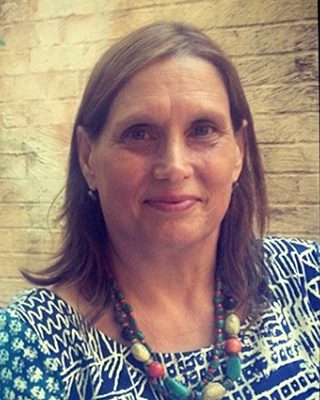
Yuuko Uchikoshi Tonkovich is a Professor at the School of Education, University of California, Davis, where she has served since 2004, advancing from Assistant to Associate and then to full Professor. Her work centers on language and literacy development in young dual language learners, with a focus on bilingualism, early literacy, and the role of family and media in language acquisition. Her research interests include: Early Childhood Development Multilingual Learners and Bilingual Education Language Acquisition and Literacy Parent-Child Interaction and Home Language Environment Quantitative Analysis of Educational Outcomes Educational Television and Multimedia Her recent publications span topics such as cognitive distancing in parent-child reading, morphological awareness in bilingual readers, and the impact of teacher language use in multilingual classrooms. The research consistently emphasizes longitudinal, cross-cultural, and interdisciplinary approaches, particularly focusing on Chinese American and Mexican American immigrant families. Her scientific awards include: AERA Vocabulary SIG Notable Vocabulary Researcher Award (2025) Foundation for Child Development Young Scholars Program Grant International Reading Association Dissertation Fellowship and Finalist Award Harvard Graduate School of Education Fellowships She has advised numerous research projects and secured significant funding from NIH/NICHD, the Foundation for Child Development, and other organizations. She teaches courses such as Language Development, Early Literacy, and Research on Text Comprehension. She is actively involved in national initiatives, serving on the Technical Advisory Group for the First 5 California Dual Language Learner Study and as Associate Editor of Applied Psycholinguistics . She leads the Language & Literacy Development Lab at UC Davis, which investigates the cognitive, linguistic, and socio-emotional development of dual language learners.
University of Illinois Urbana-ChampaignUnited States
Dov Cohen is a Professor of Psychology at the University of Illinois, with extensive cross-disciplinary affiliations including the Information Trust Institute, College of Law, Center for East Asian and Pacific Studies, and Center for Latin American and Caribbean Studies. His academic home resides within the College of Liberal Arts & Sciences. Professor Cohen's research centers on Cultural Psychology with specific expertise in honor cultures, institutional inversion, and cross-cultural value systems. His work examines how cultural frameworks shape cognition, emotion, and behavior - particularly regarding violence, debt, and religious influences. Notable contributions include the development of the 'institutional inversion' framework explaining discrepancies between collective attitudes and behaviors, and pioneering research on honor cultures in the American South. His publication record demonstrates consistent high-impact contributions across top journals including Journal of Personality and Social Psychology , Current Directions in Psychological Science , and Social Psychology . Recent work explores East-West relationship differences, gendered language in financial contexts, and the psychological mechanisms underlying cultural transmission. Cohen maintains active research programs examining the embodied nature of culture through psychological perspective and physical comportment. His theoretical work integrates Lewinian field theory with contemporary cultural psychology frameworks. As a mentor, Professor Cohen advises graduate students in Psychology and related interdisciplinary programs, fostering research that bridges cultural psychology with law, economics, and religious studies. His collaborative projects frequently involve international teams examining cultural phenomena across diverse national contexts.
Cecilia R. Aragon is a Professor in the Department of Human Centered Design & Engineering at the University of Washington, where she also serves as an Adjunct Professor in Computer Science & Engineering, Electrical and Computer Engineering, and the Information School. She is additionally a Senior Data Science Fellow at the eScience Institute. Aragon directs the Human-Centered Data Science Lab and has made significant contributions at the intersection of human-computer interaction and data science. Her research interests focus on human-centered data science, human-centered artificial intelligence, human-centered machine learning, human-computer interaction (HCI), computer-supported cooperative work (CSCW), visual analytics, aviation and astronautics sociotechnical systems, and emotion in informal text communication. Aragon's work bridges technical and social aspects of data science, particularly examining how humans interact with and gain insight from large datasets through both quantitative and qualitative methods. Aragon's recent publications demonstrate a strong focus on understanding online communities, sentiment analysis, distributed mentoring systems, and the ethical implications of AI. Her work spans multiple disciplines including social computing, data visualization, and astrophysics data analysis, showing her interdisciplinary approach to human-centered data science. Presidential Early Career Award for Scientists and Engineers (PECASE) 2008 Fulbright Fellowship 2017-18 HCDE Faculty Innovator in Research Award, University of Washington, 2015 Distinguished Alumni Award, Computer Science, University of California, Berkeley, 2013 Top 25 Women of the Year, Hispanic Business Magazine, 2009 Aragon has secured over $28 million in research funding from organizations including the National Science Foundation, National Institute of Standards and Technology, Department of Energy, Gordon and Betty Moore Foundation, Alfred P. Sloan Foundation, Washington Research Foundation, and industry partners like Microsoft and Intel. Her educational background includes a Ph.D. in Computer Science from UC Berkeley (2004), an M.S. in Computer Science from UC Berkeley, and a B.S. with Honors in Mathematics from Caltech. She leads the Human-Centered Data Science Lab and is affiliated with the eScience Institute, the Nearby Supernova Factory, and various research groups focused on data-intensive scientific collaborations. Her work on collaborative visual analytics systems like Sunfall has had significant impact in both academic and applied settings.
Anjalie Field is an Assistant Professor in the Computer Science Department at the Whiting School of Engineering, Johns Hopkins University. She is also affiliated with the Data Science and AI Institute and the Center for Language and Speech Processing (CLSP). Dr. Field completed her PhD at the Language Technologies Institute at Carnegie Mellon University under Yulia Tsvetkov, where she was a member of TsvetShop. Prior to joining Johns Hopkins, she was a postdoctoral researcher in the Stanford NLP Group and at the Stanford Data Science Institute, working with Dan Jurafsky and Jennifer Eberhardt. She also spent time as a visiting student at the University of Washington from 2021 to 2022. Her research focuses on the ethics and social science aspects of natural language processing, developing computational models to address societal issues like discrimination and propaganda while critically assessing and improving privacy, transparency, and fairness in AI pipelines. Her work spans social media analysis, bias detection in multilingual content, police accountability systems, and ethical considerations in large language model applications. Dr. Field's publications demonstrate a consistent focus on identifying and addressing biases in language technologies, with particular attention to racial, gender, and cultural dimensions. Her recent work has expanded into domain-specific applications of NLP in astronomy, healthcare, and social justice contexts, showing the breadth of impact that ethical AI considerations can have across disciplines. Among her notable recognitions are: AI2050 Fellow by Schmidt Sciences 2022 Wikimedia Foundation Research Award of the Year Best Paper nomination at Socinfo (2020) Dr. Field teaches AI Ethics and Social Impact (Fall 2023; Fall 2024) and NLP for Computational Social Science (Spring 2024; Spring 2025). She plans to take PhD students for the 2024-2025 admissions cycle. Her work bridges technical NLP research with important social considerations, making significant contributions to both the technical community and broader societal discourse around AI ethics. She is an active member of the Center for Language and Speech Processing, where she collaborates with researchers working at the intersection of language technologies and real-world applications. Her research focuses on developing methods that not only advance NLP capabilities but also ensure these technologies serve diverse communities equitably.
Diana Tamir is a Professor at Princeton University, where she directs the Princeton Social Neuroscience Lab. She earned her Ph.D. from Harvard University and specializes in the intersection of internal mental processes and external social cognition. Her research investigates: How minds predict others' emotions and mental states The cognitive consequences of self-disclosure and social media use Neural mechanisms of social prediction using fMRI and machine learning Effects of fiction reading on theory of mind Dynamics of spontaneous thought and social bonding Her recent publications (2024-2025) demonstrate strong focus on emotion prediction mechanisms, social interaction dynamics, neural signatures of psychological states, and developmental aspects of social cognition. Methodologically, she employs neuroimaging hyperscanning, ecological momentary assessment, and computational modeling across diverse populations. She currently advises graduate students including Faustine Corbani and Yeaju Diana Kim. Her lab focuses on empirical approaches to understanding how individuals navigate between internal experiences and external social environments.
Yoshiko Matsumoto is the Yamato Ichihashi Professor in Japanese History and Civilization and Professor of East Asian Languages and Cultures at Stanford University, with a courtesy appointment in Linguistics. She has been a faculty member at Stanford since 1992, progressing from Assistant Professor to her current distinguished position. Matsumoto also serves as coordinator of the Japanese Language Program and has held significant administrative roles including Chair of the Department of Asian Languages (2003-2005) and Interim Chair of the Department of East Asian Languages and Cultures (2016). Matsumoto earned her Ph.D. in Linguistics from the University of California, Berkeley (1989), following M.A. degrees in Linguistics from UC Berkeley and General and Applied Linguistics from the University of Tsukuba, an M.I.A. in American Studies from the University of Tsukuba, and a B.A. in English Language & Literature from Japan Women's University. Professor Matsumoto's research focuses on linguistic pragmatics from cross-linguistic perspectives, with particular expertise in Japanese language. Her work spans structural and sociocultural aspects of language in use, including noun-modifying clause constructions, honorifics, discourse markers, and the intersection of language with gender and aging. She has pioneered research on conversational narratives of older adults, examining how ordinary framing strategies help individuals navigate difficult experiences. Her current projects explore intergenerational communication through haiku, communicative abilities of people with dementia, and noun-modifying constructions across Eurasian languages. Matsumoto's scholarship consistently bridges theoretical linguistics with practical applications for understanding human communication in diverse social contexts. Matsumoto's recent publications reveal a growing focus on practical applications of linguistic research for social benefit, particularly in intergenerational communication and dementia care. Her work increasingly integrates arts-based approaches, especially haiku poetry, to bridge generational divides and enhance communication with elderly populations. The research shows a consistent trajectory from theoretical linguistic frameworks toward applied, human-centered language studies that address real-world challenges in aging societies, with particular attention to how ordinary language practices help individuals navigate life transitions and difficult experiences. Dean's Award for Distinguished Teaching, School of Humanities and Sciences, Stanford University (2000) Richard E. Guggenhime Faculty Scholar, Stanford University (2000-2003) Violet Andrews Whittier Fellow, Stanford Humanities Center (2019-2020) Faculty Research Fellow, Michelle R. Clayman Institute for Gender Research (2014-2015) Research Fellow, Japan Foundation (2002) Internal Fellow, Stanford Humanities Center (2005-2006) Presidential Fund for Innovation in the Humanities, Stanford University (2009-2011) Professor Matsumoto has mentored numerous students through her teaching in Japanese language and linguistics courses, including specialized offerings on language and aging, points in Japanese grammar, and haiku-based communication. Her research has been supported by prestigious grants from the National Endowment for the Humanities, the Japan Foundation, and Stanford's Presidential Fund for Innovation in the Humanities. She has served on multiple editorial boards including the Journal of Pragmatics since 1992, demonstrating long-standing leadership in her field. Matsumoto has also advised students through individual studies and thesis projects in East Asian Languages and Cultures. Matsumoto leads several collaborative research initiatives including the 'Sharing Conversations' project which examines intergenerational communication through haiku, and research on communicative abilities of people with dementia. Her work often involves interdisciplinary teams spanning linguistics, gerontology, and creative arts, with fieldwork conducted in both Japan and the United States. The 'Noun-Modifying Constructions in Languages of Eurasia' project represents a major international collaboration examining linguistic structures across cultural boundaries. She also directs the 'Language, Old Age and Gender in Japan' project supported by the Stanford University/Japan Foundation, and the 'Difficult Conversations Continue: Memories of the 3.11 Disaster and Bereavement Narratives' project focused on post-disaster communication.
Chung-Lin Martin Yang is an Assistant Professor (Instructional Track) in the Department of Brain and Cognitive Sciences at the University of Rochester, School of Arts & Sciences. His research focuses on psycho- and neurolinguistics, speech perception/production, word recognition, word learning, evolution of human cognition, and second language acquisition. His work investigates how orthography influences second language phonological encoding, the role of Broca’s area in non-linguistic sequence learning, and neural correlates of emotional processing in early childhood. He has published extensively on topics such as bilingual phonological processing, individual differences in language learning, and the impact of orthographic depth on lexical representation. Notable research themes include the interplay between orthographic cues and phonological encoding in Mandarin and English, as well as neurodevelopmental aspects of emotional and linguistic processing in children. His contributions bridge cognitive neuroscience, psycholinguistics, and educational linguistics. Dr. Yang holds a PhD in Cognitive Science and teaches courses related to language acquisition and cognitive mechanisms. His lab explores experimental methods to understand how linguistic and cognitive systems interact during learning and perception.
Javier Villa-Flores is an Associate Professor and Associate Director of the Graduate Division of Religion at Emory University. He holds a PhD in Latin American History from UC San Diego (2001), an MA (1998) from the same institution, and a BA in Sociology from the University of Guadalajara (1990). His research focuses on religion, colonialism, and social history in colonial Mexico, particularly examining the intersections of power, language, and legal systems. His major works include *Dangerous Speech: A Social History of Blasphemy in Colonial Mexico* (2006) and his current project on trust and risk in Bourbon New Spain through analysis of 'crimes of falsity.' He has contributed to journals like *Colonial Latin American Review* and co-edited volumes on archives, emotions, and colonial libraries. Teaching specialties include millenarian movements and religious martyrdom in Latin America. Villa-Flores has held fellowships from institutions including the NEH, Huntington Library, and Max Planck Institute. His work explores how colonial authorities used legal frameworks to enforce social control through concepts like blasphemy, forgery, and perjury, revealing how marginalized groups navigated these systems. Recent publications highlight the role of trust and its betrayal in shaping colonial governance and identity formation. Collaborative projects include special journal issues on archives and edited volumes on emotional history and library destruction. His research bridges historiography with interdisciplinary methods, emphasizing archival material and performative aspects of colonial power.
Seung Kyung Kim serves as an Assistant Professor (Lecturer) in the Department of Linguistics at the University of Utah, a position held continuously since July 2022. She actively teaches undergraduate courses including Language & Culture, Language Myths, Introduction to Phonetics and Phonology, and Introduction to Sociolinguistics across multiple semesters from 2023-2024, demonstrating consistent engagement in the university's academic mission within the linguistics discipline. Her research centers on psycholinguistics with specialized expertise in speech production and comprehension mechanisms, extending into second language acquisition, sociolinguistics, and phonetics. Kim investigates how social factors—particularly accent variation, emotional prosody, and ideological frameworks—impact real-time language processing through methodologies like eye-tracking and auditory-visual priming. Her work reveals critical insights into incremental processing in native and non-native speakers, especially regarding Korean case marking systems and cross-linguistic transfer effects. Analysis of Kim's publication trajectory from 2013-2024 shows evolving focus from foundational studies on emotional prosody in word recognition toward contemporary investigations of linguistic bias in veracity judgments and sociolinguistic variation. Her research consistently bridges cognitive processing with social representation, exemplified by the dual-route speech perception model integrating linguistic and social information. Recent work demonstrates methodological rigor through preregistered replication studies examining Polish-accented English comprehension. No scientific awards or major grants are documented in available records, though her scholarship appears in high-impact journals including Studies in Second Language Acquisition and The Journal of the Acoustical Society of America. While teaching records confirm active curriculum delivery across eight distinct courses with multiple sections annually, information regarding student advising, research laboratories, or collaborative teams remains unspecified in current materials.
Steven Franconeri is a Professor in the Department of Psychology at Northwestern University, leading the Visual Thinking Laboratory . His research focuses on visual thinking and communication, investigating how leveraging the human visual system can improve data understanding, memory, and decision-making in fields like science, education, and industry. Recent publications highlight his work on perceptual biases in data visualization (e.g., average estimation in line graphs , aspect ratio effects ), design principles for mitigating cognitive errors (e.g., V-FRAMER framework ), and the interplay between attention, memory, and visual communication. Key themes include visual working memory limits , grouping cues in bar charts , and dynamic visualization challenges .
Professor Eric Hutton at the University of Utah's College of Humanities specializes in Chinese and Ancient Greek philosophy, with particular emphasis on ethics, moral psychology, and cross-cultural comparisons. His academic journey began with a BA in Classics and Chinese from Stanford University, followed by an MA in Chinese from Harvard University, culminating in a PhD in Philosophy from Stanford University (2001). Professional Timeline: Assistant Professor (2001-2009), Associate Professor (2009-2019), Professor (2019-present) Key Research Areas: Chinese philosophy, Ancient Greek philosophy, ethics, moral psychology, ritual studies, and political philosophy His recent publications focus on: Comparative analysis of early Chinese and Greek political concepts (e.g., wei in 2024 work) Intersections between ethics and the arts in classical Chinese thought Epistemological aspects of Confucian tradition Philosophical dialogues between Xunzi and contemporary virtue ethics Historical transmission of classical texts (e.g., Matteo Ricci's sources in 2025 publication) Hutton's teaching portfolio includes specialized graduate and undergraduate courses in classical Chinese philosophy, Plato's Republic, contemporary ethics, and virtue ethics seminars.
Lisa Sanders is a Professor in the Department of Psychological and Brain Sciences at the University of Massachusetts Amherst. She leads the Neurocognition and Perception Laboratory and is affiliated with the Neuroscience & Behavior Graduate Program, Center for Research on Families, Healthy Development Initiative, Initiative in Cognitive Science, and the Institute for Applied Life Sciences. PhD, 2001, University of Oregon Her research lies at the intersection of cognitive neuroscience and developmental science, focusing on auditory perception, speech processing, and selective attention across the lifespan. She investigates how listeners process speech in noise, how prosody and rhythm influence perception, and the neural mechanisms underlying attentional allocation in both speech and music. Her work employs behavioral, EEG, and ERP methodologies with participants ranging from toddlers to older adults. The most recent publications highlight a strong trend in temporal attention, speech segmentation, and the influence of prosody and musical structure on perception. Her research increasingly explores cross-modal and developmental aspects of auditory cognition, using artificial languages and controlled stimuli to isolate perceptual mechanisms. Collaborative work extends into emotional decision-making and visual attention. Lisa Sanders has not been mentioned as receiving any scientific awards in the provided text. She advises graduate students through the Neuroscience & Behavior program and leads a multidisciplinary research team. Her lab conducts externally funded research projects such as LiveNoise, SpeechRate, PrecedNoise, and PhonoLearn, often in collaboration with researchers across departments and institutions. While specific grants are not listed, her sustained research output and lab operations imply active grant support. She directs the Neurocognition and Perception Laboratory at Tobin Hall, where her team investigates neural and cognitive mechanisms of perception using electrophysiological and behavioral methods. The lab fosters collaboration across psychology, linguistics, neuroscience, and communication disorders.
Maria Argyriou is an Associate Lecturer for Applied Music Preschool Education in the Department of Preschool Education & Educational Design at the School of Humanities, University of the Aegean (Rhodes, Greece). She holds a postdoctoral degree in Practical Aspects and Praxial Philosophy of Music Education from the same institution, a PhD in Music Studies from Ionian University specializing in cultural policy and music education, and two Master's degrees in Education from The Open University of Greece. PhD: Department of Music Studies, Ionian University (specializing in cultural policy and music education) Postdoctoral Degree: Practical Aspects and Praxial Philosophy of Music Education, University of the Aegean Master of Education: The Open University of Greece Second Master in Education: Specialization in education leadership and school unit assessment Argyriou's research focuses on the intersection of music education, cultural policy, and early childhood development. Her work explores praxial philosophy in music education, interdisciplinary connections between music and other subjects (particularly language and mathematics), and innovative approaches to music teaching in preschool settings. She has developed significant contributions to understanding how music can serve as a tool for cognitive development, emotional expression, and cultural citizenship in young children. Her recent publications demonstrate a clear trend toward multimodal and technology-enhanced music education approaches, with increasing focus on praxial philosophy applications in digital learning environments. Her work consistently bridges theoretical frameworks with practical classroom applications, particularly in early childhood settings. Scientific Awards: Kiveli-Y. Horn scholarships/Special Grants 2024 for archival research at The Music Library of Greece—Lilian Voudouri Argyriou actively participates in multiple professional organizations including the International Society of Music Education (member of SIG Practice and Research Group in Integrated Music Education, PRIME), European Music Council (EMC), European Association for Music in School (EAS), and serves as chairperson of the Greek Association of Primary Music Education Teachers (GAPMET). She has made significant contributions to educational materials as author of official Greek Music Education textbooks for School-Age 6-8 and as editor for multiple academic journals. She co-edits the open-access 'Hellenic Journal of Music, Education, and Culture' (HeJMEC) and serves as editor for the open-access journal 'Music in the First Grade' published by her department. Her current research focuses on archival work with children's songs from the Minos Dounias collection at The Music Library of Greece.
Dr. Bill T. Arnold is the Paul S. Amos Professor of Old Testament Interpretation at Asbury Theological Seminary. He joined the faculty in 1995 and has served in several administrative positions, including Chair of the Area of Biblical Studies, Director of Postgraduate Studies, and Vice President of Academic Affairs/Provost. His educational background includes a Ph.D. from Hebrew Union College-Jewish Institute of Religion, an M.Div. from Asbury Theological Seminary, and a B.A. from Asbury University. Dr. Arnold's research focuses on Old Testament and ancient Near Eastern studies, with specializations in Pentateuchal interpretation, particularly Genesis and Deuteronomy. His scholarly work explores the intersection of biblical texts with their historical and cultural contexts in the ancient Near East. He has made significant contributions to our understanding of Hebrew language, the history of Israelite religion, and the composition of the Pentateuch. His recent publications reveal a continued focus on Deuteronomy, with major works including a commentary on Deuteronomy (2022), a handbook on the Hebrew text of Deuteronomy 12-26 (2022), and several articles examining specific aspects of Deuteronomy's composition and theology. He has also contributed to Genesis scholarship through his work on The Cambridge Companion to Genesis (2022) and other publications. His research demonstrates a consistent interest in the relationship between biblical texts and ancient Near Eastern contexts. Dr. Arnold has received recognition through editorial appointments as General Editor (Hebrew Bible/Old Testament) for the New Cambridge Bible Commentary series, Editor of the Baker Commentary on the Old Testament: Pentateuch, and Series Editor of the New International Commentary on the Old Testament. He has been actively involved in professional organizations, serving as co-chair of the Genesis Program Unit for the Society of Biblical Literature (2017-2021) and co-chair of the SBL Deuteronomy Program Unit since 2019. Previously, he served on the Board of Trustees of the American Schools of Oriental Research (2007-2011) and ASOR's Committee on Publications (2008-2014).
Barbara Mones is a Teaching Professor in the Paul G. Allen School of Computer Science & Engineering at the University of Washington. She serves as Director of the Reality Studio, part of the Reality Lab, and leads the Facial Expression Research Group (FERG) and the Octopus Research Group (ORG). Education: Undergraduate degree from University of Michigan, Ann Arbor Post graduate certification in Animation from Sheridan College, Oakville, Canada MFA from Rhode Island School of Design Professor Mones specializes in Human-Centered Computing and Interaction with the Physical World, with expertise in Augmented, Virtual & Mixed Reality; Computer Graphics & Animation; and Computing Education Research. Her research focuses on the intersection of animation, storytelling, and immersive technologies, exploring how these can be effectively integrated into educational contexts and creative production pipelines. She has developed specialized curriculum for facial expression in animated characters and immersive storytelling environments. Professor Mones has directed and produced more than twenty animated shorts throughout her career at the University of Washington. Her recent works demonstrate expertise in character animation, facial expression, and digital storytelling, often incorporating innovative techniques in virtual and augmented reality. These films showcase her commitment to advancing both the artistic and technical aspects of computer animation. Scientific Awards: SIGGRAPH 2021 Distinguished Teaching Award NASA Group Achievement Award Professor Mones has been instrumental in developing animation curriculum that has influenced programs worldwide. She serves on the ACM SIGGRAPH Executive Committee and the Education Committee, where she continues to shape computer graphics education globally. Her teaching approach emphasizes hands-on, project-based learning through the complete animation production pipeline. She leads the Reality Studio, which focuses on research and development in immersive storytelling technologies, and oversees the Facial Expression Research Group which investigates the technical and artistic aspects of creating expressive digital characters for animation and virtual environments.