Nicholas Wiltsher is an Associate Professor at the Department of Philosophy; Aesthetics at Uppsala University since 2019. His research focuses on aesthetics, philosophy of mind, and race/gender studies, exploring topics like imagination's role in art, gender norms in aesthetics, and electronic dance music's philosophical dimensions. He holds a PhD from the University of Miami and has held academic roles at institutions including Antwerp, Auburn, Porto Alegre, and Leeds. Education: PhD in Philosophy from the University of Miami. Previous affiliations include universities in Antwerp, Auburn, Porto Alegre, and Leeds. Research interests include: the interplay between art and imagination, aesthetic norms and gender, expression theory, philosophy of race and gender, and electronic dance music aesthetics. He critiques traditional disciplinary boundaries in aesthetics and advocates for interdisciplinary approaches. His recent publications (2023–2025) emphasize imagination's epistemic role, the aesthetic constitution of gender identities, and critiques of additive imagination theories. Earlier work (2016–2019) addressed electronic dance music's cultural ontology and Collingwood's expression theory. Awards: No scientific awards explicitly listed. Grants and advising: No grants or student advisees explicitly mentioned in sources. Labs/Teams: No specific research groups or labs mentioned, though his work engages interdisciplinary collaborations in aesthetics and cultural philosophy.
Don Kulick is a Professor and Research Director at the Department of Cultural Anthropology and Ethnology, Uppsala University, Sweden. His academic career spans decades of anthropological fieldwork in Papua New Guinea, Brazil, and Scandinavia, with a focus on linguistic anthropology, sexuality studies, and disability studies. Dr. Kulick's research interests encompass linguistic anthropology, sexuality studies, disability studies, language death, vulnerability studies, and human-animal communication. His work challenges conventional views on vulnerability, arguing that it can be a resource rather than a lack. His fieldwork with adults with significant disabilities in Denmark and Sweden informed his influential book "Loneliness and its Opposite: sex, disability, and the ethics of engagement". Kulick has also made significant contributions to the understanding of transgender communities, particularly through his early ethnographic work with Brazilian travesti prostitutes documented in "Travesti: Sex, Gender and Culture among Brazilian Transgendered Prostitutes". His recent scholarly output demonstrates a trajectory from linguistic anthropology and sexuality studies toward broader questions of vulnerability, ethics, and human-animal relations. Kulick's work consistently engages with marginalized communities and challenges disciplinary boundaries, connecting linguistic anthropology with disability studies, queer theory, and ethical frameworks for engagement with vulnerable others. ERC Advanced Grant for a 5-year research project on people who are treated as though they aren't really there Dr. Kulick has received significant research funding, most notably an ERC Advanced Grant for a 5-year project examining people who are treated as though they aren't really there, including courtroom interpreters and peer reviewers. His mentorship extends through his extensive publications and edited volumes that have shaped multiple generations of anthropological scholarship, particularly in the areas of linguistic anthropology and sexuality studies. While specific lab structures aren't mentioned in the provided text, Kulick's research program on vulnerability appears to be an organized research initiative (referred to as the "EV program" in the text), suggesting a research team or collaborative network focused on vulnerability as a productive resource.
Markus Heilig is a Professor of Psychiatry and Head of the Department of Biomedical and Clinical Sciences (BKV) at Linköping University. He serves as Director of the Center for Social and Affective Neuroscience (CSAN), integrating basic and clinical neuroscience to address addictive and affective disorders. His work bridges neuropharmacology, molecular psychiatry, and clinical trials. Linköping University (Current) Center for Social and Affective Neuroscience (CSAN) (Director) Wallenberg Center for Molecular Medicine (Collaborator) His research focuses on alcohol dependence mechanisms, stress-neurotransmitter interactions (e.g., CRF, substance P, endocannabinoids), and personalized medicine approaches. Using animal models and human neuroimaging (fMRI), his lab explores epigenetic changes in frontal lobe and amygdala neurons that drive compulsive alcohol use. Recent publications highlight his work on endocannabinoid modulation for PTSD treatment, neural correlates of reward choices, and pharmacological interventions targeting GABA and opioid receptors. His studies often combine brain imaging, behavioral analysis, and pharmacology. Scientific awards include the 2019 Wallenberg Clinical Scholar grant and 2017 CAN/Nordic Drugs prizes. Heilig's research is supported by Vetenskapsrådet (SEK 57 million center funding) and international donations like the Andrew J. Bock Memorial Fund.
Matteo Magnani is a Professor in the Division of Computing Science at the Department of Information Technology, Uppsala University. He leads the Uppsala University Information Laboratory and is a founding member of the Uppsala University Computational Social Science Lab. His research spans network science, artificial intelligence, data science, and computational social science, with a focus on social data mining and multilayer networks. PhD in Computer Science, University of Bologna, 2006 Graduated with honours in Information Sciences, University of Bologna, 2002 Studies in Computer Science at University of Marne la Vallée and Imperial College London Matteo Magnani's research interests include social network analysis, multilayer and probabilistic networks, community detection, visual analytics, and the application of AI to digital media and climate communication. His work bridges computer science and social sciences, particularly in analyzing online discourse and digital intermediaries. He has contributed significantly to the understanding of network structures, uncertainty in networks, and the ethical dimensions of algorithmic analysis. His recent publications highlight trends in fairness in community detection, visual saliency in network layouts, emotional reactions to climate visuals online, and deep learning applications in social media. Topics frequently involve YouTube, Twitter, and online public debates, using advanced network and machine learning methods. Rotary Prize for best student of the Science Faculty Best Paper Award Funniest Presentation Award Best Poster Award Pedagogical Prize from UTN Distinguished University Teacher (Sweden) Docent title (Sweden) Magnani has supervised numerous students and collaborated widely, particularly with Luca Rossi, Alexandra Segerberg, and Davide Vega. He has secured funding from major sources including VR, H2020, STINT, and MIUR. He leads active research labs focused on information systems and computational social science, fostering interdisciplinary collaboration and innovation in network-based research.
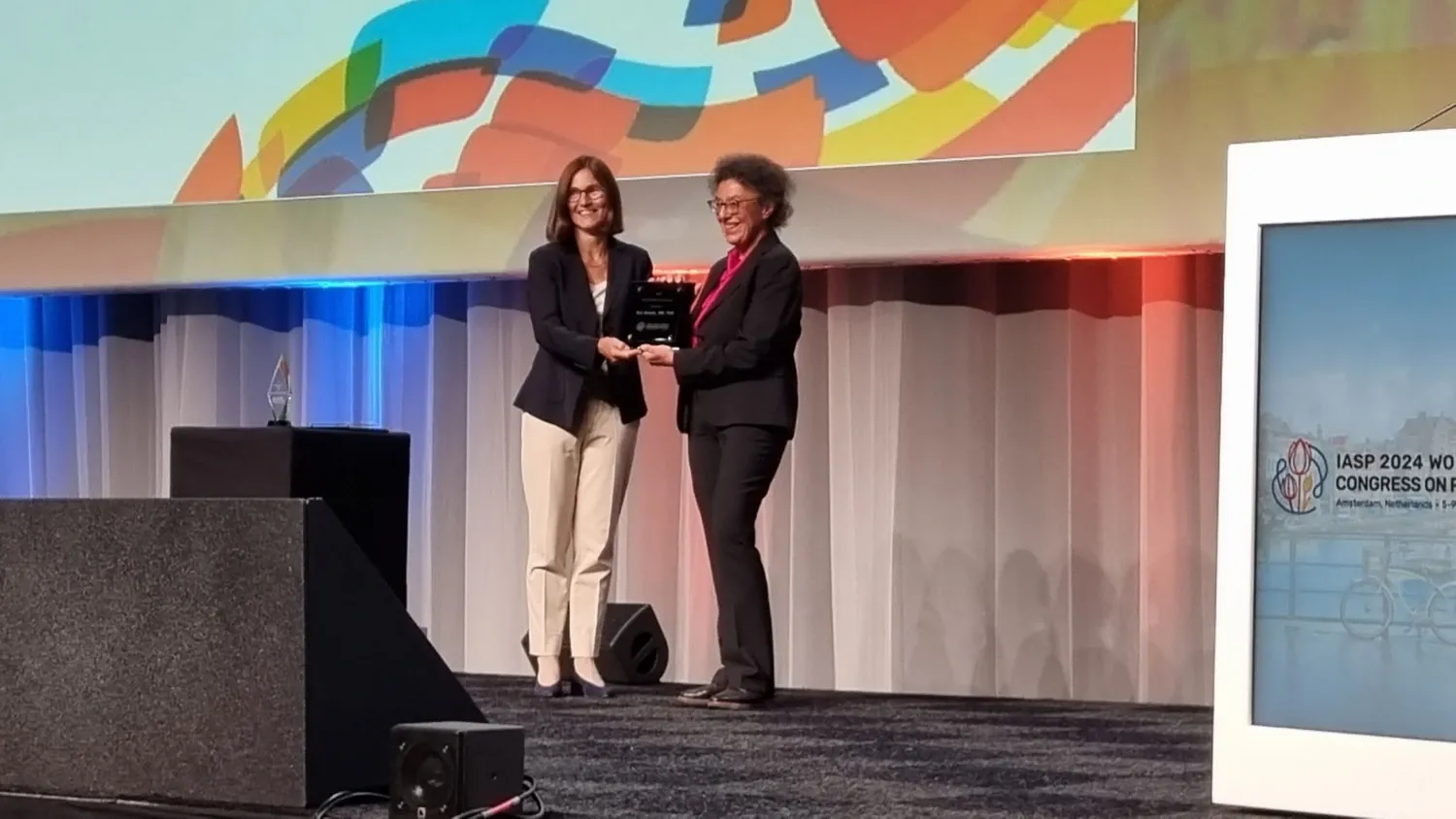
Professor Eva Kosek holds dual academic positions as Professor of Clinical Pain Research at Karolinska Institutet (since 2015) and Uppsala University (since 2020). She is affiliated with the Department of Clinical Neuroscience and leads the Mechanisms of Pain and Treatment Research Group . Her roles include senior consultant at Uppsala University Hospital's Pain Center. Education: MD from Uppsala University (1986), PhD from Karolinska Institutet (1996). Specializations: Rehabilitation Medicine (1998), Pain Relief (2001). Academic promotions: Associate Professor at Karolinska (2004), Full Professor (2015). Research Focus: Chronic pain mechanisms, neuroimmune interactions, fibromyalgia, and autoimmune pathways. Key projects include the RAFT trial (Rituximab for fibromyalgia autoantibody therapy) and the BACPAP consortium for low back pain phenotyping. She chairs IASP's Terminology Task Force, introducing the 'nociplastic pain' concept. Key Contributions: Discovered anti-satellite glial cell IgG antibodies in fibromyalgia patients, linked to symptom severity. Pioneered neuroimaging studies on pain modulation circuits. Authored over 300 publications, with recent work on cerebrospinal fluid biomarkers and lipid metabolite profiles. Awards: 2024 Roland Melzack Lecture Award from IASP. Recognized for redefining pain taxonomy and translational research. Grants: Active funding includes Swedish Research Council grants on fibromyalgia autoimmunity, environmental exposures, and neuroinflammation. Total grants exceed SEK 100M over her career. Labs/Teams: Leads a multidisciplinary team at Karolinska's Pain Research Center, collaborating internationally on translational pain studies. Active in biobanking initiatives like the Swedish Chronic Pain Biobank.
Susanne Schötz is an Associate Professor of Phonetics at Lund University's Centre for Languages and Literature and a Researcher at the Lund University Humanities Lab. She is also the project manager for Cat-human communication research and a member of the LU Profile Area: Natural and Artificial Cognition. Her research focuses on phonetic variation in three main areas: dialectal variation in Swedish and other languages, paralinguistic variation related to age, emotion, attitude and health condition, and phonetic variation in human-animal communication, particularly cat-human communication. She has led several research projects including Melody in human–cat communication (Meowsic), Cat–Human Communication, and studies on Estonian Swedish and Swedish vowel articulation using articulography. Dr. Schötz teaches courses at the speech and language pathology and audiology programs at Lund University. Her work with cats has gained significant attention, including winning the Ig Nobel Prize in Biology in 2021 for research on cat-human communication. Her research output demonstrates strong trends in animal communication, particularly focusing on the acoustic properties of cat vocalizations and how humans perceive and interpret these sounds. She combines traditional phonetic analysis with innovative approaches to study cross-species communication, making significant contributions to both linguistics and animal behavior studies. Scientific Awards: The Ig Nobel Prize in Biology (2021) Årets Mäster (Master of the Year) (2020) Vetenskapssocieteten Lunds universitet (2016) Vetenskapssocieteten i Lund: Stipendium för betydande insats inom humanistisk forskning (2007) Dr. Schötz has supervised research projects and students in phonetics and human-animal communication. Her work has been supported by various research funds including MAW, SKK och Agrias forskningsfond, and the Pufendorf IAS. She is in charge of the articulographs in the Humanities Lab, which are essential for her research on speech production and articulation. She is actively involved in the Lund University Humanities Lab, contributing to its mission of interdisciplinary research in the humanities through her expertise in phonetics and communication studies.
Andrei Khrennikov is Professor of Mathematics at the Department of Mathematics, Linnaeus University, where he also serves as director of the International Center for Mathematical Modeling (ICMM) . He leads a vibrant research group focused on interdisciplinary modeling in physics, biology, cognition, and social systems. Research Interests: His work spans a vast interdisciplinary landscape, including mathematical physics, p-adic and non-Archimedean analysis, quantum foundations, quantum-like modeling of cognition and decision-making, econophysics, and biological dynamics . He is a pioneer in applying quantum probability and formalism outside quantum physics, especially in psychology and social sciences. The Växjö series of quantum theory conferences , which he organizes, is the longest-running continuous conference series on quantum foundations, fostering dialogue between theorists, experimentalists, and philosophers. His recent publications (2021–2025) show a strong focus on quantum cognition, p-adic biology, entanglement models, and social laser theory , often leveraging generalized probability and open quantum systems frameworks. Scientific Contributions: Developed quantum-like models for cognition, decision-making, and biological processes. Pioneered use of p-adic and ultrametric analysis in genetics and brain dynamics. Advanced classical random field models as alternatives to quantum interpretations. Introduced the social laser model for collective emotional amplification in societies. He is actively involved in major research projects such as QUARTZ (Quantum Information Access and Retrieval Theory) and DYNALIFE (Information, Coding, and Biological Function) . His work bridges mathematics, physics, and cognitive science, promoting a unified framework for understanding complex systems through quantum-inspired tools.
Mikael Johansson is a Professor at Kungliga Tekniska Högskolan (KTH), specializing in Control Technology . He teaches and coordinates courses such as Distributed Optimization (FEL3311) and various advanced-level degree projects in computer science, electrical engineering, and systems engineering. His research spans Control Systems , Machine Learning , and Optimization , with a focus on asynchronous algorithms, federated learning, and applications in energy systems and construction. His work includes 15 recent publications on topics like neural networks, distributed optimization, and battery technology. Notable areas of contribution are in asynchronous learning, federated learning with privacy constraints, and quasi-Newton methods for optimization. His research bridges theoretical advancements with practical applications in urban design, healthcare, and autonomous systems.
Zenun Kastrati is an Associate Professor at the Department of Informatics, Linnaeus University. His research focuses on Artificial Intelligence, Natural Language Processing, Machine Learning, Semantic Web, Sentiment Analysis, and Learning Technologies. He contributes to the Data-driven Business Innovation (DBI) and Interaction Design Research Groups, leading projects like Forest 4.0, RAPID, and IGNITE. His recent work involves Explainable AI, medical imaging, and multilingual NLP. Ph.D. in Computer Science (NTNU, 2018) Master's in Computer Science (EU TEMPUS Programme) Previous Lecturer/Researcher at University of Prishtina His research spans AI applications in medical diagnostics , NLP , sentiment analysis , and semantic technologies . Key projects include Forest 4.0 (environment monitoring) and RAPID (online education in Pakistan). Publications highlight his expertise in deep learning , transformer models , and context-aware systems . Recent publications demonstrate trends in Explainable AI (XAI) for healthcare, medical imaging techniques, and multilingual NLP frameworks. Other work explores social media analytics , student feedback analysis , and pedagogical document classification . Zenun's teaching includes Fundamentals of Programming , Object-Oriented Programming , Web Applications , Data Analytics , and Adaptive Web courses at BSc and MSc levels.
Christian Smith is an Associate Professor and Lecturer at the Department of Robotics, Perception and Learning at Kungliga Tekniska Högskolan (KTH Royal Institute of Technology). His research focuses on robotics and applications in human-centered environments like home environments, small workshops, and healthcare facilities, including the development of new robotic systems for research. Teaching Roles: Course Coordinator/Teacher/Examiner for courses such as Introduction to Robotics (DD2410), Research Project in Robotics (DD2411), and Java Programming for Python Programmers (DD1380) Research Themes: Human-Robot Interaction, Behavior Trees, Exoskeletons, Intent Recognition, and Multimodal Perception Awards: No specific scientific awards mentioned in the provided text His KTH profile highlights work on adaptive robotics systems and formalized control strategies. The research portfolio spans from theoretical studies on behavior tree programming to applied work in assistive technologies and teleoperation systems.
Victoria Van Orden Martinez is a Researcher at Lund University's Department of History and Department of Arts and Cultural Studies, specializing in Holocaust studies, refugee experiences, and postwar knowledge production. Her work bridges history, migration studies, and gender studies, with a particular focus on how survivors of Nazi persecution who became refugees documented atrocities and shaped historical memory. She is affiliated with multiple research networks including NORAH (North European Center for Research on Antisemitism and the Holocaust), the Migrant Knowledge Network at the German Historical Institute, and the Nordic Jewish Studies Network. Education: Ph.D. in History from Linköping University (2024) Dissertation: 'Afterlives: Jewish and Non-Jewish Polish Survivors of Nazi Persecution in Sweden Documenting Nazi Atrocities, 1945-1946' Dr. Martinez's research centers on the intersection of Holocaust studies, gender, and refugee experiences, particularly focusing on how survivors became knowledge actors in documenting Nazi atrocities. Her work examines the Polish Research Institute in Lund (PIZ) archive, which was recently added to the UNESCO Memory of the World Register, analyzing how emotions functioned as vehicles of knowledge in survivor testimonies. She investigates how women survivors of Nazi persecution who were medical professionals navigated their careers after the war, and how displacement shaped historical memory and knowledge production. Her scholarly output reveals a consistent focus on the materiality of Holocaust memory, the psychological dimensions of testimony, and the epistemic value of emotions in historical documentation. Martinez's work demonstrates how refugee communities created knowledge networks that documented atrocities while simultaneously processing trauma, with particular attention to how gender shaped these experiences. Her research bridges European and American scholarly traditions, connecting Swedish archival materials with broader Holocaust studies. Scientific Awards: Nils Karlebys stiftelse för Skånsk Kultur och Historia, Stipendium (2025) As an editorial board member of Collections: A Journal for Museum and Archives Professionals and an Affiliated Non-residential Scholar at the USC Shoah Foundation, Martinez actively contributes to the development of methodologies for preserving and interpreting Holocaust testimony. Her work with the Ravensbrück archive at Lund University demonstrates her commitment to innovative approaches in historical research that center survivor experiences while examining the institutional frameworks that shape memory. She frequently presents at international conferences on topics ranging from Nazi concentration camps to refugee medical labor in postwar Sweden. Dr. Martinez is deeply embedded in collaborative research networks including the Migrant Knowledge Network at the German Historical Institute and the National Network for Holocaust Studies in Sweden. Her work with the Polish Research Institute in Lund (PIZ) archive has positioned her as a key scholar examining how displaced persons documented their experiences and contributed to historical knowledge production. Through her participation in multiple international research initiatives, she continues to expand our understanding of how trauma, displacement, and knowledge intersect in the aftermath of genocide.
Mikael Johansson is a Professor in the Department of Psychology at Lund University, where he leads research on the cognitive and neural bases of memory and cognitive control. His academic appointments include membership in eSSENCE: The e-Science Collaboration, LAMiNATE (Language Acquisition, Multilingualism, and Teaching), LU Profile Area: Proactive Ageing, and LU Profile Area: Natural and Artificial Cognition. With 159 research outputs and leadership in 18 projects (8 active), he maintains a prominent position in cognitive neuroscience research. His research focuses on the neural mechanisms of memory using behavioral, electrophysiological (EEG/ERP), and functional magnetic resonance imaging (fMRI) methods. Key interests include interactions between memory systems, formation and retrieval of episodic memories, emotion regulation and emotional memory, mechanisms underlying incidental and intentional forgetting, and the relationship between eye-movements, mental imagery and memory. His work has significant implications for understanding memory functions in psychiatric conditions such as depression and post-traumatic stress disorder. Analyzing his extensive publication record spanning from 2012-2025 reveals a consistent focus on memory mechanisms with increasing integration of eye-tracking methodologies and clinical applications. His research demonstrates an evolving trajectory from basic memory processes toward understanding memory in real-world contexts and clinical populations, with recent work emphasizing the role of eye movements in memory construction and the neural dynamics of memory integration. Mikael Johansson serves as a member of The Swedish National Committee for Psychological Sciences at the Royal Swedish Academy of Sciences since 2011 and has received significant research funding including from The Bank of Sweden Tercentenary Foundation, Swedish Research Council, and Stiftelsen Marcus och Amalia Wallenbergs Minnesfond. His current major projects include TEAM: Transdisciplinary Approaches to Learning, Acquisition, Multilingualism (2024-2029), Tracking cognitive change as a function of normal ageing and different types of degenerative disease, and How the brain constructs the present and reconstructs the past via sequences of eye movements. He leads the Lund Memory Lab where his team investigates how the brain constructs and maintains coherent episodic memories through eye movements. His research group actively collaborates with international partners across multiple disciplines, bridging cognitive psychology, neuroscience, and clinical applications. The lab's work has gained significant attention, with several publications being highlighted in news outlets and academic discussions.
Martin Carlsson-Wall is a Full Professor at Stockholm School of Economics (SSE) in the Department of Accounting within the House of Governance and Public Policy. He serves as Center Director for both the Center for Municipality Governance and the Center for Security and Resilience. In 2024, he was named "The Linder Chair in Sports and Business," the first Chair at SSE on Sports and Business topics. Since 2017, he has been Program Director for the MSc in Accounting, Valuation and Financial Management, and in 2015, he founded the Center for Sports and Business, which now includes 40 faculty members and has strategic partnerships with major Swedish sports organizations across football, hockey, golf, and skiing. Martin Carlsson-Wall's research focuses on accounting in sports organizations and accounting in inter-organisational relationships across both private and public sectors. His work extensively examines management control systems , particularly in contexts of innovation , growth companies , and risk management . His research often takes a qualitative approach, investigating how accounting practices function in extreme situations (such as the Swedish migrant crisis), high-intensity organizations (like football clubs), and during organizational change processes. Analysis of Professor Carlsson-Wall's recent publications reveals a strong thematic focus on the intersection of accounting practices with sports management and public sector administration. His work demonstrates how management control systems adapt to different organizational contexts, from football clubs to technology firms and public administration during crises. A recurring theme is how accounting practices mediate tensions between different stakeholder interests and how they evolve in response to organizational challenges. His research methodology typically employs in-depth case studies that examine accounting as a social practice rather than merely a technical function. Professor Carlsson-Wall has received significant recognition through his appointment as "The Linder Chair in Sports and Business" in 2024, establishing the first dedicated research position at SSE focusing on the business aspects of sports. As an educator, Professor Carlsson-Wall serves as Program Director for the MSc in Accounting, Valuation and Financial Management and teaches several key courses including BE901 Hybrid Organizations: Value Creation and Strategy at the bachelor's level, and course 3313 Investments and Value Creation in Global Sports (which he directs) and course 3302 Management Control at the master's level. He also supervises master's theses in Accounting and Financial Management. In Executive Education, he teaches on management control, costing, performance management, transfer pricing, investment management, and financial analysis through both open programs and customized corporate offerings. Professor Carlsson-Wall founded and directs the Center for Sports and Business, which has grown to include 40 faculty members and established partnerships with major Swedish sports organizations. He also leads the Center for Municipality Governance and the Center for Security and Resilience, demonstrating his commitment to applying accounting and management control research to practical governance challenges in both public and private sectors.
Jimmy Jaldemark is a Professor at the Department of Education, Mid Sweden University, Sundsvall, Sweden. He serves as Research Leader of HEEL (Higher Education and E-Learning) and Head of Subject for the Discipline of Education. His roles include membership in the Faculty Board of Humanities and representation in the university-wide Education Council. He co-founded GRADE, a national graduate school in digital education, and leads the EARLI Centre for Excellence in AI in Learning and Instruction (AILI). His research focuses on AI, digitalization, lifelong learning, and networked learning. He co-edited *Networked Professional Learning* (2019) and guest-edited special issues in the *British Journal of Educational Technology*. He is an editor for that journal and serves on editorial boards for *Educational Research Review*, *Postdigital Science and Education*, and others. He supervises doctoral students and teaches in Behavioral Science and Education programs. Current projects include HEaD (Higher Education and Digitization) and BLAD (Need-based Learning through Adapted Participation). He collaborates internationally, notably in the AILI network exploring AI's educational impacts. His work spans educational development, organizational learning, and policy frameworks for lifelong learning in the digital era.
Maria Ojala is an Associate Professor and Senior Lecturer in Psychology at Örebro University (20% position until December 2026) and will transition to a Professor role (80%) at the University of Oulu, Finland, in August 2024. Her research focuses on young people’s emotional responses to climate change (2004–2025), examining climate anxiety, hope, coping strategies, and pro-environmental behavior across developmental stages. Current affiliations: Örebro University, University of Oulu (FRONT program) Key research areas: Environmental Psychology, Climate Change Education, Sustainable Development, Youth Mental Health Her work bridges emotional awareness and transformative learning, analyzing how climate-related emotions influence engagement, communication patterns, and educational practices. Recent projects include longitudinal studies on climate distress in Finnish adolescents (Swedish Research Council VR, 2022–2026) and youth trust in climate science (Swedish Research Council Forte, 2022–2025). Earlier, she explored food activism (Formas, 2018–2022) and mobile preschools (RJ, 2018–2022). Publications span empirical and theoretical analyses, with 15 recent articles (2021–2025) addressing climate anxiety, coping strategies, media exposure, and teacher practices. She collaborates with research groups like POCSUS and leads initiatives in the LEADER Center. Grants include SEK 5.95M (VR), SEK 3.94M (Forte), and SEK 3M (Formas). Her work emphasizes critical emotional awareness as a key competence for sustainable futures, integrating moral reasoning and anticipatory emotions into education.