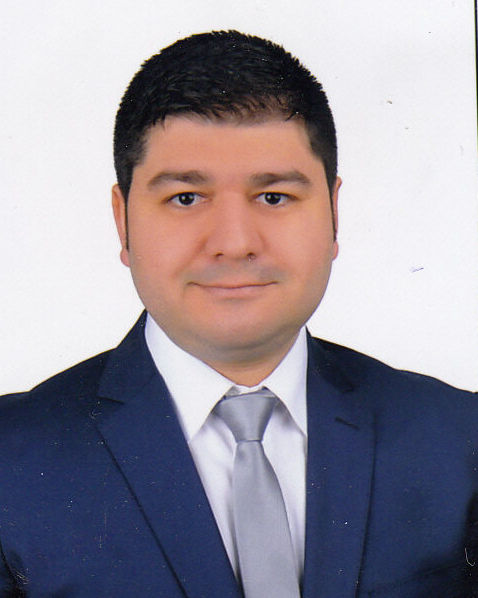
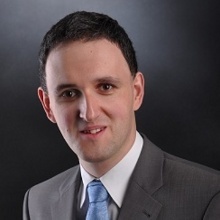
Scott Boss serves as Associate Professor of Accounting at Bentley University, where he has been a faculty member since completing his Ph.D. in Information Systems from the University of Pittsburgh in 2007. His academic credentials include a B.S. and MAcc from Brigham Young University. Located in LaCava Campus Center - 196B, he maintains active engagement through teaching and research in accounting information systems. His research concentrates on critical intersections between accounting and cybersecurity, particularly examining human factors in security behavior, cybercrime prevention, and information security controls. Dr. Boss investigates how fear appeals motivate protective behaviors and develops pedagogical frameworks for integrating cybersecurity into accounting education. His scholarly work appears in journals including the European Journal of Information Systems and Group and Organization Management , reflecting substantial contributions to both theoretical and practical aspects of secure information systems. Recent publications (2020-2025) reveal three dominant research trajectories: cybersecurity curriculum development for accounting professionals, behavioral security interventions using fear appeals, and innovative teaching methodologies for forensic investigations. His work consistently bridges technical security requirements with professional accounting practice, addressing AACSB technology standards through publications on big data implementation and audit curriculum integration. Dr. Boss actively contributes to academic service through the Strategic and Emerging Technologies Section of the American Accounting Association and the Journal of Emerging Technologies in Accounting . His teaching portfolio includes Accounting Information Systems, Systems Audit, and Information Security courses that directly incorporate his research findings into classroom practice. Current initiatives focus on developing institutional capabilities for cybersecurity education and creating experiential learning tools like the white-collar hacking contest for forensic training.
Armin Grunwald serves as Head of the Institute for Technology Assessment and Systems Analysis (ITAS) at Karlsruhe Institute of Technology (KIT) and Head of the Office of Technology Assessment at the German Bundestag (TAB). Since 2007, he has held the Chair of Philosophy and Ethics of Technology at KIT's Institute of Philosophy, building on his previous professorship at the University of Freiburg (1999-2007). His leadership positions include membership in the German Ethics Council, the National Advisory Board for Repository Search, and the Science-Policy Advisory Board of ETH Zürich. Grunwald's research focuses on the theory and practice of technology assessment, ethics of technology, sustainability concepts, and digital transformation. His work explores humanity's relationship with technology, particularly examining how digitalization challenges human self-understanding and autonomy. He investigates philosophical questions surrounding artificial intelligence, anthropocentrism in the Anthropocene, and the ethical dimensions of technological progress. His extensive publication record demonstrates consistent scholarly output across multiple disciplines. Recent work shows increasing focus on AI ethics, the philosophical implications of digital transformation, and technology assessment methodologies for addressing grand societal challenges. His publications span philosophical analyses, empirical studies on technology implementation, and policy-relevant assessments for governmental bodies. Grunwald has supervised numerous doctoral students across interdisciplinary fields including energy transition, AI governance, urban sustainability, and technology ethics. His leadership extends to directing major research initiatives through ITAS, which serves as Germany's parliamentary technology assessment body providing scientific advice to the Bundestag on emerging technologies and their societal implications.
İBRAHİM HALİL EFENDİOĞLU is an Associate Professor at Gaziantep University's Faculty of Economics and Administration, Department of Business Administration. Previously, he served as a Lecturer at Gaziantep University's Presidency, Department of Informatics from 2016 to 2023. His academic journey includes a Doctorate in Business Administration from Hasan Kalyoncu University (2015-2019), a Master's in Computer Education from Gazi University (2006-2008), and a Bachelor's in Computer Engineering from Mersin University (2000-2004). His primary research interests focus on the intersection of marketing and emerging digital technologies. EFENDİOĞLU's work spans digital marketing, artificial intelligence applications in marketing, Metaverse marketing, blockchain technology, and NFT marketing. His research demonstrates how these emerging technologies are reshaping consumer behavior and marketing strategies in both Turkish and global contexts. His recent publications (2023-2024) reveal a strong trend toward examining cutting-edge digital marketing phenomena. His work covers diverse areas including AI-powered marketing, Metaverse consumer behavior, cryptocurrency adoption, and NFT market dynamics. These publications appear in both Turkish and international journals, demonstrating his ability to contribute to scholarly discourse across linguistic boundaries. 2024 Kamu UBYT Programı Araştırmacı Teşvik Ödülü (TÜBİTAK) Yayın Teşvik Ödülü 3rd. Best Paper Award (International Islamic Marketing Association, 2023) EFENDİOĞLU has supervised graduate students, including NİHAL BÜLBÜL's thesis on social media marketing activities and their impact on purchase intention. His teaching responsibilities span undergraduate, graduate, and associate degree levels, covering courses in electronic commerce, marketing principles, digital marketing, and information technologies. He has also participated in numerous research projects related to digital marketing, Metaverse applications, and e-commerce education. His interdisciplinary background in computer engineering and business administration uniquely positions him to analyze the technological and behavioral aspects of digital marketing phenomena. This dual expertise is evident in his research that bridges technical understanding of emerging platforms with consumer behavior insights.
Dr. Karin van Es is an Associate Professor in the Department of Media and Culture Studies at the Faculty of Humanities, Utrecht University. She serves as project lead for the Humanities at Data School and is an affiliate and impact liaison at the Centre for Digital Humanities. Her work bridges academic research and practical applications in the digital society, with a focus on collaborating with external parties on interdisciplinary projects. She is also part of the GenAI in Education Humanities taskforce at Utrecht University. Her research is situated at the intersection of television studies, software studies, and critical data and algorithm studies, with a particular focus on streaming video culture and industries. Her notable publications include the book The Future of Live (Polity Press, 2016) and co-edited volumes such as The Datafied Society (AUP, 2017), Situating Data (AUP, 2023), Collaborative Research in a Datafied Society (AUP, 2024), and Governing the Digital Society (AUP, 2025). She has published extensively in journals including Television & New Media , Media, Culture and Society , Critical Studies in Television , Social Media + Society , Big Data and Society , and First Monday . Dr. van Es's recent publications reveal a strong focus on the governance of digital platforms, AI ethics, and the impact of streaming services on media consumption. Her work increasingly examines the societal implications of datafication, with particular attention to educational contexts, public values, and methodological innovations for studying digital phenomena. She has pioneered approaches like "data walking" and "data donations" as research methods for understanding how people interact with digital platforms in everyday contexts. Her scholarship demonstrates a consistent commitment to critical technical practice that bridges theoretical insights with practical interventions in the datafied society. Editor of special issue "Critical Technical Practice(s)" for Convergence Organizer of "Innovative Methods for Video-on-Demand Research" workshop (2024) Speaker at ECREA 2024 conference on "Netflix Uncovered: Insights from Data Donations" Member of editorial board for Convergence journal Her media contributions include appearances on WORT 89.9 FM discussing "The Meaning of Live" (2022), participation in the "De Maatschappelijk Betrokken Docent" program (2022), and earlier contributions on topics like "Wat is beeldradio?" (2016) and "Live liveness in realtime" (2015). She leads the Media and Performance Studies research group and is deeply involved with the Data School at Utrecht University. Her work with the GenAI in Education Humanities taskforce focuses on understanding and shaping the integration of generative AI in educational contexts. Through her role at the Centre for Digital Humanities, she helps bridge academic research with practical applications in society, particularly around issues of data governance, digital literacy, and the societal impact of emerging technologies.
Prof. Dr. Patrick Cichy is an affiliated professor at the Institute for Technology and Innovation Management (TIM) of RWTH Aachen University and also associated with Bern University of Applied Sciences. His research agenda lies at the intersection of information systems, innovation management, and data science, with a core focus on privacy & cybersecurity, service and business-model innovation, IoT ecosystems, and text mining/visual analytics. Research Interests: Privacy & Cybersecurity: Investigating how individuals and organizations balance privacy concerns with data sharing incentives, especially in emerging technology contexts. Service & Business Model Innovation: Examining how firms create and capture value from digitally enabled services and personal data. IoT Ecosystems: Studying the dynamics of value creation, legitimacy, and privacy within interconnected Internet-of-Things environments. Text Mining & Visual Analytics: Leveraging advanced computational techniques to map and analyze large-scale discourse and innovation patterns. Across his latest publications (2014–2024), a clear thematic trajectory emerges: an evolving exploration of privacy calculus and data-sharing behavior, methodological advances in text mining for innovation studies, and longitudinal analyses of privacy discourse spanning three decades. These works collectively contribute to both theoretical development and practical guidance for policymakers and managers navigating digital transformation. Contact: Email: cichy@time.rwth-aachen.de Office hours: By appointment
Zhenyu Yang is a Lecturer and Postdoctoral Researcher at École Polytechnique Fédérale de Lausanne (EPFL), affiliated with the College of Engineering through the Department of Civil Engineering and the Urban Transport Systems Laboratory (LUTS) . He holds a PhD in Industrial System Engineering from the National University of Singapore (2022), an M.Eng from Beijing Jiaotong University, and a Diploma in Transportation Engineering from Huazhong University of Science and Technology. PhD, Industrial System Engineering, National University of Singapore (2022) M.Eng, Beijing Jiaotong University Diploma, Transportation Engineering, Huazhong University of Science and Technology His research focuses on urban transportation network modeling , travel demand management , and traffic information provision , with a strong emphasis on handling uncertainty and optimizing shared mobility systems. Recent work explores reinforcement learning applications, vehicle-drone cooperative delivery , and dynamic incident-responsive traffic systems . His publications highlight advancements in ridesourcing algorithms , congestion pricing , and multi-modal transport regulation . As a lecturer, he teaches Transportation Economics , covering demand-supply dynamics, welfare analysis, and environmental policy in transport systems. He is affiliated with EPFL's Urban Transport Systems Laboratory (LUTS) and contributes to the SGC-ENS teaching unit.
Dr. Wenhong Chen is a Professor of Media Studies and Sociology at the University of Texas at Austin's College of Liberal Arts. She holds the Distinguished Scholar title at the Robert Strauss Center for International Security and Law and serves as Vice Chair of the Global Communication & Social Change Division at the International Communication Association. PhD in Sociology, University of Toronto SSHRC Postdoctoral Fellow, Duke University Her research examines digital media technologies in entrepreneurial/organizational contexts, focusing on digital inequalities, privacy, social capital, and US-China AI policy dynamics. Funded by institutions like Pew Internet, Ford Foundation, and Woodrow Wilson Center, her work bridges communication, sociology, and technology policy. Key article trends include: network power in China's media industry, digital inequality frameworks, privacy implications of health apps, transnationalism in digital governance, and the evolving role of social capital in technology adoption. President’s Associates Teaching Excellence Award (2023) Barry Sherman Teaching Award (2022) Provost’s Teaching Fellow (2021-2024) Dr. Chen has secured grants from Pew Internet, Ford Foundation, and the Social Sciences and Humanities Research Council of Canada. She previously co-founded UT Austin's Center for Entertainment and Media Industries (2018-2023) and leads a current project analyzing US-China AI policy impacts on tech entrepreneurship.
Prof. Ilia Polian serves as Head of the Institute of Computer Engineering and Chair of the Hardware-Oriented Computer Science (HOCOS) department at the University of Stuttgart. His leadership spans research, teaching, and institutional coordination across multiple high-impact projects. Prof. Polian's research focuses on developing circuit and system architectures based on both traditional and novel principles, including neuromorphic, stochastic, and approximate architectures. His second major research focus is systematic design methodology and design automation, with particular emphasis on safety and reliability properties of developed systems. Current research directions include quantum computing engineering, secure mixed-signal neural networks, and resource-efficient stochastic circuits for near-sensor computing applications. His recent publications demonstrate strong trends in quantum computing (particularly circuit partitioning and compilation for multi-QPU architectures), hardware security (including memristive cryptographic implementations), and AI-driven approaches to hardware testing and reliability. These works bridge fundamental computer architecture research with practical industrial applications. University of Stuttgart's Publication Prize for Paper on Partitioning of Quantum Circuits Prof. Polian actively supervises doctoral students including Devanshi Upadhyaya, and leads significant research grants such as the DFG Priority Program Nano Security which he coordinates. His department offers numerous thesis and research opportunities for students interested in cutting-edge hardware research. The Hardware-Oriented Computer Science department maintains strong collaborations with industry partners including IBM, Infineon Technologies, and Advantest, as well as academic institutions through the IQST Graduate School and QuantumBW initiatives.
Diego Guillermo Manzanal Milano is an Associate Professor in the Department of Continuum Mechanics and Structural Theory at the Technical University of Madrid. His current institutional affiliations include: Computational Mechanics Research Group (member since October 2020; Adjunto de Dirección General since September 2020) University Research Institute for Intelligent and Sustainable Civil Infrastructures (CIVILis) (member since November 2024) His research spans highly interdisciplinary domains at the intersection of engineering and computational sciences: Core mechanics: Computational Mechanics, Mechanics of Materials, Structural Theory Civil infrastructure systems: Building and Construction, Construction & Building Technology, Geotechnical Engineering Materials science: Multidisciplinary and Miscellaneous Materials Science applications Cross-cutting domains: Applied Mathematics, Computer Science Applications, Energy & Fuels, and Geological Engineering Emerging areas: Sustainable Civil Infrastructures, Interdisciplinary Computer Science in Engineering No scientific awards were documented in the provided information. Details regarding student supervision, research grants, or advising activities were not specified in the source text.
Noa Pinter-Wollman is a Professor in the Department of Ecology and Evolutionary Biology at the University of California, Los Angeles, within the College of Life Sciences . Her work integrates field experiments, laboratory assays, computational modeling, and social network analysis to understand how individual variation among animals translates into emergent collective behavior, and how these dynamics intersect with conservation challenges. Research Focus: Mechanisms underlying collective decision-making in social insects (especially Argentine ants and harvester ants) Social network structure and its ecological consequences in endangered griffon vultures Interface between spatial ecology and social behavior, including impacts on disease transmission and conservation management Biomimetic insights from social animals to inform resilient human-designed systems Across 2023–2025, her team has produced a steady stream of high-impact articles that collectively advance four thematic pillars: (1) microbiome–behavior feedbacks in ants, (2) conservation technology for scavengers, (3) network-analytic methods for disentangling spatial versus social drivers of interaction, and (4) cooperative strategies that underlie invasion success in ants. The work is notable for integrating high-resolution tracking technologies with rigorous statistical modeling. Funding & Collaborations: Current NSF awards include the collaborative grant “ The causes and consequences of Higher Order Interactions (HOI) ” and prior support for “ Uncovering how links between social and spatial interactions affect ecological processes .” These grants foster interdisciplinary partnerships spanning ecology, computer science, and conservation practice. Laboratory & Team: The Pinter-Wollman Lab at UCLA houses graduate researchers, post-docs, and undergraduates who conduct integrative studies on ants, paper wasps, spiders, and vultures. The lab website ( https://pinter-wollmanlab.weebly.com ) provides protocols, data resources, and outreach materials that translate basic findings into actionable conservation guidance for wildlife managers.
Paolo Riva is a Full Professor of Structural Engineering at the Department of Design and Technologies of the Faculty of Engineering, University of Bergamo. He has served as Dean of the Faculty of Engineering (2009-2012) and Director of the Department of Engineering at the same university since 2012. His expertise lies in seismic engineering and structural analysis of reinforced concrete structures. Professor Riva graduated in Civil Engineering from Politecnico di Milano in 1984 and earned his Ph.D. in Civil Engineering from the University of Waterloo, Canada in 1987. He began his academic career as a researcher at the University of Brescia (1991-2001), became Associate Professor there in 2001, and joined the University of Bergamo as Full Professor in 2005. His primary research interests focus on the seismic behavior of reinforced concrete structures, particularly structural walls and prefabricated structures. He also specializes in seismic retrofitting of historic buildings, nonlinear analysis of reinforced concrete structures, and fire behavior of reinforced concrete structures. His work bridges theoretical analysis with practical applications for enhancing structural safety in earthquake-prone regions. Professor Riva's recent publications demonstrate a strong focus on seismic damage assessment, structural retrofitting solutions, and sustainability in structural engineering. His research often addresses practical challenges in post-earthquake scenarios, including damage identification through advanced monitoring techniques and development of innovative retrofit strategies for existing structures. A notable trend is his increasing emphasis on integrating sustainability principles into seismic retrofitting practices. Seismic Reliability of Structures (WP3 - Reluis), 2022, 24 months Structural vulnerability models for natural hazards and industrial cascading effects, 2024, 33 months Sustainable Approaches For Earthquake Resistant_REhabilitation solutions for the BUILT environment, 2024, 15 months Professor Riva has directed all these research projects as Scientific Director. His expertise has been recognized through appointments to post-seismic emergency commissions following major earthquakes in Italy, where he provided critical guidance on intervention methods for seismic repairs and improvements for public and monumental buildings.
Adilson Motter is the Charles E. and Emma H. Morrison Professor of Physics and Astronomy and (by courtesy) Engineering Sciences and Applied Mathematics at Northwestern University. He serves as Director of the Center for Network Dynamics (CND) and has been a faculty member since March 2006. His academic appointments include affiliations with the Chemistry of Life Processes Institute (CLP), Molecular Biophysics Program, NSF-Simons National Institute for Theory and Mathematics in Biology (NITMB), Paula M. Trienens Institute for Sustainability and Energy, Graduate Program in Applied Physics, Center for Interdisciplinary Exploration and Research in Astrophysics (CIERA), Institute for Quantum Information Research and Engineering (INQUIRE), and Northwestern Institute on Complex Systems (NICO). Professor Motter received his Ph.D. in 2002 from UNICAMP (University of Campinas), Brazil, where he worked with Professor Patricio S. Letelier. Prior to joining Northwestern, he held positions as Guest Scientist at the Max Planck Institute for the Physics of Complex Systems in Germany and as Director's Funded Postdoctoral Fellow at the Center for Nonlinear Studies at Los Alamos National Laboratory. Professor Motter's research focuses on the dynamical behavior and control of complex systems and networks. His work spans theoretical and computational approaches to understanding phenomena in physical, biological, and engineered systems. Key research areas include: Cascading dynamics and network resilience Spontaneous synchronization and symmetry phenomena Network control theory and applications Quantum networks and information transfer Machine learning applications to network science Data-driven discovery in complex systems Applications to quantitative biology, biomedical research, renewable energy, smart power grids, microfluidics, and metamaterials Analysis of Professor Motter's recent publications reveals a strong interdisciplinary focus spanning physics, engineering, biology, and computer science. His work demonstrates consistent innovation in network science, with recent contributions advancing quantum networking architectures, understanding power grid limitations for electric vehicle integration, developing machine learning approaches for genetic analysis, and exploring fundamental synchronization phenomena. A notable trend is the increasing application of his theoretical frameworks to real-world challenges in energy systems, biomedical research, and quantum information technology. Professor Motter has received numerous prestigious awards and honors: Alfred P. Sloan Research Fellowship (2009) Weinberg Award for Excellence in Mentoring Undergraduate Research (2009) Northwestern-Argonne Early Career Investigator Award for Energy Research (2010) NSF Faculty Early Career Development (CAREER) Award (2011) Erdös-Rényi Prize in Network Science (2013) Fellow of the American Physical Society (2013) Simons Foundation Fellowship in Theoretical Physics (2015) Fellow of the American Association for the Advancement of Science (2015) Scialog Fellow (2015) Outstanding Referee, American Physical Society (2016) Fellow of the Network Science Society (2020) Senior Scientific Award, Complex Systems Society (2022) Professor Motter has demonstrated exceptional commitment to mentoring, as evidenced by the Weinberg Award for Excellence in Mentoring Undergraduate Research. His research group has received significant funding through multiple NSF grants, including his CAREER award, and collaborations with Argonne National Laboratory. Current research directions include mechanical metamaterial networks, quantum network science, and other areas of complex systems. The group has been actively recruiting postdoctoral researchers and has seen students recognized with awards and research grants. As Director of the Center for Network Dynamics (established September 2023), Professor Motter leads a multidisciplinary team exploring network phenomena across various domains. The Center has hosted significant events including the 'Brain Architecture and Computing 2024' workshop and is organizing the 2025 CDC Workshop on Neurocomputation and Dynamics in Rio de Janeiro. The Motter Group maintains active collaborations with experimentalists and researchers from diverse disciplines, facilitating the translation of theoretical insights into practical applications.
Edgar Weippl is a Professor at the Faculty of Computer Science, University of Vienna, where he serves as Vice Dean and Head of the Research Group Security and Privacy. His work spans cybersecurity, blockchain, and machine learning, with teaching roles in information security and software security courses. Current Positions: Vice Dean (Faculty of Computer Science), Head (Security and Privacy Research Group), Deputy Head (Neuroinformatics & Knowledge Engineering Groups) Research Interests: Cybersecurity, blockchain, IoT security, code obfuscation, privacy technologies, reinforcement learning, and socio-technical systems security Selected Publications: Focus on blockchain privacy, VoWiFi security, code obfuscation, and reinforcement learning applications
Bo Markussen is a Professor at the University of Copenhagen within the Department of Mathematical Sciences . He is also a member of the Data Science Laboratory , where he contributes to statistical methodology and interdisciplinary collaborations. His academic journey began with a Cand.Scient (MSc) and PhD in Statistics from the University of Copenhagen, awarded in 1998 and 2002 respectively. 2012–present: Professor, Department of Mathematical Sciences, University of Copenhagen 2009–2012: Associate Professor, Department of Basic Sciences and Environment, University of Copenhagen 2006–2009: Assistant Professor, Department of Basic Sciences and Environment, University of Copenhagen Bo Markussen's research focuses on applied statistics , particularly in functional data analysis and multiple testing corrections in genetics . His work spans diverse domains including environmental science, agriculture, and public health. Recent research output highlights applications in Arctic climate data analysis, fire risk modeling, plant stress phenotyping, and nutritional biomarker prediction. His recent publications demonstrate a strong trend toward machine learning integration with statistical modeling , addressing challenges in high-dimensional data analysis and environmental risk assessment. Collaborations span institutions in Denmark and internationally, reflecting his engagement in pan-Arctic climate studies and tropical agricultural research. 2018–present: Associate Editor, Scandinavian Journal of Statistics 2017–2019: Chair, Danish Society for Theoretical Statistics 2015–2017: Board Member, Danish Society for Theoretical Statistics As a central figure in the Data Science Laboratory , Markussen leads statistical consultancy initiatives and contributes to methodological advancements. His expertise bridges theoretical statistics with real-world applications, particularly in handling complex datasets across biological and environmental domains.
Brian D. Gerardot is a Professor at the School of Engineering & Physical Sciences , Heriot-Watt University , where he leads the Quantum Photonics Laboratory within the Institute of Photonics and Quantum Sciences. His research focuses on creating ultra-coherent quantum photonic devices that bridge quantum optics, condensed-matter physics, materials science, and nano-optics. BSc in Materials Science from Purdue University (1998) PhD from UC Santa Barbara (2004) His work explores semiconductor quantum dots and defect centers in diamond, utilizing advanced nano-fabrication techniques to design and characterize photonic structures. Research outputs highlight quantum technologies, entangled imaging, exciton dynamics in 2D materials, and coherence in photon emission systems. Scientific Awards include: Chair in Emerging Technologies (Royal Academy of Engineering, 2018) Wolfson Merit Award (Royal Society, 2018) ERC Consolidator Grant (2018) ERC Starting Grant (2013) Personal Research Fellowship (Royal Society of Edinburgh, 2006-2009) University Research Fellowship (Royal Society, 2009-2017) Challenging Engineering award (2011) He manages the NanoFab Disco Saw facility and has secured significant grants for quantum technologies and nanophotonic research, with collaborations spanning international institutions and datasets supporting breakthroughs in exciton-polarons, quantum imaging, and photonic coherence.