Blerta Abazi Chaushi is an Associate Professor at the Faculty of Business and Economics of the South East European University (SEEU) in Tetovo, North Macedonia. With a PhD in Economic Sciences (2017) and an MSc in Information Systems (2007), she combines expertise in economics and technology to study Information Systems , Artificial Intelligence in Education , and Digital Transformation in academic and public sectors. PhD in Economic Sciences (2012-2017), SEEU MSc in Information Systems (2006-2007), Indiana University BA in Business Administration (2001-2005), SEEU Her research focuses on ERP Systems , AI in Education , and Public Finance Analysis , with recent work examining the intersection of Agile Methodology , Digital Transformation , and Student Satisfaction in online learning environments. She has co-authored 15 recent publications spanning topics like Public Spending Impact , Business Analytics , and Emerging Technologies in SMEs . Blerta’s work bridges technology and policy, including studies on Microsoft Teams for Virtual Collaboration and AI Ethics in Academic Administration . Her career includes roles as a Systems Analyst at Indiana University and Program Coordinator for SEEU’s dual-degree program with the London School of Economics.
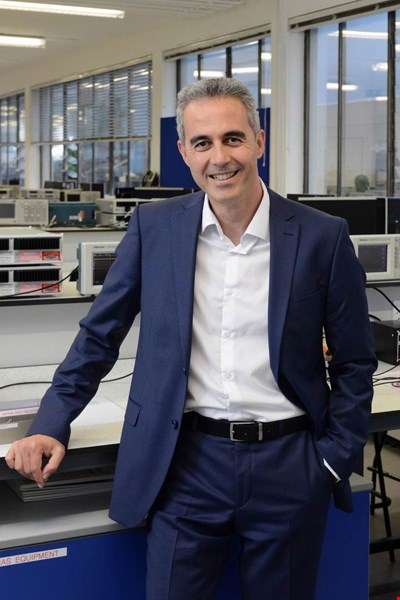
Konstantinos Banitsas is a Senior Lecturer at the Department of Electronic and Computer Engineering , Brunel University London, affiliated with the College of Engineering, Design and Physical Sciences and the Wireless Networks and Communications Centre . Holding a PhD in Telemedicine (2004), an MSc in Electronic Engineering (1997), and a BSc in Computer Science (1995), he has taught computer networking, mobile communications, and internet engineering while supervising undergraduate and postgraduate projects. His research spans telemedicine , wireless sensors , and medical imaging , with recent publications focusing on spinal cord injury treatments , myoelectric sensors for movement classification , and low-cost EMG sensor validation . Earlier work explored Microsoft Kinect applications in gait analysis, wireless medical image security , and 3G network utilization in emergency telemedicine . Dr. Banitsas supervises 4 PhD students in telemedicine and medical imaging, contributes to projects like DoctorEye (a tumor annotation platform), and participates in the IEHS research group . His work emphasizes practical implementations of wireless technologies in healthcare, including ambulance teleconsultation systems and wearable devices.
Professor Clemens H. Cap is a Full Professor with tenure and Chair for Information and Communication Services at the University of Rostock, Germany, where he has held his position since 1997. He maintains leadership of the Information and Communication Services research group and has previously held academic appointments at the University of Zurich (including an adjunct professorship until June 2023) and the University of Mannheim. University of Rostock: Full Professor (1997-present) University of Zurich: Adjunct Professor (2004-2023) University of Zurich: Assistant Professor (1992-1995) University of Mannheim: Associate Professor (1994) Professor Cap's research focuses on distributed systems, system security, Internet applications, and social problems in computer science. His work demonstrates an evolution from early research on workstation clusters to contemporary investigations of blockchain technology, classroom response systems, and the social implications of digital technologies. His research interests encompass system architecture for distributed and ubiquitous applications, Internet services, system security, and applications of formal specification techniques. His work has been supported by the German Research Foundation (DFG), the Federal Ministry of Education and Research (BMBF), and the European Union, including participation in the European Fifth Framework Research Program. His recent publications (2014-2022) reveal a strong focus on blockchain applications, security management, and educational technologies, particularly classroom response systems. His research shows consistent thematic development with security, distributed systems, and the social impact of technology as throughlines. Professor Cap regularly gives guest lectures in the Baltic States and Switzerland, demonstrating international engagement. Honorary doctoral degree 'sub auspiciis praesidentis' by Austrian president (1989) Professor Cap is active in academic self-administration as a member of the board of the interdisciplinary research department 'Knowledge - Culture - Transformation' and as Head of the ICT Science Confederation. His teaching portfolio includes Computer Networking, Data Security, Architecture of network services, Methodology of Scientific Research, Software Development Project Distributed Systems, Research Topics in Internet Technology, Computer Science and Society, and Social Impact of IT. He has developed numerous modules that are part of summer schools and international cooperations (BaSoTI). His teaching languages are German and English, and his courses are available for continuous education programs and in-house seminars for companies.
Dr. Franziska Pradel-Sınacı serves as a post-doctoral researcher at the Chair of Digital Governance within the Munich School of Politics and Public Policy at the Technical University of Munich. Previously, she completed her PhD in Political Science at the University of Cologne (2018-2021), where her doctoral research examined "Biased political information in search engines and their effects." Her educational foundation includes a doctorate from the University of Cologne's Cologne Center for Comparative Politics. Her dissertation investigated algorithmic biases in search engines and their political ramifications through experimental methodologies. Dr. Pradel-Sınacı specializes in the intersection of digital platforms and political behavior, employing computational social science techniques to analyze biases in online environments. Her core research examines how hate speech, misinformation, and political incivility manifest on social media, with particular attention to gender and intergroup dynamics. She investigates emotional responses to political content and algorithmic influences on information exposure, frequently utilizing controlled experiments to isolate causal effects. Her methodological approach bridges qualitative insights with large-scale quantitative analysis of user behavior. Analysis of her publication record reveals a concentrated focus on platform governance and user safety, with recurring themes including algorithmic amplification of toxic content, cross-cultural variations in content moderation attitudes, and the psychological impact of online political hostility. Her work consistently connects technical platform features to real-world political attitudes, demonstrating how search engine biases and social media toxicity shape democratic engagement. Recent publications highlight emerging concerns about AI-driven content moderation and the normalization of hate speech in political discourse. Dr. Pradel-Sınacı actively contributes to multiple research initiatives including ToxicAInment, Transparency in Content Moderation, and the Observatory for Political Texts in European Democracies. These projects employ user-centric methodologies to develop evidence-based interventions for improving social media experiences, with particular emphasis on comparative European contexts and refugee-related discourse. She mentors student research on political communication biases, hate speech dynamics, and misinformation pathways, encouraging empirical investigations into how digital environments shape political cognition and intergroup relations. Her supervision interests explicitly include gender bias analysis, political attack strategies, and emotional dimensions of online political engagement.
Awais Ashfaq is a Postdoctoral Researcher at Halmstad University's School of Information Technology, focusing on healthcare data analytics and AI applications in clinical decision-making. His work bridges the gap between advanced machine learning techniques and practical healthcare solutions, with particular emphasis on emergency department diagnostics and cardiovascular disease analysis. Dr. Ashfaq's research interests center around healthcare data analysis, applying statistics, traditional machine learning, deep learning, and language models to extract insights for informed clinical and management decisions. His work demonstrates strong expertise in interpretable AI models for medical diagnostics, particularly in emergency settings for conditions like dyspnea. He has made significant contributions to the development of evidence-based diagnostic tools that integrate seamlessly with clinical workflows. His publication record shows a consistent focus on leveraging complete healthcare system data to address real clinical challenges. The research trends indicate increasing sophistication in model interpretability while maintaining high diagnostic accuracy. His work spans multiple healthcare domains including emergency medicine, cardiology, and pediatric care, demonstrating the versatility of his methodological approaches. Dr. Ashfaq collaborates extensively with physicians across all care levels to ensure his research translates effectively to clinical practice and improves patient outcomes. His work on regional healthcare information platforms demonstrates commitment to building infrastructure that supports ongoing medical research and quality improvement initiatives.
Professor Penny Moore is the South African Research Chair of Virus-Host Dynamics, Research Professor, and Academic Head of the Divisions of Virology and Immunology at the University of the Witwatersrand and the National Institute for Communicable Diseases (NICD) in South Africa. She also serves as Director of the Antibody Immunity Research Unit, an extramural unit of the SA Medical Research Council, and holds a joint appointment as Honorary Senior Scientist in Virus-Host Dynamics at the Centre for the AIDS Programme of Research (CAPRISA), University of KwaZulu-Natal. Professor Moore earned her PhD from University College London and has established herself as a leading researcher in viral immunology. Her educational background has provided the foundation for her extensive work in understanding virus-host interactions, particularly in the context of HIV and emerging pathogens like SARS-CoV-2. Her research focuses on HIV and SARS-CoV-2 vaccine discovery, combining expertise in Virology, Immunology, and Bioinformatics. Moore's work centers on understanding neutralizing antibodies and their interplay with evolving viruses, with particular emphasis on how these antibodies can be harnessed for vaccine development. Her laboratory investigates the complex dynamics between viral pathogens and host immune responses, seeking to identify vulnerabilities that can be targeted for therapeutic and preventive interventions. An analysis of Professor Moore's recent publications reveals a strong focus on both HIV and SARS-CoV-2 research, with particular attention to neutralizing antibody responses, vaccine development, and viral evolution. Her work spans basic science investigations of antibody-virus interactions to clinical studies evaluating vaccine efficacy against emerging variants. A notable trend is her laboratory's contribution to understanding how prior infection and vaccination shape immune responses to new viral variants. NRF B1 Research Rating South African Research Chair in Virus-Host Dynamics Professor Moore has secured significant research funding from multiple prestigious sources including the NIH, South African Medical Research Council, International AIDS Vaccine Initiative, SA National Research Foundation, and Bill and Melinda Gates Foundation. She supervises numerous postgraduate students and post-doctoral fellows, demonstrating a strong commitment to mentorship and capacity development in scientific research. Her laboratory serves as a training ground for the next generation of virologists and immunologists in South Africa. Moore directs a substantial research operation comprising more than 15 scientists and 10 postgraduate students working collaboratively across multiple institutions. Her Antibody Immunity Research Unit functions as a hub for cutting-edge research on viral pathogens, with particular expertise in characterizing antibody responses to HIV and SARS-CoV-2. The team's multidisciplinary approach integrates wet lab virology with computational analysis to tackle complex questions in viral immunology.
Dalia Suša Vugec, PhD is an Assistant Professor at the Department of Informatics, Faculty of Economics & Business, University of Zagreb. She is actively involved in teaching and research within the field of business informatics, with a focus on digital transformation and business process management. Her educational background includes a graduation in managerial informatics in 2012 and a PhD earned in 2020, both from the University of Zagreb, Faculty of Economics & Business. She has also pursued additional education at the University of Ljubljana and University of Cambridge. Business Process Management Robotic Process Automation Digital Transformation Knowledge Management Digital and Information Literacy Artificial Intelligence Applications Her research output demonstrates a strong focus on business process management, digital transformation, and the intersection of technology with business processes. Recent publications explore robotic process automation, process mining, AI applications in knowledge management, and the digital literacy of students. Her work often examines practical implementations and case studies across various industries. Dean's Award for Excellence for graduate thesis (2012) Dr. Suša Vugec teaches various courses including Business Process Management Systems, Business Informatics, and Artificial Intelligence Systems in Business. Her teaching materials are delivered through Google Classroom, reflecting her practical approach to integrating digital tools in education. She has actively participated in numerous scientific projects and serves as a reviewer for international scientific journals and conferences.
Dr. Waseem Afzal is a Senior Lecturer at the School of Information & Communication Studies, Charles Sturt University , with over 15 years of academic experience. His research spans Information Behaviour , Extremism Informatics , and Library Impact Assessment , while his teaching focuses on Information Organization , Research Methods , and User-Centered Design . Research Pillars : Developing theoretical frameworks for information needs and information asymmetry Analyzing extremist content and virtual reality countermeasures Quantifying library community engagement and economic value of library services Advancing affective information behavior models integrating psychology Publication Trends : Recent work examines theoretical erosion in information science , Australian pandemic information flows , and regional academic librarian perspectives . His 39 publications (2006-2025) show sustained interdisciplinary collaboration with institutions in Australia, USA, and Sweden. Scientific Recognition : Elfreda Chatman Research Award (2013) International Academy of Business & Public Administration Disciplines Award (2007) Certificate of Recognition for Information Science Contributions (2022) Academic Leadership : Chairs School Research Management Committee Peer-review roles at ASIS&T and IFLA Supervises HDR students in information science Media commentator on social media illusions and library roles
Marianne Aubin Le Quéré is a Postdoctoral Research Associate at Princeton University's Center for Information Technology Policy (CITP) . Her work examines how AI and emerging technologies reshape online news and civic information ecosystems, with a focus on generative AI's societal impacts, human-centered informedness models, and LLMs as research methodologies. Research Interests : Social computing, computational social science, communication, and ethical AI applications. Recent Publications span topics like: longitudinal analysis of Reddit communities, YouTube search algorithm biases in health misinformation, and the rise of AI-driven disinformation networks. She emphasizes mixed-method approaches to study digital platforms' role in political polarization and media integrity. Awards : Top Paper Award, International Communication Association (2024) Facebook Fellowship Finalist (2021) Industry Experience includes internships at Mozilla, Bell Labs, and Reddit. She holds a B.S. in computer science and nonfiction from Brown University and worked as a product manager at Microsoft before her PhD in Information Science from Cornell Tech.
Uttishta Sreerama Varanasi is a Doctoral Researcher in the Department of Computer Science at Aalto University, Finland, working under Professor of Practice Nitin Sawhney. Their research bridges human-computer interaction, service design, and public sector innovation to address critical challenges in digital governance, crisis response, and inclusive participation. Research interests include: Human-Computer Interaction in public contexts Service design for equitable public services Trust-building mechanisms in digital government Algorithmic literacy education Collaborative sensemaking during crises Design futuring with children Varanasi employs interdisciplinary methodologies to weave multi-stakeholder perspectives into resilient infrastructures, emphasizing social inclusion and critical engagement with technology. Analysis of recent publications reveals a cohesive trajectory toward value-centered public service design. Varanasi investigates how trust architectures foster migrant inclusion in digital services (2025), develops frameworks for resident belonging (2025), and pioneers child-centered design futuring to cultivate technological criticality (2024). Their crisis management research exposes ICT tool limitations while proposing collaborative sensemaking platforms (2022-2023), consistently prioritizing equity in Finnish public sector contexts. As a core member of Nitin Sawhney's research group, Varanasi contributes to projects on resilient platform design and participatory public service innovation, focusing on infrastructural practices that sustain equitable citizen engagement through design-driven interventions.
Mika P. Nieminen is a Senior Lecturer at Aalto University's Department of Computer Science, specializing in participatory design and human-computer interaction. His work bridges emerging technologies with practical applications in healthcare and education. Key areas: Participatory design, User involvement, Collaborative VR Co-leads Strategic Usability Research Group (STRATUS) Focus on usability and competency models in technology development Recent publications highlight interdisciplinary trends: ML-assisted medical education (2025) Asymmetric VR communication (2023) Migrant-inclusive chatbot development (2020) Patient experience mapping systems (2018) Self-presentation in digital health (2017) His research group STRATUS develops practical frameworks for technology integration across domains.
Prof. Dr. Yaşar Güneri ŞAHİN serves as the Dean of the Faculty of Engineering and Computer Sciences at Izmir University of Economics, where he also holds a professorship in the Department of Software Engineering. With over two decades of experience in both academia and industry, he has established himself as a prominent figure in software engineering, real-time systems, and educational technologies. His academic journey began with a Bachelor's degree in Computer Engineering from Middle East Technical University in 1994, followed by a Master's in Computer Education from Gazi University in 1999, and culminated with a Ph.D. in Industrial Technology from Gazi University in 2005. Prior to joining Izmir University of Economics in 2008, he served as a faculty member at Yaşar University starting in 2005, and before that, he gained nearly a decade of industry experience in high-level management roles overseeing numerous software projects for both public and private sectors. Prof. ŞAHİN's research spans several interconnected domains with a strong emphasis on practical applications. His work in software engineering focuses on project management methodologies, team building models for educational contexts, and database systems. In real-time systems, he has made significant contributions to forest fire detection technologies using innovative approaches like animal-based biological sensors and radio-acoustic sounding systems. His educational technology research addresses challenges in nursing education, special education for individuals with autism, and internet resource utilization by university students. Notably, his interdisciplinary approach bridges computer science with healthcare applications, particularly in medical informatics where he has developed public health information systems and tools for medical data entry. His scholarly output demonstrates a consistent trajectory of innovation across multiple domains, with particular concentration in the period from 2007-2013. While his early work focused on foundational software engineering concepts and database systems, his research evolved to address pressing societal challenges including forest fire detection, healthcare information systems, and educational technologies. This evolution reflects his ability to identify emerging technological needs and apply software engineering principles to diverse real-world problems. His contributions have been recognized through multiple prestigious awards: TÜBİTAK Scientific Publication Awards (2008-2012) İzmir University of Economics Scientific Publication Awards (2008-2011) As an academic advisor, Prof. ŞAHİN has supervised doctoral and master's theses on diverse topics including heart failure management, triage algorithms for multiple injuries, and software project selection metrics for small and medium enterprises. His administrative leadership extends beyond his deanship to include serving on juries for national art, design, and architecture competitions, as well as evaluating research projects for TEYDEB and TÜBİTAK. His grant activities include serving as a project reviewer and monitor for various technology development initiatives including "Bulut," "ARAGES," "SADE," and "SWH-ATLANTIS." Prof. ŞAHİN maintains an active research laboratory environment focused on real-time systems and software engineering applications. His work often involves interdisciplinary collaboration, particularly with medical professionals on health informatics projects and with education specialists on technology-enhanced learning initiatives. Current research directions appear to focus on the intersection of software engineering principles with healthcare applications and environmental monitoring systems.
Tobias Mahler is a Professor of Law at the University of Oslo's Department of Private Law and serves as deputy director of the Center for Legal Informatics. He leads the legal innovation lab LILO and has been a visiting scholar at prestigious institutions including Stanford Law School and the Max Planck Institute for Foreign and International Criminal Law in Freiburg, Germany. Originally trained as a German lawyer, Mahler has practical experience having previously practiced as a paralegal in Norway. Professor Mahler's research spans the intersection of law and emerging technologies, with particular expertise in artificial intelligence regulation, robotics law, cybersecurity, and digital governance. His work focuses on developing legal frameworks that balance innovation with risk management and proportionality. He has published extensively on the EU AI Act, examining its risk-based approach and implementation challenges across various technological domains. His research also addresses the legal implications of healthcare robotics, cloud computing services, and domain name systems in the evolving digital landscape. Analysis of Mahler's recent publications reveals a strong focus on the regulatory challenges posed by artificial intelligence, particularly the EU's regulatory framework. His work examines both high-risk and non-high-risk AI systems, exploring compliance procedures, national implementation strategies, and the relationship between risk management and legal proportionality. He has made significant contributions to understanding how legal frameworks should address specific applications like medical AI, care robotics, and smart robotics within the EU context. His research consistently bridges technical and legal perspectives, emphasizing the need for adaptable regulatory approaches that can keep pace with technological innovation. Professor Mahler holds several important positions that demonstrate his influence in the field. He serves as a member of the Research Council's advisory expert group for the KI initiative (2023), is a board member of the Norwegian Association for Law and EDB, and participates in Standard Norway's committee on Artificial Intelligence (SN/K 586). He has led significant studies for both the Research Council of Norway on research data sharing and for the EU Commission related to the Digital Services Act. Previously, he served as program manager for the LLM in Information and Communication Technology Law. At the University of Oslo, Mahler is actively involved in research groups focused on Law and Technology (JOT) and Market, Innovation and Competition (MIK). He leads the legal innovation lab LILO and contributes to projects including Societal Security and Digital Identities (SODI) and Vulnerability in a Robot Society (VIROS), which examine the legal and societal implications of emerging technologies in security contexts and robotics.
Thomas LaToza is an Associate Professor in the Department of Computer Science at the George Mason University, School of Computing . His research focuses on the intersection of software engineering and human-computer interaction, exploring how developers interact with code and designing novel software development methodologies. He has pioneered crowdsourced programming environments and microtask programming frameworks, with notable projects including RulePad for checkable design rules and Hypothesizer for hypothesis-based debugging. His work emphasizes empirical studies of developer behavior, tool impact analysis, and integration of AI assistants in software development. His recent publications highlight trends in AI-driven development , debugging mental models , and developer information seeking . He has received recognition including the George Mason University Teacher of Distinction award and has served on the editorial board of Empirical Software Engineering . His advising includes PhD students Ruochen Wang, Mainul Hossain, and alumni Abdulaziz Alaboudi, Emad Aghayi, David Samudio, Sahar Mehrpour, and Maryam Arab. He co-founded the OurCode developer tools startup, translating academic research into industry applications.
Leonardo Banh is a Researcher at the University of Duisburg-Essen within the Faculty of Computer Science and its Chair of Business Information Systems and Software Engineering . M.Sc. in Business Information Systems (University of Duisburg-Essen, 2022) B.Sc. in Business Information Systems (University of Duisburg-Essen, 2020) Semester abroad at Instituto Superior Técnico, Lisbon (2021) His research focuses on Generative AI and its socio-technical implications, particularly in Machine Learning and Deep Learning applications. He explores intersections with NeuroIS , Smart Tourism , and E-commerce Ecosystems , emphasizing sustainability and digital transformation. Recent publications analyze Generative AI in Software Engineering , AI in Music Sentiment Analysis , and AI-Based Sign Language Translation . His work often involves design science research and grounded theory frameworks. Best Paper in Track Award (ICIS 2024) Nominated for Best Paper Award (ICIS 2024) Outstanding Reviewer (ICIS 2024) As advisor, he supervises theses on topics including AI-Based Mental Health Chatbots , Generative AI in HR , and Smart Tourism Applications . He also contributes to the Institute of Computer Science and Information Systems and serves on appointment/habilitation committees.