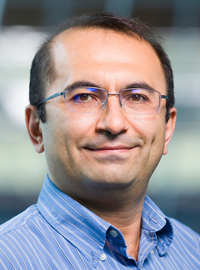
Arnold M. Howitt is an Adjunct Lecturer in Public Policy at Harvard University's Harvard Kennedy School (HKS), where he also serves as Senior Adviser to the Roy and Lila Ash Center for Democratic Governance and Innovation. He co-directs the Program on Crisis Leadership, focusing on emergency preparedness, disaster recovery, and intergovernmental policy implementation. His work spans executive education programs for senior officials in crisis management, including Leadership in Crises and Homeland Security, and he has co-founded initiatives like the National Preparedness Leadership Initiative. Dr. Howitt’s research examines crisis management in the U.S. and globally, with a focus on cross-jurisdictional coordination, emergency response systems, and lessons from disasters like the 2015 Paris attacks, Nepal earthquakes, and Japan’s 2011 triple disaster. He has held visiting faculty roles at Japanese universities and teaches part-time at Tsinghua University’s Schwarzman College in Beijing. His affiliations include the Belfer Center for Science and International Affairs and the Mossavar-Rahmani Center for Business and Government. Dr. Howitt has directed major projects such as the Executive Session on Domestic Preparedness and advised international agencies on disaster recovery. He earned his AB from Columbia University and MA/PhD in political science from Harvard.
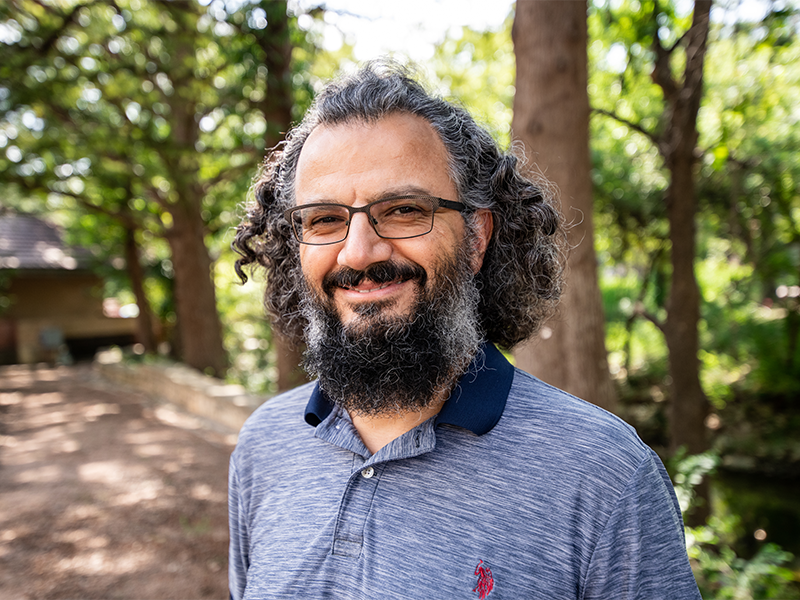
Erhan Kutanoglu is an Associate Professor in the Operations Research and Industrial Engineering Graduate Program at The University of Texas at Austin's Cockrell School of Engineering. He joined the faculty in 2002 and received a National Science Foundation Early Career Development Award that year. His research focuses on integrating predictive models with stochastic optimization to address challenges in disaster resilience, humanitarian logistics, and semiconductor manufacturing. Key areas include hurricane mitigation, power grid resilience, and supply chain optimization. Education: PhD in Industrial Engineering from Lehigh University (1999). Research Interests: Applied operations research for manufacturing/service logistics, disaster resilience decision-making, semiconductor cycle time optimization, and inventory modeling. Recent work emphasizes hurricane evacuation planning, flood mitigation for critical infrastructure, and equity considerations in grid resilience. Publications: Over 50 peer-reviewed articles in journals like IEEE Transactions, European Journal of Operational Research, and Annals of Operations Research. Notable work includes models for power grid resilience, patient evacuation strategies, and semiconductor manufacturing efficiency. Awards: NSF CAREER Award (2002), recognized for contributions to service logistics optimization and stochastic modeling. Advising & Grants: Advised graduate students on projects involving hurricane preparedness and semiconductor scheduling. Active in collaborative research with industry partners to streamline manufacturing processes and enhance disaster response systems. Labs/Teams: Engaged with the Cockrell School's infrastructure resilience research groups and interdisciplinary teams addressing climate adaptation challenges.
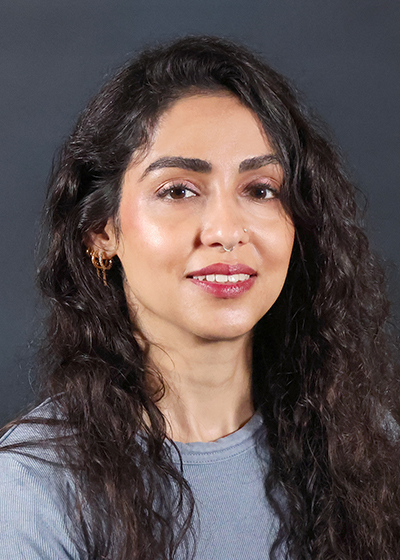
Nazanin Tajik is an Assistant Professor in the Department of Industrial and Systems Engineering at Mississippi State University (MSU). She holds a Ph.D. from the University of Oklahoma, an M.S. from the University of Tehran, and a B.S. from Sharif University of Technology. Her research focuses on integrating artificial intelligence, machine learning, and social science concepts to develop cross-disciplinary frameworks for infrastructure resilience, smart transportation systems, and disaster management. Her academic journey includes a Ph.D. at the University of Oklahoma where she contributed to the Risk-Based Systems Analytics Laboratory. At MSU, she established a research center bridging AI/ML tools with socio-technical systems. Key research domains include cyber-physical-social infrastructure resilience, search-and-rescue planning, and game-theoretic robotic designs. Tajik's work emphasizes optimization algorithms for network vulnerability assessment, resource allocation in disaster scenarios, and adaptive recovery strategies. She is actively involved with professional organizations such as INFORMS, ISE, and POMS, reflecting her commitment to advancing operations research and systems engineering methodologies.
Craig A. Bond is a Professor at the RAND School of Public Policy, a Senior Economist at RAND Corporation, and Editor-in-Chief of the RAND Journal of Economics. His work bridges military resource allocation and environmental economics through advanced econometric modeling. Current Roles: Research QA Manager (RAND Arroyo Center), Senior Economist Methodological Expertise: Stochastic dynamic programming, discrete choice modeling, non-market valuation Key Research Themes: Military readiness, coastal resilience, green infrastructure, post-disaster recovery Research Interests: Craig Bond specializes in natural resource economics , environmental economics , and applied welfare economics , with recent work focusing on: Risk modeling for defense acquisitions and personnel strategy Resilience dividend valuation frameworks Green infrastructure cost-benefit analysis Climate adaptation in coastal communities Publication Trends: His 15 most recent works (2017-2025) show interdisciplinary focus across: Military Economics: Recruiting optimization, training requirements, economic multipliers Environmental Policy: Coastal land loss, invasive species impact, water management Resilience Modeling: Disaster recovery frameworks, adaptive systems
Matthew Petering is an Associate Professor in the Department of Industrial and Manufacturing Engineering at the University of Wisconsin-Milwaukee. His work bridges operations research with real-world applications in logistics, transportation, and political redistricting. He holds a PhD in Industrial and Operations Engineering from the University of Michigan (2007), an MS from the same program (2003), and a BA in Mathematics from Washington University in St. Louis (1999). His research focuses on optimizing complex systems: from seaport container terminals to university course scheduling, and recently developing the FastMap algorithm for unbiased political redistricting. His algorithm was central to Wisconsin Supreme Court litigation in 2023-2024, submitting proposals for legislative maps that balanced fairness and operational efficiency. Dr. Petering has pioneered board game designs like Distrix (2020), which won international awards, and authored The Distrix Puzzle Book . His peer-reviewed work spans over 30 publications in journals like Transportation Science , European Journal of Operational Research , and International Journal of Production Economics . Key contributions include: Algorithmic solutions for container shipping and rail logistics Cyclic production planning models Real-time location management systems for distribution facilities Emergency evacuation modeling His FastMap redistricting system was recognized with the 2024 INFORMS Practitioner Poster Competition award. Dr. Petering frequently advises governmental bodies and judicial proceedings on redistricting methodology and logistics optimization.
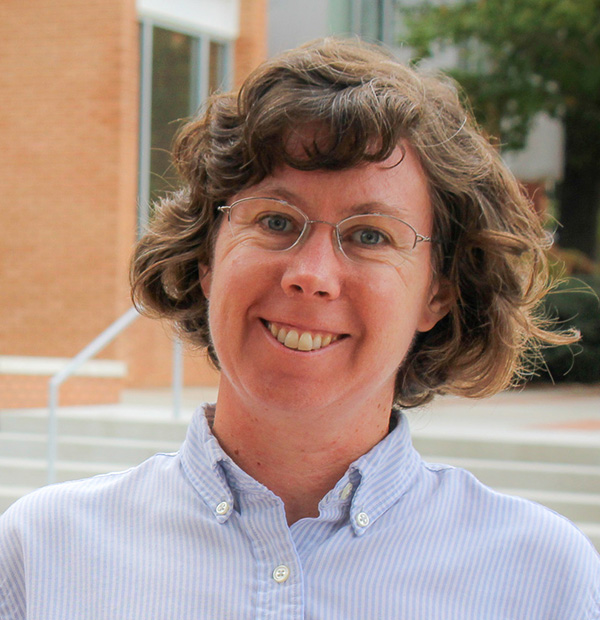
Dr. Pamela Murray-Tuite is a Professor of Civil Engineering at Clemson University's College of Engineering, Computing and Applied Sciences. Her work bridges transportation systems, disaster resilience, and emergency response modeling. Education: B.S. (1998), M.S. (1999), and Ph.D. (2003) in Civil Engineering from the University of Texas at Austin and Duke University Teaching: Courses include CE 3110 Transportation Engineering and CE 8930 Mathematical Modeling for Civil Infrastructure Systems Analysis Her research focuses on transportation resilience , with emphasis on evacuation modeling, emergency response, and infrastructure interdependence. She explores the impact of disasters on mobility patterns, utilizing mathematical modeling and simulation tools to enhance urban systems' robustness. The 15 most recent articles span hurricane evacuation behavior, agent-based modeling, and infrastructure resilience under climate change. Keywords include transportation systems, disaster management, and behavioral modeling, while subfields cover evacuation routing, network analysis, and risk perception dynamics. Dr. Murray-Tuite's work integrates statistical methods with transportation policy, addressing challenges in both natural disasters and public sector disruptions. Her contact details include office location (210 Lowry Hall) and phone (864-656-3802).
Dr. Ahmed F. Abdelghany is the Associate Dean for Research and Professor of Operations Management at the David O'Maley College of Business, Embry-Riddle Aeronautical University, since January 2006. He specializes in commercial airlines, airports, big data cloud computing, business analytics, and operations research models. Prior to his academic career, Dr. Abdelghany worked in enterprise optimization at United Airlines, Chicago. Education: Ph.D. in Civil Engineering (Transportation Systems) from the University of Texas at Austin (2001) Dr. Abdelghany’s research focuses on airline network planning, flight scheduling, simulation of complex transportation systems, and NextGen air traffic management. He has authored two influential books: Modeling Applications in the Airline Industry (Routledge 2010) and Airline Network Planning and Scheduling (Wiley 2018). His publications analyze airline operations, competitive dynamics, and crowd management in transportation facilities. He teaches courses like Airline Management (BA 315) and Airline Operations & Mgmnt (BA 609), and participates in industry short courses. Dr. Abdelghany contributes to research projects such as NextGen air traffic implementation, integrated airport initiatives, and benefit-cost analysis of arrival management systems. His work bridges academic theory with real-world airline and transportation challenges.
Joe Geunes is a Professor and Associate Department Head for Graduate Affairs in the Department of Industrial & Systems Engineering at Texas A&M University, holding the Mike and Sugar Barnes Professorship. His research focuses on production planning, supply chain management, logistics, and operations optimization. He earned his Ph.D. in Business Administration (Management Science & Operations Research) and M.B.A. from The Pennsylvania State University in 1999 and 1993, respectively. Dr. Geunes has received notable accolades including Fellow of the Institute of Industrial Engineers (2015), Marilyn and L. David Black Faculty Fellow (2022), and Best Reviewer Award from Omega (2022). His work spans infrastructure network restoration, supply chain resilience, and optimization algorithms for logistics systems. Recent projects address railcar operations, distribution network fortification, and disaster response strategies. Education: Ph.D., Business Administration (Management Science & Operations Research), The Pennsylvania State University – 1999 M.B.A., The Pennsylvania State University – 1993 Awards: Fellow, Institute of Industrial Engineers – 2015 Marilyn and L. David Black Faculty Fellow – 2022 Best Reviewer Award, Omega – 2022 Best Application Paper, IISE – 2018 His research integrates mathematical modeling and computational methods to address real-world challenges in supply chain design, inventory management, and infrastructure resilience. Recent publications emphasize multi-modal logistics, robust optimization under uncertainty, and post-disaster network recovery strategies.
Edward W. Chan is a Senior Operations Researcher and Professor of Policy Analysis at the RAND Corporation and RAND School of Public Policy. His work focuses on applying process mapping, failure mode analysis, and mathematical modeling to security and preparedness challenges across national security, homeland security, and public health emergency domains. Doctorate in Operations Research from Cornell University Expertise in Military Health Care, Homeland Security, Climate Change Risk Specializes in Decision Support Tools and Framework Development Research interests include: Military Medical Systems and Aeromedical Evacuation Critical Infrastructure Protection Climate Adaptation for National Functions Emergency Response Optimization Operational Logistics Recent work spans climate change impact on infrastructure (2023-2025), military recruitment strategies (2024), and post-disaster recovery systems (2020). He has developed frameworks for cybersecurity risk prioritization and climate adaptation strategies. Key educational background: Bachelor's, Master's, and Ph.D. in Operations Research from Cornell University
Esra Agca Aktunc serves as a Senior Lecturer in the Department of Industrial and Systems Engineering at Rensselaer Polytechnic Institute (RPI), teaching core courses including Introduction to ISE, Production and Operations Management, Facilities Design, Operations Research Methods, and Engineering Data Analytics across undergraduate and graduate programs. Her educational qualifications include: Ph.D. in Industrial and Systems Engineering from Virginia Polytechnic Institute and State University (2013) M.Sc. in Industrial and Systems Engineering from Virginia Polytechnic Institute and State University (2011) B.Sc. in Industrial Engineering from Bilkent University (2008) Dr. Agca Aktunc's research integrates optimization, simulation, and data analytics across disaster management, healthcare systems, and energy systems . Her work addresses critical challenges including hospital evacuation logistics, pandemic impacts on energy infrastructure, and natural gas management under uncertainty, employing advanced analytical methods to solve resource-constrained real-world problems in dynamic environments. Publication analysis reveals a strategic research evolution: early work (2013-2019) focused on disaster response logistics and healthcare operations, while recent publications (2020-2025) demonstrate increased specialization in energy systems, particularly electricity and natural gas demand forecasting during crises like the COVID-19 pandemic. This progression highlights her adaptive application of operations research to emerging societal challenges. No scientific awards were mentioned in the provided text. Information regarding student advising and research grants was not included in the available materials, though her extensive teaching portfolio indicates significant educational contributions.
Ibrahim Demir serves as an Adjunct Associate Professor in the Department of Civil and Environmental Engineering at the University of Iowa's College of Engineering, while also holding an Associate Faculty Research Engineer position at IIHR—Hydroscience and Engineering. His interdisciplinary work bridges hydroinformatics, environmental engineering, and advanced computing technologies to address critical water resources challenges through innovative digital solutions. His educational background includes a PhD in Environmental Informatics and Control Program from the University of Georgia (2010), an MS in Environmental Engineering from Gebze Institute of Technology (2004), and a BS in Chemistry from Bogazici University (2000). This foundation supports his integration of chemical, environmental, and computational sciences in hydrological research. Dr. Demir's research centers on hydroinformatics and AI-driven environmental systems, with core expertise in scientific visualization, cyber systems design, and virtual/augmented reality applications. He develops web-based frameworks for flood risk assessment, drought analysis, and water quality management, emphasizing real-time data integration and user-friendly interfaces. Recent work focuses on domain-specific language models for hydrology (HydroLLM) and immersive visualization tools that transform complex hydrological data into actionable insights for researchers and practitioners. Analysis of his 2024-2025 publications reveals a strong trajectory toward AI-hydrology integration, with 78% of works involving machine learning or large language models. Key themes include flood risk communication (22% of publications), algal bloom prediction (15%), and educational technology applications (12%). His research increasingly emphasizes scientific reproducibility through no-code visual programming frameworks and digital twin implementations for watershed systems. Dr. Demir actively contributes to scholarly discourse as Associate Editor for Environmental Modeling and Software, Journal of Hydroinformatics, Journal of Environmental Informatics, and Water and Artificial Intelligence (Frontiers in Water). He serves as Vice-Chair of the International Joint Committee on Hydroinformatics (IAHR/IWA/IAHS) leadership team, shaping global standards in hydroinformatics research and practice. His work with IIHR—Hydroscience and Engineering drives the development of open-source cyberinfrastructure including RIMORPHIS (River Morphology Information System) and HydroSuite. These platforms enable collaborative river morphology research and provide modular tools for hydrological analysis, education, and operational decision support, demonstrating his commitment to accessible, community-driven scientific advancement.
Dana Rowangould serves as Assistant Professor in the Department of Civil and Environmental Engineering at the University of Vermont's College of Engineering and Mathematical Sciences. Her interdisciplinary work bridges engineering, economics, and social sciences to address transportation system challenges, with particular focus on improving mobility for constrained-travel populations. Her educational background includes: Ph.D. in Ecology (Environmental Policy emphasis) from University of California, Davis M.S. in Agricultural and Resource Economics from University of California, Davis B.S. in Civil and Environmental Engineering from Rice University Dr. Rowangould's research centers on transportation equity and justice , rural travel behavior , and accessibility measurement , with significant contributions to understanding rural mobility constraints, transit recovery post-pandemic, and policy impacts on vulnerable populations. Her methodology integrates spatial analysis, behavioral studies, and policy evaluation to develop equitable transportation solutions. Recent publications reveal a pronounced focus on rural transportation challenges, including travel burdens among migrant communities, wildfire evacuation safety, and electric vehicle adoption barriers. Her work increasingly addresses contemporary policy shifts through the lens of transportation justice, examining how anti-DEI movements impact mobility access while developing practical tools for accessibility measurement. As founder of Sustainable Systems Research, she has partnered with community organizations on transportation health impact assessments. Her teaching at the University of Washington included Health and Sustainable Transportation and Transportation Economics courses. Current affiliations include the Transportation Research Center where she contributes to Vermont Transportation Energy Profile initiatives and pedestrian safety evaluations in rural contexts.
Eren Erman Ozguven is an Associate Professor and Director of the Resilient Infrastructure and Disaster Response (RIDER) Center at the FAMU-FSU College of Engineering's Department of Civil and Environmental Engineering. His research focuses on emergency evacuation modeling, traffic safety, and disaster resilience. He holds a Ph.D. from Rutgers University (2012) and M.S./B.S. degrees from Bogazici University (2006/2002). University: Florida A&M University-Florida State University School: FAMU-FSU College of Engineering Department: Civil and Environmental Engineering Research interests include GIS-based analysis of transportation networks, hurricane evacuation planning, and smart city infrastructure. Ozguven leads projects funded by NSF and FDOT, addressing vulnerable populations' needs during disasters. His work integrates AI, remote sensing, and simulation tools for resilience. Key articles focus on disaster risk reduction, evacuation modeling, and roadway safety using advanced data analytics. Notable grants include NSF projects on rural resiliency hubs and hurricane-pandemic shelter planning. Ozguven advises 10+ students and collaborates with RIDER Center to develop tech-driven solutions for community resilience. Labs/Teams: RIDER Center, ASAP Center (Aging Population Safety).
State University of New York at BuffaloUnited States
Jee Eun (Jamie) Kang is an Associate Professor in the Department of Industrial and Systems Engineering at the University at Buffalo, located within the School of Engineering and Applied Sciences. Her research focuses on transportation modeling, applied operations research, and sustainable mobility systems. She has contributed extensively to studies on autonomous vehicles, emergency evacuation planning, and electric vehicle infrastructure. Her work bridges theoretical optimization frameworks with real-world applications, addressing challenges in multi-modal travel environments, disaster logistics, and shared mobility systems. Dr. Kang's research often involves data-driven methodologies, leveraging automated fare collection systems and smart card transactions to infer user behavior and optimize transportation networks. Her publications span topics such as strategic parking location models for autonomous vehicles, pricing mechanisms in bike-sharing systems, and scenario-based analyses for battery electric vehicle feasibility. She actively advises students on projects related to urban mobility, evacuation planning, and transportation sustainability. Scientific Awards: None explicitly mentioned in the provided texts. Dr. Kang's advising and collaborative work include projects on household activity patterns, hydrogen refueling station optimization, and evacuation warning systems. Her research has been applied to real-world scenarios like the Nepal earthquake relief efforts and California's hydrogen infrastructure planning.
Russell King is the Henry Armfield Foscue Distinguished Professor of Industrial and Systems Engineering (ISE) at North Carolina State University's College of Engineering. He serves as the Director of Graduate Programs for the ISE department, responsible for administering degree programs serving approximately 190 graduate students. King is also a Fellow of the Institute of Industrial and Systems Engineers and has received numerous teaching and research awards throughout his 37-year career at NC State. Dr. King earned his Ph.D. in Industrial Engineering from the University of Florida (1986), following a Master of Industrial Engineering (1982) and Bachelor of Science in Systems Engineering (1980). His undergraduate journey was unconventional, having considered seven different majors including pre-med, biology, microbiology, biochemistry, math, and ornamental horticulture before selecting engineering. His doctoral work was completed under advisor Thom Hodgson, who moved from Florida to become NC State's ISE department head during King's studies. King's research focuses on solving practical problems across diverse areas including logistics, scheduling, and inventory control for additive manufacturing, remanufacturing, and military systems under risk. His work spans pricing strategies, stress control of 3D-printed parts, supply chain design, and military logistics optimization. His research approach bridges theoretical rigor with real-world applications, resulting in consulting engagements with Ford Motors, The Gap, Dillards Department Stores, and the Institute for Defense and Business. Analysis of his recent publications shows a consistent focus on military logistics applications (5 of 10 recent papers), additive manufacturing integration (3 papers), and supply chain risk management (4 papers), demonstrating how his research has evolved to address emerging challenges in manufacturing and defense logistics while maintaining practical relevance. C. A. Anderson Outstanding Faculty Award, ISE Department at NC State University (2020, 2014, 2008, 2002, 1996, 1986) Albert G. Holzman Distinguished Educator Award, Institute of Industrial Engineers (2010) Henry Armfield Foscue Distinguished Professor (2017) Edward P. Fitts Distinguished Professor (2012) NCSU George H. Blessis Outstanding Undergraduate Advisor Award (2010) Teaching Excellence Award in the OR Division, Institute of Industrial and Systems Engineers (2019) Technical Innovation in Industrial Engineering, Institute of Industrial Engineers (2003) Fellow, Institute of Industrial Engineers (2006) As an academic leader, King has developed innovative programs including a dual Master of Industrial Engineering/Master of Business Administration program and a distance education Master of Engineering degree. His mentorship has produced three students who placed in the top 3 of IIE's dissertation award competition, with two taking first place. He has served as associate editor for the Journal of Manufacturing Systems and IIE Transactions, contributing to the scholarly community beyond his own research. Outside academia, King and his daughter are Masters of Taekwondo under Grand Master K.S. Lee of Morrisville, NC.