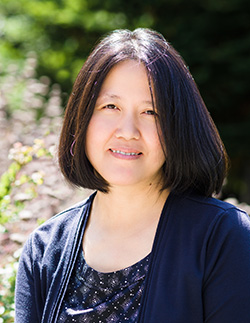
Jillian Bohlen is an Associate Professor at the University of Georgia within the College of Agricultural & Environmental Sciences , specifically the Department of Animal and Dairy Science . Her work focuses on dairy cattle reproduction, teaching, and youth development in agricultural sciences. Education: B.S. in Dairy Science, University of Georgia (2003) M.S. in Dairy Science, University of Georgia (2005) Ph.D. in Animal Sciences, Clemson University (2012) Dr. Bohlen's research emphasizes applied reproduction in cattle , including synchronization techniques, ultrasound applications in reproductive programs, and embryo competency. She integrates students into all research projects despite lacking a formal research appointment. Her teaching interests span dairy cattle production , reproductive management , and contemporary agricultural issues , with courses like ADSC 3620 (Dairy Cattle Production), ADSC 4010 (Issues in Animal Agriculture), and ADSC 4410 (Applied Reproductive Management). Scientific awards include: Student Career Success Influencer Award (2024) Russell Award for Excellence in Undergraduate Teaching (2023) UGA Creative Teaching Award (2022) CAES Early Career Teaching Award (2022) Hoard's Dairyman Youth Development Award (2021) Larry Benyshek Teaching Award (2017) She actively promotes agricultural education through programs like the Commercial Heifer Project , Dairy Cattle Judging , and Dairy Quiz Bowl . Additionally, she participates in funded projects related to methane emissions , heat stress mitigation , and antibiotic alternatives in dairy farming.
James Briscoe is a Senior Group Leader at The Francis Crick Institute in London, where he leads a research group focused on developmental biology and morphogen signaling. He previously held positions at the Medical Research Council's National Institute for Medical Research, which later became part of the Francis Crick Institute. Education: BSc in Microbiology and Virology from the University of Warwick, UK PhD from Imperial Cancer Research Fund/King's College London Postdoctoral training at Columbia University with Thomas Jessell Dr. Briscoe's research focuses on the molecular and cellular mechanisms of graded signaling by morphogens and the role of transcriptional networks in cell fate specification. His laboratory employs a range of experimental and computational techniques using model systems including mouse and chick embryos and embryonic stem cells. His work has significant implications for understanding developmental processes and their relationship to disease. His recent publications demonstrate a continued focus on morphogen gradients, neural tube development, and computational approaches to understanding cell fate decisions. His research increasingly integrates single-cell technologies and computational modeling to unravel the complexities of developmental patterning. Scientific Awards and Honors: EMBO Young Investigator (2001) EMBO Gold Medal (2008) Elected to EMBO (2009) Fellow of the Academy of Medical Sciences (2019) Fellow of the Royal Society (2019) As Editor-in-Chief of the journal Development since 2018, Dr. Briscoe plays a significant role in shaping the field of developmental biology. His leadership extends to mentoring researchers and contributing to scientific policy discussions, as evidenced by his recent publication 'Science under siege: protecting scientific progress in turbulent times.' Dr. Briscoe's laboratory at the Crick Institute is well-equipped with access to advanced facilities including light microscopy, flow cytometry, genomics, and computational resources, enabling a multidisciplinary approach to developmental biology questions.
Cristian Gómez Canela is a Full Professor in the Department of Analytical and Applied Chemistry at the School of Engineering, Ramon Llull University (IQS). He serves as Coordinator of the Master's Degree in Analytical Chemistry and is an active member of the Catalan Chemical Society (SCQ), representing SCQ in EuChems-EYCN. His academic journey includes a PhD in Chemistry from the University of Barcelona (2014), followed by postdoctoral research at IDAEA-CSIC and King's College University. Dr. Gómez Canela's research focuses on environmental analytical chemistry, particularly the optimization and validation of analytical methods based on liquid chromatography coupled with tandem mass spectrometry (LC-MS/MS) and high-resolution mass spectrometry (HRMS) for determining organic pollutants in environmental samples. His work extends to metabolomics applied to aquatic organisms and the analysis of neurotoxic compounds in water systems. His research fingerprint reveals strong expertise in zebrafish models (100%), neurotransmitter analysis (66%), Daphnia magna studies (64%), and neurotoxicity assessment (21%). His recent publications (2024-2025) demonstrate a clear trend toward environmental neurotoxicology, with emphasis on the effects of pharmaceuticals and industrial pollutants on aquatic organisms. His work integrates advanced analytical techniques with biological endpoints to assess environmental risks, particularly focusing on neurological and cardiovascular impacts. The research spans method development for pollutant detection, environmental monitoring, and mechanistic studies of neurotoxic effects. Dr. Gómez Canela leads multiple significant research projects including CHEMIPARK (2024-2027) on passive sampling methodologies for environmental pollutants, GESPA (2022-2025) as part of the Environmental Process Engineering and Simulation Group, and several projects on neuroactive compounds in water systems. He has an impressive research output with 91 scientific publications from 2011-2025 and an h-index of 27 with over 2,000 citations. As a dedicated educator, he contributes to multiple academic programs including the Master in Analytical Chemistry, Master in Pharmaceutical Chemistry, and undergraduate degrees in Chemistry and Chemical Engineering. His research group GESPA represents a multidisciplinary team combining chemical engineering, biotechnology, and chemical analysis to advance environmental sustainability through theoretical and experimental approaches.
Changhuei Yang is the Thomas G. Myers Professor of Electrical Engineering, Bioengineering, and Medical Engineering at California Institute of Technology, serving as Executive Officer for Electrical Engineering and Investigator at Heritage Medical Research Institute. He holds a Ph.D. and three master's degrees from MIT, with appointments at Caltech since 2003. Research focuses on: Advanced microscopy techniques including Fourier Ptychography Wavefront shaping for biological tissue imaging Optical phase conjugation for deep-tissue applications Compact medical devices for cerebral monitoring Publications demonstrate leadership in computational imaging, with recent advances in stain-free embryo analysis, portable cerebral blood flow monitors, and high-resolution volumetric imaging techniques using neural representations. Honored as National Academy of Inventors member. Research applications span deep-tissue biochemical imaging, incisionless surgery, and optogenetic activation systems.
Heping Zhang is the Susan Dwight Bliss Professor of Biostatistics at the Yale School of Public Health , with secondary appointments in the Child Study Center , Department of Statistics and Data Science , and Department of Obstetrics, Gynecology, and Reproductive Sciences . He directs the Collaborative Center for Statistics in Science (C²S²) and leads the Reproductive Medicine Network data coordinating center. Education: PhD in Statistics, Stanford University (1991) Postdoctoral Fellow, Mathematical Science Research Institute (1991) Research Focus : Zhang specializes in biostatistical methodology for genomic data analysis , clinical trials , and reproductive medicine . His work bridges genetics , mental health , and maternal-child health through innovative statistical approaches. Awards : 2023 Web of Science Highly Cited Researcher 2023 International Chinese Statistical Association Distinguished Achievement Award 2022 Institute of Mathematical Statistics Neyman Award and Lecture 2011 Royan Institute International Research Award 2011 Institute of Mathematical Statistics Medallion Award 2008 Harvard School of Public Health Myrto Lefokopoulou Distinguished Lecturer Professional Roles : He served as President of the International Chinese Statistical Association (2019) and Former Editor of the Journal of the American Statistical Association - Applications and Case Studies . His lab develops open-source software tools like ABESS , STREE , and modSaRa for genomic and clinical data analysis.
Massimo Mischi is a Full Professor at the Faculty of Electrical Engineering of the Eindhoven University of Technology (TU/e) and chairs the Signal Processing Systems (SPS) Division , the largest division at TU/e with over 250 researchers. He founded the Biomedical Diagnostics (BM/d) Lab in 2012, which now includes 180 researchers and clinical/industrial advisors, focusing on biomedical signal processing for diagnostics and monitoring.
Harry R. Lloyd is an Assistant Professor of Philosophy at the University of North Carolina at Chapel Hill, serving as Core Faculty for the PPE Program and Research Affiliate at the Center for AI Safety. He joined UNC Chapel Hill in Fall 2025 after completing his PhD at Yale University, where his dissertation examined moral uncertainty and bargaining under Shelly Kagan. His academic foundation includes a Ph.D. in Philosophy from Yale University (2020-2025) and a first-class B.A. in Philosophy, Politics, and Economics from the University of Oxford's Lady Margaret Hall (2016-2019), where he graduated top of his cohort and won multiple prizes including the Hicks/Webb Medley Prize and Uehiro Essay Prize. He attended Monmouth Comprehensive School (2009-2016), becoming the first comprehensive school student to win Trinity College Cambridge's Philosophy Essay Prize. Lloyd's research integrates Ethics, Political Philosophy, and Philosophy of AI through innovative frameworks for moral uncertainty and bargaining theory. His work bridges abstract theory with urgent real-world applications in AI alignment, distributive justice, and urban policy. He critically examines how normative disagreement should be resolved in AI systems, challenges conventional views on gentrification's moral dimensions, and develops resource-rational approaches to contractualism in animal ethics and intergenerational justice. His publication trajectory reveals a cohesive intellectual project: advancing bargaining-theoretic solutions to moral uncertainty while applying these frameworks across AI safety, political philosophy, and bioethics. Recent work in Philosophical Studies and Ergo establishes novel connections between moral uncertainty and collective decision-making, while his Journal of Urban Affairs article redefines gentrification's ethical analysis beyond displacement metrics. Awarded significant fellowships and prizes including the Rocky Mountain Ethics Congress Young Ethicist Prize (2024) and Global Priorities Institute Essay Prize (2021), his honors demonstrate impact across multiple domains: Institute for Humane Studies Junior Fellowship (2025) Forethought Foundation Global Priorities Fellowship (2022-2024) Rocky Mountain Ethics Congress Young Ethicist Prize (2024) Global Priorities Institute Early Career Conference Programme (2022) Research funding includes the Global Priorities Fellowship (2022-2024) and Institute for Humane Studies Junior Fellowship (2025). He actively shapes academic discourse through peer review for journals including Philosophical Studies and Journal of Applied Philosophy, and co-organizes the Yale Moral Philosophy Working Group. Though newly appointed, his teaching portfolio spans Environmental Ethics, PPE Capstone, and Philosophy of Technology, building on Yale teaching experience where he served as primary instructor for Philosophy and Technology. Lloyd maintains active research affiliations with the Center for AI Safety and previously contributed as a Resident Fellow at Yale's Information Society Project (2023-2025). His collaborative networks extend to the Global Priorities Institute at Oxford and Happier Lives Institute, driving interdisciplinary work at the AI-society interface through regular presentations at PPE Society meetings and ethics conferences.
Michael Riegler is a Researcher at the AI Department, Simula Research Laboratory , focusing on interdisciplinary applications of Artificial Intelligence in healthcare, sports analytics, and multimedia systems. His work bridges Machine Learning , AI Alignment , and Applied AI across clinical and real-world domains. Key Affiliations: Simula Research Laboratory (AI Department Head) Research Themes: Explainable AI in medicine, multimodal data analysis, and AI-driven health monitoring Research Interests include: Developing AI/ML algorithms for medical imaging (e.g., polyp detection, embryo analysis) Addressing missing data challenges in healthcare through novel imputation techniques Creating multimodal virtual avatars for investigative interview training Designing edge AI systems for sports analytics and sustainable fishing Recent Publications highlight collaborations with institutions in Norway and globally, with a focus on: Medical Applications: Polyp segmentation, ECG analysis, and explainable models for disease detection Sports Analytics: Athlete performance prediction and soccer video processing Data Infrastructure: Lifelogging datasets (ScopeSense), semantic representation frameworks Labs & Teams include leadership in Simula’s AI Department and participation in projects like Medico Multimedia Task , ImageCLEF , and MediaEval workshops. His work emphasizes responsible AI innovation in public sectors and privacy-preserving systems for edge environments.
Raphael Franzini serves as Associate Professor of Medicinal Chemistry at the University of Utah, actively contributing to the Biological Chemistry PhD Program. His research pioneers innovative chemical approaches for therapeutic development, with dual focus on DNA-encoded library technologies and bioorthogonal drug delivery systems. His educational foundation includes an M.S. from the Swiss Federal Institute of Technology (Lausanne) and a Ph.D. from Stanford University. This training underpins his group's multidisciplinary methodology combining organic synthesis, bioconjugation, computational modeling, and advanced imaging techniques. Dr. Franzini's research program centers on two transformative areas: First, advancing DNA-encoded library screening through computational integration to identify leads for challenging targets like Tankyrase and Sirtuin 6, with recent work addressing false negatives in machine learning prediction. Second, developing novel bioorthogonal release chemistry using isonitrile-tetrazine reactions for spatiotemporally controlled drug activation, validated in zebrafish models. His group emphasizes both technological innovation and therapeutic translation, with chemistry designed to minimize off-target effects in solid tumors. Analysis of his 15 most recent publications reveals escalating integration of computational methods with experimental library screening, alongside refinement of bioorthogonal release kinetics. The work spans chemical biology, medicinal chemistry, and pharmaceutical sciences, with growing emphasis on machine learning for library data interpretation and in vivo validation of drug-release systems. Dr. Franzini maintains an active research laboratory that provides comprehensive training in cutting-edge drug discovery methodologies. His group culture prioritizes both scientific innovation and researcher development, with projects spanning from fundamental reaction kinetics to therapeutic applications. The lab's infrastructure supports organic synthesis, molecular imaging, and computational analysis for advancing precision therapeutics.
Lin He is the Thomas and Stacey Siebel Distinguished Chair in Stem Cell Research and Professor of Cell Biology and Physiology at the University of California, Berkeley. His laboratory focuses on understanding the biological functions of non-coding RNAs in development and disease, with particular emphasis on microRNAs (miRNAs) in cancer, stem cell biology, and developmental processes. He developed the CRISPR-EZ method for highly efficient mouse genome editing, significantly advancing genetic research. Research interests include miRNAs' roles in tumor progression, metastasis, and pluripotency regulation in stem cells. His work bridges mouse genetics, genomics, and molecular biology to uncover mechanisms governing non-coding RNA functions. Current projects address miRNAs in oncogenesis, stem cell fate determination, and the interplay between non-coding RNAs and retrotransposons in development. Key contributions include identifying miRNA networks in cancer pathways, demonstrating miRNA requirements for ciliogenesis and lung development, and advancing CRISPR-based genome editing techniques. His interdisciplinary approach integrates genetic, genomic, and cellular tools to explore fundamental questions in biology and medicine. Lab website: helabucb.org CRISPR-EZ technology enables 100% genome editing efficiency in mouse zygotes Pioneering studies on miRNA regulation of PTEN, p53, and oncogene pathways
Audrey Bowden is an Associate Professor at Vanderbilt University in both the Department of Biomedical Engineering and Department of Electrical and Computer Engineering . She is also the Dorothy J Wingfield Phillips Chancellor Faculty Fellow . Education: PhD in Biomedical Engineering (2007) from Duke University BSE in Electrical Engineering (2001) from Princeton University Research Interests: Bowden's work focuses on biomedical optics and point-of-care diagnostics , with a strong emphasis on addressing healthcare disparities through low-cost technologies. Key areas include: Biomedical Imaging Biophotonics Image Processing Machine Learning in Medical Imaging Optical Coherence Tomography (OCT) Functional Near-Infrared Spectroscopy (fNIRS) Publication Trends: Recent work combines machine learning with endoscopic imaging to differentiate cancer from inflammation, develops low-cost OCT systems for smartphones, and improves fNIRS accessibility for diverse patient populations. Her lab also focuses on 3D reconstruction algorithms for urological applications and specular reflection removal in endoscopic videos. Lab & Clinical Collaborations: The Bowden Biomedical Optics Laboratory (BBOL) collaborates with clinical departments including urology , dermatology , otolaryngology , and women's health . The lab integrates optics , microfluidics , and computer science to create hardware/software tools for resource-constrained environments.
Ueli Grossniklaus is an Ordinary Professor at the University of Zurich within the Faculty of Mathematical and Natural Sciences , affiliated with the Department of Plant and Microbiology . His work focuses on plant developmental biology, particularly epigenetic and genetic mechanisms governing reproduction and adaptation. Key Courses: Epigenetics, Plant Biology Workshop, Group Seminars on Current Research Laboratory Techniques: Advanced methods in plant cell mechanics, transcriptomics, and genome editing Research Interests span plant epigenetics, reproductive biology, and the interplay between environmental stress and genetic regulation. He investigates: Mechanistic control of gametogenesis and fertilization Epigenetic contributions to plant adaptation Evolutionary implications of asexual reproduction Biophysical forces in plant cell growth Publication Trends (2025–2018) reveal expertise in: Arabidopsis and fern model systems Epigenetic regulation (DNA methylation, histone dynamics) Apomixis and hybrid seed failure mechanisms Biomechanics of pollen tubes and carnivorous plants Genome editing tools (CRISPR) and long-read sequencing Scientific Collaborations include interdisciplinary projects on: Microfluidic devices for plant cell analysis Gene drive ecology and ethics 3D imaging of plant reproductive structures Advising and Grants focus on mentoring through research internships in developmental biology, genetics, and systems biology. His lab engages in: Epigenetic response to environmental stress Cell wall mechanics in reproduction Computational modeling of plant growth Laboratory Teams integrate plant biologists, bioengineers, and computational scientists to study: Mechanistic gene regulation Evolutionary developmental biology Microrobotics for cellular force measurement
Dr. Jennifer Cearns is a Lecturer in AI Trust and Security and Social Anthropology at The University of Manchester, and a Visiting Professor at Katholieke Universiteit Leuven in Belgium. Her research bridges digital anthropology with investigations into AI's societal impacts, including intimacy, trust, grief, and kinship in human-AI relationships. She has conducted ethnographic fieldwork across Latin America, the Caribbean, and the US, with a focus on Cuba's socio-economic dynamics and digital-material exchanges. Cearns holds a PhD from UCL (2020), an MSc and BA from Oxford University, and has consulted in the technology industry for over a decade. Her research explores themes like AI in dementia care, embryo selection ethics, and the privatization of Cuban housing. She has published extensively, including her monograph Circulating Culture (2023), which examines cross-border exchanges between Cuba and the US. Awards include the Arthur Maurice Hocart Prize (2019) and Roseberry Nash Award (2020). Cearns actively engages in public discourse through media appearances and academic conferences, addressing topics like AI’s emotional dimensions and digital surveillance. She supervises PhD students in areas such as AI ethics, kinship studies, and Latin American socio-political issues. Current projects include a book on Cuba’s evolving values and collaborations on AI’s epistemological challenges. Cearns’ work contributes to UN SDGs related to education and sustainable development through her research on technology’s societal impacts.
Dr. Michael Choma is an Adjunct Associate Professor in the Radiology & Biomedical Imaging department at Yale School of Medicine . He also serves as Vice President Clinical at LookDeep Health , a Bay-Area startup developing AI/computer vision technologies for inpatient telemedicine and patient monitoring. Dr. Choma holds a PhD (2004) and MD (2006) from Duke University , completed pediatric training at Boston Children’s Hospital , and pursued postdoctoral research at the Wellman Center for Photomedicine, Massachusetts General Hospital/Harvard Medical School . His research spans biomedical optics , medical imaging , and developmental biology , with a focus on optical coherence tomography (OCT) for studying pulmonary and cardiovascular physiology . He has developed OCT technologies to quantify cilia-driven fluid flow in respiratory systems, investigated embryo heart physiology , and designed novel light sources for speckle-free imaging. His work also bridges clinical medicine and engineering innovation , particularly in digital health and AI-driven diagnostics . Dr. Choma’s publications from 2015-2016 highlight trends in medical imaging , biophotonics , and computational diagnostics , with subfields including optical coherence tomography , fluid dynamics , and point-of-care testing . His scientific awards include the Numenta Startup Prize (2015) and Theodore von Kármán Fellowship (2014) . At Yale, Dr. Choma previously led an NIH-funded biophotonics laboratory and contributed to clinical radiology . He also served as an attending physician in the Yale-New Haven Primary Care Clinic . His interdisciplinary approach integrates medical practice , engineering , and data science , with recent interests in AI bias in medicine , digital pathology , and healthcare innovation .
Henry T. Greely is the Deane F. and Kate Edelman Johnson Professor of Law and Professor (by courtesy) of Genetics at Stanford University . He serves on multiple administrative and advisory roles, including Director of the Stanford Center for Law and the Biosciences and Chair of the Stanford Center for Biomedical Ethics. His work bridges bioethics , neuroscience , genetics , and public policy , focusing on the ethical, legal, and societal impacts of emerging biosciences. Education: JD from Yale Law School (1977), AB in Political Science from Stanford University (1974) Key Research Areas: Neuroethics (predictive neuroscience, mind-reading, cognitive enhancement) Genetic Ethics (prenatal testing, genomic biobanks, whole genome sequencing) Stem Cell Law (chimeras, regulatory challenges) Affiliations: Bio-X Faculty Wu Tsai Neurosciences Institute Institute for Human-Centered AI His recent publications address AI misuse in biomedicine, human embryo editing, and cross-cultural chimeric research ethics. Awards include AAAS Fellow (2007) and the Richard M. Lyman Award (2013).