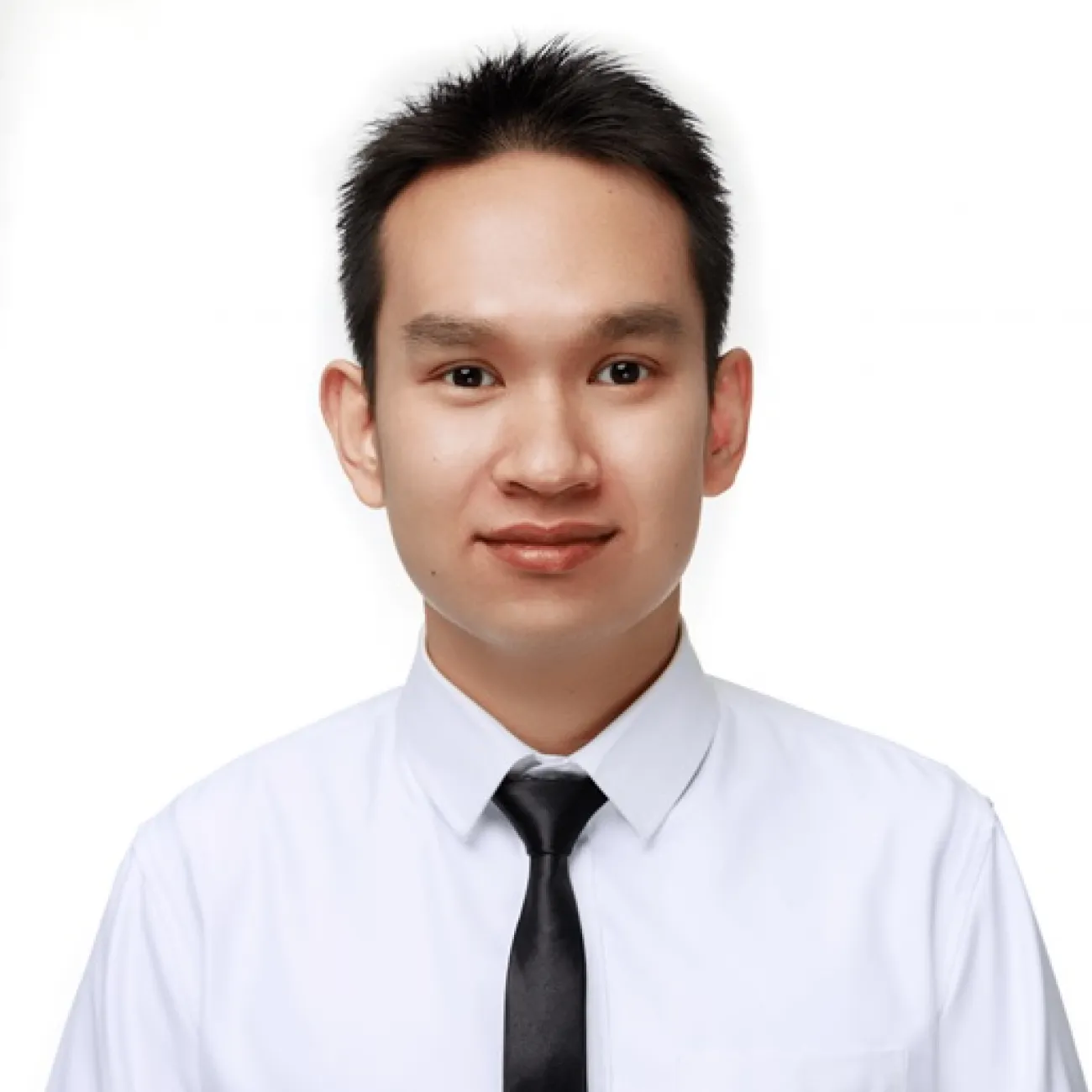
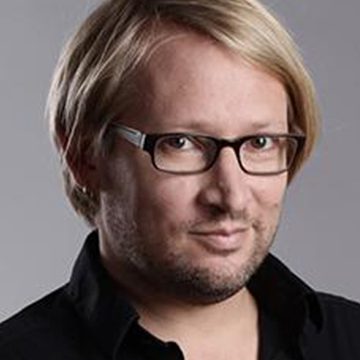
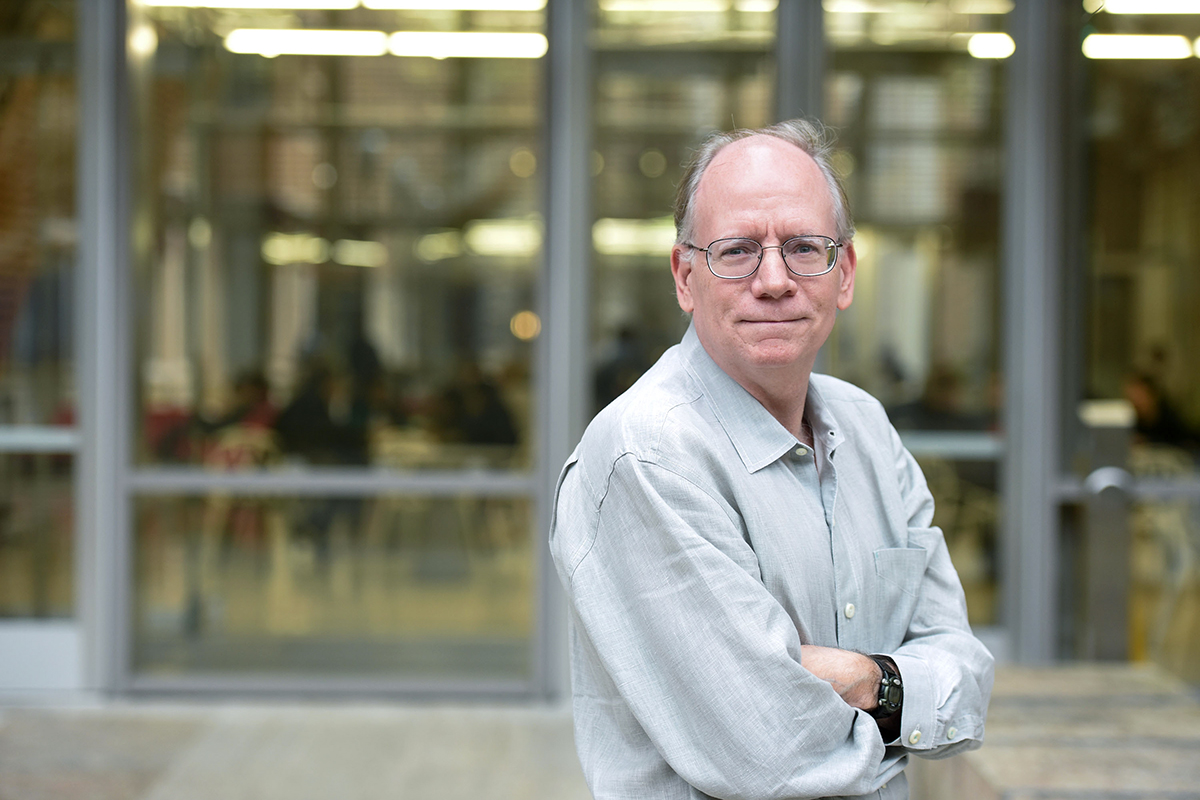
Dr. Tan Viet Tuyen Nguyen is a New Frontiers Fellow (Lecturer) in AI at the University of Southampton, specializing in Human-Centered Artificial Intelligence and Social Human-Robot Interaction. His research focuses on multimodal learning for robots to adapt their behavior to human social needs, with applications in healthcare, education, and service environments. Prior to this role, he was a Research Associate at King’s College London and a Research Assistant on the EU-funded CARESSES project, developing culturally-aware assistive robots for elderly support. Education: PhD in Information Science (Robotics) from Japan Advanced Institute of Science and Technology. He has organized conferences such as the IEEE RO-MAN 2022 special session on nonverbal communication and served as a reviewer for top-tier robotics and AI conferences. Research Interests include: Human-Robot Collaboration, Multimodal Perception, Generative AI for Social Interaction, and Context-Aware Robot Behavior Generation. His work has been recognized with awards including the Best Paper Award at ROMAN 2022 and the Prospective Research Award at ICServ 2023. Teaching Responsibilities include courses on Biologically Inspired Robotics, High-Level Programming, and MSc/Undergraduate project supervision. He currently oversees two PhD students and collaborates on projects like 'Exploring the impact of AI-driven writing of engagement in climate change' and 'Bridging Generations and Cultures through Generative AI.' Labs/Teams: Member of the Agents, Interaction and Complexity Centre and the Centre for Robotics Research at Southampton.
Tariq Iqbal is an Assistant Professor at the University of Virginia , with joint appointments in the Department of Systems and Information Engineering and Department of Computer Science . He leads the Collaborative Robotics Lab (CRL) , specializing in human-robot teams and embodied AI . Previously, he was a Postdoctoral Associate at MIT's CSAIL , advised by Prof. Julie Shah , and earned his Ph.D. in Computer Science from University of California San Diego (UCSD) under Prof. Laurel Riek . Ph.D. in Computer Science, University of California San Diego (2017) M.S. in Computer Science, University of Texas at El Paso (2012) B.S. in Computer Science and Engineering, Bangladesh University of Engineering and Technology (2007) His research lies at the intersection of artificial intelligence and robotics , focusing on human-robot collaboration in dynamic environments. Key areas include motion prediction , multimodal fusion , trust modeling , and collaborative learning . His work integrates cognitive science and deep learning to enhance robotic fluency in naturalistic settings. Recent publications (2023–2025) highlight advancements in human-robot team dynamics , multimodal dataset creation , and motion prediction algorithms . Notable works include Energy-Based Transformers for scalable AI, PoseTron for motion prediction, and Accessible Navigation Mapping for assistive robotics. These contributions span trust modeling , cloud robotic infrastructure , and safety in close-proximity collaboration . National Science Foundation (NSF) CAREER Award Air Force Office of Scientific Research (AFOSR) Young Investigator Program (YIP) Award Commonwealth Center for Advanced Manufacturing (CCAM) Innovation Award As faculty, he has secured grants from NSF and AFOSR , mentored research students, and taught courses like Stochastic Modeling I (SYS 6005) and Robots and Humans (SYS 4582/6465, ECE 4502/6465, CS 6465) . His prior industry roles at IBM Watson Lab and Grameenphone Ltd. inform his applied research in telecom infrastructure and cognitive robotics . He leads the Collaborative Robotics Lab (CRL) at UVA, which develops multimodal datasets , real-time coordination algorithms , and adaptive pathfinding systems . Current projects explore human motion prediction , team synchrony , and embodied question-answering , reflecting his commitment to advancing human-robot fluency and contextual AI .
Prof. Torsten Wolfgang Kuhlen serves as a Universitätsprofessor at RWTH Aachen University, leading the Teaching and Research Area for Virtual Reality and Immersive Visualization within the Department of Computer Science. He is affiliated with Chair of Computer Science 12 (High Performance Computing), the Visual Computing Institute, and remains an integral part of the RWTH IT Center where his research group operates one of the world's largest Virtual Reality laboratories including the 30 sqm aixCAVE visualization chamber. The group maintains strong connections with Computational Science & Engineering Division, National High Performance Computing Center for Computational Engineering Science (NHR4CES), and VR in Science and Industry Network NRW e.V. Prof. Kuhlen's research spans virtual reality, immersive visualization, and multimodal 3D user interfaces with applications across simulation science, production technology, neuroscience, and medicine. His work combines basic research on advanced methods and algorithms with interdisciplinary collaborations involving RWTH Aachen institutes, Forschungszentrum Jülich, and industry partners. Recent publications demonstrate strong focus on audiovisual perception, immersive analytics, collaborative virtual environments, and practical VR applications in education and manufacturing. His research group has produced significant work on listening effort in virtual environments, immersive authoring techniques, and VR applications for scientific visualization. Notable projects include VRScenarioBuilder for automated vehicle testing and applications in monitoring additive manufacturing processes. The group actively participates in major conferences including IEEE VIS and EuroVis, with several award-winning contributions. Prof. Kuhlen has advised PhD students including Martin Bellgardt who recently completed his doctoral degree on "Increasing Immersion in Machine Learning Pipelines for Mechanical Engineering". The research group maintains state-of-the-art VR infrastructure including the aixCAVE facility which is open to all RWTH research groups.
David Lindlbauer is an Assistant Professor at the Human-Computer Interaction Institute (HCII) within Carnegie Mellon University's School of Computer Science. He leads the Augmented Perception Lab and co-directs the CMU Extended Reality Technology Center (XRTC) . His research bridges Human-Computer Interaction, Computer Graphics, and Computer Vision to create adaptive interfaces that enhance human-digital interaction. Education : PhD (summa cum laude) from Technische Universität Berlin , MSc and BSc from University of Applied Sciences Upper Austria Previous Affiliation : Postdoctoral Researcher at ETH Zurich (2018-2020) David's research focuses on understanding human perception of digital information and developing computational approaches to optimize AR/VR interface usability. Key areas include: Context-aware adaptive interfaces Visual saliency and attention modeling Spatial audio-haptic systems Optimal placement algorithms Object manipulation in Remixed Reality Diminished/ambient MR interfaces His 15 most recent publications (2024-2025) span topics in adaptive XR interfaces, multimodal notifications, haptic systems, and spatial cognition. These works appear at venues like ACM CHI, ACM UIST, IEEE VR, and Frontiers in VR. Common themes include: Machine learning for interface adaptation Human factors in XR design Real-time environment analysis Privacy-aware display systems Collaborative MR interfaces Accessibility enhancements Scientific Recognition : Best Paper Honorable Mention Award (ACM CHI 2024) Best Paper Award (ACM ISS 2023) ETH Zurich Postdoctoral Fellowship Multiple best paper recognitions at CHI, UIST, and IEEE VR Teaching & Leadership : Course developer for CMU's "Interactive Extended Reality" Mentor for NASA SUITS Challenge team Co-chair roles at CHI and UIST Overseeing PhD students and research interns
Mykola Pechenizkiy is a Full Professor at the Department of Mathematics and Computer Science at Eindhoven University of Technology (TU/e), holding the Data Mining Chair. He also serves as an Adjunct Professor in Data Mining for Industrial Applications at the University of Jyväskylä. His research focuses on predictive analytics, data mining, and responsible AI, addressing real-world challenges in industry, healthcare, and education. He leads the Customer Journey research program at the Data Science Center Eindhoven, emphasizing ethical and transparent analytics. Academically, he holds a PhD from the University of Jyväskylä (2005) and has held visiting researcher positions at institutions like Columbia University and NYU. He has co-authored over 300 peer-reviewed publications and serves on editorial boards and committees for leading conferences (e.g., AAAI, IJCAI). He is the President of the International Educational Data Mining Society (IEDMS). His research interests include concept drift adaptation, sparsity techniques in neural networks, and fairness-aware AI. He has led projects such as the TKI PPS KPN Smart Two initiative and collaborates with industries like ASML, Philips, and Rabobank. His work contributes to UN SDGs, particularly in sustainable development through AI-driven solutions. Awards: Best Demo Paper Award (IEEE ICDE 2023), Best Paper Awards (ALA 2022, LoG 2022), and SensorKDD 2009 recognition. Grants/Projects: Active projects include TKI PPS KPN Smart Two (2019–2025) and Smart One W&I TKI KPN Flagship (2018–2022). Labs/Teams: Affiliated with EAISI Health, SIKS Scientific Board, and the University of Waikato’s AI Institute.
Fethiye Irmak Dogan is a Postdoctoral Research Associate at the University of Cambridge's Department of Computer Science and Technology, working in the Affective Intelligence and Robotics Laboratory. She holds a Ph.D. in Computer Science from KTH Royal Institute of Technology (2023), an M.Sc. and B.Sc. in Computer Engineering from Middle East Technical University (METU). Her research focuses on human-robot interaction, continual learning, and socially appropriate robot behaviors leveraging explainability. She has conducted robotics research at KTH's Division of Robotics, Perception and Learning and collaborated internationally, including a visiting scholar stint at Georgia Institute of Technology. Education highlights include: B.Sc., Computer Engineering, METU (2015) M.Sc., Computer Engineering, METU (2018), with research at Kovan Robotics Lab Ph.D., Computer Science, KTH (2023), with visiting research at Georgia Tech Research interests emphasize deploying autonomous robots in human environments, resolving ambiguous user instructions through explainability, and enabling socially intelligent robot behaviors. Recent work explores continual learning for context adaptation, multimodal frameworks for human-robot collaboration, and vision-language models for wellbeing assessment in children. Key projects include BT-ACTION (modular instruction understanding), GRACE (LLM-driven socially appropriate actions), and STREAK (continual learning for household tasks). Her contributions span robotics, AI ethics, and human-centered design, with a focus on real-world applications in healthcare and education.
Manolis Savva is an Associate Professor in the School of Computing Science at Simon Fraser University and holds the Canada Research Chair in Computer Graphics. He specializes in 3D scene analysis, generative methods for 3D content, and computer graphics for AI. His research bridges computer graphics, vision, and robotics. Education: Ph.D. (Computer Science, Stanford University, 2016), MS (Computer Science, Stanford, 2012), B.A. (Physics & Computer Science, Cornell, 2009). Research Interests: Human-centric 3D scene analysis, generative 3D content creation, AI-driven rendering, and applications in robotics. Key projects include Habitat (Embodied AI platform), ScanNet , and ShapeNet datasets. Recent Articles: Focus on articulated object modeling, 3D scene synthesis, and AI-driven visualization. Notable work includes SceneMotifCoder (generating object arrangements) and R3DS (panoramic scene understanding). Awards: CHCCS Early Career Award (2022), ICLR 2023 Outstanding Paper Award, ICCV 2019 Best Paper Nomination, and SGP 2020 Dataset Award (ScanNet). Lab/Teams: Leads research groups in 3DLG (3D Learning and Graphics) and GrUVi (Graphics and Vision). Collaborates on projects like AI Habitat and HomeRobot .
Andrew Campana is an Assistant Professor of Asian Studies at Cornell University's College of Arts and Sciences, specializing in modern and contemporary Japanese literature and media. His research explores the possibilities and limitations of expression during media transitions, with particular focus on poetry, digital media, and disability studies. His academic journey includes a Ph.D. in East Asian Languages and Civilizations from Harvard University and an Honors B.A. in East Asian Studies from the University of Toronto. Campana's first book, Expanding Verse: Japanese Poetry at the Edge of Media , published by the University of California Press in 2024 as an open access work, examines Japanese poetic practice from the 1920s to the present as poets engaged with evolving media technologies including film, tape recording, television, and the internet. As a researcher, Campana's work bridges literary studies, media studies, game studies, and disability studies, with current projects exploring how poetry became a key site of digital experimentation in Japan. His research methodology combines traditional literary analysis with hands-on creative practice, informed by his experiences at MIT's Trope Tank laboratory. His scholarly interests span Japanese media history, disability representation in literature and gaming, digital poetics, and gender studies. His research has received significant media attention, including features in the Cornell Chronicle ('Poets in Japan Experiment at the Edge of Media' and 'Japanese Poets Open New Ways of Thinking About Media'), The Statesman, and interviews on NPR's Academic Minute and the Curiosity Daily podcast discussing his work on gaming and accessibility. As an educator, Campana teaches courses including 'Introduction to Japan,' 'Japanese Poetry,' and 'The Glitch: Errors, Disability, and the Edges of Digital Media' (ASIAN 4703/6703), guiding students through interdisciplinary explorations of Japanese literature, media, and digital culture. His teaching reflects his commitment to understanding media transitions through both theoretical and practical lenses.
Chen Sun is an Assistant Professor of Computer Science at Brown University and a part-time Staff Research Scientist at Google DeepMind . His research bridges computer vision, machine learning, and artificial intelligence , focusing on multimodal representation learning, visual commonsense, and controllable video generation . He directs the PALM🌴 research lab , which explores scalable models for robotic planning, video understanding, and human activity recognition . Chen Sun earned a Ph.D. in Computer Science from the University of Southern California (2016) , advised by Professor Ram Nevatia , and a Bachelor of Science in Computer Science from Tsinghua University (2011) . His lab's work has been supported by Adobe, Honda, Meta, NASA, and Samsung , and he is affiliated with the NSF AI Research Institute on Interaction for AI Assistants . His research spans multimodal transformers, embodied agents, and physics-informed video generation . Key trends include Learning from unlabeled videos for human activity recognition Developing controllable generation techniques using motion trajectories and physics-based signals Advancing scalable frameworks for video-language tasks Scientific awards include the Brown University Richard B. Salomon Faculty Research Award and Samsung Global Research Outreach Award . He has served as Workshop Chair (CVPR 2025) , Action Editor (TMLR) , and Area Chair for top conferences like ICLR, CVPR, and NeurIPS . Chen Sun mentors a dynamic team including Ph.D. students Apoorv Khandelwal (Presidential Fellow) Calvin Luo (Research Mobility Fellow) Nate Gillman (Math Department) Shijie Wang Tian Yun (co-advised with Ellie Pavlick) Yuan Zang Zilai Zeng Zitian Tang and alumni now pursuing Ph.D. programs at Princeton, Cornell, UBC, and UNC . His teaching portfolio includes graduate-level courses on Deep Learning (CSCI 2470) , Advanced Topics in Deep Learning (CSCI 2952N) , and a short course on Multimodal Transformers at ICASSP 2022 and AAAI 2023 .
Dongwook Yoon is an Associate Professor at the Department of Computer Science , University of British Columbia , and serves as Director of the SOCIUS Lab . He actively contributes to research in Human-Computer Interaction, Human-AI Interaction, and Virtual/Augmented Reality as a member of the Designing for People (DFP) and CAIDA research clusters. Education : PhD in Computer Science from Cornell University (2017), MS (2009) and BS (2007) in Computer Science from Seoul National University Research Focus : Designing socio-technical systems that bridge the gap between technology and human social processes, with innovations in AR/VR, multimodal interaction, and inclusive design Article Trends show his work spans: Temporal and bichronous learning environments AI self-clones and ethical implications Income inequality in virtual platforms Enhanced multimodal collaboration in VR Eyes-reduced interfaces for situational impairments Speculative participatory design for gig economy challenges Scientific Awards include: Google Academic Research Award (2024) Best Paper Award at CHI 2024 High Impact Award in Educational Technology (2024) CHCCS/SCDHM Graphics Interface Early Career Award (2023) Multiple Honorable Mentions at CHI, DIS, and CSCW Students & Collaborators range from active PhD candidates (Anika Sayara, Yuri Kim) to notable alumni (Thitaree Tanprasert, Ashish Chopra) across his SOCIUS Lab projects. His research receives funding from NSERC , KIST , Adobe , Microsoft , and Google grants.
Christopher Honey is an Associate Professor in the Department of Psychological & Brain Sciences at Johns Hopkins University, affiliated with the Krieger School of Arts & Sciences. His research focuses on computational cognitive neuroscience, exploring how the brain processes sequential information such as language and memory. He holds a PhD from Indiana University and has held positions at Princeton University and the University of Toronto before joining JHU in 2016. Education: PhD in Psychological and Brain Sciences, Indiana University Postdoctoral Fellowship at Princeton University with Uri Hasson Bachelor’s in Applied Mathematics and English Literature, University of Cape Town Research Interests: Neural dynamics of memory and perception Temporal processing in the brain Cognitive modeling using computational methods Neuroimaging data standards (e.g., BIDS) Publications highlight his work on brain state fluctuations, neuroimaging data structures, and memory enhancement. His lab develops tools for analyzing fMRI and EEG data, emphasizing real-world applications like smartphone-based cognitive interventions. Lab and Collaborations: Active projects on narrative processing and hippocampal replay Development of open-source neuroscience tools like iELVis Focus on translational research for aging populations
Markus Vincze is an Associate Professor at the Institute of Automation and Control Engineering (ACIN) at Vienna University of Technology (TU Wien). He founded the Vision for Robotics (V4R) group in 1996 to advance robotic perception, particularly in real-world environments and homes. His work focuses on cognitive computer vision techniques for robotics. Education: Diplom in Mechanical Engineering (1988) and PhD (1993) from TU Wien; M.Sc. (1990) from Rensselaer Polytechnic Institute. V4R coordinates EU projects like ActIPret, robots@home, HOBBIT, and national initiatives like vision@home. Markus has edited a book on Robust Vision with Gregory Hager and authored 62 peer-reviewed journal articles and over 400 reviewed publications. His recent research explores zero-shot 6D pose estimation, sim-to-real transfer, and transparent object detection. Markus has served as program chair for ICRA 2013 and organized HRI 2017 in Vienna. He has advised numerous students and secured grants from the Austrian Academy of Sciences for work at HelpMate Robotics and Yale's Vision Laboratory. The V4R group leads innovations in robotic vision, including frameworks for synthetic data generation (Unrealgensyn), depth completion (CAGT), and educational robotics applications for sustainability. Their work spans household robotics (RH3), agricultural robotics (EdgeSoil), and human-robot collaboration.
Guy Hoffman is Associate Professor and Associate Director of Undergraduate Affairs at Cornell University's Sibley School of Mechanical and Aerospace Engineering. He holds faculty appointments in Aerospace Engineering, Computer Science, Information Science, and Mechanical Engineering. Hoffman earned his Ph.D. in Human-Robot Interaction from MIT and M.Sc. in Computer Science from Tel Aviv University. His research explores computational, design, and social aspects of Human-Robot Interaction (HRI), with focus areas including: Embodied cognition for social robots Anticipation and timing in HRI Nonverbal behavior in human-robot collaboration Robotics for performing arts Non-anthropomorphic robot design Publications demonstrate interdisciplinary work spanning social robotics, adaptive interfaces, inclusive design, and AI education. Recent articles explore shadow-based interaction privacy, emotional conveyance through shape-changing interfaces, and cultural aspects of robot morphology. Major recognitions include: Andrew P. Sage Best Transactions Paper Award (IEEE, 2020) Dennis G. Shepherd Teaching Award (Cornell, 2019) Best Paper Award, IEEE/ACM HRI Conference (2015) His research group develops robotic platforms like Blossom and investigates human-robot collaboration in workspaces, inclusive play for children with mixed abilities, and open-source educational tools for AI literacy.
Raymond J. Mooney is a Professor in the Department of Computer Science at the University of Texas at Austin, where he has been a faculty member since 1987. He is the Director of the UT Artificial Intelligence Laboratory and affiliated with multiple research groups including the Machine Learning Research Group, UT Computational Linguistics Lab, and the UT Center for Computational Biology and Bioinformatics. He holds a B.S., M.S., and Ph.D. in Computer Science from the University of Illinois at Urbana-Champaign, where his thesis was supervised by Gerald DeJong. His research spans diverse areas in artificial intelligence, machine learning, and natural language processing: Natural Language Learning Connecting Language and Perception Statistical Relational Learning Information Extraction Transfer and Active Learning Abductive Reasoning Text Mining and Clustering Recommender Systems Knowledge-Base Refinement Recent publications highlight trends in grounded language processing, human-robot interaction, and multimodal reasoning. He has been recognized with prestigious fellowships including ACL (2014), ACM (2010), and AAAI (2005). Scientific awards: Fellow of the Association for Computational Linguistics (2014) Fellow of the Association for Computing Machinery (2010) Fellow of the American Association for Artificial Intelligence (2005) Classic Paper Award (2019) Best Paper Awards (2007, 2004, 1996) He teaches graduate courses like CS 371R: Information Retrieval and Web Search (Fall 2025) and CS 395T: Grounded Natural Language Processing (Spring 2025). His research labs include: UT Artificial Intelligence Laboratory Machine Learning Research Group UT Computational Linguistics Lab UT Center for Computational Biology and Bioinformatics
Dr. Todd D. Murphey is a Professor of Mechanical Engineering at Northwestern University's Robert R. McCormick School of Engineering and Applied Science. He serves as Director of Transformative Research and Director of the Master of Science in Robotics Program at Northwestern, leading initiatives in computational dynamics, control systems, and robotics. His work bridges engineering, neuroscience, and biomedical applications, with a focus on developing systems that interact effectively with humans and their environments. Dr. Murphey received his Ph.D. in Control and Dynamical Systems from the California Institute of Technology in 2002, with a thesis titled "Control of Multiple Model Systems." Prior to that, he earned a B.S. in Mathematics, summa cum laude, from the University of Arizona in 1997. Dr. Murphey's research centers on computational methods in dynamics and control, with applications spanning neuroscience, health science, robotics, and automation. His work in the Interactive & Emergent Autonomy Lab focuses on computational models of embedded control, biomechanical simulation, dynamic exploration, and hybrid control. The group develops mathematical approaches that lead to orders of magnitude improvement in computational efficiency for real-time implementation. Key application areas include assistive exoskeleton control, stabilization of energy networks, bio-inspired active sensing, entertainment robots, robotic exploration, and software-enabled stroke rehabilitation. Analysis of Dr. Murphey's recent publications reveals a strong emphasis on human-swarm interaction, algorithmic matter, and control of cyber-physical systems in uncertain environments. His work increasingly integrates information theory with physical systems, exploring how both autonomous and biological systems interact with environments to learn and improve behaviors. Recent trends show growing applications in rehabilitation technology, with particular focus on human-machine interaction in biomedical devices and embodied intelligence. Dr. Murphey has received numerous honors and awards for his contributions to robotics and engineering: Named Director of Transformative Research at Northwestern University (2025) Appointed IEEE Robotics and Automation Society Vice President of Publication Activities (2022) Co-recipient of Best Paper Award for IEEE Transactions on Robotics (2020) Appointed to Air Force Scientific Advisory Board (2019) Recipient of ABB Best Student Paper Award for CPL-SLAM research (2019) Cole-Higgins Award from Northwestern Engineering (2015) Dr. Murphey has supervised numerous graduate students including Taosha Fan, Giorgos Mamakoukas, and Ian Abraham, with research spanning robotic exploration using electrosense and mechanical contact, human-in-the-loop control, and shared control for rehabilitation devices. His lab has secured significant funding from the National Science Foundation, DARPA, and industry partners including Siemens and Ekso Bionics, supporting research in algorithmic matter, emergent behavior, and human-swarm collaboration. The Interactive & Emergent Autonomy Lab, led by Dr. Murphey, investigates how both autonomous systems and biological systems interact with their environments to learn and improve behaviors. Current projects include active learning and data-driven control, active perception in human-swarm collaboration, algorithmic matter and emergent computation, control for nonlinear and hybrid systems, cyber physical systems in uncertain environments, harmonious navigation in human crowds, information maximizing clinical diagnostics, reactive learning in underwater exploration, robot-assisted rehabilitation, and software-enabled biomedical devices. The lab collaborates with researchers across Northwestern and institutions including Georgia Tech, MIT, and industry partners.