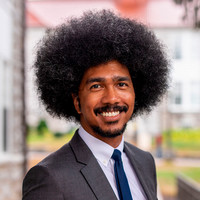
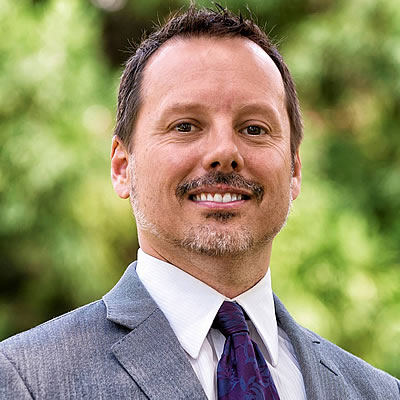
Dr. Cyril Uy II is an Assistant Professor of Religion at James Madison University since 2021. He holds a Ph.D. from Brown University, an M.A. from Stanford University, an M.Phil. from the University of Cambridge, and a B.A. from Yale University. His research focuses on medieval Sufism, Islamic philosophy, and the intersections of knowledge, identity, and embodiment. He explores how Muslim thinkers navigated authority and exclusion in knowledge production, with a specialization in Mongol-era Sufi figures like Saʿd al-Dīn Ḥamūya. His work bridges historical texts with contemporary theories of identity and social dynamics. His award-winning dissertation led to his first book, Lost in a Sea of Letters (Brill, 2025), analyzing Ḥamūya’s deconstructive ethos and its implications for pluralism. His current project employs jazz improvisation as a framework to study Sufi intellectual and social practices. Dr. Uy teaches courses on mysticism, science-religion intersections, gender/sexuality, and music in religious experience, emphasizing student engagement with personal and academic perspectives. Before JMU, he was the inaugural Mellon Teaching Fellow in Global Islamic Studies at Connecticut College. His scholarly contributions include co-editing On God and the World (Oxford UP, 2019), a critical edition and translation of medieval Islamic texts. He actively bridges historical scholarship with contemporary interdisciplinary dialogue.
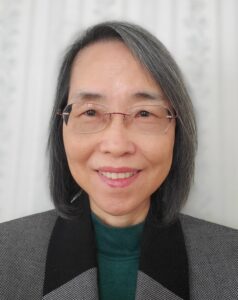
Kwok Pui-lan is the Dean’s Professor of Systematic Theology at the Candler School of Theology, Emory University. Her work bridges postcolonial and feminist theological frameworks with contemporary social justice issues. She is a prominent author of works including Postcolonial Politics and Theology , Occupy Religion , and Introducing Asian Feminist Theology . Her research focuses on globalization, gender, peacebuilding, and the intersection of theology with race, power, and pedagogy. Dr. Kwok actively contributes to academic discourse through her blog (http://kwokpuilan.blogspot.com) and writings for the Wabash Center, addressing themes such as embodied teaching in digital spaces, anti-racism in academia, and theology’s role in responding to societal crises. Her scholarship emphasizes critical reflection on religious education and the ethical implications of emerging technologies. Her teaching philosophy integrates collaborative learning, arts-based methods, and embodied practices to foster transformative education. She has explored topics like machine learning’s impact on religious imagination and the role of spirituality in pandemic-era learning environments. Dr. Kwok’s work consistently interrogates systems of power and oppression, advocating for marginalized voices in theological discourse. Her contributions to the field include reimagining pedagogical approaches to address contemporary challenges in religious education and social justice advocacy.
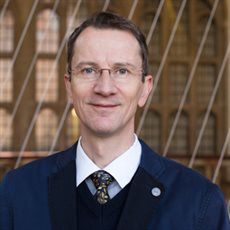
Professor Wolfgang Vondey serves as Professor of Christian Theology and Pentecostal Studies in the Department of Theology and Religion at the University of Birmingham, where he directs the Centre for Pentecostal and Charismatic Studies. A classically trained systematic theologian with expertise spanning philosophy, linguistics, and ethics, Vondey teaches in the Master of Arts programme in Evangelical and Charismatic Studies while maintaining an active research agenda that bridges academic theology with practical ecclesial concerns. His academic journey includes: MA in Japanese Studies, Japanese Linguistics, and Media Science from Philipps University Marburg, Germany (1994) MDiv from Pentecostal Theological Seminary, USA (1999) PhD in systematic theology and ethics from Marquette University, USA (2003) Postdoctoral fellowship at Boston College Faculty position at Regent University Divinity School (2005-2015), where he founded and directed the Regent Center for Renewal Studies Vondey's research focuses on Pentecostal and Charismatic theology with particular emphasis on pneumatology, ecclesiology, ecumenical theology, and the intersection of theology and science. His scholarly work spans diverse theological traditions from Catholic to postmodern thought, exploring ritual and liturgical studies, theological method, Christology, soteriology, and political theology. With a multilingual background (German, French, Italian, Spanish, Dutch, and Japanese), he brings international perspective to his analysis of global Pentecostalism. His publications reveal consistent engagement with contemporary Pentecostal theological challenges, examining political dimensions of glossolalia, corporate embodiment in Pentecostal tradition, synodality, and the public nature of Pentecostal ecclesiology. Vondey's work demonstrates how Pentecostal theology navigates tensions between mainstream and extreme expressions while maintaining theological coherence in global contexts. As an academic leader, Vondey co-edits the 'Christianity and Renewal – Interdisciplinary Studies' book series with Amos Yong and serves as founding chair of the ecumenical studies group of the Society for Pentecostal Studies. His supervision of numerous PhD students across diverse topics—from Pentecostal orality in Denmark to Word of Faith theology in Bolivia—demonstrates his commitment to developing the next generation of Pentecostal scholars worldwide.
Laura A. Meek is an Assistant Professor in the Department of Anthropology at the University of British Columbia Okanagan , specializing in Medical Anthropology , Decolonial Science and Technology Studies , and East African research . She holds affiliations with interdisciplinary networks like the UBC-O Science and Technology Studies Collective and co-directs the Storying Otherwise: Creative Ethnographic Writing Hub . PhD, MA in Anthropology (University of California, Davis) MA in Women’s Studies (George Washington University) Honors BA in Comparative Human Development (University of Chicago) Her research examines counterfeit pharmaceuticals and bodily epistemologies in Tanzania, framed through feminist , decolonial , and anti-racist lenses . She investigates leprosy elimination campaigns and fugitive science practices across Africa and Hong Kong, with recent work focusing on creative ethnographic prose and critical disability studies . Her publications span high-impact journals like Social Science & Medicine and Medical Anthropology Quarterly , addressing themes of radical uncertainty and world-making practices . Laura’s 15 most recent articles (2021–2025) analyze: pharmaceutical counterfeits in East Africa, the temporal politics of leprosy , anti-colonial global health , and creative writing as research . Her work bridges Indian Ocean connections and STS frameworks to critique neocolonial health governance. 2025 Collaborative Research Mobility Award 2024 Wenner-Gren Workshop Grant 2023 MAE–MAT Early Career Paper Award 2021 Society for Humanistic Anthropology Creative Ethnographic Prose Prize 2018 Wenner-Gren Dissertation Grant 2013 NSF Doctoral Dissertation Grant She supervises M.A. and Ph.D. students in UBC-O’s Interdisciplinary Graduate Studies programs, particularly in global health , African politics , and STS . Her professional service includes co-chairing the 2026 Cascadia Medical Anthropology Seminar and serving on the American Anthropological Association Nominations Committee .
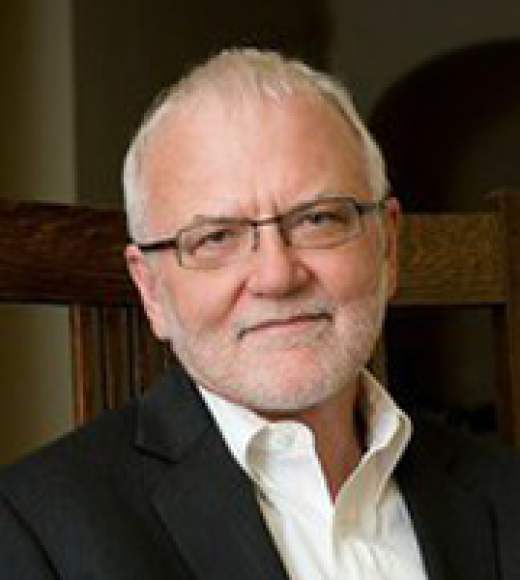
David Germano is Professor of Tibetan and Buddhist Studies at the University of Virginia's College of Arts & Sciences, Department of Religious Studies. He also holds a Clinical Professor appointment in Nursing and serves as Director of multiple centers including the Tibet Center, the Contemplative Sciences Center, and SHANTI (Social Sciences, Humanities, and Arts Network of Technological Initiatives). Since 2000, he has directed the Tibetan and Himalayan Library, establishing himself as a leading figure in Tibetan studies and digital humanities. Germano earned his B.A. from Notre Dame University in 1984 and completed his Ph.D. at the University of Wisconsin in 1992. His academic career at UVA progressed from Assistant Professor (1992-1998), to Associate Professor (1998-2011), and finally to Professor (2011-present). His research focuses on the Nyingma and Bön lineages of Tibetan Buddhism, particularly tantric traditions and Buddhist philosophy from the eighth to fifteenth centuries. He also studies Tibetan history and literature, contemporary Tibet (especially regarding religion, education, and technology), and digital humanities. Germano is particularly interested in engaged scholarship that inserts higher education into a socially transformative role across various sectors. Germano's publications reveal a consistent focus on Tibetan Buddhist traditions, with particular emphasis on Dzogchen (Great Perfection) teachings, visionary movements, and the intersection of traditional practices with contemporary contexts. His work spans religious studies, anthropology, digital humanities, and Tibetan cultural studies, demonstrating interdisciplinary approaches to understanding Tibetan Buddhism and its modern manifestations. As a leader in digital humanities, Germano has pioneered numerous initiatives including the Tibetan and Himalayan Digital Library, the Tibetan Unicode Project, the Tibetan Literary Encyclopedia, and the Tibetan Language Learning Resources initiative. He has also co-directed the UVa-Machik Geotourism Initiative and the Tibetan and Himalayan Historical GIS project, demonstrating his commitment to innovative approaches for preserving and disseminating Tibetan knowledge.
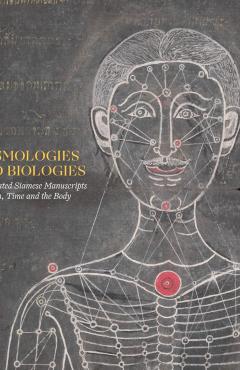
Justin McDaniel is the Edmund J. and Louise W. Kahn Endowed Professor of the Humanities at the University of Pennsylvania's Department of Religious Studies. His research focuses on Lao, Thai, Pali, and Sanskrit literature, Buddhist rituals, manuscript studies, and Southeast Asian history. He has authored multiple award-winning books and published over 100 articles and reviews. Education includes a BA from Boston College (1993), MTS from Harvard Divinity School (1998), MA and PhD in Sanskrit and Indian Studies from Harvard University (2001, 2003). His research explores intersections between Buddhism, material culture, and social history. Recent work includes studies on Siamese manuscripts and Thai Buddhist art. He has held grants from NEH, Mellon, Rockefeller, and others. Awarded teaching excellence at multiple institutions, McDaniel’s innovative courses like Existential Despair and Living Deliberately have been featured in national media. He serves as co-editor for Buddhism Compass and Journal of Lao Studies . Publications include Cosmologies and Biologies (2024), Wayward Distractions (2023), and Architects of Buddhist Leisure (2015), supported by NEH and Kyoto University. Forthcoming projects address Thai manuscripts and Buddhist biographies.
Michael Warner is the Seymour H. Knox Professor in the Department of English at Yale University, where he holds a prominent position in literary and cultural studies. His work bridges scholarship, theory, and public intellectual engagement across disciplines such as early American literature, queer theory, and the sociology of secularism. His research focuses on the interplay between media, reading practices, and the formation of social worlds. Warner explores how publics and counterpublics emerge through print culture and communication, with significant contributions to understanding the evangelical public sphere and the cultural roots of secularism in America. His interdisciplinary interests extend to new media, intellectual property, and political discourse. The recent articles reflect a strong trend in cultural and literary theory, with deep attention to public discourse, identity formation, and interpretive practices. Warner's work consistently engages with philosophical and historical dimensions of literature, often challenging normative frameworks in reading and social belonging. Co-editor, Varieties of Secularism in a Secular Age (Harvard University Press, 2010) Author, The Evangelical Public Sphere in Eighteenth-Century America (forthcoming, University of Pennsylvania Press) Author, Publics and Counterpublics (Zone Books, 2002) Author, The Trouble with Normal (Harvard University Press, 2000) Editor, The Portable Walt Whitman (Penguin, 2003) Warner has advised numerous graduate students and has been involved in major scholarly collaborations, though specific names are not listed. He has received support for his research through academic lectureships, including the Rosenbach Lectures (2009), and editorial projects with leading university presses. His work continues to influence both literary studies and social theory. He is associated with advanced research in secular culture and public discourse, particularly through his current book projects and lecture series. His intellectual leadership positions him at the center of debates on religion, modernity, and democratic public life.
Jeffrey S. Lidke is a Professor of Religious Studies and Chair of the Department of Religion and Philosophy at Berry College. He holds a B.A. from the University of Colorado (1990), M.A. (1996), and Ph.D. (2000) in South Asia Religion and Philosophy from the University of California, Santa Barbara. A Fulbright Dissertation Fellow to Nepal (1996-97), his research focuses on Nepalese Tantra, South Asian religious traditions, and the intersection of contemplative practices with neuroscience. His major works include The Goddess Within and Beyond the Three Cities (2017) and Viśvarūpa Maṇḍir: A Study of Chaṅgu Nārāyaṇa (2017). Key research areas include Śākta Tantra's political theology, Abhinavagupta's monistic philosophy, and the neuroscientific implications of Tantric meditative practices. His work bridges textual analysis with ethnographic fieldwork in Nepal and India. Education: B.A., Religious Studies, University of Colorado (1990) M.A., South Asia Religion and Philosophy, University of California, Santa Barbara (1996) Ph.D., South Asia Religion and Philosophy, University of California, Santa Barbara (2000) Research Interests: Indian and Nepalese Tantra Kashmir Śaivism Cognitive Neuroscience of Contemplative Practices Embodied Mysticism in Art and Dance Maṇḍala Theory and Political Theology Key Contributions: Pioneered studies on the Sarvāmnāya Tantra system Explored neuroscientific applications of Tantric meditation Edited volumes on South Asian religious practices and ecology Awards: Fulbright Dissertation Fellowship (1996-97) Professional Activities: Co-editor of Southeast Review of Asian Studies Interviews on Tantric philosophy and Yoga-Neuroscience connections
Song-Chong Lee is an Associate Professor of Religious Studies and Philosophy at the University of Findlay, focusing on the intersection of race, religion, and pedagogy. His work addresses systemic inequities and explores innovative teaching methods in theological education. Affiliation: University of Findlay, College of Arts and Sciences, Department of Religious Studies Key Themes: Race matters in classrooms, social justice, trauma-informed teaching, online education challenges, and anti-racist strategies. In his October 2, 2014 blog post titled "In the Classroom, Race is More Than Race," Lee reflects on navigating racial homogeneity at his institution and the evolution of his pedagogical focus toward inclusion. He contributes to discussions on emotional labor in teaching, democratic classroom practices, and the adaptation of pedagogy during crises like the COVID-19 pandemic. Notable Collaborations: Wabash Center for Teaching and Learning in Theology and Religion Focus Areas: Decolonial practices, embodied learning, and addressing white privilege in education.
Donald L. Donham is a Distinguished Research Professor in the Department of Anthropology at the University of California, Davis. He holds a Ph.D. in Cultural Anthropology from Stanford University (1979), following earlier degrees in Chemistry from Stanford (M.S., 1969) and Baylor University (B.S., 1967). Before joining UC Davis in 2003, he taught at Stanford and Emory Universities, and held postdoctoral fellowships at Cambridge University's Economics Department and African Studies Centre. His research focuses on power dynamics, economic-cultural interplay, historical methodology, Marxism, narrative theory, violence interpretation, and transcultural gender/sexuality studies. Donham's work emphasizes ethnographic analysis of revolutionary movements (e.g., Ethiopia's 1974 revolution), labor systems in Maale communities, and postcolonial political economies. His award-winning publications include Marxist Modern: An Ethnographic History of the Ethiopian Revolution (1999) and Violence in a Time of Liberation (2011). He has directed Mellon Foundation-funded research on violence and served as editor of American Ethnologist . His students have researched topics ranging from Ethiopian youth culture to Lebanese Shi'i religiosity, South African land politics, and Brazilian sexualities. Donham's academic career spans over five decades, with key roles at major institutions and recognition through fellowships from the Woodrow Wilson Center, UC Humanities Research Institute, and others. His teaching includes courses on cultural anthropology theory, sexualities, and historical methodologies.
Julia Kuhlin is a Research Fellow in digital humanities at Humlab, Umeå University, leading research on Swedish Free Churches' visual communication on Instagram and religious digital creatives. Her work bridges religious studies and digital media analysis. Research focuses on: Digital religion and social media engagement Lived religion in Pentecostal communities Interreligious relations and gender aspects World Christianity with regional focus on India and Sweden Publications demonstrate consistent focus on religious adaptation to digital platforms and ethnographic studies of Christian communities. Recent work emphasizes deconstruction of religious narratives through new media formats like podcasts.
Lea Rees is Lady Wallis Budge Junior Research Fellow in Egyptology at University College, Oxford, and an Associate Member of the University’s Faculty of Asian and Middle Eastern Studies. She leads and collaborates on fieldwork at Dahshur with the German Archaeological Institute in Cairo and on conservation and publication in the tomb of Ramesses III (KV 11). Research interests span Egyptian settlement and landscape archaeology, cultural interactions, archaeological theory, and the history of Egyptology. She employs phenomenological, sociological, and archival perspectives to investigate ancient lived environments and their modern reception. Egyptian settlement archaeology Landscape biography and phenomenology Cross-cultural iconography (e.g., Bes in the Achaemenid Empire) Archaeological theory and spatial sociology Conservation and epigraphy in the Valley of the Kings Her recent publications concentrate on two major arenas: the Valley of the Kings , where multi-year conservation and documentation campaigns in KV 11 have yielded richly illustrated reports and new insights into Ramesside burial equipment; and Dahshur , where she interrogates long-term landscape transformations from Early Dynastic encampments to Old Kingdom pyramid towns and their subsequent deconstruction. Scientific recognition includes the competitive Lady Wallis Budge Junior Research Fellowship and ongoing collaboration with the German Archaeological Institute, the Ramesses III Conservation Project, and international scholarly networks. Current projects & teams : Post-doctoral project ‘Historicising phenomenology: A landscape biography of Dahshur’ at Oxford Field director, Dahshur excavations (German Archaeological Institute Cairo) Research collaborator, Ramesses III (KV 11) Publication and Conservation Project
Julian Millie is a Professor in Indonesian Studies at Monash University, Faculty of Arts, where he coordinates and teaches in the Indonesian Studies program. His academic work bridges anthropology, religious studies, and Southeast Asian studies, with a focus on the social and political dimensions of Islamic practice in Indonesia. His research centers on embodied Islamic routines, including preaching, ritual, and commemoration of regional Islamic figures. He has led major ARC-funded projects such as Preaching Islam: politics, performers and publics and Glocalisation and sub-national Islams , and currently leads the international project Islamic Bureaucracies and Pious Publics in Turkey and Indonesia . Anthropology of Indonesia Islamic Culture and Society Ritual and Religion Public Islam and Preaching Social Change in Muslim Societies Political Anthropology His recent publications (2023–2024) reveal a continued focus on Islamic consumerism, reformist critiques of consumption, ritual embodiment, and the politics of Islamic education. These works span journals like Asian Studies Review and edited volumes on preaching and Malay-Indonesian Islamic studies, showing strong interdisciplinary reach into sociology, cultural studies, and education policy. Julian Millie has contributed to scholarly discourse through editorial roles, including guest editorships for Asian Studies Review (2023) and International Journal of Cultural Studies (2013). His media engagements highlight his commitment to public anthropology, commenting on the state of Indonesian studies in Australia and Islamic education policy. He is actively involved in research grants, including current funding from 2020 to 2025, and has collaborated with scholars across Australia, Indonesia, and Turkey. While no formal advisees are listed, his leadership in research projects suggests mentorship and team coordination. He is a central figure in the study of contemporary Indonesian Islam, contributing to both academic and public understanding.
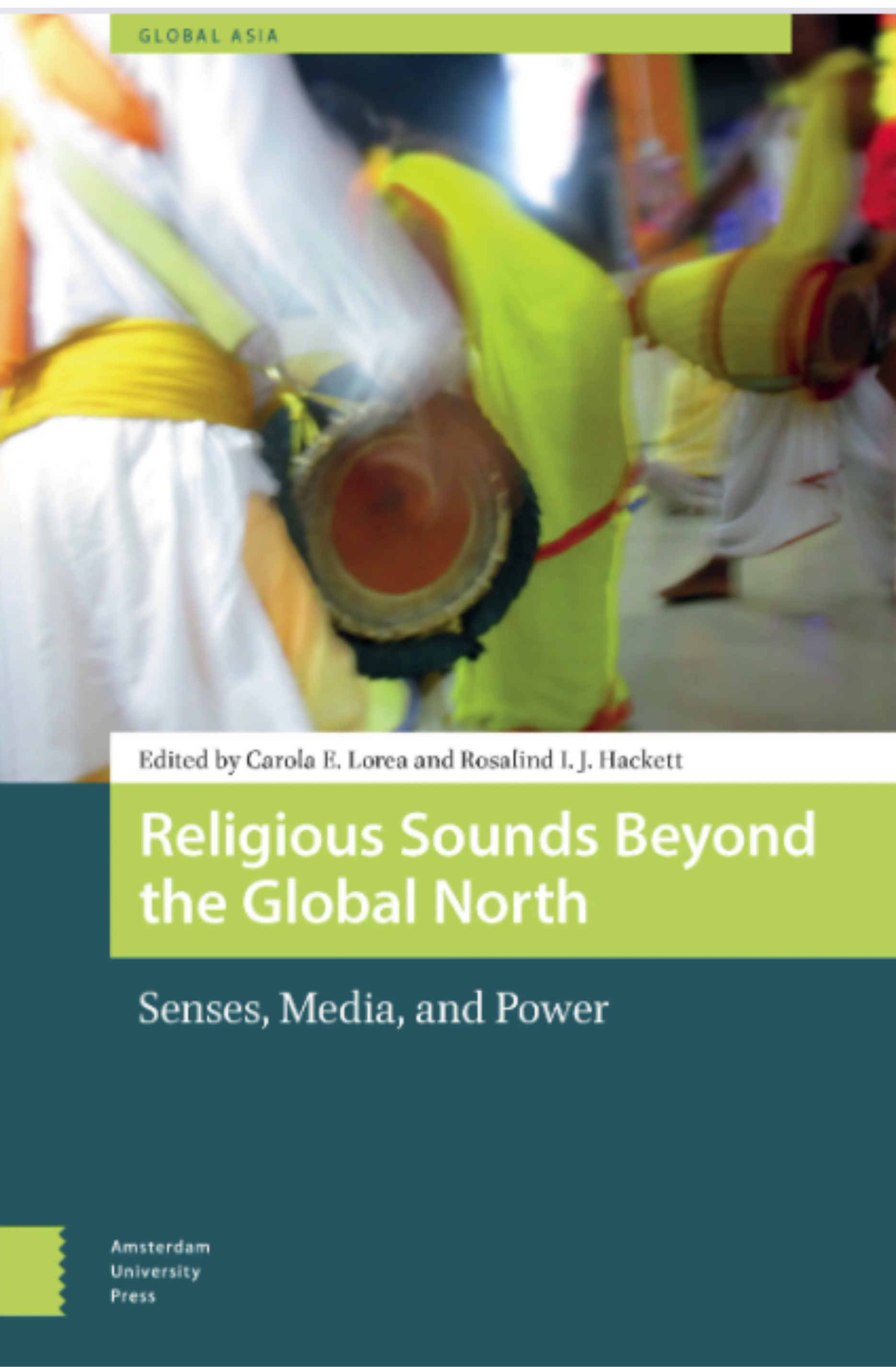
Dr. Carola Lorea is a Junior Professor at the Institute for Religious Studies, Faculty of Philosophy, University of Tübingen (since 2023) and former Senior Research Fellow at NUS's Asia Research Institute (2022-2023). Her work bridges religious studies, cultural anthropology, and digital humanities with a focus on South/Southeast Asian borderlands. PhD in South Asian Studies (2015, La Sapienza University of Rome) 2023 Habilitation Venia Legendi in religious studies and cultural anthropology Research centers on Matua traditions , Baul oral cultures , religion and pandemics , and sensory scholarship . She pioneered the CoronAsur research blog (2020) and leads the MANTRAMS project with ERC Synergy Grant (2023). Key contributions include: Digital Archive of Baul Songs (EAP1247 PI) Theoretical work on bricolage thinking in borderland communities Critical analysis of caste dynamics in post-Partition Andaman settlers Sonic approaches to religious studies Teaching includes courses on Religious Sounds (Tübingen 2024), Religion and South Asian Society , and Bengali language instruction. She founded the Digital Archive 'Songs of the Old Madmen' and co-edits volumes on global religious sound studies.
Pamela Klassen is a Professor and Chair in the Department for the Study of Religion at the University of Toronto, with a cross-appointment in the Department of Anthropology. She has taught at the University of Toronto since 1997 and has been a full professor since 2011. Her academic leadership includes serving as Chair & Graduate Chair of her department (2020-present) and as Vice-Dean, Undergraduate & International in the Faculty of Arts & Science (2016-2020). In 2022-2023, she served as the William Lyon Mackenzie King Visiting Professor of Canadian Studies at Harvard University. Professor Klassen's research focuses on colonialism, treaties, museums, and public memory. Her work spans several interconnected areas: Anthropology of religion, secularism, and mediation (including digital humanities) Christianity, colonialism, and land in North America & Turtle Island Religion, ritual, and public memory (including museum studies) Religion, spirituality, and gender Her scholarship demonstrates a consistent engagement with how religious practices, memories, and institutions intersect with questions of power, land, and identity in settler colonial contexts. Klassen's work often bridges historical and ethnographic approaches, examining both contemporary religious practices and their historical formations. Professor Klassen's publications reveal a trajectory of increasingly focused attention on the intersections of religion, land, and colonialism, with recent work emphasizing Indigenous perspectives and decolonial approaches to religious studies. Her scholarship moves fluidly between theoretical interventions in religious studies and concrete engagements with public memory projects. Scientific Awards & Honors 2022-2023: William Lyon Mackenzie King Visiting Professor of Canadian Studies, Harvard University 2019: Fellow of the Royal Society of Canada 2015-2020: Anneliese Maier Research Award, Alexander von Humboldt Foundation 2015: Northrop Frye Award of Excellence for Integration of Research and Teaching 2014-2017: Distinguished Visiting Professor in Anthropology of Modern Religion, University of Tübingen 2012: American Academy of Religion Award of Excellence for Spirits of Protestantism Professor Klassen has successfully secured significant research funding, including the prestigious Anneliese Maier Research Award which supported her collaborative work with the Kay-Nah-Chi-Wah-Nung Historical Centre. She has supervised numerous graduate students in religious studies and anthropology, with many going on to successful academic careers. Professor Klassen leads several major collaborative projects including Kiinawin Kawindomowin Story Nations, a digital storytelling initiative with the Rainy River First Nations, and Treaty Conversations, an educational resource about treaty relationships in Ontario. These projects exemplify her commitment to community-engaged scholarship that bridges academic research with public education and reconciliation efforts.