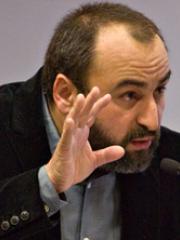
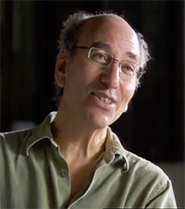
Richard Abrams is a Professor of Psychological & Brain Sciences at Washington University in St. Louis. His research focuses on perception, attention, and motor control, particularly investigating how mental mechanisms underlie eye and limb movements and visual attention. He holds a PhD and MA from the University of Michigan and a BS from Columbia University. His work explores perceptual objects in attention/action, visual stimuli effects, and distractor suppression. Key research themes include attentional capture by motion onset and value-driven stimuli, the role of hand proximity in vision, and embodied cognition principles. His recent studies emphasize attentional suppression mechanisms and spatial task relevance modulation. Abrams’ lab website provides further details on ongoing projects and experimental paradigms. His research has been featured in Ampersand for discoveries like visual distraction’s 'silver lining,' where distractor suppression enhances focus on competing stimuli. Grants and advising details are not explicitly detailed in the provided text.
Brett Amory is a Lecturer at Stanford University's Art Practice department, where he has been active since 2018. He received an MFA from Stanford University in 2020 and a BFA from the Academy of Arts in San Francisco in 2005. Amory’s research focuses on multidisciplinary art practice at the intersection of quotidian and habitual engagements with the everyday world. His work prioritizes visual perception prior to interpretation, using ordinary contexts to explore unfamiliar realms. Recent artworks like Jesus Was a Sailor and Sex Magic Suicide examine themes of identity, memory, and material experimentation through mixed media approaches. His exhibitions include prestigious venues such as the National Portrait Gallery (London), Scottish National Portrait Gallery (Edinburgh), Fort Wayne Museum of Art, and Contemporary Jewish Museum in San Francisco. He held an artist residency at the de Young Museum in 2017.
Dr. Lorenzo Ferrarini is a Lecturer in Visual Anthropology at the University of Manchester, affiliated with the Granada Centre for Visual Anthropology. He holds a PhD in Social Anthropology (2014) and a postgraduate degree from the University of Milan-Bicocca (2008). His research focuses on Mande Africa, particularly Burkina Faso, exploring themes like hunting, ecological perception, sound, and embodiment. He is renowned for his work in documentary film, photography, and sound recording, with notable projects including Kalanda: The Knowledge of the Bush (2015) and Living the Weather (2016). Education: PhD in Social Anthropology with Visual Media, University of Manchester, 2014 Postgraduate Degree, University of Milan-Bicocca, 2008 Research Interests: West African hunter-gatherer knowledge systems Sensory ethnography and sound studies Collaborative filmmaking methodologies Cultural heritage in Southern Italy Awards: ICTM Book Prize (2021) for Sonic Ethnography John Collier Jr. Award for Still Photography (2021) Best Ethnographic Film (2015) Teaching: Modules on Mande Africa and visual anthropology MA course Beyond Observational Cinema Ethnographic documentary short course Labs/Teams: LEAV - Ethnomusicology and Visual Anthropology Lab (University of Milan) Granada Centre for Visual Anthropology Leverhulme Trust project on weather experiences
Professor Jennifer A. Bartz is a faculty member in the Department of Psychology at McGill University, within the Faculty of Science. Her research focuses on the biological and situational factors influencing prosocial behavior, with a particular emphasis on attachment theory, oxytocin mechanisms, and social impairments in psychiatric disorders like autism and borderline personality disorder. She employs interdisciplinary methods from social psychology, neuroscience, and psychopharmacology. Her work explores how neurobiological systems (e.g., opioid and oxytocin pathways) interact with individual differences and environmental contexts to shape empathy, trust, and relationship dynamics. The Bartz Lab investigates topics such as gene-environment interactions in attachment, stress effects on social cognition, and pharmacological interventions for social dysfunction. Notable contributions include studies on oxytocin’s dual role in promoting or hindering cooperation depending on personality traits. Recent research highlights include examining opioid receptor gene (OPRM1) influences on maternal-child attachment, sex-specific effects of stress on empathy, and CD38’s role in communal behaviors. Her findings bridge basic science and clinical applications, aiming to improve treatments for social deficits in psychiatric populations. Collaborations span genetics, neuroimaging, and behavioral experiments, with a focus on translational outcomes. She has published extensively in high-impact journals like Psychological Science , Translational Psychiatry , and Current Directions in Psychological Science , and maintains an active research program supported by grants from Canadian and international funding agencies.
Prof. Dr. Daniel Roth is a Professor of Machine Intelligence in Orthopedics at the TUM School of Medicine and Health at Technical University of Munich (TUM), appointed in September 2023. His research focuses on human-machine interfaces in medicine, including AI, virtual/augmented reality (XR) technologies for surgical assistance systems, disease diagnosis, and rehabilitation. Previously, he held a junior professorship in Human-Centered Computing and Extended Reality at Friedrich-Alexander-Universität Erlangen-Nürnberg (FAU). Education: Bachelor's/Master's in Media and Imaging Technology (TH Köln) PhD in Computer Science (Julius-Maximilians-Universität Würzburg) Research Interests: Roth’s work integrates AI and extended reality to solve healthcare challenges. Key areas include: XR-based surgical training and teleconsultation systems AI-driven analysis of surgical workflows Embodiment in virtual environments for medical applications Accessibility technologies for visually impaired users Publications: Recent work emphasizes immersive medical visualization, telemedicine systems, and user embodiment in VR. Key themes include: XR applications in surgery and patient care 3D teleconsultation for emergency scenarios AI-enhanced anatomy visualization Awards: Best Demo Honorable Mention (IEEE VR, 2021) Best Poster Award (ISMAR, 2020) IEEE TVCG Best Journal Paper (2018) Grants & Teams: Active in interdisciplinary projects at Klinikum rechts der Isar. Collaborates with industry partners on AR/VR healthcare solutions. No formal advisee list is provided, but his work involves multi-disciplinary teams. Labs/Teams: Leads machine intelligence initiatives in TUM’s medical school, focusing on translational research between engineering and clinical practice.
Costica Bradatan is Honorary Research Professor of Philosophy at the University of Queensland and Professor of Humanities in the Honors College at Texas Tech University. He has held faculty positions at Cornell University, University of Notre Dame, University of Wisconsin-Madison, Miami University, Arizona State University, and several European and Asian institutions. His academic work focuses on the intersection of philosophy, history, and literature. Bradatan's research explores fundamental questions in: History of Western philosophical traditions Continental philosophical frameworks Religious experience and secularization Literary philosophy and narrative epistemology Cinematic philosophy and aesthetic representation His publications demonstrate expertise in existential analysis, historical trauma studies, political philosophy, and cultural criticism. Bradatan maintains an active public intellectual profile through contributions to major publications including The New York Times, Washington Post, Times Literary Supplement, and Los Angeles Review of Books, where he serves as Religion/Comparative Studies Editor. He has authored ten books examining philosophical martyrdom, failure, and humility.
Martin Corley is a Professor of Speech, Language, and Cognition and Head of Psychology at the University of Edinburgh's School of Philosophy, Psychology and Language Sciences. He holds a full-time academic position and has been affiliated with the University of Edinburgh since 1995, after completing his PhD at the University of Exeter. His research focuses on speech production and comprehension, particularly the role of disfluencies (e.g., 'um,' 'er,' silent pauses) in communication, employing methods like eye-tracking, EEG, and ultrasound imaging. Corley teaches courses such as the MSc in Univariate Statistics and Methodology using R. He currently supervises PhD students Wei Li (Lead), Esperanza Badaya (Lead), and Nora Wolf (Secondary). His work has led to over 50 publications, including studies on scalar quantifier interpretation, deception detection, and the cognitive processing of non-literal language. He is actively involved in academic recruitment, recently advertising a teaching-focused Lecturer position in Psychology. Corley’s research interests span psycholinguistics, cognitive science, and neurolinguistics, with a focus on real-time language processing and social reasoning. He collaborates internationally and maintains a Google Scholar profile and personal website (martincorley.org). His Erdős number is 4, indicating academic collaboration proximity to Paul Erdős.
Jack Reynolds is Professor of Philosophy at Deakin University, Fellow of the Australian Academy of Humanities, and Member of the ARC College of Experts. His research bridges phenomenology, cognitive science, and psychopathology, with current NHMRC-funded projects on Tourette Syndrome. He leads doctoral supervision across existentialism, embodied cognition, and political philosophy. Recent publications critically engage predictive processing models, temporal experience, and neurodiversity. His work advocates interdisciplinary 'hybrid epistemologies' combining continental philosophy with natural sciences. Reynolds directs research on psychedelic temporality and neurophenomenology, emphasizing first-person accounts in psychopathology. His editorial roles include the Bloomsbury Handbook of Existentialism.
David Kirsh is a Professor in the Department of Cognitive Science at the University of California, San Diego. He holds a D.Phil from Oxford University and completed post-doctoral work at MIT's AI Lab. His research focuses on distributed cognition, embodied cognition, and human-computer interaction, with specific interests in how environments shape cognitive processes and how physical objects become tools for thought. Key research areas include: Theory of Interaction: Examines how people adapt environments to simplify cognitive tasks Environment Design: Develops principles for designing collaborative spaces and smart rooms Information Architecture: Designs large-scale web systems and information spaces Dr. Kirsh directs the Interactive Cognition Lab and co-directs the Arthur C. Clarke Center for Human Imagination. His work bridges cognitive science with practical applications in workplace design, e-learning, and human-computer interaction.
Dr. Carl Bonner-Thompson is an Assistant Professor in Urban (In)justice at Utrecht University's Human Geography and Spatial Planning Department. His work integrates feminist and queer perspectives to explore how vulnerabilities, care, and digital technologies intersect with marginalized urban experiences. Key areas include digital geographies of LGBTQ+ communities, masculinities, and the spatial politics of inequality. Research interests focus on embodied approaches to digital platforms (e.g., Grindr), gender/sexuality geographies, and urban precarity. He examines how technologies mediate identity and spatial practices, particularly for marginalized groups. Recent publications analyze queer social reproduction in precarious cities and feminist spaces for masculinities. Editorial Board: Gender, Place and Culture: Journal of Feminist Geography Teaching courses: Diverse Cities and Urban Inequality, Inclusive Cities? Theories and Concepts Publications span peer-reviewed journals like Gender, Place and Culture and Geoforum , with a focus on digital embodiment, queer temporalities, and urban marginalization. His work bridges qualitative methods and participatory action research to address social justice issues.
Chris Moore is a Professor in the Department of Psychology and Neuroscience at Dalhousie University, where he has held this position since 1988. He earned his Ph.D. in Experimental Psychology from the University of Cambridge (UK) and a B.A. Hons in Natural Sciences from the same institution. His research focuses on developmental and social psychology, particularly the emergence of social understanding and prosocial behavior in early childhood. Key topics include theory of mind, joint attention, moral development, and the influence of social contexts on decision-making. Moore previously held a Canada Research Chair (2003–2005) at the University of Toronto. His work bridges academic and public engagement, with a forthcoming book on guilt (2025) and a third-year social psychology course based on this research. He has published extensively on topics such as intergroup cooperation, autism spectrum disorder and moral reasoning, and cross-cultural sharing behaviors. Scientific Awards: Canada Research Chair (2003–2005) Advising & Grants: Dr. Moore is currently not accepting new research students, but his past work has involved collaborations across disciplines. His research has explored the interplay between developmental psychology and broader societal issues, including fairness, empathy, and cultural influences on moral behavior. Research Themes: His investigations span developmental trajectories of social cognition, the neurological underpinnings of moral judgment, and the transition from early childhood prosocial tendencies to adult social behavior. Recent work emphasizes translational research, connecting laboratory findings to real-world moral dilemmas.
Thecla Schiphorst is Professor and Director of the School of Interactive Arts and Technology at Simon Fraser University. Her research bridges dance, computing, and embodied interaction, focusing on movement knowledge representation, wearable technologies, and aesthetics of interaction. With interdisciplinary MA (Dance and Computing Science) from SFU and PhD from University of Plymouth, she applies somatic models like Laban Movement Analysis to technology design. Schiphorst co-developed Life Forms, the choreographic composition tool used by Merce Cunningham for his creations (1990-2005). Her work expands embodied theory applications in HCI through research in tangible interfaces, natural interaction, and experience design. She teaches courses exploring artificial intelligence applications and ethical challenges.
Professor Beatriz Calvo Merino is a Cognitive Neuroscientist at City St George's, University of London, where she is affiliated with the Department of Psychology in the School of Health Sciences. She serves as Programme Director for the MSc Clinical, Social and Cognitive Neuroscience and the Joint PhD Programme in Psychology and Social Neuroscience with Sapienza University, Italy. Her academic journey includes training at University College London and Universidad Complutense de Madrid, with postdoctoral work at the Institute of Cognitive Neuroscience. Research Interests: Her research explores the neural basis of action observation, sensorimotor expertise, and emotion perception, with a strong emphasis on dance and performing arts. She investigates how sensorimotor experience modulates aesthetic and emotional processing, contributing significantly to the field of neuroaesthetics. Her work integrates EEG, TMS, behavioral, and physiological methods to study embodiment and social cognition. Recent Research Trends: Her recent publications (2020–2025) reflect a sustained focus on embodiment in autism, emotion perception, multisensory integration, and the cognitive neuroscience of dance. She employs ERP and SEP methodologies to dissect somatosensory contributions to social perception, particularly in clinical populations. Her editorial and review work also highlights her leadership in methodological advancements in dance neuroscience. Scientific Awards: Alexander Gottlieb Baumgarten Award (2018) British Association of Cognitive Neuroscience Early Career Award (2019) Grants and Collaborations: Her research has been supported by the ESRC, Leverhulme Trust, Wellcome Trust, Ramon y Cajal Fellowship, and City University funding schemes. She collaborates widely with the dance community, including the Royal Opera House Ballet, Laban Dance Centre, and choreographers such as Wayne McGregor, bridging science and the arts. Labs and Teams: She leads a research group focused on sensorimotor processing and neuroaesthetics within the Department of Psychology, contributing to the Cognitive and Social Neuroscience research theme at City St George's.
Claudia Molitor is a composer, artist, and performer at City St George's, University of London, where she is affiliated with the Department of Music and Sound Arts within the College of Arts and Sciences. Her work bridges music, sound art, video, and fine art, with a strong focus on interdisciplinary and collaborative practices. University: City St George's, University of London School: College of Arts and Sciences Department: Department of Music and Sound Arts Email: claudia.molitor@citystgeorges.ac.uk Her research explores composition as a cultural and technological practice, particularly through the lens of expanded notation, the phenomenology of listening, and collaborative creation. Her artistic inquiry often engages with philosophical concepts such as Timothy Morton’s 'hyperobject,' challenging traditional notions of authorship and the musical work. The breadth of her recent publications and compositions reveals a sustained engagement with themes of perception, environment, embodiment, and materiality. Projects like Sonorama , The Singing Bridge , and MELT demonstrate her interest in site-specific sound installations, acoustic ecology, and the interplay between sound and space. Her work frequently integrates technology, historical reconstruction (e.g., Walking with Partch ), and sensory experience. Notable scientific contributions include peer-reviewed articles such as 'Composition as Hyperobject' and 'Curating experience: Composition as cultural technology – a conversation,' reflecting her theoretical depth and engagement with contemporary art discourse. She has been actively involved in mentoring and collaborative research, though specific student names are not listed. Her artistic projects often involve partnerships with institutions like Tate Britain, NMC Recordings, and the British Library, indicating significant grant and project funding, though specific grants are not detailed. Her creative output is exhibited and performed internationally, including at festivals such as Wien Modern, hcmf//, Spor, BBC Proms, and Sonica, as well as venues like Somerset House and the Onassis Cultural Centre. These engagements suggest leadership in collaborative artistic teams and labs focused on experimental sound and interdisciplinary research.
Erik Nystrom is a composer and academic at City, University of London, specifically affiliated with City St George's, where he conducts research and artistic work in electroacoustic and computer music. His practice centers on multichannel sound, spatial texture, and live interactive performance using algorithmic systems. He previously held a Leverhulme Early Career Fellowship at the University of Birmingham’s BEAST studio, contributing significantly to spatial synthesis and performance aesthetics. Education: PhD in Electroacoustic Music, City University, London (supervised by Denis Smalley) MA in Electroacoustic Music, City University, London (supervised by Denis Smalley) Erik’s research explores the intersection of human and machine agency in improvisation, focusing on post-human cognition, nonconscious processes, and the concept of intra-action. His work integrates machine learning, agent-based systems, and real-time synthesis, particularly through the SuperCollider environment. He investigates how algorithmic systems can co-create with human performers, generating emergent sonic textures through feedback and listening behaviors. Key themes include spatial sound, acousmatic improvisation, and the philosophical underpinnings of technological creativity. His 15 most recent works and publications reveal a strong trend toward algorithmic improvisation, cognitive assemblages, and spatial synthesis. The articles and compositions emphasize machine learning, real-time interaction, and the blurring of composition and performance. Subfields such as post-human attractors, topographic synthesis, and listening agents dominate his recent output, reflecting a deep engagement with both technical innovation and philosophical inquiry in music. Scientific Awards: Leverhulme Early Career Fellowship (2015–2018) The Merciful Company Cordwainer's Prize for Outstanding Achievement on the MA Programme Mercer's Music Prize for Most Outstanding Achievement on the PhD Programme Audience Prize at Metamorphoses International Electroacoustic Composition Competition, Brussels (2010) Erik has advised no formal students listed in the text, but his research has been supported through competitive grants such as the Leverhulme Fellowship. He has presented his work globally at major conferences including ICMC, SMC, NIME, and Beyond Humanism. His compositions have been released by empreintes DIGITALes and performed at institutions like the University of Oxford and De Montfort University. He is actively involved in creative labs and research teams, notably through his work with BEAST (Birmingham Electroacoustic Sound Theatre) and participation in symposia such as the IKO/OSIL Symposium in Graz, Austria. His current practice involves developing interactive systems for live spatial performance, often involving collaborative electroacoustic composition with intelligent agents.