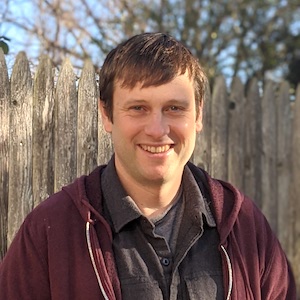
Dr. Shaoyun Yu is a Research Assistant Professor in the Department of Linguistics and Modern Languages at The Chinese University of Hong Kong (CUHK). Previously, he was a postdoctoral fellow at The Hong Kong Polytechnic University's Brain, Language, and Computation Lab. His educational background includes: PhD and MLitt from Nagoya University Bachelor of Engineering from Nanjing University of Science and Technology Dr. Yu's primary research focus is model-brain alignment, which bridges computational models of language and neuroscience to uncover the mechanisms of human language processing and learning. He investigates how neural network-based language models acquire linguistic representations and how these align with brain activity during language tasks. His work spans multiple levels of language analysis, including fundamental syntactic structures, embodied cognition, and higher-level discourse comprehension. To address these questions, he employs an interdisciplinary approach combining computational modeling, neuroimaging techniques, and behavioral experiments.
Frank Francesco Birk serves as Professor of Social Work and Head of the Social Work - People with Disabilities Program at the Faculty of Social Work, Baden-Württemberg Cooperative State University Villingen-Schwenningen. His work bridges social work, sustainability, and embodied practices with a focus on inclusive approaches. His educational background includes a Dr. phil. in Special Education and Rehabilitation Sciences from Universität zu Köln, MA in Motology from Philipps-Universität Marburg, and BA in Childhood Education from Katholische Hochschule NRW. Additional qualifications span systemic counseling, eTeaching, and cultural pedagogy. Birk's research centers on movement-oriented social work, with pioneering work in experiential gerontology, nature-based sports social work, and intergenerational movement concepts. He develops inclusive didactic models like the Adaptive-Inclusive Didactics Model (AiD M ) and focuses on body-positive anti-discrimination approaches addressing ableism, adultism, and body shaming. His scholarship connects climate justice with disability inclusion through the iBNE framework (Inclusive Education for Sustainable Development). His 15 most recent publications reveal strong thematic clustering in: Body politics and anti-discrimination (40% of works) Sustainability-social work intersections (35%) Early childhood movement education (15%) Intergenerational programs (10%) Notable methodological trends include cross-cultural comparisons (Germany-Korea-Japan), intersectoral collaborations, and participatory action research with marginalized communities. Award highlights: Friedrich Ebert Foundation scholarships (2014-2018) Hugo Kükelhaus Society study visits (2021-2022) SPD Generations in Motion Volunteering Award (2016) Birk actively mentors through the Friedrich Ebert Foundation and serves as liaison lecturer for graduate funding. His practice integrates research through roles in the German Society for Social Work's specialist groups on Movement/Sport/Body and Climate Justice. Current projects focus on implementing inclusive sustainability frameworks within social work curricula and developing body-positive interventions for educational settings. He contributes to professional networks including the Hugo Kükelhaus Society, German Children and Youth Foundation's Early Childhood Cultural Education Network, and serves as reviewer for academic publications in his field.
Salu Ylirisku is a Senior Lecturer at the Aalto School of Electrical Engineering, specializing in design pedagogy and transdisciplinary education. Their work bridges engineering education with participatory design methodologies, contributing to UN Sustainable Development Goals related to quality education. Doctoral Degree in Arts and Design, Aalto University (2013) Master's Degree in Engineering and Technology, University of Helsinki (2002) Research interests include participatory design, user-centered design processes, and innovative approaches to engineering education. They have collaborated with Microsoft Research Cambridge and led interdisciplinary projects like the Interactive Lights Installation at Flash Vallisaari. Their publications emphasize transdisciplinary frameworks, co-design methods, and sensory-driven design solutions. Recent publications (2021-2023) focus on reimagining design pedagogy for online environments, language dynamics in design, and multidisciplinary curriculum development. Key subfields span embodied interaction, educational technology, and collaborative design practices.
Juan Antonio Prieto Velasco is a Professor at Pablo de Olavide University , affiliated with the Department of Philology and Translation. His research focuses on Translation Studies , Cognitive Linguistics , and Multimodal Discourse Analysis , with particular emphasis on scientific translation and medical terminology . PhD in Philology and Translation from the University of Granada (2008) Supervised by Dr. Pamela Faber Benítez and Dr. Clara Inés López-Rodríguez Co-authoring with Adrián Fuentes Luque on situated learning and Web 2.0 tools in translator education His recent work examines multimodal representation of specialized knowledge through projects like VARIMED (cognitive motivation in medical translation) and EcoLexicon (multimodal environmental terminological databases). He utilizes corpus analysis tools to study image schemas in medical pain representation and graphic information in technical communication. Publications highlight visualization strategies in terminology, accessible educational materials , and curriculum innovation under the European Higher Education Area (EEES) framework. His teaching methods emphasize authentic project-based learning and collaborative translation scenarios .
Siv B. Lie is an Associate Professor of Ethnomusicology at the University of Maryland's School of Music. She holds affiliate appointments in the Department of Anthropology, School of Theater, Dance, and Performance Studies, and the Center for Global Migration Studies. Her research explores intersections between Romani (Gypsy) cultural production, race, and politics. Key areas include: Ethnoracial identity in French jazz Genocide commemoration practices Language and semiotics in music Cultural commodification dynamics Recent publications examine: Jazz Manouche's role in negotiating ethnoracial belonging Music pedagogy as resistance against color-blind policies Sonic qualia in racialized performance contexts Historical memory through musical commemoration Awarded the 2022 William A. Douglass Prize in Europeanist Anthropology, her work appears in journals like Ethnomusicology , Jazz and Culture , and European History Quarterly . She co-founded NYU's Initiative for Romani Music and curates RomArchive's music section.
Mingyuan Chu is a Lecturer in the School of Psychology at the University of Aberdeen, with research focusing on the interplay between nonverbal behavior and cognitive processes. Affiliated with the School of Psychology within the College of Life Sciences and Medicine, Chu maintains an active research profile utilizing EEG, virtual reality, motion tracking, and eye-tracking methodologies. Chu's educational background includes a PhD in Psychology from the University of Birmingham (2008), an MSc in Neuropsychology from the University of Bristol (2005), and a BSc in Applied Psychology from Nankai University (2004). Professional memberships include being an Editorial Board member for GESTURE, the Experimental Psychology Society, and the International Society for Gesture Studies. Research centers on four key areas: (1) language-action system interactions, (2) gesture facilitation in problem-solving and language processing, (3) pragmatic and emotional processing during communication, and (4) individual differences in gesture-speech integration. Methodologically, the work combines electrophysiological, virtual reality, motion tracking, eye-tracking, and behavioral experimentation approaches. Publication analysis reveals consistent focus on nonverbal communication across 22 publications (2008-2025), with recent work emphasizing cross-cultural gesture differences, subliminal pain perception, and individual differences in gesture production. The research demonstrates strong continuity in gesture-cognition relationships while expanding into cultural and clinical dimensions. EPS Small Grant (2022-2023) Leverhulme Research Project Grant (2020-2022) EPS Symposium Grant (2020) Research Enhancement Scheme, University of Aberdeen (2019) Carnegie Incentive Grant (2018-2019) British Academy Small Grant (2016-2018) Teaching responsibilities include Advanced Psychology A, Methodology A/B, Memory and Language, and Current Topics in Psychological Studies at Levels 2-4. As Senior Personal Tutor and International Exchange Officer, Chu plays significant administrative roles within the School of Psychology. The research program maintains active collaborations across cognitive neuroscience, linguistics, and cross-cultural psychology domains.
Anna Lees is a Professor in the College of Education at the University of Washington, specializing in Learning Sciences & Human Development . A member of the Little Traverse Bay Bands of Odawa Indians, she focuses on Indigenous methodologies, early childhood education, and collaborative teacher preparation models that center Indigenous knowledge systems. Education: Ed.D. in Curriculum & Instruction from Loyola University Chicago M.A. in Elementary Reading & Literacy from Marygrove College B.A. in Elementary Education from Spring Arbor University Her research emphasizes land- and water-based pedagogies , decolonizing educational frameworks , and reciprocal partnerships with Indigenous communities . Recent publications explore curriculum development in tribal early learning programs, postcolonial teacher preparation, and eco-relational educational models. Anna Lees serves as editor for the Tribal College and University Research Journal and has earned recognition from the Spencer Foundation, Journal of Teacher Education , and Journal of Early Childhood Teacher Education .
Dr. Emma Whipday is a Lecturer at the School of English Literature, Language and Linguistics, Newcastle University. Her research focuses on Early Modern drama, particularly the intersections of gender, power, and class, with an emphasis on domestic abuse, sibling relationships, and incest in Jacobean and Elizabethan drama. Her work bridges literary scholarship with performance-based methodologies, including theatrical close reading, verbatim theatre experiments, and creative practice. She co-edits the essay collection Playing and Playgoing: Actor, Audience, Performance in Early Modern England , exploring the phenomenological experience of performers and audiences in historic playhouses. Key Research Themes: Domestic tragedies, true crime narratives, embodied research methods. Collaborations: Lucy Munro (King’s College London), Shakespeare’s Globe practitioners. Digital Humanities: Utilizes archives like the Early Broadside Ballad Archive. Her recent publications and projects highlight Shakespearean studies, sibling dynamics, and innovative approaches to reconstructing historical performance practices. She advocates for interdisciplinary methodologies that integrate subjective scholarly experience.
Valentina Fantasia is an Associate Professor and Associate Senior Lecturer in Cognitive Science at the Department of Philosophy, Lund University, within the Faculty of Humanities and Theology. She holds an office at LUX:B556, Helgonavägen 3, Lund. As a Wallenberg AI-Humanities and Society (WASP-HS) Assistant Professor, she leads significant research projects at the intersection of developmental psychology, social cognition, and human-robot interaction. Her work bridges theoretical philosophy, practical philosophy, and cognitive science, with a strong commitment to feminist and critical perspectives on AI/technoscience. Dr. Fantasia's research focuses on the development of social cognition as a participatory sense-making process in daily routine interactions, examining how socio-cultural practices and contexts (particularly outdoor environments) shape social learning experiences. She employs diverse methodological approaches spanning quantitative, observational, and ethnographic techniques. Her work uniquely combines situated, ecological, and embodied perspectives to investigate human interactions with artificial social agents in everyday settings, challenging traditional approaches to human-technology interaction. Her publication portfolio demonstrates a consistent focus on human-robot interaction, social cognition development, and critical AI studies. Her recent work examines time delays in HRI, pretend play sequences in kindergarten settings, and embodied interactions with social robots. These publications reflect her interdisciplinary approach that bridges psychology, philosophy, and AI ethics, with particular attention to participatory sense-making processes and the socio-cultural dimensions of human-technology interaction. Her notable scientific achievements include: WASP-HS Assistant Professor position supporting her research on social interactions with autonomous systems Crafoord Foundation funding (SEK 1,125,000) for the Movement Matters (MoMa) project Inga och John Hain Stiftelse research award (SEK 400,000) Coordination of the "Girls just want to have Sc(AI)ence" research network Dr. Fantasia actively supervises doctoral students Samantha Stetdler and Gaye Askin, and teaches courses including SASH92: Social AI Through the Looking Glass, PSYD63: Adolescence Psychology, and PSYD61: Psychology and AI. She leads multiple research projects including Movement Matters (MoMa), Social Interactions with Autonomous Systems, and the networking project focused on women's participation in technoscience. Her research aligns with UN Sustainable Development Goals related to quality education, gender equality, and reduced inequalities. She is actively involved in the Cognition & Philosophy VR Lab at Lund University and participates in numerous academic activities including conference organization, peer review, and editorial work. Her research network spans international collaborations focused on human-robot interaction, developmental psychology, and critical AI studies.
Anis Bawarshi is Professor and Thomas L. & Margo G. Wyckoff Endowed Chair in the University of Washington's Department of English, where he previously directed the Program in Writing and Rhetoric for ten years and chaired the English department for six years. His career bridges administrative leadership with foundational scholarship in writing studies. His academic preparation includes: B.A. in English from California State University, Northridge (1992) M.A. in English from the University of Kansas (1995) Ph.D. in English from the University of Kansas (1999) Bawarshi's research centers on rhetorical genre theory as a framework for understanding writing's social functions. He investigates how genres serve as sites of invention, mediate knowledge transfer across contexts, and shape identity formation through writing practices. His work challenges traditional dichotomies in composition studies by emphasizing writing's role in everyday social participation and organization, with recent focus on translingual approaches and anti-racist pedagogy. Analysis of his 15 most recent publications reveals three dominant trajectories: (1) Genre theory's application to public discourse (climate petitions, Israel-Palestine debates), (2) Writing knowledge transfer across disciplines and linguistic boundaries, and (3) Critical examinations of uptake mechanisms in writing ecologies. His scholarship increasingly integrates social justice frameworks with genre studies, particularly through translingual and anti-racist lenses. His honors include: Karen Shabetai Distinguished Undergraduate Teaching Award Bawarshi has mentored 18 doctoral students whose dissertations explore writing transfer, translingualism, and genre theory across diverse contexts. Recent graduates include Hunter Little (2025) on mental disability knowledge, Joseph Anthony Wilson (2023) on transnational writing, and Sumyat Thu (2020) on raciolinguistic ideologies. He contributed to the English department's $150,000 College Spark Washington grant (2017) supporting writing initiatives. He leads the Program in Writing and Rhetoric as its former director, fostering collaborative research on writing pedagogy, and co-edits the Reference Guides to Rhetoric and Composition series, shaping national scholarship in the field through sustained editorial stewardship.
Dr. Changjae Oh is a Lecturer in Multimedia at the School of Electronic Engineering and Computer Science (EECS), Queen Mary University of London (QMUL). He is affiliated with the Centre for Multimodal AI, Centre for Intelligent Sensing, Computer Vision Group, and Advanced Robotics at Queen Mary. His research focuses on embodied agents, combining robotics and computer vision to enable precise environmental perception and action execution. Current research interests include human-to-robot handover, 3D computer vision, robust machine learning, and vision-language models for robot perception. Research group includes PhD students working on topics like adversarial policy learning, vision-language models, and federated learning for malaria prediction. Recent publications emphasize stereo vision, object pose estimation, and transformer-based architectures. Grants include funding from the Royal Society and Korea Institute for Advancement of Technology for projects on generative models and multi-modal foundational models.
Niels Pinkwart is a Professor at Humboldt University of Berlin within the Faculty of Mathematics and Natural Sciences and Institute of Computer Science, serving as Member of the Faculty Council. His research group focuses on Computer Science and Society and Computer Science Didactics, developing AI-driven educational solutions for diverse learning contexts including vocational training, language acquisition, and autism support. His research centers on human-centered AI in education, with emphasis on adaptive learning systems, creativity assessment in programming environments, and inclusive technologies. Recent work examines physical embodiment in educational robots, bias mitigation in assessment algorithms, and neural engagement patterns in VR learning for neurodiverse populations. He investigates how multimodal feedback systems and LLM integration can enhance language learning while maintaining pedagogical alignment. Current publications reveal a strong trend toward practical AI implementation in real-world educational settings, particularly in vocational contexts and global health education. His team develops deployable tools like the AI Campus 2.0 platform and Zirkus Empathico 2.0 game, with increasing focus on ethical AI deployment and cross-cultural applicability as evidenced by Nigeria-based healthcare studies. The research consistently bridges theoretical frameworks with classroom-ready applications. Professor Pinkwart supervises doctoral candidates including Heinrich Mellmann, Kerstin Wagner, Gregor Wrobel, and Michael Piechotta, with disputation dates scheduled through late 2025. His work receives funding through collaborative projects like the Verbundprojekt KI-Campus 2.0, where HU Berlin leads the platform development component. The research group maintains strong industry and international healthcare partnerships, particularly in digital transformation initiatives for resource-constrained environments. He directs development of specialized educational technologies including sound-driven robot quiz systems with fair responder detection and multimodal feedback, alongside serious games for social-emotional development in autism. Current lab activities focus on scaling bias-mitigated exam assembly tools for vocational education while expanding VR-based cognitive engagement metrics across neurodiverse populations.
Prof. Yuk Yiu IP is an Associate Professor at the School of Creative Media, City University of Hong Kong. As an experimental filmmaker, media artist, art educator, and independent curator, his work spans emergent cinema, new media art, and game design, exhibited internationally at festivals like Transmediale, ISEA, and VideoBrasil. He founded the art.ware project to promote new media art in Hong Kong. Research Interests: Experimental Cinema New Media Art Digital Art Media Archaeology Video Art Visual Ethnography Computer Game Design Artistic Trends: His recent works explore hybrid cinema, interactive installations, and game-based art, merging digital and physical spaces. Twelve of his 15 most recent publications focus on these intersections, with keywords like "ludonarrative design," "algorithmic aesthetics," and "post-cinema." Scientific Recognition: Hong Kong Arts Development Awards (2018) PACT Zollverein Residency (2025) ACC Cinema Fund Recipient (2018) Hong Kong Contemporary Art Awards (2012) Collaborations: He works with digital artists like Jeffrey Shaw and Olli Tapio Leino, focusing on virtual environments and critical interactivity. His projects include "Critical Games" and "Value-rich Peer Community Assessment."
Sarah Matthews is an Associate Professor in the School of Information Systems within the Faculty of Creative Industries, Education & Social Justice at Queensland University of Technology (QUT). Her research focuses on the intersection of Human-Computer Interaction and Educational Technology, with particular emphasis on designing technologies for young children's learning experiences. She leads a productive research program that combines theoretical insights with practical design applications. Her research interests span Child-Computer Interaction, Tangible User Interfaces, Computational Thinking Education, and Early Childhood Educational Technology. Dr. Matthews employs participatory design methods, often working directly with children, educators, and speech language pathologists to develop technologies that address real-world educational challenges. Her work demonstrates how physical-digital manipulatives can enhance learning experiences, particularly in early childhood education settings. Analysis of her recent publications reveals a strong focus on designing technologies that support children's collaborative making activities, language development, and computational thinking skills. Her research shows how embodied interaction principles can be applied to create educational tools that are both engaging and pedagogically sound. The work often bridges theoretical HCI concepts with practical educational applications, resulting in tangible design outcomes. Recipient of multiple research grants for child-centered technology design Active participant in major HCI conferences including CHI, TEI, and DIS Collaborates extensively with interdisciplinary teams across education, health, and technology domains Dr. Matthews has successfully supervised numerous graduate students and early-career researchers, with several of her former advisees continuing to collaborate on research projects. Her work has established important design principles for creating technologies that respect children's agency while supporting specific learning goals. Current research directions include exploring how reflexive design practices can address cross-cultural considerations in educational technology.
Chuck Sturtevant is a political anthropologist at American University with a Ph.D. from the University of Aberdeen, an M.Phil. in Ethnographic Documentary from the University of Manchester, and a B.A. from Yale University. His work bridges anthropology, indigenous studies, Latin American studies, and Latina/o studies. Ph.D. in Anthropology, University of Aberdeen M.Phil. in Ethnographic Documentary, University of Manchester B.A. in Anthropology, Yale University Sturtevant’s research focuses on understanding social subordination through ethnographic practice grounded in lived experiences. He emphasizes deep engagement with communities, combining embodied fieldwork with critical theoretical frameworks. His teaching philosophy centers on project-based learning, exemplified by courses like: ANTH-150: Anthropology of Life in the U.S. ANTH-334: Environmental Justice ANTH-225: Language & Human Experience ANTH-439: Culture, History, Power, Place in the Andes/Spanish Empire ANTH-602: The Craft of Anthropology: Methods I