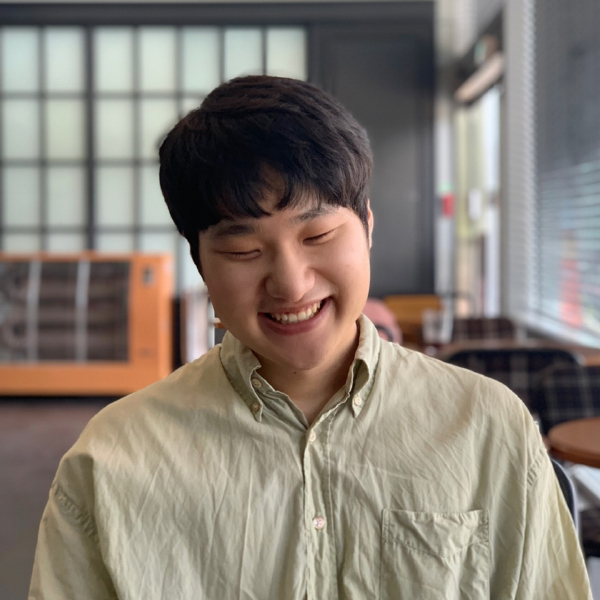
Jinhan Kim is a Postdoctoral Researcher at the Università della Svizzera italiana (USI) in the Faculty of Informatics, working in the TAU lab under Prof. Paolo Tonella. He earned his Ph.D. from KAIST under Prof. Shin Yoo, focusing on software engineering research in mutation testing, fault localization, and deep learning system testing. His work bridges traditional software engineering techniques with AI-driven methodologies, emphasizing AI4SE and SE4AI paradigms. Education: Ph.D. in Software Engineering, KAIST, 2023 Research Interests: Mutation Testing Deep Learning System Testing Autonomous Systems Testing Adversarial Attack Detection Empirical Software Engineering Service and Leadership: Organized SBFT 2026 and DeepTest 2026 (co-located with ICSE 2026) Program Committee Member for ASE, ISSTA, Mutation, and DeMeSSAI Board of Distinguished Reviewers for TOSEM (2024–2025) Labs and Teams: Active contributor to the TAU Lab at USI, focusing on advanced software testing and AI integration.
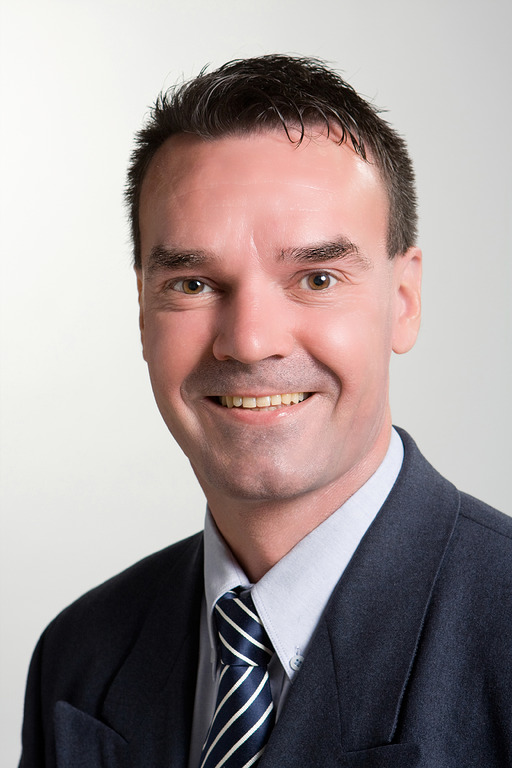
Nabil Aouf is a Professor of Robotics and Autonomous Systems in the Department of Electrical and Electronic Engineering at City, University of London, a position he has held since January 2019. Previously, from 2006 to 2018, he was Professor of Autonomous Systems at Cranfield University’s Defence and Security campus, where he also served as Head of the System and Autonomy Group and Research Lead of the Centre of Electronic Warfare, Information and Cyber. He earned his PhD in Electrical Engineering from McGill University Faculty of Engineering between 1999 and 2002. His research focuses on Robotics, Autonomous Systems, UAV Navigation, Computer Vision, and Fault-Tolerant Control . Key areas include visual odometry, sensor fusion (vision/IMU, RGBD, thermal-visible), robust control for UAVs, fault diagnosis in inertial systems, 3D perception, and autonomous landing. His work integrates theoretical control methods with real-time implementation in aerospace and defense contexts. His recent publications reflect a strong emphasis on robust optimization, multispectral vision, and real-time autonomous navigation. Trends indicate a focus on enhancing autonomy under uncertainty—through illumination-invariant stereo matching, L∞ optimization, and robust feature matching—particularly for UAVs operating in challenging environments. Nabil Aouf has collaborated extensively with researchers such as M. Richardson, O. Araar, T. Mouats, and M. Boulekchour across numerous projects in UAV control, sensor fusion, and autonomy. While no scientific awards are listed in the provided text, his leadership roles and sustained publication record in high-impact journals and conferences underscore his academic contributions. He has supervised or collaborated with several advisees including S.H. Almutairi, L. Chermak, I. Vitanov, and D. Nam, contributing to both theoretical developments and practical implementations in autonomous systems. His work has applications in aerospace, defense, planetary exploration, and critical infrastructure inspection.
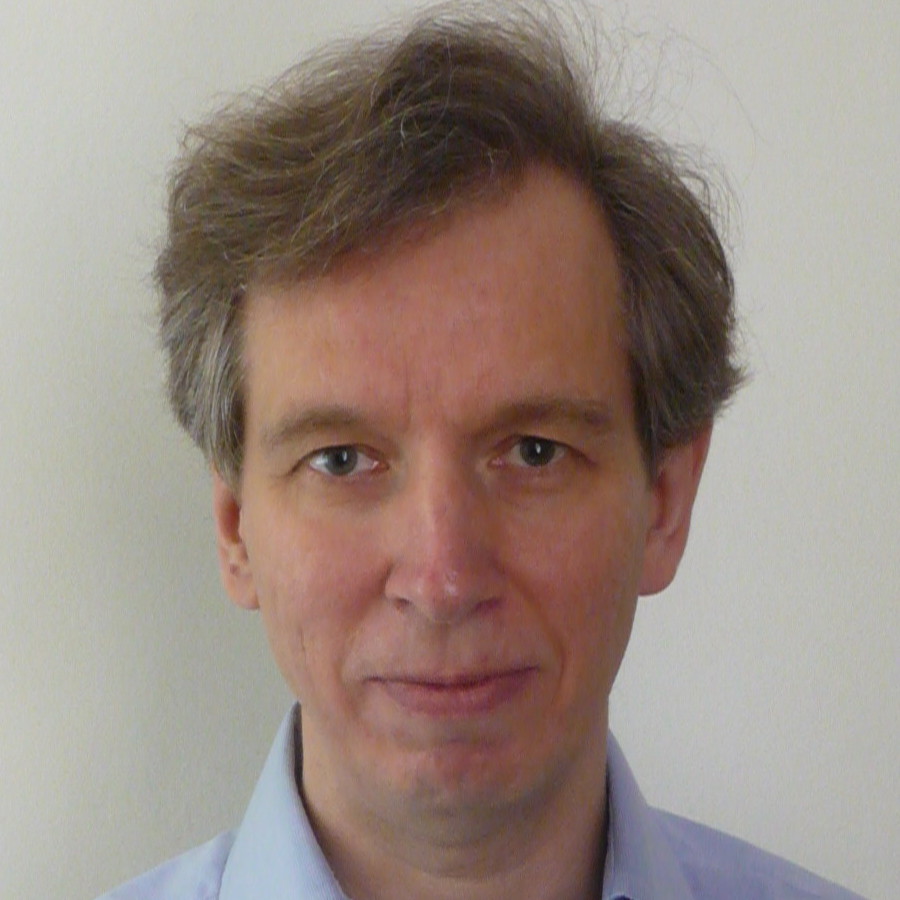
Valeriy Vyatkin is a Professor at the Department of Electrical Engineering and Automation, Aalto University. His research focuses on advancing industrial automation, control systems, and their integration with emerging technologies like machine learning and digital twins. He specializes in standards such as IEC 61499, addressing interoperability, formal verification, and performance optimization in distributed automation systems. Key research interests include: Physics-informed machine learning for industrial processes (e.g., steel rolling, reservoir engineering) Formal methods for control system validation and safety-critical applications Development of adaptive automation frameworks for Industry 5.0 challenges, including human-robot collaboration and energy systems Interoperability between legacy and modern industrial standards (OPAS, OPC UA) Recent work emphasizes real-time simulation, FPGA-based control prototyping, and AI-driven solutions for energy efficiency and sustainability in manufacturing, horticulture, and process industries. Publications span topics like robotic walker design, probabilistic model checking, and decentralized learning management systems. He collaborates on EU and industry-funded projects, focusing on digital twin implementation, edge computing, and virtual commissioning. His team develops tools for automated code generation, system migration, and anomaly detection in complex industrial settings.
Miguel Ángel Sotelo Vázquez is a full Professor at the University of Alcalá, leading the INVETT Research Group (Intelligent Vehicles and Traffic Technologies). He holds the Department of Automatic Control and specializes in autonomous systems, particularly in path planning, sensor fusion, and human-vehicle interaction. His research integrates machine learning, robotics, and control theory to address challenges in intelligent transportation systems. He earned his Ph.D. in 2001 with a thesis on autonomous vehicle navigation in partially known environments. His work emphasizes real-world deployment, explainable AI, and safety-critical systems. Recent projects focus on lane change prediction, pedestrian behavior modeling, and cybersecurity for autonomous systems. Key contributions include neuro-symbolic frameworks for decision-making, real-time multi-physics field reconstruction, and cross-cultural studies of pedestrian interactions. He collaborates internationally on urban mobility resilience and hydrogen refueling infrastructure. Research Highlights : Development of knowledge graph-based prediction architectures Experimental validation of human-vehicle interaction in VR environments Creation of the SCOUT trajectory prediction framework
Zelmina Lubovac is a Senior Lecturer in BioInformatics at the School of Bioscience, University of Skövde. She serves as both a Course Coordinator for multiple undergraduate and graduate courses in bioinformatics and a Programme Coordinator for Master's level programs. Her academic work focuses on the intersection of computational methods and biological applications, particularly in disease analysis and biomarker discovery. Dr. Lubovac's research spans several key areas in bioinformatics and systems biology: Disease module identification in complex biological networks Multi-omics integration (genomics, proteomics, metabolomics) for biomarker discovery Machine learning applications in RNA-seq and other high-throughput biological data Development of bioinformatics software tools for network analysis miRNA analysis in cancer and neurological disorders Her recent publications (2022-2024) demonstrate a strong focus on applying computational approaches to understand disease mechanisms, particularly in pancreatic cancer and multiple sclerosis. She has developed several widely-used bioinformatics tools including MODalyseR, MODifieR, and TFTenricher that facilitate disease module analysis and gene network interpretation. Her work often involves collaborative research with clinical teams to translate computational findings into potential diagnostic applications. Dr. Lubovac has been involved in significant research projects including: BIO-AID (Biomedical AI-driven data analytics): Oct 2020 - Sep 2024 Systems Biology DMDPipe: Mar 2018 - Feb 2021 She actively contributes to both undergraduate and graduate education at the University of Skövde, coordinating multiple courses and programs in bioinformatics and bioscience, with a clear emphasis on preparing students for careers at the intersection of biology and computational science.
Prof. Dr.-Ing. Jürgen Teich is a full Professor and Chair for Hardware-Software Co-Design at the Department of Computer Science, Friedrich Alexander University Erlangen-Nuremberg (FAU). He serves as Head of Department Computer Science and Vice Dean of the Technical Faculty since August 2024, and has been Speaker of the FAU Research Center Embedded System Initiative (FAU ESI) since 2023. His educational background includes: Diploma degree in Electrical Engineering, University of Kaiserslautern (1989) Dr.-Ing. degree in Electrical Engineering, University of Saarland (1993) Habilitation (PD Dr.-Ing.) entitled "Synthesis and Optimization of Digital Hardware/Software Systems" (1996) Prof. Teich's research focuses on Embedded Systems , Invasive Computing , Hardware-Software Co-Design , and Reconfigurable Computing . His work spans from theoretical foundations to practical implementations, with particular emphasis on resource-constrained systems, many-core architectures, and energy-efficient computing. He has pioneered research in invasive computing paradigms that enable more efficient use of many-core processors by allowing applications to dynamically claim resources. His recent publications reveal a strong trend toward energy-efficient AI deployment on embedded devices , security of embedded systems , and novel memory technologies . There's a clear focus on practical implementations of machine learning on microcontrollers (TinyML), hardware acceleration for data processing, and innovative approaches to power management in self-powered systems. Among his notable scientific awards are: IEEE Fellow (since 2018) Member of Academia Europaea, Section Informatics (since 2011) Member of the National Academy of Science and Engineering (acatech) (since 2018) Member of the German Society of Humboldtians (since 2021) Prof. Teich has been Principal Investigator for numerous DFG-funded projects including SFB/Transregio 89 "Invasive Computing" (2010-2022), SFB 694, and multiple priority programs. He has coordinated large collaborative research efforts across Germany and internationally, with significant funding from DFG and other sources. His research group has produced influential work in embedded systems design and co-design methodologies. He leads the Hardware-Software Co-Design research group at FAU, which focuses on innovative approaches to embedded system design, invasive computing architectures, and efficient implementation of machine learning on resource-constrained devices. The group maintains strong collaborations with industry partners including Intel, Xilinx, and automotive companies.
Jari Huikku serves as Associate Professor and Head of the Department of Accounting at Aalto University School of Business, where he has been a faculty member since 2003. His academic journey includes a Doctoral degree in Accounting from Helsinki School of Economics (2009) and a Master's in Finance from Turku School of Economics. Prior to academia, Huikku accumulated 15 years of industry experience in multinational corporations such as Wärtsilä and Sanitec, holding financial director and general management positions. His educational qualifications are: Doctor of Philosophy (Accounting), Helsinki School of Economics, 2009 Master of Science (Finance), Turku School of Economics and Business Administration, University of Turku Huikku's research centers on Strategic Investment Decision-Making, Management Control Systems, Goodwill, and Post-Completion Auditing. He examines how organizations implement risk analysis in investment decisions and the motivational factors influencing management control practices. His work also extends to accounting education, investigating student learning approaches and gender differences in performance. This dual focus bridges theoretical accounting research with practical educational applications. Analysis of his recent publications (2021-2025) reveals consistent exploration of strategic investment processes, budgetary control systems, and accounting education methodologies. His work increasingly incorporates organizational theory perspectives like strong structuration theory and embedded agency, while maintaining empirical grounding through case studies and qualitative analysis. The interdisciplinary nature of his research connects accounting with organizational behavior, healthcare management, and educational psychology. Huikku has earned multiple scholarly accolades: Best Paper Award, Management Accounting Research Group Conference (2024) Best Paper Award, Massey University (2022) Huugo Raninen Prize, Finnish Journal of Business Economics (2008) Best Qualitative Paper Award, Massey University (2012) Best Paper Award, Massey University (2012) Best Paper Award, Lincoln University (2015) In his academic role, Huikku supervises master's and doctoral students in strategic investment and management control topics. He directs a capstone management consultancy course where students address real corporate challenges. His international scholarly engagements include visiting positions at Copenhagen Business School, University of Auckland, and Stockholm School of Economics, reflecting his global research network. While specific grant details aren't provided, his extensive publication record in top journals indicates sustained research funding. Though not explicitly stated, Huikku's leadership as Department Head and collaborative research across institutions suggests active involvement in academic communities and research groups focused on accounting and management control systems.
Maurizio Martina is a Full Professor at the Department of Electronics and Telecommunications (DET) of Politecnico di Torino. He is a member of the Interdepartmental Center PEIC - Power Electronics Innovation Center and serves as an Associate Editor for the IEEE Transactions on Circuits and Systems I (2018-2023). His research focuses include: Digital circuits and signal processing Machine learning hardware architectures RISC-V extensions and post-quantum cryptography VLSI design for edge computing and IoT Recent publications emphasize cryptographic hardware implementations (CHIMERA, Keccak co-processors), RISC-V integration methodologies, and privacy-preserving neural network frameworks. His work spans VLSI architectures for video processing, bio-inspired electronics, and error correcting codes, with applications in cybersecurity, robotics, and biomedical systems. Scientific Recognition : Premio Nazionale Innovazione (2013) Premio dei Premi (2014) He supervises 12 PhD students across cycles 35-40 in Electrical, Electronics and Communications Engineering, including: Valeria Piscopo (2024-in progress) Alessandra Dolmeta (2022-in progress) Luigi Giuffrida (2022-in progress) Walid Walid (2019-2023) As part of the VLSILAB Group , his research explores hardware accelerators for machine learning, post-quantum cryptography on RISC-V, and bio-inspired embedded systems. Teaching activities include courses on Integrated Systems Architecture and Hardware & Wireless Security at Politecnico di Torino and Università di Pavia.
Mikael Johansson is a Professor at Kungliga Tekniska Högskolan (KTH), specializing in Control Technology . He teaches and coordinates courses such as Distributed Optimization (FEL3311) and various advanced-level degree projects in computer science, electrical engineering, and systems engineering. His research spans Control Systems , Machine Learning , and Optimization , with a focus on asynchronous algorithms, federated learning, and applications in energy systems and construction. His work includes 15 recent publications on topics like neural networks, distributed optimization, and battery technology. Notable areas of contribution are in asynchronous learning, federated learning with privacy constraints, and quasi-Newton methods for optimization. His research bridges theoretical advancements with practical applications in urban design, healthcare, and autonomous systems.
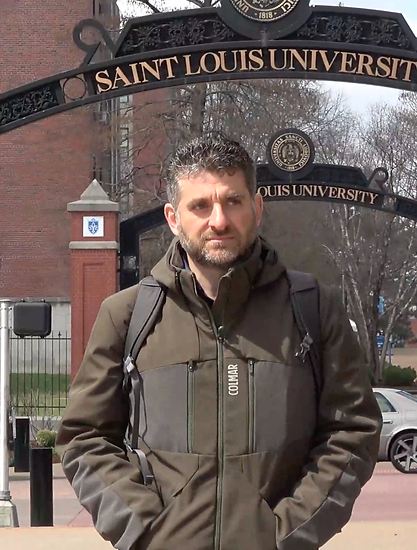
Flavio Esposito is an Associate Professor in the Computer Science Department at Saint Louis University's School of Engineering. He also serves as a Research Institute Fellow and CS Graduate Coordinator. His office is located in ISE 234D at 3450 Lindell Blvd, St. Louis, MO. Dr. Esposito's research focuses on cyber-physical systems and networked systems, including network virtualization, network management, Software-Defined Networks (SDN), network architectures, and wireless networks. He has a strong interest in interdisciplinary applications of these technologies to medicine and agriculture. His work bridges theoretical networking concepts with practical implementations. His publications span key areas in networking research, with recent work focusing on congestion control algorithms, virtual network embedding, recursive network architectures, and edge computing applications. The research trends show a progression from foundational networking protocols toward more sophisticated applications integrating machine learning, edge computing, and cyber-physical systems, with increasing emphasis on real-world applications in diverse domains. Outstanding Graduate Mentoring Faculty Award from the School of Engineering (2021) Finalist for the Undergraduate Mentoring Award in the College of Arts and Sciences Multiple NSF research awards including US Ignite, ICE-T, CNS Core, CC* Integration, CPS:TTP, and ModernCARE projects COMCAST Innovation Fund Award (January 2020) International Center for Responsible Gaming (ICRG) Award ($150K) Dr. Esposito actively mentors PhD and MS students, with numerous current and past students who have gone on to positions at major tech companies, universities, and research institutions. He has been a Principal Investigator on multiple significant research grants totaling millions of dollars. He co-founded Spaghetti Code Labs with former PhD student Alessandro Sangiorgi, whose cybersecurity educational app WeeNet has achieved 5.7M+ downloads. He leads several research labs and teams focused on cyber-physical systems, with current openings for PhD students, visiting researchers, and postdocs working on networks, learning, edge computing, and applications to medicine and agriculture. His teams have developed numerous software systems including Software Mutant, Neighborhood Method Prototype, VINEA, ProtoRINA, and BUtorrent.
Natalia Díaz Rodríguez is an Assistant Professor of Artificial Intelligence at ENSTA ParisTech, where she works in the Computer Science and Systems Engineering department within the Autonomous Systems and Robotics Lab (U2IS). She is also affiliated with the INRIA Flowers team, focusing on developmental robotics. Her research spans deep learning, reinforcement learning, continual learning, and symbolic AI, with applications in explainable AI, computer vision, and robotics for social good. Her academic background includes a double PhD in Artificial Intelligence from Abo Akademi University and the University of Granada, alongside MSc degrees in Soft Computing and Computer Engineering from the University of Granada. She contributes to interdisciplinary AI, particularly in robotics, ethics, and healthcare applications, and co-organizes workshops on continual learning. Double PhD in Artificial Intelligence (2015), Abo Akademi University and University of Granada Doctoral diploma on Innovation and Entrepreneurship (2017), EIT Digital MSc in Soft Computing and Intelligent Systems (2012), University of Granada MSc in Computer Engineering (2010), University of Granada Her recent publications focus on trustworthy AI, including bias identification, counterfactual explanations, and continual learning strategies, reflecting her commitment to ethical and robust AI systems. She also explores AI applications in structural engineering, climate visualization, and financial risk assessment, emphasizing practical deployment and interpretability.
Hazel Doughty is an Assistant Professor at Leiden University in the Leiden Institute for Advanced Computer Science (LIACS) . Previously, she was a postdoctoral researcher at the University of Amsterdam and completed her PhD at the University of Bristol under the supervision of Prof. Dima Damen and Prof. Walterio Mayol-Cuevas. Research Interests: Video Understanding, Skill Determination, Self-Supervised Learning, Temporal Attention, and Adverb Recognition in Instructional Videos. Grants: Co-Applicant for DUAL-IMPACT (NWO High Tech Systems and Materials, €1.25M); Main Applicant for NWO Veni grant ( From What to How: Perceiving Subtle Differences in Videos , €280K). Scientific Recognition: Veni Grant (2023) ELLIS Member (2022) Outstanding Reviewer for CVPR, NeurIPS, ECCV, and ACCV Academic Service: Organizer of workshops at CVPR 2024, BMVC 2023, NCCV 2024, and NeurIPS'21. Area Chair for CVPR, ICCV, NeurIPS, AAAI. Teaching: Courses on Computer Vision (BSc) and Advances in Deep Learning (MSc) at Leiden University. Her work focuses on fine-grained video understanding with weak or incomplete supervision , including adverb analysis, self-supervised learning, and egocentric vision datasets. Her recent publications analyze benchmark sensitivity, motion-focused video-language models, and generalized category discovery. Collaborations include the HAVA lab at the University of Amsterdam and the EPIC-Kitchens-100 project. She leads the DUAL-IMPACT initiative on high-tech systems and co-organized workshops at CVPR, ICCV, and NeurIPS. Her students include PhD candidates Luc Sträter and Kaiting Liu , and former advisees like Fida Mohammad Thoker (now postdoc at KAUST) and Piyush Bagad (now PhD at Oxford).
Bernhard von Stengel is a Professor of Mathematics at the Department of Mathematics, London School of Economics and Political Science . His work bridges game theory, computational complexity , and mathematical economics , with a focus on equilibrium computation and algorithmic aspects. Developed Game Theory Explorer , open-source software for analyzing strategic and extensive-form games. Organized major workshops like What is Strategic Information? (2024) and Game Theory and Machine Learning (2023). Authored the textbook Game Theory Basics (Cambridge University Press, 2021). His research spans zero-sum games , correlated equilibrium , inspection games , and communication over noisy channels . Recent work includes characterizing the Condorcet dimension of metric spaces (2024) and stable-set bounds for Nash equilibria in bimatrix games. He has collaborated with institutions like the Game Theory Society and contributed to public discourse via talks on algorithms' societal impact (2021) and game theory in politics (2020).
Yanan Guo is an Assistant Professor in the Department of Computer Science at the University of Rochester, specializing in computer architecture and cybersecurity. Her research focuses on GPU memory safety, side-channel attacks, quantum computing, and machine learning security, with recent projects exploring cross-VM side-channel vulnerabilities and quantum circuit simulation. PhD, University of Pittsburgh (advisor: Dr. Jun Yang) Her work bridges hardware and software security, addressing issues like GPU cache eviction mechanisms, memory corruption attacks, and adversarial threats in neural networks. She actively collaborates with researchers like Youtao Zhang and Jun Yang, with publications in top venues including USENIX Security, MICRO, and ICML. Recent publications highlight trends in GPU security (memory safety, side-channel attacks), quantum computing optimizations, and adversarial machine learning. Her team’s projects have received recognition such as the NSF OAC grant for AI workflow security and features in IEEE Transactions on Computers. Featured Paper in IEEE Transactions on Computers (02/22 issue) Shortlisted for Top Picks in Hardware and Embedded Security 2023 Dr. Guo mentors PhD students and offers weekly office hours for undergraduates, emphasizing career paths, graduate applications, and research guidance. She serves on program committees for conferences like USENIX Security and ASPLOS.
Angshuman Karmakar is an Assistant Professor in the Department of Computer Science and Engineering at the Indian Institute of Technology Kanpur, India. His research focuses primarily on Post-Quantum Cryptography (PQC) and Computation On Encrypted Data (COED), which are critical areas in modern cryptography and computer security. Dr. Karmakar received his Ph.D. from Katholieke Universiteit Leuven (KU Leuven), Belgium, where he worked under Prof. Ingrid Verbauwhede in the COSIC research group. He was awarded the prestigious Erasmus Mundus fellowship for his doctoral studies and the FWO (Fonds voor Wetenschappelijk Onderzoek – Vlaanderen) fellowship for his post-doctoral research at KU Leuven. His research spans theoretical development of cryptographic schemes, implementation algorithms, side-channel and fault attack analysis, and countermeasure development. Dr. Karmakar has established extensive international collaborations with researchers and engineers worldwide to address complex challenges in cryptography and security. Recent publications demonstrate a strong focus on practical post-quantum cryptographic implementations with particular attention to hardware and software efficiency, side-channel resistance, and novel attack methodologies. His work bridges theoretical cryptography with real-world implementation challenges across diverse platforms from IoT devices to high-performance computing systems. Erasmus Mundus fellowship for doctoral studies at KU Leuven FWO fellowship for post-doctoral study at KU Leuven Google India Research Award for work on practical transition to post-quantum cryptography Dr. Karmakar is actively seeking graduate students and postdoctoral researchers to collaborate on cutting-edge research in cryptography and computer security. His work has significant implications for securing future communication systems against quantum computing threats, with applications spanning blockchain technologies, IoT security, and general-purpose computing systems.