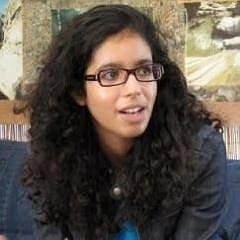
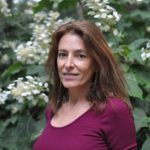
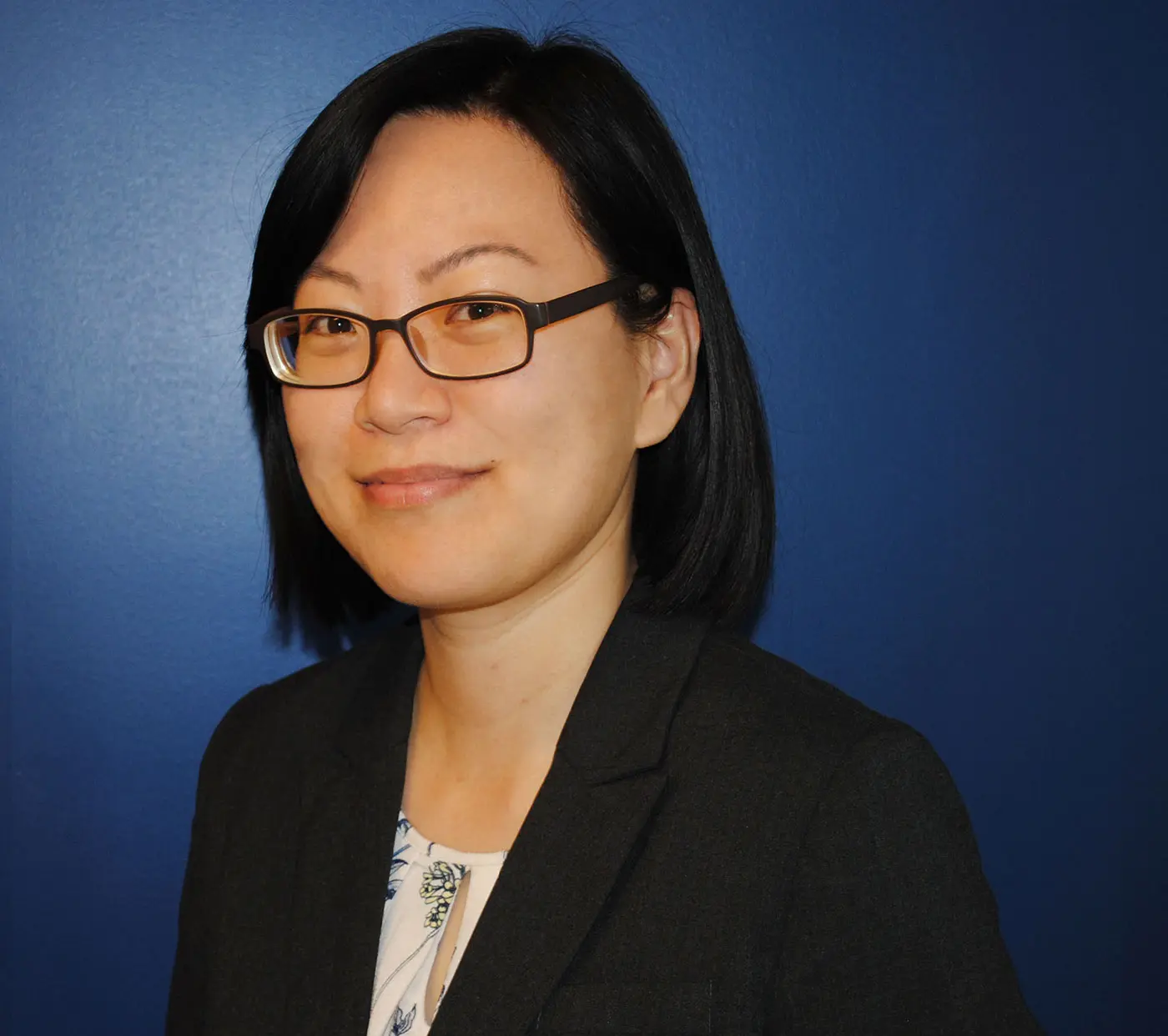
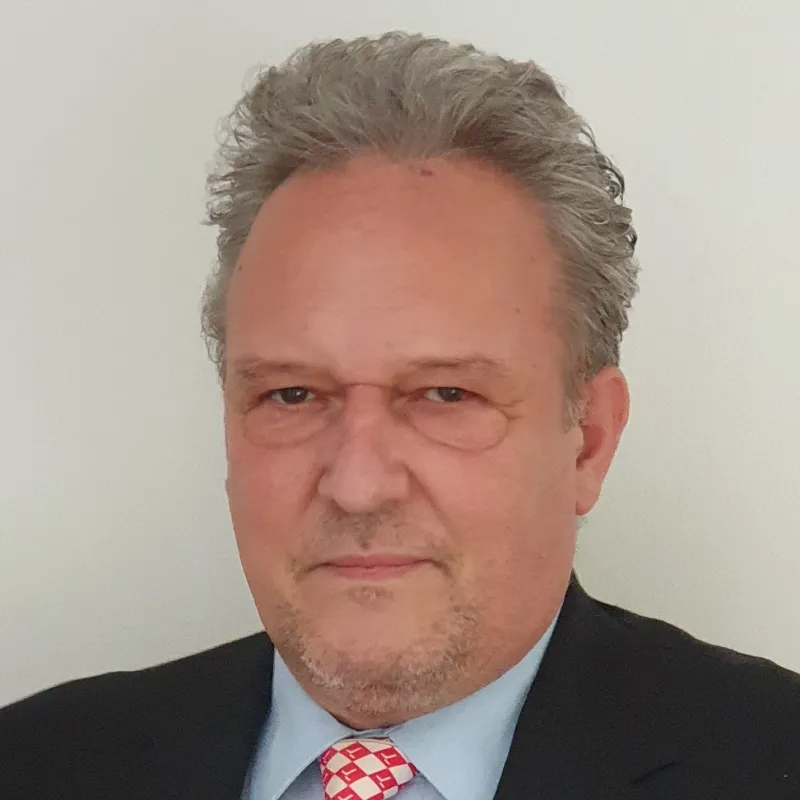
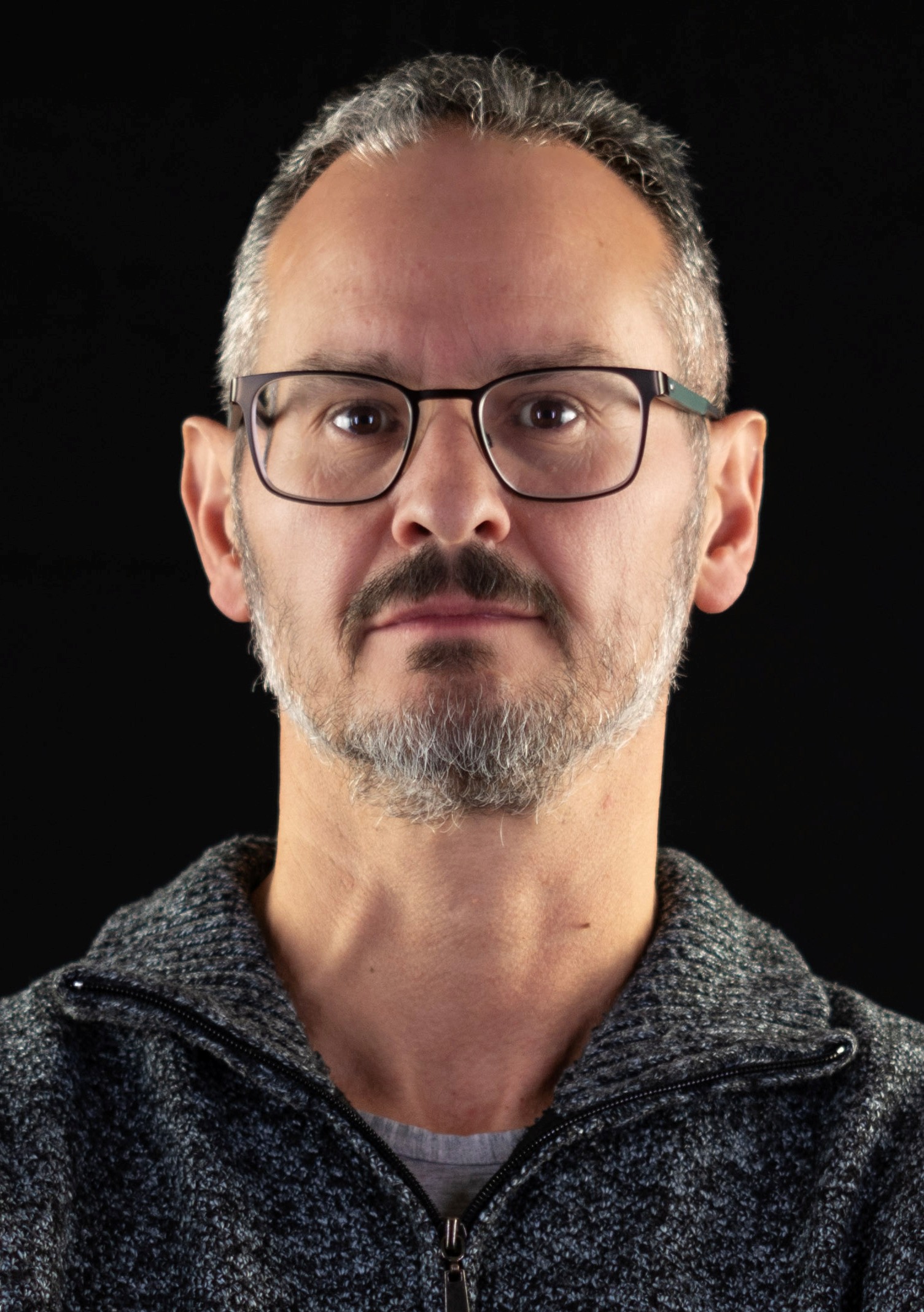
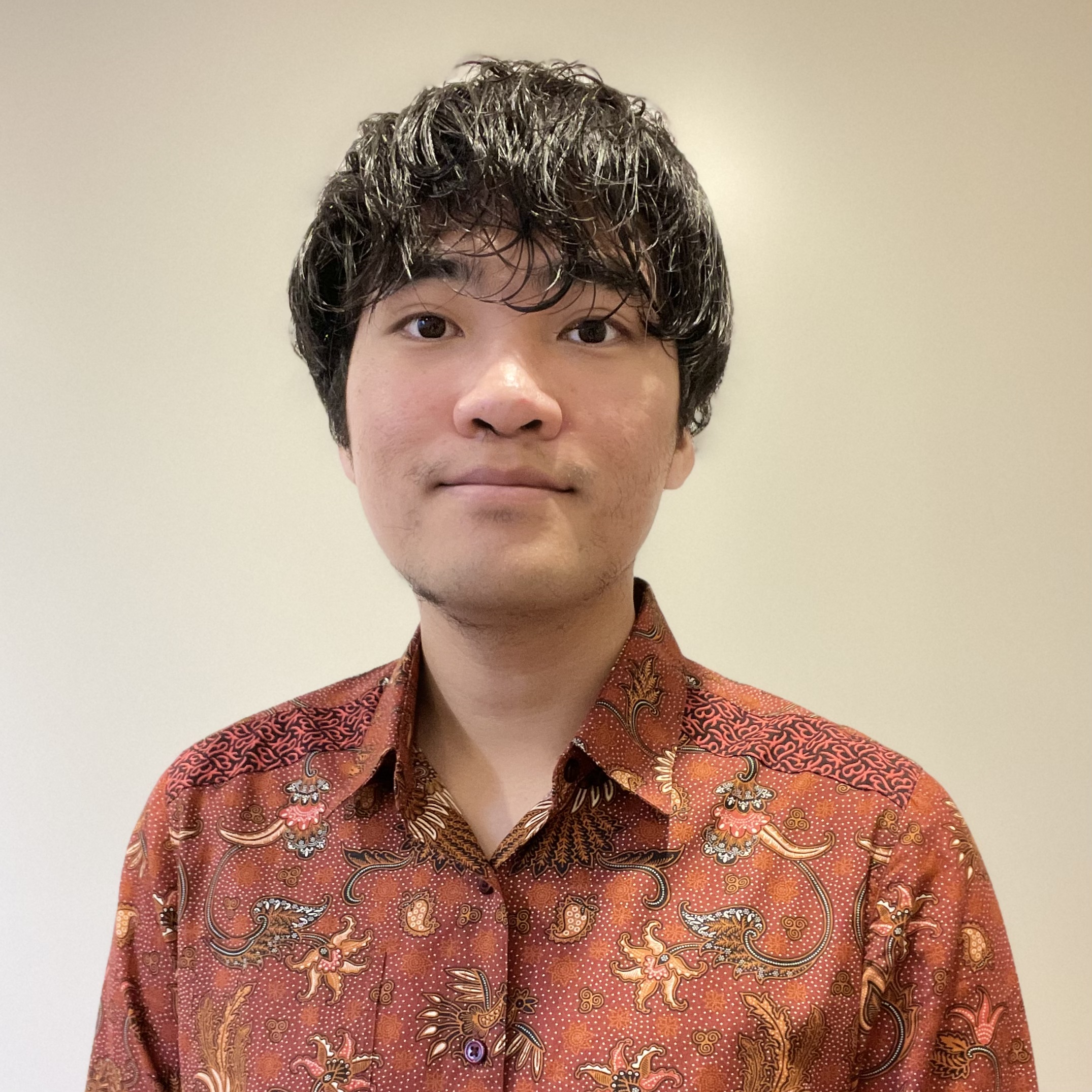
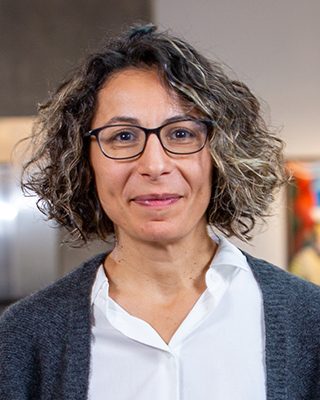
Dr. Mary Lauren Benton is an Assistant Professor in the Department of Computer Science at Baylor University's College of Engineering and Computer Science. She holds a Ph.D. and M.S. in Biomedical Informatics from Vanderbilt University (2020, 2018) and a B.S.I. in Bioinformatics from Baylor University (2015). Education: Ph.D. (Vanderbilt, 2020), M.S. (Vanderbilt, 2018), B.S.I. (Baylor, 2015) Her research focuses on computational biology and gene regulation, particularly how DNA sequences influence genome function and human disease risk through integrated datasets. Recent work explores enhancer-gene interactions, epigenetic mechanisms, and the application of graph neural networks to genomic problems. Selected publications highlight interdisciplinary trends across genomics (e.g., Cis-regulatory landscapes , CTCF motif accessibility ) and computer science (e.g., Dynamic graph attention , Node classification ).
Nada Amin is an Assistant Professor of Computer Science at Harvard University's John A. Paulson School of Engineering and Applied Sciences (SEAS), where she leads the metareflection lab . Her research combines programming languages (PL) and artificial intelligence (AI), focusing on neuro-symbolic systems that are correct by construction, with applications in program synthesis, verification, and precision medicine. Harvard John A. Paulson School of Engineering and Applied Sciences (2019–Present) University Lecturer in Programming Languages at University of Cambridge (2017–2019) Doctoral and postdoctoral work at EPFL (2011–2017) Her research spans three core themes: Safer : Type systems and formal verification (Coq, Dafny, Frama-C) Faster : Multi-stage programming and interpreter collapsing techniques Easier : Neuro-symbolic AI for program manipulation and biological reasoning Key publications include: 2025: Modular Imperative with LLMs (LMPL), Multi-stage Relational Programming (PLDI) 2024: Persimmon for extensible variant types (OOPSLA) 2023: LURK for recursive knowledge (ICFP), Dolorem language growth pattern (ECOOP) Scientific honors include: Teaching Assistant Team Award (EPFL, 2015) Michigan Cambridge Research Initiative Grant (2018) ArsDigita Prize (1999) She has served on program committees for GPCE (co-chair), ICFP, PLDI, and organized workshops in metaprogramming and logic programming. Her teaching portfolio includes graduate courses on neurosymbolic programming, program synthesis, and advanced PL theory.
Rachel Golub is a Professor of Immunology at Université Paris Diderot (Paris 7) and heads the Lymphopoiesis Unit at the Institut Pasteur, INSERM U668, in Paris. Her research centres on innate lymphoid cell (ILC) biology, Notch signalling, and their implications in liver cancer, inflammation, and tissue regeneration. Education: PhD in Developmental Biology, Université Paris 6, 1997 HDR (Habilitation), Université Paris 7, 2007 Research Interests: Professor Golub investigates how innate lymphoid cells develop from fetal and adult progenitors, the molecular circuits controlled by the Notch pathway that balance ILC subsets, and how these pathways influence hepatocellular carcinoma progression and inflammatory diseases. Her team combines single-cell approaches, genetically modified models, and human tissue analysis to dissect microenvironmental cues shaping ILC fate. Publication Trends: Between 2020 and 2024 her work has appeared in leading journals such as Cell Reports , Immunity , EMBO Journal , Blood , and Frontiers in Immunology . The studies cluster around four main axes: (1) ILC differentiation and ontogeny, (2) Notch-mediated regulation of ILC and NK cells, (3) tumour-immune interactions in hepatocellular carcinoma, and (4) inflammatory modulation of lymphocyte development in metabolic and wound-healing contexts. Scientific Awards & Recognition: Prime d’Excellence Scientifique (PES) 2012-2016 PEDR Award 2007-2011 INSERM CSS7 third-rank distinction 2014 Fellowships from Ligue Nationale contre le Cancer, MRC Canada, Ontario Cancer Institute, and French Ministry of Research Grants & Advising: She has served as coordinator or collaborator on >15 major grants (ANR, ARC, INCA, FACCTS, USPC, ABM, PTR), funding post-doctoral and doctoral students as well as collaborative international projects. She regularly sits on HDR and PhD juries, ANR panels, and foreign funding agencies (DFG). Labs & Teams: Her Lymphopoiesis Unit at Institut Pasteur hosts the “ILC Development and Inflammation” group, currently comprising PhD students, engineers, and technicians. The team is embedded within the wider Pasteur Immunology Department and benefits from institute-level platforms such as Single-Cell Biomarkers and advanced imaging core facilities.
Pei-Chun Kao is an Associate Professor at the Zuckerberg College of Health Sciences, University of Massachusetts Lowell, serving as Scientific Lead in Robot-Assisted Movement Biomechanics at the NERVE Center and UMOVE Center Researcher. Her work bridges engineering and clinical rehabilitation through biomechanics research focused on human locomotion. Her educational background includes a Ph.D. in Biomechanics (2009) and M.S. in Movement Science (2003) from the University of Michigan, B.S. in Physical Therapy (2000) from National Taiwan University, and postdoctoral training at the University of Delaware (2014). Ph.D. Biomechanics, University of Michigan (2009) M.S. Movement Science, University of Michigan (2003) B.S. Physical Therapy, National Taiwan University (2000) Dr. Kao's research centers on gait rehabilitation, biomechanics, and neuromuscular control of human walking , with specific expertise in assistive technology, cognitive-motor interference, and fall prevention. She develops wearable devices for biofeedback and rehabilitation interventions through rigorous analysis of motor adaptation principles. Her experimental approaches combine robotic exoskeletons, functional electrical stimulation (FES), and biomechanical modeling to address movement disorders across diverse populations. Analysis of her 15 most recent publications reveals a concentrated research trajectory in exoskeleton-human interaction dynamics (60% of articles), with significant focus on cognitive-motor interference during walking (25%) and military/occupational ergonomics (15%). Key trends include the development of adaptive control algorithms for rehabilitation robotics, quantification of fatigue effects on gait stability, and characterization of dual-task performance in aging populations. Her scientific recognition includes: President's Poster Award (2011) - American Society of Biomechanics Multiple University of Michigan graduate fellowships (2005-2009) Dr. Kao directs substantial research programs funded by NSF, U.S. Army, and ASTM International, with current projects including Fabric-embedded Dynamic Sensing for Adaptive Exoskeleton Assistance (NSF #1955979) and multiple SLIMMER exoskeleton initiatives for soldier performance enhancement. Her collaborative network spans engineering, military research, and clinical rehabilitation teams. As Scientific Lead at the NERVE Center, she directs research on robot-assisted movement biomechanics, leveraging the center's advanced motion capture and virtual reality facilities to develop next-generation rehabilitation technologies with direct clinical applications.
Pavel Zemcik serves as a Visiting Professor in the Computational Engineering department at the School of Engineering Sciences, Lappeenranta University of Technology (LUT). His academic work spans multiple domains within computer science with a strong emphasis on visual computing technologies. Dr. Zemcik's research interests encompass a broad spectrum of visual computing disciplines, including computer graphics, computer vision, machine vision, and image processing. His work particularly focuses on light field rendering techniques, 3D display technologies, and advanced wavelet transform applications. He has made significant contributions to GPU acceleration methods for real-time visual processing and has explored applications in both industrial settings and medical imaging. Analysis of his recent publication trends reveals a concentrated research trajectory in light field technologies and 3D display systems over the past five years. His work demonstrates increasing sophistication in handling visual quality metrics, focus management, and compression techniques specifically tailored for 3D displays. The research shows strong interdisciplinary connections between computer graphics, signal processing, and human perception studies. His scholarly output demonstrates consistent productivity across multiple high-impact venues in computer graphics and computer vision. While specific grant information isn't detailed in the available materials, his publication pattern suggests sustained research funding supporting his work in visual computing technologies.
Luigi Pomante is a tenured Assistant Professor at the University of L'Aquila, Italy, where he is affiliated with the Department of Engineering and Information Science and Mathematics (DISIM) and the DEWS Center of Excellence. His academic career focuses on research and teaching in embedded systems and hardware-software co-design methodologies. Dr. Pomante's primary research interest is Electronic System-Level Hardware-Software Co-Design of heterogeneous parallel dedicated systems. He is the principal developer of the HEPSYCODE framework, which provides comprehensive methodologies and tools for system-level design space exploration. His work addresses critical challenges in embedded systems development, including handling functional and non-functional requirements, heterogeneous architectures, and mixed-criticality constraints. He has published extensively in journals like IEEE Transactions on Computers and IET Computers & Digital Techniques, as well as at major international conferences. Analysis of Dr. Pomante's publication record reveals a consistent research trajectory focused on hardware-software co-design methodologies, with increasing attention to real-time constraints and mixed-criticality systems in more recent work. His publications demonstrate expertise in design space exploration techniques, system modeling using CSP-like approaches, and the development of metrics for evaluating hardware-software partitioning solutions. The HEPSYCODE framework represents his most significant contribution to the field. Dr. Pomante actively supervises student projects and theses related to electronic design automation and embedded systems. He has contributed to European research projects including EMC2 (Embedded Multi-Core systems for Mixed Criticality applications), where he was responsible for deliverables related to design methodologies, implementation approaches, and validation frameworks. His work has practical applications in aerospace and other safety-critical domains through collaborations with industry partners. He leads the HEPSYCODE research group at DEWS, which focuses on developing methodologies and tools for hardware-software co-design of heterogeneous parallel dedicated systems. The group's current work includes extensions for real-time and mixed-criticality systems, frameworks for embedded system monitoring, and techniques for handling approximate computing and energy/power constraints within the design space exploration process.
Paola Bonacini is an Associate Professor in Geometry at the Department of Mathematics and Computer Science, University of Catania, since June 2021. She teaches Linear Algebra and Geometry for undergraduate engineering programs, including Electronics Engineering and Industrial Engineering. Research Interests: Focus on Discrete Mathematics (Design Theory, Voloshin colorings, Blocking Sets) and Algebraic Geometry (Lifting Problems in Codimension 2, Zero-dimensional Schemes in P1 × P1, Hilbert Functions). Scientific Awards: None explicitly mentioned. Collaborations: Active in the MATITA project and tutoring/academic orientation initiatives at the University of Catania. Publications: Over 15 recent works in journals like Discrete Mathematics , Mathematics , and Applied Mathematical Sciences , emphasizing Design Theory and Algebraic Geometry. Notable trends include equitable colorings, balancing/blocking sets for hypergraphs, and minimal free resolutions of zero-dimensional schemes. Contact: Office hours on Mondays and Fridays from 15:00–16:00 (or by appointment via Microsoft Teams). Office: Studio 41, III blocco, Viale A. Doria, 6, Catania.
Caterina VIOLA is a theoretical computer scientist and mathematician currently serving as a Fixed-term Assistant Professor (RTDA) at the Department of Mathematics and Computer Science of the University of Catania . Her research focuses on quantum algorithms for text processing, computational complexity, and constraint satisfaction problems within the National Center for HPC, Big Data and Quantum Computing project. Education: Master's in Mathematics from University of Catania (Erasmus exchange at Universidad de Granada); Doctor rerum naturalium in Mathematics from Technische Universitaet Dresden Her research bridges theoretical computer science and mathematics, with a particular emphasis on approximation algorithms, inapproximability, and numerical semigroups. She has previously worked at the University of Oxford as a post-doctoral researcher and tutor, followed by a post-doc position at Charles University in Prague. Recent publications highlight her work on linear programming relaxations for constraint satisfaction problems, submodular functions, and numerical semigroup analysis. Current teaching responsibilities include Laboratorio di Algoritmi for Computer Science undergraduates and Informatica for Communication Sciences and Languages students. As a Senior Associate Post-doctoral Researcher at Oxford and post-doc at Charles University in Prague, she has developed expertise in mathematical foundations of computational optimization and their practical implementations.
Jean-Luc Danger is a Professor at TELECOM Paris where he currently heads the Digital Electronic Systems Research Group. He is affiliated with the Secure and Safe Hardware (SSH) Research Team within the Information Processing and Communication Laboratory (LTCI). With a career spanning over three decades in academia after 12 years in industrial research at PHILIPS and NOKIA, Professor Danger has established himself as a leading expert in hardware security and cryptographic implementations. Professor Danger received his degree in electrical engineering from SUPELEC in 1981 before embarking on his industrial career. His academic journey began in 1993 when he joined TELECOM Paris, where he has since made significant contributions to the field of hardware security. His educational background in electrical engineering provided the foundation for his later specialization in secure hardware design and analysis. Professor Danger's research primarily focuses on embedded systems security , physically unclonable functions (PUFs) , side-channel attacks and countermeasures , and fault injection techniques . His work bridges the gap between theoretical cryptography and practical hardware implementations, addressing critical security challenges in modern computing systems. His research has evolved from foundational work on cryptographic algorithms to more recent investigations into hardware Trojans, aging effects on security primitives, and automotive security systems. Professor Danger has been particularly influential in developing methodologies for analyzing and protecting against electromagnetic fault injection attacks and side-channel information leakage. His extensive publication record demonstrates a consistent focus on hardware security challenges, with recent work showing increased attention to automotive security systems, machine learning applications for intrusion detection, and reliability issues in security primitives affected by aging and process variations. The trajectory of his research shows a natural progression from pure cryptographic implementations to more holistic security approaches that consider the entire hardware stack and its vulnerabilities. Through his leadership of the Secure and Safe Hardware research team, Professor Danger has fostered a collaborative environment that bridges theoretical security research with practical hardware implementation challenges. His work has contributed significantly to the development of standardized methodologies for evaluating hardware security and has influenced both academic research and industry practices in secure hardware design.
Gökberk Cinbiş is an Associate Professor at the Department of Computer Engineering, Middle East Technical University (METU), leading research in data-efficient machine learning with minimal supervision. His work spans zero-shot, few-shot, weakly-supervised, and self-supervised learning, with applications in vision-language integration and large-scale image/video understanding. PhD from Université de Grenoble (2014) M.A. from Boston University (2010) His research focuses on generative models, meta-learning, and robust computer vision systems. Recent work explores sparsity in parameter-efficient fine-tuning, token embeddings for vocabulary extension, and domain-aware LoRA components for personalization. Notable trends in his publications include: Advancements in zero-shot and few-shot learning Applications in remote sensing (SAR2ET for evapotranspiration) Meta-learning and hybrid augmentation techniques Sign language recognition and industrial vision benchmarks Scientific honors include: Science Academy - Young Scientist Award (BAGEP 2024) Google Faculty Research Award (2019-2020) Best PhD Thesis Prize by AFRIF (2015) Alper Atalay Best Student Paper Award (2016) He has supervised MSc students Gencer Sumbul and Berkan Demirel, secured TUBITAK grants on meta-learning and any-shot learning, and organized workshops on industrial inspection at CVPR and ECCV. Cinbiş leads METU ImageLab, focusing on computer vision and machine learning.
Professor Johannes Neugebauer serves as University Professor of Theoretical Organic Chemistry at the Institute of Organic Chemistry, University of Münster, where he leads a research group dedicated to developing quantum chemical methodologies for complex chemical environments including solvents, proteins, molecular crystals, and surfaces. His work bridges theoretical predictions with experimental validation through extensive collaborations across multiple disciplines. Neugebauer's research focuses on advanced computational approaches including subsystem-based Density Functional Theory (DFT) and density-based embedding methods for both ground and excited electronic states. His group has pioneered subsystem methods for excited states and linear-response properties, developed theoretical frameworks for light-driven processes, and created multi-level electron-correlation techniques. Key contributions include the Subsystem Quantum Chemistry Program SERENITY and insights into light-enabled deracemization of cyclopropanes through collaborations with experimental groups. The research spans applications in molecular spectroscopy, catalytic processes, and materials science, with emphasis on selective and efficient calculations for complex systems. Analysis of recent publications reveals a consistent trajectory toward increasingly sophisticated computational models for chemical reactivity, with growing emphasis on interdisciplinary applications in photochemistry, surface science, and catalytic reaction mechanisms. The work demonstrates strong integration between method development and practical applications across organic chemistry, materials science, and spectroscopy. Professor Neugebauer has mentored numerous doctoral students who have established careers at prestigious institutions worldwide, including ETH Zurich, University of Basel, Rutgers University, and University of Bristol. His research is supported by major collaborative initiatives including CRC 1459 "Intelligent Matter", IRTG 2678 Münster-Nagoya on Functional Pi-Systems, CMTC (Center for Multiscale Theory and Computation), SoN (Center for Soft Nanoscience), and BACCARA (International Graduate School of Battery Chemistry). The Neugebauer group operates within the University of Münster's Institute of Organic Chemistry while maintaining active participation in multiple interdisciplinary research centers. The group collaborates extensively with experimental chemistry teams both within Münster and internationally, particularly in the areas of photocatalysis, surface chemistry, and molecular modeling. Current research directions include advancing quantum chemical methods for machine learning integration and developing computational tools for next-generation materials design.
Dr Kevin Limanta is a Researcher at the School of Mathematics and Statistics , UNSW Sydney. He teaches MATH1131 Mathematics 1A (Calculus) and MATH1231 Mathematics 1B (Algebra), serving as course convenor for both. His research spans advanced mathematical domains including: Combinatorics (super Catalan numbers, Dyck paths) Algebraic Structures (finite field Fourier summation) Harmonic Analysis (spherical harmonics on S³) Functional Analysis (Morrey space properties) Dr Limanta's publications focus on algebraic interpretations of Catalan numbers, permutation-generated Dyck path mappings, and harmonic function theory on mathematical spaces. His work intersects pure mathematics with computational applications.
Prof. Dmitri Zaitsev is an Associate Professor at the School of Mathematics, Trinity College Dublin, specializing in Several Complex Variables, Real and Complex Algebraic Geometry, and Symplectic Geometry. His work bridges theoretical analysis with geometric applications. Research Interests: Several Complex Variables, CR Geometry, Subelliptic Operators, and Normal Forms. Key Contributions: Studies in CR hypersurfaces, boundary systems, and geometric approaches to differential equations.
Sara Mostafavi is an Associate Professor at the Paul Allen School of Computer Science & Engineering at the University of Washington (UW), with a focus on Artificial Intelligence and Computational Biology. She is currently on leave (2024-2025) leading the Computational Biology and Translation Organization at Genentech. Mostafavi previously held faculty roles at the University of British Columbia (UBC) and the Vector Institute, where she received prestigious Canada Research Chair (CRC II) and Canada CIFAR Chair in AI (CIFAR-AI) awards. PhD in Computer Science, University of Toronto (2011) Postdoctoral Researcher, Stanford University Her research develops machine learning and statistical methods to study gene regulation, disease susceptibility, and molecular networks, with applications in immunology, genetics, and neuroscience. She has pioneered sequence-to-function models for understanding gene regulatory grammar and predicting disease mechanisms. Her publications highlight expertise in genomic data integration, interpretable AI, and cross-modality learning. Recent work includes analyzing mosaic chromosome loss in aging microglia, immune cell differentiation, and Alzheimer's disease networks. Scientific Awards Canada Research Chair (CRC II) in Computational Biology (2015–2020) Canada CIFAR Chair in Artificial Intelligence (CIFAR-AI) Co-founder of the Machine Learning for Computational Biology (MLCB) Conference Mostafavi has mentored numerous PhD and Master’s students, including Xinming Tu, Anna Spiro, Gherman Novakovsky (PhD 2023), and Elijah Willie (MSc 2020). Her lab collaborates with institutions like the Immunological Genome (ImmGen) Consortium and Canadian Institute for Advanced Research (CIFAR). She leads the Mostafavi Lab, which specializes in combining association evidence across genomics datasets and modeling biological pathways to disentangle spurious correlations. Her team develops tools like CEWAS, AI-TAC, and Brain xQTL web server.
Francesca Arici is an Assistant Professor in Mathematics at Leiden University's Mathematical Institute, affiliated with the Analysis and Dynamical Systems section and the Noncommutative Geometry (NCG) group. Her research is supported by an NWO Vidi grant titled The Noncommutative Geometry of Quantum Symmetric Domains . She holds a PhD in Mathematical Physics from SISSA, Trieste (2015), supervised by Giovanni Landi, and has held postdoctoral positions at Radboud University Nijmegen and the Max Planck Institute for Mathematics in the Sciences. Education : PhD in Mathematical Physics (SISSA, 2011-2015); Master and Bachelor in Mathematics (UCSC Brescia, 2005-2011) Research Interests : Noncommutative Geometry, Operator Algebras, Quantum Algebra, K-Theory, and applications to mathematical physics. Her work explores C*-algebras, quantum symmetric domains, and topological insulators. Teaching : Currently teaches Elementary Practical Mathematics for Non-Mathematicians in Leiden's Minor Quantitative Biology and co-runs the Master Colloquium. Past courses include Fourier Analysis, C*-algebras, and Mathematical Reasoning. Scientific Awards : NWO Vidi Grant (2024) for Noncommutative Geometry of Quantum Symmetric Domains Students : Supervises PhD candidates Jack Thelin af Ekenstam and Yufan Ge, and has mentored numerous Master's and Bachelor's students across Leiden and Radboud University. Community Service : Member of the European Mathematical Society's Outreach and Engagement Committee (2021-present), Young Academy Leiden (2022-present), and former Deputy Member of the Standing Committee of European Women in Mathematics (2013-2018).