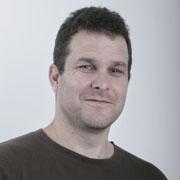
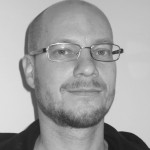
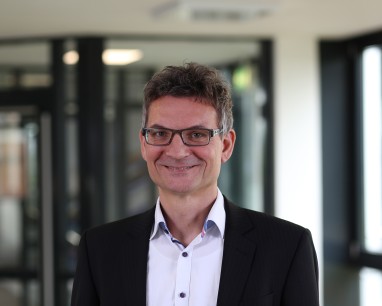
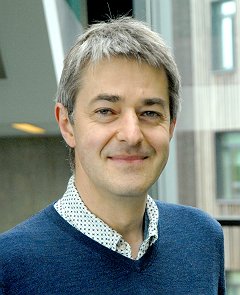
Prof. Niv Buchbinder is a faculty member in the Department of Statistics and Operations Research at the School of Mathematical Sciences, Tel Aviv University. His research centers on algorithmic solutions for combinatorial optimization in offline and online contexts, with significant contributions to primal-dual methodologies and algorithmic game theory. His academic background includes a Ph.D. in Computer Science from the Technion (2008) under Prof. Seffi Naor and an M.Sc. in Computer Science from the Technion (2003) under Prof. Erez Petrank. Key research areas encompass Combinatorial Optimization, Online Algorithms, Algorithmic Game Theory, Primal-Dual Methods, and Submodular Optimization, focusing on competitive analysis for problems like set cover, ad-auctions, and caching. Recent publications (2012-2015) reveal a concentrated effort in submodular optimization and online decision-making, with applications in advertising, resource allocation, and machine learning. These works consistently employ primal-dual frameworks to achieve strong competitive ratios in adversarial settings. Scientific recognition includes: Best Paper Award at ESA 2007 for “Online Primal-Dual Algorithms for Maximizing Ad-Auctions Revenue” Best Paper Award at FOCS 2011 for “A Polylogarithmic Competitive Algorithm for the k-Server Problem” No information is available regarding student advising or research grants. Similarly, details about laboratory facilities, research teams, or future projects are not provided in the source materials.
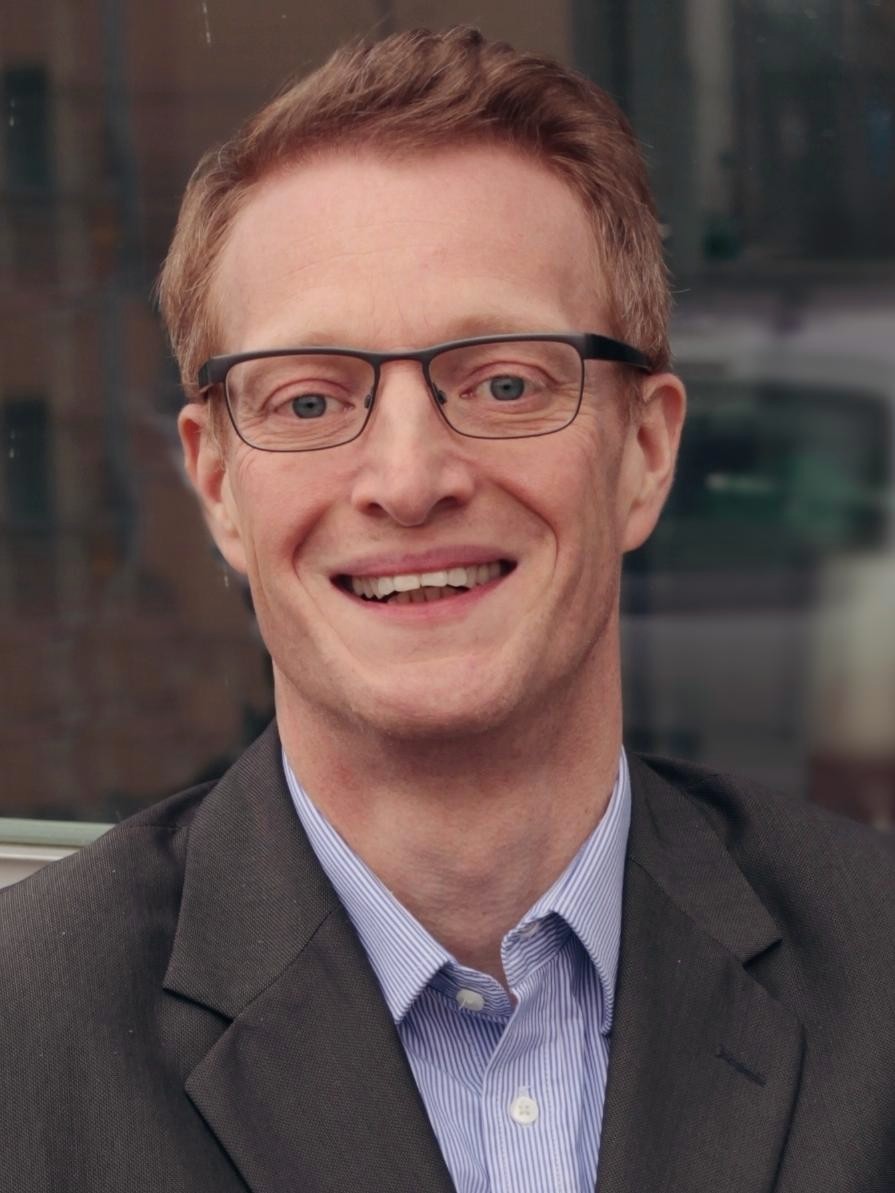
Dr. Bernhard Ruthensteiner is a senior scientist and head of the Section Evertebrata varia at the Munich State Zoological Collection (ZSM), part of the Bavarian State Natural Science Collections (SNSB). His work bridges taxonomy, comparative anatomy, and advanced imaging techniques. Institution : Munich State Zoological Collection Role : Head of Section Evertebrata varia Research Focus : Invertebrate anatomy, 3D imaging, and evolutionary morphology His research spans diverse invertebrate groups, including Gastropoda , Cnidaria , and Echinodermata , with a strong emphasis on microCT and SEM analysis for resolving taxonomic and developmental questions. Recent publications highlight his contributions to understanding biomineralization processes , protonephridial system development , and evolutionary adaptations in terrestrial and marine species . Key collaborations involve institutions in Germany, Austria, and Madagascar, with a focus on integrative taxonomy and digital specimen curation. His work also includes pioneering 3D model embedding in PDF publications and correlative microscopy for studying symbiotic relationships.
Leif-Alexander Garbe serves as Professor and Vice Rector for Research, Knowledge Transfer and International Relations at Neubrandenburg University of Applied Sciences, where he is embedded in the Department of Agricultural Economics and Food Science. His dual role positions him at the intersection of academic leadership and specialized research, driving institutional strategy while maintaining direct engagement with scientific inquiry in applied agricultural and food systems. Garbe's research focuses intensely on Applied Chemistry within Food and Bioproduct Technology, specializing in the molecular analysis and transformation of biogenic raw materials. His work investigates sustainable chemical processes for converting biological resources into functional food components and industrial bioproducts, addressing critical challenges in resource efficiency and circular bioeconomy. This research bridges fundamental chemical principles with practical applications in agricultural value chains. As Vice Rector, Garbe oversees university-wide research initiatives, international partnerships, and knowledge transfer mechanisms that connect academic work with regional industry needs. His administrative leadership prioritizes translating scientific discoveries into tangible economic and social benefits for Northeast Germany's agricultural sector.
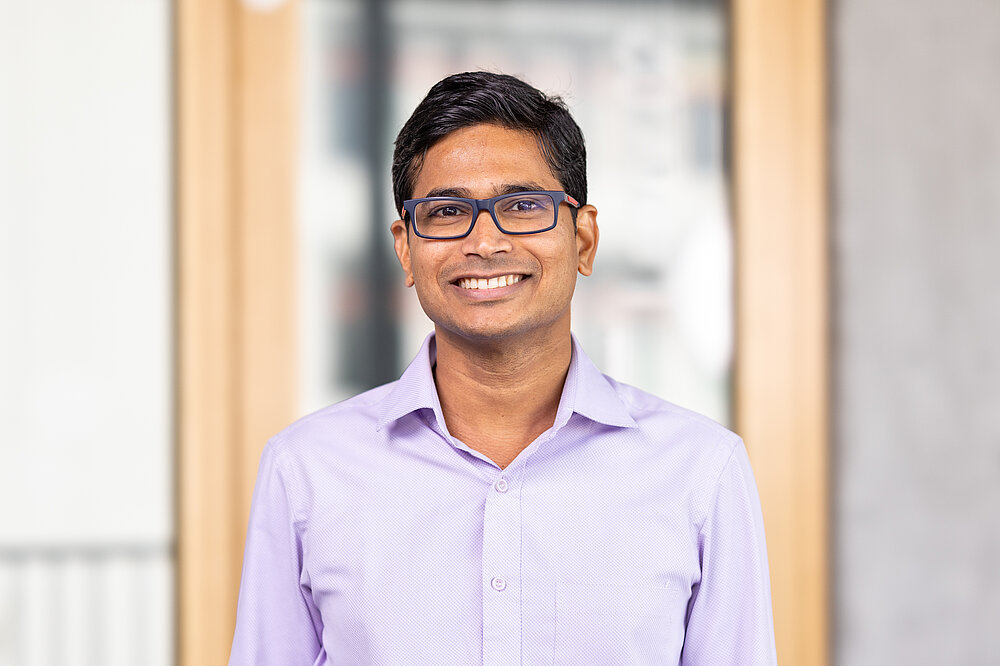
Dr. Prince Ravat leads the Chemistry of Molecular Nanosystems group at the Institute of Organic Chemistry , University of Würzburg. His research focuses on the bottom-up synthesis of enantiopure chiral molecules , structure–property relationships , and self-assembly behavior for organic electronics and spintronics . Education: BSc and MSc from Maharaja Sayajirao University of Baroda (2008) PhD at Max Planck Institute for Polymer Research (2011–2014) Habilitation at University of Würzburg (2019–2023) Professional Career: Private Lecturer (Dr. rer. nat. habil.) since 2024 Research Group Leader since 2018 Postdoc at University of Basel (2014–2017) JSPS Fellow at University of Tokyo (2017–2018) Research Themes include chiroptical properties , spin-selective phenomena , and π-conjugated systems . His publications highlight helicene-based nanomaterials , diradicals , and optoelectronic applications . Scientific Awards: 2024 Keck-Köppe Foundation Chemistry Prize 2023 Dr. Otto Röhm Memorial Prize 2022 ERC Starting Grant 2016 INSPIRE Faculty Award He teaches Modern Synthetic Methods and mentors interdisciplinary projects in physical organic chemistry.
Dr. Roland Immler is a Principal Investigator at the Biomedical Center Munich , Ludwig-Maximilians-Universität München , within the Collaborative Research Centre TRR 359 . He leads the Sperandio Group in the Department of Cardiovascular Physiology and Pathophysiology . Research Focus His scientific interests lie at the intersection of vascular biology , inflammation , and cardiovascular pathophysiology . By investigating endothelial cell function, atherosclerotic processes, and inflammatory signalling cascades, his group aims to uncover molecular mechanisms that drive cardiovascular disease. Laboratory & Team Dr. Immler directs the Sperandio Group , an active research team embedded in the multidisciplinary environment of the Biomedical Center Munich.
Prof. Dr. Christian Müller leads the Müller Group at the Department of Chemistry , part of the Chemistry and Biochemistry faculty at Free University of Berlin . His research spans both Inorganic Chemistry and Neuroscience , focusing on interdisciplinary connections between chemical synthesis and cognitive processes. Key research areas include synthesis and reactivity of phosphininium salts in chemistry, alongside neural mechanisms of language processing , aphasia therapy , and brain-constrained deep neural networks in neuroscience. His work bridges organophosphorus chemistry and cognitive neuroscience , emphasizing cross-modal interactions and computational modeling. Current students in his group include B.Sc. Duy Nguyen , and the Müller Group actively explores neuroplasticity, semantic grounding, and sensory integration through experimental and computational approaches. Despite no explicit mention of scientific awards, his publications highlight a robust interdisciplinary portfolio.
Dr. Denis Artiukhin is a researcher at the Institute of Chemistry and Biochemistry within Freie Universität Berlin , where he leads the Artiukhin Group. His work focuses on theoretical chemistry, quantum chemical methods, and computational modeling of molecular systems. Research Areas: Theoretical Chemistry, Quantum Chemistry, Computational Chemistry, Physical Chemistry, Photochemistry, and Chemical Physics. Key Contributions: Development of quantum chemical software (gmx2qmmm), subsystem density functional theory, frozen-density embedding methods, and studies on proton-coupled electron transfer and potential energy surfaces. Publications: Recent work includes method development for quantum simulations, spin-density calculations in photosynthetic systems, and applications to hydrogen bonding and catalytic processes. Contact: denis.artiukhin@fu-berlin.de
Prof. Dr. Claus Fühner is a Professor of Computer Engineering at the Faculty of Computer Science of Ostfalia University of Applied Sciences. His research interests include: Systems and Software Engineering for embedded systems Implementation of embedded systems from microcontrollers to cloud Functional safety Wireless communication (Bluetooth Low Energy, LoRaWAN) AI, neural networks, and LLMs in technical systems Railway automation Recent research projects (2016-2023) show a focus on practical applications in IoT and embedded systems, with an increasing emphasis on AI and LLMs. Key projects include SmartFreightWagon for railway freight digitalization (2023) and autonomous vehicle research using deep learning (2020). Prof. Fühner regularly supervises student theses and is open to industry collaboration. He can be contacted via email at c.fuehner@ostfalia.de.
Prof. Dr. Frauke Mattner serves as Chairholder of Hygiene and Environmental Medicine within the Faculty of Health's Department of Human Medicine. Her leadership position places her at the critical intersection of clinical medicine and environmental health sciences, directing research that directly impacts hospital infection control protocols and medical education standards. Her research program focuses on: Applied hospital hygiene systems Environmental transmission of pathogens Infection epidemiology in surgical settings Virological and microbiological risk assessment Clinical integration of hygiene protocols across medical specialties The department maintains a clinically embedded research team comprising medical specialists spanning microbiology, virology, anesthesiology and orthopedic surgery. This multidisciplinary composition enables direct translation of hygiene research into operating theater protocols and surgical training curricula. Located at Ostmerheimer Str. 200, 51109 Cologne with direct phone access (+49 221 8907-8677), the department functions as both academic research unit and operational hospital hygiene authority.
Prof. Dr. Malte Zimmermann is a Full Professor of Semantics and Theory of Grammar at the Department of Linguistics, University of Potsdam. He is also a faculty and board member of the African Linguistics School (ALS), which biannually convenes in West African countries to advance formal linguistics knowledge among African scholars. His editorial roles include Associate Editor for Natural Language and Linguistic Theory and former Associate Editor for Linguistics and Philosophy . His educational background includes: Ph.D. in General Linguistics, Universiteit van Amsterdam (2002) M.A. in German Language and Linguistics/English/Anglistic/Philosophy, Universität zu Köln (1998) Abitur, Gymnasium Athenaeum, Stade/Niedersachsen (1989) Zimmermann's research centers on the interface between linguistic form and meaning, with specialization in formal semantics and grammar theory. His work spans quantification, tense, question semantics, discourse particles, and information structure, with particular emphasis on semantically under-researched West African languages (Chadic, Kwa, Grassfield Bantu). His research combines theoretical analysis with experimental methods, notably through projects like 'ExQ' examining embedded question interpretation across European and Non-European languages. He has led field research in Ghana, Cameroon, and Nigeria, challenging assumptions about language universals through empirical investigation of linguistic diversity. His publication trajectory reveals consistent focus on cross-linguistic semantic variation, particularly in focus interpretation, quantifier scope, and information structure phenomena. Recent work demonstrates growing integration of experimental methodologies with traditional formal approaches, with frequent comparisons between German, English, and diverse African languages. His investigations into serial verb constructions have been especially influential, uncovering hidden syntactic variability beneath surface similarities across languages like Akan and Igbo. As a supervisor, Zimmermann has guided numerous doctoral students to completion, with recent graduates including Giuliano Armenante (2024), Eva Shipova (2024), and Mareike Philipp (2023). His research has been supported by substantial funding including: SFB1287 Limits of Variability in Language, 'Limits of variability in interpretation' (2017-2021) SPP 1727 XPRAG.de, 'Exhaustiveness in embedded questions across languages' (2017-2020) SPP 1727 XPRAG.de, 'Exhaustivity in it-clefts' (2014-2017) DFG-Network 'Questions in Discourse' (2012-2016) SFB632 Information Structure projects (2007-2015) He leads the Potsdam semantics group (including Peter Sutton, Giuliano Armenante, Jeanne Lecavelier, Anna Struck, and Carla Bombi) which conducts fieldwork in West Africa. Currently, he co-directs the SFB-project on the 'Limits of Variability in Interpretation,' examining scope ambiguities, reconstruction, and bare NP interpretation across German, English, Akan, Igbo, and Medumba. His collaborative work with Edgar Onea (Graz) and Tatjana Scheffler exemplifies his commitment to bridging theoretical linguistics with empirical fieldwork and experimental validation.
Junior Professor Dr. Julia Westermayr leads the Theoretical Chemistry of Materials Design group at the Wilhelm-Ostwald-Institute for Physical and Theoretical Chemistry (Leipzig University). Her interdisciplinary research bridges machine learning , quantum chemistry , and materials science to advance molecular simulations and reaction mechanism discovery. Academic rank: Assistant Professor (Junior Professor) Research focus: AI-driven excited-state dynamics, interatomic potentials, CO₂ conversion, and photocatalysis Key collaborators: Bell Flavors & Fragrances GmbH, ScaDS.AI, TU Berlin, University of Vienna Her team develops transferable ML models for nonadiabatic molecular dynamics , enabling long-timescale simulations of photodriven processes at metal surfaces and solvent environments . Recent work includes equivariant neural networks for UV absorption spectra and generative AI for molecular design . The group actively trains PhD students like Daniel Bitterlich, Peter Fichtelmann, and Robin Curth, while hosting international researchers from institutions like Bologna and Vienna. Research trends span Computational Chemistry (15/15 articles), with subfields including Excited-State Nonadiabatic Dynamics , Interatomic Potential Modeling , Photochemistry , Semiconductor Design , Reaction Mechanism Discovery , and ML-Augmented Quantum Simulations . The group participates in major scientific collaborations (DFG Cluster of Excellence, ScaDS.AI) and industry partnerships (Bell Flavors & Fragrances GmbH). They host regular research stays (e.g., Sascha Mausenberger from Vienna) and student internships , while maintaining active presence at conferences like PsiK2025 .
Dr. Arne Wenzel is a Researcher at the University of Göttingen's Department of Crop Sciences within the Functional Agrobiodiversity group, focusing on biodiversity conservation in human-modified tropical landscapes to inform sustainable landscape design. His research expertise spans: Biodiversity Conservation Landscape Ecology Tropical Ecology Agroecology Functional Biodiversity (with emphasis on pollination ecology and pest control) Fieldwork across Sulawesi, Sumatra, and South India examines how land-use practices affect biodiversity patterns. Currently coordinating EFForTS project's large-scale Sumatran landscape assessment (100+ plots), he investigates rainforest transformation impacts using dummy caterpillars, stingless bee colonies, pantraps, and bioacoustic monitoring of birds and bats. Scientific awards: None mentioned in source text. As lead of EFForTS sub-project B09, he directs research on biodiversity-ecosystem service relationships in transformation landscapes, though specific grants or student supervision details are unreported. Embedded within the Functional Agrobiodiversity group, he contributes to the interdisciplinary EFForTS initiative studying ecological-socioeconomic dynamics of Sumatran rainforest conversion systems.
Prof. Dr.-Ing. Steffen Helke serves as a full Professor in the Department of Electrical Engineering & Information Technology at University of Applied Sciences Südwestfalen. His academic roles include Senate membership, evaluation officer for the department, program coordinator for Media Informatics, and spokesperson for the GI Specialist Group Automotive Software Engineering. Current affiliations span committee work in electrical engineering bachelor programs and leadership in safety-critical software research. His research focuses on functional software security , safety-critical system verification , and model-based quality assurance . Key areas include information flow control languages, automotive software security, hierarchical statechart validation, and requirements delta analysis for efficient development estimation. Methodologies emphasize formal verification, static analysis, and tool-supported refactoring to ensure robustness in embedded systems. Teaching encompasses advanced courses in Software Engineering, IT Security, Ethical Hacking, and Competitive Programming. Thesis supervision occurs in research areas like NLP-based requirements analysis, refactorings for security languages (Jif), and model checking for Statecharts. Industrial collaborations facilitate project/bachelor theses with real-world security applications. Research trends from publications show consistent focus on bridging formal methods with industrial software development. Dominant disciplines include Software Engineering (72% of works) and Formal Verification (58%), with emerging subfields like NLP-assisted requirements engineering (2019) and automotive security frameworks. Keyword analysis reveals sustained emphasis on verification (100% of works), security (80%), and automotive applications (40%). Administrative contributions include leadership in the combined Electrical Engineering bachelor program and active participation in university governance through department councils. Tools developed in his research (e.g., Delta Analyzer, R2BC) are integrated into curricula using ReqView, Matlab/Simulink, and Enterprise Architect for systematic requirement engineering and UML modeling.
Chris Mundy is a Lab Fellow and Physicist at Pacific Northwest National Laboratory (PNNL), specializing in theoretical and computational approaches to complex interfacial systems. His research integrates statistical mechanics and molecular simulations to address fundamental challenges in electrolyte behavior, solvation phenomena, and energy-related materials science under the Department of Energy's Basic Energy Sciences portfolio. His educational background includes a PhD in Chemistry from the University of California, Berkeley (1992) and a BS in Chemistry from Montana State University (1988). Mundy has held significant leadership roles including Chair of the Gordon Research Conference on 'Chemistry and Physics of Liquids' (2025), Chair of the Theoretical Chemistry Subdivision of the American Chemical Society (2022), and Vice Chair (2020-2021). Mundy's research focuses on bridging molecular-scale phenomena to macroscopic outcomes in electrolytes and interfacial systems. His work spans computational modeling of ion hydration, solvation dynamics, and nanoscale assembly processes relevant to energy storage and environmental systems. Recent publications demonstrate strong emphasis on advanced simulation techniques applied to battery electrolytes, biomimetic materials, and aqueous interfaces. His 15 most recent publications reveal consistent focus on computational chemistry methods applied to interfacial phenomena, with growing integration of machine learning and advanced spectroscopy techniques. Key themes include ion-specific effects at interfaces, solvation structure characterization, and predictive modeling of electrolyte behavior across concentration regimes. American Physical Society Fellow (2014) Mundy actively contributes to professional service through leadership in Gordon Research Conferences and ACS subdivisions. His work at PNNL connects fundamental theoretical chemistry to Department of Energy mission areas including energy storage, environmental remediation, and materials science. Current research leverages high-performance computing resources to develop predictive frameworks for complex fluid systems. As a senior researcher at PNNL, Mundy collaborates extensively across national laboratory teams and academic institutions, focusing on theoretical development that informs experimental design in interfacial science and electrochemistry. His group utilizes advanced molecular simulation techniques to probe systems ranging from battery electrolytes to biological interfaces.
Radu Calinescu is Professor of Computer Science at the University of York, UK, where he serves as Principal Investigator for the UKRI Trustworthy Autonomous Systems Node in Resilience and leads the Trustworthy Adaptive and Autonomous Systems and Processes (TASP) Research Team. His academic career includes previous positions as Lecturer in Computer Science at Aston University (2009-2012), Senior Researcher at the University of Oxford (2008-2009), and part-time Lecturer at Oxford (2005-2009). Professor Calinescu's research focuses on formal modelling, analysis, verification and controller synthesis for autonomous and self-adaptive systems, with particular emphasis on parametric and probabilistic model checking, automated and model-driven software engineering. His work applies these approaches to robotic, cyber-physical, embedded and service-based systems, with a strong commitment to using formal methods at runtime to enhance the resilience and safety of critical autonomous systems. His extensive publication record spans top-tier journals including IEEE Transactions on Software Engineering, Journal of Systems and Software, and Automated Software Engineering. His research demonstrates consistent focus on verification techniques for adaptive systems, with increasing attention to safety-critical applications in recent years. His work bridges theoretical formal methods with practical applications in robotics and autonomous systems. British Computer Society Distinguished Dissertation Award for his DPhil thesis on Autonomic-Independent Loop Parallelisation Principal Investigator for multiple major projects including Continual Verification and Assurance of Robotic Systems under Uncertainty (ORCA Hub/EPSRC), Safety of AI Techniques (AAIP/Lloyd's Register Foundation), and CSI:Cobot Program Committee Co-Chair for major conferences including SEFM 2021, SEAMS 2020, and SERENE 2019 Professor Calinescu actively supervises numerous PhD students and postdoctoral researchers, with current team members including Faisal Alhwikem, Xinwei Fang, Mario Gleirscher, James Harbin, and Colin Paterson. His research group is based at the Ron Cooke Hub in York, a purpose-built facility housing world-class research groups and startups. His former students have gone on to academic positions at institutions worldwide and industry roles at major technology companies.