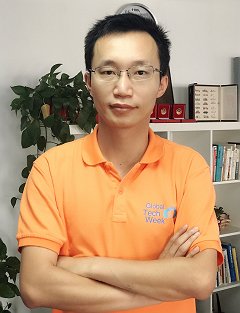
Zhenyu Chen is a Full Professor and Director of the iSE Laboratory at Nanjing University, specializing in AI-driven software testing methodologies. His research bridges artificial intelligence and software engineering with dual focus areas: leveraging AI to enhance testing processes ( AI for Testing ) and validating AI/ML systems ( Testing for AI ). His research interests center on deep learning framework testing , crowdsourced testing optimization , and Large Language Model applications in verification . Recent work demonstrates innovative approaches to metamorphic testing of neural networks, LLM-based test report analysis, and security hardening of code models against backdoors. Key contributions include the development of mooctest.com and frameworks like DevMuT for mutation testing of deep learning APIs. His publication trajectory reveals evolving focus from crowdsourced testing (2018-2020) to deep learning system validation (2021-2023) and current emphasis on LLM-powered testing solutions. Major venues include ASE, ICSE, and ISSTA where he serves regularly on program committees.
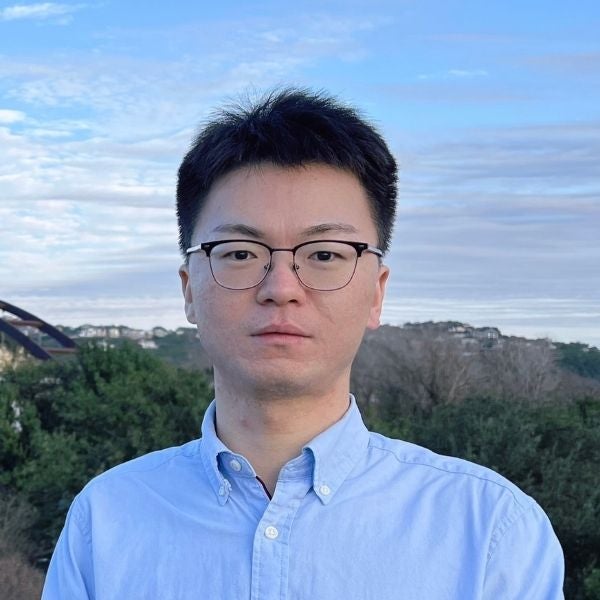
Yang Sui is a Postdoctoral Research Associate in the Department of Computer Science at Rice University, collaborating with Professors Xia (Ben) Hu and Hanjie Chen. His research focuses on Efficient AI and Trustworthy AI, including deep neural networks, large language models (LLMs), diffusion models, and algorithm-hardware co-design. He holds a PhD from Rutgers University (2024), an MS from Jilin University (2019), and a BS from Jilin University (2016). Education: PhD, Computer Science, Rutgers University, 2024 MS, Computer Science, Jilin University, 2019 BS, Computer Science, Jilin University, 2016 Research Interests: Efficient AI: Model Compression (pruning, quantization, low-rank decomposition), Generative AI (diffusion models, LLMs), and algorithm-hardware co-design. Trustworthy AI: Adversarial robustness (backdoor attacks, vulnerability detection). He has interned at Snap Research (2024), Tencent America (2022), and Baidu (2018), contributing to projects like BitsFusion quantization and Paddle-Lite framework. Awards: Paul Panayotatos Scholarship (2024) Best Paper Runner-Up Award (DCAA Workshop at AAAI 2023) First Place in ESWEEK Classification Track (2023) SGS Travel Award (2023) Advising & Grants: Advises students on topics like LLM quantization and multimodal models. Collaborates with industry and academia on grants related to efficient AI and hardware co-design. Led projects like Rice’s “Efficient Deep Learning Reading Group” (2023). Labs & Teams: Contributes to Snap’s Creative Vision team, Rutgers’ research groups, and co-design initiatives with industry partners like Baidu and Tencent.
Dr. Daniele Cattaneo is a Junior Research Group Leader at the Robot Learning Lab (University of Freiburg, Germany). He specializes in autonomous robotics, deep learning for perception and localization, and sensor fusion. His research focuses on embodiment-agnostic and environment-agnostic systems for robots, with applications in autonomous driving and healthcare robotics. Education: Ph.D. in Computer Science, Università degli Studi di Milano-Bicocca (2016–2020) M.Sc. and B.Sc. in Computer Science, Università degli Studi di Milano-Bicocca (2013–2016, 2010–2013) Research Interests: His work addresses challenges in LiDAR-camera calibration, SLAM (Simultaneous Localization and Mapping), unsupervised domain adaptation, and multimodal fusion for robust perception. Key projects include CMRNext (LiDAR-camera matching), Syn-Mediverse (healthcare scene understanding), and Continual SLAM (long-term autonomy). Awards & Grants: He leads funded projects like AI-Drive (next-gen autonomous driving algorithms) and iSUOR (operating room video analysis). Collaborations include work with the AIS Group and Robotic Learning Lab . Students & Labs: Supervises 12+ students in topics like LiDAR localization, HD maps, and radar-based navigation. Active in the Robot Learning Lab at Freiburg, contributing to open-source datasets and tools for robotics research.
Tomonari Furukawa is a Professor and Zinn Faculty Scholar at the University of Virginia, leading the VICTOR Lab. He holds a B.Eng. in Mechanical Engineering from Waseda University (1990), an M.Eng. in Mechatronic Engineering from the University of Sydney (1993), and a Ph.D. in Quantum Engineering and Systems Science from the University of Tokyo (1996). His research focuses on robotics, computational mechanics, autonomous systems, and advanced sensor technologies. He has published over 300 papers, contributed to editorial boards, and secured grants such as the U.S. DOD DURIP grants for advanced research infrastructure. His work spans topics like autonomous robotic mapping, sensor fusion, and real-time deformation measurement for automotive safety. He has developed systems for tire tread profiling, crash deformation analysis, and 3D road surface reconstruction. Furukawa’s methodologies often integrate Bayesian approaches, neural networks, and multi-sensor data fusion to solve complex engineering challenges. His contributions to the NSF I/UCRC Centre for Tire Research highlight his impact on applied mechanics. Recipient of multiple career and paper awards, Furukawa emphasizes translational research. His VICTOR Lab explores cutting-edge robotics, including compliant bipedal designs for disaster response (e.g., DARPA Robotics Challenge) and autonomous navigation systems. Current projects leverage AI and advanced vision systems for infrastructure monitoring and human-robot collaboration.
Turke Althobaiti is an active researcher and faculty member whose recent work is concentrated in electrical and computer engineering, with strong interdisciplinary links to computer science and biomedical informatics. Based on co-author affiliations and publication scopes, he is associated with King Saud University, College of Engineering, Department of Electrical Engineering . Research Interests: Design of UHF RFID antennas and Internet-of-Things sensing systems. Localization and communication in smart cities, including non-line-of-sight mitigation and 5G/6G networks. Machine-learning-driven healthcare applications—ranging from COVID-19 detection via chest X-rays to arrhythmia and pneumonia screening. Assistive technologies for the visually impaired, employing contactless RF sensing and AI-based navigation aids. Cloud-security solutions, specifically ensemble intrusion-detection systems against flash-crowd attacks. Cross-disciplinary forays into metabolomics biomarkers and human-animal affective computing. Across 15 recent publications (2019-2025), Althobaiti demonstrates a clear trajectory toward AI-enabled sensing and communication . Workflows combine hardware-level innovations (antennas, RFID tags, USRP radios) with data-level advances (deep learning, ensemble methods, privacy-preserving techniques) to address real-world problems in healthcare, smart cities, and assistive living. Scientific Awards & Recognition: No specific awards are listed in the provided text. Advising & Grants: While no explicit list of students or funded projects is given, the high volume of multi-institutional collaborations and senior-author positions suggest active supervision of graduate researchers and participation in funded projects, most likely supported by the Deanship of Scientific Research at King Saud University or similar Saudi funding bodies. Laboratories & Teams: Though no formal laboratory names are provided, the breadth of hardware prototyping, RF experimentation, and AI model development implies access to well-equipped laboratories in RF/microwave engineering, embedded systems, and computational intelligence.
Jorge Solis is an Associate Professor and Docent in Electrical Engineering at Karlstad University, Sweden. He specializes in robotics, automation, and renewable energy integration. His research focuses on assistive robots, biologically-inspired control systems, and energy storage solutions. He collaborates with industries like ABB, Camanio Care AB, and international institutions such as the University of Southern Denmark and Waseda University. He has authored over 150 publications, including peer-reviewed journals and conference papers, with a focus on human-robot collaboration, solar energy systems, and medical robotics. Key projects include gesture-based cobot programming, greenhouse energy optimization, and autonomous UAV monitoring systems. His work has earned finalist awards at major robotics conferences and a best paper award in medical engineering. Jorge teaches courses in industrial automation, control systems, and embedded control at both bachelor’s and master’s levels. He leads research teams and chairs technical committees in bio-robotics. His contributions span academia-industry partnerships, emphasizing practical applications in healthcare, agriculture, and energy sectors.
Lorraine Li is an Assistant Professor in the Department of Computer Science at the University of Pittsburgh, affiliated with the Interdisciplinary Science Program (ISP) and the School of Computing and Information. She holds a PhD from the University of Massachusetts Amherst (2022) and conducted postdoctoral research at AI2's Mosaic team. Her work focuses on NLP, machine learning, and socially responsible AI systems. Education: PhD in Computer Science (UMass Amherst, 2022) Research explores evaluation frameworks for commonsense knowledge, model interpretability, and ethical AI applications in domains like education and law. Key interests include probabilistic models, long-tail reasoning, and geographic robustness in LLMs. Recent publications address confirmation bias in reasoning chains (ACL 2025), geographically diverse prompting (CVPR 2024), and uncommon scenario reasoning (NAACL 2024). She co-organized the AAAI 2024 Make symposium and serves on committees for ACL, EMNLP, and NAACL. Grants: Pitt Cyber funding (2024) Lab: Pitt NLP Seminar group
Yuan Yao serves as an Assistant Professor in the Department of Information Technology at Uppsala University, Sweden. His academic role spans teaching and research within the Computer Systems division, focusing on cutting-edge computer architecture and parallel computing systems. He maintains active collaborations across international institutions, particularly in energy-efficient hardware design and emerging computing paradigms. His educational journey includes: B.S. in Micro-electronics from Northwestern Polytechnical University, China (2009) M.S. in System-on-Chip Design from KTH Royal Institute of Technology, Sweden (2014) Ph.D. in Electrical Engineering and Computer Science from KTH Royal Institute of Technology (2019) Yao's research centers on power and thermal management for chip multi-processors, Network-on-Chips (NoCs), and GPUs. He pioneers hardware/software co-design for high-performance computing, coherency mechanisms for emerging memory technologies, and performance analysis of on-chip networks. Recent work expands into neural network acceleration and battery-less Internet of Things architectures, reflecting a trajectory toward energy-constrained specialized systems. His methodology integrates formal modeling with practical implementation for real-world impact. Publication trends reveal consistent innovation in energy efficiency across parallel architectures. From foundational DVFS techniques for NoCs (2016-2018) to recent breakthroughs in battery-less IoT (2023-2024), his work demonstrates evolutionary progression toward novel computing domains. Key thematic threads include thermal-aware optimization, memory consistency protocols, and hardware acceleration for AI workloads, with applications spanning data centers to embedded systems. Scientific recognition includes: Best paper candidate at IEEE International Symposium on High Performance Computer Architecture (HPCA) 2018 for in-network packet generation research Yao actively supervises graduate researchers and leads collaborative projects in computer architecture. His grant portfolio supports work on battery-less IoT systems and neural network accelerators, though specific funding details aren't publicly enumerated. Current projects emphasize sustainable computing through novel architectures for energy-harvesting environments. He operates within Uppsala University's Computer Systems division, contributing to research groups focused on hardware acceleration, embedded systems, and networked architectures. His lab environment fosters interdisciplinary work bridging computer architecture, energy harvesting, and machine learning for next-generation computing platforms.
Professor Francesca Toni is a Professor in Computational Logic at the Department of Computing, Faculty of Engineering at Imperial College London. She leads research in Artificial Intelligence, focusing on explainable AI (XAI), argumentation theory, and neuro-symbolic systems. Her affiliations include the Centre for eXplainable AI (XAI), Argumentation-based Deep Interactive eXplanations (ADIX), and the Human-Like Computing initiative. Her work integrates computational logic with machine learning to develop interpretable models for healthcare, robotics, and decision support systems. Recent research emphasizes conflict analysis in neural networks, argumentative ensembling, and object-centric learning frameworks. Her research interests span AI ethics, formal argumentation, and the integration of symbolic reasoning with deep learning. Key contributions include neuro-argumentative learning architectures, benchmarking explainability methods (XAI-Units), and frameworks for robust recourse in model multiplicity scenarios. She actively explores applications in biomedical fraud detection (Pub-Guard-LLM) and personalized decision support via gradual bipolar argumentation. Her publications highlight trends in explainable AI, with a focus on visual debates, counterfactual explanations, and causal structure learning. She has pioneered systems like ProtoArgNet for interpretable image classification and DR-HAI for dialectical reconciliation in human-AI interactions. Her work bridges theoretical foundations (e.g., ABA semantics) with real-world applications in healthcare and legal reasoning. Notable projects include ROAD2H—an open-source XAI approach for managing comorbidities—and Cafe for conflict-aware feature explanations. She has contributed to legal AI systems (LawGIBA) and causal discovery methods. Current efforts focus on neuro-argumentative machine learning and object-centric representation learning.
Georg Groh is an Adjunct Professor at the Technical University of Munich (TUM), affiliated with the TUM School of Computation, Information and Technology . His research focuses on modeling social context, social interaction mediated by IT systems, and ML-based natural language processing. He holds a doctorate (2005) and habilitation (2012) from TUM, with prior studies in physics and computer science. Key research areas include social signal processing, network analysis, and bias detection in AI systems. Notable awards include the 2019 Supervisory Award and 2016 Honorary Teaching Certificate. His work bridges computational methods with societal impacts, particularly in health informatics and ethical AI. Recent projects explore LLM hallucination detection, bias profiling, and cross-lingual text classification. Education: PhD in Computer Science (2005), TUM Habilitation in Computer Science (2012), TUM Studies in Physics (University of Kaiserslautern) and Computer Science (Universities of Hamburg, Kaiserslautern, TUM) Research Interests: Groh’s work spans social computing, NLP, and ethical AI . Current projects address bias in language models, hate speech detection, and data-driven health interventions. His methodologies emphasize contextual analysis of social interactions, leveraging ML and graph-based techniques. Awards: 2nd place Supervisory Award (2019) Best Paper Awards (2016, 2008) Advising & Grants: Advised on projects like Nutrilize (nutrition recommender system) and contributed to EU-funded initiatives on mHealth systems. Active in designing AI systems for dietary logging and stress management.
Slim Essid is a Full Professor at Télécom Paris and coordinator of the Audio Data Analysis and Signal Processing (ADASP) group. He holds a PhD and HDR from Université Pierre et Marie Curie (UPMC). His research focuses on machine learning, artificial intelligence, and signal processing applied to temporal data analysis, including multiview learning, representation learning, and structured prediction. Applications span music content analysis (MIR), multimodal perception (e.g., EEG data analysis), and human behavior analysis. He has advised 15 PhD students and collaborated on over 14 post-doctoral projects. Education: PhD in Signal Processing, Université Pierre et Marie Curie (2005) Habilitation (HDR), Université Pierre et Marie Curie (2015) M.Sc. in Digital Communication Systems, Télécom ParisTech (2002) Engineer Degree, École Nationale d’Ingénieurs de Tunis (2001) Research interests emphasize multimodal learning, self-supervised representation learning, and audio-visual fusion. Key projects include sound-prompted segmentation, zero-shot audio captioning, and EEG-based auditory attention decoding. Over 150 peer-reviewed publications exist across conferences like NeurIPS, ICML, and journals like IEEE Transactions. Active in reviewing for top-tier venues and advising French/EU research projects. Labs/Teams: Member of the Signal, Statistics and Learning (S2A) research team and the Information Processing and Communication Laboratory (LTCI).
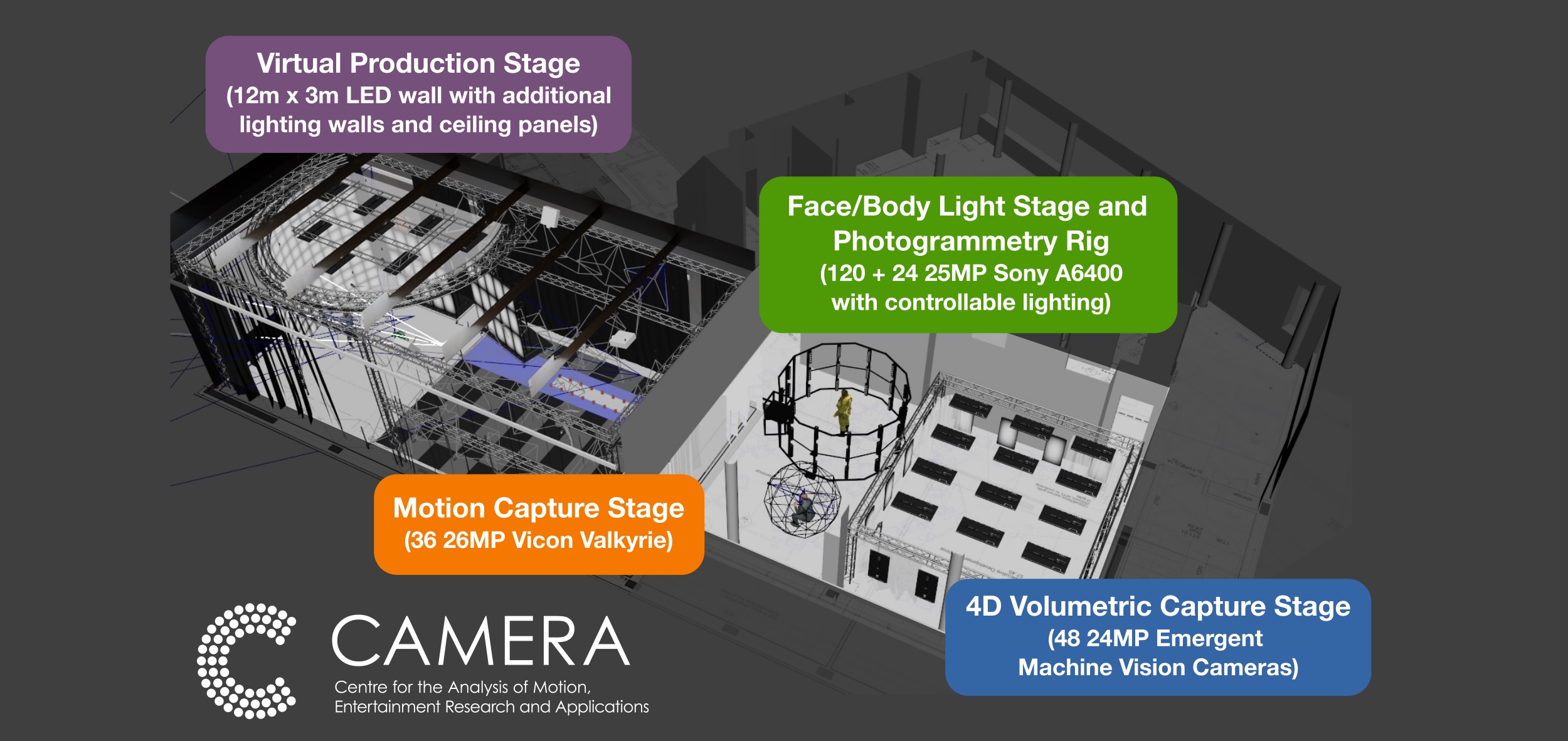
Neill Campbell is a Professor of Visual Computing and Machine Learning in the Department of Computer Science at the University of Bath . He is the Director of the Centre for the Analysis of Motion, Entertainment Research and Applications (CAMERA) and co-director of the Centre for Mathematics and Algorithms for Data (MAD) . He holds an external position as Honorary Associate Professor at University College London and is a Royal Society Industry Fellow. His research spans visual computing, machine learning, and their applications in graphics, vision, and healthcare. His educational background includes a Master of Engineering and a Doctor of Philosophy in Engineering from the University of Cambridge, with his PhD focusing on Automatic 3D Model Acquisition from Uncalibrated Images. Neill Campbell’s research interests lie at the intersection of shape modeling , machine learning , and computer vision . He develops probabilistic and deep learning models to understand and generate visual content, with applications in digital humans, virtual production, biomechanics, and medical imaging. His work emphasizes uncertainty quantification, generative modeling, and alignment learning using Gaussian processes and Bayesian nonparametrics. He leads interdisciplinary projects that bridge computer science and mathematical sciences. The recent publications reflect a strong trend in probabilistic modeling , geometric deep learning , and medical applications . Topics include Gaussian process-based shape modeling, anomaly detection in safety-critical systems, and sparse approximations for geometric representations. His work increasingly integrates theoretical machine learning with real-world applications in health, engineering, and creative industries. Royal Society Industry Fellow Neill Campbell actively supervises PhD students across multiple Centres for Doctoral Training (ART-AI, SAMBa, CDE) and leads significant research grants such as MyWorld (UKRI Strength in Places Fund) and REMODEL (EPSRC). His group collaborates with industry leaders like Rolls-Royce, NVIDIA, Adobe, and DNEG, and he supports student internships and industrial placements. He is also involved in spin-out activities, including contributions to Forceteck Ltd. He leads the Visual Computing Group and is deeply embedded in research centers including CAMERA , MAD , and MyWorld . His team includes postdoctoral researchers and PhD students working on 3D reconstruction, biomechanics, inverse problems, and generative models, fostering a collaborative and interdisciplinary research environment.
Herman Bruyninckx is a Professor at the Faculty of Engineering Sciences , KU Leuven , where he also serves as Vice-Chair of the Department of Mechanical Engineering and head of the Robotics, Automation and Mechatronics (RAM) subdivision. His research focuses on integrating formally represented domain knowledge into robotic systems for real-time, self-explanatory, and certifiable control. He advocates for open standards and software engineering practices in robotics, with a career-long emphasis on knowledge-driven robotic systems over data-driven approaches.
Nicholas Marshall is an Assistant Professor in the Department of Mathematics at Oregon State University. His work bridges analysis, geometry, and probability with strong applications in data science. Current faculty: Oregon State University Postdoctoral training: Princeton University (NSF Fellowship) Doctoral training: Yale University Undergraduate education: Clarkson University His research focuses on: Interplay between geometric structures and probabilistic models Development of numerical methods for high-dimensional data Applications in cryo-electron microscopy and hyperdimensional computing Analysis of stochastic algorithms and convergence properties Recent publications indicate significant contributions to: Harmonic expansion techniques Equivariant function learning Momentum-accelerated optimization methods Binary hyperdimensional geometry NSF Postdoctoral Fellowship (Princeton) He actively mentors graduate and undergraduate students, including Wyatt Whiting, Peter Cowal, Heather Fogarty, and Seth Alderman. Teaching appointments include advanced courses in probability theory, numerical linear algebra, and mathematics of data science.
Andrey Chechulin is a Professor at the St. Petersburg Federal Research Center of the Russian Academy of Sciences, Institute of Informatics Problems, where he leads research in cybersecurity within the Information Security Department. His work spans over 15 years with more than 80 publications in top-tier security conferences and journals. Dr. Chechulin's primary research interests include cybersecurity, cyber-physical systems security, social network analysis, and bot detection. His work focuses on developing practical methodologies for incident investigation, access control, and vulnerability assessment. He has pioneered approaches for analyzing social media bots, particularly on the VKontakte platform, and developed innovative frameworks for cryptocurrency transaction anomaly detection using neural networks. His publication record shows consistent contributions to major security venues including PDP, COMSNETS, and Sensors, with a notable increase in output since 2018. Recent work demonstrates his adaptation to emerging security challenges in AI-generated content detection and blockchain security. Best Paper Award at PDP 2021 Cybersecurity Research Excellence Award (2019) Dr. Chechulin maintains strong collaborative relationships with Igor V. Kotenko (60 joint publications), Dmitry Levshun, and Maxim Kolomeets. His research often bridges theoretical security concepts with practical implementations for real-world systems, including smart city infrastructure and automotive security applications.