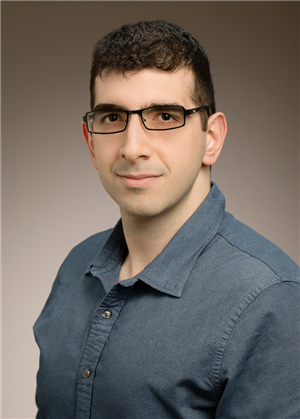
Edmon BegoliView profile
Adjunct Professor
Edmon Begoli serves as Director of Oak Ridge National Laboratory's Center for AI Security Research (CAISER) and holds an Adjunct Professor appointment in the Department of Electrical Engineering and Computer Science at the University of Tennessee-Knoxville. As a distinguished ORNL research staff member and senior scientist, he specializes in developing resilient, secure, and scalable machine learning architectures with national impact in AI security, veteran suicide prevention, and precision medicine initiatives. Begoli's educational foundation includes undergraduate and graduate studies at the University of Colorado-Boulder and a doctorate from the University of Tennessee, all in Computer Science. Following his PhD, he conducted research as a visiting scholar at UC Berkeley's EECS department, where he maintains an active association with the SKY Computing lab. His research program bridges adversarial machine learning and healthcare analytics, focusing on real-time decision systems for critical applications like suicide risk prediction and infectious disease monitoring. Begoli pioneers frameworks that integrate cybersecurity principles into AI development to withstand sophisticated attacks while maintaining functionality in sensitive environments. Analysis of his publication trajectory reveals a consistent emphasis on adversarial techniques applied across cybersecurity and healthcare domains, with increasing focus on veteran health outcomes and medical data security. His work demonstrates the convergence of transformer model vulnerabilities, medical informatics, and national security applications. Notable recognition includes: IEEE Computer Society Distinguished Contributor status Google Research Innovator award (2022) for robust streaming and language processing architectures Begoli leads major national initiatives including the PERC/REACH VET veteran suicide prevention collaboration and MVP CHAMPION precision medicine program. He designed DOE's foundational Knowledge Discovery Infrastructure (KDI) and Citadel platforms for protected data computation, establishing critical capabilities for secure analytics on leadership-class systems. As co-leader of ORNL's internal AI safety initiative and collaborator with UC Berkeley's RISE Lab, he advances real-time analytic monitoring frameworks for high-stakes clinical events through projects like Realm, which implements Ray's actor model for context-specific model updates across distributed healthcare systems.