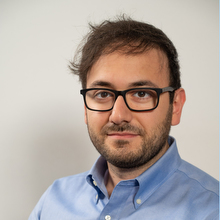
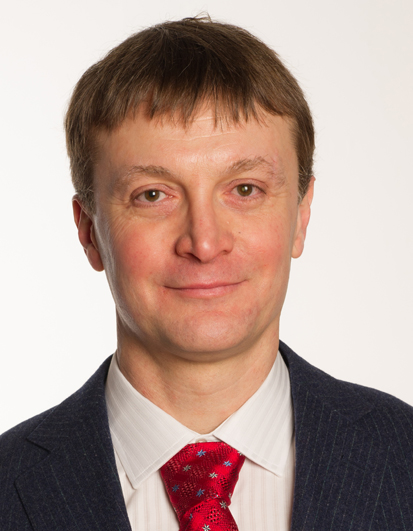
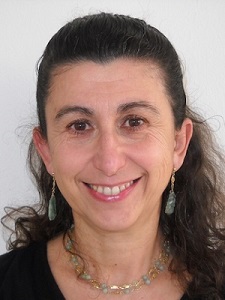
Simone Corbellini is an Associate Professor at the Polytechnic University of Turin, Department of Electronics and Telecommunications (DET), and a member of the College of Electronic, Telecommunications and Physics Engineering. His research spans electrical and electronic engineering, with a focus on artificial neural networks, calibration, wireless sensor networks, and embedded systems. Research keywords: Artificial Intelligence Metrology & Measurement IoT & Signal Processing Recent projects include MicrowaveRad (microwave radiometers for thermometry) and PVZEN Lab (energy community monitoring systems). He supervises PhD students Davide Ceschini, Davide Sgro', and Marco Sento, contributing to projects on low-power distributed sensors and biomedical devices. His scientific accolades include a National Patent for tire production process control. Teaching roles cover Testing and Certification and Electronic Circuits in Electronic, Biomedical, and Electrical Engineering programs.
Gianluca Caiazza is a Researcher at the Department of Environmental Sciences, Computer Science and Statistics at Ca' Foscari University of Venice. He is affiliated with the Research Institute for Complexity and the Temporary Center for the Innovation Ecosystem Project. His work focuses on cybersecurity within robotics and software systems, particularly in the Robot Operating System (ROS) framework. He teaches courses such as 'Operating Systems - MOD.1' and 'Software and System Verification' at both undergraduate and doctoral levels. His research interests span cybersecurity for robotic systems, static analysis techniques, blockchain applications in robotics, and secure middleware development. He has conducted extensive work on enhancing ROS security through tools like SROS2 and static analysis frameworks like LiSA, addressing vulnerabilities in DDS systems and penetration testing methodologies. Caiazza's recent publications emphasize automated policy extraction, microservice security, and IIoT system scalability. His work bridges theoretical computer science with practical applications in robotics, contributing to both academic journals and industry-oriented conferences. He collaborates actively with institutions like IEEE and Springer, focusing on advancing secure robotic technologies. His teaching activities include laboratory modules for software project development and advanced verification techniques for software systems. Despite no listed awards, his contributions to ROS security frameworks are recognized within academic and industrial robotics communities.
Alessandro Aimasso is a PhD student in Aerospace Engineering (38th cycle, 2022-2025) at the Polytechnic University of Turin's Department of Mechanical and Aerospace Engineering (DIMEAS), where he also serves as an external lecturer and teaching assistant. He contributes to research activities at the ASTRA group (Additive Manufacturing for Systems and Structures in Aerospace) and the interdepartmental Center for Photonic Technologies PhotoNext. His research focuses on optical sensors for aeronautical and space applications, particularly Fiber Bragg Grating (FBG) technology for system lifecycle management. Specific interests include: Augmented reality visualization of sensor data Thermal and structural monitoring of aerospace systems Smart composites manufacturing with embedded sensors Lunar habitat construction technologies Real-time monitoring systems for spacecraft Analysis of his recent publications shows strong focus on experimental validation of FBG sensor applications in extreme environments, development of real-time monitoring systems, and integration of augmented reality for data visualization. His work frequently involves rapid prototyping and multidisciplinary approaches to aerospace challenges. He holds two patents: USE AND INTEGRATION OF SENSORS IN THE STRUCTURE AND EQUIPMENT OF COMPLEX MACHINES FOR THE DEVELOPMENT OF INTELLIGENT MONITORING SYSTEMS AND CREATION OF MULTIFUNCTIONAL VIRTUAL SENSORS Gas-dynamic nozzle for an end-jet engine, specifically a launcher As a teaching assistant, he contributes to courses on Modeling, Simulation, and Testing of Aerospace Systems, and Photonics in the Digital Revolution. His laboratory work involves the ASTRA group's facilities focusing on additive manufacturing and photonic technologies.
Stefano Quer is an Associate Professor at the Department of Control and Computer Science (DAUIN), Politecnico di Torino. He holds a PhD in Electronic Engineering from the same institution and has been affiliated with DAUIN since 1996. Researcher (1996-2000) Associate Professor (2000-present) Visiting Faculty at UC Berkeley (1994-1995) Research Interests His work spans Formal Verification BDD/SAT Techniques Embedded Systems Hardware/Software Co-Verification Parallel Computing with applications in VLSI CAD, industrial IoT, and energy-efficient systems. Recent articles focus on GPU-accelerated graph algorithms, wireless sensor calibration, and AI-driven test optimization. Scientific Awards Best Paper Award, IEEE EURO-DAC'94 Academic Contributions Supervised PhD students Lorenzo Cardone and Andrea Calabrese Member of DATE, ICSOFT Technical Program Committees Topical Advisor for Sensors MDPI 60+ publications in IEEE/ACM venues
Cristiano Pegoraro Chenet is a researcher affiliated with the Department of Control and Computer Engineering (DAUIN) at Politecnico di Torino. He holds the academic rank of Researcher and contributes to teaching as an external collaborator for the Algorithms and Programming course in the Electronic and Communications Engineering Bachelor’s program. Research Interests : Focused on resilient computer architectures, hardware-based malware detection, and design diversity techniques for fault tolerance. His work intersects machine learning, security, and embedded systems, particularly in cloud computing and RISC-V architectures. Publications : Active in IEEE conferences and journals, with a recent survey in IEEE ACCESS analyzing hardware malware detection methods. His research includes contributions to the Horizon Europe Vitamin-V project and experiments on radiation-hardened mixed-signal systems. Collaborations : Works with the SMILIES research group at DAUIN, engaging in international projects with institutions across Europe.
Alessandra Flammini is a full Professor of Electronic Measurements at the Department of Information Engineering, University of Brescia. She leads research teams in Smart Sensors and Embedded Systems (ES³) and founded the eLUX laboratory focused on Smart Grids, Smart Living, and electric vehicles. Her work emphasizes IoT solutions for sustainable cities, sensor signal processing, and wireless sensor networks for industrial and urban applications. Her research spans smart grids, renewable energy integration, and IoT infrastructure for mobility. Notable projects include transportable off-grid charging stations for e-bikes and modular control strategies for vehicle-to-grid systems. She has published over 300 international papers and secured significant research funding, contributing to her recognition in the Top Italian Scientists list. Recent articles explore LoRaWAN virtualization, edge computing performance, and energy-saving control strategies. She also investigates UWB-based safety systems for construction sites and IoT frameworks for indoor environmental monitoring. Flammini’s work bridges technological innovation with practical deployment, emphasizing real-world applications in smart cities and sustainable mobility. Awards: Top Italian Scientists list Labs/Teams: ES³ Research Team, eLUX Lab Grants/Projects: Multiple financed projects on renewable energy, IoT infrastructure, and smart grid solutions
Giorgio Insinga is a Research Fellow at the Department of Control and Computer Science (DAUIN) of Politecnico di Torino. He serves as an External lecturer and teaching assistant, contributing to courses like Computer System Architectures and Computer Engineering since 2022/23. Research Interests: His work focuses on embedded memory testing, diagnosis, and reliability in automotive System-on-Chips (SoCs). Key areas include fault detection methodologies, diagnostic data compression strategies, and hybrid ADC designs for on-chip measurements. He collaborates with the CAD - Electronic CAD & Reliability Group (DAUIN). Scientific Contributions: Recent publications address test architectures for large-scale memory banks, low-area ADC implementations, and irradiation-based memory parameter extraction. His research bridges hardware reliability with practical automotive applications. National patent for 'Electronic board quality analysis software' Teaching Roles: Collaborated in courses related to computer architectures and system design since 2022, emphasizing practical implementation and testing techniques.
Matthias Pezzutto is an Assistant Professor at the Department of Information Engineering, University of Padova. His research focuses on advanced control systems, networked control systems, and wireless communication for control applications. He explores topics such as distributed estimation, epidemic control, and optimization in cyber-physical systems. His work bridges theoretical advancements with practical implementations, including experiments over Wi-Fi and multirotor robotics. Key areas of interest include: Control systems with communication constraints Epidemic modeling and intervention strategies Real-time wireless control architectures His publications emphasize robust control methodologies, such as self-triggered MPC and adaptive transmission protocols, addressing challenges like packet loss and latency. Recent works explore the integration of edge-cloud continuum for control systems and heterogeneous vehicle mission planning. While no specific awards or grants are listed, his research activities are supported by experimental validations and collaborations in industry and academia.
Juan David Guerrero Balaguera is a Research Fellow at Politecnico di Torino's Department of Automatic Control and Computer Science (DAUIN), affiliated with the CAD group. He holds a Ph.D. in Computer and Control Engineering from Politecnico di Torino (2024), advised by Prof. Matteo Sonza Reorda and Prof. Ernesto Sanchez. His research focuses on dependable hardware for safety-critical systems, including GPU reliability, fault tolerance, AI accelerators, and functional in-field testing. Prior to his Ph.D., he earned a Master's (2017) and Bachelor's (2013) in Electronics Engineering from Universidad Pedagógica y Tecnológica de Colombia, where he taught digital design, embedded systems, and FPGA-based image processing from 2014 to 2020. His research interests span advanced FPGA design, computational arithmetic for AI, fault effects analysis in GPUs, and reliability assessment of neural networks. Notable contributions include methods for generating self-test libraries (STLs) for GPUs, evaluating fault impacts on TCUs, and enhancing CNN robustness via dropout layer optimization. Education: Ph.D. in Computer and Control Engineering, Politecnico di Torino (2024) M.S. in Electronics Engineering, Universidad Pedagógica y Tecnológica de Colombia (2017) B.S. in Electronics Engineering, Universidad Pedagógica y Tecnológica de Colombia (2013) He has received the Ph.D. Quality Award (2023 and 2024) from Politecnico di Torino and Best Paper recognitions at DATE 2023 and DDECS 2021. His work bridges theoretical fault models with practical GPU testing methodologies, emphasizing real-world applications in AI and edge computing. Current teaching roles include collaborating on GPU programming (Master's level) and computer sciences courses (Automotive Engineering). Research collaborations involve exploring reliability trade-offs in split-computing DNNs and developing fault-aware design flows for AI accelerators.
Emanuele Piuzzi is an Associate Professor in Electrical and Electronic Measurements at the Department of Information Engineering, Electronics and Telecommunications, Sapienza University of Rome. He holds an M.S. and Ph.D. in Electronic Engineering from Sapienza University, with a thesis on electromagnetic field exposure and a dissertation on human exposure to wireless telecommunication systems. His research focuses on dielectric spectroscopy, TDR applications, impedance pneumography, UWB radar for physiological monitoring, and electromagnetic field safety assessment. He is a reviewer for IEEE Transactions on Instrumentation and Measurement and a member of IEEE and the Italian Electrotechnical Committee. Teaching includes courses on 'Electrical Measurements' for Electronic and Biomedical Engineering students. Research interests span biomedical engineering, telecommunications, and medical imaging, with a strong emphasis on practical applications like non-invasive monitoring systems and material characterization. His work on radar systems for medical diagnostics and sensor networks for structural health monitoring demonstrates interdisciplinary innovation. Over 150 publications highlight contributions to electromagnetics, biomedical devices, and metrology.
Angela Anna ALBANESE is a Full Professor in the Department of Mathematics and Physics "Ennio De Giorgi" at the University of Salento, Italy, a position she has held since October 1, 2021. She previously served as an Associate Professor in the same department from 1998 to 2021. She earned her degree in Mathematics from the University of Lecce in 1991 and began her academic career there as a researcher from 1993 to 1998. She has held visiting positions at the Polytechnic University of Valencia (Spain) and the University of Tübingen (Germany), and was a CNR-Italy fellow at the Polytechnic University of Valencia. Her research is centered on Functional Analysis , particularly in Operator Theory , Ultradifferentiable Classes , Sequence Spaces , and Spectral Theory . Her work investigates the properties of Cesàro and related operators in various function and sequence spaces, including Fréchet and Banach spaces, with a strong emphasis on regularity, spectral behavior, and dynamical properties. Her expertise also extends to partial differential equations and harmonic analysis. The recent publications highlight a sustained focus on operator theory in function spaces , with a particular concentration on the Cesàro operator and its generalizations across different topological vector spaces. A significant trend is the analysis of spectral properties and dynamics of composition, multiplication, and convolution operators. Her work increasingly bridges classical functional analysis with applications in harmonic analysis and PDEs, as seen in her research on time-frequency representations and hypoellipticity. National Scientific Qualification (ASN) as Full Professor of Analysis (2013) National Scientific Qualification (ASN) as Full Professor of Analysis (2019, 1st quarter) Prof. ALBANESE plays a significant role in academic leadership and service. She is the Coordinator of the PhD School in "Mathematics and Computer Science" at the University of Salento (since 2019) and a member of the Doctoral School Board (since 2024). She has been a member of the Teaching Committee for the PhD School in Mathematics since 2007. She has served as an Assistant Editor for the journal Note di Matematica (2009–2019) and is currently a member of the Editorial Board of the Banach Journal of Mathematical Analysis (since 2023). She is a prolific reviewer for numerous journals and funding bodies, including Zentralblatt MATH, the Austrian Science Fund (FWF), and the VQR. Her research has been supported by several national and international projects. She was the main researcher for a project on "Functional Analysis and Applications-Young Researchers" at the University of Lecce and has participated in multiple projects funded by the National Institute of Higher Mathematics (INdAM) and the Italian Ministry of University and Scientific Research. She was also a researcher on a Spanish Ministry of Science and Innovation project titled "Metodos de analisis funcional para el analisis matematico".
Nicolò Bellarmino is a Researcher at the Department of Control and Computer Science (DAUIN), Politecnico di Torino, where he also serves as an External Lecturer and Teaching Assistant. His work is centered on machine learning applications in electronic design automation, particularly in microcontroller performance screening and reliability assessment of deep learning hardware. His research interests include machine learning for embedded systems, feature selection, neural network testing, and reliability engineering. He employs techniques such as evolutionary algorithms, transfer learning, and fault injection to develop efficient and robust methodologies for semiconductor testing and DNN accelerator validation. The recent publications highlight a strong focus on data-efficient and automated approaches for performance prediction and reliability assessment, leveraging foundation models, unsupervised learning, and hierarchical modeling. These works span journals and top-tier conferences in computer-aided design, electronics, and machine learning. He has no listed scientific awards in the provided text. Bellarmino actively contributes to teaching in the Computer Engineering and Aerospace Engineering programs, collaborating on courses such as Systems Programming, System and Device Programming, and Future of Work. He is a member of the CAD - Electronic CAD & Reliability Group (DAUIN), contributing to cutting-edge research in EDA and hardware reliability. No grants or advising roles are mentioned.
Fabrizio Riente is a Fixed-term Researcher at the Department of Electronics and Telecommunications (DET) , Politecnico di Torino. He holds academic responsibilities in multiple programs and contributes to editorial and conference committees. Member of College of Electronic, Telecommunications and Physics Engineering Invited Member of College of Computer, Film, and Mechatronics Engineering His research spans Nanocomputing , Quantum Technologies , and Machine Learning for environmental and healthcare applications, with a focus on: Qubit Control & Readout Systems IoT for Bee Health Monitoring 3D Audio-Visual Reproduction for Hearing Research Hybrid Simulation and Emerging Nanotechnologies Low-Power Electronic Systems His recent publications demonstrate interdisciplinary work bridging Quantum Electronics and Acoustic Ecology , particularly in developing VLSI architectures for novel applications. Notable scientific awards include Associate Editorship at Frontiers in Electronics and program committee roles at international conferences. He supervises PhD students in Quantum Engineering and Electronic Engineering , directing research projects funded by commercial contracts on quantum architectures and automotive technologies. His teaching portfolio includes courses on Microelectronic Systems and Low-Power Electronics .
Massimo Ruo Roch serves as an Associate Professor in the Department of Electronics and Telecommunications (DET) at the Polytechnic University of Turin, Italy. His academic appointment falls under the scientific disciplinary sector IINF-01/A - Electronics within Area 0009 - Industrial and Information Engineering. His research spans multiple cutting-edge domains including Artificial Intelligence, Internet of Things, Energy Efficiency, Smart Cities, Logic in Memory, and Nanomagnetics . His work aligns with several European Research Council sectors including Micro- and nano-systems engineering, Artificial intelligence, Computer architecture, and Distributed systems. Ruo Roch leads the VLSILAB research group and has developed significant expertise in smart embedded systems for lighting and IoT applications, as well as agritech with autonomous robot systems for grape harvesting. His publication record demonstrates consistent contributions to low-power computing, magnetic logic circuits, and error correction techniques dating back to the late 1990s. Among his notable recognitions are the National Innovation Award (2013) and the prestigious Prize of Prizes (2014) conferred by the President of the Italian Republic through the National Foundation for Technological Innovation COTEC. He actively supervises doctoral candidates including Fabrizio Mo (working on Molecular Sensors at the Nanoscale) and Andrea Mongardi (researching Bio-inspired sEMG-based embedded systems). His research portfolio includes multiple commercial contracts and patents related to test systems, data-driven architectures, and intelligent lighting devices.
Fabrizio Cesare Filippo Di Pasquale is a Full Professor of Telecommunications and Director of the Institute of Mechanical Intelligence at Sant'Anna School of Advanced Studies in Pisa, Italy. With a career spanning academia and industry, he holds electronic engineering and information technology doctorates from Italian universities and has held research positions at University College London, Pirelli, and Cisco before joining Sant'Anna. His educational background includes: Electronic Engineering degree, University of Bologna (1989) Ph.D. in Information Technology, University of Parma (1993) Professor Di Pasquale's research focuses on optical fiber sensors, silicon photonics, and optical communication systems, with significant applications in structural health monitoring for aerospace, transportation, and composite materials. His work bridges fundamental photonics with industrial deployment through numerous patents and commercial applications. Recent projects include the SmartRail initiative for railway infrastructure monitoring and embedded sensor systems for spacecraft propellant tanks. Analysis of his 2023-2024 publications reveals a concentrated research trajectory toward miniaturized photonic sensors, radiation-hardened silicon devices, and embedded optical sensing in composite structures. Key trends include silicon photonics for aerospace applications, micro-interferometer-based interrogation systems, and distributed sensing for infrastructure monitoring, demonstrating consistent innovation in translating laboratory research to field-deployable solutions. With 25 patents filed and over 250 scientific publications, Professor Di Pasquale has established significant intellectual property in optical sensing technologies. His co-founding of Infibra Technologies S.r.l. demonstrates successful technology transfer, while his leadership of the Institute of Mechanical Intelligence drives cross-disciplinary research in intelligent mechanical systems and advanced sensing solutions for critical infrastructure. He directs the Institute of Mechanical Intelligence where his team develops next-generation optical sensing platforms, including the SmartRail project for continuous railway monitoring and embedded sensor systems for composite structures in aerospace applications. Current research emphasizes real-time structural health monitoring through embedded fiber optic networks and silicon photonic integrated circuits for harsh environments.