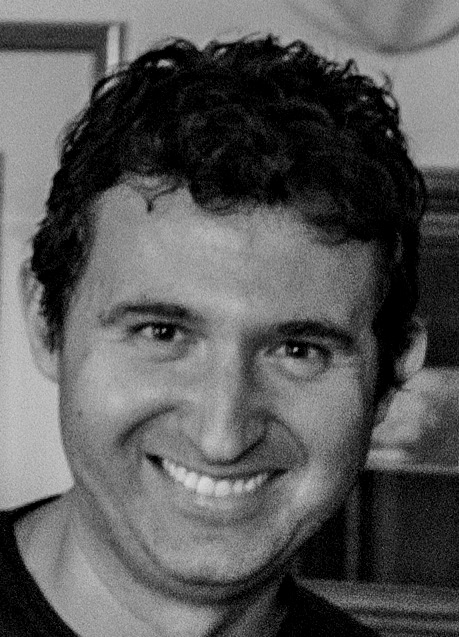
Luca Mottola is a Full Professor at Politecnico di Milano and Senior Researcher at RI.SE Sweden. He leads the Networked Embedded Software Lab (NESLab), focusing on next-generation IoT, battery-less systems, and mobile robotics. His work bridges embedded computing, wireless networks, and cyber-physical systems, with applications in smart cities and space robotics. Education: No explicit details provided in texts. Research interests include energy-harvesting IoT, drone communication, and real-time systems. Notable awards include the ACM SENSYS Test of Time Award (2022) and multiple Best Paper Awards at top conferences like MOBICOM and RTCSA. Grants/Projects: Overseen projects on battery-less IoT, drone localization, and energy-efficient systems. Editorial roles include IEEE Transactions on Mobile Computing and ACM Transactions on Sensor Networks. Labs/Teams: NESLab, FlyZone Testbed for aerial drones, and collaborations with NXP Technologies, TU Graz, and USC.
Luca Sterpone is a Full Professor at the Department of Control and Computer Science (DAUIN), Politecnico di Torino. He serves as Head of the Control and Computer Engineering Department (2023-2027), coordinates the Aerospace and Safety Computing Lab, and is a member of the Academic Senate and Power Electronics Innovation Center (PEIC). His research spans reconfigurable computing, fault tolerance, and radiation effects analysis in electronic systems. Professor since 2021 Department Head (DAUIN) since 2023 Coordinates international collaborations with ESA, AMD Xilinx, NVIDIA, and Thales Alenia Space Develops radiation-hardened FPGA tools (SETA, VERI-Place, PyXEL) 2007 EDAA Outstanding Dissertation Award and 2005 IEEE Best Paper Award Research Focus : Designing radiation-tolerant systems for aerospace, including fault-tolerant AI accelerators, FPGA reliability, and software-based error mitigation. He investigates soft error propagation in nanoscale circuits and develops tools for radiation sensitivity analysis in VLSI. His work integrates hardware-software co-design for mission-critical applications. Awards : EDAA Outstanding Dissertation Award (2007) IEEE European Test Symposium Best Paper (2005) SMACD Best EDA Tool Award (2018) ARC Best Paper candidate (2018) Teaching : He leads courses in Reconfigurable Computing (PhD level), GPU Programming , and Operating Systems . He has formal responsibility for teaching roles across 9 bachelor's and 7 master's years, and mentors multiple PhD students. Collaborations : Coordinates with the European Space Agency (ESA), University of Bielefeld, Universidad de Sevilla, and industrial partners like AMD Xilinx, NVIDIA, and General Motors. He leads projects such as RESCHIP4EU, VEGAS, and TERRAC for radiation-hardened computing solutions.
Igor Simone Stievano is a Full Professor at the Polytechnic University of Turin , affiliated with the Department of Electronics and Telecommunications (DET) and the Interdepartmental Center Ec-L - Energy Center Lab . He holds a PhD in Electrical Engineering and has supervised numerous students in disciplines spanning electromagnetic compatibility, machine learning, and multi-energy networks. His research interests include: Modeling and simulation of integrated circuits Machine learning for signal integrity Multi-energy network resilience Stochastic analysis of electrical systems Electromagnetic compatibility Key projects include the EU-funded SHIMMER initiative on hydrogen injection in gas networks and commercial contracts for high-speed I/O macromodeling. He serves as a chair and committee member at major conferences like the IEEE Workshop on Signal and Power Integrity. Scientific recognitions : IEEE Senior Member Recipient of the 2013 Futuro in Ricerca grant Editorial Board member of ENERGIES (2020-) Stievano actively participates in PhD college evaluations for Mathematical Sciences and Metrology programs at Politecnico di Torino, while teaching courses in Electrical Engineering and Digital Technologies across biomedical, computer, and media engineering curricula.
Davide Previtali is an Assistant Professor at the University of Bergamo's Department of Engineering. His research focuses on control systems, black-box and preference-based optimization, and lithium-ion battery technologies. He teaches the 'Data science and automation' course (6 CFU). Education: Master’s in Computer Science Engineering (2019), PhD in Engineering and Applied Sciences (2022), both from University of Bergamo Research interests include model predictive control, thermal systems optimization, regenerative braking systems, and integration of biological models with neural networks. Recent work emphasizes energy-efficient industrial processes and algorithms for preference-based optimization with convergence guarantees. Publications span industrial oven modeling, shrink tunnel control systems, and advanced optimization algorithms. He leads the Control systems and Automation Laboratory, focusing on practical applications of control theory in manufacturing and energy systems. Labs/Teams: Control systems and Automation Laboratory
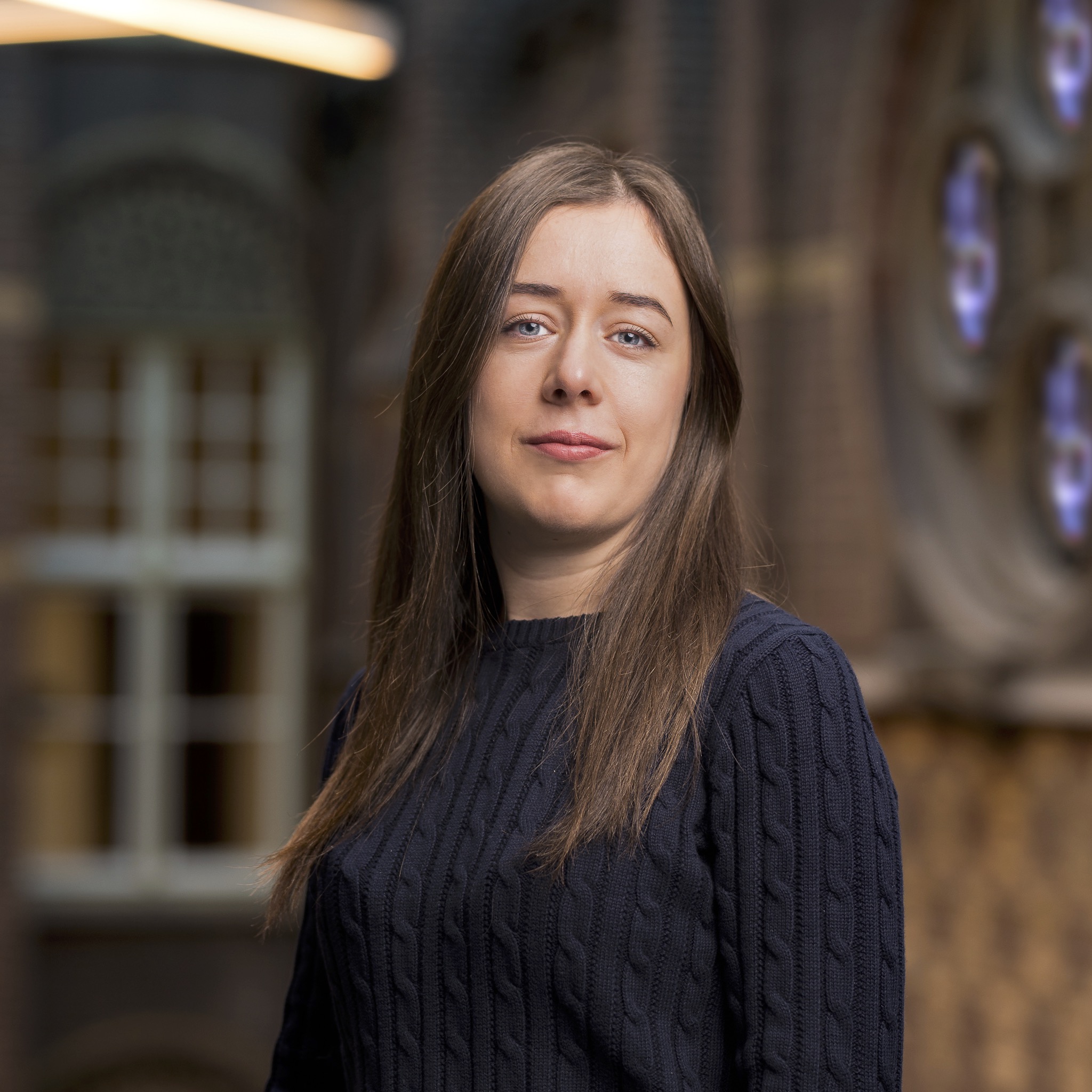
Sarah Azimi is a fixed-term researcher at the Department of Control and Computer Science (DAUIN) within the College of Computer, Film and Mechatronics Engineering at Politecnico di Torino. She actively contributes to research and teaching in the domains of reliable computing, reconfigurable systems, and AI applications for space and smart city security. Research Interests: Reliability and fault tolerance in safety-critical and space systems RISC-V and FPGA-based architectures High-performance computing (HPC) and reconfigurable computing AI resilience and real-time gesture recognition for public safety Radiation effects and hardening techniques for aerospace applications Publication Trends: Her recent publications focus on RISC-V reliability, radiation effects in space missions, AI resilience in reconfigurable platforms, and smart city security through gesture recognition. Her work spans both journal and conference venues, emphasizing practical and mission-tailored solutions in embedded and aerospace computing. Scientific Awards: No awards explicitly mentioned in the provided text. Advising and Grants: Sarah Azimi supervises multiple PhD students including Federico Buccellato, Aobo Cui, and Giorgio Cora. She leads the competitive research project Safe Smart City: Detecting Violence and Requests for Help in Real Time Through Video Surveillance Devices (2024). She is also a member of the RAMSES CubeSat-1 Development project (2025–2026) and led the commercial research project on the Rempro fault-tolerant processor (2022–2023). Labs and Teams: She is a key member of the CAD - Electronic CAD & Reliability Group (DAUIN) at Politecnico di Torino, contributing to cutting-edge research in electronic design automation and system reliability for aerospace and terrestrial applications.
Filippo Ubertini is Professor of Civil and Environmental Engineering at the University of Perugia, Italy, where he coordinates the International Doctoral Programme in Civil & Environmental Engineering and represents the University inside the FABRE national bridge-research consortium. He leads the Structural Health Monitoring Laboratory ( SHM-Lab ) and is the primary contact for assignments linked to smart-infrastructure research. Education: While explicit degrees are not listed in the supplied text, his role as programme coordinator and full professor implies completion of a PhD and habilitation in Civil Engineering. Research focus: Ubertini’s work sits at the intersection of smart materials and data-driven infrastructure management . He develops self-sensing cementitious composites doped with carbon micro-fibers or graphene nano-platelets that can measure strain, cracking and moisture in real time, turning whole bridges and buildings into distributed sensors. Complementary research threads include low-cost acquisition electronics, UAV & InSAR remote sensing, Bayesian & adversarial machine-learning algorithms for damage detection, digital twins and life-cycle cost analysis of bridge networks. Publication trends (2024-2025): Roughly 30 peer-reviewed items per year concentrate on (i) AI-enhanced operational modal analysis and transfer-learning damage classification across bridge populations, (ii) experimental characterisation of 3D-printed and cast self-sensing concrete, (iii) full-scale validation on curved box-girder, masonry and railway bridges, and (iv) integration of satellite radar data with numerical collapse simulations to predict residual service life of landslide-affected viaducts. Scientific awards & recognition: No specific prizes or fellowships are mentioned in the provided text. Doctoral supervision & grants: The text does not enumerate individual students or funded projects; however, his coordination of an international PhD programme and numerous experimental campaigns imply sizeable supervisory and funding responsibilities. Laboratory & team: Ubertini heads the SHM-Lab at UniPg, maintaining facilities for material mixing, 3D concrete printing, electrical impedance tomography, UAV photogrammetry, and large-scale structural testing, while collaborating with the European FABRE consortium and multiple EU projects.
Alberto Oliveri is an Associate Professor at the University of Genoa in the Department of Naval, Electrical, Electronic and Telecommunications Engineering. He teaches courses including Circuits and Systems, Nonlinear Circuits and Systems, Power Management, and Elements of Electrical Technology for undergraduate and graduate programs in Electronic Engineering, Information Engineering, Industrial Technologies, and Chemical Engineering. His research focuses on advanced topics in power electronics and control systems, with particular emphasis on: Modeling and optimization of magnetic components (inductors) for switch-mode power supplies FPGA implementation of nonlinear model predictive control algorithms Synthetic inertia solutions for renewable energy grid integration Embedded control systems for power converters Advanced modeling of ferrite-core and amorphous-core inductors His recent publications (2022-2025) demonstrate a consistent focus on improving power conversion efficiency through advanced control strategies and hardware implementation. Research themes include predictive control optimization, magnetic component characterization under saturation conditions, renewable energy grid support functions, and embedded algorithm development for real-time power system monitoring.
Gian Pietro Picco is a Full Professor at the Department of Information Engineering and Computer Science (DISI) at the University of Trento, Italy. His research focuses on wireless networks, particularly ultra-wideband (UWB) technology, wireless sensor networks, and cyber-physical systems. He teaches courses including Distributed Systems, Low-power wireless networking for the Internet of Things, and Programming 2. Professor Picco's research interests span several interconnected domains in pervasive computing and networking: Ultra-wideband (UWB) technology for precise localization and communication Wireless sensor networks and Internet of Things (IoT) systems Cyber-physical systems and networked control Energy-efficient networking protocols Distributed systems and middleware Software engineering approaches for networked embedded systems His recent publications demonstrate a strong focus on ultra-wideband technology applications, particularly in localization, ranging, and concurrent transmissions. His work bridges theoretical foundations with practical implementations, often addressing real-world challenges in human-robot interaction, contact tracing, and infrastructure monitoring. A notable trend is the increasing application of UWB technology for precise positioning in complex environments, with significant contributions to understanding and mitigating human occlusion effects on ranging accuracy. Professor Picco has received numerous prestigious awards for his research contributions: Best Paper Award at IPSN'23 for "Network On or Off? Instant Global Binary Decisions over UWB with Flick" Best Paper Award at IPIN 2019 for "TALLA: Large-scale TDoA Localization with Ultra-wideband Radios" Best Paper Award at EWSN 2018 for "Concurrent Ranging in Ultra-wideband Radios" Best Paper Award at IPSN 2015 for "Geo-referenced Proximity Detection of Wildlife" Best Paper Award at IPSN 2011 for "Wireless Sensor Networks for Adaptive Lighting in Road Tunnels" Best Paper Award at IPSN 2009 for "Monitoring Heritage Buildings with Wireless Sensor Networks" Mark Weiser Best Paper Award at PerCom 2012 Professor Picco actively advises numerous PhD and Master's students, with several of his advisees becoming prominent researchers in wireless networking. His laboratory has secured significant funding for research projects in wireless sensor networks, IoT systems, and cyber-physical systems. His work has practical applications in heritage building monitoring, wildlife tracking, road tunnel lighting systems, and pandemic contact tracing. His research group maintains the Cloves large-scale ultra-wideband testbed and has developed several middleware systems for wireless sensor networks, including Lime and TeenyLIME. The group collaborates extensively with international research institutions and has made significant contributions to standardization efforts in IoT networking protocols.
Marco Consales is an Associate Professor at the Department of Engineering, University of Sannio. His research focuses on fiber optic sensors, with applications in structural health monitoring, radiation detection, and biomedical sensing. He has collaborated with CERN on projects involving radiation-tolerant sensors and beam pipe structural monitoring. Key areas include lab-on-fiber technology for cancer biomarker detection, soil moisture sensing, and aerospace structural monitoring. Education: Formal degrees not explicitly listed, but his academic position implies doctoral qualifications in Engineering/Electronics. Research Interests: Fiber optic sensors, nanotechnology integration, biomedical applications, environmental monitoring, and aerospace engineering. His work spans over 250 publications, with notable contributions in optical fiber meta-tips, radiation dosimetry, and soil water content monitoring. He has developed innovative sensors for CERN experiments and precision agriculture. His lab's work includes lab-on-fiber platforms for point-of-care diagnostics and advanced materials characterization.
Gemma Catolino is an Assistant Professor at the Department of Computer Science, University of Salerno, and affiliated with the Software Engineering (SeSa) Lab. She has also served as an Assistant Professor at Tilburg University and Eindhoven University of Technology through the Jheronimus Academy of Data Science from September 2022 to December 2023, and previously as a Postdoctoral Researcher at Delft University of Technology and Tilburg/Eindhoven institutions. PhD in Computer Science, University of Salerno (2020), supervised by Prof. Filomena Ferrucci MSc in Management and Information Technology, University of Salerno (2016, magna cum laude) BSc in Computer Science, University of Molise (2014) Her research centers on empirical software engineering, focusing on both technical and social aspects affecting software development. Key areas include code smells, defect prediction, testability, changeability, and the emerging concept of “Community Smells”—social dysfunctions in developer teams. She investigates how human factors, team diversity (especially gender), and developer experience influence software quality and maintenance effort, often using mining software repositories and machine learning techniques. Her recent publications span high-impact journals and conferences such as IEEE TSE, EMSE, JSS, ICSE, and ICSME, with a strong trend toward integrating social and technical metrics for just-in-time defect prediction in mobile applications, analyzing community dynamics, and applying software quality metrics to cybersecurity contexts like dark web analysis. She has also contributed to MLOps and serverless computing. She has received several honors including a DEI research grant (2020), Best Technical Paper at BENEVOL 2019, first and second place in ACM Student Research Competitions (2018, 2017), and the Best Master Thesis award from the Italian Software Metrics Association (2017). Gemma Catolino has been actively engaged in academic service as a referee for top journals like IEEE TSE, EMSE, JSS, and IST, guest editor for special issues, and program/organizing committee member for major conferences including ICSE, MSR, SANER, and MobileSoft, where she served as Program Co-Chair in 2022. She has also contributed as a teaching assistant, lecturer, and course coordinator in machine learning and software engineering courses. She leads and contributes to research projects involving international collaborations, particularly with researchers such as Prof. Filomena Ferrucci, Prof. Andy Zaidman, Prof. Willem-Jam van den Heuvel, and Prof. Alexander Serebrenik. Her work bridges empirical software engineering with practical tool development and socio-technical analysis, positioning her at the forefront of modern software engineering research.
Massimo Poncino is a Full Professor at the Department of Control and Computer Science (DAUIN) within the Faculty of Engineering at Politecnico di Torino. He serves as Scientific Advisor for the STMicroelectronics partnership and coordinates basic engineering subjects. A Senior Member of IEEE since 2012 and Fellow since 2012, he has served on editorial boards for IEEE Transactions on Computer-Aided Design, IEEE Design & Test of Computers, and ACM Transactions on Design Automation. Education: Laurea in Electronic Engineering (1989) and PhD in Computer and Systems Engineering (1993) from Politecnico di Torino Academic Career: Visiting Scientist University of Colorado (1993-1994), Researcher at Politecnico di Torino (1995-2001), Associate Professor at University of Verona (2001-2004), Full Professor at Politecnico di Torino (2006-present) His research focuses on energy-efficient digital systems , including design automation of SoCs, hardware-aware AI, battery management, cyber-physical systems, and embedded systems. Recent publications highlight advancements in digital twins for batteries , low-power neural network deployment , and IoT privacy . Scientific Awards: Recognition of Service Award - ACM (2013) Certificate of Appreciation - IEEE Circuits and Systems Society (2006, 2008, 2009) IEEE Fellow (2012-) Research Involvement: EU H2020, VI/VII Framework Programs evaluator Scientific Director for projects: Approxim@ction, EMBAI, DISLO-MAN, DAMASCO Member of EDA research group Teaching: Course director for Energy Management for IoT (2019-2025) Lecturer for Computer Science courses (2003-2025)
Marco Aldinucci is a Full Professor and Head of the Parallel Computing group at the University of Torino's Computer Science Department. He leads the HPC Key Technologies and Tools (HPC-KTT) national lab under CINI, involving 38 Italian universities. His expertise spans parallel programming models, HPC systems, federated learning, and energy-efficient computing. Aldinucci has secured over €10M in EU research funding, contributed to frameworks like Fastflow and Streamflow, and pioneered initiatives like the HPC4AI lab and the CINI HPC-KTT lab. His research focuses on advancing exascale computing, cloud-HPC integration, and AI-driven medical solutions. Notable projects include the Gaia AVU-GSR solver for exascale systems and the DeepHealth Toolkit for medical AI. He has held governance roles in EuroHPC and chairs the Observatory on Trends and Applications of Supercomputing in Italy. Aldinucci’s publications (150+) address parallel algorithms, distributed learning, and sustainable HPC infrastructure. His work has been recognized with awards from HPC Advisory Council, NVIDIA, IBM, and Autodesk. Current initiatives include the Software & Integration lab at the Italian National HPC Centre (ICSC) and leadership in the OpenScience working group at Torino. His advising includes Iacopo Colonelli, whose thesis won CINI’s 2023 best award. He actively engages in EU projects, workflow systems, and standards for hybrid computing environments. Aldinucci’s labs and collaborations drive innovations in HPC portability, energy efficiency, and AI scalability.
Mirco Marchetti is an Associate Professor at the University of Modena and Reggio Emilia, affiliated with the Department of Engineering 'Enzo Ferrari'. He specializes in cybersecurity, network security, and automotive systems. His teaching responsibilities include courses on cybersecurity fundamentals, computer networks, operating systems, and automotive cyber defense. Research interests focus on intrusion detection systems (IDS), vehicular networks (VANETs), machine learning applications in cybersecurity, and automotive cybersecurity. He has contributed to projects like HackCar (automotive attack/defense testbed) and RealCAN (real-time CAN bus analysis tools). His work also explores adversarial attacks on ML-based systems and secure communication protocols for industrial and vehicular systems. Recent publications emphasize automotive cybersecurity (e.g., Mercedes-Benz infotainment system analysis, CAN bus anomaly detection), ML robustness against adversarial attacks, and zero-trust architectures. He collaborates with the SECloud research group (secloud.ing.unimore.it) and uses experimental platforms like Software-Defined Radios for security evaluations. Teaching responsibilities span multiple academic programs including Master's degrees in Computer Engineering and Artificial Intelligence Engineering. Courses emphasize practical skills in Linux/Unix administration, network configuration, and embedded system security.
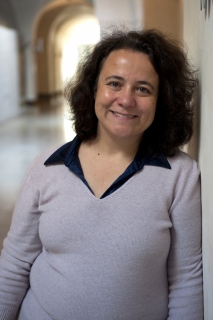
Lisa Elviri is an Associate Professor in Analytical Chemistry at the Department of Pharmacy, University of Parma, Faculty of Sciences. She holds a PhD in Chemical Sciences (Analytical Chemistry) from the University of Parma and has been a tenured researcher since 2004. Education: PhD in Chemical Sciences (Analytical Chemistry, University of Parma); Laurea in Chemistry (University of Parma). Her research spans analytical chemistry , mass spectrometry , biomaterials , 3D printing , and clinical diagnostics . She focuses on developing LC-MS and immunoenzymatic methods, validating techniques for pharmaceutical analysis, and designing chitosan-based scaffolds for tissue regeneration. Recent publications highlight work on Alzheimer’s disease (PCSK9 inhibition, APOE4 genotype studies), 3D-printed medical devices , and biorefinery quality monitoring using spectroscopy. Her teaching includes Analytical Chemistry for 5-year Master’s programs in Pharmacy and Pharmaceutical Chemistry. She has authored 75 international publications, 140 conference communications, and holds an H-index of 26 (Google Scholar). Her office is located at the Science and Technology Campus, Parma.
Chiara Petrioli is Full Professor at Sapienza University of Rome's Department of Computer, Control and Management Engineering and Deputy Rector for scouting, fundraising, and business incubation. She founded the spinoff WSENSE S.r.l. and coordinated the university's Computer Science Ph.D. program. Her research pioneers the Internet of Underwater Things, leading to breakthrough technologies featured in international media and the NT100 list. Her research interests center on wireless, embedded, IoT, and cyber-physical systems, with a focus on underwater networking. She designs and optimizes communication protocols, security mechanisms, and energy-efficient architectures for underwater sensor networks, enabling applications in environmental monitoring, archaeology, and deep-sea exploration. Recent publications highlight trends in underwater acoustic communications (e.g., dual-channel protocols, S2C modulation), security (authentication, key exchange), and energy efficiency (wake-up radio, UAV-assisted data collection). Applications span dissolved oxygen monitoring, submerged heritage preservation, and sustainable deep-sea mining impact assessment. Her scientific awards include: IEEE Fellow 2021 Fulbright Scholar Inspiring Fifty 2018 N2Women 2019 Star in Computer Networking and Communications Gamma Donna Women Startup Award 2022 Top 2% World Scientist by Stanford Repubblica D 100 Women to Change the World 2021 As principal investigator, she has led over twenty national and international projects, including EC projects GENESI and SUNRISE, and EASME projects ArcheoSub and Seastar. She founded WSENSE S.r.l., a spinoff that translates research into innovative technologies, resulting in international patents and features in BBC, RAI, Wired, and National Geographic. She actively contributes to the academic community as chair of IEEE SECON steering committee, associate editor of ACM/IEEE Transactions on Networking, and through leadership roles in ACM SIGMOBILE and IEEE Transactions on Mobile Computing.