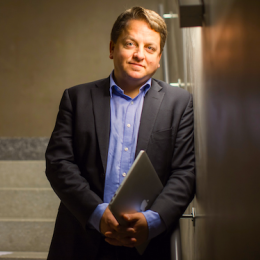
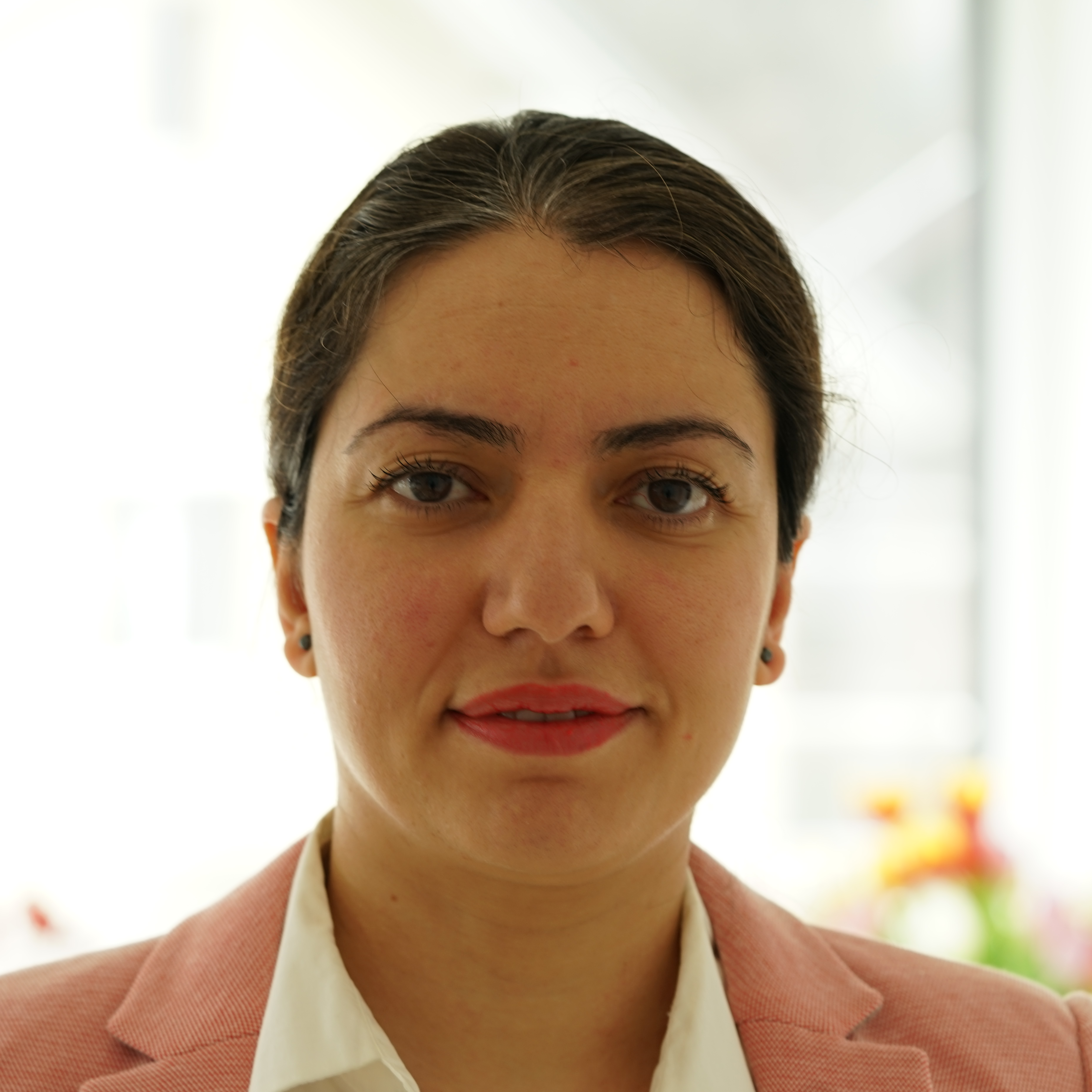
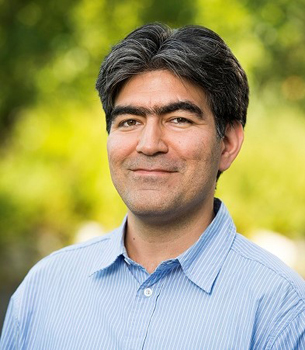
Mikael Östling is a Professor at KTH Royal Institute of Technology, holding a position in the Division of Electronics and Embedded Systems within the School of Information and Communication Technology. He earned his MSc (1980) and PhD (1983) in engineering physics from Uppsala University. Since 1984, he has been a faculty member at KTH, serving as Deputy President (2017–2022), Dean of the School of ICT (2004–2012), and Head of the Department of Microelectronics and Information Technology (2000–2004). He has held visiting roles at Stanford University and the University of Florida. His research focuses on silicon/silicon germanium devices, wide bandgap semiconductors (e.g., silicon carbide), and high-power/high-frequency applications. He has authored over 600 papers, 10+ book chapters, and a textbook. Key achievements include co-founding TranSiC (2005), securing the ERC Advanced Investigator Grant (2009), and serving as Editor-in-Chief of IEEE Journal of Electron Devices Society (2016–2019). He is an IEEE and ECS Fellow. Östling has supervised 50 PhD theses and contributed to innovations like high-temperature silicon carbide circuits and graphene-based sensors. His work spans academic leadership, industry collaboration, and global research advisory roles in EU frameworks and the European Research Council.
Saad Mubeen is a Full Professor of Computer Science at Mälardalen University, Sweden, affiliated with the School of Innovation, Design and Engineering and the Division of Networked and Embedded Systems. He holds a Master's in Electrical Engineering (Embedded Systems) and a PhD in Computer Science and Engineering from Mälardalen University (2014), with a Docent title (2018) focused on vehicular embedded systems. His research emphasizes predictable embedded systems, timing analysis for real-time communication, and component-based software design. Key areas include model-driven development for automotive systems, integration of TSN/5G networks, and fault-tolerant industrial architectures. He has led projects on end-to-end timing analysis in distributed systems, ROS 2 verification, and cognitive edge-cloud scheduling. Publications span 2021–2025, focusing on real-time systems, network protocols (TSN, AVB, 5G), and industrial automation. Notable work includes frameworks for TSN configuration, fault diagnosis tools using NETCONF, and scheduling algorithms for heterogeneous edge-cloud environments. His contributions address critical challenges in timing predictability, security, and resource optimization for cyber-physical systems. Education contributions include problem-based learning modules for vehicular software engineering. He is actively involved in bridging academia and industry through collaborative research on next-generation automotive and industrial systems.
Name: Fredrik Blix Academic Rank: Associate Professor Affiliation: Department of Computer and Systems Sciences at Stockholm University Specializations: Information Security, Cybersecurity, Cyber Resilience, Cyber Policy, and Threat-Led Penetration Testing Research Interests: Dr. Blix focuses on advanced cybersecurity frameworks, including adaptive security models for multi-stage cyber attacks and systematic engineering approaches for cyber-physical systems. His work addresses compliance standards like NIS2 and GDPR, particularly within the Swedish automotive industry and cloud services. Notably, he developed the ASFA framework for DORA-compliant threat analysis and contributes to security-SLA monitoring in cloud environments. Notable Contributions: His research spans risk quantification models (e.g., FAIR in logistics), attack behavioral pattern analysis for critical infrastructure, and validation of offensive cyber operations frameworks. He also explores intersections between informal, formal, and technical cybersecurity components through case studies like "Special Commando Move".
Paolo Monti is a Professor and Head of the Optical Networks Unit at Chalmers University of Technology's Department of Communications, Antennas and Optical Networks. With extensive expertise in optical communication infrastructures, he leads research focusing on energy efficiency, network resiliency, programmability, automation, and techno-economics of optical networks. His work spans multiple international collaborations with funding from major research bodies across EU, USA, and Asia. Professor Monti's research interests center around next-generation optical networking technologies. His work explores the integration of artificial intelligence and machine learning with optical networks, quantum-classical network convergence, 6G infrastructure development, and network automation. His research addresses critical challenges in network energy consumption, reliability under failure conditions, and cost-effective deployment strategies for emerging communication technologies. The research group under his leadership develops frameworks for optical network monitoring, security, and resource optimization using advanced computational techniques. Analysis of his recent publications reveals a strong trend toward AI/ML integration with optical networking, with significant focus on quality of transmission estimation, network automation, and 6G readiness. His work increasingly combines quantum technologies with classical optical networks while addressing practical implementation challenges in multi-band elastic optical networks. The publications demonstrate a progression from theoretical network design to practical implementations with real-world validation. Professor Monti has received recognition as a Senior Member of IEEE, highlighting his contributions to the field of communications and networking. As an academic leader, Professor Monti has been involved as Principal Investigator, co-PI, and main technical leader in numerous national and international projects. His educational contributions include teaching courses at undergraduate, Master's, and PhD levels, as well as developing ICT-focused education programs. His research has been supported by major funding bodies including the European Commission, VINNOVA, and Wallenberg Centre for Quantum Technology. The Optical Networks Unit under Professor Monti's leadership operates as a vibrant research environment focusing on both theoretical and experimental aspects of next-generation optical communications. The unit maintains strong collaborations with industry partners and academic institutions worldwide, participating in multiple EU-funded projects and national initiatives focused on quantum communications and 6G infrastructure.
Dr. Jesper Andersson is a Professor of Computer Science and Dean of the Faculty of Technology at Linnaeus University. He holds a PhD from Linköping University (2007) and has extensive leadership experience, serving as Department Chair from 2013–2020. His research focuses on self-adaptive software systems, software reuse, and cyber-physical systems. He has published widely in top venues like ACM Transactions on Autonomous and Adaptive Systems and Computing , and actively contributes to organizing international conferences. Education: Responsible for advanced courses in software design and development processes. Engaged with industry through technical advising for global companies. Completed major projects include developing a master’s program in computer science and the PROSSES project on self-protecting systems. Current research projects include Digital Twin of Organizations (DTO), DIACCESS for sustainable cities, and Aladino for adaptable architectures. His work emphasizes resilience frameworks, decentralized control, and industrial adaptation practices. Key collaborations include leading the AdaptWise research group and co-chairing SEAMS 2023. His articles span self-adaptive patterns, trust-aware systems, and IoT applications, reflecting a strong focus on both theoretical and applied software engineering challenges.
Ibrahim Orhan serves as a Lecturer at KTH Royal Institute of Technology within the Division of Health Informatics and Logistics. His primary responsibilities include teaching core courses such as Communication Networks (HE1033), Mobile Communications and Wireless Networks (HI1035), and Routing in IP Networks (HI2002), while also supervising first-cycle degree projects in Computer and Electrical Engineering. His research centers on wireless sensor networks with specialized applications in healthcare and education. Key focus areas include time synchronization protocols for multi-sensor systems, performance monitoring in contention-based networks, and data fusion techniques for health monitoring applications like fall detection. Recent work demonstrates a strategic expansion into educational technology through serious games for engineering education. Analysis of his 15 most recent publications (2006-2023) reveals an evolving research trajectory: initial work concentrated on fundamental wireless network performance (2008-2011), shifting toward healthcare applications (2012-2016), and culminating in educational technology innovations (2023). Persistent themes include Bluetooth synchronization, mobile sensor integration, and quality-of-service management in resource-constrained environments. Dr. Orhan actively supervises undergraduate degree projects in computer and electrical engineering, though specific student names aren't publicly listed. His research has been supported through KTH institutional channels, with publications spanning IEEE conferences, specialized journals like the International Journal of Serious Games, and collaborative projects focused on ambient assisted living solutions.
Yuan Yao serves as an Assistant Professor in the Department of Information Technology at Uppsala University, Sweden. His academic role spans teaching and research within the Computer Systems division, focusing on cutting-edge computer architecture and parallel computing systems. He maintains active collaborations across international institutions, particularly in energy-efficient hardware design and emerging computing paradigms. His educational journey includes: B.S. in Micro-electronics from Northwestern Polytechnical University, China (2009) M.S. in System-on-Chip Design from KTH Royal Institute of Technology, Sweden (2014) Ph.D. in Electrical Engineering and Computer Science from KTH Royal Institute of Technology (2019) Yao's research centers on power and thermal management for chip multi-processors, Network-on-Chips (NoCs), and GPUs. He pioneers hardware/software co-design for high-performance computing, coherency mechanisms for emerging memory technologies, and performance analysis of on-chip networks. Recent work expands into neural network acceleration and battery-less Internet of Things architectures, reflecting a trajectory toward energy-constrained specialized systems. His methodology integrates formal modeling with practical implementation for real-world impact. Publication trends reveal consistent innovation in energy efficiency across parallel architectures. From foundational DVFS techniques for NoCs (2016-2018) to recent breakthroughs in battery-less IoT (2023-2024), his work demonstrates evolutionary progression toward novel computing domains. Key thematic threads include thermal-aware optimization, memory consistency protocols, and hardware acceleration for AI workloads, with applications spanning data centers to embedded systems. Scientific recognition includes: Best paper candidate at IEEE International Symposium on High Performance Computer Architecture (HPCA) 2018 for in-network packet generation research Yao actively supervises graduate researchers and leads collaborative projects in computer architecture. His grant portfolio supports work on battery-less IoT systems and neural network accelerators, though specific funding details aren't publicly enumerated. Current projects emphasize sustainable computing through novel architectures for energy-harvesting environments. He operates within Uppsala University's Computer Systems division, contributing to research groups focused on hardware acceleration, embedded systems, and networked architectures. His lab environment fosters interdisciplinary work bridging computer architecture, energy harvesting, and machine learning for next-generation computing platforms.
Masoumeh Ebrahimi is an Associate Professor at KTH Royal Institute of Technology, Division of Electronics and Embedded Systems, and holds an Adjunct Professor position at the University of Turku, Finland. She leads research in hardware acceleration, neural architecture search, and fault-tolerant systems. Her work bridges machine learning, embedded systems, and network-on-chip (NoC) design. Research Interests: Hardware-Accelerated Machine Learning 6G Network Architectures Fault-Tolerant Computing High-Performance GPU Systems Network-on-Chip (NoC) Design Federated Learning Key Projects: Co-supervisor of Hui Chen’s postdoc project Generalizing hardware acceleration for nonlinear functions . Active in Digital Futures, a cross-disciplinary center focusing on societal challenges using digital tech. Collaborates on edge computing, 6G networks, and resilient embedded systems. Labs & Teams: Core member of KTH’s Digital Futures initiative, advancing AI accelerators and next-gen communication systems. Engaged in EU-funded projects on NoC reliability and federated learning frameworks.
Marjan Sirjani is a Professor at Mälardalen University, affiliated with the School of Innovation, Design and Engineering, and the Division of Computer Science and Software Engineering. Her research focuses on cybersecurity, formal verification, and cyber-physical systems, with notable contributions to actor-based modeling (e.g., Timed Rebeca) and tools like AFRA for model analysis. She specializes in integrating formal methods into safety-critical systems, including automotive cybersecurity, ROS2 robotics, and blockchain-based IoT systems. Her work emphasizes rigorous analysis of protocols, concurrency, and real-time constraints. Recent projects include the CRYSTAL framework for CPS assurance, Tiny Twins for runtime attack detection, and applying LLMs for automated test generation. She also explores semantic segmentation in construction and compositional analysis of distributed systems. Publications highlight advancements in protocol learning, controller synthesis for safety, and model-driven development. Her research bridges theoretical foundations (e.g., automata theory, temporal logics) with practical applications in autonomous systems, medical device interoperability, and smart mobility. Labs/Teams: Involved in the Rebeca tool development (AFRA) and collaborative projects on CPS security. Grants: Not explicitly listed but implied through project involvement.
Masoud Daneshtalab is a Professor at Mälardalen University, leading the Heterogeneous System research group (HERO). He previously held roles as a European Marie Curie Fellow at KTH Royal Institute of Technology (2014) and as a university lecturer and group leader at the University of Turku, Finland (2012-2014). His research focuses on interconnection networks, hardware/software co-design, deep learning acceleration, and evolutionary optimization. He specializes in fault-tolerant DNN accelerators, time-sensitive networking (TSN), and embedded systems. His work bridges theoretical advancements with practical implementations, emphasizing reliability and efficiency in edge computing and AI applications. Research interests include: Network-on-Chip (NoC) architectures and congestion prediction Fault resilience in deep neural networks (DNNs) Optimization of federated learning and homomorphic encryption for edge AI Integration of TSN with 5G and automotive systems Hardware acceleration techniques for computational efficiency Recent publications emphasize advancements in robust AI architectures, fault tolerance mechanisms, and TSN-based communication protocols. His work often addresses practical challenges in deploying machine learning models on resource-constrained devices. He actively contributes to interdisciplinary projects in autonomous systems, healthcare monitoring via FMCW radar, and neural architecture search for embedded applications. Labs/Teams: Leads the HERO group at Mälardalen University, focusing on heterogeneous computing systems and real-time embedded systems.
Slimane Ben Slimane is an Associate Professor and University Lecturer at the Royal Institute of Technology (KTH) in Stockholm, Sweden, where he is affiliated with the School of Electrical Engineering and Computer Science. His academic position combines teaching responsibilities with active research in communication systems. Dr. Ben Slimane's research focuses on critical areas of modern wireless communications: Wireless Communication Systems and 5G/6G Technologies Radio Network Design and Optimization Signal Processing for Communication Systems Network Coding and Cooperative Communications IoT Security and Industrial Wireless Networks Cognitive Radio and Spectrum Management His publication record demonstrates a strong progression from fundamental wireless communication research to addressing contemporary challenges in next-generation networks. Recent work focuses on mmWave communications, beam alignment issues in 3GPP standards, C-RAN architectures for beyond 5G, and security solutions for industrial IoT deployments. His research consistently bridges theoretical frameworks with practical implementation challenges faced by industry. At KTH, Dr. Ben Slimane serves as examiner and course coordinator for numerous advanced courses including Wireless Communication Systems (IK2507), Radio Networks (IK2510), and Signal Processing (II1303). He also oversees degree projects across multiple programs in computer science, electrical engineering, and information technology. Dr. Ben Slimane actively contributes to academic development through examination of bachelor's and master's theses, with particular focus on communication systems, embedded systems, and ICT innovation specializations. His teaching portfolio reflects the interdisciplinary nature of modern communication engineering education at KTH.
Wojciech Mostowski is a Senior Lecturer at the School of Information Technology, Halmstad University. His academic role involves both research and teaching, with a focus on software reliability and energy-efficient software analysis. Research interests: Mostowski leads the ELLIIT funded project on "Static Analysis of Energy Usage in Software" and contributes to software reliability research. His work bridges theoretical analysis with practical applications in energy-conscious software development. Teaching: He is responsible for courses including Advanced Object-Oriented Programming , Distributed Systems Programming , and Data Security for Embedded Systems , emphasizing technical rigor and pedagogical engagement. Advising: Mostowski supervises PhD students Joel Nyholm (main), Sina Entekhabi (main), and Sundas Munir (co-supervisor), fostering the next generation of researchers in software engineering and embedded systems. Contact: Reach him via email at wojciech.mostowski@hh.se or mobile +46 72-977 36 22.
Magnus Jonsson is a Professor of Real-Time Computer Systems at Halmstad University's School of Information Technology. He serves as Deputy Program Director for the university's Smart Cities and Communities profile area. His research focuses on real-time communications, vehicular networks, cooperative systems, and resilient communication architectures. Key research themes include: Autonomous vehicle communication systems Real-time protocols for embedded networks V2X (vehicle-to-everything) infrastructure Wireless network reliability Fiber-optic communication systems Publications emphasize practical applications like: Securing autonomous vehicle systems Platooning applications Low-latency communication frameworks He has edited multiple conference proceedings including Communication Technologies for Vehicles and Resilient Networks Design and Modeling . His work contributes to both theoretical advancements and industry-ready solutions for smart mobility and critical infrastructure systems.
Ahmed Rezine is a Senior Lecturer and Associate Professor at the Department of Computer Science (IDA) , specifically within the Software and Systems (SAS) division at Linköping University . His research focuses on software verification , machine learning , and cybersecurity , particularly in the context of deep neural networks and embedded systems . Research Trends: His recent publications, such as VNN: Verification-Friendly Neural Networks (2024) and Trojans in Instruction Sets (2024), highlight his work at the intersection of AI robustness and hardware security . Earlier studies (2023-2017) emphasize formal verification of concurrent systems and GPU architectures , reflecting a consistent focus on parameterized systems and security analysis . Colleagues & Collaborations: Rezine collaborates with researchers in the Software and Systems group, part of the Wallenberg Autonomous Systems Program (WASP) . His work intersects with AI IDA and Embedded Systems (ESLAB) , focusing on autonomous systems and real-time processing .
Pedro Petersen Moura Trancoso is a Full Professor at the Department of Computer Engineering , Chalmers University of Technology, Sweden. His research focuses on deep learning accelerators , heterogeneous computing , energy-efficient architectures , and memory system optimization for IoT and edge devices. Key projects: AutoPIM (autonomous vehicle accelerators), VEDLIoT (efficient AIoT), eProcessor (European processor ecosystem), PRIME (PIM systems) Collaborations: European Commission, Swedish Research Council, Swedish Foundation for Strategic Research Research Trends : Hybrid CNN/GPU/FPGA Acceleration On-Chip/Scratchpad Memory Optimization Adaptive Resource Allocation for Energy Efficiency Hardware-Software Co-Design for AIoT Publications demonstrate leadership in deep learning hardware , heterogeneous memory systems , and edge computing architectures . Key journals: IEEE ISPASS, ACM Computing Frontiers, DATE Conference.