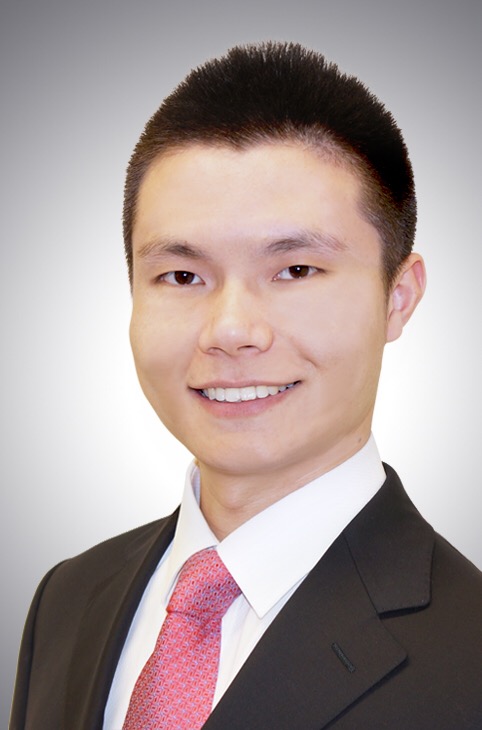
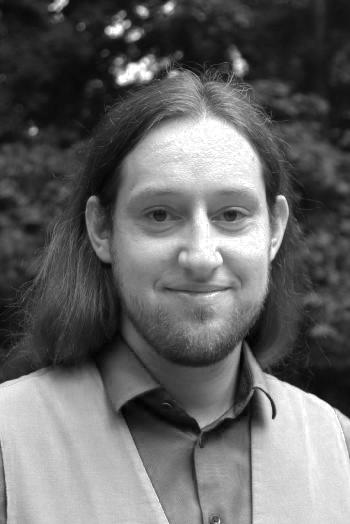
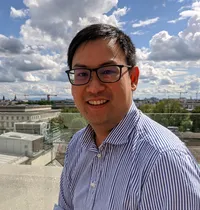
Dr.-Ing. Junjie Shi is a researcher at the Department of Computer Science (Chair 12) within the Faculty of Computer Science at TU Dortmund University. His work focuses on real-time systems, embedded systems, and resource-aware machine learning approaches. Research Interests: Real-Time Systems, Embedded Systems, Real-Time Scheduling, Resource Synchronization/Sharing Protocols, Resource-Aware Machine Learning, Bayesian Optimization, Reinforcement Learning Address: Otto-Hahn-Str. 16, Room E05, 44227 Dortmund, Germany. Contact: Phone +49 (231) 755-6121.
LiGuo Huang is an accomplished researcher and academic in the field of software engineering with a publication record spanning over two decades from 2003 to 2025. With 95 publications documented in the dblp database, Huang has established a significant presence in both traditional software engineering domains and emerging areas where machine learning intersects with software development practices. Huang's research has evolved from foundational work in value-based software engineering to cutting-edge applications of artificial intelligence in software analysis and maintenance. Huang's research interests encompass a broad spectrum of software engineering topics, with particular emphasis on value-based software engineering, software quality assurance, defect classification, and software process modeling. More recently, Huang has focused on applying machine learning and deep learning techniques to software engineering problems, including code summarization, vulnerability detection, and software maintenance. This evolution reflects the broader shift in the field toward data-driven approaches for software development and analysis. The publication trends reveal a consistent research trajectory with increasing publication rates in recent years, particularly in the application of machine learning to software engineering problems. Huang's work shows a strategic progression from theoretical foundations in software quality to practical applications of AI in software development. The research spans empirical studies, systematic literature reviews, and novel technical approaches to longstanding software engineering challenges, demonstrating both theoretical depth and practical relevance. Huang has collaborated extensively with researchers across multiple institutions, forming particularly strong partnerships with Jidong Ge, Bin Luo, Chuanyi Li, and Barry W. Boehm. The collaboration with Boehm in early career publications suggests mentorship that evolved into peer collaboration, while more recent work shows Huang mentoring newer researchers who now serve as primary authors on joint publications. Huang's research has practical implications for software development practices, particularly in improving software quality, enhancing developer productivity through AI-assisted tools, and providing empirical evidence for software engineering decision-making. The work bridges theoretical computer science with practical software engineering concerns, making significant contributions to both academic research and industry practice.
Emmanuel Baccelli is a Professor for 'Open and Secure IoT Ecosystem' at Freie Universität Berlin's Department of Mathematics and Computer Science, holding a dual appointment with Inria (French national research institute for digital sciences) and the Einstein Center Digital Future (ECDF). His research focuses on the intersection of low-power protocols, deeply embedded open source software, and IoT security, addressing the critical trade-off between energy efficiency and security in resource-constrained devices. Professor Baccelli's research interests span Distributed Algorithms, Computer Networks, Internet of Things, Open Source Software Development, Wireless Networks, Internet Architecture, Network Protocol Design & Analysis, Cybersecurity, TinyML, and Standardisation . His work emphasizes Privacy-by-Design principles, advocating for open specifications and open source solutions to enhance user control, privacy, and sovereignty in IoT ecosystems. He investigates how deeply embedded open source software can improve both functionality and security of IoT devices, with particular attention to the technical challenges of maintaining security while preserving energy efficiency. Baccelli's publication record demonstrates consistent contributions to networking standards, particularly in low-power and lossy networks. His research has significantly influenced IoT protocols and standards, with numerous RFC publications that form foundational elements of modern IoT networking infrastructure. His work bridges theoretical networking concepts with practical implementations in constrained environments. As an educator and mentor, Professor Baccelli has advised multiple PhD students through completion, including Koen Zandberg (defended June 2025), Oliver Hahm (defended December 2016), and Juan Antonio Cordero (defended September 2011), with Zhaolan Huang currently working on Ultra-Low Memory Footprint Machine Learning. He actively seeks new students interested in programming, cybersecurity, applied mathematics, communication protocols, and tinyML. Professor Baccelli co-founded and coordinates the RIOT open source community, an operating system for IoT devices based on microcontrollers. His work extends beyond technical domains to include engagement with humanities scholars, lawyers, and designers on open source philosophy and practice. He maintains active involvement in standardization efforts through the IETF, contributing to multiple working groups focused on IoT and networking protocols.
Daniel Franzen is an affiliated researcher at the Human-Centered Computing group within the Department of Mathematics and Computer Science . His work bridges technology functionality with privacy concerns, focusing on parameters that influence whether users perceive digital systems as intrusive or beneficial. University of Edinburgh PhD in Computer Science (2016) Master of Science in Computer Science (2012) and Media Informatics (2012) from RWTH-Aachen Bachelor of Science in Computer Science (2010) and Mathematics (2011) from RWTH-Aachen His research explores privacy-preserving data donation , human-AI collaboration, and the design of systems that balance utility with ethical considerations. Key projects include delirium prevention in clinical settings, reflective practice in data science, and adversarial interface design patterns. Recent publications highlight trends in privacy visualization , LLM-based conversational interfaces , and hybrid intelligence systems . He investigates how thresholds in machine learning, user onboarding libraries, and visual storytelling impact decision-making and data interpretation. Daniel contributes to educational initiatives through courses like Human-Centered Data Science and Interactive Intelligent Systems , emphasizing critical thinking and visualization literacy. The HCC lab focuses on designing technologies that prioritize user sovereignty and ethical frameworks, such as the Meta-Consent System for health data sharing.
Eva Zangerle is a Professor at Universität Innsbruck, Austria, with a focus on recommender systems, music information retrieval, and data science. She actively contributes to multi-method evaluation frameworks and collaborative research initiatives like PAN (Plagiarism Authorship Verification) workshops. Key research areas: Recommender Systems Evaluation, Music Emotion Recognition, Authorship Analysis Major collaborations with institutions like Zenodo, ACM, CEUR-WS.org, and RecSys conferences Her recent work explores graph neural networks for music recommendation, style change detection in multi-author texts, and cross-domain user modeling. Articles emphasize temporal modeling, multimodal data fusion, and ethical considerations in algorithmic systems. Eva leads tasks in PAN workshops and contributes to open-access datasets. She collaborates with researchers like Christine Bauer, Alan Said, and Günther Specht on improving evaluation practices in recommender systems.
Artem Sokolov serves as an Honorary Professor in the Department of Computational Linguistics at Heidelberg University and as a Research Scientist at Google Berlin. His primary research focuses on machine translation and structured prediction within natural language processing. Previously, he held positions at Amazon, the Statistical NLP Group at Heidelberg University led by Prof. Stefan Riezler, LIMSI, and Orange Labs in France, contributing to advancements in statistical and neural machine translation systems. He earned his PhD in Computer Science and Artificial Intelligence from the IRTCITS research center in Kyiv. His doctoral thesis investigated randomized algorithms for locality-sensitive embeddings of the Levenstein edit distance, establishing foundational work for efficient string similarity search in computational linguistics and intrusion detection systems. Dr. Sokolov's research expertise spans machine translation, imitation learning, bandit algorithms, and weakly supervised learning. He has pioneered methods for learning from partial feedback in structured prediction tasks, particularly addressing exposure bias in sequence generation and multi-facet evaluation of translation systems. His work bridges theoretical machine learning with practical NLP applications, emphasizing robustness against noisy data and scalable optimization techniques for real-world deployment. Analysis of his recent publications reveals trends toward scalable influence functions for model interpretability, multi-attribute control in machine translation, and rigorous auditing of multilingual datasets. His research consistently intersects natural language processing, machine learning optimization, and data quality assessment, with increasing emphasis on ethical AI considerations and efficient learning from weak supervision signals. Scientific awards include: 1st place at ECML/PKDD Discovery Challenge 2010 (English quality task) 2nd place at ECML/PKDD Discovery Challenge 2010 (general task) 2nd place in Semi-Supervised Feature Learning Challenge at NIPS 2011 3rd place in Semi-Supervised Feature Learning Challenge at NIPS 2011 As co-Principal Investigator for the 2015-2017 grant "Weakly Supervised Learning of Cross-Lingual Systems", Dr. Sokolov developed techniques for learning cross-lingual rankings from weakly supervised data sources like patent citations and Wikipedia hyperlinks. He has mentored students through teaching advanced courses including Imitation Learning, Stochastic Learning, and Statistical Machine Translation at Heidelberg University, supervising seminar projects on structured prediction and optimization algorithms. Dr. Sokolov is an active member of the Statistical NLP Group at Heidelberg University and collaborates with research teams at Google Berlin. His current work focuses on advancing production-scale machine translation systems through scalable inverse reinforcement learning and robust training methodologies, building on his extensive background in both academic research and industrial applications.
Shigehiko Schamoni is a Lecturer and Compute Lab Manager at Heidelberg University's Institute of Computer Engineering (ZITI), where he oversees scientific computing infrastructure and teaches computer science courses. He is completing his PhD under Prof. Stefan Riezler in the Statistical NLP group. His dual roles bridge technical management and academic instruction, with teaching responsibilities spanning undergraduate and graduate courses since 2011. Research Focus: Schamoni's work intersects clinical AI and natural language processing, with emphasis on: Machine learning for medical applications (sepsis prediction, clinical validity) Speech translation and automatic speech recognition Cross-lingual information retrieval Data augmentation techniques Multimodal machine learning His 15 most recent publications (2016-2024) demonstrate strong thematic clustering: 47% focus on medical AI (primarily sepsis prediction and clinical data validation), while 53% address NLP challenges (speech translation, ASR, and multimodal systems). This bifurcation reflects consistent collaboration with medical researchers alongside core NLP innovation. Teaching Experience includes instruction across 10+ courses since 2011, such as: Graduate courses: "Tools – Werkzeuge für effizientes wissenschaftliches Arbeiten" (2023-2024) Undergraduate courses: "Einführung in die Nutzung computerlinguistischer Ressourcen" (2021-2022) Programming courses: "Advanced Programming" and "Parallel Programming Paradigms" (2012-2015) He maintains affiliations with both the ZITI infrastructure team and Statistical NLP research group.
Kai-Uwe Bletzinger is a Professor and Chair of Statics and Dynamics at the Technical University of Munich's School of Engineering, Department of Civil, Geo and Environmental Engineering. With an extensive publication record spanning from 1991 to 2025 totaling 246 publications, he maintains an active research program in computational structural engineering. His research productivity shows consistent output with significant activity in recent years, particularly in 2022-2025. Professor Bletzinger's research focuses on computational mechanics with specializations in Finite Element Analysis , Shape Optimization , Form Finding , Computer-Aided Design , Membrane Structures , and Fluid-Structure Interaction . His work bridges theoretical computational methods with practical engineering applications, particularly in structural optimization and analysis. The fingerprint of his research shows strong emphasis on numerical methods for structural engineering problems. Analysis of his recent publications (2022-2025) reveals a consistent focus on advancing computational methods for structural optimization, particularly through the Vertex Morphing technique. His work increasingly integrates modern computational approaches including machine learning applications in structural dynamics and digital twin technologies for construction. The research spans fundamental numerical method development to practical applications such as the tensegrity tower for the German Museum in Munich, demonstrating both theoretical depth and practical relevance. While specific awards are not mentioned in the provided text, his extensive publication record in high-impact engineering journals suggests recognition within the computational mechanics community. His research appears to be well-funded given the consistent output and collaborative nature of many publications. Professor Bletzinger's work demonstrates leadership in computational structural engineering, with particular expertise in developing and applying advanced numerical methods to complex structural problems. His research group appears to be active in both fundamental method development and practical engineering applications, contributing significantly to the field of computational mechanics and structural engineering.
Dominik Hujo is a researcher at the Chair of Automation and Information Systems at the Technical University of Munich (TUM). He holds a Master of Science degree and contributes to advanced research in industrial automation and AI integration. His research focuses on industrial cyber-physical systems , digital twins , human-machine interaction , and AI deployment in manufacturing environments . His work emphasizes real-time requirements, embedded systems, and data management for production processes. Dominik's publications from 2023-2025 demonstrate expertise in multi-agent coordination , predictive maintenance , edge-cloud architectures , and SysML modeling for mechatronic constraints . Key application areas include construction machinery, gear assembly, and logistics systems. He actively collaborates with researchers like Prof. Birgit Vogel-Heuser and Marius Krüger on projects such as KI.Fabrik (AI Factory) and OpAI4DNCS (Operator-AI Interaction for Distributed Control Systems).
Kathrin Land is a researcher at the Chair of Automation and Information Systems at Technical University of Munich (TUM), working under Prof. Birgit Vogel-Heuser. Her research focuses on automation engineering, model-based development, and data-driven optimization of production systems. Key research areas include: Test case scheduling and prioritization Digital twins for industrial applications Technical debt management in automation OPC UA integration in construction robotics Recent publications highlight trends in: Automated test execution frameworks Process mining for production validation Data analytics in food industry separation processes Sanctioning mechanisms for multi-agent systems
Gabriel Kalweit is a Researcher at the Neurorobotics Lab, University of Freiburg, where he has been affiliated since 2017. He completed his doctoral thesis in 2022 at the university's Technical Faculty on reinforcement learning under advisors Joschka Boedecker and Martin Riedmiller. His research focuses on interdisciplinary applications of artificial intelligence, particularly in oncology, reinforcement learning, and medical imaging. Research interests span: AI-optimized cancer therapy and treatment personalization Explainable AI methods for medical diagnostics Reinforcement learning for biological systems and robotics Computational pathology and cell analysis techniques His recent publications demonstrate strong focus on medical AI applications, with 80% of 2023-2025 works involving oncology-related machine learning. Research frequently combines reinforcement learning with biomedical challenges like antibody design, therapy dosing, and tumor detection. Awards/Honors: Nominated for IEEE ICRA Best Paper Award in Cognitive Robotics (2020) for work on affordance learning Kalweit collaborates extensively within the Neurorobotics Lab and BrainLinks-BrainTools research center, with frequent co-authorship with Maria Kalweit, Joschka Boedecker, and oncology specialists. Current work emphasizes real-time adaptive cancer therapy systems and foundation models for medical imaging.
Dr. Ir. Anh Vu Doan is a Lecturer at the Technical University of Munich (TUM) under the Chair of Integrated Systems and a Senior Project Leader at Infineon in Neubiberg, Germany. With a Belgian-Vietnamese background and prior residence in Japan, he has held academic roles including postdoctoral fellowships at Keio University and TUM, as well as teaching assistant and stand-in lecturer positions at Université libre de Bruxelles (ULB) and IÉSEG School of Management. Research Interests: Embedded systems design Combinatorial optimization Problem modeling and decision aiding Approximate computing and 3D-stacking memory Machine learning reliability and safety Network-on-Chip (NoC) optimization Recent Publications focus on neuromorphic systems, power optimization for multicore processors, adversarial attacks in ML, and multi-objective design strategies using genetic algorithms. His work bridges hardware-software co-design and sustainable mobility decision frameworks. Scientific Awards: Erasmus-Mundus Grant (EASED program) JST/CREST Research Program Education: MSc in Electrical Engineering (ULB, 2009) PhD in Engineering Sciences (ULB, 2015)
Julian Hoever, M.Sc., is a research associate in the Department of Intelligent Embedded Systems at the University of Duisburg-Essen's Faculty of Computer Science since June 2024. His work bridges academic research and industrial application through projects like ZaKI.D, focusing on AI accessibility for regional companies. Bachelor's in Applied Computer Science, University of Duisburg-Essen Master's in Cyber-Physical Systems, University of Duisburg-Essen (2024) His research centers on knowledge distillation and precomputable neural networks for FPGAs , enabling efficient AI models. This aligns with the ZaKI.D project 's goal of transferring AI expertise to industry via small-scale initiatives and training. Julian's recent publication in Sensors explores configurable soft sensors for fluid flow estimation, highlighting his expertise in adaptive embedded systems. Projects like IoT Garage and Elastic AI further demonstrate his focus on practical AI implementation in resource-constrained environments.
David Peter Federl is a Researcher at the Chair of Intelligent Embedded Systems in the Faculty of Computer Science at the University of Duisburg-Essen. He holds a Master of Science in Cyber-Physical Systems and a Bachelor of Science in Applied Computer Science, both from the University of Duisburg-Essen. B.Sc. in Applied Computer Science, University of Duisburg-Essen M.Sc. in Cyber-Physical Systems, University of Duisburg-Essen His research focuses on embedded machine learning, hybrid digital-analog AI systems, and implementing artificial intelligence on resource-constrained devices like sensors to address data protection challenges while enabling localized AI services. Current projects include ZaKI.D , which aims to democratize AI adoption for regional companies through small-scale initiatives and training. Past projects encompass TransfAIr , RIWWER , Elastic AI , and IoT Garage . Contact: david-peter.federl@uni-due.de
Fatih Özgan, M.Sc., is a research associate and doctoral candidate at the Chair of Intelligent Embedded Systems within the Faculty of Computer Science at the University of Duisburg-Essen since April 2025. He holds a Master's degree in Electrical and Information Engineering with a focus on Automation and Control Engineering (2021) and a Bachelor's degree in Industrial Engineering (Energy and Economics specialization) from the same university (2019). His research focuses on Deep Reinforcement Learning , particularly on the analysis and development of DRL methods. He previously worked at the Chair of Intelligent Systems in Computer Science under Prof. Dr. Josef Pauli before joining the current chair. Contact details: Office: Bismarckstr. 90 (BC 410), 47057 Duisburg Phone: +49 203 379 3734 Email: fatih.oezgan@uni-due.de