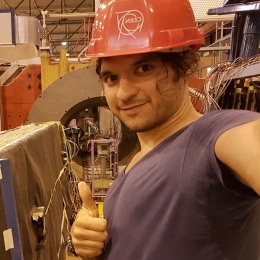
Eduardo Valdés Santurio is a Postdoctoral Fellow at the Department of Physics , Stockholm University , specializing in hardware development for radiation-tolerant environments within the ATLAS - Accelerator Based Particle Physics research group. His work focuses on front-end electronics and Trigger Data Acquisition (TDAQ) systems for the ATLAS Tile Calorimeter upgrade, addressing challenges in high-luminosity LHC (HL-LHC) conditions. Research Interests: Radiation-tolerant electronics design FPGA firmware development (Xilinx ISE, Vivado) High-speed optical link communication (SFP+, GBTx) Radiation damage mitigation (TID, NIEL, SEL, SEU) Redundant system architecture Data integrity protocols (CRC, FEC) Publications highlight contributions to: Daughterboard redesign for HL-LHC Radiation qualification testing Beam test analysis of calorimeter modules Calibration of upgraded detector electronics Responsibilities: Chair of ATLAS TileCal Upgrade weekly electronics meetings Coordinator of Stockholm TileCal Daughterboard development Teaching Lab Assistant for courses in electronics and radiation detectors Contributor to technical design reports and radiation safety protocols
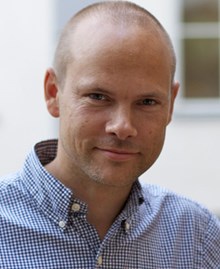
Martin Törngren is a Professor of Embedded Control Systems at the Department of Mechatronics and Department of Mechanical Engineering at KTH Royal Institute of Technology. He is actively engaged in research and teaching within Embedded Systems , Mechatronics , and Cyber-Physical Systems , focusing on architecture, model-based development, and system integration. His work bridges control systems and embedded systems, emphasizing reliability and safety in industrial applications. Research Leadership: Technical coordinator of the Artemis project iFEST, focusing on functional safety for automated systems. Education: Teaches courses like Cyber-physical Systems (MF2140) , Mechatronics Higher Course , and doctoral-level courses in embedded systems. Research Interests: Törngren's work spans model-based systems engineering , distributed control systems , co-design of control and computer systems , and system safety . He emphasizes industry-university collaboration , particularly with the automotive and automation sectors. His publications highlight trends in automated driving safety , edge computing , and toolchain integration . Collaborative Initiatives: He co-founded the Innovative Centre for Embedded Systems (ICES) and participates in networks like Artist2 and ArtistDesign. His research projects often involve partnerships with global companies and academic institutions.
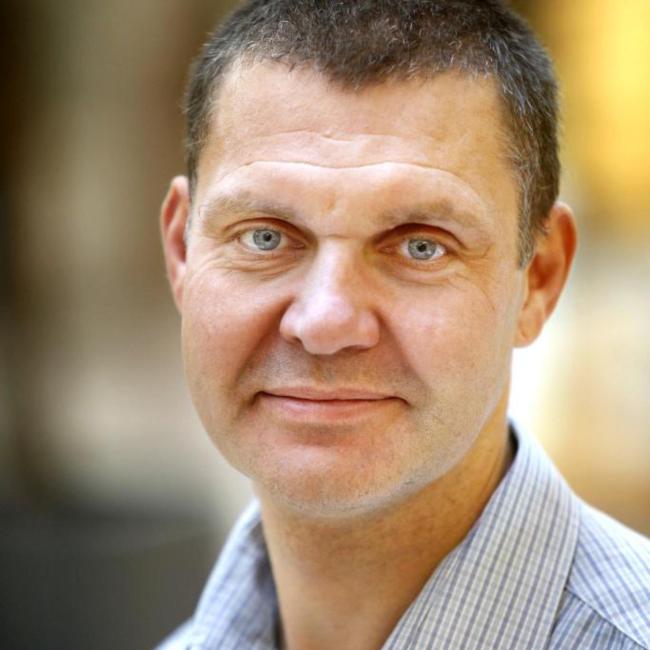
Emina Alickovic serves as an Adjunct Associate Professor at Linköping University within the Department of Electrical Engineering (Institutionen för systemteknik, ISY), specifically affiliated with the Automatic Control division (Reglerteknik, RT). Her position places her within one of Scandinavia's leading research environments for control engineering and systems theory. Her academic focus centers on Automatic Control, encompassing theoretical and applied research in Control Systems design, stability analysis, and dynamic system optimization. This work intersects with broader Electrical Engineering disciplines including signal processing and embedded systems, reflecting the department's strong industry collaboration ethos in robotics, automotive systems, and industrial automation. Contact for academic inquiries is maintained through university channels: emina.alickovic@liu.se . As an Adjunct Associate Professor, she contributes specialized expertise while maintaining primary professional engagement external to the university.
Dr. Viktor Larsson serves as Adjunct Associate Professor in Fluid and Mechatronic Systems at Linköping University. He holds a Ph.D. (2019) and Licentiate of Engineering (2017) from Linköping University, and an M.S. in Mechanical Engineering from the same institution (2014). His research focuses on energy-efficient motion systems for mobile machinery, particularly hybrid hydromechanical transmissions. Core expertise includes developing control strategies, hardware-in-the-loop simulation, and optimization of fluid power systems. Contributes to the open-source multi-domain simulation tool Hopsan. Publications demonstrate consistent focus on improving energy efficiency through advanced control algorithms and system redesign. Awarded best master's thesis in 2014 for innovations in hydraulic transmission technology. Research Themes: Hydraulic system electrification, real-time simulation validation, and sustainable design for construction/agricultural machinery.
Maria Åkesson is a Professor at Halmstad University's School of Information Technology, specializing in digital innovation and learning technologies. She co-leads the LeaDS research program on learning in digitized societies and leads a research project on digital automation and work environments funded by Afa Försäkring. As a 40% guest professor at Umeå University, her work bridges academia and industry. Her research focuses on digital automation's societal implications, work environment challenges, and educational curricula for the digital era. Key projects include designing master's programs in Digital Service Innovation and studying participatory innovation processes in healthcare and manufacturing sectors. Publications emphasize digital service architecture, remote diagnostics, and ethical considerations in health tech. She collaborates with two PhD students and senior researchers, exploring topics like robotic process automation in public administration and value network transformations. Her work integrates design science, organizational studies, and human-centered approaches. Ms. Åkesson's studies highlight tensions between technological vision and practical implementation, particularly in legacy industries. She advocates for balanced innovation strategies that address both generative potential and control challenges in digitized systems.
Björn Lundell is a Professor of Computer Science at the University of Skövde's School of Informatics. His research focuses on open source software, ICT standards, software engineering practices, and their applications in public sector and industrial contexts. He is actively involved in projects addressing challenges like standard compliance, lock-in effects, and sustainable digitalization. Lundell has collaborated extensively with organizations such as Combitech, Saab, and Husqvarna, and his work often bridges academic research with practical industrial needs. Key areas of research include open source ecosystems, governance of software standards, and cybersecurity in public sector IT. He has contributed to major initiatives like the EDU4Standards project (EU Horizon 2020) and the ORIOS project on open source reference implementations. His work emphasizes long-term maintenance of digital assets, interoperability, and compliance with regulations like the Cyber Resilience Act (CRA). Lundell has authored over 150 publications in journals like IEEE Software and Empirical Software Engineering, and conferences such as EGOV and OpenSym. His recent focus includes GenAI data governance, SaaS contract terms in public sectors, and IoT standardization. He serves as an advisor to governmental bodies, including the Swedish Public Procurement Agency, and has provided expert opinions on IT policy frameworks. Grants and projects include leadership in the LIM-IT (2016–2020) and SUDO (2020–2024) initiatives, addressing lock-in effects and sustainable innovation. His research team collaborates internationally, with partners in academia and industry across Europe and beyond.
Torkel Strömsten is an Associate Professor at the Department of Accounting, Stockholm School of Economics (SSE). He concurrently holds a part-time Professorship at Halmstad University and previously served at KTH Indek. His research focuses on management accounting and control systems, sustainability, climate risk accounting, and innovation networks. Strömsten leads SSE’s Accounting Frameworks platform within the MISUM sustainability center and directs the Business Performance Diploma (BPD) program for senior finance professionals in Nordic companies like Ericsson and Atlas Copco. His academic contributions span over two decades, with publications in journals such as Management Accounting Research and Accounting, Organizations and Society . Notable projects include studying target costing at IKEA and TCFD reporting’s role in sustainable finance. Awards include a post-doctoral fellowship from the Jan Wallanders and Tom Hedelius Foundation (2002–2005). Strömsten’s work bridges accounting practices with strategic innovation and global supply chain sustainability. He has advised multinational corporations and led research initiatives like FIRE (Forskningsskolan i Redovisning). His recent articles emphasize financialization challenges and the interplay between cultural contexts and management control systems.
Reza Rezasson is an Assistant University Lecturer at Gävle University, specializing in X-ray imaging and detector technology. His research focuses on applications in industrial quality control, environmental analysis, and material science. Notably, he has contributed to advancements in phase-contrast X-ray imaging for paperboard quality inspections and X-ray fluorescence spectrometry for toxic metal detection. Rezasson holds a PhD from Mid Sweden University (2016) and a Licentiate degree (2014), both in related fields. Education: PhD in Advanced X-ray Detectors for Industrial and Environmental Applications, Mid Sweden University, 2016 Licentiate in Phase-Contrast and Spectroscopic X-ray Imaging, Mid Sweden University, 2014 Research Interests: Rezasson's work bridges electrical engineering and applied physics, with a focus on developing high-resolution imaging systems and detectors. His research addresses challenges in non-destructive testing, nanoparticle characterization, and sensor optimization. Recent projects include collaborations with institutions like DESY on detector development and software design for the PERCIVAL detector system. Publications: His over 30 peer-reviewed articles span X-ray imaging techniques, detector technology, and educational policy. Recent trends emphasize interdisciplinary applications, such as environmental monitoring and pandemic-driven educational reforms. Grants & Labs: Rezasson collaborates on detector projects involving institutions like DESY and international teams. His lab work focuses on PERCIVAL detector systems and their applications in synchrotron radiation studies. Future research aims to expand into smart dosimetry and AI-driven imaging algorithms. Academic Advocacy: He actively contributes to academic discourse on university policies, mentorship, and student well-being through articles in SULF publications, advocating for intellectual diversity and supportive academic environments.
Martin Lind is an Assistant Professor of Mathematical Analysis at Karlstad University. His research focuses on advanced topics in mathematical analysis, including discrepancy theory, functions of bounded variation, approximation theory, and multiscale systems. He holds a PhD from Karlstad University (2013) and completed a post-doctoral fellowship at the University of South Carolina (2014-2015). Education: PhD in Mathematics, Karlstad University, 2013 His work bridges pure and applied mathematics, addressing problems in number theory, functional analysis, and numerical methods. Key research themes include: Discrepancy estimates for pseudorandom sequences Properties of functions with bounded variation (p-variation, Lambda-variation) Nonlinear approximation methods using splines Analysis of multiscale elliptic-parabolic systems His recent publications (2020-2024) emphasize number-theoretic aspects of sequences and their applications in quasi-Monte Carlo methods. He collaborates actively on applied projects like pollution reduction modeling with photocatalytic materials. Notable contributions include: Developing variational characterizations of Sobolev spaces Establishing convergence rates for semidiscrete Galerkin schemes Exploring Fubini-type properties in multivariate analysis
Stefan Lindskog is a full Professor at the Department of Computer Science, Karlstad University, Sweden. His research focuses on tunable security services, network security protocols, intrusion detection systems, and encryption methodologies. He has held academic positions at Karlstad University since 1990 and holds a PhD in Computer Engineering from Chalmers University (2005) and a Docent degree in Computer Science from Karlstad University (2008). His work emphasizes practical cybersecurity solutions, including firewall usability, multipath TCP security, and privacy-preserving technologies. Lindskog has authored over 60 peer-reviewed publications, including studies on encrypted network traffic analysis, Tor anonymity vulnerabilities, and firewall rule optimization. He collaborates extensively with industry partners and academic networks, contributing to projects like the EU-funded NEWCOM++ initiative. Teaching: Real-Time Systems (7.5 ECTS) Key Research Themes: Security service tunability, adaptive intrusion detection, and secure communication protocols Collaborations: HITS project (High Quality Networked Services in a Mobile World) Publications span topics from malware detection in encrypted traffic to systematic reviews of firewall usability. Lindskog’s work bridges theoretical security models and operational system implementation, with a focus on real-world applicability in industries like offshore energy and mobile communications.
Anastasiia Varava is an affiliated faculty member and PhD student at KTH Royal Institute of Technology, working within the Division of Robotics, Perception and Learning. Her research focuses on computational geometry and topology applied to robotic manipulation, particularly caging theory and its practical implementations for handling rigid and deformable objects. She collaborates with advisors Florian Pokorny and Danica Kragic on theoretical and applied robotics challenges. Her work integrates robotics with interdisciplinary fields such as topology, machine learning, and computer vision. Key topics include path planning, deformable object manipulation, and geometric algorithms for motion verification. Recent contributions emphasize data-driven approaches for latent space modeling and visual action planning in robotics systems. Varava has authored or co-authored over 30 peer-reviewed articles and conference papers, covering topics from caging-based motion planning to molecular screening algorithms inspired by robotics. Her publications span journals like IEEE Transactions on Robotics and conferences such as IROS and ICRA, reflecting a strong focus on practical robotic systems with theoretical rigor. Her doctoral thesis, Path-Connectivity of the Free Space: Caging and Path Existence (2019), established foundational work on caging and path non-existence in robotics. Current projects involve advancing geometric evaluation techniques for data representations and exploring diffusion models for robotic skill learning.
Yifei Jin is a WASP Industrial PhD student at KTH Royal Institute of Technology's School of Electrical Engineering and Computer Science, specifically within the Division of Theoretical Computer Science. They are supervised by Professor Aristides Gionis and Associate Professor Sarunas Girdzijauskas at KTH, and also serve as an Experienced Researcher at Ericsson Research and a Visiting Researcher at Yale University under Rex Ying and Leandros Tassiulas. Yifei's research focuses on graph mining , network analysis , and graph representation learning , particularly applied to crowdsourcing data and wireless communication systems. Their work intersects telecommunications network optimization machine learning for graph-structured data AI-driven wireless resource management edge computing and distributed AI as evidenced by their publications spanning 2017–2025. Their academic contributions include 15 recent papers exploring topics such as neural surrogates for voltage drop estimation, wireless ray-tracing models, scalable distributed AI deployment, and vehicle platooning coordination. These publications demonstrate expertise in network traffic reduction KPI conflict analysis graph convolutional networks hyperbolic embeddings for ontologies real-time network diagnostics .
Voravit Tanyingyong is a Lecturer at Kungliga Tekniska Högskolan (KTH Royal Institute of Technology) working in the Division of Communication Systems within the School of Electrical Engineering and Computer Science. He has been working at KTH since 2003, demonstrating a long-standing commitment to the institution. His contact information includes telephone number +46 8 790 42 08 and email voravit@kth.se, with his office located at Malvinas Väg 10. Dr. Tanyingyong received his PhD in Information and Communication Technology from KTH in 2021, with his doctoral thesis titled "Performance, Availability, and Scalability in Open Networking Platforms for Internet Services." Prior to that, he completed his Licentiate thesis at KTH in 2014 titled "Performance and Reliability in Open Router Platforms for Software-Defined Networking," establishing a strong foundation in networking research. Dr. Tanyingyong's research interests span computer systems, network applications, protocols, architectures, and the Internet of Things (IoT). His work demonstrates a consistent focus on practical implementations of networking technologies with applications in various domains including environmental monitoring, healthcare, and smart grids. His research bridges theoretical networking concepts with real-world implementations, particularly in the area of IoT systems where he has developed testbeds for air quality monitoring and smart grid applications. A significant portion of his work addresses performance, reliability, and scalability challenges in modern networking environments. Analysis of Dr. Tanyingyong's publication history reveals a clear evolution in his research focus. Early work centered on router/server performance and OpenFlow switching, reflecting the emergence of Software-Defined Networking. More recently, his research has shifted toward IoT applications, with publications on scalable IoT sensing systems, air quality monitoring, and IoT for smart DC grids. His work consistently addresses practical implementation challenges while maintaining theoretical rigor, with a particular emphasis on system performance, reliability, and scalability. The interdisciplinary nature of his research connects computer networking with environmental science, healthcare, and energy systems. Advanced Internetworking (IK2215) - Teacher Internet of Things (IK1332) - Teacher Networks and Communication (IK1203) - Teacher Ethics and Sustainable Development for Engineers (II2210) - Course Responsible Projects and Project Methods (II1302) - Course Responsible Multiple degree projects as examiner across Computer Engineering, Computer Science and Electrical Engineering specializations Dr. Tanyingyong has established himself as a dedicated educator who bridges theoretical networking concepts with practical implementations. His teaching portfolio reflects his research expertise while covering essential networking fundamentals and emerging IoT technologies. As course responsible for Ethics and Sustainable Development for Engineers, he demonstrates commitment to broader engineering principles beyond technical skills.
Dr. Rickard Karlsson works as a Lecturer at Linköping University's Department for Swedish as a Second Language, Rhetoric and Language Support (SAROS) under the Department of Culture and Society (IKOS). His teaching focuses on Swedish language didactics, grammar, and assessment of learner languages, with supervision across academic levels. PhD in Languages and Cultures of Europe Upper Secondary School Teacher in Swedish as a Second Language Research spans empirical analysis of adult language acquisition , historical linguistics , and multilingualism ideologies . Google Scholar publications reveal interdisciplinary contributions to particle filter algorithms and automotive sensor systems from 2001-2025. Notable collaborations include Fredrik Gustafsson and Per-Johan Nordlund. Recent publications (2025-2016) merge automotive engineering and historical Linguistics, covering tire diagnostics, cultural exchange patterns, and vibration-based navigation. This dual expertise reflects his transition from technical research to language education, maintaining academic connections across disciplines.