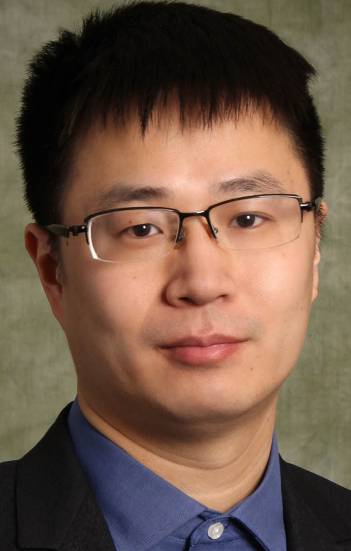
Bernhard von Stengel is a Professor of Mathematics at the Department of Mathematics, London School of Economics and Political Science . His work bridges game theory, computational complexity , and mathematical economics , with a focus on equilibrium computation and algorithmic aspects. Developed Game Theory Explorer , open-source software for analyzing strategic and extensive-form games. Organized major workshops like What is Strategic Information? (2024) and Game Theory and Machine Learning (2023). Authored the textbook Game Theory Basics (Cambridge University Press, 2021). His research spans zero-sum games , correlated equilibrium , inspection games , and communication over noisy channels . Recent work includes characterizing the Condorcet dimension of metric spaces (2024) and stable-set bounds for Nash equilibria in bimatrix games. He has collaborated with institutions like the Game Theory Society and contributed to public discourse via talks on algorithms' societal impact (2021) and game theory in politics (2020).
Yanan Guo is an Assistant Professor in the Department of Computer Science at the University of Rochester, specializing in computer architecture and cybersecurity. Her research focuses on GPU memory safety, side-channel attacks, quantum computing, and machine learning security, with recent projects exploring cross-VM side-channel vulnerabilities and quantum circuit simulation. PhD, University of Pittsburgh (advisor: Dr. Jun Yang) Her work bridges hardware and software security, addressing issues like GPU cache eviction mechanisms, memory corruption attacks, and adversarial threats in neural networks. She actively collaborates with researchers like Youtao Zhang and Jun Yang, with publications in top venues including USENIX Security, MICRO, and ICML. Recent publications highlight trends in GPU security (memory safety, side-channel attacks), quantum computing optimizations, and adversarial machine learning. Her team’s projects have received recognition such as the NSF OAC grant for AI workflow security and features in IEEE Transactions on Computers. Featured Paper in IEEE Transactions on Computers (02/22 issue) Shortlisted for Top Picks in Hardware and Embedded Security 2023 Dr. Guo mentors PhD students and offers weekly office hours for undergraduates, emphasizing career paths, graduate applications, and research guidance. She serves on program committees for conferences like USENIX Security and ASPLOS.
Angshuman Karmakar is an Assistant Professor in the Department of Computer Science and Engineering at the Indian Institute of Technology Kanpur, India. His research focuses primarily on Post-Quantum Cryptography (PQC) and Computation On Encrypted Data (COED), which are critical areas in modern cryptography and computer security. Dr. Karmakar received his Ph.D. from Katholieke Universiteit Leuven (KU Leuven), Belgium, where he worked under Prof. Ingrid Verbauwhede in the COSIC research group. He was awarded the prestigious Erasmus Mundus fellowship for his doctoral studies and the FWO (Fonds voor Wetenschappelijk Onderzoek – Vlaanderen) fellowship for his post-doctoral research at KU Leuven. His research spans theoretical development of cryptographic schemes, implementation algorithms, side-channel and fault attack analysis, and countermeasure development. Dr. Karmakar has established extensive international collaborations with researchers and engineers worldwide to address complex challenges in cryptography and security. Recent publications demonstrate a strong focus on practical post-quantum cryptographic implementations with particular attention to hardware and software efficiency, side-channel resistance, and novel attack methodologies. His work bridges theoretical cryptography with real-world implementation challenges across diverse platforms from IoT devices to high-performance computing systems. Erasmus Mundus fellowship for doctoral studies at KU Leuven FWO fellowship for post-doctoral study at KU Leuven Google India Research Award for work on practical transition to post-quantum cryptography Dr. Karmakar is actively seeking graduate students and postdoctoral researchers to collaborate on cutting-edge research in cryptography and computer security. His work has significant implications for securing future communication systems against quantum computing threats, with applications spanning blockchain technologies, IoT security, and general-purpose computing systems.
Stephen Alstrup is a Professor in the Algorithms and Complexity section at the Department of Computer Science (DIKU), University of Copenhagen, Faculty of Science. His research bridges theoretical computer science with practical applications in modern computational challenges. His primary research interests include: Algorithm design and analysis Graph algorithms and data structures Big Data processing techniques Streaming algorithms and Internet distribution Theoretical foundations with practical implementations Alstrup's work demonstrates how theoretical algorithm research can lead to real-world applications, as evidenced by his development of Octoshape technology for large-scale Internet streaming. His research spans from fundamental theoretical problems to applications in Big Data, cloud computing, and information retrieval systems. He has published extensively with 93 research outputs including journal articles, conference proceedings, and books. His recent work focuses on graph spanners, semantic hashing, recommendation systems, and universal graph structures, showing continued productivity in theoretical computer science. Alstrup actively engages with industry and media, contributing to discussions about Big Data applications, technology innovation, and how businesses can collaborate with universities to access cutting-edge knowledge and funding opportunities. His work has been featured in 10 media contributions discussing practical applications of algorithms in education, municipal IT projects, and business innovation.
Prof. Dr. Matthias Weidlich is a faculty member at Humboldt University of Berlin within the Institute of Computer Science under the Faculty of Mathematics and Natural Sciences . His research focuses on Process Mining , Complex Event Processing , and Data Privacy with applications in Business Process Management and Scientific Workflows . Research Interests: Business Process Management and Process Mining Complex Event Processing and Stream Data Analysis Data Privacy and Security in Process Systems Scientific Workflow Systems and User Behavior Heterogeneous Network Embeddings Algorithm Design and Optimization Recent Publications (2023-2025) demonstrate expertise in: Efficient stream processing techniques Privacy-preserving process mining frameworks Scientific workflow analysis tools Graph neural network applications Multi-modal data integration Adaptive querying systems Contact: Office: Unter den Linden 6, 10099 Berlin Phone: 030 2093-41277 Email: matthias.weidlich@hu-berlin.de Web: hu.berlin/data
Naranker Dulay is a Professor in the Department of Computing at Imperial College London, part of the Faculty of Engineering. He holds affiliations with the Centre for Cryptocurrency Research and Engineering, Centre for Smart Connected Futures, and the Distributed Software Engineering group. His research focuses on Distributed Computing, Applied Economics, Policy and Administration Law, Computer Software, and Information Systems. His work explores blockchain technologies, smart contracts, consensus algorithms, and distributed systems. Recent research includes optimizing post-trade processing using distributed ledgers and developing adaptive protocols for dispute resolution in smart contracts. He is also involved in cybersecurity and privacy-preserving technologies for data management. Key contributions include frameworks like Chainlog for logic-based smart contracts and FADE for self-destructing data. His articles span over a decade, emphasizing blockchain scalability, energy-efficient neural networks, and decentralized macro-programming in wireless sensor networks. Dr. Dulay collaborates across interdisciplinary domains, blending technical innovation with socio-technical challenges. His affiliations reflect a commitment to advancing smart connected futures through cutting-edge research.
Geoffrey Nelissen is an Assistant Professor in the Department of Mathematics and Computer Science at Eindhoven University of Technology. He holds additional roles as a Research Scientist and Investigador Auxiliar at INESC TEC (Portugal), contributing to interdisciplinary research in real-time systems. His work focuses on schedulability analysis, parallel task execution, and real-time communication protocols, with applications in embedded systems and multicore architectures. Research Interests: Real-Time Scheduling Response Time Analysis Multi-core and Parallel Systems Time-Sensitive Networking (TSN) Formal Verification Recent work emphasizes schedule abstraction frameworks, memory contention analysis, and deterministic communication protocols. His research has received recognition through multiple best paper awards including ICESS 2021 and RTAS 2022. He actively contributes to conferences like RTSS and ECRTS while teaching courses on Real-Time Systems and Operating Systems. Collaborations span European institutions with focus on embedded systems, autonomous driving, and safety-critical applications. Current projects explore holistic approaches to WCRT analysis and resilient real-time communication architectures.
Wenfeng Zhao is an Assistant Professor in the Department of Electrical and Computer Engineering at Binghamton University. He holds a PhD from the National University of Singapore (2014) and BS/MS degrees from Huazhong University of Science and Technology (2007-2009). Prior to this role, he conducted postdoctoral research at the University of Minnesota's Biomedical Engineering Department. His research focuses on neural engineering, compressed sensing, ultra-low-power VLSI systems, and in-memory computing. Key areas include hardware security, biomedical signal processing, and energy-efficient computing architectures. His work spans applications in neural interfaces, cryptographic hardware, and IoT edge devices. Recent publications highlight advancements in block-cipher-in-memory architectures, emotion recognition via EEG analysis, and energy-efficient FPGA accelerators for neural networks. His research also addresses challenges in cryogenic memory systems and MRI-compatible neural recording devices. Zhao's contributions emphasize interdisciplinary approaches at the intersection of hardware design, signal processing, and cybersecurity. His lab develops novel solutions for low-power embedded systems and trustworthy IoT infrastructure.
Dr. Christos Papavassiliou is an Associate Professor in the Department of Electrical and Electronic Engineering at Imperial College London, part of the Faculty of Engineering. His research focuses on instrumentation electronics, memristor modeling, signal integrity, and novel device technologies such as SiGe devices, RF MEMS, and ReRAM. He leads the Space Lab and collaborates with the National Centre for Scientific Research in Athens. He holds senior membership in IEEE and is a member of the IET. Education: Ph.D. in Applied Physics, Yale University (1983–1989) MPhil in Applied Physics, Yale University (1983–1988) MS in Applied Physics, Yale University (1983–1985) B.S. in Physics, MIT (1979–1983) Research Interests: Memristor-based neuromorphic computing and stochastic systems High-performance instrumentation hardware and data acquisition Multi-state memristive memory and selectorless arrays Integration of memristors with CMOS for hybrid circuits Applications in biomedical wearables and edge AI deployment Key Contributions: Developed novel memristor models for circuit simulation Pioneered work on memristor-based true random number generators Advanced understanding of resistive drift and energy-constrained storage Designed FPGA-based systems for analog circuit emulation Labs & Teams: Active in the Space Lab at Imperial College, focusing on interdisciplinary research in electronics and space applications.
Zohreh Shams is a Visiting Fellow at the Computer Laboratory, University of Cambridge, and Chief Scientific Officer at Leap Labs. Previously, she served as a Senior Research Associate at the University of Cambridge and held roles at Babylon Health as a Senior ML Scientist. Her research focuses on ML interpretability, explainable AI, knowledge discovery, and automated reasoning with applications in healthcare and safety-critical systems. Dr. Shams completed her PhD in Artificial Intelligence at the University of Bath, specializing in explanatory decision-making in multi-agent systems using Argumentation Theory. Her work bridges cognitive science and AI, collaborating with institutions like the University of Brighton on projects such as Accessible Reasoning with Diagrams , which explores explainable ontology reasoning systems. Her research interests include generative modeling, concept-based representations, and the integration of domain knowledge into AI systems. Notable contributions include developing frameworks like CGXplain for neural network explanations and REM for healthcare data analysis. Her publications span venues such as ECCV, AAAI, and TMLR. Shams has contributed to interdisciplinary projects, including the Integrated Cancer Medicine initiative, and maintains affiliations with Wolfson College as a former Junior Research Fellow. Her work emphasizes ethical AI practices, clinician collaboration, and the societal impact of explainable AI systems.
Damon McCoy is a Professor of Computer Science and Engineering at NYU Tandon School of Engineering and Co-Director of the NYU Center for Cybersecurity (CCS). He holds a Ph.D. in Computer Science from the University of Colorado, Boulder (2009) and a B.S. in the same field (1999). His research focuses on empirically measuring the security and privacy of technology systems, with a current emphasis on online payment systems, cybercrime economics, automotive security, privacy-enhancing technologies, and censorship resistance. He co-directs Cybersecurity for Democracy , a multi-university initiative addressing online threats to democratic processes. His research has examined topics such as the monetization of YouTube conspiracy content, toxic online discourse targeting election officials, and vulnerabilities in automotive systems. He has collaborated with institutions like the International Computer Science Institute and led studies on social media platforms' content moderation practices, including Facebook's handling of political ads and YouTube's ecosystem of deceptive advertising. McCoy's work often bridges cybersecurity with societal impacts, analyzing how technology intersects with democracy, misinformation, and economic exploitation. His contributions include developing frameworks for securing automotive software updates (Uptane) and methodologies to combat cybercrime supply chains. He has received funding from the National Science Foundation and other agencies to pursue projects addressing emerging cyber threats. Key affiliations include the NYU Center for Cybersecurity and the Center for Automotive Embedded Systems Security (CAESS), where he contributed to early automotive security analysis. He advises on cybersecurity policy and has published extensively in top-tier journals and conferences, focusing on real-world applications of security research.
Nan Marie Jokerst is the J. A. Jones Distinguished Professor of Electrical and Computer Engineering at Duke University's Pratt School of Engineering and Executive Director of the Duke Shared Materials Instrumentation Facility. She previously served as Chair of the Duke Academic Council (2014-2015) and Associate Dean for six years. B.S. in Physics, Creighton University (1982) M.S.E.E., University of Southern California (1984) Ph.D. in Electrical Engineering, University of Southern California (1989) Her research spans chip-scale photonic sensing systems , III-V thin-film lasers on silicon , metamaterials , and heterogeneous integration . She develops optical systems for medical diagnostics, environmental monitoring, and security applications through the Jokerst Laboratory, which combines optical system design, optoelectronic device development, and semiconductor fabrication expertise. Her recent publications show strong focus on terahertz strain mapping using metamaterials, multi-pixel tissue characterization for cancer margin detection, and microfluidic sensing platforms with embedded photodetectors. Key trends include advancing non-destructive structural monitoring and miniaturized biomedical diagnostics through novel photonic integration techniques. IEEE Fellow (2003) Optica Fellow (2001) NSF Presidential Young Investigator Award IEEE Third Millennium Medal IEEE/HP Harriet B. Rigas Medal USC Viterbi School Alumni Award She has advised numerous graduate students in photonic device research and secured major grants including the NSF National Nanotechnology Coordinated Infrastructure ($6M, 2015-2021) and NNCI: North Carolina Research Triangle Nanotechnology Network ($20M, 2020-2026). Her leadership extends to co-founding Triangle Women in STEM and serving on the National Academies Board on Global Science and Technology. The Duke Shared Materials Instrumentation Facility under her direction provides critical cleanroom and characterization resources for interdisciplinary research.
Giovanni De Micheli is a Professor of Electrical Engineering and Computer Science at EPF Lausanne, Switzerland. He also serves as Director of the Integrated Systems Centre and the Institute of Electrical Engineering at EPFL, and chairs the Scientific Committee of CSEM in Neuchatel. Previously, he held academic roles at Stanford University for 18 years, including Full Professor, Associate Professor, and Assistant Professor in the Department of Electrical Engineering. His research spans synthesis of digital circuits, hardware/software co-design, low-power design, and Networks on Chip (NoC) technology. 2003: IEEE Emanuel Piore Award 2000: Golden Jubilee Medal of the IEEE CAS Society 2000: ACM Fellow 1994: IEEE Fellow 1990: IEEE/CS Distinguished Service Award 1988: NSF Presidential Young Investigator Award His seminal contributions include pioneering C-based synthesis and Boolean matching algorithms for digital circuits, foundational work in dynamic power management using stochastic control, and the development of Network-on-Chip (NoC) technology. His publications, such as "Networks on Chips: A New SoC Paradigm" and "Dynamic Power Management for Portable Systems" , have shaped modern SoC design practices. With over 400 technical articles, 9 books, and an H-index of 56, his work remains highly influential.
Ryo Suzuki is an Assistant Professor at the ATLAS Institute within the University of Colorado Boulder's Computer Science department. His research focuses on innovative intersections of Human-Computer Interaction (HCI), Augmented Reality (AR), and robotics. He explores systems that blend AI, haptics, and shape-changing interfaces to create enriched user experiences. Key areas of investigation include embedding interactivity into static educational materials (e.g., textbooks), developing AI-driven AR tools for procedural instruction, and creating shape-changing robotics for tactile feedback. His work often emphasizes practical applications in education, remote collaboration, and creative industries. Recent projects include MapStory (LLM-driven map animation), RealityEffects (3D volumetric video augmentation), and HoloDevice (holographic cross-device collaboration).
Fabrício Benevenuto is an Associate Professor in the Computer Science Department at Federal University of Minas Gerais (UFMG), where he conducts interdisciplinary research at the intersection of social media analysis, data science, and computational journalism. His work spans complex networks, machine learning, and natural language processing with strong societal impact. His research focuses on social media dynamics, particularly in Brazilian contexts, with major contributions to hate speech detection, fake news analysis, and political discourse monitoring. He leads large-scale projects against misinformation, including development of systems like WhatsApp Monitor, Media Bias Monitor, and Purple Feed. His work combines technical innovation with real-world applications for election transparency and public discourse integrity. Benevenuto's recent publications demonstrate strong trends in multilingual NLP for social media analysis, with emphasis on Brazilian Portuguese contexts. His team produces both theoretical contributions and practical systems addressing hate speech, misinformation, and media bias. Notable methodological approaches include combining network analysis with linguistic features, developing culturally-aware detection systems, and creating large annotated datasets for understudied languages. CAPES award for best Brazilian computer science thesis (2010) Humboldt Foundation scholarship recipient (2017-2018) Member of TikTok Safety Advisory Council WWW'20 Best Paper Nominee & CNIL-INRIA Privacy Protection Prize winner Multiple best paper awards at CEAS, WBC, and ICWSM conferences Test-of-Time Award at ICWSM'20 Benevenuto actively mentors PhD and MSc students, with numerous advisees securing academic positions at Brazilian universities and research roles at institutions like Max Planck Institute. His projects often receive funding supporting interdisciplinary collaborations across computer science and social sciences. Current work includes large-scale analysis of Telegram political groups, real-time election monitoring systems, and developing culturally-aware NLP tools for Portuguese. He leads research teams working on social media analysis systems with societal impact, particularly focused on Brazilian digital ecosystems. Projects involve cross-institutional collaborations with researchers from MPI-SWS, Max Planck Institute, and various Brazilian universities, emphasizing practical applications for public discourse integrity.