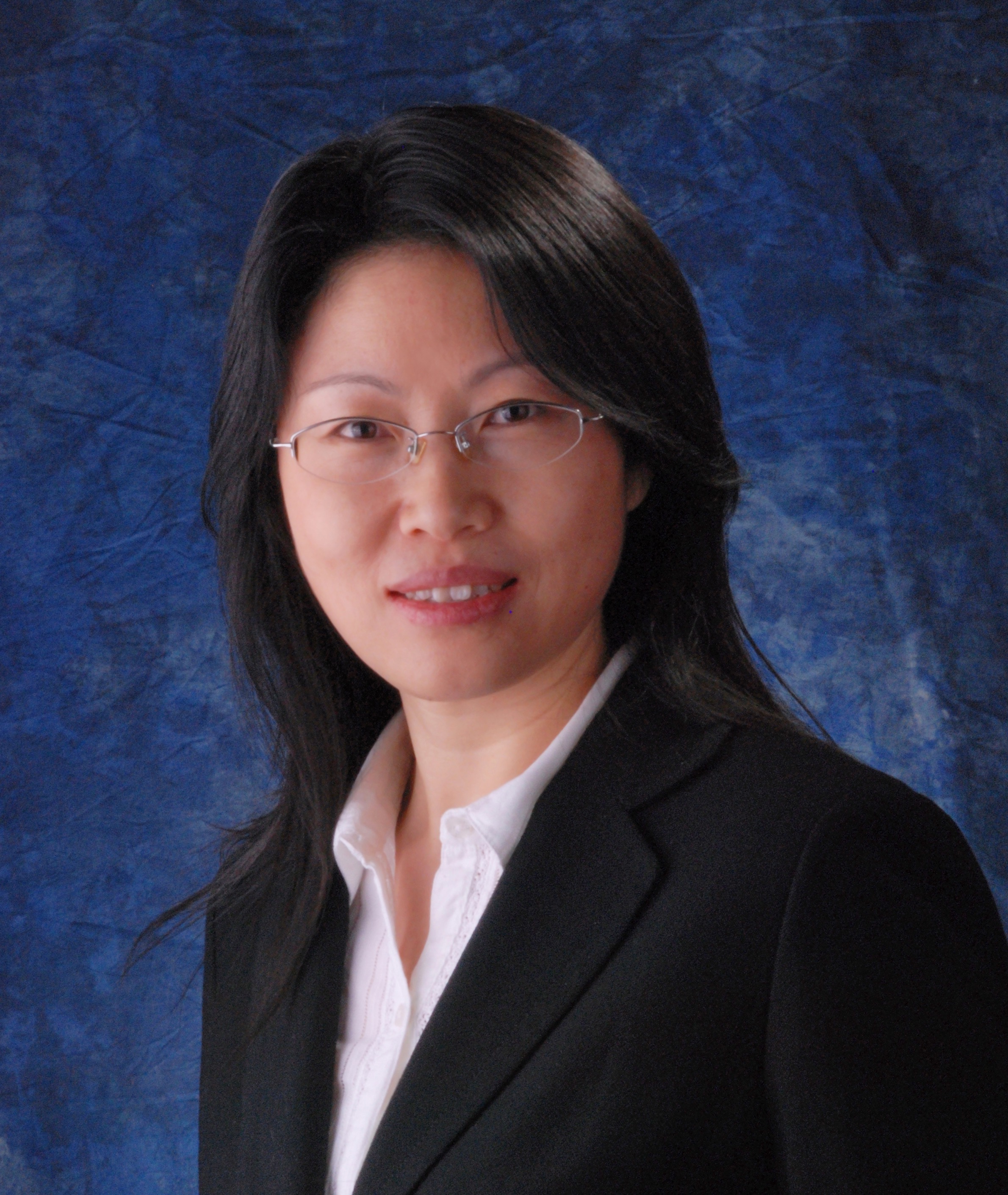
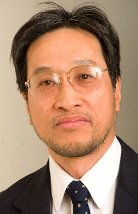
Golnoosh Farnadi is an Assistant Professor at McGill University's School of Computer Science , an Adjunct Professor at Université de Montréal , and a Visiting Faculty Researcher at Google Research . She holds the Canada CIFAR AI Chair and is a core academic member of Mila – Quebec AI Institute . Her research focuses on algorithmic fairness , responsible AI , and optimization . She founded the EQUAL Lab (EQuity & EQuality Using AI and Learning algorithms) to address bias and discrimination in AI systems. Key publications explore fairness in kidney exchange programs, generative model geometry, multilingual LLM de-biasing, and prototype-based recommender systems. Her work bridges causal inference, adversarial robustness, and ethical AI. Google Award for Inclusion Research (2023) Women in AI Awards North America Finalist (2023) Facebook Privacy Enhancing Technologies Award (2021) IVADO Postdoctoral Fellowship (2018–2021) She has supervised over 15 PhD and Master's students, including Prakhar Ganesh (McGill) and William St-Arnaud (Université de Montréal). Her teaching includes Responsible AI and Machine Learning courses at McGill and HEC Montréal.
Andy Clark is Professor and Chair in Logic and Metaphysics at the University of Edinburgh, where he has been teaching since 2004. He has previously held academic positions at the University of Glasgow, the University of Sussex, Washington University in St Louis, and Indiana University, Bloomington. He served as Director of the Philosophy/Neuroscience/Psychology Program at Washington University and Director of the Cognitive Science Program at Indiana University. His research centers on the philosophy of mind and cognitive science. He is best known for co-creating the extended mind hypothesis , which posits that the mind extends beyond the brain and body into the environment. His work also explores connectionism , robotics , and the philosophical implications of artificial intelligence. These interests reflect a deep engagement with interdisciplinary approaches to understanding cognition. While no specific publications are listed in the source text, his body of work consistently bridges philosophy, neuroscience, and AI, contributing to foundational debates in cognitive science. His research trajectory emphasizes embodied and embedded cognition, challenging traditional boundaries of the mind. Scientific recognition includes: Fellow of the British Academy (2015) Clark has played significant leadership roles in academic programs but there is no mention of formal student advising, grants, or specific research teams in the provided text. His influence is primarily through theoretical innovation and interdisciplinary scholarship.
Ajay Kapur serves as Associate Provost for Creative Technologies and Director of the Music Technology program (MTIID) at California Institute of the Arts. With an interdisciplinary background spanning computer science, electrical engineering, and music, he bridges technological innovation with artistic expression through leadership in academic programs and entrepreneurial ventures. His research centers on symbiotic human-machine interaction for artistic creation, particularly exploring computer improvisation with humans through Indian Classical music frameworks. This manifests in developing programmable mechatronic instruments, sensor-based interfaces, and AI-driven systems for musical expression. His work extends traditional techniques while creating new performance paradigms like the globally touring Machine Orchestra and KarmetiK Orchestra. Kapur's recent publications reveal evolving expertise from music robotics to blockchain applications, with significant focus on NFT systems, tokenization, and immersive environments. His scholarly output demonstrates consistent innovation at the intersection of artistic practice and emerging technologies. As an educator and entrepreneur, he has co-founded companies in edtech and AI while authoring foundational texts like Digitizing North Indian Music and Introduction to Programming for Musicians and Digital Artists . His performances at venues including LACMA, Singapore Arts Festival, and the 2010 Winter Olympics showcase practical applications of his research.
Vassilis Christophides is a Professor of Computer Science at the University of Crete and holds an advanced research position at Inria Paris, where he leads work in the MiMove team. His research spans databases, web information systems, big data processing, and IoT analytics, with a strong emphasis on entity resolution, data integration, and scalable data mining. He has supervised numerous research projects funded by the European Union and the Greek State, and has published over 130 articles in top-tier conferences and journals. Research Interests: His primary research areas include Databases, Web Information Systems, Big Data Processing and Analytics, and Information Systems for the Internet of Things. He also focuses on entity resolution, knowledge graphs, streaming data, and explainable AI, particularly in the context of anomaly detection and fairness-aware data systems. His recent work explores hybrid attention models for entity alignment and causal analysis in time series classification. Recent Research Trends: Analysis of his recent publications (2021–2025) reveals a strong focus on entity resolution with fairness constraints, explainable anomaly detection, and adaptive scheduling in IoT edge analytics. He also investigates deepfake detection, crop type mapping using satellite data, and structural bias in knowledge graphs, demonstrating a broad and impactful research portfolio at the intersection of data management and machine learning. Scientific Awards: 2004 SIGMOD Test of Time Award Best Paper Award, ISWC 2003 Best Paper Award, ISWC 2007 Advising and Grants: While specific student names are not listed in the provided texts, Christophides has co-authored numerous papers with researchers such as Vasilis Efthymiou, Ioannis Tsamardinos, and Nikolaos Myrtakis, suggesting active mentorship. He has been the scientific coordinator of multiple EU and national research projects, indicating substantial grant leadership and project management experience. Labs and Teams: He is affiliated with the MiMove team at Inria Paris, a research group focused on mobility and data-intensive systems. His work bridges academic and applied research, leveraging Inria’s infrastructure for large-scale data experimentation and innovation in IoT and edge computing environments.
Naoki Saito is a Professor in the Department of Mathematics at the University of California, Davis, and the Director of the UC Davis TETRAPODS Institute of Data Science (UCD4IDS). His research lies at the intersection of applied mathematics, signal processing, and data science, with a focus on multiscale analysis and harmonic analysis on graphs and networks. His research interests include Applied and Computational Harmonic Analysis , Graph Signal Processing , Multiscale Transforms , Wavelets , Spectral Graph Theory , and Mathematical Data Representation . He develops theoretical frameworks and practical algorithms for analyzing complex datasets, particularly through the use of Laplacian eigenfunctions and multiscale basis dictionaries. The recent publications reflect a strong trend toward graph-based signal processing , scattering transforms , and topological data analysis . His work emphasizes the construction of natural, adaptive bases for signals on graphs and simplicial complexes, enabling efficient and interpretable data analysis. The integration of harmonic analysis with machine learning techniques is a recurring theme. Although no specific scientific awards are listed in the provided texts, his sustained scholarly output and leadership in the field are evident. Dr. Saito advises a number of students and postdoctoral researchers, including J. Irion, Y. Shao, H. Li, and others. His research has been supported by various grants, though specific funding sources are not detailed in the provided materials. He leads the UCD4IDS, a research institute focused on data science, indicating active involvement in collaborative, interdisciplinary research and academic leadership.
Mateo Valero Cortés is a renowned Professor of Computer Architecture at the Polytechnic University of Catalonia and Director of the Barcelona Supercomputing Center (BSC). He has held academic and leadership roles since 1974, advancing high-performance computing (HPC) and computer architecture research. His work includes pioneering contributions to vector architectures, multithreading, and instruction-level parallelism. Education includes a Telecommunications Engineering degree from the Polytechnic University of Madrid (1974) and a PhD in Telecommunications Engineering from the Polytechnic University of Catalonia (1980). His research spans over 700 publications, focusing on HPC systems, parallel computing, and supercomputing infrastructure. Key research interests include vector processing, super-scalar processors, and task-based programming models. Recent work emphasizes scalable architectures for exascale computing and energy-efficient hardware-software co-design. Notable achievements include the Eckert-Mauchly Prize (highest in computer architecture), Seymour Cray Award, and Charles Babbage Prize. He has led initiatives like the Spanish Supercomputing Network (RES) and PRACE (European HPC partnership). Academic affiliations include the Royal Academy of Engineering of Spain, ACM Fellow, and IEEE Fellow. He has received 13 honorary doctorates and awards such as Mexico’s Order of the Aztec Eagle. Current projects include the Mont-Blanc HPC prototype and ERC-funded research on multi-core chip design. His BSC oversees over 300 researchers and manages MareNostrum supercomputers.
Afra Alishahi is a Full Professor at Tilburg University's Department of Cognitive Science and Artificial Intelligence within the Tilburg School of Humanities and Digital Sciences. Her research focuses on computational models of human language acquisition and grounded language learning, leveraging neural models to explore how language processing and acquisition occur. She has held roles including Assistant Professor at Tilburg University (since 2011) and Postdoctoral Fellow at Saarland University (2008-2011). Her work bridges computational linguistics, cognitive science, and artificial intelligence, with contributions to understanding language learning mechanisms through models that integrate visual, auditory, and linguistic data. Education: PhD (university unspecified), with prior academic roles in Iran and Germany. Awards: CoNLL 2017 Best Paper Award, 2023 Outstanding Paper Award, NWO Aspasia Grant (2015), and NWO Natural Artificial Intelligence Grant (2015). Her research has been supported by grants such as the Dutch National Research Agenda-funded project on interpreting deep learning models for text and sound. Research Interests: Grounded language learning, interaction effects in language acquisition, and neural model interpretability. Key areas include multi-modal learning (e.g., linking speech to visual scenes), computational modeling of child language learning, and probing neural networks for linguistic knowledge. She co-organized workshops like BlackboxNLP (2018-2020) and has authored over 60 publications, including influential works on phonology encoding in neural models and gender disambiguation in machine translation. Teaching: Courses include Cognitive Models of Language Learning , Computational Linguistics , and Language, Cognition & Computation . She advises master's theses and leads projects in data science and AI. Lab/Team: Leads research on computational modeling, collaboration with interdisciplinary teams (e.g., with Grzegorz Chrupała, Afsaneh Fazly), and involvement in initiatives like the Interpreting Deep Learning Models for Text and Sound project.
Emre Salman is a Professor in the Department of Electrical and Computer Engineering at Stony Brook University (SUNY), where he directs the Nanoscale Circuits and Systems (NanoCAS) Lab. His research focuses on nanoscale IC design, energy-efficient computing, and biomedical electronics, with notable contributions to 3D integrated circuits and wireless energy harvesting for IoT and healthcare applications. Education : PhD in Electrical Engineering, University of Rochester (2009) MSc in Electrical and Computer Engineering, University of Rochester (2006) BSc in Microelectronics Engineering, Sabanci University, Turkey (2004) Research Interests : Salman’s work spans energy-efficient integrated circuits, secure IoT systems, and implantable medical devices. He pioneers techniques like charge-recycling logic and thermal-aware design for post-Moore computing. His group develops monolithic 3D ICs to address power/thermal challenges in AI accelerators and biomedical implants. Articles Trends : Recent publications highlight advancements in triboelectric energy harvesters for knee implants, thermal covert channel mitigation in 3D processors, and energy-efficient DNN accelerators. He emphasizes sustainability and security in emerging technologies like ReRAM-based computing and AC circuits for wireless IoT. Awards : 2023-2024 IEEE Distinguished Lecturer 2018 IEEE Region 1 Technological Innovation Award 2013 NSF CAREER Award Advising & Grants : Salman has directed multiple NSF, NIH, and industry-funded projects. He advises students on topics like hardware security and biomedical electronics, with a focus on translating research into commercializable technologies. Labs & Teams : The NanoCAS Lab collaborates with Brookhaven National Lab and industry partners (e.g., AMD, Samsung) to bridge academic research with real-world applications in energy-efficient computing and secure 3D ICs.
João Magalhães is a Full Professor in the Department of Computer Science at the Faculty of Science and Technology, Universidade NOVA de Lisboa, Portugal. He serves as Group Coordinator of the Multimodal Systems Group at the NOVA Laboratory for Informatics and Computer Science and leads the NOVASearch research group at FCT/UNL. His research focuses on vision and language information understanding, with particular emphasis on multimodal information understanding, multimodal conversational AI, multimedia search and summarization, temporal and memory models, and social media information quality. His work spans both theoretical foundations and practical applications across web, social media, and clinical domains. Analysis of his recent publications reveals a strong trajectory in multimodal conversational AI systems, with increasing sophistication in handling both voice and visual inputs. His research has evolved from foundational work in cross-modal embeddings to advanced large language models for dual-goal conversational settings, demonstrating consistent innovation in the field of multimodal understanding. 1st prize winner of the second Alexa TaskBot Challenge (2023) Award-winning solution in the Alexa TaskBot Challenge (2022) Best paper award at the Portuguese NLP conference (PROPOR) (2020) Best paper nominations at ACM conferences (2018) Professor Magalhães has advised numerous graduate students through the NOVASearch group and has secured substantial research funding through projects including Amazon Alexa TaskBot Challenge (2021-2023), iFetch (2020-2023), SmartyFlow (2017-2020), COGNITUS (2016-2019), GoLocal (2016-2020), QSearch (2012-2015), ImTV (2010-2013), and CS4SE (2010-2013). He actively serves the research community as ACM Multimedia 2026 Program Committee Chair and has held leadership roles in numerous conferences including ACM Multimedia 2022 General Chair and ECIR2020 General Chair. He leads the Multimodal Systems Group within the NOVA Laboratory for Informatics and Computer Science, where his team develops cutting-edge solutions for multimodal understanding with applications in conversational AI, multimedia search, and social media analysis.
Professor Ole-Christoffer Granmo is a distinguished academic at the University of Agder, Norway, where he serves as Professor in the Department of Information and Communication Technology. He is the Founding Director of the Centre for Artificial Intelligence Research (CAIR) at the University of Agder, leading cutting-edge research in artificial intelligence and machine learning. Dr. Granmo obtained his master's degree in 1999 and his PhD in 2004, both from the University of Oslo. His academic journey has been marked by significant contributions to the field of AI, most notably the creation of the Tsetlin machine in 2018, for which he received the AI research paper of the decade award from the Norwegian Artificial Intelligence Consortium (NORA) in 2022. Professor Granmo's research primarily focuses on logical and causal world modeling across multiple modalities including images, sound, and natural language. His work spans logical auto-encoding, convolution, regression, transformer architectures, and reinforcement learning, all with the overarching goal of creating ultra-low-power artificial general intelligence through transparent logical learning and reasoning. His publications reveal a strong emphasis on interpretable AI systems, hardware implementations, and applications across diverse domains including cybersecurity, healthcare, social media analysis, and bioinformatics. AI Research Paper of the Decade (2022) - Norwegian Artificial Intelligence Consortium (NORA) Eight paper awards in machine learning Professor Granmo has coordinated over seven research projects and mentored 55+ master's students and nine PhD students. His leadership extends to co-founding the Norwegian Artificial Intelligence Consortium (NORA) and establishing two companies: Anzyz Technologies AS and Tsense Intelligent Healthcare AS. As an advisor at Literal Labs, he actively bridges academic research with practical industry applications, demonstrating his commitment to translating theoretical innovations into real-world solutions that address complex challenges across multiple sectors.
Ambuj K. Singh is a Professor in the Department of Computer Science at the University of California, Santa Barbara . With over 278 publications since 1987, his work spans graph neural networks, social network dynamics, and interdisciplinary applications in neuroimaging and cheminformatics. Key collaborations with researchers like Sourav Medya, Arlei Silva, and Francesco Bullo Contributions to network design, opinion dynamics, and interpretable AI His research integrates machine learning with graph theory , addressing problems in community detection , influence limitation , and explanation generation . Recent work focuses on counterfactual explainers and molecular graph analysis . He has contributed to venues like KDD, NeurIPS, WWW, and ICLR, often exploring temporal networks and polarized embeddings .
Professor Liu Hongyan is a full-time Professor in the Department of Management Science and Engineering at Tsinghua University's School of Economics and Management, where he has served since 1994, achieving the rank of Professor in 2011 after previously holding positions as Associate Professor (2003-2011) and Teacher. His research bridges theoretical data science with practical applications across e-commerce, healthcare, and social media platforms. Education: PhD in Management, School of Economics and Management, Tsinghua University (2001) His research focuses on big data management , machine learning , and business intelligence with specialized expertise in personalized recommendation systems , medical/financial data analysis , and computer vision applications . Recent work integrates large language models and causal inference to solve complex problems in short video platforms, live streaming, and healthcare analytics, emphasizing real-world impact through industry collaborations. Analysis of his 15 most recent publications (2023-2025) reveals a strong trajectory toward multimodal AI systems combining recommendation engines with computer vision, particularly in 3D animation for advertising and healthcare. Key trends include LLM-enhanced display advertising, emotion-aware facial animation, and medical image annotation using adversarial learning, while maintaining core contributions to behavioral data mining in social networks. Scientific recognition includes: National Archives Administration's Outstanding Scientific and Technological Achievement Award Multiple Best Paper Awards at international conferences Outstanding Doctoral Dissertation Supervisor designation from the Society for Management Science and Engineering Special Award for National Natural Science Foundation project on user behavior pattern discovery Professor Liu has secured leadership roles in major National Natural Science Foundation projects including Innovation Research Groups and international cooperation initiatives. His industry impact is demonstrated through patented recommendation systems adopted by multiple companies, particularly in personalized content delivery for live streaming and short video platforms. As an Outstanding Doctoral Dissertation Supervisor, he mentors the next generation of data science researchers. He serves as Deputy Director of Tsinghua University's Center for Artificial Intelligence and Management Research and holds key positions in national academic societies including the E-Commerce and Cyberspace Management Committee (China Management Modernization Research Association) and the Information Systems Engineering Committee (Chinese Society for Systems Engineering).
Thuy T. Le is a Professor of Electrical Engineering at San Jose State University's College of Engineering. With a distinguished career spanning several decades, he teaches graduate and undergraduate courses in digital system design, computer architecture, microprocessor systems, and related fields. His academic journey began with earning B.S., M.S., and Ph.D. degrees from the University of California, Berkeley. Professor Le's research interests encompass a broad spectrum of cutting-edge technological domains. His primary focus areas include System-on-Chip (SoC) and Embedded System Design, Hardware Accelerators for complex algorithms, Quantum Computing, implementation of Probability theory and Monte Carlo simulation, and radiation effects on electronic devices and systems. His work bridges traditional electrical engineering with emerging computational paradigms, demonstrating a consistent ability to adapt to evolving technological landscapes while maintaining strong foundations in core engineering principles. Analysis of Professor Le's publication record reveals a consistent trajectory from nuclear reactor physics and computational methods toward modern hardware acceleration and quantum computing. His early work focused on nuclear reactor simulation and radiation shielding, then evolved to parallel computing and distributed systems, and has recently centered on hardware acceleration for complex algorithms, quantum computing applications, and AI hardware. This progression demonstrates his ability to transition between major technological paradigms while maintaining expertise in computational methods and hardware implementation. Professor Le has demonstrated significant leadership in professional service, having served as keynote speaker, general chair, technical program chair, session chair, reviewer, and committee member for numerous international conferences. His service extends beyond academia through his role as Co-Founder and Advisor of the Vietnamese Strategic Ventures Network and Chairman of the Board of the United States–Vietnam Foundation. In his educational role, Professor Le has made substantial contributions to engineering curriculum development and assessment. He has taught a wide range of courses including EE271 (Advanced Digital System Design), EE210, EE250, and various project/thesis courses. His research advising spans digital system design, ASIC, SOC, and hardware accelerators. He has also collaborated with local companies on projects related to high-performance system architectures, parallel algorithms, digital arithmetic, and System-on-Chip verification.
Professor Farookh Hussain is a distinguished academic at the School of Computer Science , University of Technology Sydney , specializing in Artificial Intelligence , Cloud Computing , and Software Engineering . His research spans diverse sectors including agriculture, manufacturing, healthcare, and transportation. Affiliated with the Australian Artificial Intelligence Institute (AAII) , he leads impactful work in business intelligence and carbon credit systems. Key research areas: AI applications, blockchain for provenance, carbon credit analytics Active in Masters/PhD supervision and cloud computing education Research Highlights : Developed KACINO framework for carbon dynamics modeling Created hybrid cybersecurity frameworks for supply chain risk management Advanced chatbot dialogue breakdown solutions through systematic reviews Proposed hypercomplex knowledge graph recommenders Published extensively on carbon credit price prediction and blockchain storage methods Contributions to water demand forecasting and collaborative robotics adoption Grant Activities : Secured funding from Hampton Capital Asset Management , Innovation Connections , and Science and Industry Endowment Fund Projects include LLM-driven text-to-SQL conversion , blockchain for melanoma data , and AI for storm water management
Dr. Ninghao Liu is an Assistant Professor of Computer Science in the School of Computing at the University of Georgia, part of the Franklin College of Arts & Sciences - Division of Physical & Mathematical Sciences. He holds a Ph.D. in Computer Science from Texas A&M University (2021) and an M.S. in Electrical and Computer Engineering from Georgia Institute of Technology (2015). His research focuses on Explainable AI (XAI), Graph Mining, Model Fairness, Recommender Systems, and Outlier Detection, with notable contributions to foundational AI techniques and their applications in education, healthcare, and environmental sciences. Dr. Liu has secured significant funding, including a three-year NSF grant (2022–2025) for 'Graph-Oriented Usable Interpretation' and a five-year $10 million grant from the U.S. Department of Education (2024–2029) for the GenAI Empowered National Initiative for STEM+C Education. He has also been honored with the Outstanding Paper Award at ICML 2022, Best Paper Award Shortlist at WWW 2019, and other distinctions. His work emphasizes interpretable machine learning, graph neural networks, and addressing algorithmic bias. He collaborates across disciplines, contributing to radiology AI, climate-smart forestry, and pandemic prediction through knowledge-enhanced deep learning. His lab is based at the Boyd Research and Education Center, where he advances research in trustworthy AI systems and data-centric solutions.