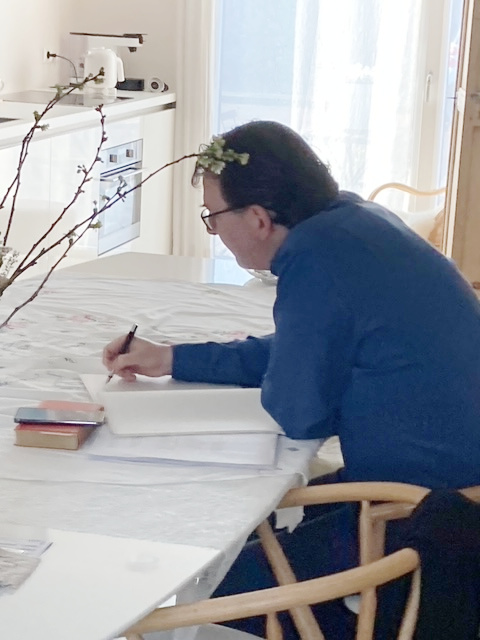
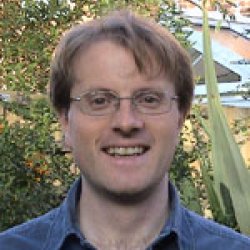
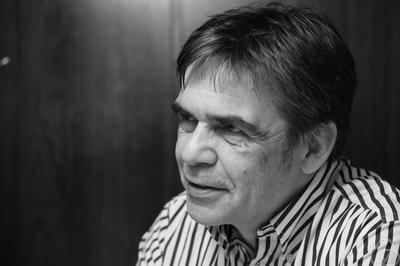
Emmanuel Kowalski is a Professor of Mathematics at ETH Zurich , where he has been since 2008. Previously, he held professorships at Université Bordeaux I (2000–2007) and was a Veblen Research Instructor at Princeton University and the Institute for Advanced Study (1998–2000). His research focuses on analytic number theory, automorphic forms, and algebraic geometry. Education: École Normale Supérieure de Lyon (1989–1992); PhD in Mathematics from Rutgers University (1998). Research Interests include automorphic forms, L-functions, sieve methods, exponential sums, and probabilistic number theory. His work often bridges number theory with algebraic geometry and harmonic analysis. He has authored over 70 research papers and 6 books, including the influential Analytic Number Theory (2004) with Henryk Iwaniec. Scientific Awards and Invitations include the von Neumann Visiting Fellowship at IAS Princeton (2009), membership in the Board of the Institut des Hautes Études Scientifiques (2016–present), and four invitations to lecture at the prestigious Bourbaki Seminar. He has also delivered key lectures at the Riemann International School of Mathematics and conferences honoring major mathematicians. Grants and Leadership He has organized numerous conferences and research programs, including the 2019 Arithmetic, geometry and modular forms conference at FIM and the 2022 goMath program on Women in Mathematics. He co-leads projects funded by the Swiss National Science Foundation (SNF), such as Trace functions and arithmetic Fourier transforms .
Professor Tim Dokchitser is the Heilbronn Chair in Algebraic/Arithmetic Geometry at the School of Mathematics, University of Bristol. His research focuses on algebraic number theory, elliptic curves, arithmetic of L-functions, Galois theory, and computational algebra. He actively explores connections between number theory and finite groups, using computer experiments to advance conjectures like the Birch-Swinnerton-Dyer Conjecture. BSc, Lund University MSc, Lund University PhD, University of Utrecht MA, University of Cambridge His research spans hyperelliptic curves over local fields, Weil representations, tame Galois torsion, and finite group character formulas. Recent work includes computational approaches to Frobenius traces and étale cohomology in hyperelliptic curve quotients. Articles (2023-2025) highlight advancements in arithmetic geometry, zero-knowledge cryptography, and Galois representation theory. Scientific awards include a University Research Fellowship (2011-2014) for elliptic curves and L-functions. He leads projects like the 2015-2018 study on hyperelliptic curves and contributes to collaborations across arithmetic geometry. His computational methods have inspired conjectures in motivic cohomology and modular deformations.
Dirk Praetorius is a Professor of Numerics of Partial Differential Equations (PDEs) at the Technische Universität Wien (TU Wien) , affiliated with the Institute for Analysis and Scientific Computing (ASC) within the Faculty of Mathematics and Geoinformation . He leads the research group on Numerics of PDEs and has held various leadership roles, including Institute Director (since 2020) and head of the Numerics research area. His work focuses on numerical methods for PDEs, including Finite Element Methods (FEM), Boundary Element Methods (BEM), adaptive algorithms, and computational micromagnetics. Education and Career: Praetorius earned his Diplom in Mathematics (2000) and PhD in Applied Mathematics (2003) from TU Wien, followed by a Habilitation in Numerical Analysis (2005). He has been a faculty member at TU Wien since 2005, progressing from Assistant Professor to full Professor in 2017. He has also held visiting positions at institutions such as the University of Jyväskylä and RICAM (Linz). Research Interests: His research spans numerical analysis, adaptive FEM/BEM, a-posteriori error estimation, matrix compression, and computational micromagnetics. He has contributed to modeling spin dynamics, magnetic skyrmions, and multiscale systems. His work emphasizes efficient algorithms for large-scale problems and optimal computational complexity. Awards and Editorial Roles: Praetorius received the TU Best Teacher Award (2021) and TU Best Lecture Award (2019). He serves as Senior Editor for Computational Methods in Applied Mathematics (CMAM) and on the editorial board of Applied Numerical Mathematics (APNUM) . He co-founded the outreach initiative TUForMath to promote mathematics education. Grants and Projects: He leads or co-leads several research projects funded by the Austrian Science Fund (FWF), including the collaborative SFB "Taming Complexity in Partial Differential Systems" (2017–2025) and international collaborations with Germany. His work addresses topics like functional error estimates, nonlinear PDEs, and computational design of magnetic devices. Labs and Teams: He contributes to the ASC Institute and coordinates interdisciplinary projects involving computational physics and engineering. His team develops software tools like MooAFEM and Commics for micromagnetic simulations.
Don Blasius is a Professor of Mathematics at the University of California, Los Angeles (UCLA), serving as Managing Editor of the Pacific Journal of Mathematics and chair of the Mathematics-Economics Interdisciplinary Program (IDP). His research focuses on number theory, arithmetic geometry, and automorphic forms within the Department of Mathematics. His work centers on the deep connections between modular forms, elliptic curves, and fundamental conjectures in arithmetic geometry. Key investigations include generalizations of the Shimura-Taniyama conjecture, applications of Hilbert modular forms to Diophantine problems, and the role of Hodge theory in understanding algebraic cycles. His research frequently bridges automorphic representations with Galois cohomology to explore L-functions and arithmetic structures. Blasius's publication record reveals consistent thematic development since the 1990s, with increasing focus on modular forms and their geometric implications. His work demonstrates strong collaborative patterns, particularly with J. Rogawski on Shimura varieties and M. Borovoi on period torsors, while maintaining independent contributions to conjectural frameworks in number theory. No scientific awards were mentioned in the provided text. No information regarding student advising or research grants was provided in the text. He is an active member of the UCLA Number Theory Group, which drives collaborative research in modular forms, Diophantine equations, and related areas of pure mathematics through seminars and joint projects within the Department of Mathematics.
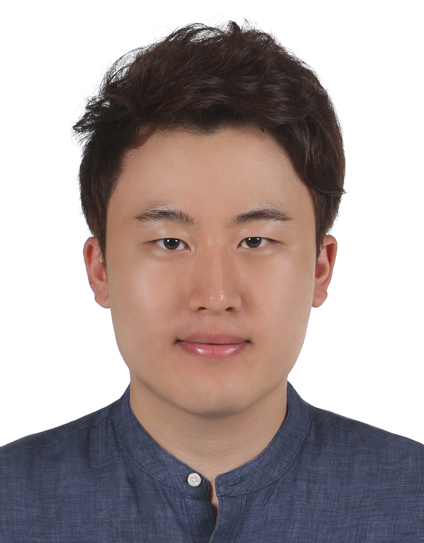
Gyujin Oh is a Ritt Assistant Professor in the Department of Mathematics at Columbia University's Faculty of Arts and Sciences. He received his PhD in mathematics from Princeton University in 2022 under the supervision of Christopher Skinner and Akshay Venkatesh. Prior to joining Columbia, he was a postdoctoral member of the SLMath/MSRI program Algebraic Cycles, L-Values, and Euler Systems in Spring 2023. Dr. Oh's research spans multiple areas of number theory and arithmetic geometry. His primary interests include Algebraic Number Theory, the Langlands Program, Modular Forms, Galois Representations, and Arithmetic Geometry. His work often bridges classical number theory with modern geometric approaches, exploring connections between automorphic forms, cohomology theories, and arithmetic structures. He has made contributions to understanding rigid local systems, the Néron-Ogg-Shafarevich criterion, and various aspects of the Langlands correspondence. His recent publications demonstrate a strong focus on advanced topics in number theory, particularly exploring the intersection of modular forms, Shimura varieties, and Galois representations. His work on generalized Whittaker models, moduli stacks of crystals, and arithmetic quantum local systems reflects his interest in both classical and cutting-edge approaches to number-theoretic problems. The pattern in his research shows a consistent theme of connecting geometric structures with arithmetic phenomena. Dr. Oh is an active educator who has developed comprehensive lecture notes for both undergraduate and graduate courses in Algebraic Number Theory. In Spring 2025, he is teaching Graduate Algebraic Number Theory (MATH GR6657) at Columbia University, covering local and global class field theory, Langlands program connections, and related advanced topics. He has also been involved in organizing and participating in numerous learning seminars including the Moduli of Langlands Parameters seminar, Theta learning seminar, and Deformation theory learning seminar.
Minah Oh is a Professor and Chair of the Department of Mathematics & Statistics at James Madison University (JMU), where she has served since 2010. Her research focuses on numerical analysis, scientific computing, finite element methods, and optimal control, with a particular emphasis on axisymmetric problems and multigrid techniques. She holds a Ph.D. in Mathematics/Numerical Analysis from the University of Florida (2010) and degrees from Yonsei University (B.S., 2005). Her work bridges theoretical mathematics and computational applications, addressing challenges in PDE discretization, optimal control problems, and geometric numerical methods. Recent publications explore finite element approaches for state-constrained control problems and the analysis of axisymmetric domains using de Rham complexes and Fourier-based methods. No scientific awards are explicitly listed in the provided materials. Her advising and grants sections remain unspecified in the text. Dr. Oh maintains an academic website at educ.jmu.edu/~ohmx for further details.
Myrto Mavraki is an Assistant Professor in the Department of Mathematics at the University of Toronto, with affiliations to both the St. George and Mississauga campuses. She specializes in arithmetic geometry and dynamical systems, particularly the theory of unlikely intersections and canonical heights in families of rational maps. Institution: University of Toronto School: Faculty of Arts and Science Department: Department of Mathematics Rank: Assistant Professor Her research focuses on deep connections between arithmetic geometry and dynamical systems. Key areas include equidistribution, variation of canonical heights, preperiodic points, and unlikely intersections in families of maps, especially on the projective line and in elliptic surfaces. These topics lie at the heart of modern arithmetic dynamics and have strong ties to Diophantine geometry and number theory. The most recent publications show a sustained focus on canonical height variation, equidistribution, and the geometry of post-critically finite and preperiodic loci in parameter spaces. Collaborations with leading mathematicians such as Laura DeMarco, Harry Schmidt, and Hexi Ye reflect her central role in current developments in arithmetic dynamics. Her work combines algebraic, analytic, and arithmetic techniques to solve deep conjectures and establish foundational results. Her research is supported by an NSERC Discovery Grant and an Early Career Supplement (2024–2029), and previously by an NSF grant (DMS-2200981). She has mentored or collaborated with several prominent researchers and is likely supervising graduate students, though none are explicitly named. She does not list formal awards, but her publication record in top journals and prestigious fellowships indicate high recognition in the mathematical community. Mavraki held the Benjamin Peirce Fellowship at Harvard (2020–2023), a highly competitive postdoctoral position, and prior positions at the University of Basel and Northwestern University. She earned her PhD from the University of British Columbia under Dragos Ghioca.
Dr. Masoumeh Dashti is an Associate Professor in Mathematics at the University of Sussex, UK, affiliated with the School of Mathematical and Physical Sciences. She holds a PhD in Mathematics from the University of Warwick (2008) and prior degrees in Mechanical Engineering from Sharif University of Technology and Tehran Polytechnic. Her research focuses on Partial Differential Equations, Inverse Problems, Bayesian Inference, and their applications in fluid dynamics and epidemiology. Key research interests include: Bayesian approaches to inverse problems, sparsity-promoting estimators, uncertainty quantification, and mathematical modeling of epidemics on networks. She has contributed to foundational work on Besov priors and MAP estimator consistency in nonparametric Bayesian frameworks. Her publications span topics like network inference from epidemic data, contraction rates of posterior distributions, and fluid-structure interaction problems. She has secured grants including 'Two-dimensional stochastically perturbed shallow water equations' (2019-2023) and 'Confronting High Dimensional Network Models With Data' (2018-2022). Currently, she serves as an Associate Editor for SIAM-ASA Journal on Uncertainty Quantification and AIMS Foundations of Data Science . Teaching expertise includes Functional Analysis, Partial Differential Equations, and Calculus of Several Variables at both undergraduate and postgraduate levels.
Susanna V. Haziot is an Assistant Professor in the Department of Mathematics at Princeton University. Her research focuses on fluid dynamics, partial differential equations, and geophysical fluid dynamics with applications to oceanographic phenomena. She investigates wave propagation, vortex dynamics, and nonlinear systems, particularly in contexts like Arctic and Antarctic ocean currents, Muskat problems, and water wave theory. Her work combines analytical techniques, such as bifurcation theory and stability analysis, with geophysical modeling to address challenges in climate science and coastal engineering. Notable contributions include studies on solitary waves with constant vorticity, critical layers in stratified fluids, and the application of stereographic projections to model ocean currents. Dr. Haziot’s publications span topics from mathematical analysis of free boundary problems to historical perspectives on traveling water waves, reflecting her interdisciplinary approach. While no awards or grants are explicitly listed in the provided materials, her extensive publication record highlights her active role in advancing theoretical and applied fluid dynamics research. Her affiliations include the mathematics department at Princeton, where she contributes to both teaching and research initiatives. No doctoral advisees are listed in the provided text, though her work likely involves collaboration with graduate students and research groups focused on environmental fluid dynamics.
Prof. Marc Lackenby is a Professor of Mathematics at the Mathematical Institute, University of Oxford. His research spans topology, geometry, group theory, and their intersections, particularly focusing on low-dimensional topology and geometric algorithms. His editorial roles include serving as an editor for the International Mathematical Research Notices , Groups, Geometry and Dynamics , and the Forum of Mathematics, Pi and Sigma . He was previously an editor for the Journal of Topology (2007–2021) and the Journal of the LMS (2008–2013). Recent publications highlight his work on hyperbolic knots, triangulation complexity of 3-manifolds, and applications of machine learning to topological problems. His research bridges classical geometric topology and modern computational methods. Scientific awards include the LMS Whitehead Prize (2003), EPSRC Advanced Research Fellowship (2004–09), Philip Leverhulme Prize (2006), and the Frontiers of Science Award (2024). He was an invited speaker at the International Congress of Mathematicians (ICM) in 2010.
Professor Jörn Steuding holds the Professorship for Number Theory at the University of Würzburg since 2006, where he is affiliated with the Institute of Mathematics within the Faculty of Mathematics and Computer Science. His academic career includes a Ramon y Cajal research position at Universidad Autónoma de Madrid (2004-2006), postdoctoral work at the University of Frankfurt under Professors W. Schwarz and J. Wolfart (1999-2004), and completion of his habilitation at Frankfurt in 2004. His educational background includes a PhD from the University of Hannover in 1999 under Prof. G.J. Rieger, where he also served as an assistant from 1996-1999, and undergraduate studies in mathematics at Hannover from 1991-1995. Professor Steuding's research spans multiple areas of number theory, with particular focus on Zeta and L-functions (including zero distribution, universality properties, and connections to Random Matrix Theory), Diophantine analysis (covering approximation theory, equations, and the abc conjecture), elliptic curves and modular forms , algebraic number theory (including arithmetically equivalent fields), and elementary number theory with applications to primality testing and factorization. His work often bridges theoretical foundations with historical perspectives, as evidenced by his research on the Hurwitz brothers' contributions to complex continued fractions. His publication record demonstrates consistent contributions to leading journals in number theory, with research trends showing evolution from foundational work on Riemann zeta function zeros to broader investigations of L-functions in the Selberg class, Diophantine problems over quadratic fields, and historical aspects of number theory. His publications appear in prestigious journals including Mathematische Annalen, Acta Arithmetica, and the Bulletin of the American Mathematical Society. Professor Steuding has authored significant monographs including Diophantine Analysis (CRC Press/Chapman-Hall, 2005), Value distribution of L-functions (Springer Lecture Notes in Mathematics 1877, 2007), and Elementary Number Theory: A Gentle Introduction to Higher Mathematics (Springer Spektrum, 2015, co-authored with N. Oswald). He serves as the Erasmus Coordinator for his department alongside Dr. Jens Jordan, facilitating international academic exchanges. His research collaborations span multiple institutions, with notable co-authors including N. Oswald, M. Technau, H. Nagoshi, and L. Pankowski. Professor Steuding leads the Number Theory team at the University of Würzburg, maintaining an active research group focused on contemporary problems in analytic and algebraic number theory. His work continues to explore connections between classical number theory and modern mathematical physics through Random Matrix Theory applications.
Bernardo Cockburn is a Distinguished McKnight University Professor in the School of Mathematics at the University of Minnesota. He has been a faculty member since 1987, progressing from Assistant Professor to Associate Professor in 1992, and achieving full Professor status in 1997. He also held positions as an Affiliate Professor at the University of Delaware (2019-2020) and Chair Professor of Mathematics at King Fahd University of Petroleum and Minerals in Saudi Arabia (2012-2014). Education: Ph.D. from University of Chicago (1986), Doctorat de 3eme Cycle from University of Paris VI/INRIA (1983), Masters and Licenciatura from Universidad Nacional de Ingenieria in Lima, Peru Research Focus: Numerical methods for partial differential equations, particularly discontinuous Galerkin methods Cockburn's research primarily centers on the devising and analysis of efficient methods for numerically solving linear and nonlinear partial differential equations . His most significant contribution has been in the development and analysis of discontinuous Galerkin methods , particularly the hybridizable discontinuous Galerkin (HDG) methods which he pioneered. His work spans error estimation for hyperbolic problems, continuous dependence for Hamilton-Jacobi equations, and numerous applications across fluid dynamics, structural mechanics, and electromagnetics. He has developed theoretical frameworks for superconvergence properties and created practical algorithms for a wide range of engineering applications. Analysis of his recent publications reveals a strong focus on hybridizable discontinuous Galerkin methods , with significant contributions to superconvergence theory, error estimation, and applications to diverse physical problems including Stokes flow, linear elasticity, Timoshenko beams, and convection-diffusion problems. His work demonstrates a clear trajectory from theoretical foundations to practical implementation, with increasing emphasis on curved domains, adaptive methods, and coupling techniques between different numerical approaches. Doctor Honoris Causa from Universidad Nacional de Ingenieria, Lima, Peru (2013) Invited Speaker at the International Congress of Mathematicians, Numerical Analysis Section (2010) Distinguished McKnight University Professor, University of Minnesota (2007) Cockburn has supervised an impressive 23 PhD students throughout his career, many of whom have gone on to become professors at major universities worldwide including the University of Puerto Rico, Purdue University, and University of Concepcion in Chile. His advisees have produced significant research in discontinuous Galerkin methods, particularly in applications to structural mechanics, fluid dynamics, and Hamilton-Jacobi equations. His research has been supported by numerous grants from the National Science Foundation and other funding agencies, enabling extensive collaboration with researchers across the United States and internationally. Cockburn leads a vibrant research group focused on computational mathematics, with particular emphasis on developing and analyzing discontinuous Galerkin methods. His work has fostered significant collaboration between mathematicians and engineers, with applications spanning aerospace, civil engineering, and materials science. The research group maintains strong connections with institutions worldwide, including regular collaborations with researchers in Peru, Chile, and Europe, reflecting Cockburn's international background and influence.
Jennifer Ryan is a Professor of Numerical Analysis and Division Head of Numerical Analysis, Optimization, and Systems Theory at the Department of Mathematics, KTH Royal Institute of Technology. Her research focuses on designing and developing numerical schemes to extract accuracy from simulations, particularly through superconvergence properties and computational efficiency improvements. She applies these techniques to applications such as imaging, fluid visualization, and plasma dynamics. Education: PhD in Applied Mathematics, Brown University; MS in Mathematics, Courant Institute; BA in Applied Mathematics, Rutgers University. Professional Activities: Member of editorial boards for BIT Numerical Mathematics, ESAIM:M2AN, and Communications on Applied Mathematics and Computation; Steering committee member of AWM's Women in Numerical Analysis and Scientific Computing (WINASc). Her publications emphasize discontinuous Galerkin methods, SIAC filtering, and applications in fluid dynamics. She has served on multiple grant review panels and received awards for diversity and inclusion initiatives. Grants: Principal Investigator for projects funded by the Swedish Research Council, NSF, and US Air Force Office of Scientific Research. Awards: Fellow of UK Higher Education Academy, DAAD Fellowship, and Householder Fellowship.
Professor Tony Shardlow is affiliated with the Department of Mathematical Sciences at the University of Bath , UK. His research spans Stochastic Differential Equations , Bayesian Inverse Problems , Statistical Shape Modelling , and Numerical Analysis , with applications in data science, medical imaging, and computational physics. Labs/Teams : IMI (Institute for Mathematical Innovation), Prob-L@b (Probability Laboratory at Bath), SAMBa (EPSRC Centre for Doctoral Training in Statistical Applied Mathematics). Recent Research Trends : Focus on geometric shape analysis using flow fields, stochastic PDEs for particle dynamics, and Bayesian inference techniques in industrial and medical contexts. Collaborative work bridges computational mathematics with applications in hip dysplasia assessment and pesticide delivery systems. Advising : Supervised Fengpei Wang's PhD thesis on dimension reduction and Sinkhorn algorithms. Collaborates with researchers like N. D. F. Campbell and C. Poon. Teaching : Offers MA30170 - Numerical Solution of Elliptic PDEs.
Endre Süli is a Professor of Numerical Analysis at the University of Oxford, affiliated with Worcester College and Linacre College. He has held various academic roles since 1985, including Fellowships and Tutorships in Mathematics. University Education: B.Sc. in Mathematics, University of Belgrade (1974-1978) M.Sc. in Mathematics, University of Belgrade (1978-1980) Ph.D. in Mathematics, University of Belgrade (1985) M.A., University of Oxford (1985) British Council Visiting Student, Reading University and University of Oxford (1983/84) Süli's research focuses on numerical methods for partial differential equations (PDEs), with expertise in finite element methods, adaptive algorithms, error control, and computational modeling of fractures and non-Newtonian fluids. His work bridges mathematical theory and practical applications in fluid dynamics and material science. His recent publications emphasize finite element approximations, nonlinear PDEs, and stochastic models for polymer dynamics. Themes include multiscale methods, tensor-sparsity for high-dimensional problems, and compressible flow simulations. Scientific Awards: Fellow of the Royal Society (2021) London Mathematical Society Naylor Prize and Lectureship (2021) Pro Urbe Prize, City of Subotica (2021) SIAM Fellow (2016) Member, Academia Europaea (2020) Foreign Member, Serbian National Academy of Sciences and Arts (2009) IMA Service Award (2011) Fellow, European Academy of Sciences (EurASc) (2010) Fellow, Institute of Mathematics and its Applications (2007) London Mathematical Society/New Zealand Mathematical Society Forder Lecturer (2015) Professor Hospitus, Charles University, Prague (2012) Distinguished Visiting Chair Professor, Shanghai Jiao Tong University (2013) Invited Speaker, International Congress of Mathematicians, Madrid (2006) Süli has supervised numerous research projects and held visiting appointments globally. His contributions to numerical analysis span foundational work on error estimation, nonlinear stability, and advanced computational frameworks for complex physical systems.