Arul ShankarView profile
Professor
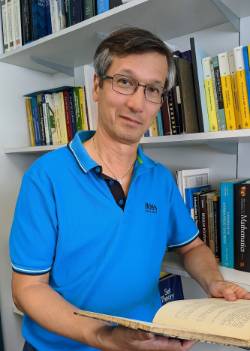
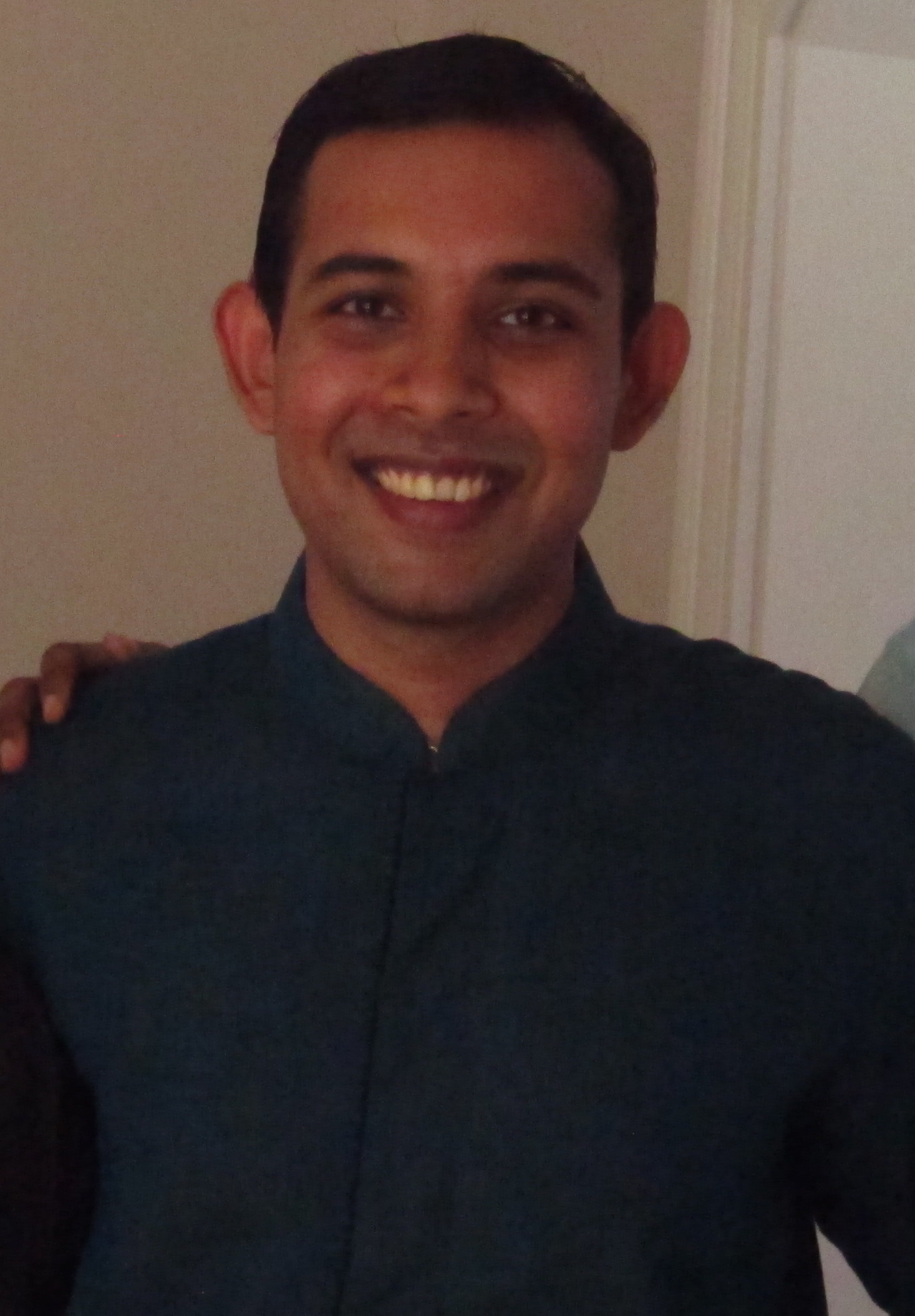
Arul Shankar is a Professor of Mathematics at the University of Toronto, with his primary appointment at the Mississauga campus (UTM). He holds an office at 215 Huron Street, Room 1023 and can be reached at ashankar@math.utoronto.ca. His research focuses on Number Theory and Arithmetic Statistics, with particular expertise in elliptic curves, Selmer groups, and class groups. Professor Shankar's research interests center on the arithmetic statistics of number fields and elliptic curves. His work has significantly advanced our understanding of the average rank of elliptic curves, the distribution of Selmer groups, and the statistics of class groups. He has developed innovative applications of the geometry of numbers to arithmetic problems, often in collaboration with Manjul Bhargava and other leading number theorists. His research bridges deep theoretical questions with statistical approaches to understand the behavior of arithmetic objects across families. His publications reveal a consistent focus on the statistical behavior of arithmetic invariants, with particular attention to bounding average ranks of elliptic curves and understanding the distribution of class groups. The work demonstrates sophisticated applications of geometry of numbers techniques to problems in arithmetic statistics, with results published in top journals including the Annals of Mathematics, Inventiones Mathematicae, and Journal of the American Mathematical Society. Scientific Awards: 2018 Sloan Research Fellowship from the Alfred P. Sloan Foundation Professor Shankar is currently on sabbatical as a Simons Fellow. His research has established foundational results in arithmetic statistics, particularly regarding the average rank of elliptic curves and the distribution of class groups across families of number fields. His work with Bhargava on bounding the average rank of elliptic curves represented a major breakthrough in the field. His research group focuses on extending geometry of numbers methods to new contexts in arithmetic statistics, with recent work examining coregular vector spaces and applications to class groups. The lab maintains strong collaborations with number theorists at leading institutions worldwide.