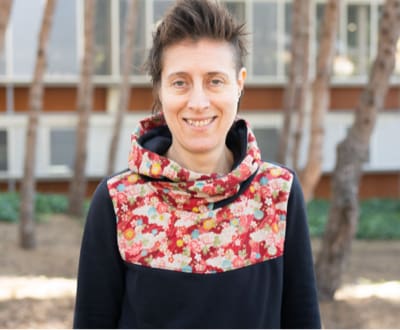
Dr. Rajesh Bera is a Research Fellow at ICFO's Functional Optoelectronic Nanomaterials group specializing in quantum-confined nanostructures. His research examines ultrafast carrier dynamics, excitonic properties, and optoelectronic applications of nanomaterials including quantum dots, nanoplatelets, and hybrid nanostructures. Current investigations focus on intraband transitions in doped nanocrystals, orientation-dependent excitonic behavior in 2D materials, and charge transfer mechanisms in heterostructure devices. Work bridges fundamental photophysics with applications in photodetection, sensing, and energy conversion. Recent publications demonstrate expertise in time-resolved spectroscopy of quantum materials, nanomaterial synthesis via colloidal chemistry, and rational design of optoelectronic devices. Continually develops novel characterization methods to probe ultrafast processes at nanoscale interfaces.
Catalan Institute of Nanoscience and Nanotechnology (ICN2)Spain
Prof. Gustau Catalán is an ICREA Research Professor and Group Leader of the Oxide Nanophysics Group at the Catalan Institute of Nanoscience and Nanotechnology (ICN2). He earned his PhD in Physics from Queen’s University of Belfast (2001) and held postdoctoral positions at IMEDEA (2002–2004), University of Groningen (2004–2005), and University of Cambridge (2005–2009). Since 2009, he has led pioneering research in flexoelectricity, domain wall physics, and strain-engineered oxide materials, supported by an ERC Grant. Education: PhD in Physics, Queen’s University of Belfast (2001) BSc in Physics, Universitat de Barcelona (1997) Research Interests: Gustau Catalán's work focuses on the interplay between ferroelectricity, flexoelectricity, and metal-insulator transitions in oxide materials. His research explores how these properties manifest at reduced dimensions, with applications in nanoelectronics, photovoltaics, and smart mechanical systems. Key areas include polarization dynamics, domain wall engineering, and strain-gradient effects. Recent Publications (2024–2025): The 15 most recent articles highlight advancements in flexoelectricity (e.g., water ice and halide perovskites), domain wall dynamics (e.g., tungsten trioxide), and strain-gradient-induced photovoltaic effects. These studies span materials like PbZrO3, BaTiO3, and BiFeO3, with implications for energy harvesting, memory devices, and nanoscale actuators. Scientific Awards: ERC Grant for flexoelectricity laboratory establishment Advising and Collaborations: While specific students are not listed, Catalán collaborates extensively with researchers across Europe. His group develops novel oxide-based systems and investigates their electromechanical and optoelectronic properties. Laboratory & Team: At ICN2, he established one of the world's first flexoelectricity laboratories, leading a team that explores oxide nanophysics through advanced characterization techniques like AFM, X-ray diffraction, and electrocaloric imaging.
Pablo Fajardo Peña is a Full Professor in the Department of Aerospace Engineering at Universidad Carlos III de Madrid (UC3M). He leads the Plasmas and Space Propulsion Team (EP2) and co-directs the Aerospace Engineering Research Group. His research focuses on advanced propulsion technologies for space applications, including plasma thrusters, electric propulsion, and fluid-thermal systems. Professor Peña's work spans computational modeling of plasma dynamics, experimental characterization of propulsion systems, and development of novel thrusters like Hall effect thrusters and electrospray systems. His recent publications analyze plasma discharge mechanisms, thruster plume behavior, magnetic nozzle effects, and propellant interactions. He leads multiple EU and Spanish-funded projects including HIPATIA (Helicon Plasma Thruster), CHEOPS (Hall Effect Orbital Propulsion), and ADAPT (Advanced Plasma Propulsion). These initiatives focus on developing efficient propulsion systems for spacecraft and addressing challenges in space debris removal. Professor Peña supervises doctoral research on plasma diagnostics and thruster simulation, and has developed simulation tools like HYPHEN (Hybrid Plasma Thruster Holistic Environment). His team collaborates with ESA, Airbus, and SENER Aeroespacial on propulsion technology validation.
Susana Paton Alvarez is an Associate Professor at the Department of Electronic Technology within the College of Engineering at the Universidad Carlos III de Madrid. She is affiliated with the Microelectronic Design and Applications (DMA) research group and the University Institute on Gender Studies . Her contact information includes email addresses susana.paton@uc3m.es and spaton@ing.uc3m.es , and her office is located at 1.2.C06 - Agustin De Betancourt in Leganés. Her research focuses on analog and mixed-signal circuit design , with a particular emphasis on capacitance-to-digital converters , voltage-controlled oscillators (VCO) , and biomedical sensors . Recent work includes advancements in time-encoded sensors for physiological monitoring and noise analysis in multi-bit SigmaDelta modulators. She also explores applications in flexible electronics and edge computing for biosignal acquisition. Notable publications include contributions to IEEE Sensors Letters , IEEE Transactions on Circuits and Systems II , and IEEE Sensors Journal , reflecting her expertise in microelectronic design and biomedical engineering. Her research often bridges theoretical circuit analysis with practical implementations in nanometer CMOS technologies. Dr. Paton Alvarez actively participates in collaborative projects and conferences, such as Modularos and Short Range Wireless Front-Ends initiatives. While no scientific awards are explicitly listed, her publications highlight sustained contributions to the field of analog and biomedical circuit design. Her academic roles include teaching Computer Science and Electronics subjects. She is involved in the University Institute on Gender Studies , indicating an interest in interdisciplinary research or outreach in gender-related academic issues.
Yolanda Vidal Segui is an Associate Professor in the Department of Mathematics at the Universitat Politècnica de Catalunya (UPC), affiliated with the Escola d'Enginyeria de Barcelona Est (EEBE). Her research focuses on wind energy systems, predictive maintenance, and structural health monitoring of wind turbines. She leads projects in the CoDAlab and WinTurCoM research groups, specializing in data-driven models, condition monitoring, and failure prognosis. Her work integrates machine learning, mathematical modeling, and sensor technology to enhance turbine reliability and energy efficiency. Dr. Vidal holds a PhD in Applied Mathematics and has authored over 350 publications. Her contributions include advancements in SCADA data analysis, vibration-based diagnostics, and AI-driven condition monitoring systems. She has received several accolades, including the WindEurope Technology Workshop recognition and the IFIT Distinction in Mechanism and Machine Science. Her research bridges academia and industry, addressing challenges in offshore wind turbine integrity and maintenance strategies. Active in professional service, she serves on conference committees and editorial boards (e.g., Mechanical Systems and Signal Processing, Wind Energy). Her work emphasizes sustainable energy solutions and has been applied in real-world scenarios like the Alpha Ventus wind farm. She also contributes to educational initiatives, developing innovative teaching materials for engineering students.
Elsa Prada Nuñez is a Senior Researcher at the Institute of Materials Science of Madrid (ICMM) under the Spanish National Research Council (CSIC) . She leads the Quantum Dynamics of Materials (QUDYMA) group and currently serves as Head of the Theory Department. Her academic career spans multiple institutions, including the Universidad Autónoma de Madrid (UAM), Karlsruhe University, and Lancaster University, with a focus on condensed matter theory and quantum materials. PhD in Physics from UAM (2006) Tenured Scientist at ICMM-CSIC (2020-2025) Senior Researcher at ICMM-CSIC (2025-present) Her research explores quantum phenomena in low-dimensional materials and nanostructures, particularly topological insulators, Majorana zero modes in hybrid nanowires, graphene and 2D crystals, disorder effects, magnetotransport, spintronics, quantum pumping, straintronics, and exciton dynamics. She has directed over 20 students across PhD, Master's, and undergraduate levels, including notable projects on full-shell hybrid nanowires and twisted bilayer graphene. Recent publications highlight advancements in Josephson junctions, Majorana detection, and topological superconductivity in full-shell nanowires. Awards include the Young Female Scientist 2021 from the Royal Academy of Sciences of Spain and Mastercard, and the 2022 Certamen Universitario 'Arquímedes' First Award as a tutor. She has secured significant grants from the Spanish government and European collaborations for projects on quantum materials and topological superconductivity. Principal Investigator for €139,150 Spanish government grant (PID2021-125343NB-I00) Lead on €5,000 ICMM-CSIC grant (2020-2021) Participant in €3.48M EU AndQC project (2019-2023)
Prof. Josep Puigmartí-Luis is a Research Professor at the University of Barcelona (UB) since 2020, following an ERC Starting Grant in 2015 and an ICREA Research Professorship in 2019. He holds a master’s in Chemistry and Food Engineering from IQS (2003) and a PhD in Materials Science from ICMAB. His research focuses on functional materials synthesis, microfluidic technologies, and self-assembly processes, with applications in nanotechnology and biomedical engineering. Key awards include the Premi Antoni de Martí (2009), St. Jordi Award (2006), and ETH Fellowship (2008). His group, ChemInFlow, develops magnetic microrobots and piezoelectric catalytic systems for targeted therapies and environmental remediation. Educations: PhD in Materials Science, Institut de Ciència de Materials de Barcelona (ICMAB) Master in Chemistry and Food Engineering, Institut Químic de Sarrià (IQS), 2003 Research Interests: Synthesis of functional materials in solution/surfaces, microfluidic technologies, non-equilibrium assemblies, magnetic microrobotics, and piezoelectric catalysis. Articles Trends: Recent work emphasizes microfluidics-driven material synthesis, magnetic microrobot navigation, and piezoelectric catalysis for biomedical and environmental applications. Key themes include nanoreactors, targeted drug delivery, and functional MOF/COF materials. Awards: Premi Antoni de Martí i Franquès de Ciències Químiques (2009) ERC Starting Grant (2015) Rising Star Award (IEEE 3M-NANO 2023) Grants & Labs: ERC Starting Grant (2015), ICREA Professorship (2019). The ChemInFlow Group pioneers interdisciplinary approaches in materials synthesis and robotics, with collaborations spanning Europe and Asia. Labs/Teams: Leads the ChemInFlow Group at UB, focusing on microfluidic technologies and biomedical microrobotics.
Agustín Zaballos Diego is an Assistant Professor in the Department of Computer Engineering at University Ramon Llull (URL), Barcelona, Spain, since 1999. He serves as Research Coordinator in the Department of Engineering at La Salle Campus Barcelona and leads the R&D Networking and Security Area since 2002. His academic background includes a PhD in Data Networks and Internet Technologies (2012), an International MBA (2014), and an M.S. in Electronic Engineering (2000). University: University Ramon Llull (URL) Department: Department of Computer Engineering Research Group: GRITS Research Focus: Real-time QoS-aware routing protocols in Smart Grids, Ubiquitous Sensor Networks, and IoT communications. His work bridges telecommunications, computer science, and energy systems through projects like OPERA (FP6), INTEGRIS (FP7), and FINESCE (FP7). Publication Trends: Recent articles highlight advancements in HF communications for Antarctic research, hybrid genetic algorithms for traffic engineering, IPv6 testing, and Industry 4.0-related networking solutions. Keywords span Smart Grids, IoT, Sensor Networks, and QoS optimization. Collaborative Projects: Key initiatives include the Antarctica Project , ATHIKA (ICT in healthcare), ENVISERA (environmental sensor networks), HOTSUP (online teaching innovation), PLANET4 (AI/ML in industry), and XIoT (IoT scalability challenges).
Catalan Institute of Nanoscience and Nanotechnology (ICN2)Spain
Arben Merkoçi is an ICREA Research Professor and leader of the NanoBioelectronics and Biosensors Group at the Catalan Institute of Nanoscience and Nanotechnology (ICN2). He holds a PhD in ion-selective electrodes from the University of Tirana (Albania) and has held research positions at institutions including the Polytechnic University of Budapest, University of Ioannina, and New Mexico State University. His research focuses on integrating biological molecules with micro/nanostructures to design advanced biosensors, with applications in healthcare and environmental monitoring. Education: PhD in Analytical Chemistry (University of Tirana, 1992) Roles: Co-Editor-in-Chief of Biosensors and Bioelectronics , member of the Academy of Sciences of Albania Research interests include nanomaterial-based biosensors (e.g., graphene, MXenes, quantum dots), point-of-care diagnostics, and sensor fabrication technologies. He has pioneered innovations in inkjet-printed sensors, wearable devices, and CRISPR-integrated biosensing. His group collaborates globally to advance nanobiosensor applications in clinical and environmental settings. Over 350 publications (H-index 91) and 40 supervised PhD theses highlight his contributions. He co-founded GraphenicaLab (graphene patterning) and PaperDrop (clinical diagnostics). Active in grant acquisition and policy, he shaped Spain’s first nanoscience undergraduate program at the Universitat Autònoma de Barcelona.
Irem Boybat is a Researcher in the In-Memory Computing Group at IBM Research - Zurich, Switzerland, focusing on advanced AI hardware solutions. She holds a Ph.D. in Electrical Engineering from EPFL (2020) and prior degrees from EPFL and Sabanci University. Ph.D., Electrical Engineering, EPFL (2020) M.Sc., Electrical Engineering, EPFL (2015) B.Sc., Electronics Engineering, Sabanci University (2013) Her research bridges in-memory computing and AI, targeting energy-efficient hardware for deep learning and neuromorphic systems. Recent work explores analog AI accelerators, heterogeneous architectures, and scalable models for edge computing. Publications highlight cross-disciplinary innovation in materials, circuits, and system design. She has received the IBM Pat Goldberg Memorial Best Paper Award and EPFL PhD Thesis Distinction. Her invited talks span prestigious venues including the European Phase-Change Symposium, IEEE CICC, and HiPEAC. Collaborations include EU H2020 projects like MANIC and WiPLASH.
ARNALTES GOMEZ SANTIAGO is a Full Professor at the Department of Electrical Engineering, Universidad Carlos III de Madrid. His research focuses on Power Systems Control, Renewable Energy Integration, HVDC Systems, and Grid-Forming Converters. He leads projects funded by institutions like Red Eléctrica de España and the Community of Madrid. His work addresses challenges in offshore wind farm integration, energy storage systems, and converter-based grid stability. He has authored over 50 publications, including studies on grid-forming control strategies, low-frequency oscillation damping, and battery degradation modeling. He holds 4 patents related to power system control and renewable energy. Recent projects include contributions to digital power networks, green hydrogen integration, and black-start capabilities for renewable plants. His research emphasizes practical applications, such as HVDC interconnections and smart grid technologies.
LUIS GONZALEZ GUERRERO is an Assistant Professor at the Universidad Carlos III de Madrid, specializing in photonics and telecommunications. His research focuses on integrated photonic circuits for millimeter-wave and terahertz (THz) communication systems, with applications in satellite payloads, wireless fronthaul/backhaul, and space technology. He leads projects in hybrid integrated optical platforms (e.g., InP-Si3N4), laser stability, and high-frequency signal generation. His work bridges photonics with electrical engineering to enable next-generation wireless systems. Research Interests: Dr. Gonzalez Guerrero’s expertise spans integrated photonics, microwave photonics, THz communication links, satellite communication systems, and photonic signal generation. His innovations include low-noise radiometers, optical injection locking for stable local oscillators, and high-purity mm-wave/THz signal transmission. His contributions address challenges in frequency stability, bandwidth efficiency, and phase noise mitigation in high-frequency systems. Publications: His recent work emphasizes hybrid photonic platforms, sub-THz wireless bridges, and phase noise mitigation techniques. Articles highlight advancements in optical signal processing, laser source integration, and applications in space communication. His research trends reflect a strong focus on translating laboratory prototypes into deployable systems for satellite and terrestrial networks. Affiliations: He is affiliated with the Grupo Universitario de Tecnologías de Identificación (GUTI), a research group at UC3M. His work is supported by grants focused on photonic integrated circuits and space communication technologies. He collaborates internationally on projects involving multicore fiber systems, coherent THz transmitters, and optical frequency comb applications.
Dr. Juan Antonio Montiel-Nelson is a Full Professor at the Department of Electronic and Automatic Engineering, University of Las Palmas de Gran Canaria, Spain, and a permanent member of the Institute for Applied Microelectronics (IUMA). With over 195 publications and 691 citations (ResearchGate, April 2024), he maintains an h-index of 13 in Scopus with 544 citations across 407 documents. PhD in Electrical Engineering from University of Las Palmas de Gran Canaria (1994) Full Professor since 2003 (previously Titular Professor 1997-2003) Visiting Scientist at Edith Cowan University, Australia (1996-1997) His research spans VHSIC design across GaAs, SiGe, InP, and CMOS technologies, with current focus on MEMS sensors design and integration for health monitoring, oceanographic profiling, and aquaculture applications. His work integrates circuit design with AI-driven systems for environmental and health monitoring. Dr. Montiel-Nelson serves on the MWSCAS Steering Committee since 2009 and the IEEE Sensors council for the Spanish chapter. He has contributed to 72 IEEE publications including flagship conferences from 2006-2023 and serves as reviewer for multiple IEEE Transactions journals. Myril B. Reed Best Paper Award, 2008 IEEE MWSCAS Active reviewer for IEEE Transactions on Circuits and Systems I/II Reviewer for IEEE Transactions on Very Large Scale Integration (VLSI) He currently leads multiple major research initiatives including EU-funded projects on AI-assisted health monitoring systems and national projects on oceanographic profilers and aquaculture sensor networks, demonstrating strong leadership in interdisciplinary research bridging electronic engineering with practical environmental and healthcare applications.
Dr. Elisabet Romero is a Group Leader at the Institute of Chemical Research of Catalonia (ICIQ) , where she leads research in bio-inspired solar energy conversion . Her work focuses on designing chromophore-protein assemblies capable of efficiently converting sunlight into electrochemical energy, mimicking natural photosynthesis. She is supported by prestigious grants, including an ERC Starting Grant and a Marie Curie Fellowship . Education: PhD in Biophysics, VU Amsterdam (2011) Master’s in Chemistry, Institute of Advanced Chemistry of Catalonia BSc in Chemistry (Physical Chemistry specialization), University of Barcelona (2003) Research Interests: Dr. Romero’s research lies at the intersection of physical chemistry, photophysics, and sustainable energy . She investigates the quantum mechanical principles underlying energy and electron transfer in photosynthetic systems, applying this knowledge to engineer artificial systems for solar fuel production. Her group uses ultrafast spectroscopy techniques like transient absorption and 2D electronic spectroscopy to probe femtosecond-scale dynamics. Publications & Research Trends: Her recent publications reflect a strong trend in de novo protein design for artificial light harvesting , excitonic coupling in chromophore systems , and quantum effects in biological energy transfer . Collaborative work with leading institutions highlights her role in advancing synthetic biology and quantum bio-inspired materials. Scientific Awards: European Research Council (ERC) Starting Grant Marie Curie Fellowship Advising and Grants: Dr. Romero mentors a dynamic team of PhD students, postdoctoral researchers, and master’s students . Her group has secured competitive funding from the ERC, Severo Ochoa Programme, and Marie Skłodowska-Curie Actions , supporting innovative research in renewable energy technologies. Labs and Teams: Her laboratory at ICIQ is equipped with state-of-the-art ultrafast spectroscopy facilities. The team fosters a collaborative and inclusive environment, combining rigorous scientific inquiry with social engagement and cultural exchange.
Pablo Parra Espada is an Associate Professor at the Department of Automática, University of Alcalá (Spain), affiliated with the Space Research Group (SRG-UAH). He holds a PhD from the University of Alcalá (2012) titled Integración de tecnologías de desarrollo y análisis basadas en componentes bajo un enfoque multi-plataforma , supervised by Dr. Sebastián Sánchez Prieto and Dr. Óscar Rodríguez Polo. His research focuses on space systems engineering , particularly in RISC-V processor design , embedded systems , and model-driven engineering . Key areas include hardware-software co-design for satellite systems, real-time computing, and fault-tolerant architectures. He has contributed to the Solar Orbiter mission through work on the Energetic Particle Detector (EPD) and its on-board software validation. His recent work emphasizes virtualization techniques for LEON processors, FPGA-based digital beamforming , and spaceborne phased array systems . He also explores model-driven approaches for automated configuration of ground support equipment. His interdisciplinary contributions bridge computer architecture with aerospace applications. Prof. Parra Espada has published extensively on topics such as hardware performance monitoring, memory management units for satellites, and system-level verification of space software. His work combines rigorous engineering methodologies with cutting-edge technologies to address challenges in space instrumentation and embedded systems.