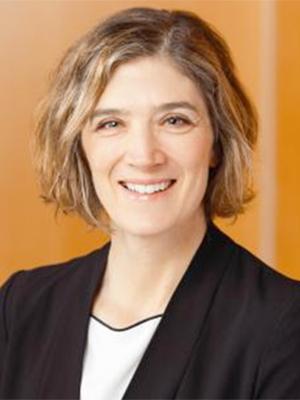
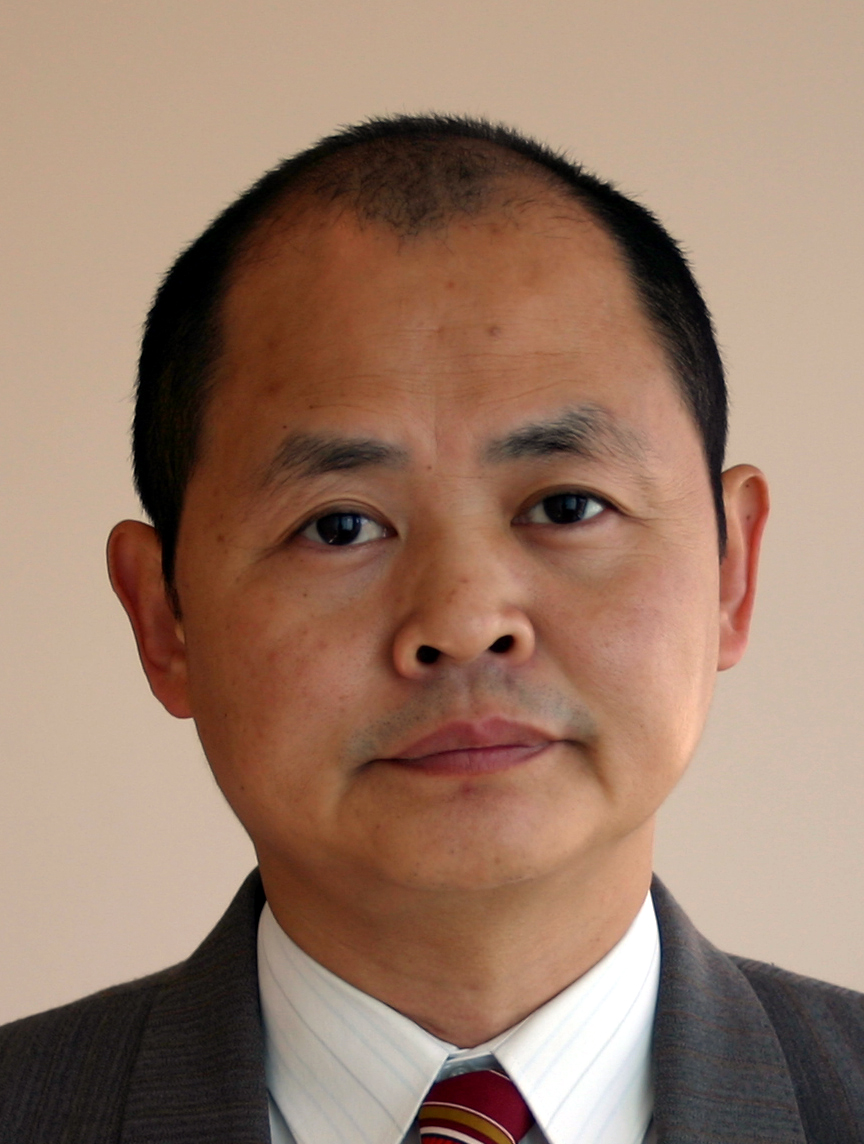
Professor Sang-Heon Lee is a faculty member at the University of South Australia, affiliated with the UniSA STEM division. His research spans interdisciplinary domains including machine vision, supply chain optimization, and material science. His research interests focus on developing advanced imaging systems for food safety (e.g., aflatoxin detection in almonds), optimizing reverse supply chains for electronic waste and solar panels, and engineering nanocomposites for construction materials. He also investigates biomedical imaging techniques for mucociliary transit assessment and clinical coding methodologies. The 15 most recent publications highlight his work in multispectral/hyperspectral imaging, fuzzy logic optimization, and nanomaterials. Key trends include non-destructive food testing, sustainable e-waste management, and biomedical imaging analysis. As a research degree supervisor, he contributes to academic training in these areas. No scientific awards or lab affiliations were explicitly mentioned in the provided text.
Jose Lorenzo Trujillo serves as an Associate Professor in the Department of Automatic Control, Electronics, Computer Architecture and Networks at the University of Cadiz, Spain, with research centered on Systems Engineering and Automation. His academic profile integrates teaching, research, and departmental leadership within engineering disciplines. He earned his doctorate from the University of Cadiz in 2007 with a thesis on integrated software for real-time systems design and control, supervised by Dr. Manuel J. López Sánchez. His scholarly focus bridges theoretical and applied engineering domains, emphasizing practical implementations in automation and signal processing. Dr. Trujillo's research interests span critical technological frontiers: Systems Engineering Automatic Control Signal Processing Real-time Systems Computer Networks Electronics Information and Communication Technologies As a core member of the TIC196 research group (Automática, Procesamiento de Señales e Ingenieria de Sistemas), he advances projects in automatic control and systems engineering. While no specific awards are documented, his active thesis supervision and participation in funded research initiatives demonstrate sustained academic engagement and contribution to engineering knowledge.
Lucija Ivančić is a Teaching and Research Assistant at the Department of Informatics, Faculty of Economics & Business, University of Zagreb. She is currently a PhD candidate with a focus on digital transformation, business process management, and emerging technologies like robotic process automation (RPA) and process mining. Role: Teaching and Research Assistant Department: Informatics University: University of Zagreb Research Interests: Her work bridges business process management and digital transformation, with specific expertise in RPA, process mining, and AI applications in sectors like healthcare, education, and food wholesale. She explores how digital technologies enhance organizational efficiency, customer care, and elderly independence. Publication Trends: Recent articles focus on RPA's integration challenges, process mining in healthcare, and AI-driven customer analytics. Her research often employs case studies, systematic reviews, and data-driven methodologies like K-means clustering. Scientific Awards: Deans' award for BPMN simulation modeling Deans' award for IS auditing research Additional Contributions: She investigates digital inclusion of seniors, e-learning platform implementation during the pandemic, and business-IT alignment education frameworks. Her work emphasizes practical guidelines for enterprises and policymakers.
Hilmi AYGÜN is an Assistant Professor in the Department of Mechatronics Engineering at Karabük University's Faculty of Engineering and Natural Sciences, where he has been serving since 2019. His academic career began as a Research Assistant in the Electrical and Electronics Engineering Department from 2009-2019 before transitioning to his current position in Mechatronics Engineering. He also serves as the Erasmus Coordinator for both the Mechatronics Engineering Department and the university since 2021. Education: PhD in Electrical and Electronics Engineering (2011-2019), Karabük University, Institute of Science MSc in Electrical and Electronics Engineering (2010-2011), Karabük University, Institute of Science BSc in Electrical and Electronics Engineering (2003-2007), Kırıkkale University, Faculty of Engineering Hilmi AYGÜN's research primarily focuses on electrical machines and energy conversion systems, with particular emphasis on motor control algorithms for electric vehicle applications. His work integrates control theory with artificial intelligence techniques, especially optimization algorithms like Particle Swarm Optimization (PSO) and the Yusufcuk Algorithm. He has made significant contributions to field-oriented control of induction motors, DC motor control systems, and wind energy applications. His publication record shows a clear trajectory toward increasingly sophisticated control systems for electromechanical applications, with recent work focusing on metaheuristic methods for motor control, optimization of wind energy systems, and advanced DC motor control techniques. His research bridges theoretical control concepts with practical engineering applications, particularly in transportation and renewable energy sectors. Hilmi AYGÜN has successfully advised at least one Master's student, Hersh Hasan Taha Al Dawoodı, whose thesis focused on field-oriented control of induction motors using metaheuristic methods. He has participated in two major research projects: one on optimal flux reference direct torque control for asynchronous motors used in electric vehicles (2015-2019), and another on controlling bed temperature in fluidized bed boilers using PSO-PID controllers (2011-2013). As an educator, he has taught numerous courses including Electric Machine Dynamics, Modeling and Control of Biomedical Systems, Control of Electric Machines, Electric and Hybrid Vehicles, Industrial Automation, and various electronics courses. His teaching spans both undergraduate and graduate levels, demonstrating his versatility across multiple engineering disciplines within the mechatronics field.
Johannes Geier is a Researcher at the Chair of Design Automation at the Technical University of Munich (TUM). His work focuses on electronic design automation, fault injection simulations, and security countermeasures for RISC-V processors. University: Technical University of Munich Department: Chair of Design Automation Email: johannes.geier@tum.de Research Interests Electronic Design Automation (EDA) for analog and digital circuits Fault tolerance and reliability in RISC-V architectures Security analysis of post-quantum cryptographic systems Timing analysis and microfabrication techniques Optical Networks-on-Chip (NoC) and emerging technologies Compiler-assisted hardware security implementations Recent Research Trends Specializes in fault injection methodologies for hardware security validation Develops open-source tools like vRTLmod for RTL simulation acceleration Explores RISC-V vector extensions for post-quantum cryptography Investigates differential fault effect equivalence checks for efficiency Designs compiler-based security countermeasures against instruction skip attacks Works on concurrent multi-node XCP proxy server architectures
Santeri Porrasmaa is a Doctoral Researcher at Aalto University's Department of Electronics and Nanoengineering. He works within the Marko Kosunen Group , focusing on analog and microwave integrated circuit design. Research interests include automated design methodologies for analog circuits Development of voltage-to-time converters Electromagnetic simulation environments for microwave circuits Quantum-efficient photodetectors for optical flux measurement Recent publication trends show expertise in: Design automation frameworks for analog circuits Injection locking techniques for energy-efficient oscillators Electromagnetic simulation optimization Quantum metrology applications
Björn Möller, a researcher at the Department of Signal Processing and Machine Learning within the Faculty of Electrical Engineering, Information Technology, and Physics at Technical University of Braunschweig, specializes in machine learning and computer vision applications. His academic journey includes a diploma in Business Information Systems from TU Dresden (2012–2019), with a focus on Business Intelligence. Research Interests His work bridges deep learning with practical applications in two distinct domains: Advancing microscopy techniques through low-resolution data-driven super-resolution models Optimizing viticulture operations via object detection and yield prognosis systems His publications demonstrate expertise in algorithm development for both scientific imaging and agricultural technology. Publication Trends Research spans atomic-scale imaging (2024, 2023) and agricultural AI (2019, 2021). Notably, he explores how transformer architectures and super-resolution methods can solve domain-specific challenges in microscopy and vineyard management. Contact Information Email: bjoern.moeller@tu-braunschweig.de Location: Schleinitzstraße 22 (Room 302), Braunschweig Phone: +49 (0) 531 391 - 2446
Claudio Gaz is a Senior Lecturer in Mechatronics, Control, and Autonomous Systems at the Department of Mechanical Engineering, Faculty of Engineering, Computing and the Environment, Kingston University London. He holds a PhD in Automation and Operational Research (2016) and a Master's in Control Engineering with top marks (2011) from Sapienza Università di Roma, and was awarded the French national qualification as maître de conférences (class 61) in 2019. His research spans control systems, robotics, and mathematical modeling, with a focus on industrial manipulators (e.g., KUKA LWR, Universal Robots UR10) and biological processes like glucose homeostasis. Recent work involves dynamic parameter identification for collaborative robots and sensorless force feedback in medical robotics. He has collaborated with institutions such as Sapienza Università di Roma, CNR-IASI (Italian National Research Council), and Airbus Group. His scientific awards include: Fellowship of the Higher Education Academy (FHEA) . Gaz has contributed to journals and conferences in robotics, control theory, and biomedical modeling, with a strong emphasis on real-time adaptive algorithms and safety in physical human-robot interaction.
Dr. Corinne Hohl is a Professor and Head of the Department of Emergency Medicine at the University of British Columbia (UBC), Faculty of Medicine. She serves as a scientist at the Centre for Clinical Epidemiology and Evaluation (C2E2), practices emergency medicine at Vancouver General Hospital, and chairs the Canadian COVID-19 Emergency Department Rapid Response Network. Dr. Hohl is also a member of the Canadian Drug Safety and Effectiveness Research Network and the Canadian Network for Advanced Interdisciplinary Methods for Comparative Effectiveness Research. Her educational credentials include: Bachelor of Science (B.Sc.) Master of Health Science (M.H.Sc.) Doctor of Medicine (MDCM) Fellow of the Royal College of Physicians of Canada (FRCPC) Dr. Hohl's research centers on emergency medicine , drug safety and effectiveness , and pandemic preparedness , with pioneering work in adverse drug event surveillance and health information technology. She developed the ActionADE system to prevent medication re-exposure harm through automated cross-setting communication. Her work integrates clinical practice with health systems innovation, focusing on clinical decision rules and real-world data analytics to improve patient safety in emergency care. Recent publications reveal three dominant trends: (1) leveraging health data for pandemic response (COVID-19 mortality prediction, vaccine effectiveness, health equity), (2) advancing drug safety through informatics (SNOMED CT coding, administrative data validation, non-adherence detection), and (3) addressing climate and social determinants of health (heatwave impacts, neighborhood marginalization). These studies consistently bridge emergency medicine with population health. Her scientific recognition includes: Best Paper Award from the American College of Emergency Physicians (2011) New Investigator Award from CIHR (2012) UBC Teacher of the Year Award (2013) UBC Excellence in Early Career Mentorship Award (2019) As a graduate supervisor in UBC's Experimental Medicine program, Dr. Hohl mentors students through the Graduate and Postdoctoral Studies portal. She leads major collaborative grants including the ActionADE randomized controlled trial and the Canadian COVID-19 Emergency Department Rapid Response Network, funded by CIHR and health research agencies. Her work emphasizes interdisciplinary team science and knowledge translation into practice. Dr. Hohl directs research at the Centre for Clinical Epidemiology and Evaluation and co-leads national networks including the Canadian Drug Safety and Effectiveness Research Network. Her teams focus on emergency department-based interventions, real-world evidence generation, and scalable health IT solutions for medication safety and pandemic response.
Dr. Tiantai Deng is a Lecturer in Electronics and Digital Systems at the School of Electrical and Electronic Engineering , University of Sheffield (since 2021). His industrial background includes a senior research engineer role at HiSilicon/Huawei , where he focused on hardware architecture design for CNN, GEMM, and image/video processing on FPGAs/ASICs. Education: BEng, MSc, PhD Research interests span FPGA-based hardware acceleration , sparse processing architecture for CNN/GEMM, number system design , approximation computing , and high-level design environments . His work integrates algorithm-hardware co-optimization for efficiency in AI and mathematical computing. Recent publications emphasize neurodynamic systems for opinion modeling, parallel processing elements for ODE/AI acceleration, and low-power FPGA implementations for clustering/modulation classification. Earlier work addressed combustion dynamics and image processing pipelines. Contact: t.deng@sheffield.ac.uk | Office: G108, Sir Frederick Mappin Building, Sheffield S1 3JD | ORCID 0000-0003-4507-5746
Professor Mahdi Mahfouf holds the Chair in Intelligent Systems at the University of Sheffield's School of Electrical and Electronic Engineering . He obtained his MPhil (1988) and PhD (1991) in Control Systems from the same institution. After postdoctoral research (1992-1996) on Leverhulme-funded projects in Model-Predictive Control and Fuzzy Logic, he progressed through academic ranks at Sheffield to Full Professor (2005). Recipient of the IEE Hartree Premium Award (1992) and MEDIPEX Innovation Award (for ICU Decision Support Systems) Over 370 publications, including 130+ journal papers Head of the Intelligent Systems Research Laboratory Research Themes His work spans fundamental research in Fuzzy Logic (modelling, control), Neural-Fuzzy Systems, Self-Organising Control, and Evolutionary Optimization, alongside applied domains in pharmaceutical manufacturing, aerospace systems, biomedical engineering (ICU monitoring), and intelligent transportation. Recent publications focus on hybrid AI for pharmaceutical processes , type-2 fuzzy control systems , and machine learning in manufacturing metrology . Lab initiatives include multistage process monitoring and human-machine interaction systems for stress management.
Professor İsmail Serdar Özoğuz is a distinguished academic at Istanbul Technical University , affiliated with the Department of Electronics and Communication Engineering . Holding the title of Professor since 2009, he has contributed extensively to analog circuit design, neural network applications, and wireless communication systems. Ph.D. in Electronics and Communications Engineering (1995) Department Head (2020-present) Vice Dean (2017-2020) Research Interests: His work spans Electronics , Analog Design , Circuits and Systems Theory , with recent focus on: Neural network-based filter optimization Memristor emulator circuits Spintronic devices for wireless and memory applications Intelligent optimization in RF designs Article Trends: Recent publications highlight AI integration in engineering challenges, power efficiency in wireless systems, and hardware-software co-optimization . His work bridges theoretical models (e.g., fractional-order neural networks) with practical implementations (e.g., GaN amplifiers). Scientific Awards: GEBIP Award (TUBA), 2002 Mustafa Parlar Foundation Research Incentive, 2003 TUBITAK Incentive Award, 2004 Grants & Projects: As Principal Investigator, he has led initiatives on: Spintronic devices for wireless/memory/analog uses Passive combiners in HF transmitters High-power GaN amplifier development Fractional-order neural network models
Dr Albert Stevan van Heerden is a Lecturer in Aerospace Engineering at the James Watt School of Engineering, University of Glasgow. Previously, he was a Research Fellow at Cranfield University's Rolls-Royce University Technology Centre and Centres for Aeronautics and Propulsion and Thermal Power Engineering. He holds a PhD in Aerospace Engineering from Cranfield University, an MS in Aeronautics from California Institute of Technology (Fulbright scholar), and a BEng in Mechanical Engineering from the University of Pretoria. His research focuses on conceptual aircraft design , airframe and propulsion systems development , and technical/economic assessment of sustainable aerospace technologies . He employs deterministic and non-deterministic design methods, with a unique emphasis on evolvable aircraft family design for long-term relevance. His work spans traditional civil transport aircraft, electric aircraft , and hydrogen-powered aircraft systems. Key publications include advancements in set-based design techniques margin allocation strategies hydrogen propulsion systems thermal management frameworks uncertainty allocation methods . Scientific recognition includes Fellow of the Higher Education Academy (FHEA) Member of the Royal Aeronautical Society (MRAeS) . He also serves as Academic Adviser for the Commonwealth Scholarship Commission and Academic Ambassador for the James Watt School of Engineering. His teaching portfolio includes Thermodynamics 2, Aircraft Design 3, and Fluid Mechanics (University of Glasgow Singapore), reflecting his expertise in core aerospace disciplines.
Professor Gang-Ding Peng is a leading academic in photonics and optical communications at the School of Electrical Engineering and Telecommunications , University of New South Wales (UNSW). With over three decades of experience, his research focuses on silica and polymer optical fibers, fiber lasers, sensors, and photonic signal processing. Education: B.Sc. in Physics (1982, Fudan University), M.Sc. in Applied Physics (1984), Ph.D. in Electronic Engineering (1987, both Shanghai Jiao Tong University) Career: Lecturer at Shanghai Jiao Tong (1987-1988), Postdoctoral Fellow at Australian National University (1988-1991), UNSW Faculty since 1991, Queen Elizabeth II Fellow (1992-1996) Research Interests: Specialized in specialty optical fibers, nonlinear optics, and photonic devices. His work spans: Silica and polymer fiber amplifiers/lasers Electro-optic and liquid-crystal-doped fibers Multi-core fiber Bragg grating systems Photonic crystal fiber sensing 3D-printed optical components Quantum and neuromorphic photonic applications Scientific Awards: Queen Elizabeth II Fellowship (1992-1996) Fellow and Life Member of OSA & SPIE Supervision: Active mentor in Bi/Er co-doped fibers, 3D-printed optical fibers, and fiber sensing technologies.