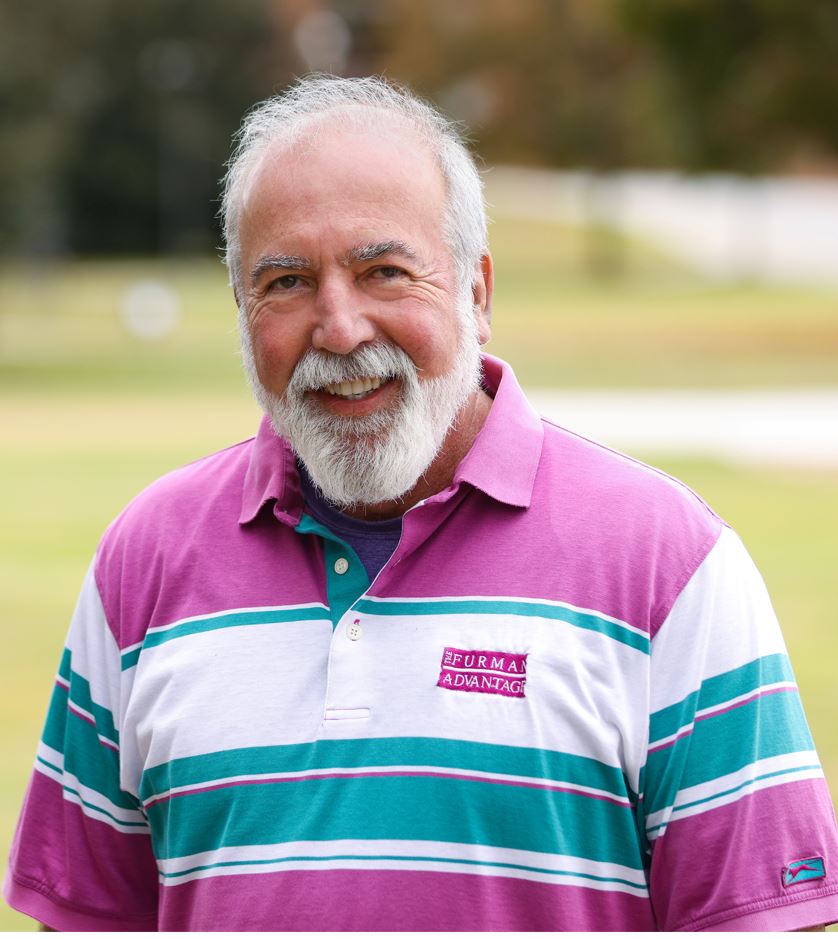
Anthony Caterisano is a Professor of Health Sciences at Furman University, with over 35 years of academic and athletic leadership. He holds a Ph.D., M.A., and B.S. from The University of Connecticut, SUNY, and UNC Chapel Hill. His research focuses on exercise physiology, resistance training, and sports medicine, with notable publications in journals like Medicine and Science in Sports and Exercise . Dr. Caterisano is a Fellow of the American College of Sports Medicine (FACSM) and has authored/co-authored books on football training and resistance techniques. He has served as wrestling coach at Furman, Spartanburg Methodist College, and currently coaches at Wade Hampton High School. As a competitive powerlifter, he has secured 16 South Carolina state titles, 10 national titles, and 10 world gold medals in masters-level competitions. His work bridges scientific research and practical application, with grants and presentations on topics like strength training methodologies and cardiovascular adaptations. Key contributions include studies on Tsunami Barbell training, metabolic responses to exercise, and core muscle engagement. His awards reflect both academic excellence and athletic achievement, while his grants and presentations underscore his commitment to advancing sports science.
Lee Miller is a Professor in the Department of Neurobiology, Physiology, and Behavior at the University of California, Davis, College of Biological Sciences. His research integrates neural engineering, physiology, and computational methods to develop communication restoration technologies and investigate sensory processing mechanisms. His primary research interests include neural engineering for speech neuroprosthetics, electrophysiological analysis of speech production, auditory neuroscience, and geometric approaches to neuromuscular signal decoding. He employs surface electromyography (EMG), electroencephalography (EEG), and computational modeling to study brain-machine interfaces for speech restoration and multisensory integration. Recent publications reveal a dominant focus on EMG-based speech neuroprostheses, with geometric and topological analysis of neuromuscular signals emerging as a key methodology. His lab has pioneered non-invasive approaches to speech articulation decoding, created standardized EMG databases, and investigated neural mechanisms of attention in speech-in-noise processing. This work bridges engineering innovation with fundamental neuroscience to address communication disorders. Professor Miller leads the Miller Lab at UC Davis, which specializes in neural engineering for communication restoration. The lab develops real-time speech synthesis systems from neural signals and investigates the physiological basis of speech production and perception using multimodal recording techniques.
Piotr Winkielman is a Professor of Psychology at the University of California, San Diego (since 2007), with affiliations at Warwick Business School (UK) and the Warsaw School of Social Sciences and Humanities (Poland). His research focuses on the interplay of emotion, cognition, embodiment, and consciousness in social cognition, employing methods from social/cognitive psychology and neuroscience. Key interests include unconscious emotion processing, facial mimicry, decision-making under emotional influence, and the neural basis of social perception. Education: PhD in Social Psychology (1997), University of Michigan MSc in Psychology (1991), University of Bielefeld, Germany BSc in Psychology (1988), University of Warsaw, Poland Research Interests: Winkielman explores how fleeting affective reactions influence behavior without conscious awareness, studying facial feedback mechanisms, emotional contagion, and the role of physiological signals in decision-making. His work bridges theories like Affect-As-Information and Facial Feedback, while challenging assumptions about the necessity of conscious processes in emotion. Grants & Funding: Supported by NSF Grant BCS-0350687 for studies on unconscious emotion and physiological feedback. Collaborations include projects on mimicry, stress effects, and cross-modal perception. Labs & Teams: Leads research at UCSD on embodied cognition and social neuroscience, with studies involving EEG, EMG, and behavioral experiments. International collaborations span UK, Poland, and Germany.
Ian Greenhouse serves as an Assistant Professor in the Department of Human Physiology within the College of Arts and Sciences at the University of Oregon. He directs the Action Control Laboratory, where he investigates the neurophysiological mechanisms underlying human movement initiation and cancellation using multimodal approaches including electrophysiology, neuroimaging, and brain stimulation. Education: Undergraduate degree in Psychology from Tufts University Ph.D. from the University of California, San Diego Postdoctoral training at the University of California, Berkeley Research Focus: Dr. Greenhouse's work centers on action control neurophysiology , specifically examining motor inhibition processes during response stopping and preparation. His lab employs electromyography (EMG) , transcranial magnetic stimulation (TMS) , and magnetic resonance spectroscopy (MRS) to probe corticospinal excitability in healthy and clinical populations. Key investigations include neural computations for action preparation, biomarkers of stopping failure, and relationships between motor performance and brain chemistry (e.g., GABA). Publication Trends: Analysis of Dr. Greenhouse's 2022-2025 publications reveals intensified focus on subcomponents of response inhibition (pause vs. cancel processes) and neurochemical modulation of motor control. His work increasingly integrates menstrual cycle effects on GABA with action stopping metrics, while maintaining core investigations of corticospinal dynamics during unimanual/bimanual preparation. Recent studies show growing clinical applications in stroke rehabilitation. Scientific Awards: No awards were documented in the source materials. Advising and Research: As laboratory director, Dr. Greenhouse mentors students in the Action Control Laboratory's research program. Although specific grants aren't detailed, his high-output publication record spanning neuroimaging, electrophysiology, and clinical applications suggests sustained external funding for equipment-intensive neuroscience research. Laboratory Operations: The Action Control Laboratory (https://actioncontrollab.uoregon.edu) operates from Gerlinger Hall (Room 348), utilizing TMS-EMG integration, MRS, and behavioral paradigms to study action control. Current projects examine preparatory inhibition in stroke recovery, interhemispheric dynamics during movement preparation, and individual differences in stopping processes using the stop-signal task framework.
Professor Dario Farina is Chair in Neurorehabilitation Engineering at the Department of Bioengineering, Faculty of Engineering, Imperial College London. He has previously served as Full Professor at Aalborg University, Denmark, and at the University Medical Center Göttingen, Germany, where he founded and directed the Institute of Neurorehabilitation Systems. His research spans biomedical signal processing, neural control of movement, and neurorehabilitation technology, with extensive contributions to electromyography, motor unit analysis, and neural interfaces. Chair in Neurorehabilitation Engineering, Imperial College London Former Full Professor, Aalborg University and University Medical Center Göttingen Founder and Director, Institute of Neurorehabilitation Systems Key Affiliations: Centre for Neurotechnology, Artificial Intelligence Network, Robotics Forum, Neuromechanics and Rehabilitation Technology His research focuses on biomedical signal processing , neural control of movement , and neurorehabilitation technology . He investigates how neural signals control muscles, develops methods to decode motor unit activity from EMG, and designs neural interfaces for prosthetics and rehabilitation. His work integrates computational modeling, signal processing, and clinical applications to improve bionic systems and neurorehabilitation outcomes. The recent publications (2024–2025) show a strong emphasis on high-density EMG , real-time motor unit decomposition , peripheral and cortical neural interfacing , closed-loop control systems , and AI-driven biosignal analysis . Key themes include decoding spinal and cortical signals, improving prosthetic control, understanding tremor mechanisms, and developing open-source tools for motor unit analysis. The work bridges neuroscience, engineering, and clinical practice. Scientific awards and honors include: Royal Society Wolfson Research Merit Award (2016) IEEE EMBS Early Career Achievement Award (2010) Nightingale Prize for best paper in MBEC (2007) Elected Fellow of EAMBES (2016) Elected Fellow of AIMBE (2012) Professor Farina has advised numerous researchers and students in neuroengineering and rehabilitation technology. He has led major research grants in neural interfaces and neurorehabilitation. He is Editor-in-Chief of the Journal of Electromyography and Kinesiology , an editor for IEEE Transactions on Biomedical Engineering and The Journal of Physiology , and has held editorial roles in multiple journals. He was President of ISEK (2012–2014) and is a Senior Member of IEEE. He leads a research group focused on neuromechanics, neural decoding, and bionic systems. The team develops tools like I-Spin live and MUedit for real-time motor unit identification and contributes to open-source platforms such as NeuroMotion . The lab collaborates internationally on projects involving spinal cord stimulation, prosthetic control, and wearable robotics, aiming to translate neural engineering advances into clinical rehabilitation.
Tina Gupta will join the University of Oregon as an Assistant Professor in the Department of Psychology under the College of Arts and Sciences in Fall 2025. With expertise in clinical psychology and affective neuroscience, she focuses on adolescent emotional development and severe mental illness risk markers. Research Interests: Adolescent Development, Psychosis-risk, Resilience, Emotion Processing, Reward Processing, Early Intervention Methods: Clinical interviews, behavioral measures, facial expression coding, neuroimaging, eye-tracking, computational statistics Her work bridges clinical psychology and developmental psychopathology to identify biological and environmental factors contributing to severe mental illnesses like schizophrenia. She specifically examines disruptions in emotional processes and protective resilience mechanisms in at-risk adolescents. Dr. Gupta employs multi-modal approaches including fMRI , EMG , and longitudinal tracking to map brain-behavior relationships. Her recent publications analyze anhedonia trajectories, facial expressivity changes, and inflammation's role in adolescent mental health.
Amir Asif is a Professor at the Lassonde School of Engineering, York University, and concurrently serves as Vice President, Research and Innovation. His academic leadership roles include Dean of the Gina Cody School of Engineering and Computer Science at Concordia University (2014-2020). He specializes in signal processing, communications, and their applications in healthcare, power grids, and distributed systems. Asif holds a PhD from Carnegie Mellon University and a Harvard certification in executive leadership. Education: PhD, Electrical and Computer Engineering, Carnegie Mellon University (1996) MS, Electrical and Computer Engineering, Carnegie Mellon University (1993) BSc, University of Engineering and Technology Lahore (1990) Harvard Certificate in Leadership for Senior Executives (2018) Research Interests: Asif’s work spans signal processing for medical imaging (e.g., ultrasound elastography), smart grid optimization, and cybersecurity in power systems. His recent publications address hydrogen energy systems, EMG-based gesture recognition, and resilient control frameworks against cyberattacks. Grants & Leadership: He leads NSERC-funded projects on federated learning and resilient algorithms. He chairs the Ontario Council of University Research and serves on TRIUMF Innovations and the Richmond Hill Board of Trade. His grants include SSHRC funding for equity initiatives and NSERC support for distributed signal processing. Teaching & Mentorship: Asif has supervised over a dozen graduate students and taught courses like Digital Communications and Statistical Signal Processing Theory. Notable advisees include Arash Mohammadi (PhD, 2014) and Nick Sajadi (PhD, 2017).
Phil Pavilionis is an Associate Professor of Kinesiology in the School of Public Health at the University of Nevada, Reno. With over 20 years of clinical experience as a Certified Athletic Trainer (ATC) and Certified Strength and Conditioning Specialist (CSCS), he bridges academic research with practical applications in sports medicine. His roles include teaching undergraduate/graduate courses, conducting research in the Neuromechanics Laboratory, and serving as an adjunct clinical athletic trainer for Nevada Sports Medicine. Education: Ph.D. in Neuroscience, University of Nevada, Reno (2024) M.S. in Exercise Science, California University of Pennsylvania (2007) B.S. in Health Science, University of Nevada, Reno (1995) Dr. Pavilionis specializes in head injury prevention and virtual reality applications for concussion evaluation. His research leverages clinical experience to develop standardized assessment protocols, focusing on vestibular-ocular motor screening (VOMS) using virtual reality to reduce administrator variability. Key investigations include oculomotor deficits following concussion, head impact biomechanics in football using instrumented mouthguards, and minimal detectable change metrics for neurocognitive tests like ImPACT. His work integrates neuroscience, kinesiology, and engineering to improve concussion diagnosis and management. Analysis of his 45 publications (2022-2025) reveals three dominant trends: (1) Virtual reality standardization of concussion assessments, particularly VOMS protocols; (2) Head impact monitoring using instrumented mouthguards to evaluate protective equipment like Guardian Caps; and (3) Machine learning applications for objective concussion detection through eye-tracking and biomechanical data. These studies consistently address the critical need for objective, standardized tools to overcome subjective symptom reporting in sports concussion management. Dr. Pavilionis actively collaborates with the Neuromechanics Laboratory and Nevada Sports Medicine, translating research into clinical practice. While no specific grants are documented in the provided materials, his extensive publication record (including 15 articles in 2023 alone) demonstrates sustained research productivity and interdisciplinary collaboration across neuroscience, engineering, and sports medicine disciplines.
State University of New York at BuffaloUnited States
Stephen E. Still is a Professor of Practice in the Department of Civil, Structural and Environmental Engineering at the University at Buffalo (UB), affiliated with the Institute for Sustainable Transportation and Logistics. His roles include teaching applied transportation planning and technology courses, advising students, and collaborating across disciplines between the School of Engineering and Applied Sciences and the School of Management. Prior to academia, he served as founder and managing director of Seabury Airline Planning Group and Diio, LLC, specializing in aviation consulting and IT. With over 30 years of industry experience, he held leadership roles at US Airways and United Airlines, focusing on strategic route planning, fleet management, and alliance development. Dr. Still holds a PhD in Civil Engineering and Operations Research from Princeton University, with a focus on transportation systems and economics, and a BS in Engineering (magna cum laude) from UB with a concentration in transportation planning. He has also completed advanced coursework in demand modeling at MIT. His research interests emphasize sustainable transportation systems and logistics, integrating engineering principles with operational efficiency. While his academic contributions primarily reside in transportation engineering, his interdisciplinary work incorporates wearable technology and sensor-based solutions for health monitoring, as evidenced by his extensive publication record in smoking cessation and behavioral health research. Scientific awards and grants are not explicitly mentioned in the provided information. Dr. Still’s advising and teaching focus on fostering student engagement in transportation innovation and real-world problem-solving. His professional experience bridges academia and industry, reflecting a commitment to practical applications of engineering and logistics principles.
Lee M. Miller is a Professor and Vice Chair of Academic Affairs in the Department of Neurobiology, Physiology and Behavior at the University of California, Davis, affiliated with the Center for Mind and Brain. His research focuses on neuroengineering, computational neuroscience, and neural mechanisms underlying attention, speech processing, and multisensory integration. Research interests include the development of neural prosthetics, decoding of neuromuscular signals for prosthetic control, and understanding how auditory and visual systems interact during speech perception and attentional processes. His work bridges clinical applications (e.g., cochlear implants) with fundamental neuroscience, leveraging tools like electrophysiological recordings, EEG/MEG, and advanced signal processing techniques. Recent publications highlight innovations in electromyographic speech neuroprosthetics, the topology of neuromuscular signals, and the neural basis of speech-in-noise processing. Miller’s studies emphasize translational potential, such as improving speech synthesis from brain signals and designing haptic feedback systems for motor coordination. His contributions have advanced understanding of neural mechanisms in sensory integration, auditory attention, and the impact of cognitive factors on perception. Miller maintains a lab dedicated to these interdisciplinary efforts, with a focus on both basic science and clinical applications.
Raquel Iniesta is a Reader in Statistical Learning for Precision Medicine at King's College London, leading the Fair Modelling and TDA lab within the Department of Biostatistics & Health Informatics. Her expertise spans mathematics, statistics, and machine learning applied to precision medicine, with a focus on ethical AI integration in healthcare. She teaches advanced machine learning and statistical modeling courses and actively engages in scientific communication through workshops and media outreach. Her research emphasizes developing transparent AI models for personalized medicine, particularly in depression, hypertension, and neurodegenerative diseases. Notable contributions include studies on fasciculation analysis in ALS and ethical frameworks for healthcare AI. Publications highlight interdisciplinary approaches, combining machine learning with clinical and genetic data to improve predictive models. Dr. Iniesta leads educational initiatives, including the Machine Learning module and Introduction to Statistics programs, and contributes to public engagement by designing digital content and managing social media for research dissemination.
Mathew Yarossi is an Assistant Professor at Northeastern University with a joint appointment in the College of Engineering (Electrical and Computer Engineering) and Bouvé College of Health Sciences (Physical Therapy, Movement, and Rehabilitation Sciences). He holds a PhD from Rutgers University (2017) and joined Northeastern in 2022. Research Focus: His work bridges movement neuroscience, clinical research, and engineering, with emphasis on AI-driven solutions for rehabilitation. Key areas include physiological signal processing, neuromuscular control, and human-robot interaction. His NSF-funded project on dyadic object handover with robots highlights his interdisciplinary approach. Publications: Recent work explores VR-based interventions, EMG-driven prosthetics, and computational modeling of transcranial stimulation. His 2025 patent on virtual reality experiment design underscores his translational impact. Awards: Holds a patent for VR experiment systems (2025). Advising & Grants: Mentors students in PEAK Experiences programs and collaborates with the U.S. Army on AI applications in combat systems. His lab is part of the Institute for Experiential AI.
Dr. Christoph Leitner is a Research Fellow at ETH Zurich's Integrated Systems Laboratory under Prof. Luca Benini, focusing on biomedical and IoT applications. His work integrates printed piezoelectric transducers and flexible electronics with energy-efficient systems. He holds a PhD in Biomedical Engineering from TU Graz (2022) and has collaborated with institutions like Sant'Anna School of Advanced Studies and KTH Stockholm. Notable achievements include the Josef Krainer Young Researcher Award and Motorik Scholarship. Leitner's research spans ultrasonics, machine learning, and wearable devices, with contributions to muscle-tendon dynamics and real-time biofeedback systems. Education: PhD in Biomedical Engineering, TU Graz (2022), Advisor: Prof. Christian Baumgartner Previous roles: University Assistant (2006–2011) and R&D Engineer at Virtual Vehicle GmbH Research Interests: Convergent technologies merging biomedical engineering and IoT Ultrasound-based monitoring for musculoskeletal systems Energy-efficient embedded systems for wearable applications Collaborations & Awards: Recipient of Josef Krainer Young Researcher Award (2023) and Motorik Scholarship (2018) Active collaborations with University of Zurich, Veterinary University of Vienna, and Queensland University of Technology Labs & Projects: Integrated Systems Laboratory at ETH Zurich Developed a patented ultrasound-transparent tattoo-based SEMG system with Prof. Francesco Greco
Craig A. Chin is an Associate Professor in the Department of Electrical Engineering at Kennesaw State University. He holds a Ph.D. and M.S. in Electrical Engineering from Florida International University (2006, 2001) and a B.S. in Electrical and Computer Engineering from the University of the West Indies (1995). Research Interests: Digital Signal Processing for Biomedical Applications Machine Learning in Biomedical Signal/Image Analysis Wireless Body Area Networks (WBANs) for Healthcare Network Security in Resource-Constrained Environments Biometric Authentication for Wireless Sensor Networks Innovations in Engineering Education (Cooperative/Active Learning, Humanities Integration) Article Trends: His publications (2001–2019) focus on Biomedical Signal Processing (EMG/Eye-Gaze Integration, Stress Detection), WBANs for mHealth , and Engineering Education Pedagogy . Recent work (2013–2019) emphasizes Cooperative Learning Strategies and Wireshark-based Network Security Labs . Academic Contributions: Craig has taught courses such as Biometrics, Data Communications, Biomedical Instrumentation, and Medical Electronics. He actively explores future research on biometric-driven security for Body Area Sensor Networks and active learning strategies in online education.
Dawson Kidgell is an Associate Professor in the Department of Physiotherapy at Monash University, Faculty of Medicine. He is an active researcher and PhD supervisor with a strong focus on the neurophysiology of exercise, particularly neuroplasticity and motor cortex responses to strength training and non-invasive brain stimulation techniques such as Transcranial Magnetic Stimulation (TMS) and transcranial direct current stimulation (tDCS). His research interests include understanding how the nervous system adapts to exercise, rehabilitation, and neuromodulation. He employs advanced electrophysiological methods—TMS, tDCS, EMG, and spinal reflex testing—to explore corticospinal excitability, intracortical inhibition, and motor learning. His work has significant implications for sports science, rehabilitation of neuromuscular injuries, and aging populations. Recent publications (2020–2024) highlight a strong trend in systematic reviews and meta-analyses on tDCS, corticospinal responses to training, and clinical applications in tendinopathy, concussion, and aging. His research frequently investigates bilateral transfer, cross-education of strength, and the neural mechanisms underlying rehabilitation interventions. Scientific Awards: University of Jyväskylä Visiting Fellow grant (2023) Research Funding and Supervision: Associate Professor Kidgell has secured over $2.5 million in research funding. He has successfully supervised 11 PhD students to completion and currently mentors 5 additional PhD candidates. His research projects include NHMRC-funded studies on neurophysiological markers of balance and equipment grants for advanced neurostimulation tools. Laboratories and Research Teams: His work is conducted within neurophysiology and exercise neuroscience labs at Monash, often in collaboration with interdisciplinary teams focusing on motor control, rehabilitation, and sports medicine.