Marco Di Renzo is a CNRS Research Director (Professor) and Head of the iPhyCom group at the Laboratory of Signals and Systems (L2S) at Paris-Saclay University, France. He is affiliated with both CNRS and CentraleSupélec. His roles include: Member of L2S Management Committee and Board Council Member of the Ph.D. School Admission Committee Academic Vice Chair, ETSI Industry Specification Group on RIS Editorial and leadership roles in IEEE communications journals Education: Laurea (cum laude) and Ph.D. in Electrical Engineering from University of L’Aquila (2003, 2007) Habilitation à Diriger des Recherches from Paris-Saclay University (2013) Research focuses on 6G networks , reconfigurable intelligent surfaces (RIS) , and integrated sensing and communications (ISAC) . He explores electromagnetic theory, machine learning applications, and energy-efficient wireless systems. His work addresses challenges in near-field communications, multi-user MIMO, and holographic beamforming. He advocates for physics-driven design principles in next-gen networks. Key awards include IEEE/IEE Fellowships, the Michel Monpetit Prize, and multiple IEEE Best Paper Awards. He holds international visiting professorships at institutions like the University of Oulu (Finland) and Nanyang Technological University (Singapore). Active in standardization via ETSI ISG RIS and contributes to global initiatives like the ITU 6G Vision. His research bridges theoretical models with practical implementations, emphasizing interdisciplinary collaboration between physics, signal processing, and AI.
Dr. Gines Martinez is a Director of Research at CNRS/IN2P3 and Director of SUBATECH laboratory at IMT Atlantique. His research focuses on experimental study of quark-gluon plasma using relativistic heavy ion collisions at ALICE (LHC) and PHENIX (RHIC) experiments. He teaches Experimental Physics of Strong/Weak Interactions at Université de Nantes and electromagnetism/quantum mechanics at IMT Atlantique. Research Interests: Quark-gluon plasma formation, particle production in hadronic collisions, deuteron formation mechanisms, and ultra-relativistic nuclear collisions. Recent Publications: Focus on femtoscopy, flow harmonics, and QCD phase diagram using LHC data. Research reveals insights into nucleosynthesis in hadronic collisions and QCD matter behavior under extreme conditions. Outreach: Featured in Ouest-France and El País, with seminars on physics education in prisons and schools.
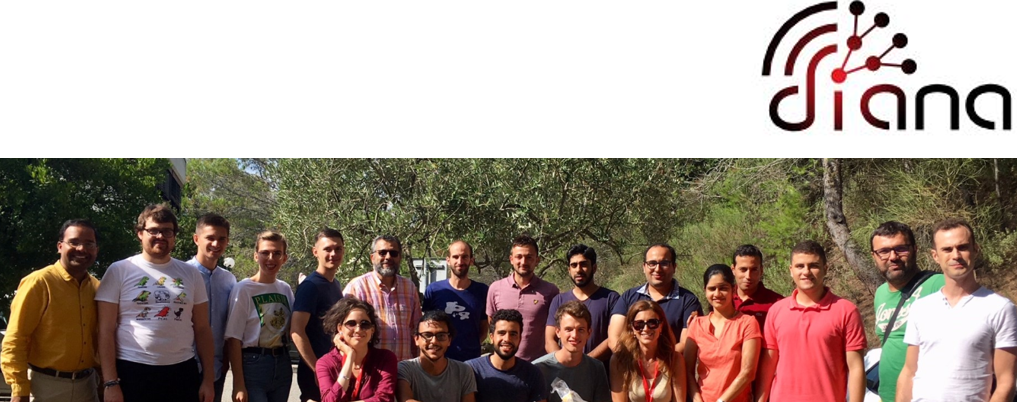
Chadi Barakat is a Senior Researcher (Directeur de Recherche) at Université Côte d'Azur's Inria research center, leading the DIANA project-team. He holds a PhD in Computer Science from University of Nice Sophia Antipolis (2001) and Habilitation (HDR) in 2009, with academic credentials from Lebanese University (1997) and French institutions. PhD: Computer Science (2001), University of Nice Sophia Antipolis HDR: Computer Science (2009), University of Nice Sophia Antipolis Master's: Computer Science (1998), University of Nice Sophia Antipolis BSc: Electrical & Electronics Engineering (1997), Lebanese University His research focuses on Internet measurement and traffic analysis , with significant contributions to Quality of Experience (QoE) modeling, 5G/ICN/SDN network architectures , and network performance evaluation . Recent articles highlight browser-based network monitoring, fidelity-aware network emulation, and ray tracing optimization for radio frequency mapping. He has supervised 12 PhD students to completion and currently directs the Academy of Excellence 'Networks, Information, and Digital Society' at Université Côte d'Azur. His work has received multiple best paper awards at CNSM, CloudNet, and SECON conferences, while serving as associate editor for Elsevier Computer Networks journal and active in ACM/IEEE conference committees. Director, Academy of Excellence 'Networks, Information, and Digital Society' (2025-present) Senior IEEE Member (2010) & ACM Senior Member (2018) General Co-Chair: ACM IMC 2022, ACM CoNEXT 2012 Guest Editor: IEEE JSAC special issue on Internet Sampling
Eliane Becache is a permanent researcher at ENSTA Paris within the Applied Mathematics Unit (UMA) and serves as Director of the POEMS laboratory (CNRS/ENSTA/INRIA) and Deputy Director of the EDMH doctoral school. Her research focuses on partial differential equations for wave propagation, numerical methods including mixed finite elements and perfectly matched layers (PML), and unbounded domain resolution techniques. Education: Numerical analysis of PDEs and finite element methods Teaching: Courses on finite elements, complex variables, and wave equations at ENSTA and Orsay master's programs Her publications from 2010-2023 address topics like: Stability analysis of PMLs in anisotropic/disersive media Numerical methods for convective/acoustic wave propagation Wave scattering in unbounded domains Time-domain and frequency-domain wave simulations Elastodynamic and electromagnetic wave modeling Scientific Outreach: Co-author of educational films on wave propagation, including the award-winning Digital modeling of the acoustic guitar (Henri Poincaré Prize, 2003). Organized WAVES conferences and scientific events.
Sonia Fliss is a Full Professor at ENSTA Paris , affiliated with the Department of Applied Mathematics and the POEMS laboratory (UMR CNRS-INRIA-ENSTA) . She teaches applied mathematics courses on partial differential equations (PDEs) , finite element methods , and periodic homogenization to undergraduate and graduate students. Doctor in Applied Mathematics (2009) Authorized to supervise research (2019) Research Interests : Sonia Fliss specializes in the modeling and numerical analysis of wave propagation in periodic, quasi-periodic, and random media . Her work includes transparent boundary conditions , guided waves , and asymptotic methods for acoustic, electromagnetic, and elastic wave phenomena . Recent Publications highlight her contributions to the Half-Space Matching Method , edge states in honeycomb structures , and scattering problems in unbounded domains . Her numerical techniques address multi-scale waveguides and time-harmonic propagation . Laboratory : As a member of the POEMS team, she collaborates on interdisciplinary projects involving mathematical analysis , computational physics , and engineering applications in domains like defence, energy, and transport .
Higher School of Aeronautical Techniques and Automotive ConstructionFrance
Toufik AZIB is a Full Professor and scientific coordinator of the ECMS (Energy and Conception of Mechatronic Systems) research theme at ESTACA Engineering School in France. He leads a team of 6 teacher-researchers and 13 PhD students, focusing on optimal design of power electronics and energy management for hybrid power systems. His work bridges academic research and industrial applications in sustainable mobility, with strong collaborations across Europe and Algeria. Dr. AZIB received his Electrotechnical Engineering Diploma from the University of Setif, Algeria in 2006, followed by an M.Sc. in Electrical Engineering from ENSEM-INPL, France in 2007. He earned his Ph.D. in electrical engineering from the University of Paris South XI in 2010 and completed his HDR (Habilitation à Diriger des Recherches) from the University of Paris Saclay in 2021. His academic journey reflects a strong foundation in both theoretical and applied electrical engineering. His research focuses on the modeling, control, and optimal design of embedded energy systems under multi-physical constraints (electrical, thermal, electromagnetic compatibility, volume, reliability). He specializes in energy management strategies for hybrid systems combining fuel cells, batteries, and ultracapacitors, with applications in electric vehicles and the 'more electric aircraft.' His work integrates numerical and experimental approaches to develop methodologies for pre-dimensioning and real-time energy management, addressing challenges in sustainable transportation. Analysis of Dr. AZIB's recent publications reveals a strong trend toward multidisciplinary design optimization for automotive applications, particularly electronic throttle systems. His research increasingly incorporates knowledge management techniques and addresses reliability considerations in hybrid power source design. There's a clear progression from fundamental energy management strategies to sophisticated eco-driving solutions for electric vehicles, reflecting the evolving demands of sustainable mobility. Best Paper Award for 'Structure and Control Strategy for a Parallel Hybrid Fuel Cell/Supercapacitors Power Source' at IEEE VPPC'09 Dr. AZIB has supervised numerous PhD and Master's students across multiple institutions in France, Algeria, and Colombia. He leads significant research projects including MIMe (Module d'Intégration et de simulation Mécatronique), ECOS Nord (Eco-driving strategies for electric motorcycle), and AmCoAIR (improving air quality in vehicle cabins), securing funding from national and international sources. His work demonstrates strong industry collaboration with partners like Valeo, PSA, and Renault. As experimental platforms coordinator since 2012, Dr. AZIB oversees 10 specialized experimental facilities at ESTACA's S2ET-Paris Saclay research pole, including those for autonomous electric vehicles, drones, electric machines, and power modulators. His team regularly develops proof-of-concept demonstrators to validate research findings, such as the Formula Student electric vehicle and the 'Electric Appeal' streamliner project, demonstrating practical applications of their theoretical work.
Nicolas Lebbe is a CNRS researcher at the Laplace laboratory in Toulouse, France, specializing in applied mathematics and computational physics for photonic and electromagnetic systems. Current CNRS Researcher (2023–) Postdoctoral Researcher at Langevin Institute (2022) Postdoctoral Researcher at INRIA Sophia-Antipolis (2020–2022) PhD in Applied Mathematics from CEA & LJK (2016–2019) His research focuses on shape and topology optimization , homogenization , and scientific computing applied to nanophotonics and metasurfaces . He developed methods to optimize photonic components using the level-set approach and General Sheet Transmission Conditions (GSTC) for metasurface modeling. His work bridges mathematical rigor with practical electromagnetic and photonic device design. Nicolas has published extensively on Maxwell equations , plasmonics , and finite element simulations , with key contributions to robust optimization and interface homogenization . His recent publications (2023–2025) emphasize homogenization techniques for curved and quasi-periodic metasurfaces, while earlier works (2017–2019) span robust optimization theory and mid-IR photonics. He collaborates with institutions like the Langevin Institute, INRIA, and École polytechnique, and has presented at international workshops including OWTNM and GDR MecaWave. His PhD thesis, Contribution in topological optimization and application to nanophotonics (2019), laid foundational work for nanophotonic device optimization.
Sébastien Tordeux is an Associate Professor at the University of Pau, affiliated with the Magique 3D research team in the Faculty of Sciences. His research focuses on numerical methods for wave propagation, particularly Trefftz methods, asymptotic expansions, and electromagnetic/acoustic scattering. He holds a PhD in Applied Mathematics from the University of Versailles Saint-Quentin and has held positions at INSA-Toulouse and ETH Zurich. He has advised multiple PhD students and organized conferences such as the 2017 conference in honor of Abderrahmane Bendali. His work emphasizes high-order numerical modeling and efficient solvers for wave equations in complex media. Education: PhD in Applied Mathematics (2004, Université de Versailles), DEA M2SAP (2001), ENSTA Engineer (1998-2001). Professional roles include Chair of Excellence in Numerical Analysis (INRIA-UPPA 2010-2015), and leadership in Master’s program administration and national academic committees (CNU 26). Research interests span Trefftz methods for time-harmonic models, numerical solvers reducing pollution effects, and asymptotic modeling for small obstacle scattering. Recent contributions include quasi-Trefftz methods for electromagnetic systems and iterative approaches for 3D wave simulations. He has supervised PhD students working on topics like antenna patch models, perforated plate acoustics, and multiscale electromagnetic diffraction. His collaborative projects involve institutions like ONERA and TU Berlin, focusing on high-accuracy wave modeling and computational methods.
Mathé Vivien is a Lecturer and Researcher at La Rochelle University, Department of Earth Sciences. As Director of the Department, their research focuses on the evolution of anthropized coastal areas over millennia through geophysical prospecting (electrical, electromagnetic, magnetic) and paleoenvironmental reconstruction. Key projects include studying ancient ports of Narbonne and megalithic sites of Carnac. Research interests span coastal geomorphology, archaeological geophysics, wetland paleoenvironments, and human-environment interactions. Methodological innovations in non-invasive prospecting techniques characterize their work, applied to Neolithic enclosures, Roman ports, and estuary evolution. Recent publications demonstrate consistent focus on Mediterranean and Atlantic coastal archaeology, with recurring themes of geophysical methodology validation, multi-proxy paleoenvironmental reconstruction, and spatial analysis of archaeological features. Collaborative international projects in Tunisia, Senegal, and Turkey highlight a transdisciplinary approach. Affiliations include leadership roles in ANR MONUMEN (Neolithic monumental architecture) and RAPSODIE (Celtic settlements) projects. Team collaborations involve ESTRAN research group and CNRS-INSU institute. No awards or student supervision details were documented.
Valentina KRACHMALNICOFF is a CNRS Research Scientist at Institut Langevin, affiliated with ESPCI Paris and PSL University. She joined the institute in 2012 after completing her postdoctoral fellowship there in 2010. Her research focuses on experimental nanophotonics, particularly studying near-field interactions between fluorescent nano-emitters and nanostructured plasmonic or dielectric materials. Dr. KRACHMALNICOFF obtained her PhD from University Paris-Sud in 2009 with a thesis on quantum atom optics experiments supervised by Alain Aspect and Charles Westbrook. Her research interests span experimental nanophotonics with plasmonic and dielectric media, near-field optical microscopy with fluorescent nanoprobes, quantum optics applications, and the study of electromagnetic local density of states. She has developed expertise in fluorescence intensity and decay rate measurements of nano-objects grafted on scanning probe microscope tips, as well as nano-manipulation techniques. Her work bridges fundamental physics with potential applications in quantum technologies, biosensing, and thermal management at the nanoscale. She frequently employs super-resolution imaging techniques to overcome diffraction limits in optical measurements. Analysis of Dr. KRACHMALNICOFF's recent publications reveals a strong methodological evolution toward increasingly sophisticated combinations of experimental techniques with theoretical modeling. Her work consistently focuses on probing light-matter interactions at the nanoscale, with growing integration of biophysical approaches. The publications demonstrate expertise in thermal radiation at nanoscale distances, plasmonic and dielectric nanostructures, and super-resolution fluorescence lifetime imaging. Her research shows a trajectory from fundamental near-field optics toward applications in quantum information and biosensing. Dr. KRACHMALNICOFF has received notable scientific recognition: 2017: CNRS Bronze Medal for her pioneering work in nanophotonics 2007: L'Oréal France - UNESCO "For Women in Science" Prize Dr. KRACHMALNICOFF actively mentors doctoral students and postdoctoral researchers. Current advisees include Guillaume Blanquer and Dorian Bouchet (PhD candidates) and Vivien Loo (postdoctoral researcher). Former students include Da Cao and Etienne Castanié. Her research is supported by CNRS funding and collaborative grants with other institutions, evident from her extensive co-authorship network spanning theoretical physicists, materials scientists, and optical engineers. Dr. KRACHMALNICOFF leads an experimental research team at Institut Langevin specializing in nanophotonics. Her laboratory features advanced near-field optical microscopy capabilities, fluorescence lifetime imaging systems, and nano-manipulation setups. The team collaborates closely with other researchers at Institut Langevin, including Yannick De Wilde (CNRS Research Director) and Ignacio Izeddin (Associate Professor at ESPCI), forming a cohesive research group focused on light-matter interactions at the nanoscale.
Alexandre Ern is a Senior Researcher at CERMICS (École des Ponts ParisTech) and INRIA Paris (SERENA team), where he has contributed since 1995 and 2016, respectively. He holds a professorship at École des Ponts (since 1997) and previously served as Associate Professor at École Polytechnique (2010–2022). Since 2015, he heads the Master's program in Applied Mathematics at École des Ponts. Ern is Co-Editor-in-Chief of the IMA Journal of Numerical Analysis (since 2024) and Associate Editor for multiple top journals including SIAM Journal on Scientific Computing and ESAIM Mathematical Modelling and Numerical Analysis. His research focuses on numerical methods (finite elements, discontinuous Galerkin, hybrid high-order schemes), a posteriori error estimation , and applications in fluid/solid mechanics and environmental flows (hydrology, porous media). He develops structure-preserving discretizations for complex PDEs and explores computational geosciences and wave propagation. Ern's publications emphasize robust error analysis , high-order discretizations , and computational efficiency for elliptic, parabolic, and hyperbolic systems. Recent work explores hybrid high-order methods for wave equations, Maxwell's equations, and interface problems, often leveraging polynomial-degree-robust techniques and unfitted meshes. Scientific Awards: Paul Caseau Prize (2020) Nominee, AMIES Prize (2020) ENPC Best PhD Award (supervision) UPE Best PhD Award (supervision) Frontiers of Science Award, Int. Congress Basic Science (2024) He actively advises PhD students (31+ supervised) and postdocs, with projects funded by industrial partners including CEA, EDF, and Safran. His team collaborates with CERMICS and INRIA's SERENA lab, focusing on computational mechanics, model reduction, and large-scale fracture networks.
Pierrick Lotton serves as a CNRS Research Director at Le Mans University's Institute of Acoustics (LAUM), a joint research unit between CNRS and the university. He leads critical work within LAUM's Transducers team, focusing on fundamental and applied research in electroacoustics and thermoacoustics. His institutional affiliation places him at France's premier acoustics research laboratory, which maintains extensive facilities for acoustic measurements, ultrasonic experimentation, and transducer development across multiple specialized domains including materials science, opto-acoustics, and bioacoustics. Lotton's research program centers on two interconnected pillars: electroacoustics and thermoacoustics. His electroacoustic investigations pioneer advanced modeling, development, and characterization of audio transducers with particular emphasis on nonlinear behaviors in loudspeakers and electric guitar pickups. Simultaneously, his thermoacoustic research explores acoustic refrigeration systems, complex couplings between acoustic and thermal energy fields, and transient nonlinear phenomena. This dual focus enables innovative cross-pollination between audio engineering and thermal physics, driving advancements in both fundamental understanding and practical applications of acoustic energy conversion. Analysis of his 2019-2024 publications reveals a consistent trajectory in transducer physics, particularly MEMS-based piezoelectric speakers, voice coil dynamics in magnetic environments, and digital acoustic projection systems. His work demonstrates exceptional methodological diversity spanning analytical modeling, experimental validation, and educational innovation. Notable contributions include the ASKNOWN project's open-access acoustics courseware and breakthroughs in understanding transducer nonlinearities for both consumer audio and specialized applications like fish sound localization. No major scientific awards were documented in the available institutional materials, though his sustained publication record in high-impact journals and presentations at European Acoustics Association forums indicate significant peer recognition. His collaborative research network spans France, Germany, Italy, and the Czech Republic, reflecting strong international engagement. Lotton's academic supervision activities aren't explicitly detailed, but his educational initiatives like the ASKNOWN project demonstrate commitment to pedagogy. His research is supported through LAUM's institutional framework and collaborative projects including European initiatives and ANR-funded programs. Current work appears concentrated on advancing MEMS transducer technology, refining thermoacoustic cooling systems, and developing next-generation educational resources for acoustics. As a core contributor to LAUM's Transducers team, Lotton operates within one of Europe's leading acoustics laboratories. His current projects align with LAUM's strategic focus on transducer innovation and thermoacoustic applications, positioning him at the forefront of both theoretical acoustics research and practical engineering solutions. The laboratory's comprehensive infrastructure supports his work from fundamental wave propagation studies to applied device development.
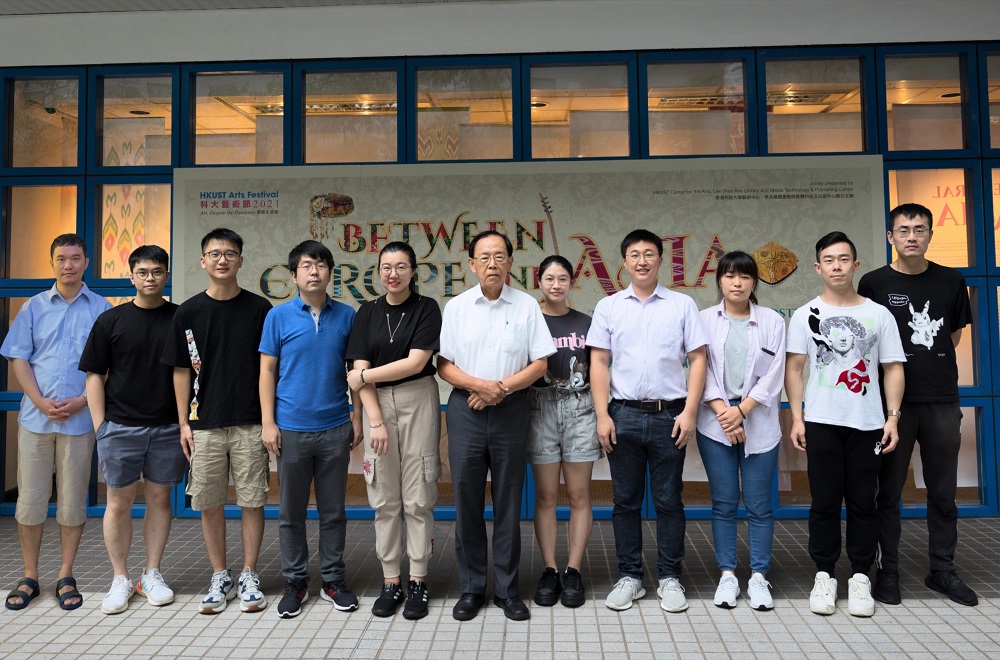
Dr. Ping Sheng is Chair Professor of Nanoscience and Professor of Physics at the Hong Kong University of Science and Technology (HKUST). A pioneer in acoustic metamaterials, he established the conceptual foundation for locally resonant sonic materials and developed innovative metamaterial absorbers. His research encompasses wave-matter interactions across phononic, photonic and electronic systems, with seminal contributions to acoustic metamaterials, carbon nanostructure superconductivity, and electrorheological fluids. Current work focuses on broadband absorption technologies for underwater and microwave applications. Dr. Sheng has received the Brillouin Medal, Rolf Landauer Medal, and Bloch Prize for his transformative contributions. He co-founded Acoustic Metamaterials Group (AMG), enabling commercial applications of metamaterial technologies.
Emilie Avignon-Meseldzija is a Researcher at the Electrical and Electronic Engineering of Paris , affiliated with the School of Engineering at the University of Paris. Her work focuses on advanced analog and RF circuit design, with significant contributions to filter design, metamaterials, biomedical electronics, and radar systems. She has published over 24 peer-reviewed articles between 2010 and 2025, emphasizing innovations in group delay filters, non-Foster components, and FMCW radar systems. In education, she co-developed a new microelectronics teaching method implemented at Supélec in 2012, focusing on practical circuit design and integrated systems education. Her research combines theoretical rigor with practical applications, such as low-power biomedical stimulators and high-performance radar front-ends. Key areas of expertise include: Passive and active filter design Non-Foster metamaterial components Biomedical signal conditioning circuits RF frequency synthesizers Integrated circuit layout optimization Recent work (2024–2025) emphasizes dynamically reconfigurable systems, tunable inductors, and programmable biomedical stimulation circuits. Her contributions bridge foundational RF engineering with emerging applications in healthcare and radar technology.
Clément Delcamp is a CNRS Researcher at the Institut des Hautes Etudes Scientifiques (IHES), focusing on theoretical physics at the intersection of condensed matter and algebraic topology. He was previously a Junior Professor at IHES since 2023, following postdoctoral fellowships at Ghent University, the Max Planck Institute for Quantum Optics (Munich), and the Max Planck Institute for the Physics of Complex Systems (Dresden). His academic journey includes a PhD from the University of Waterloo and the Perimeter Institute for Theoretical Physics, preceded by an MSc in Quantum Fields and Fundamental Forces at Imperial College London (2013–2015). Education: MSc in Quantum Fields and Fundamental Forces (Imperial College London, 2015), PhD (University of Waterloo & Perimeter Institute, 2018) His research explores the algebraic structures underlying quantum lattice systems, emphasizing generalized symmetries, dualities, and topological field theory applications. He has pioneered tensor network methods to study electromagnetic duality in (3+1)d systems and non-abelian Kramers-Wannier dualities in generalized Ising models. His work bridges abstract category theory with concrete physical models, particularly in topological phases and renormalization group techniques. Recent publications highlight his contributions to quantum lattice duality frameworks, defect calculus, and tensor network-based renormalization. His 2024 paper with Lootens and Verstraete demonstrates optimized DMRG simulations for gapped phases via dual models. At IHES, he leads research on non-invertible symmetries and solicits postdocs in theoretical physics. Scientific Awards: Walter Zellidja Scholarship (French Academy), FWO Postdoctoral Fellowship Delcamp's affiliations span leading institutions including the Perimeter Institute, Max Planck Institutes, Ghent University, and IHES. He actively promotes collaboration through seminars and lectures at venues like the Collège de France, Les Houches, and Queen Mary University.