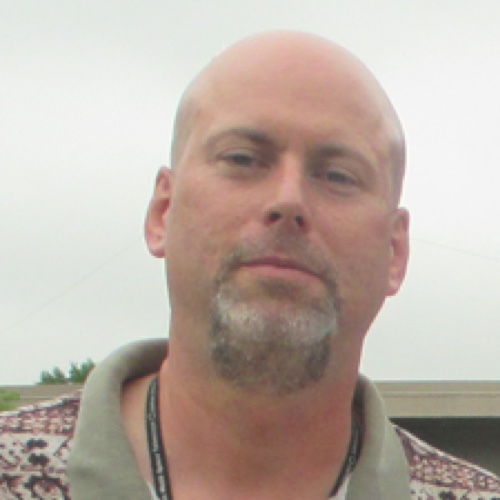
Dr.-Ing. Ingor Theodor Baumann is a Senior Lecturer at the Technische Universität Dresden , affiliated with the Faculty of Electrical Engineering and Information Technology . Since 2016, he has held a Privatdozent position, and since 2012, he has been a Research Associate at the Chair of Electromagnetic Theory. PhD in Microwave Engineering (2012) Habilitation in Computational Electromagnetics (2016) Focus on numerical methods for electromagnetic simulation Research Interests include electromagnetic field theory , microwave engineering , and computational electromagnetics . His work addresses substrate noise coupling , antenna arrays , and EMC challenges in automotive and RF systems. Recent Publications emphasize hybrid simulation methods , non-destructive testing , and microwave device modeling , with applications in terahertz imaging and automotive radar . Best Paper Awards (2015, 2016) Contact: igor.baumann@tu-dresden.de
Nebojša S. Dončov is Full Professor at the Department of Telecommunications, Faculty of Electronic Engineering, University of Niš. As Vice-Dean for Science and IEEE Senior Member, he leads research in computational electromagnetics with applications in antenna design and electromagnetic compatibility. His TLM modeling techniques have been validated internationally. Education & Affiliations: PhD in Telecommunications (2002) Corresponding Member of Academy of Engineering Sciences of Serbia IEEE MTT/AP/EMC Society Senior Member Research Focus: Pioneers cylindrical TLM methods for: Conformal antenna analysis EM propagation modeling On-body communication systems Machine learning-assisted EM simulation Publication Trends: Recent IEEE Transactions papers demonstrate advances in neural network applications for antenna optimization and experimental validation of novel simulation techniques. Research consistently bridges theoretical electromagnetics with practical wireless system design. Awards & Projects: Aleksandar Marinčić Award (2017) URSI Young Scientist Award (2002) NATO SPS Project Director: UAV-Based Explosive Detection Royal Society projects on sensor networks Teaching & Service: Authors textbooks on antenna theory and simulation techniques. Chairs IEEE TELSIKS conferences and coordinates Erasmus+ collaborations with European technical universities.
Dr. Victor Khilkevich is a Research Professor in the Department of Electrical and Computer Engineering at Missouri University of Science and Technology (Missouri S&T). Affiliated with the EMC Laboratory in Rolla, Missouri, his work focuses on electromagnetic compatibility, microwave imaging, and high-frequency measurement methodologies. His research interests include: Microwave Absorber Design PCB Electromagnetic Characterization Signal Integrity Analysis EMI Source Localization Near-Field Scanning Techniques Automotive EMC Modeling Recent publications examine plane wave coupling to PCBs, microwave holography for EMI source imaging, and 3D printed multilayer absorbers. These works span fields like: Electromagnetic Compatibility Printed Circuit Board Engineering Microwave Measurement Systems Computational Electromagnetics Materials Science Transmission Line Theory Scientific awards include multiple IEEE EMC Society recognitions, Distinguished Reviewer status, and Missouri S&T Faculty Achievement Awards.
Ram Achar is a Professor in the Department of Electronics within the Faculty of Engineering at Carleton University, Ottawa, Canada. His research focuses on advanced electronic design and simulation methodologies for high-speed systems. His research interests include: Signal and Power Integrity Circuit Modeling, Simulation and Optimization High-Speed Interconnects Model-Reduction Techniques CAD for RF, MEMS, Wireless and Optoelectronic Applications EMC/EMI and Mixed-Signal Analysis Nonlinear Circuit Analysis The publications and technical contributions of Prof. Achar reflect a strong emphasis on computational methods and design automation in high-frequency and high-speed electronic systems, particularly in the domains of packaging, interconnect modeling, and electromagnetic compatibility. Notable recognitions include: IEEE Circuits and Systems Society Distinguished Lecturer (2011–2013) Guest Editor, IEEE CPMT Transactions (2011) Prof. Achar has held significant leadership roles in the IEEE community, including General Co-Chair for EPEPS-2010 and EPEPS-2011, Chair of Joint Chapters of IEEE Ottawa Section (CAS–EDS–SSC), and active participation in technical committees such as TC-EDMS (TC-12), EPEPS, and EDAPS. He contributes extensively to the advancement of electronic packaging and electrical design through conference organization and technical guidance. He is a Senior Member of IEEE and actively involved in multiple IEEE societies: Microwave Theory and Techniques (MTT), Circuits and Systems (CAS), Electronic Devices (EDS), Solid-State Circuits (SSC), and Electromagnetic Compatibility (EMC).
Ugo Siravo is an ETS/HES Engineer at the Swiss Plasma Center (SPC) within EPFL's School of Basic Sciences (SB), specializing in TCV Tokamak Physics and International Installations. Concurrently, he serves as a Lecturer for the Doctoral School of Physics (EDPY-ENS), teaching “Fusion and industrial plasma technologies” under EPFL's Vice Presidency for Academic Affairs. His work bridges engineering execution and academic instruction in fusion energy systems. His research spans Fusion Energy Engineering , Plasma Physics Applications , and Tokamak Technology Development , with specialized expertise in Gyrotron Systems , Neutral Beam Injection , and Electromagnetic Compatibility . This focus drives innovations in TCV tokamak operations, particularly power supply optimization, heating system integration, and ITER-related component validation. His methodology combines experimental validation with numerical simulation to solve high-power RF engineering challenges in nuclear environments. Analysis of his 15 most recent publications (2011-2025) reveals consistent contributions to TCV tokamak engineering, with escalating focus on ITER-compliant systems. Key trends include gyrotron collector thermal management (2023), dual-frequency operation (2019-2024), and electromagnetic compatibility for fusion environments (2011, 2017, 2023). His work demonstrates progression from component testing (2011) to integrated system optimization (2022-2025), emphasizing reliability in high-stress fusion applications. As a Lecturer, Siravo contributes to EPFL's doctoral education in physics but no advising details or grant activities are documented. His professional identity remains anchored in engineering execution within the Swiss Plasma Center framework. He operates within EPFL's Swiss Plasma Center (SPC), which manages the TCV tokamak—one of the world's most flexible magnetic confinement devices. The SPC maintains critical partnerships with ITER and European fusion initiatives, positioning Siravo's work at the nexus of experimental tokamak engineering and international fusion development.
Prof. Gerd Griepentrog is a Full Professor at TU Darmstadt's Institute for Power Electronics and Control of Drives. Previously, he held leadership roles at Siemens AG's Corporate Technology division (2002–2013). His research focuses on power electronics, electromagnetic compatibility, and grid stability in high-frequency converter systems. Key interests include active power filters, common-mode noise mitigation, and advanced modulation techniques for motor drives. Education: Ph.D. in Automation and Power Engineering (1993–1996), TU Chemnitz Diploma in Automation and Power Engineering (1988–1993), TH Zwickau/Chemnitz Research Interests: Development of high-efficiency power electronic converters EMC solutions for industrial drives and renewable energy systems Integration of Industry 4.0 communication protocols (e.g., OPC UA) in drive systems Cybersecurity analysis of power grids via harmonic distortion patterns Recent Work Trends: Focus on SiC and GaN semiconductor applications for high-frequency converters Advancements in common-mode voltage reduction techniques Hybrid EMI filtering strategies combining capacitors and active components Awards: None explicitly listed. Grants & Labs: Active in collaborative projects involving fusion reactor power supplies (e.g., ASDEX Upgrade). Leads experimental work on supercapacitor-based pulsed power systems for tokamaks.
Nebojša S. Doncov is a Full Professor at the Faculty of Electronics, University of Niš, Serbia, where he is affiliated with the Department of Telecommunications. He has been a leading academic and researcher in computational electromagnetics and antenna systems since earning his PhD in 2002 from the same institution. His research interests include: Computational Electromagnetics, particularly the Cylindrical TLM Method Antenna Design and Optimization using AI and Neural Networks Wearable and Smart Textile Antennas Direction of Arrival (DoA) Estimation Electromagnetic Compatibility and High-Frequency Modeling Biomedical and UAV-based GPR Applications His recent publications show a strong trend toward integrating artificial intelligence with electromagnetic modeling, especially in wearable and conformal antenna systems. He has published extensively in top IEEE and Wiley journals, with a focus on numerical methods and practical antenna applications for wireless and biomedical systems. His scientific awards include: URSI Young Scientist Award (2002) Aleksandar Marinčić Award (2017) Best Diploma Thesis Award (1995) Early Graduation Charter (1995) He has led or participated in numerous national and international research projects, including NATO Science for Peace, Royal Society International Exchange, and multiple COST Actions. He has advised students through research collaborations and co-authored works, though no formal list is provided. He has also contributed to academic education through textbooks and problem collections. He is actively involved in research labs and teams, including the Serbian research teams in SmartBridges, Predictive Design of Wearable Antennas, and Advanced UAV-Based GPR Imaging. He collaborates with institutions such as WIPL-D, University of Nottingham, and Technical University of Munich.
Donghyun Kim serves as an Assistant Professor in the Department of Electrical and Computer Engineering at Missouri University of Science and Technology, where he leads research in electromagnetic compatibility (EMC), signal integrity (SI), and power integrity (PI) for high-speed electronic systems at the Electromagnetic Compatibility Laboratory in Rolla, Missouri. His academic credentials include: Ph.D. in Electrical Engineering, KAIST, Daejeon, Korea (2018) M.S. in Electrical Engineering, KAIST, Daejeon, Korea (2014) B.S. in Electrical Engineering, KAIST, Daejeon, Korea (2012) Dr. Kim's research spans electromagnetic challenges in advanced electronic packaging, with core expertise in 2.5D/3D IC systems, through-silicon via (TSV) technology, and nanometer-scale device design. His work addresses critical signal integrity issues in high-speed digital channels, power distribution network noise, and electromagnetic interference in printed circuit boards (PCBs), while also exploring nanomaterial applications like MXene-graphene hybrids for viral biosensors. Analysis of his 2024 publications reveals dominant themes in high-frequency modeling up to 100 GHz, PCB dielectric characterization techniques, statistical eye diagram methodologies, and surface roughness effects on transmission lines. This body of work demonstrates consistent focus on solving practical EMC and SI challenges in next-generation electronic packaging through rigorous electromagnetic theory and measurement validation. Scientific recognition: No awards listed in available sources Academic mentoring and research funding details are not publicly specified, though his role in the Electromagnetic Compatibility Laboratory indicates active supervision of graduate research. The laboratory provides critical infrastructure for industry-academic collaboration in EMC testing, high-frequency measurements, and signal integrity analysis. The Electromagnetic Compatibility Laboratory at Missouri S&T serves as Dr. Kim's primary research base, featuring state-of-the-art facilities for electromagnetic testing, high-speed channel characterization, and nanomaterial-based sensor development, supporting both fundamental research and industry-driven solutions.
Mircea M. RADULESCU is a Full Professor of Electric Traction and Small Electric Motors at the Faculty of Electrical Engineering , Technical University of Cluj-Napoca , Romania. He leads the Small Electric Motors and Electric Traction (SEMET) Group and has served as a Ph.D. Advisor since 2000. Education: M.Sc. (Dipl.-Ing.) in Electrical Engineering (1978, Technical University of Cluj-Napoca) Ph.D. (Dr.-Ing.) in Electrical Engineering (1993, Polytechnic University of Timisoara) Research Interests: Specializes in computer-aided design (CAD) of electromechanical devices, magnetic field analysis, small motor design, mechatronic systems, and electromagnetic compatibility in traction applications. His work bridges theoretical analysis and practical implementation in electric mobility systems. Key Research Areas: Electromagnetic field analysis Small and electronically-commutated motor design Electric traction systems Energy-efficient propulsion Mechatronic drives Ferrohydrodynamic applications Honors & Affiliations: Diploma of Excellency (ICPE SA, 2000) IEEE Senior Member (since 1999) Associate Editor of ELECTROMOTION (since 1994) Founder of Romanian Association of Small Electric Machines Builders (ANCEM) Advising: Co-supervised Ph.D. theses for Florin LAZA (3-phase doubly-salient stator-permanent-magnet flux-reversal motors) and Gabriel CIMUCA (flywheel energy storage systems).
Anushka Stancheva serves as a Lecturer at New Bulgarian University's Faculty of Mathematics, Department of Telecommunications, following her tenure as Associate Professor (2011-2021). Holding a PhD in Electromagnetic Compatibility of Radio Electronic Equipment, she specializes in wireless communication systems and spectrum management. Her educational background includes: Doctorate (1990) in Communication and Computer Engineering from Technical University, Sofia, with thesis on radio interference resistance Master of Engineering (1977) in Radio Engineering from Higher Machine and Electrical Engineering Institute, Varna Dr. Stancheva's research focuses on Electromagnetic Compatibility analysis, mathematical modeling of wireless systems (GSM/UMTS/LTE/5G), radio frequency spectrum management, and biological effects of electromagnetic fields. Her work bridges theoretical EMC frameworks with practical industry applications in mobile communications and regulatory compliance. Her 15 most recent publications (2015-2018) demonstrate concentrated expertise in 5G spectrum allocation, LTE interference mitigation, cognitive radio systems, and regulatory frameworks for radio equipment. These works reveal evolving research trajectories toward next-generation mobile networks and increasingly stringent EMC standards. She has directed significant projects including GSM network digitization for 350,000+ subscribers, mobile fraud management systems, and WHO-collaborated health impact studies of electromagnetic fields. Her administrative leadership includes directing NBU's Telecommunications Master's program (2011-2012) and serving as Program Director (2012-2016). Professionally active, she chairs the Space Communications section at the Bulgarian Astronautical Society, serves on WRC-2019 preparation committees, and contributes to WHO electromagnetic radiation research initiatives.
Isabelle Bord-Majek is an Associate Professor at the Institute of Materials Integration from Material to System (IMS Bordeaux) within the University of Bordeaux . She works in the WAVES research group and is affiliated with the DEVICES, MATERIALS team. Research Interests: Her work spans materials synthesis for electronic applications, focusing on Supercritical fluid synthesis of nanomaterials Low-temperature sintering strategies Dielectric composites for embedded capacitors Reliability of wide bandgap semiconductors Electromagnetic compatibility in automotive and medical devices Publication Trends: Recent articles highlight her expertise in Photomagnetic molecular compounds Biocompatible InGa nanoparticles Supercritical fluid processing 3D electromagnetic simulations for component design Advanced dielectrics for RF and power applications Collaborations: She partners with institutions like CEA Leti , LAAS CNRS , and companies such as STMicroelectronics and Stellantis .
Dr. Eng. Bartosz Piotr Woszczyna is a Lecturer at the Department of Electrical Engineering within the Faculty of Electrical and Computer Engineering at Cracow University of Technology. His research focuses on optimizing electrical traction systems and power electronics, with emphasis on real-world applications in urban transportation infrastructure. Research Interests: His work spans power quality, semiconductor technologies, and electromagnetic compatibility in traction systems. Primary areas include: Switching loss reduction in multilevel inverters Harmonics analysis in tramway power grids SiC transistor applications for high-efficiency converters Load variability modeling in traction substations EMC solutions for power electronics Voltage stability in on-board vehicle networks Publication Trends: His 14 recent publications demonstrate consistent focus on empirical solutions for tram traction systems. Dominant themes include experimental validation of SiC-based converters, measurement of harmonic distortions in traction networks, and optimization of substation load distribution. Collaborative works frequently address practical engineering challenges in urban rail transport.
Dr. Omar Ramahi is a Professor in the Department of Electrical and Computer Engineering at the University of Waterloo, leading the Advanced Concepts Research (ACR) Laboratory. He holds a PhD from the University of Illinois at Urbana-Champaign and has held academic positions at the University of Maryland and industry roles at Digital Equipment Corporation. His research focuses on electromagnetic phenomena, biomedical applications, renewable energy, and metamaterials, with over 500 publications and co-authorship of the textbook EMI/EMC Computational Modeling Handbook . Education: PhD, Electrical and Computer Engineering, University of Illinois (1990) MSc, Electrical and Computer Engineering, University of Illinois (1986) BSc (Mathematics) & BSc (Electrical Engineering), Oregon State University (1984) Research Interests: Radiating systems and antennas Biomedical imaging and sensing (e.g., breast cancer detection, bone fractures) Electromagnetic compatibility (EMC) and interference Metamaterials and metasurfaces Renewable energy harvesting and wireless power transfer Low-frequency electromagnetic tomography Awards: IEEE Electromagnetic Compatibility Society Technical Achievement Award (2012) University of Waterloo Research Excellence Award (2022) IEEE Fellow (Elected) 2010 Excellence in Graduate Supervision Award Advising & Labs: Directed over 30 PhD and MS students, many now faculty globally. ACR Lab develops wearable health sensors, radar-based medical imaging, and energy harvesting systems. Notable projects: Jewelry-based health monitors, microwave breast cancer detection, UAV classification via radar.
John McCloskey is an Adjunct Professor in Astronautical Engineering at Capitol Technology University and serves as Chief EMC Engineer at NASA's Goddard Space Flight Center. He holds a B.S. in Electrical Engineering from Penn State University (1988). His expertise in Electromagnetic Compatibility (EMC) is critical to NASA missions like the James Webb Space Telescope, ensuring electromagnetic integrity for space systems. Professional Roles: Chief EMC Engineer, NASA Goddard Space Flight Center (since 2012) Adjunct Professor, Capitol Technology University Research & Engagement: Active member of IEEE EMC Society, organizing workshops and delivering talks at annual symposia Creator of the YouTube playlist "Fundamentals of Electromagnetics" for educational outreach Affiliations: Institute of Electrical and Electronics Engineers (IEEE) EMC Society
Dr. Tarek Youssef is an Associate Professor in the Department of Electrical and Computer Engineering at the University of West Florida (UWF), part of the Hal Marcus College of Science and Engineering. He holds a Ph.D. in Electrical Engineering from Florida International University (FIU), an M.S. and B.S. in Electrical Engineering from Helwan University, Egypt. His research focuses on cyber-physical security, smart grid security, energy management systems, and intelligent control of microgrids. Education: Ph.D. Electrical Engineering, Florida International University, USA (2018) M.S. Electrical Engineering, Helwan University, Egypt B.S. Electrical Engineering, Helwan University, Egypt Research Interests: Cyber-Physical Security for Smart Grids Renewable Energy Integration in Microgrids Real-Time Energy Management and Control DC Grid Synchronization and Stability Testbed Development for Multiagent Systems His work has been funded by the Department of Energy (DoE) and Office of Naval Research (ONR), resulting in over 15 journal articles, 25 conference papers, and 3 patents. Notable contributions include GPS synchronization schemes for DC microgrids and advanced energy management frameworks. He is a recipient of the Muhammad Rashid Best Project Award. Awards: Muhammad Rashid Best Project Award His research includes development of real-time testbeds for hierarchical microgrid control and innovative wireless power transfer systems. Dr. Youssef has also contributed to improving electric machine drive designs using digital signal processing techniques.