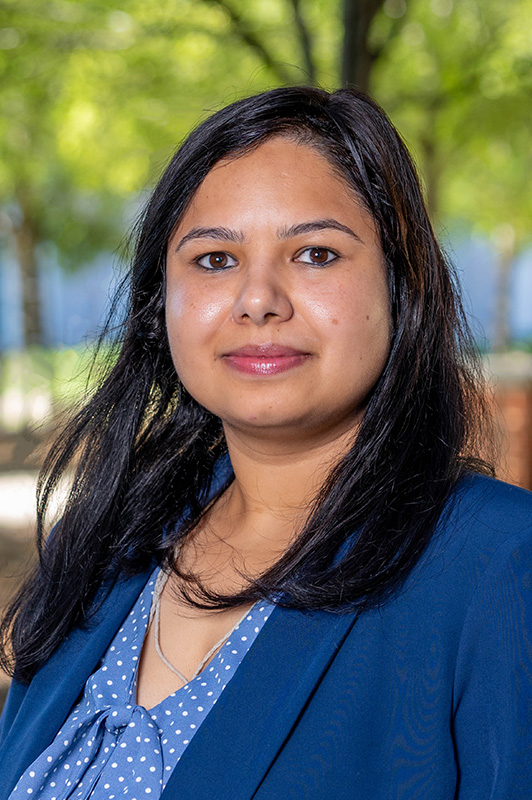
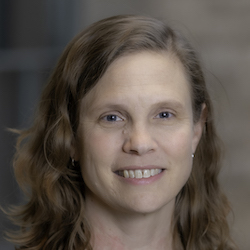
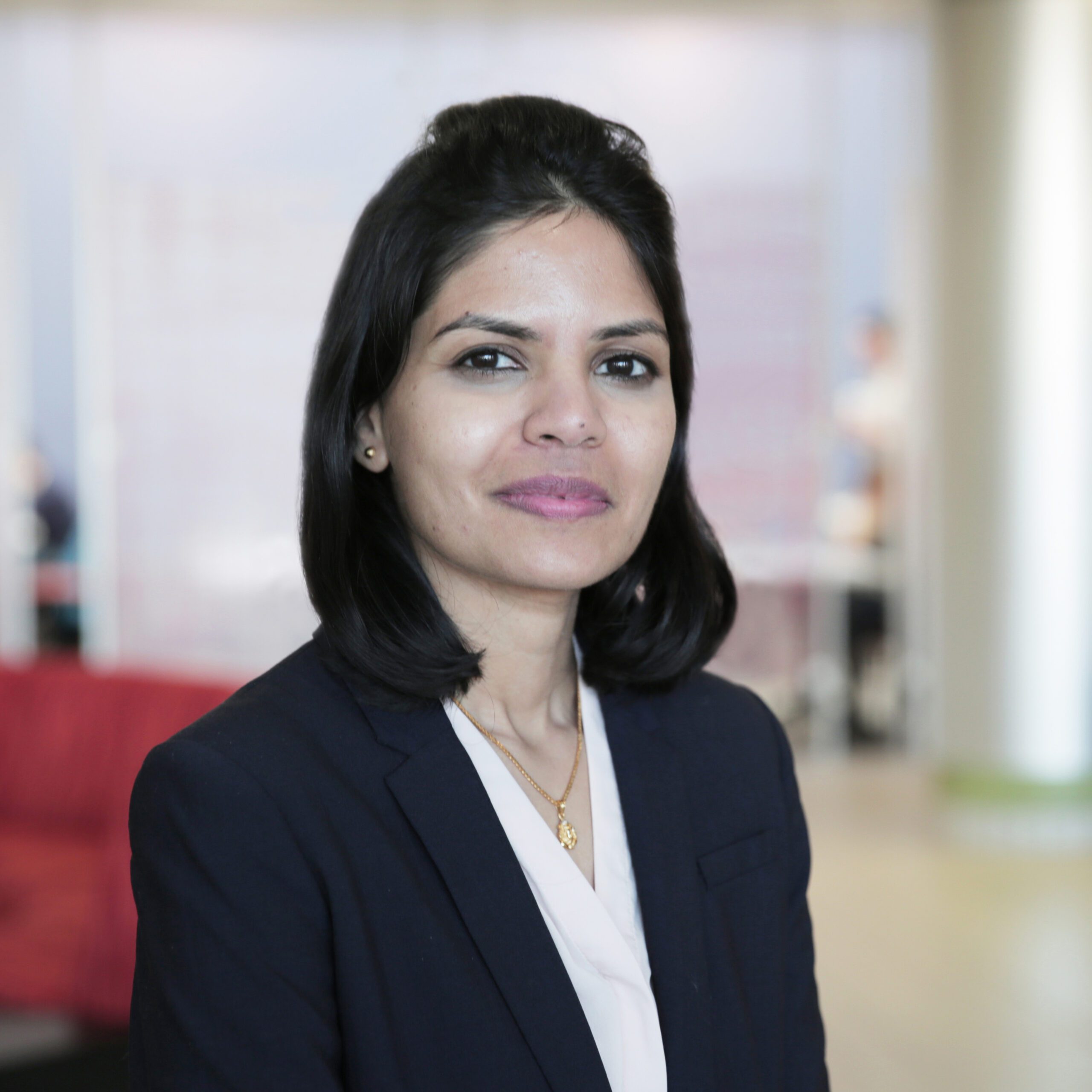
Neha Sharma is an Assistant Professor in the Department of Civil and Environmental Engineering at Auburn University. Her research focuses on nutrient recovery, electrochemical resource recovery, water reuse, trace metal cycling, and pollutant fate and removal.
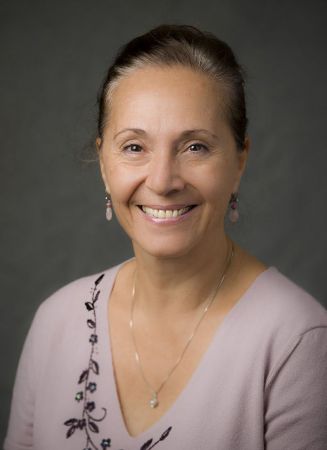
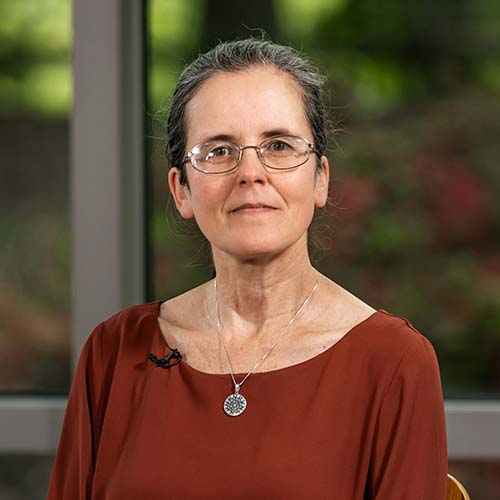
Sibel Pamukcu is a Professor in the Department of Civil and Environmental Engineering at Lehigh University, affiliated with the P.C. Rossin College of Engineering and Applied Science. Her research focuses on electroremediation of soils and groundwater, advanced geo-materials, and sensor systems for subsurface monitoring. She has held leadership roles including interim Chair of Civil and Environmental Engineering and co-director of Lehigh’s ADVANCE grant. Pamukcu teaches courses in geotechnical and environmental engineering at both undergraduate and graduate levels. Education: Ph.D. in Civil Engineering, Louisiana State University M.S. in Civil Engineering, Louisiana State University B.S. in Civil Engineering, Bogazici University, Turkey Research Interests: Her work spans electrochemical methods for environmental detoxification, development of polymer-enhanced sands, and distributed sensor networks for real-time subsurface monitoring. Key focus areas include: In-situ destruction of contaminants in clay-rich soils Enhanced oil recovery via electric fields Wireless and fiber-optic sensor systems for hazard mitigation Grants & Awards: Principal investigator on over 60 grants from NSF, DOE, DOD, and others. Notable awards include the Alfred Noble Robinson Award (Lehigh University) and the ASCE Civil Engineering Foundation Grant Award. Her lab holds multiple patents on soil remediation techniques and polymer-coated sands. Advising & Service: Supervised 9 Ph.D. and 25+ M.S. students Appointed to Martindale Center faculty and Sigma Xi leadership Contributed to 50+ peer-reviewed articles and 100+ technical publications Labs & Teams: Leads interdisciplinary initiatives in electrokinetic remediation and underground sensing, collaborating with industry partners like Electric Power Research Institute and the Pennsylvania Department of Transportation.
Dr. Patrick J. McNamara is an Associate Professor in the Department of Civil, Construction and Environmental Engineering at Marquette University's College of Engineering. He directs the McNamara Research Group, which focuses on understanding how chemicals from consumer products impact public health and the environment once they pass through water treatment systems. His research bridges environmental engineering and microbiology to address critical water quality challenges facing modern infrastructure. Dr. McNamara's educational background includes: Ph.D., 2012, Civil Engineering, University of Minnesota, Twin Cities M.S., 2008, Environmental and Water Resources Engineering, University of Texas at Austin B.S., 2006, Civil Engineering (Minor - Spanish for the Business Professions), Marquette University His research program investigates how consumer product chemicals impact engineering treatment processes that rely on healthy bacteria to treat water. The McNamara Research Group develops non-traditional treatment processes to remove these chemicals from water and mitigate their environmental effects. His work spans antibiotic resistance in water systems, micropollutant removal technologies, pyrolysis of biosolids, PFAS contamination, and electrochemical treatment processes. Specific areas include the impact of corrosion inhibitors on antibiotic resistance, removal of chemicals via drinking water treatment, environmental antibiotic resistant bacteria, beneficial biosolids reuse, and pyrolysis applications. Dr. McNamara's publication record demonstrates a strong focus on emerging water quality challenges, particularly the intersection of chemical contaminants and antibiotic resistance. His recent work examines corrosion inhibitors' impact on antibiotic resistance in drinking water, PFAS mitigation through advanced treatment processes, and environmental drivers of antibiotic resistance in stormwater systems. His research combines fundamental microbiology with practical engineering solutions to address complex water quality issues. Dr. McNamara has received numerous honors and awards: 2022 OCOE Outstanding Researcher Award from Marquette University Marquette University's Campus 2020 KEEN Rising Star Faculty Scholar Award from Provost Office (2019) Central States Water Environment Association Bill Boyle Outstanding Educator Award (2018) Way Klingler Young Scholar Award (Marquette University, 2018) Excellence in Review Award – Environmental Science & Technology (2017) Dr. McNamara has secured significant research funding as Principal Investigator on multiple projects, including NSF grants focused on mitigating antibiotic resistance in drinking water and studying the environmental impacts of quaternary ammonium compounds. His current research portfolio includes projects on PFAS removal through novel electrocoagulation-peroxidation processes, designing green stormwater infrastructure to combat antibiotic resistance, and removing contaminants from greywater using electrocoagulation technology in collaboration with industry partners like Kohler Company. The McNamara Research Group at Marquette University maintains strong collaborations with researchers across multiple institutions and works closely with water utilities and industry partners to translate research findings into practical solutions for water treatment challenges. Their work addresses critical infrastructure needs while protecting environmental and public health through innovative engineering approaches.
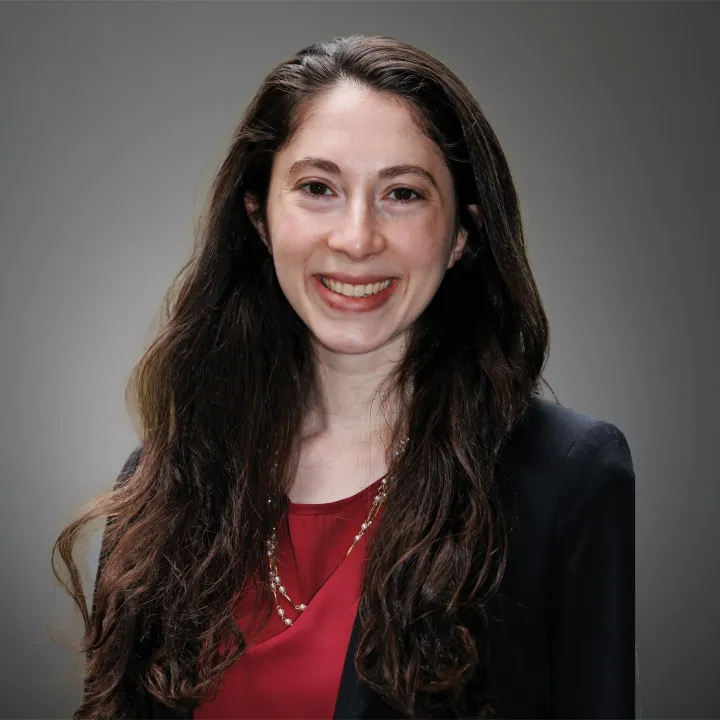
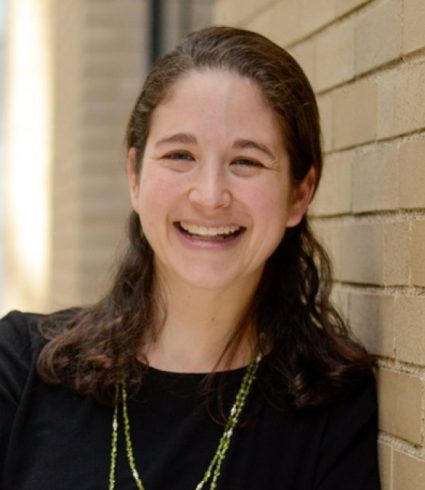
Lea R. Winter is an Assistant Professor in the Department of Chemical and Environmental Engineering at Yale University's School of Engineering & Applied Science. Her research focuses on electrified processes at the nexus of food, energy, water, and climate, with emphasis on sustainable CO 2 conversion, green nitrogen fixation, wastewater valorization, and plasma-electrochemical systems. She leads an active research group and mentors multiple PhD students, postdocs, and undergraduates. Ph.D., Columbia University B.S., Yale University Dr. Winter's research interests lie at the intersection of sustainability and chemical engineering. She pioneers electrified membrane technologies, plasma-activated reactions, and catalytic processes for converting waste streams (CO 2 , nitrates, wastewater) into valuable fuels, chemicals, and fertilizers. Her work integrates electrochemistry, plasma chemistry, and heterogeneous catalysis to develop distributed, circular solutions for environmental challenges. Key themes include green ammonia production , on-demand fertilizer synthesis , and electrified water treatment with resource recovery. Analysis of her recent publications reveals a strong focus on electrified membranes for nitrate and CO 2 conversion, plasma-activated co-processing of N 2 and C 1 gases, and single-atom catalysis for environmental applications. Her research spans fundamental reaction mechanisms to scalable engineering solutions, often published in high-impact journals such as Nature Water , PNAS , and Joule . The work demonstrates a consistent trajectory toward enabling a distributed hydrogen and nitrogen economy through sustainable electrochemical and plasma-driven technologies. Scientific Awards: Beckman Young Investigator Award (2024) Department of Energy Early Career Award (2024) Caltech Young Investigators Lecture Series Award (2022) NEWT Distinguished Postdoctoral Fellowship (2020) NSF Graduate Research Fellowship (2015) North American Catalysis Society Kokes Award (2019) Dr. Winter actively mentors students and has advised several who have gone on to PhD programs and faculty positions. Her lab receives significant research funding, as evidenced by her early-career awards from DOE and NSF. She leads projects on mining nontraditional water sources for hydrogen, plasma-based fertilizer synthesis, and electrified membrane systems. The Winter Lab fosters a collaborative, creative, and safe research environment centered on the principles of CRISP: Creativity, Respect, Investment, Safety, and Partnership. She also contributes to scientific discourse through invited viewpoints on climate education and critiques of emerging technologies like seawater electrolysis. Her lab collaborates widely, including with researchers at Columbia, Caltech, and international institutions.
Dr. Yuanzhi Tang is the Georgia Power Professor at the Georgia Institute of Technology with joint appointments in the School of Earth and Atmospheric Sciences and School of Civil and Environmental Engineering. He directs the Center for Critical Mineral Solutions, co-founded the Georgia Partnership for Essential Minerals, and serves as Associate Co-Director of Interdisciplinary Research at the Brook Byers Institute for Sustainable Systems. He is also Co-Editor-in-Chief of Chemical Geology and Associate Editor of Geochimica et Cosmochimica Acta . His research investigates molecular-scale interfacial processes in natural and engineered systems, focusing on: Contaminant fate/transport at microbe-mineral-water interfaces Biogeochemical cycling of metals and nutrients Resource recovery from waste streams Synchrotron applications in environmental science Recent publications emphasize rare earth element recovery, waste valorization, and sustainable energy materials, employing advanced spectroscopic techniques to understand reaction mechanisms. Professor Tang leads an active research group with multiple postdoctoral researchers, graduate students, and undergraduates. His externally funded projects include: NSF: Rare earth elements in sedimentary systems DOE: Critical metal recovery from waste streams NASA: Manganese oxide formation mechanisms DoD: Rare earth separation technologies
State University of New York at BuffaloUnited States
Jonathan Boualavong is an Assistant Professor in the Department of Civil, Structural and Environmental Engineering at the University at Buffalo, State University of New York. His research focuses on electrochemical separations for climate change mitigation, public health, and environmental justice, integrating engineering and critical science and technology studies perspectives. PhD, Environmental Engineering, Pennsylvania State University (2023) MPhil, Chemical Engineering, University of Strathclyde, Scotland (2019) BS, Biomedical Engineering, University of Rochester (2017) His work examines: Electrochemical CO2 capture and its energy implications Mechanistic understanding of metal separations Ethical dimensions of scientific measurement Integration of renewable energy systems with chemical processes Current projects analyze: Air-water interface manipulation for CO2 absorption Electrochemical controls on lead/copper corrosion Coordination chemistry in transition metal redox processes Ethical citation networks in separation science Contact: jboualav@buffalo.edu
Dr. Paul Westerhoff is a Regents' Professor and Fulton Chair of Environmental Engineering at Arizona State University's School of Sustainable Engineering and the Built Environment. He leads major NSF-funded research centers, including the Nanosystems Engineering Research Center for Water Treatment (NEWT) and the Science and Technologies for Phosphorus Sustainability (STEPS) Center. With over 400 journal publications (H-index >100), his work focuses on emerging contaminants, water treatment technologies, and nanomaterial fate. Awards include the 2023 National Academy of Engineering membership, 2020 A.P. Black Award, and 2019 NWRI Clarke Prize. Education: Ph.D., University of Colorado-Boulder (1995); M.S., University of Massachusetts-Amherst (1991); B.S., Lehigh University (1989). Research emphasizes water quality, sustainable engineering, and nanotechnology applications. Key areas include PFAS remediation, biofilm control via UV light, and atmospheric water harvesting. He serves as Associate Editor for Environmental Science & Technology . Recent projects include lithium monitoring in drinking water, semiconductor water use, and space-based UV disinfection systems. Over 80 students have graduated under his mentorship, recognized with ASU's 2015 Outstanding Doctoral Mentor Award. Awards span innovation (Water Research Foundation, 2024), teaching (Daniel Jankowski Legacy Award, 2021), and technical excellence (EPA STAA, 2019).
Mohan Qin is an Assistant Professor in the Department of Civil and Environmental Engineering at the University of Wisconsin–Madison. Her research focuses on developing novel approaches for resource recovery from waste streams and the concentration and detection of microplastics in the Great Lakes. Dr. Qin received her educational degrees as follows: Ph.D. in Civil Engineering from Virginia Tech (2017) M.S. in Environmental Engineering from Peking University (2013) B.S. in Environmental Engineering from Shandong University (2010) Her primary research areas include: Bioelectrochemical systems for resource recovery from wastewater Environmental biotechnology for sustainable wastewater treatment Electrochemical processes for desalination and water treatment Membrane-based technology for selective ion removal Her work particularly emphasizes ammonia recovery from manure and wastewater, and the detection of microplastics in freshwater systems, contributing to sustainable water management and resource conservation. Analysis of Dr. Qin's recent publications (2022-2025) reveals a strong focus on ammonia recovery using membrane and electrochemical systems, with increasing attention to microplastics detection in lake water. Her work spans from fundamental transport mechanisms to practical applications in dairy manure treatment and Great Lakes monitoring, often integrating novel sensor technologies and renewable energy sources. Dr. Qin has received numerous awards, including: 2024 IWA Membrane Technology Specialist Group (MTSG) Rising Star Award 2024 University of Wisconsin-Madison Hilldale Undergraduate/Faculty Research Fellowship 2023 UW-Madison Media Fellow and Sustainability Fellow 2022 UW-Madison Madison Teaching and Learning Excellence (MTLE) Fellow Multiple awards during her graduate studies at Virginia Tech Dr. Qin actively mentors students through thesis and independent study courses (CIV ENGR 890, 990, 699) and has been awarded the Hilldale Fellowship for undergraduate research collaboration. Her research is supported by several fellowships including the UW-Madison Sustainability Fellow and Media Fellow, which likely fund her innovative work in resource recovery and microplastics detection. She leads a research group at UW-Madison focused on environmental biotechnology and electrochemical systems, collaborating with institutions like Yale University (where she completed her postdoc) and contributing to journals as an associate editor for Desalination and Water Treatment and on the early career editorial board of ACS ES&T Engineering.
University of Illinois Urbana-ChampaignUnited States
R. D. Cusick is an Associate Professor in the Department of Civil & Environmental Engineering at the University of Illinois at Urbana-Champaign. He earned his B.S. from the University of California, Riverside (2005), and his M.S. and Ph.D. from Pennsylvania State University (2010 and 2013). His research focuses on advancing sustainable water treatment technologies by integrating electrochemical processes with energy systems and nutrient recovery from wastewater. Dr. Cusick also serves on multiple professional committees, including the Demographics Committee of the Association of Environmental Engineering and Science Professors. Education: Ph.D. Environmental Engineering, Pennsylvania State University, 2013 M.S. Environmental Engineering, Pennsylvania State University, 2010 B.S. Environmental Engineering, University of California, Riverside, 2005 Research Interests: Electrochemical water treatment, nutrient recovery from wastewater, process modeling, and energy-water-environment sustainability. His work emphasizes developing technologies to recover nutrients (e.g., phosphorus) and energy from wastewater while reducing environmental impacts. Professional Activities: Member of the American Chemical Society, Electrochemical Society, Water Environment Federation, and the International Working Group for Capacitive Deionization. He chairs the Energy-Water-Environment Sustainability Program and serves on several departmental and national committees. Awards: W. Wesley Eckenfelder Graduate Research Award (2013) Penn State Alumni Association Dissertation Award (2013) Dow Sustainability Student Challenge Award (2012) Grants & Consulting: Active consulting roles with companies like Island Water Technology and Aquapod. His research is supported by grants from NSF, DOE, and the Bill & Melinda Gates Foundation. Labs & Teams: Leads the Cusick Lab, focusing on electrochemical technologies and nutrient recovery. Collaborates with industry partners to advance scalable solutions for water infrastructure challenges.
Jennifer Dunn is a Professor of Chemical and Biological Engineering at Northwestern University, with a courtesy appointment in Mechanical Engineering. She serves as Director of the Center for Engineering Sustainability and Resilience and Associate Director of the Northwestern-Argonne Institute of Science and Engineering. Her research focuses on sustainability, energy systems, and environmental impacts of emerging technologies such as hydrogen, biofuels, and nutrient recovery. Dunn leads the Systems Analysis Research Group, applying techno-economic, life-cycle, and materials flow analyses to evaluate low-carbon technologies and circular economy strategies. Education includes a Ph.D. in Chemical Engineering from the University of Michigan, an M.S.E. in Sustainable Chemical Engineering Systems from the University of Michigan, and a B.S. in Chemical Engineering from Purdue University. Her research interests span sustainable mineral supply chains, water treatment innovations, and decarbonization pathways. Recent work emphasizes methane reduction strategies, critical mineral policy, and circular nitrogen economies. Dunn has contributed to National Academies committees and serves as an Associate Editor for the SAE International Journal of Sustainable Transportation. Labs/Teams: Dunn Lab, Center for Engineering Sustainability and Resilience, and the Northwestern-Argonne Institute of Science and Engineering.
Gary Koenig is Associate Professor of Chemical Engineering at the University of Virginia. His research program focuses on advanced materials for energy storage systems, particularly lithium-ion batteries and flow batteries. He holds a PhD from University of Wisconsin-Madison and completed postdoctoral research at Argonne National Laboratory. His group develops novel electrode architectures, including thick sintered electrodes and all-active-material designs, to improve battery energy density and rate capability. Research spans materials synthesis, electrochemical characterization, and transport modeling to overcome limitations in current energy storage technologies. Honors include the NSF CAREER Award (2017) and Fulbright Research Fellowship (2020). Recent publications examine electrode processing techniques, lithium extraction methods, and transport phenomena in battery systems. His work demonstrates innovations in electrode design that enable higher energy densities while maintaining cycling stability. He has taught courses including Applied Statistics, Chemical Reaction Engineering, and Energy Technology Options.
Massachusetts Institute of TechnologyUnited States
Elsa A. Olivetti is the Jerry McAfee (1940) Professor in Engineering and Professor of Materials Science and Engineering at MIT, and a MacVicar Faculty Fellow. She leads the Olivetti Group, focusing on sustainable materials design, recycling strategies, and computational models for environmental and economic impact assessment. Her work bridges materials science with sustainability, emphasizing circular economy principles and decarbonization. Education: B.S. in Engineering Science from University of Virginia (2000); Ph.D. in Materials Science and Engineering from MIT (2007). Her doctoral research centered on lithium-ion battery electrode materials. She joined MIT’s Department of Materials Science and Engineering (DMSE) in 2014 as an Assistant Professor, later advancing to full Professor. She co-directs the MIT Climate & Sustainability Consortium and chairs the MIT Climate Nucleus. Research interests include: sustainable materials systems, recycling-friendly material design, waste mining, and AI-driven materials discovery. She develops models for cost prediction, environmental impact analysis, and policy-relevant supply chain dynamics. Notable contributions include high-throughput zeolite design and battery recycling frameworks. Awards include the Bose Teaching Award (2021), NSF Early Career Award (2018), and Minerals, Metals & Materials Society Early Career Fellowship (2019). Her work emphasizes education and curriculum development, including courses for MIT’s Climate Scholars program. Labs/Teams: Olivetti Group (MIT), MIT Climate & Sustainability Consortium. Active in global sustainability initiatives, focusing on materials for energy transition and climate resilience.
Nathalia Peixoto is an Associate Professor in the Department of Electrical and Computer Engineering and Affiliate Faculty in Bioengineering at George Mason University. Her work bridges neural engineering, biomedical applications, and assistive technology development with international collaborations across Israel, Ireland, Peru, and Korea. Educational background: PhD in Electrical Engineering, Universidade de Sao Paulo MS, University of Campinas Research Interests: Dr. Peixoto specializes in neural engineering with focus on brain-computer interfaces using wearable devices. Her lab develops: Neural prosthetics and implantable systems Bioimpedance-based medical sensors Low-cost electrophysiological recording platforms Community-centered engineering design solutions Publication Trends: Her 2022-2025 publications demonstrate strong interdisciplinary convergence between neuroscience, biomedical engineering, and AI. Key trends include machine learning for seizure detection in zebrafish models, electrochemical optimization of neural interfaces, and community-engaged design projects addressing societal challenges through transdisciplinary graduate training. Grants and Projects: Principal investigator for multiple NSF-funded initiatives: NRT-HDR: Transdisciplinary Graduate Training (2019-2024) Smart and Connected Communities: Networked Devices (2017-2019) Bioimpedance for retinal implants (2015-2017) C2MW: Classroom to Makers Week (2015-2016) Additional funding from VA STEM CoNNECT and Longwood University. Laboratory: The Neural Engineering Lab integrates chemistry, physics, and engineering disciplines through team-based projects involving high school to graduate students. Current work includes sustainable food-waste solutions, tremor-capturing robots for low-resource areas, and neural implants with international academic partnerships.
Greeshma Gadikota is an Associate Professor and Croll Sesquicentennial Fellow at Cornell University's School of Civil and Environmental Engineering. She directs the Sustainable Energy and Resource Recovery Group, focusing on carbon capture, mineralization, and sustainable energy technologies. Her work addresses global challenges in decarbonizing industries like steel, aluminum, and mining while advancing low-carbon materials. Education: B.S., Chemical Engineering, Michigan State University (2007) M.S., Operations Research, Columbia University (2008) M.S., Chemical Engineering, Columbia University (2011) Ph.D., Chemical Engineering, Columbia University (2014) Research: Dr. Gadikota’s research integrates multiphase chemical interactions to engineer CO2 capture and utilization. Key areas include carbon-negative mining, geothermal lithium extraction, and mineralizing CO2 into construction materials. Her innovations aim to close material and carbon cycles in industries like cement production and steel manufacturing. Awards & Recognition: DOE CAREER Award MIT Rising Stars in CEE Thrust Lead for DOE-EFRC MUSE Best Paper Award (Carbon Mitigation Initiative/BP) Grants & Partnerships: DOE-funded decarbonization of cement via CO2 mineralization Partnerships with Nucor Steel and Stillwater Critical Minerals for sustainable mining NSF Innovation Corps grant for carbon mineralization startups Labs & Teams: Leads the Gadikota Research Group and collaborates with Oak Ridge National Laboratory and industry partners on projects like the MINER Program for carbon-negative mineral recovery.
Dr. Qilin Li is a Professor of Civil and Environmental Engineering at Rice University, serving as Co-Director of the NSF Nanosystems Engineering Research Center for Nanotechnology-Enabled Water Treatment (NEWT). She leads research on advanced water treatment technologies, membrane processes, and nanotechnology applications to address global water challenges. Her work focuses on membrane distillation, nanomaterials for disinfection, and sustainable infrastructure solutions. Dr. Li holds a Ph.D. and M.S. from the University of Illinois at Urbana-Champaign and a B.E. from Tsinghua University. Her research group investigates membrane fouling, desalination, and recovery of valuable metals from wastewater. Key projects include nanophotonics-enhanced solar desalination and electrochemical processes for contaminant removal. She has been awarded the CAPEES/Nanova Frontier Research Award and the Roy E. Campbell Faculty Development Award. Dr. Li advises multiple Ph.D. students and postdoctoral researchers, advancing innovative water treatment technologies. Dr. Li’s contributions span academic leadership, industry collaborations (e.g., SolMem LLC), and policy-oriented research to enhance urban water resilience. Her lab develops materials and processes for energy-efficient water reuse, with a focus on sustainable solutions for industrial and municipal systems.