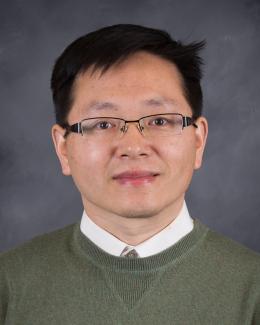
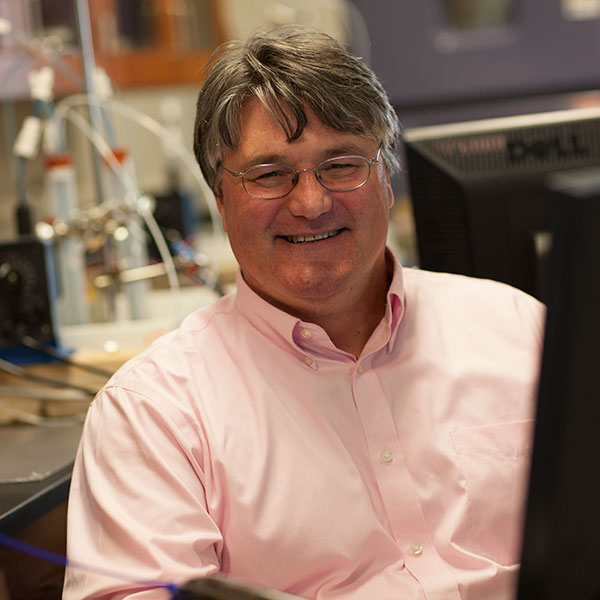
Dr. Lilin He is a Neutron Scattering Scientist in the Neutron Scattering Division at Oak Ridge National Laboratory (ORNL). He earned his Ph.D. in Polymer Physics from Clemson University and joined ORNL in 2012 as an instrument scientist for the General Purpose Small-Angle Neutron Scattering (GP-SANS) beamline at the High Flux Isotope Reactor (HFIR). His research focuses on characterizing disordered materials using neutron scattering techniques. Research Interests: Dr. He's work spans soft matter, porous materials for energy applications, and biomolecular systems. Key areas include: Development of advanced materials for energy storage (e.g., polymer electrolytes, battery components) Design of porous systems for CO 2 capture and environmental remediation Nanoscale analysis of biomolecules and complex fluids under varied conditions Innovations in neutron scattering instrumentation and methodologies Publication Trends: His recent articles (2023-2025) demonstrate a strong focus on energy materials (batteries, CO 2 capture), nanoporous systems, and scattering technique development. Over 75% involve applied materials science, with recurring themes in sustainability and nanoscale characterization. Affiliations: He maintains active involvement in ORNL's Neutron Sciences Directorate and contributes to facility operations at HFIR.
Zhiyong Gu is a Professor and Chair of the Department of Chemical Engineering at the Francis College of Engineering, University of Massachusetts Lowell. He leads an active research group focused on nanomaterials and nanotechnology, particularly nanowires and nanoparticles, with applications in sensing, electronics, and biomedical fields. His educational background includes a Ph.D. in Chemical and Biological Engineering from State University of New York Buffalo (2004), an M.S. in Chemical and Biomolecular Engineering from University of Notre Dame (2001), and a B.S. in Engineering from Qingdao Institute of Chemical Technology. Dr. Gu's research interests center on the synthesis and fabrication of functional and hybrid nanowires and nanoparticles, using self-assembly or directed assembly techniques to integrate these nano-building blocks into ordered 2D and 3D hierarchy structures. His work develops these nanomaterials for applications in sensing, electronics, and biomedical fields. His group has made significant contributions to nanosoldering, nanowire sensors, and novel micro-joining methods. Analysis of his recent publications shows a strong focus on nanowire-based sensors, particularly platinum nanowire arrays for electrochemical applications, nanoscale soldering and joining techniques for electronics packaging, and environmental applications of nanomaterials for pollutant degradation. His research bridges fundamental nanomaterials science with practical applications in multiple industries. Scientific Awards: 3M Non-Tenured Faculty Award ACS YCC Leadership Development Award Mark Diamond Research Fund (MDRF) Award Teaching Excellence Award (2011) TURI Sustainability Research Fellow Best Poster Award (2006) - Mid-Atlantic MEMES Alliance Symposium Dr. Gu has successfully advised numerous graduate students including Ph.D. candidates and Master's students. His research has been supported by significant funding from the National Science Foundation, US Environmental Protection Agency, and 3M Company, focusing on nanoscale properties of lead-free nano solders, surface characterization, and magnetically assembling nanoscale metal networks. The Gu Research Group at UML maintains active collaborations and focuses on several key areas: multisegmented and multifunctional nanowires, lead-free nanosolders, porous nanoparticles and nanostructures, nanowire sensors and sensor arrays, novel micro-joining and nano-joining methods, nanoelectronics assembly and packaging, and emerging nanomaterials for environmental remediation.
Thomas Zawodzinski holds the prestigious Governor's Chair in Electrical Energy Storage with a joint appointment at the University of Tennessee, Knoxville and Oak Ridge National Laboratory (ORNL). He serves in the Department of Chemical and Biomolecular Engineering at UT and the Division of Materials Science and Technology at ORNL. Previously, he was the F. Alex Nason Professor of Engineering at Case Western Reserve University, Director of the Case Advanced Power Institute, and the Ohio Eminent Scholar in Fuel Cells. Earlier in his career, he served as Team Leader for Fuel Cells in MST-11 at Los Alamos National Laboratory for 13 years. Dr. Zawodzinski earned his Ph.D. in Chemistry from SUNY/Buffalo, focusing on electrochemical devices for energy applications, including fundamental and applied studies of batteries and fuel cells, applications of NMR methods to study transport and structure in device components, preparation of advanced functional materials, and development of molecular device concepts. His research spans multiple energy storage technologies with particular expertise in metal air batteries, redox flow batteries, fuel cells, and membranes. Current research directions include electrolytes and composite electrodes for fuel cells, fundamentals of energy storage materials and systems, water management in fuel cells, and application of NMR to chemical engineering problems. His work at LANL also included lithium batteries, preparation of new electrolytes, studies of transport and electrode materials, self-assembled monolayers for device preparation, and sensors for chemical/biological agents. Analysis of Dr. Zawodzinski's publication record reveals a strong focus on solid-state electrolytes, particularly sulfide-based materials for batteries, and continued work on redox flow battery systems. His research spans fundamental material characterization to practical battery component development, with emphasis on mechanical properties, ion transport, and electrochemical stability across multiple energy storage technologies including lithium batteries, zinc-based systems, and various fuel cell configurations. ECS Energy Technology Division Research Award (2016) Royal Academy of Engineering Fellowship (2015) Poly Fellow (2015) Ohio Eminent Scholar in Fuel Cells Dr. Zawodzinski has secured significant research funding through Department of Energy projects, including leading a DOE Fuel Cell Project. His professional service includes membership on the International Advisory Board for the Journal of Power Sources and extensive conference organization including the Asilomar Conference on Advances in Polymers for Fuel Cells. He has served as Discussion Leader for the Fuel Cell Gordon Conference multiple times and co-organized numerous ACS and Electrochemical Society symposia. He leads the Energy Storage and Conversion Group within the Chemical Transformations Section of ORNL's Chemical Sciences Division, focusing on developing advanced materials for next-generation energy storage technologies with applications ranging from grid-scale storage to portable power systems.
Chris Bartel is an Assistant Professor in the Department of Chemical Engineering and Materials Science at the University of Minnesota's College of Science and Engineering. He leads the Design of Materials on Computers (DMC) Lab, focusing on computational approaches to materials discovery for sustainable energy applications. His research spans computational materials science, quantum chemistry, and machine learning, with specific interest in solid-state materials for batteries, photovoltaics, catalysts, and ceramics. Bartel's group integrates electronic structure theory, thermodynamics, and data science to develop predictive models for material properties and degradation mechanisms. Analysis of his recent publications (2024-2025) reveals a strong focus on generative materials discovery, solid-state reaction mechanisms, battery materials design, and the application of machine learning to materials science problems. His work frequently appears in high-impact journals including Nature, Science Advances, and ACS Energy Letters, often in collaboration with leading researchers like Gerbrand Ceder. Prof. Bartel actively mentors a diverse research group including postdoctoral researchers and undergraduate students. His lab philosophy emphasizes teamwork and mentorship, with a specific commitment to enabling careers in science and engineering for those from historically excluded backgrounds. The DMC Lab's mission centers on two goals: making a difference in mitigating climate change effects and multiplying impact by helping all group members realize their potential. The Design of Materials on Computers Lab represents a vibrant research environment at the forefront of computational materials discovery, combining theoretical approaches with practical applications to address critical energy challenges.
Matthew Neurock is a Professor in the Department of Chemical Engineering and Materials Science (CEMS) at the University of Minnesota's College of Science and Engineering. His office is located in Amundson Hall on the Minneapolis campus, where he leads the Materials Theory research group, also known as the Computational Catalysis Group. Professor Neurock's research focuses on the development and application of computational tools to simulate heterogeneous catalytic systems for sustainable production of fuels, chemicals, and materials. His work employs a multi-scale approach combining first-principle quantum chemical methods, molecular dynamics simulations, and microkinetic models to understand catalyst structure-performance relationships. Key research areas include: Electrocatalysis (Heterogeneous and Homogeneous) Nanoporous Catalysts Biomass and Plastics Pyrolysis Solvent Effects in Electrochemical systems Metal and Metal Oxide Catalysts Development and Application of Kinetic Monte Carlo simulations Analysis of his recent publications (2021-2024) reveals a strong focus on sustainable catalytic processes, particularly for energy conversion and environmental applications. His work frequently bridges computational predictions with experimental validation through extensive collaborations. The publications demonstrate expertise in understanding reaction mechanisms at the atomic level while connecting these insights to macroscopic catalytic performance. Professor Neurock has received recognition for his work, including the Kokes Award mentioned in group news. His research program appears well-funded based on the consistent publication output and student support. He has advised numerous PhD students, many of whom have gone on to academic positions at institutions like University of Massachusetts-Amherst, Truman State University, and Louisiana State University, while others have pursued careers in industry at companies including Lam Research and engineering firms. Professor Neurock maintains an active research group with new students joining annually, indicating ongoing research funding and program vitality.
Dr. James Hoefelmeyer serves as Professor and Chair of the Department of Chemistry at the University of South Dakota, where he leads a dynamic research program in materials chemistry and catalysis. His academic journey began with a B.S. in Chemistry from the University of Texas at Dallas (1998), continued with a Ph.D. in Inorganic Chemistry from Texas A&M University (2002), and included postdoctoral research at the University of California, Berkeley (2002-2005). Dr. Hoefelmeyer's research spans several interconnected areas of inorganic and materials chemistry: Synthesis and surface modification of titanium dioxide (TiO 2 ) nanocrystals Development of frustrated Lewis pairs for catalytic applications Attachment of single-site transition metal ions to nanomaterial surfaces Photocatalysis for solar energy conversion and environmental remediation Nanomaterials for energy storage applications His recent publications (2020-2025) demonstrate a strong focus on energy applications, with particular emphasis on titanium dioxide-based systems, frustrated Lewis pair chemistry, and catalytic materials for fuel cells and solar energy conversion. The research shows a progression from fundamental synthesis and characterization toward applied technologies with practical energy implications. Dr. Hoefelmeyer has secured significant research funding throughout his career: MRI: Track 1 Acquisition of a benchtop powder X-ray diffractometer (NSF, 2025-2028) REU Site: Molecules Meet Materials (NSF, 2022-2025) NSF-MRI: Acquisition of a Digital Camera for the TEM Instrument (2020-2021) Advanced Bioelectrochemical Module for Waste-to-Electricity (NASA, 2016-2021) High Performance and Durable Lithium-ion Battery for NASA Space Applications (2014-2017) As an educator and mentor, Dr. Hoefelmeyer has guided numerous undergraduate and graduate students through research projects, with many appearing as co-authors on his publications. His group maintains strong collaborations with researchers across disciplines and institutions, contributing to a vibrant research environment in the Department of Chemistry at the University of South Dakota.
Joseph Vitt serves as Associate Professor in the Department of Chemistry within the College of Arts and Sciences at the University of South Dakota, where he has established a distinguished career spanning over three decades. His academic journey began with a B.S. in Chemistry from Saint John's University (1987), followed by a Ph.D. in Analytical Chemistry from Iowa State University (1991). His educational background includes: Ph.D. in Analytical Chemistry, Iowa State University (1991) B.S. in Chemistry, Saint John's University (1987) Professor Vitt maintains dual research pillars: electrochemical kinetics of oscillating reactions (particularly iodide oxidation at gold electrodes) and innovative chemical education methodologies. His electrochemical work employs rotating ring-disk techniques to unravel complex reaction mechanisms, while his educational research develops practical troubleshooting frameworks for instrumental analysis courses. This dual focus creates unique synergy between fundamental science and pedagogical application. His publication record reveals a strategic evolution from pure electrochemistry (1999-2000) toward educational innovation (2006-2008), reflecting growing commitment to undergraduate teaching excellence. The consistent appearance in chemistry education journals demonstrates effective translation of research insights into classroom practice. Professor Vitt's exceptional teaching impact is documented through: Belbas-Larson Award for Excellence in Teaching (2011) Nine Belbas-Larson Teaching Award nominations (2007, 2010, 2013, 2019, 2022-2024) Nomination for Dr. Michael P. Roche Distinguished Teaching Award (2025) Alpha Chi Sigma Research Award (Iowa State University, 1991) As an active mentor, he cultivates student development through hands-on instrumentation experience and problem-based learning. His Churchill-Haines Labs workspace (Room 115) supports both electrochemical research and educational material development. While recent publications are limited, his sustained teaching award recognition through 2025 confirms ongoing scholarly impact in chemistry education. Though no dedicated research group is specified, Professor Vitt's work operates within USD's Department of Chemistry infrastructure, leveraging departmental laboratories for both historical electrochemistry studies and current educational innovation projects focused on making instrumental analysis accessible to undergraduate learners.