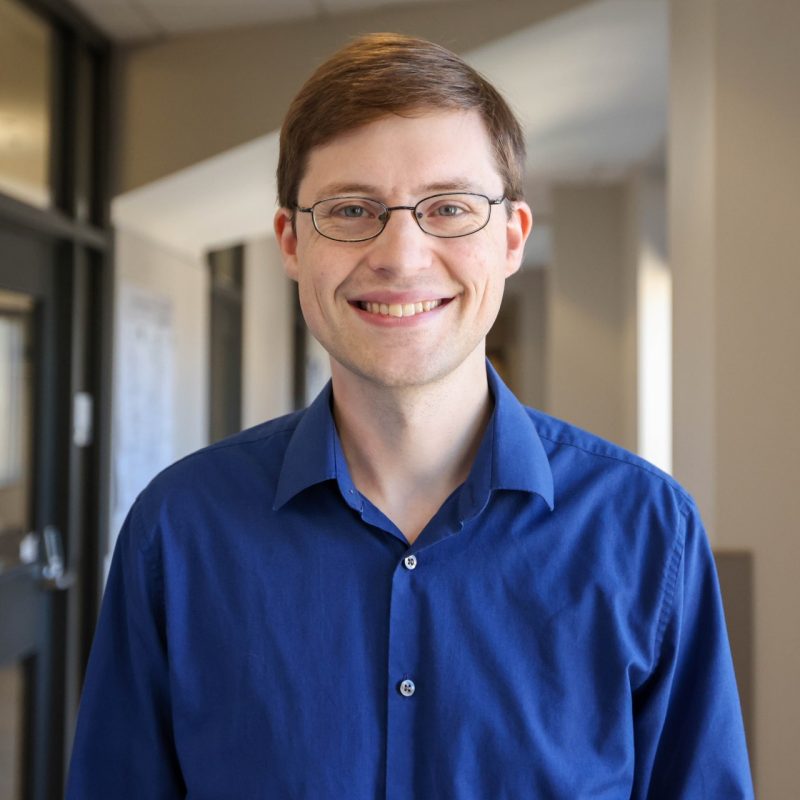
Michael McAlpine is a Professor in the Mechanical Engineering department at the University of Minnesota . He also holds affiliations with the Biomedical Engineering and Electrical and Computer Engineering departments. His research focuses on 3D printing functional materials & devices , Nanoscale inks , Biomedical devices , Bioelectronics , and Flexible Microsystems . Research Interests : 3D Printing, Biomedical Engineering, Nanotechnology, Flexible Electronics, Microfluidics Labs : ME 361/363 Contact : mcalpine@umn.edu , (612) 626-3303, ME 117 Recent Research Trends include 3D Printed Biomedical Devices , Flexible Electronics , and Bioprinting Applications . His work spans from Spinal Organoid Formation to Programmable Drug Release Capsules . Scientific Award : Circulation Research 2020 Best Manuscript Award
California Institute of Technology (Caltech)United States
Julia R. Greer serves as the Ruben F. and Donna Mettler Professor of Materials Science, Mechanics and Medical Engineering at the California Institute of Technology (Caltech), where she also holds the position of Executive Officer for Applied Physics and Materials Science since 2025. She earned her B.S. from MIT (1997) and M.S./Ph.D. from Stanford University (2000/2005), joining Caltech as Assistant Professor in 2007, promoted to Professor in 2013, and appointed to her current named professorship in 2019. Her research spans mechanics of hierarchical architectures , nanomaterials , and additive manufacturing , with significant contributions to energy storage systems and biomedical materials . Key focus areas include nano-scale mechanical properties, in-situ deformation analysis, and development of novel fabrication techniques for micro-architected materials. Her group pioneered hydrogel infusion additive manufacturing for metals and multiphoton 3D lithography standards. Analysis of recent publications reveals strong emphasis on solid-state battery interfaces (2025), bioresorbable microrobots (2024), and AI-enabled material design (2024), demonstrating cross-disciplinary impact across energy, healthcare, and quantum technologies. Her work consistently bridges fundamental nanomechanics with practical applications in energy storage and medical devices. 2024 ASME Nadai Medal 2024 SES A.C. Eringen Medal Elected to National Academy of Sciences (2025) Fletcher Jones Foundation Director (2019-2025) Professor Greer has advised over 40 PhD students including Seola Lee (2025) and Wenxin Zhang (2025), with research funded by collaborations spanning MIT, UCSF, Purdue, and ETH Zurich. Her group maintains active projects in lightweight nanoarchitected materials for impact absorption, electroactive polymers for braille devices, and 3D interdigitated solid-state batteries. Current leadership includes Editor-in-Chief of the Journal of Applied Physics (2024-) and direction of Caltech's Materials Science department.
Ralph H. Colby serves as Professor of Materials Science and Engineering and Chemical Engineering at Pennsylvania State University's College of Earth and Mineral Sciences, holding the Corning Faculty Fellowship. His research focuses on molecular-level dynamics in complex fluids, particularly polymers, ionomers, and liquid crystalline systems. With over 130 publications and authorship of the textbook Polymer Physics (2003), he directs an active research program examining structure-property relationships in soft matter. B.S. in Materials Science and Engineering, Cornell University (1979) M.S. in Chemical Engineering, Northwestern University (1983) Ph.D. in Chemical Engineering, Northwestern University (1985) Professor Colby's research spans polymer physics, rheology, and materials for energy applications. His group employs mechanical rheology, dielectric spectroscopy, and scattering techniques to investigate ion transport in single-ion conductors for batteries, dynamics of glass-forming liquids, and self-assembly in polyelectrolyte systems. Current work emphasizes structure-property relationships in ionomers, liquid crystalline polymers, and branched architectures. Analysis of recent publications reveals consistent focus on ionomer membranes for energy applications, processing-structure relationships in advanced polymers, and fundamental dynamics of complex fluids. Key trends include increasing integration of computational modeling with experimental characterization, expansion into sustainable materials processing, and growing emphasis on applications in battery technology and biomedical materials. Penn State Faculty Scholar Medal for Outstanding Achievement (2022) Bingham Medal, Society of Rheology (2012) American Chemical Society Fellowship Corning Faculty Fellowship in Materials Science and Engineering Professor Colby leads multiple federally funded projects including NSF's 'Fundamental Studies of Flow-Induced Polymer Crystallization' and DOE's 'Conduction mechanisms and structure of ionomeric single-ion conductors'. His group maintains strong industry partnerships with Corning Incorporated and participates in interdisciplinary initiatives like the Penn State Intercollege Graduate Degree Program in Materials Science and Engineering. Current research includes collaborations on breast cancer adherence interventions in Rwanda and conjugated polymer development for flexible electronics. The Colby Research Group operates specialized facilities for rheological characterization, dielectric spectroscopy, and X-ray scattering at Penn State's Materials Research Institute. The team maintains active collaborations with national laboratories and international research groups, focusing on translating fundamental polymer physics discoveries into practical applications for energy storage and advanced manufacturing.
Josh Atkinson is an Assistant Professor in the Department of Civil and Environmental Engineering and the Omenn-Darling Bioengineering Institute at Princeton University. His research focuses on using synthetic biology and protein engineering to control electron transport in microbes for environmental applications, such as bioelectronic sensors and bioremediation. The Atkinson Lab investigates microbial energy processing, biofilm-electronic interfaces, and sustainable biotechnologies. Affiliations: Princeton University, Omenn-Darling Bioengineering Institute Research Interests: Microbial electron transport, bioelectronic systems, environmental monitoring, sustainable catalysis His work bridges disciplines like electrochemistry, bioengineering, and environmental science to engineer living materials for real-world challenges. The lab recruits students across levels, emphasizing diversity and interdisciplinary collaboration. Recent projects include real-time contaminant sensors and light-controlled biofilm patterning. Articles highlight innovations in bioelectronics and microbial systems engineering. The lab’s future directions involve scaling-up bioelectronic devices and enhancing microbial community understanding.
Dr. John Reynolds is a Professor of Chemistry and Biochemistry at the Georgia Institute of Technology with a 40-year legacy in polymer chemistry. He serves as founding Director of the Georgia Tech Polymer Network (GTPN) and a member of the Center for Organic Photonics and Electronics (COPE). Research spans conjugated polymers, electrochromism, organic LEDs, photovoltaics, and bioelectronics Expert in optoelectronic and redox properties of electroactive materials Co-editor of the Handbook of Conducting Polymers His group has published over 450 peer-reviewed papers and holds ~45 issued patents. Recent research focuses on: Advanced electrochromic materials for visible and infrared applications Next-generation organic solar cells with green processing techniques Supercapacitor and electrochemical transistor materials Space exploration polymer applications Scientific recognition includes: ACS Cope Scholar Award (2020) ACS Florida Award (2019) ACS Applied Polymer Science Award (2012) Fellowships from Royal Society of Chemistry, Materials Research Society, and PMSE (2013) His editorial contributions include serving on boards for multiple prestigious journals including ACS Central Science and Chemistry of Materials . The Reynolds Group actively trains PhD and postdoctoral researchers, with recent members advancing to positions at University of Michigan, ExxonMobil, Northwestern, and Intel.
Dr. Gary Glover is a Professor of Radiology (Radiological Sciences Lab) at Stanford University , with courtesy appointments in Psychology and Electrical Engineering. His work focuses on the physics and mathematics of MRI, particularly rapid scanning methods using spiral k-space trajectories for functional brain imaging and multimodal neuroimaging (fMRI/EEG/fPET/fNIRS) combined with neuromodulation techniques like TMS and transcranial ultrasound. Academic Appointments: Radiology, Psychology, Electrical Engineering Professional Affiliations: Bio-X, Stanford Cancer Institute, Wu Tsai Neurosciences Institute Research Interests include: Development of blood oxygen level-dependent (BOLD) and viscoelastic contrast in MRI Functional MR Elastography for brain activation mapping Optimization of MR-ARFI for transcranial ultrasound guidance Automated spinal cord segmentation (EPISeg) using machine learning Scientific Awards : National Academy of Engineering (2013) Gold Medal, ISMRM (2000) Steinmetz Award, General Electric (1985) Lauterbur Lecture, ISMRM (2018) Recent Publications analyze: Fast fMRI sampling and spurious signal correction Dissociated patterns in default mode network anti-correlations Neural correlates of collaborative behavior in triadic fMRI Salience network contributions to depression pathophysiology
Christina Tringides is a tenure-track Assistant Professor in Materials Science and NanoEngineering at Rice University, affiliated with the Neuroengineering Initiative (NEI). She holds the CPRIT Scholar in Cancer Research title and leads the Tringides Lab, which develops soft materials and neurotechnologies for neural system interfaces. Her interdisciplinary work spans from cellular to organ levels, addressing both in vivo and in vitro applications. Education: B.S. in Materials Science & Engineering and Physics from MIT (2015); Ph.D. in Biophysics from Harvard University (2022) under David Mooney. Postdoctoral research at ETH Zürich with Janos Vörös as an ETH Fellow. Recognized with awards including the WIMA laureate (2023), NSF GRFP (2017), and Fulbright Scholar (2015). Research focuses on hydrogels, bioelectronics, and implantable electrode arrays. Key projects include biomimetic in vitro platforms for neural studies and viscoelastic biohybrid interfaces for neuromodulation. Her lab’s innovations aim to advance neurological disorder treatments and diagnostics. Scientific contributions include over 20 peer-reviewed articles, with recent work emphasizing conductive hydrogels, synaptic stimulation systems, and immunotherapy biomaterials. Active in professional organizations like the Materials Research Society and American Chemical Society.
Guillermo A. Ameer serves as the Daniel Hale Williams Professor of Biomedical Engineering at Northwestern University's McCormick School of Engineering and Professor of Surgery in the Feinberg School of Medicine. He directs the Center for Advanced Regenerative Engineering (CARE) and maintains affiliations with the Simpson-Querrey Institute, Chemistry of Life Processes Institute, and the IBiS Graduate Program. His leadership extends to founding the Regenerative Engineering Laboratory, which pioneered citrate-based antioxidant biomaterials known as polydiolcitrates. Americas' leading innovator in regenerative engineering, Ameer's research spans vascular, orthopaedic, and bladder tissue engineering. His lab developed Nanonets™ thermoresponsive oligomers and photoresponsive liquid polymers for applications including wound healing, islet transplantation, and 3D-printed vascular scaffolds. Notable breakthroughs include bioresorbable stents, bladder regeneration scaffolds, and diabetic wound healing technologies that have received FDA clearance and commercial implementation through companies like Acuitive Technologies and VesselTek BioMedical. His publication record demonstrates consistent innovation in biomaterials science, with research trends showing progression from fundamental polymer chemistry to sophisticated clinical applications. Recent work focuses on electroactive bladder scaffolds, 3D-printed vascular devices, and wearable health monitoring systems, reflecting his commitment to translating laboratory discoveries into tangible medical solutions. The 2025 launch of the Regenerative Engineering Institute underscores his growing institutional impact. Percy L. Julian Award (2024) BMES Athanasiou Medal of Excellence in Translational Bioengineering (2023) Election to National Academy of Medicine (2021) National Academy of Inventors Fellow (2019) AAAS Fellow (2018) AIChE Fellow (2017) Ameer has mentored over 30 PhD and Master's students who now lead research at institutions including Penn State, USC, and the FDA. His lab secures substantial NIH funding, including an American Recovery and Reinvestment Act Challenge Grant for liquid cast arterial stents. Current projects include the development of citrate-based biomaterials for bladder regeneration, diabetic wound healing, and bioresorbable vascular scaffolds, with multiple technologies transitioning to clinical applications through partnerships with medical device companies. The Regenerative Engineering Laboratory maintains a collaborative interdisciplinary environment with approximately 20 researchers spanning engineering and natural sciences disciplines. Recent initiatives include the development of wearable skin gas sensors (2025) and CITREPORE™ bone void filler (2024), demonstrating the lab's capacity to address diverse clinical challenges through biomaterials innovation.
Carolyn Conner Seepersad serves as the J. Mike Walker Professor of Mechanical Engineering at the University of Texas at Austin and directs the Center for Additive Manufacturing and Design Innovation. She holds membership in the U.T. System Academy of Distinguished Teachers and maintains active leadership in the additive manufacturing community through roles such as co-organizer of the Solid Freeform Fabrication Symposium and ASME Design Engineering Division Executive Committee membership. Her academic credentials include: PhD in Mechanical Engineering from Georgia Tech (2004) MA/BA in Philosophy, Politics and Economics from Oxford University (1998, Rhodes Scholar) BS in Mechanical Engineering from West Virginia University (1996) Dr. Seepersad's research centers on computational design methodologies and additive manufacturing innovation , with particular expertise in simulation-based design of complex systems, environmentally conscious product development, and materials engineering. Her work bridges theoretical design frameworks with practical manufacturing applications, emphasizing sustainability and performance optimization across aerospace, automotive, and energy systems. Current projects explore reactive extrusion additive manufacturing, negative stiffness materials, and machine learning integration for process-aware design. Analysis of her 15 most recent publications reveals a dominant focus on process innovation in additive manufacturing (70%), particularly stereolithography and selective laser sintering, with growing emphasis on data-driven design approaches (20%) and sustainable engineering applications (10%). Her work demonstrates consistent progression from fundamental material design toward integrated system optimization and industrial scalability. Her scientific recognition includes: International Outstanding Young Researcher Award in Freeform and Additive Manufacturing (2009) UT System Regents’ Teaching Award (2010) ASME Design Automation Committee Outstanding Young Investigator Award (2010) ASEE Outstanding New Mechanical Engineering Educator Award (2013) Multiple ASME and ASEE best paper awards U.T. System Academy of Distinguished Teachers membership Dr. Seepersad maintains an extensive advising portfolio with 48 graduate students (16 PhD, 24 MS, and 8 current) plus 2 postdoctoral researchers, reflecting sustained research productivity and educational impact. Her Product, Process, and Materials Design Lab fosters interdisciplinary collaboration between mechanical engineering, materials science, and computational design teams.
Virginia Polytechnic Institute and State UniversityUnited States
Michael Schulz is an Associate Professor in the Department of Chemistry at Virginia Polytechnic Institute and State University (Virginia Tech). His research focuses on designing functional polymers to address challenges in medicine, environment, and energy. Key areas include antiviral materials, toxin capture, and rare-earth element chelation. He leads the Schulz Group , which emphasizes polymer synthesis and methodology development. Education: B.S. in Chemistry (University of Iowa, 2010), M.S. and Ph.D. in Chemistry (University of Florida, 2014). Postdoctoral training included work with Prof. Klaus Mullen (Max Planck Institute) and Prof. Robert Grubbs (Caltech). Research Interests: Functional polymer design for biomedical applications (e.g., drug sequestration), environmental remediation (e.g., metal binding), and advanced materials. His group explores structure-property relationships in polymers, leveraging tools like isothermal titration calorimetry and advanced polymerization techniques. Publications: Over 50 peer-reviewed articles, including work on polymer-based drug capture, rare-earth element extraction, and antiviral materials. Recent trends focus on block copolymers , enzyme-responsive systems , and nanocomposites for biomedical and environmental applications. Awards: Fulbright Research Grant (2014), NSF East Asia-Pacific Fellowship (2013), Butler Polymer Research Award (2013). Labs: Active in polymer synthesis, materials characterization, and collaborative projects with industry partners. His lab develops architected materials via 3D printing and advanced lithography for targeted drug delivery and environmental sensing.
William S. Oates is the Cummins, Inc. Professor of Engineering in the Department of Mechanical Engineering at Florida A&M / Florida State University. He holds affiliations with the Mechatronics and Energy Center and the Florida Energy Systems Consortium (FESC). His research focuses on solid mechanics of multifunctional materials, quantum-informed continuum modeling, and applications in robotics, aerospace, and energy systems. He has advised over 20 graduate students and holds awards including ASME Fellow (2018) and NSF CAREER Award (2011). Education: Ph.D. from Georgia Institute of Technology. Research spans smart materials, fractal media mechanics, and quantum computing for material modeling. Key projects include high-temperature sapphire pressure sensors, photomechanical polymers, and Bayesian uncertainty quantification in materials science. Notable awards include DARPA Young Faculty Award (2009) and FSU Guardian of the Flame Teaching Award (2010). His lab collaborates with the National High Magnetic Field Lab and Challenger Learning Center for K-12 outreach. Current research includes quantum algorithm implementation for engineering applications and fractal-based viscoelastic models.
Maggie He is an Assistant Professor of Organic Chemistry in the Department of Chemistry & Biochemistry at the University of Arkansas, College of Arts & Sciences. Her research program focuses on the development of functional materials with applications in sensing and adaptive systems. Education: Ph.D. in Chemistry, ETH Zürich M.S. in Chemistry, University of Pennsylvania B.S. in Chemistry, magna cum laude, The City College of New York Her research spans organic synthesis, materials chemistry, and sensor development, with particular expertise in carbon nanomaterials and shapeshifting molecular systems. Current work emphasizes covalent functionalization of carbon nanotubes , bullvalene-based dynamic molecules , and real-time chemical sensors for environmental and medical applications. The group integrates synthetic chemistry with materials characterization to bridge fundamental science and practical devices. Her publication record shows consistent focus on carbon nanomaterial functionalization (35% of recent articles), molecular dynamics in fluxional systems (25%), and sensing applications (40%), with increasing emphasis on radiation detection and bio-inspired sensor designs in the last five years. Scientific Awards: ETH Medal (2015) Swiss National Science Foundation Early Postdoc Mobility Fellowship (2014) Roche Symposium – Leading Chemists (2012) Multiple undergraduate research awards including Merck Index Award and Bristol-Myers Squibb Research Award She teaches graduate courses in organic analysis (CHEM 5753) and experimental methods (CHEM 4723), advising students in synthetic methodology and materials characterization. Her research group maintains collaborations with MIT and ETH Zürich, with funding supporting carbon nanomaterial synthesis and sensor development. The He Group operates specialized facilities for organic synthesis, nanomaterial characterization, and sensor testing, focusing on translating molecular innovations into functional devices for environmental monitoring and healthcare applications.
Kelly Burke is an Associate Professor and Department Head at the University of Connecticut’s College of Engineering. She holds a Ph.D. in Polymer Science from Case Western Reserve University (2010). Her research focuses on synthesizing functional polymeric materials, including liquid crystalline materials, stimuli-responsive polymers, and biocompatible biomaterials for medical and sustainability applications. She has held leadership roles such as Director of the Polymer Science Program (2021–2024) and previously served as an Assistant Professor (2014–2021) and Postdoctoral Scholar (2010–2013) at Tufts University. Burke has received prestigious awards, including the NIH MIRA (2022) and NSF CAREER (2020) awards. Education: Ph.D., Case Western Reserve University, 2010 Research Interests: Her lab explores liquid crystalline polymers for shape-memory applications, biopolymers like silk for medical devices, and materials to modulate inflammation. Projects include biodegradable linkers in liquid crystalline networks and functionalized silk surfaces for drug delivery. Research areas span biomaterials engineering, sustainable polymers, and regenerative medicine. Publications: Her work spans liquid crystalline materials, silk-based adhesives, and biomedical applications. Recent studies include 3D-printed silk constructs for tissue engineering and electrocaloric polymers for energy applications. Awards: National Institutes of Health Maximizing Investigators’ Research Award (2022) American Chemical Society Young Investigator Award (2022) National Science Foundation CAREER Award (2020) Grants & Labs: Leads the Burke Laboratory for Polymeric Materials, focusing on advanced materials for medical and sustainable uses. Her NSF and NIH grants support research into shape-memory polymers and biomaterials for chronic disease modulation. Labs/Teams: The Burke Lab collaborates on projects involving silk fibroin conjugates, electrocaloric materials, and biocompatible composites. Facilities include advanced characterization tools for polymer synthesis and biomaterial testing.
Barry C. Thompson is a Professor of Chemistry and Chair of the Department of Chemistry at the University of Southern California (USC), affiliated with the Loker Hydrocarbon Research Institute. He holds a Ph.D. from the University of Florida (2005) and a B.S. from the University of Rio Grande (2000). His research focuses on designing electroactive organic polymers, particularly for polymer-based solar cells and sustainable materials. Key projects include advancing Direct Arylation Polymerization (DArP) for conjugated polymers and exploring ternary blend photovoltaics. Thompson leads a research group with active grants from NSF, DOE, and industry. His lab includes advanced facilities like a nitrogen glove box, solar simulators, and analytical instruments. He has mentored numerous Ph.D. students and researchers, contributing over 120 peer-reviewed publications. Notable contributions include innovations in polymer synthesis, battery binders, and device engineering for renewable energy applications.
University of California, Los AngelesUnited States
Yoram Cohen is a Professor in the Department of Chemical and Biomolecular Engineering at the University of California, Los Angeles (UCLA). He leads the Polymer and Separations (PolySep) Research Laboratory, focusing on advanced water treatment technologies. Ph.D. in Environment and Sustainability D.Env. in Environmental Science and Engineering B.S. in Environmental Science His research spans membrane technology , surface nano-structuring , and environmental impact analysis . Key areas include: Reverse osmosis and ultrafiltration membrane design Surface crystallization and fouling mitigation Electroactive polymers for contaminant removal Nanoinformatics for environmental health Mathematical modeling of contaminant transport Recent publications emphasize machine learning integration in desalination systems, high-recovery water treatment , and sustainable membrane technologies . His work addresses challenges in decentralized water systems for disadvantaged communities. Pritzker Emerging Environmental Genius Award The PolySep Lab has pioneered innovations in: Surface-modified membranes with polymer brush layers Real-time scaling detection methods Self-adaptive control systems for water treatment