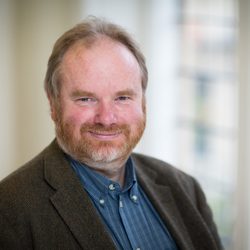
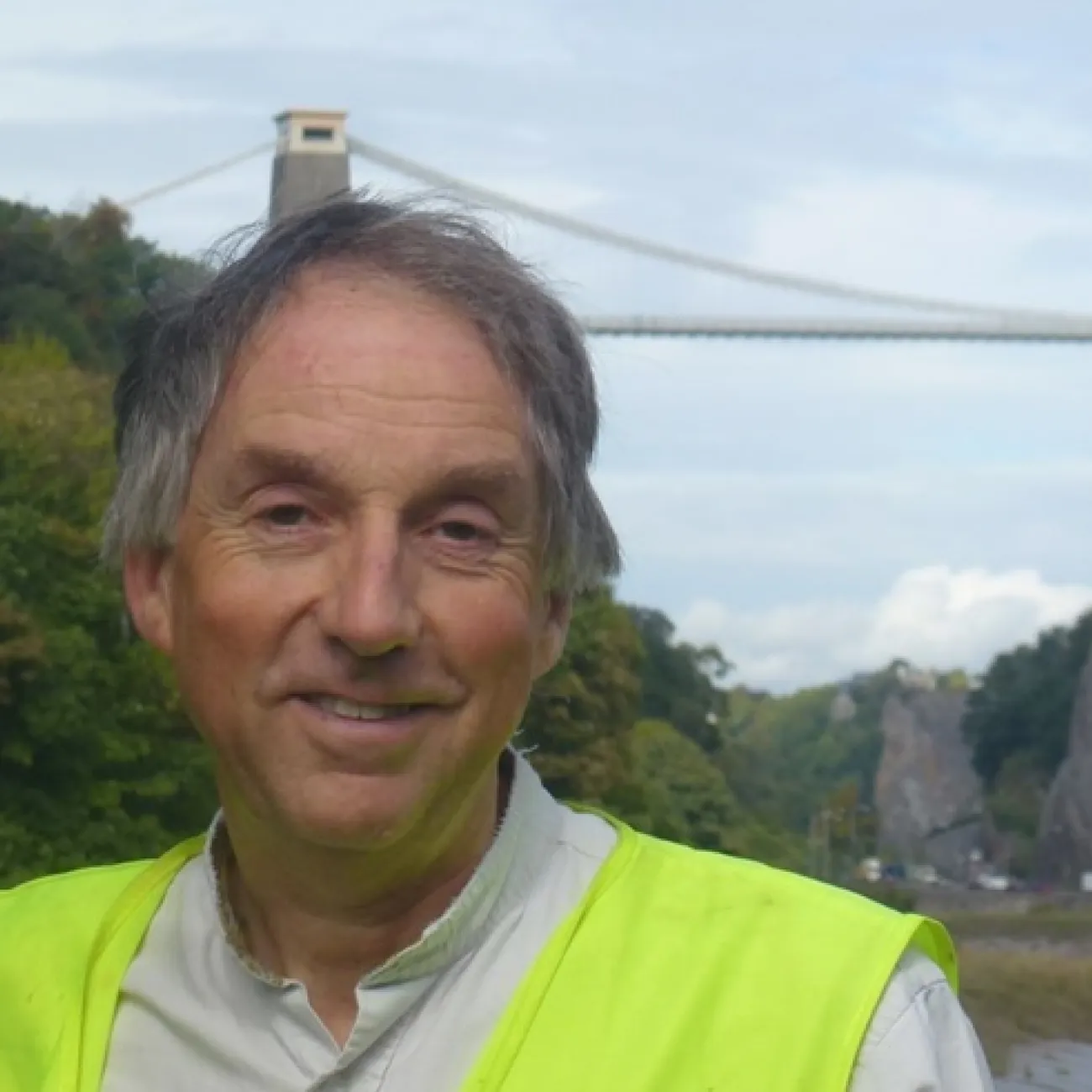
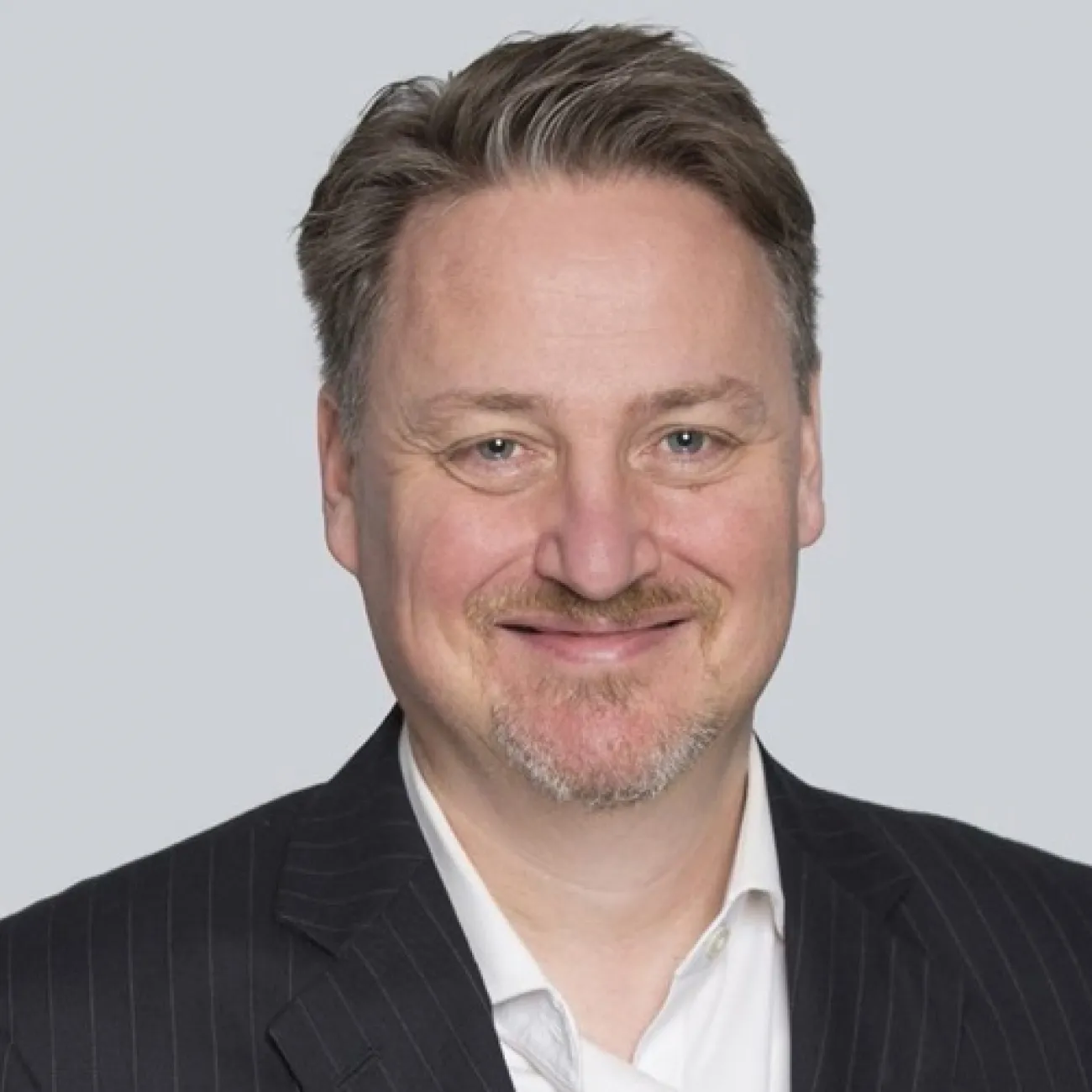
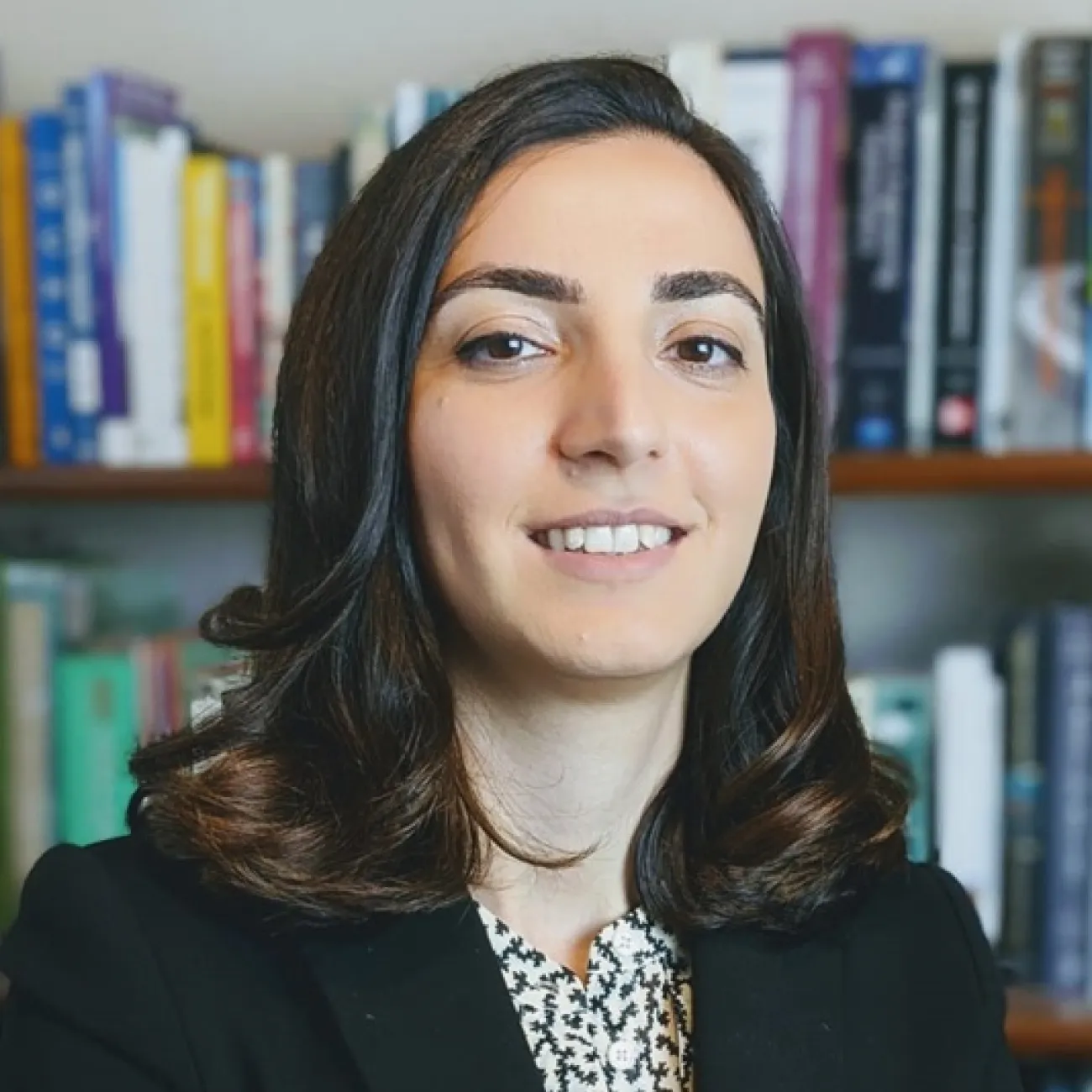
Malcolm McCulloch serves as Professor of Energy Systems and Group Leader of the Energy and Power Group within the Department of Engineering Science at the University of Oxford. He also holds the position of Co-Director for the Oxford Martin Programme on Integrating Renewable Energy and maintains affiliation with Christ Church college. His research spans four primary domains: domestic energy systems, electric vehicle technology, renewable generation, and energy solutions for developing regions. McCulloch's research focuses on practical energy transition challenges. His domestic energy work develops user-centric demand side management technologies and behavior change interventions, leading to the spin-out Intelligent Sustainable Energy (now Navetas Energy Management). In transportation, he pioneered the Morgan LifeCar hydrogen sports car project, resulting in high-efficiency motors and the Oxford Yasa Motors spin-out. His renewable generation research includes lightweight tidal turbines through Kepler Energy, while his Energy for Development work creates nano/micro grid solutions for distributed electrification. Analysis of his recent publications reveals a strong emphasis on integrating variable renewables through innovative market mechanisms, grid flexibility solutions, and electric vehicle integration. His work consistently addresses the technical and economic barriers to decarbonization, with increasing focus on peer-to-peer energy trading, thermal storage, and climate-resilient cooling solutions since 2020. McCulloch previously served as Co-Director of the Institute for Carbon and Energy Reduction in Transport (2008-2013) under the Oxford Martin School. His leadership extends to creating the Integrated Transport Network for Oxford and developing practical applications through multiple successful spin-out companies that bridge academic research and commercial implementation.
William Powrie is Professor of Geotechnical Engineering at the University of Southampton and former Dean of the Faculty of Engineering and the Environment (2010-2018). He authored the seminal textbook 'Soil Mechanics: Concepts and Applications' and chairs HS2's Independent Geotechnical Expert Panel. Research focuses on geotechnical challenges in transportation infrastructure including railway track behavior, earthworks, tunneling, and groundwater control. His work applies soil mechanics principles to complex materials like landfilled waste and railway ballast. As Convenor of the UK Collaboratorium for Research on Infrastructure and Cities (UKCRIC) and leader of UK Rail Research and Innovation Network (UKRRIN), he coordinates national infrastructure research initiatives. Recent publications emphasize experimental and numerical investigations of infrastructure performance, particularly railway geotechnics and sustainable construction practices. Awards and honors include Fellowship of the Royal Academy of Engineering (2009), British Geotechnical Association Medal (2017, 2021), and invited lectureships worldwide. Current research projects receive support from EPSRC, Network Rail, and HS2. Advises multiple PhD students including Akeem Faniran, Benjamin Robert Lee, and Tracey Anne Najafpour Navaei. Leads the iPACT network developing infrastructure solutions for coastal communities.
David Ashmore is a Lecturer in Engineering Economics at the University of Southampton, specializing in transport sector reform, infrastructure procurement, service contract franchising, and public policy. He has over 30 years of international experience working with engineers, policymakers, regulators, and multilateral donors across the UK, Europe, India, the Americas, Africa, and Asia-Pacific regions. Transport Economics Infrastructure Procurement Public-Private Partnerships Policy Analysis His recent research explores sustainable mobility transitions, including ride-hailing dynamics in Indian cities, hydrogen truck adoption in Australia, and equitable infrastructure systems amid rapid urbanization. He emphasizes multistakeholder collaboration and policy innovation in transport reforms. Key publication trends focus on zero-emissions transportation, PPP challenges, automated planning tools, and formal-informal sector integration in developing countries. Articles span conference proceedings, journal articles, and policy-oriented outputs. David serves as a Visiting Research Fellow at the Technical University of Dresden and holds memberships in the Chartered Institute of Logistics and Transport and the Institution of Transportation Engineers. He actively supervises PhD students and leads global transport policy research initiatives.
Dr Bahareh Zaghari (MSc, PhD, CEng, FHEA) is a Lecturer in the Electrical Power Engineering group at the University of Southampton's School of Electronics and Computer Science. Her research focuses on electrified aircraft systems, sensors with machine learning applications, electrical power systems, and nonlinear dynamics modeling. Current projects include acoustic sensing for temperature/flow measurement Co-design of electrical machines for aircraft electrification Research activities span hybrid-electric aircraft design (FutPrint50 Horizon project), fully electric aircraft development (EnabEl Innovate UK), and smart sensing systems for aerospace components. Industrial collaborations include KISTLER, iNetic, PALL Aerospace, Safran, ARUP, Embraer, and BAE Systems. Conference coordinator for IEEE Transportation Electrification Council's Electrified Aircraft committee Chair of IEEE/AIAA Electrified Aircraft Technology Symposium (2023) Panel moderator at AIAA Propulsion and Energy (2021) Her work demonstrates innovative applications of acoustic transducers in harsh environments, with contributions to temperature mapping, fault analysis, and energy harvesting systems. She currently supervises PhD student Shikhar Singh.
Dr. Hongye Zhang serves as a Lecturer in Superconducting and Cryogenic Electric Machines at the School of Engineering, University of Edinburgh, while maintaining a Visiting Research Fellow position at the University of Manchester. He actively contributes to the European Society for Applied Superconductivity (ESAS) as a Board Member and chairs the international HTS 2026 workshop. His educational foundation includes: BSc and MSc in Electrical Engineering from Xi’an Jiaotong University (2015, 2018) Diplôme d’ingénieur (MEng) from École Centrale de Lyon (2018) PhD in Applied Superconductivity from the University of Edinburgh (2021) Dr. Zhang’s research centers on decarbonizing transport through superconducting/cryogenic electric machines for hydrogen-powered aircraft, integrating artificial intelligence with superconductor technology and cryogenic techniques. His work targets net zero emissions by developing high-power-density propulsion systems that leverage hydrogen energy and advanced numerical modeling of superconductors. Analysis of his 2022-2025 publications reveals dominant themes in superconducting machine design for wind energy and electric aviation, with significant contributions to loss mitigation, flux pump technology, and trapped field magnet applications. His research bridges fundamental superconductor characterization with practical system integration for renewable energy. Recognized with the 2021 IEEE Council on Superconductivity Graduate Study Fellowship, his professional engagements include: Early Career Editorial Board Member for Elsevier’s Superconductivity journal Technical Editor for IEEE Transactions on Applied Superconductivity Program Committee Member for SMT 2023 He leads critical research within the £54-million H2GEAR project developing hydrogen-electric aircraft propulsion, while teaching Power Engineering 2 and Electrical Machines courses. His advisory roles span doctoral supervision and industry collaboration through Energy Systems research institute. Based at the University of Edinburgh’s Faraday Building, Dr. Zhang directs a research group focused on hydrogen energy applications and superconducting machine testing, with strong ties to the H2GEAR consortium and ESAS working groups.
Professor Washington Yotto Ochieng serves as Head of the Department of Civil and Environmental Engineering and Chair Professor in Positioning and Navigation Systems at Imperial College London. He directs the Centre for Active Resilience and Security (CARS) and maintains key affiliations with the Centre for Systems Engineering and Innovation, Centre for Transport Engineering and Modelling, Institute for Molecular Science and Engineering, and Space Lab. His extensive advisory roles include the Science Museum Group Board of Trustees, Royal Institute of Navigation Presidency, and Royal Academy of Engineering Africa Steering Committee. His educational background includes a BSc (First Class) in Engineering from the University of Nairobi and MSc (Distinction) and PhD in Civil Engineering from the University of Nottingham. He received an honorary DSc from Technical University of Kenya in 2023. Ochieng's research pioneers critical infrastructure resilience, user-centric mobility, and positioning/navigation/timing (PNT) systems. He has designed satellite navigation systems (including Europe's EGNOS and GALILEO) for multi-domain applications and advanced Air Traffic Management and Intelligent Transport Systems. His work integrates geomatics, transportation engineering, and sustainable mobility to solve global urban infrastructure challenges, with recent emphasis on decarbonization and AI-driven solutions. His 2024-2025 publications reveal strong trends in sustainable transportation decarbonization, AI-optimized traffic management, and resilient urban positioning systems. Research focuses on hydrogen fuel cell trains, carbon-efficient aviation, and deep reinforcement learning applications for emission reduction, demonstrating interdisciplinary integration of engineering, environmental science, and artificial intelligence to address climate challenges. Fellow of the Royal Academy of Engineering (2013) Harold Spencer-Jones Gold Medal from Royal Institute of Navigation (2019) Doctor of Science (honoris causa) from Technical University of Kenya (2023) Elder of the Order of the Burning Spear (EBS) from Kenya (2023) Commander of the Order of the British Empire (CBE) (2024) Ochieng provides strategic guidance to UK Government bodies (Government Office for Science, Department for Transport, FCDO), European Parliament, and European Court of Auditors. His advisory work shaped the Blackett Review on Satellite-derived Time/Position, UK Space Strategy, and Future of Mobility report. He chairs the Science Museum London Advisory Board and leads FCDO's Sustainable Urban Economic Development program in Africa, with significant grant influence through UK National Physical Laboratory and Department for International Development. He directs the Centre for Active Resilience and Security (CARS) and leads Space Lab initiatives, focusing on mission-critical PNT systems and infrastructure resilience. His teams collaborate with international consortia including RTCM Special Committee 134 and US Institute of Navigation, developing next-generation navigation solutions for safety-critical applications across transport, aviation, and urban environments.
Dr. Ahmed Badawy is a Lecturer in Electrical Engineering at Lancaster University's School of Engineering, where he has been serving since 2017. His academic journey includes advanced degrees in electrical engineering and significant research experience in power electronics and renewable energy systems. Dr. Badawy's educational background includes: B.Sc. in Electrical Engineering from the Faculty of Engineering, Alexandria University, Egypt (2008) M.Sc. in Electrical Engineering from the Faculty of Engineering, Alexandria University, Egypt (2012) Ph.D. in Electrical Engineering from the Electric and Electronic Engineering Department at the University of Strathclyde, Glasgow, U.K. (2016) Dr. Badawy's research focuses on power electronics and energy conversion systems, with particular expertise in DC-DC converters, multi-level converters, and electric machines. His work emphasizes digital control of power electronic systems for applications in renewable energy integration, electric vehicles, and power quality improvement. His research has significant implications for sustainable energy systems and transportation electrification. His recent publication record demonstrates a strong focus on electric vehicle power systems, particularly modular converter topologies for on-board charging applications. There's a clear trend toward integrated solutions for EV charging that combine renewable energy sources with grid connectivity. His work also shows significant contributions to control methodologies, including model predictive control and hierarchical control systems for power electronic converters. Dr. Badawy mentors several PhD students working on cutting-edge research in power electronics and renewable energy systems. His research group is actively involved in projects related to sustainable energy conversion and electric transportation. Dr. Badawy is affiliated with Energy Lancaster and the TALOS research group at Lancaster University, where he contributes to interdisciplinary research on sustainable energy systems and power electronics applications.
I. Safak Bayram is a Senior Lecturer (Associate Professor) in the Department of Electronic and Electrical Engineering at the University of Strathclyde, Glasgow, UK. He joined Strathclyde in 2020 as a Chancellor's Fellow, following his role as an Assistant Professor and Scientist at Hamad Bin Khalifa University, Qatar. His research focuses on advancing sustainability and efficiency in intelligent power grids and transportation networks through system-level modeling, control, and management frameworks. Education: PhD in Electrical and Computer Engineering, North Carolina State University (2014) MSc in Telecommunications, University of Pittsburgh (2010) BSc in Electrical and Electronics Engineering, Dokuz Eylul University, Turkey (2007) His research interests center on the integration of electric vehicles (EVs), renewable energy, and energy storage systems into the grid to decarbonize transportation and electricity sectors. He specializes in smart charging, demand-side management, harmonics, power quality, and V2G technologies. His recent publications (2024–2025) emphasize experimental and modeling approaches to EV smart charging impacts on transformers, phase imbalance, and grid compatibility, reflecting a strong focus on real-world deployment and grid resilience. Scientific Awards: Best Paper Award, IEEE SmartGridComm (2024) Best Paper Award, IEEE Workshop on Renewable Energy and Smart Grid (2015) Best Paper Award, IEEE SmartGridComm (2018) Best Readings in Smart Grid Communications (2014) Adjunct Faculty Member Appointment (2020) Dr. Bayram is actively involved in research leadership and academic service. He has secured multiple research grants as Principal Investigator, including projects on V2G hubs and off-grid EV charging. He serves as an Associate Editor for IEEE Transactions on Transportation Electrification and IET Electrical Systems in Transportation, and has organized special issues and conferences such as IEEE SmartGridComm. He regularly delivers tutorials and participates in international conferences, contributing to the global smart grid and electrification community. Labs and Research Teams: His work is supported by active collaborations with industry (e.g., Arnold Clark Automobiles Limited) and research institutions. He leads research on modular EV charging (BumblebeeEV), smart charging algorithms, and grid integration projects, often involving experimental validation and field data analysis.
Dr. Aliakbar Jamshidi Far is a Lecturer at the School of Engineering, University of Aberdeen, since December 2017. Previously, he served as a Research Fellow at the Aberdeen HVDC Centre (2012-2017) and as an Assistant Professor at the Iranian Research Organization for Science and Technology (2008-2012). Dr. Jamshidi Far holds a PhD in Electrical Engineering from AmirKabir University (2008), an MSc from Iran University of Science and Technology (1996), and a BSc from Sharif University of Technology (1992). He is an IET Chartered Engineer, Senior Member of IEEE, and member of CIGRE Working Group B4.76. His research focuses on Modeling and control of HVDC systems and DC grids High-power AC/DC and DC/DC converters Hybrid DC circuit breakers Ultrasound applications in Oil & Gas Renewable energy integration Recent publications highlight trends in Modular Multilevel Converters (MMC) for DC grids Flux Switching Machine optimization Ultrasound-based scale removal technology Wave energy for remote islands Smart microgrids for Indonesia and Nigeria Advanced DC circuit breaker designs Dr. Jamshidi Far has secured significant funding including £204k from the Oil & Gas Technology Centre (2019-2021, Co-PI) £42k Consultancy from BP PLC (2019-2020, PI) EU Horizon 2020 PROMOTion Project (2016-2017, Research Fellow) SSE-funded DC converter research (2015-2016, Research Fellow) ERC-funded DC systems modeling (2012-2014, Research Fellow) Teaching responsibilities include Undergraduate: EE3579 - Electrical and Electronic Engineering Design Postgraduate: EG551K/55M5 - Renewable Energy Integration to Grid (Coordinator) EG503V/503W - Solar Energy (Coordinator) EG501H/504B - Electrical Systems for Renewable Energy (Coordinator) He supervises MEng/BEng and MSc students in Renewable Energy, Oil & Gas, and Subsea programs.
Soufiene Djahel is a Professor at the Centre for Future Transport and Cities (CFTC) at Coventry University, UK. His research focuses on connected and autonomous vehicles (CAVs), unmanned aerial vehicles (UAVs), cyber security, and smart cities. He holds a PhD in Secure Routing and Medium Access Protocols from Université des Sciences et Technologies de Lille (2010), and has held academic positions including Senior Lecturer at the University of Huddersfield and Manchester Metropolitan University. His research interests include CAV coordination protocols, cyber-physical security solutions, and intelligent transportation systems. Djahel leads projects such as the £1.2M AeroPharma Logistics initiative and has secured funding from the Newton Fund and JSPS. He is a recipient of the 2021 JSPS Invitational Fellowship and has published extensively in IEEE journals and conferences. Current projects explore UAVs-as-a-service, digital twins for CAVs, and B5G/6G for smart infrastructure. He advises PhD students on topics like AI-based threat mitigation and transport electrification. Djahel also serves as an external examiner and editorial board member for journals like IEEE Transactions on Intelligent Transportation Systems.
Dr. Jose Ricardo Sodre is a Reader and Head of the Department of Mechanical, Biomedical and Design Engineering at Aston University, UK. He previously served as Associate Professor and Automotive Engineering Team Leader at Birmingham City University, and as Associate Professor and Director of Postgraduate Programmes in Mechanical Engineering at Pontifical Catholic University of Minas Gerais (PUC Minas), Brazil. His research focuses on Sustainable Energy and Transport Decarbonisation, with expertise in biofuels, hydrogen, fuel cells, and transport electrification. Education: PhD in Mechanical Engineering (1995), UMIST, Manchester, UK MSc in Mechanical Engineering (1992), Pontifícia Universidade Católica Do Rio de Janeiro (PUC-RIO), Brazil BSc in Mechanical Engineering (1988), Universidade Federal Fluminense, Brazil Research Interests: Electric Vehicles, Biofuels, Hydrogen, Fuel Cells, Internal Combustion Engines, Renewable Energy Energy Efficiency, Pollutant Emissions, GHG Reduction, Transport Electrification Grants & Partnerships: Led over £8.5M in grants with industry partners such as FIAT-Chrysler, IVECO, PETROBRAS, and HORIBA. Supervised 11 PhD and 27 MSc students. Labs/Teams: Leads the Energy and Bioproducts Research Institute (EBRI) at Aston University.
Dr. Mohammad Yazdani-Asrami is a Lecturer in Electrically Powered Aircraft and Operations at the Autonomous Systems & Connectivity (ASC) division of the James Watt School of Engineering, University of Glasgow. He leads research in electrification and cryo-electrification of transportation, particularly in aviation, leveraging applied superconductivity and AI techniques. His research interests span the Electrification and cryo-electrification of power and transportation systems Design of superconducting components (machines, cables, fault current limiters) for aviation Application of AI, machine learning, and big data in engineering and superconductivity Hydrogen electrolysis, production, and integration in aerospace and power networks His recent publications demonstrate a strong trend toward intelligent modeling and AI-driven solutions in superconducting technologies, with a focus on electric aircraft, fault protection, and thermal management using cryogenic fluids. Dr. Yazdani-Asrami has received notable scientific recognition, including: UK Royal Academy of Engineering Global Talent (2021) Young Professional of the Year, Cryogenic Society of America (2023) He actively supervises PhD students and hosts visiting researchers. His advising portfolio includes Alireza Sadeghi, Kerr Smith, Dedao Yan, Giacomo Russo, and Fábio Gregório. He has secured funding from the EPSRC, University of Glasgow, and CSC for PhD students. He also supports postdoctoral fellowships from the Royal Academy of Engineering, Leverhulme Trust, and Marie Skłodowska-Curie actions. He is involved in several research groups and collaborations, particularly within the Aerodynamics, Propulsion and Electrification group. His editorial roles include serving on the boards of Superconductor Science and Technology , World Journal of Engineering , Aerospace Systems , and others. He regularly contributes to major conferences such as the Applied Superconductivity Conference and the International Conference on Magnet Technology.
Professor Karoline Rogge is a Professor of Sustainability Innovation and Policy at the Science Policy Research Unit (SPRU) within the University of Sussex Business School. She leads the EMPOCI project on accelerating sustainable energy-mobility transitions and was Co-Director of the Sussex Energy Group. Her research focuses on policy mixes, socio-technical transitions, and climate innovation, with extensive work on energy systems, mobility decarbonization, and urban green transitions. Affiliated with the Bennett Institute for Innovation and Policy Acceleration and Fraunhofer ISI, she bridges academia and policy, contributing to the IPCC's Sixth Assessment Report and advising EU and national governments. Research interests include policy design for low-carbon innovation, multi-system transitions, and the interplay between policy and technology. Key projects include EMPOCI (2020-2026), GreenDEMO (2025-2027), and SONNET (2019-2021). Her work emphasizes transdisciplinary methods, such as co-creating city labs and transformative foresight processes. Notable achievements include being named in the 2021 Clarivate Analytics Highly Cited Researchers List and contributing to over 78 publications. She supervises PhD students on topics like electric mobility policy mixes and decarbonization strategies, and serves on editorial boards for journals like Research Policy and Technological Forecasting and Social Change . Her grants include the ERC-funded EMPOCI and EU Horizon 2020-supported SONNET. Professional activities span advisory roles at the European Commission’s JRC and editorial leadership in her field. Teaching includes modules on energy policy and innovation systems at the University of Sussex.
Professor Dinos Arcoumanis FREng is a distinguished academic at City, University of London, where he has served as Professor since 2000. He previously held academic positions at Imperial College London from 1988-2000, progressing from Lecturer to Reader and ultimately to Professor of Internal Combustion Engines. At City University, he has held significant leadership roles including Head of the Aeronautical, Civil and Mechanical Engineering Department, Dean of the School of Engineering & Mathematical Sciences, Pro-Vice-Chancellor for Research and International Links, and Deputy Vice-Chancellor (Research & International) until August 2014. He remains actively involved in research and academic leadership, currently serving as Director of the International Institute of Cavitation Research and Coordinator of the World Cities World Class (WC2) University Network. Professor Arcoumanis holds undergraduate and graduate degrees in Physics, Engineering and Mechanical Engineering from the Aristotelian University of Thessaloniki, Greece (1973), the University of California at Irvine, USA (1980), and the Imperial College of Science, Technology and Medicine, London (1984), respectively. His primary research focuses on internal combustion engines, with specific expertise in combustion, exhaust emissions, and engine lubrication. Professor Arcoumanis has pioneered the application of laser diagnostics and computational fluid dynamics to study internal combustion engines, with particular interest in automotive fuels including renewable and alternative fuels. His work bridges fundamental fluid mechanics with practical engine applications, addressing critical environmental engineering challenges in the transportation sector. His recent research has expanded into cavitation phenomena, fuel cell technology, and the development of sustainable propulsion systems for future transportation needs. Professor Arcoumanis's extensive publication record demonstrates a clear evolution in research focus, beginning with fundamental studies of diesel engine combustion and progressing toward advanced fuel injection systems, alternative fuels, and environmental sustainability. His work consistently bridges theoretical fluid mechanics with practical engine applications, with recent emphasis on cavitation phenomena in fuel systems and the integration of renewable energy technologies with traditional combustion systems. The interdisciplinary nature of his research connects mechanical engineering principles with environmental science, materials science, and energy systems engineering. Professor Arcoumanis has received numerous prestigious awards and honors throughout his career: 1991 Dugald Clerk Prize of IMechE 1995 and 1998 Arch T. Colwell Merit Award of the Society of Automotive Engineers Elected Fellow of the Royal Academy of Engineering (FREng) in 2001 Honorary doctorate from St. Petersburg State Polytechnic University of Russia (2009) Professor Arcoumanis has made significant contributions to academic leadership and professional service. He founded the International Journal of Engine Research (JER) in 1999 and serves as its Editor for Europe. He has coordinated the World Cities World Class (WC2) University Network since 2010, which brings together international institutions in major cities to address research challenges in transport, global health, business, and cultural industries. He has also served as a consultant to Brussels (DG17) and Bechtel Ltd. on the Auto-oil II European Programme (1998-2000), and was appointed Ambassador-at-Large of the Hellenic Republic for Energy Policy and New Technologies in September 2012. His research has been supported by various funding bodies including the Lloyd's Register Educational Trust, which funds the International Institute of Cavitation Research that he directs. Professor Arcoumanis leads the International Institute of Cavitation Research, a partnership between City University London, Loughborough University, and Delft University of the Netherlands. He has established collaborative research teams focused on engine combustion, fuel injection systems, and alternative propulsion technologies. His research group has developed advanced experimental facilities for studying fuel spray dynamics, combustion processes, and cavitation phenomena in engine systems. These teams regularly collaborate with automotive industry partners and international research institutions to address cutting-edge challenges in engine technology and sustainable transportation.
Professor Evangelos Boulougouris is Head of the Department of Naval Architecture, Ocean and Marine Engineering at the University of Strathclyde, where he also serves as Chair of the Maritime Safety Research Centre. He is a chartered professional engineer with over 28 years of internationally recognized research in maritime safety, design for safety, and holistic ship design. His work spans damage stability, autonomous vessels, alternative fuels, and ship survivability, with strong impact on international regulations through roles in IMO, ITTC, SNAME, and RINA. Research Interests: His primary research focuses on safety of marine operations, including damage and intact stability in waves, collision avoidance, ship evacuation, crashworthiness, and the integration of alternative fuels like ammonia and hydrogen. He leads cutting-edge work in multi-objective ship design optimization, risk modeling, and decarbonization strategies for advanced marine vehicles. The recent 15 publications highlight a strong trend toward digitalization and sustainability in shipping, combining machine learning for propeller optimization, CFD simulations for catamaran performance, real-time decision support in emergencies, and hybrid propulsion systems for zero-emission vessels. His work increasingly emphasizes climate resilience, port risk under extreme weather, and energy management in CTVs, aligning with global SDGs. Scientific Awards: 2020 Denny Medal SNAME ABS Captain Joseph H. Linnard Prize (2023) Safety 2020 Best Paper Award (2022) Honorable Mention for Vice Admiral E. L. Cochrane Award (2022) EU CHAMPIONS of Transport Research (HOLISHIP, TRA 2014) Greek Technical Innovation Award, Lloyd’s List (2009) 1st Prize, International SAFER SHIP Competition (1999) Advising and Grants: He actively supervises PhD students and has led numerous EU and UK-funded projects such as SEASTARS, SAFARI, EcoShipYard, and Digital Shipwright. As Principal Investigator and Co-I, he secures substantial research funding, coordinates knowledge exchange (KE) initiatives, and leads training programs across Europe. Labs and Teams: He leads the Maritime Safety Research Centre at Strathclyde, fostering interdisciplinary collaboration on ship safety, stability, and sustainable design. His team works closely with industry partners RCG and DNV, and engages in international networks through STAB, ITTC, and IMO committees.